Overview
Performance And Engine
The Z300’s 296cc engine has two parallel cylinders, uses liquid cooling, and runs on a four-stroke cycle. It features a double overhead camshaft with eight valves. The bore is 62.0 mm, the stroke is 49.0 mm, and the compression ratio is 10.6:1.
| Engine specification |
Kawasaki Z300 |
| Displacement |
296cc |
| Configuration |
Parallel-twin, four-stroke |
| Cooling system |
Liquid-cooled |
| Valve system |
DOHC, eight valves |
| Fuel supply |
Fuel injection with dual throttle valves |
| Throttle-body specification |
32 mm × 2 |
| Bore × stroke |
62.0 × 49.0 mm |
| Compression ratio |
10.6:1 |
| Maximum power |
40 PS at 11,000 rpm |
| Maximum torque |
26.3 Nm at 10,000 rpm |
| Lubrication |
Forced lubrication, wet sump |
| Starting system |
Electric |
The Z300 is officially rated at 40 PS and 26.3 Nm. Maximum power comes at 11,000 rpm, and peak torque at 10,000 rpm. These numbers indicate where the engine reaches its top output.
The engine delivers smooth and responsive power at low and mid rpm, with strong acceleration at higher revs. These specs help show the engine’s intended character.
The fuel-injection system has two throttle valves per cylinder. The main valves respond to the rider’s throttle, while the engine control unit manages the second set. These secondary valves help keep the engine response smooth and linear.
This setup is called dual throttle-valve technology, but it does not mean the bike has an electronic ride-by-wire throttle. The main valves are still mechanically connected to the throttle grip.
The engine uses a sleeveless, plated die-cast aluminium cylinder and lightweight coated pistons. An oxygen sensor in the exhaust helps manage emissions, and the radiator-fan cover directs hot air away from the rider.
The Kawasaki Z300 goes from 0 to 60 mph in 5.47 seconds and from 0 to 100 km/h in 5.78 seconds. Note that 60 mph is about 96.6 km/h, not exactly 100 km/h.
| Acceleration measurement |
Time reported |
| 0–60 mph |
5.47 seconds |
| 0–100 km/h |
5.78 seconds |
These numbers give a sense of performance but don’t confirm the acceleration times for the India-spec Z300 launched in 2026.
The Z300 and Ninja 300 use the same basic engine platform, but each has different claimed power and torque figures.
The Z300 has a six-speed manual transmission with return shift and a chain final drive. Unlike an automatic scooter, you need to use the clutch and shift gears yourself. It uses a wet, multi-disc clutch. Gear ratios go from 2.714 in first to 0.857 in sixth, with a final reduction ratio of 3.000.
The Z300 comes with an assist and slipper clutch. The assist lowers the clutch spring load during normal use, making the clutch lever easier to pull.
The slipper clutch helps reduce engine back-torque during sudden downshifts by easing pressure on the clutch plates. This helps prevent rear-wheel hopping and skidding from too much engine braking. It doesn’t make the gearbox automatic or replace the need to choose the right gear.
Estimates put the Z300’s top speed at about 164 to 168 km/h. The speedometer may show 175 to 178 km/h, while GPS readings are claimed to be 168 to 170 km/h.
Mileage And Fuel Efficiency
There isn’t an ARAI-certified mileage figure for the Z300 in India yet. Sometimes the “Mileage – ARAI” field is left blank or marked as “To be tested.” No official mileage in km/l has been confirmed.
The bike has an Economical Riding Indicator. An “ECO” mark shows up when the system senses good fuel-saving conditions, encouraging you to use the throttle and gears more efficiently. How you ride, shift, and use the throttle affects fuel use.
Owners report mileage of about 26.5 to 30 km/l, with some estimates ranging from 28 to 35 km/l depending on riding style and conditions. These numbers haven’t been verified for the new India-spec model.
Features And Technology
The Kawasaki Z300 in India is the MY2027 model and mixes key riding features with Z-series looks. It comes with a triple LED headlight, LCD instrument console, ABS, and an Assist & Slipper clutch. It also has adjustable rear spring preload, a raised handlebar, and a radiator-fan heat deflector. A USB Type-C outlet is optional.
- Triple LED Headlight: The Z300 has a triple LED headlight. The two upper lights are for low beams, and the lower one is for the high beam. A sharp front cowl surrounds the lights, matching the latest Z-series style.
- Full-LCD Instrument Console: The bike has a full-LCD instrument panel that shows speed and engine rpm. It uses a bar-style tachometer instead of a separate analogue rev counter. The display is LCD, not a TFT touchscreen.
- Economical Riding Indicator: An “ECO” mark shows up on the display when the engine system detects good fuel-saving conditions. It helps guide you to use the throttle and gears more efficiently.
- Optional USB Type-C Outlet: : A USB Type-C power outlet is available as an optional accessory.
- Assist Clutch Mechanism: The Assist & Slipper clutch uses an assist cam to pull the clutch hub and operating plate together during normal use. This lowers the clutch-spring load and makes the clutch lever easier to pull.
- Slipper Clutch Function: When you downshift suddenly and engine back-torque is too high, the slipper clutch eases pressure on the clutch plates. This helps prevent the rear wheel from hopping or skidding due to engine braking.
- Dual Throttle-Valve Fuel Injection: The injection system uses two throttle valves per cylinder. The primary valves are mechanically linked to the throttle grip, while the secondary valves are controlled by the engine control unit to regulate intake airflow.
- Anti-Lock Braking System: The Z300 comes with ABS, which helps prevent the wheels from locking up when you brake.
- Front Petal-Disc Brake: The front wheel uses a single 290 mm petal disc and a dual-piston caliper. This is the front brake setup for the India-market Z300.
- Rear Petal-Disc Brake: The rear wheel has a single 220 mm petal disc and a dual-piston caliper. So, the Z300 has disc brakes on both wheels, not a front-disc and rear-drum setup.
- Telescopic Front Fork: The front suspension uses a 37 mm telescopic fork with 120 mm of wheel travel.
- Uni-Trak Rear Suspension: The rear suspension is a Bottom-Link Uni-Trak setup with a gas-charged shock absorber. It has adjustable spring preload and 132 mm of wheel travel.
- High-Tensile Steel Diamond Frame: The Z300 has a tubular diamond frame based on the Ninja 300. It uses high-tensile steel, reinforcement gussets, and rubber front engine mounts.
- MRF Tyre Equipment: The Z300 comes with an MRF Zapper FX2 front tyre and an MRF Steel Brace SR-01 rear tyre. The sizes are 110/70-17 at the front and 140/70-17 at the rear.
- Raised Handlebar and Upright Layout: The Z300 features a wide, raised handlebar and a slightly forward-leaning seat. This gives a relaxed, upright riding position with a seat height of 785 mm.
- Radiator-Fan Heat Deflector: The radiator-fan cover directs hot air away from the rider to help manage heat.
- Exhaust Oxygen Sensor: The exhaust has an oxygen sensor to help manage emissions. Kawasaki lists it as part of the MY2027 engine package, along with a sleeveless, plated die-cast aluminium cylinder and lightweight coated pistons.
- Electric Starting: The Z300 has an electric starter and a digital ignition system, both listed in Kawasaki’s official specs.
- Muscular Tank Shrouds and Z-Series Bodywork: The fuel tank’s top edges stick out and slope forward, with bold shrouds giving the Z300 its Supernaked look. The sharp front cowl and triple headlights match the latest Z-series style seen on the Z900.
- Seventeen-Litre Fuel Tank: Kawasaki specifies a 17-litre fuel capacity.
Build Quality
The Z300 uses a tubular diamond frame derived from the Ninja 300, incorporating high-tensile steel components, reinforcement gussets and rubber front engine mounts. The frame’s rigidity balance was refined through circuit development to support stability during sporty riding.
The engine incorporates a sleeveless, plated die-cast aluminium cylinder and lightweight coated pistons. These are material and manufacturing features within the engine assembly, distinct from the quality of the exterior panels and trim.
The Z300 is described as having a high level of fit and finish. Its sculpted tank shrouds, sharp headlight cowl and integrated LCD instrument panel form the visible bodywork and cockpit package.
There is no detailed breakdown of exterior-panel materials or an independent assessment of panel alignment, paint consistency, switchgear feel or fastener quality.
Rubber front engine mounts are part of the chassis construction, but vibration measurements at the handlebar, seat or footrests are not published. Long-term resistance to rattles, paint fading and corrosion remains unestablished for the newly introduced India-specification model.
Handling
The Z300 weighs 175 kg (kerb), with a 1,405 mm wheelbase, a 27-degree steering-head angle, and 93 mm of trail. Kawasaki says it has 35 degrees of steering movement each way. These numbers define the bike’s size and shape, and the chassis is designed for stability and sporty control.
The wide, raised handlebar is designed to provide an upright riding position while supporting active control during sporty riding. The handlebar arrangement is a confirmed design feature.
The front suspension uses a 37 mm telescopic fork with 120 mm of wheel travel. At the back, the Bottom-Link Uni-Trak system has a gas-charged shock absorber with adjustable spring preload and 132 mm of wheel travel. Kawasaki says this setup balances comfort in the city with stable handling for sporty rides.
The Z300 comes with an MRF Zapper FX2 tyre at the front and an MRF Steel Brace SR-01 at the rear. The front tyre is 110/70-17, and the rear is 140/70-17. These tyres are chosen to match the chassis and offer stable handling. You can mention the tyre names and sizes, but do not combine different ratings into one specification.
The Z300 features a 290 mm front petal disc and a 220 mm rear petal disc, both with dual-piston calipers. ABS is included to help prevent wheel lock-up when braking.
ABS does not always mean shorter stopping distances or prevent loss of control in every case. The Z300 offers 140 mm of ground clearance.
Comfort
The Z300 has a wide, raised handlebar and a slightly forward-sloping seat, giving a relaxed, upright riding position. This setup is meant for daily commuting, highway rides, and better control during sporty riding. The seat height is listed as 785 mm.
A 785 mm seat height alone doesn’t guarantee that every shorter rider can place both feet flat on the ground. Ground reach and low-speed confidence need to be assessed alongside the seat shape and the motorcycle’s 175 kg kerb mass. The seat’s slightly forward-sloping shape is confirmed, but its length, width or cushioning specifications are not published.
The upright riding position may not be comfortable for everyone. The telescopic fork and Uni-Trak rear shock aim to balance comfort in the city with good handling. You can adjust the rear spring preload to change the suspension setup.
The Assist & Slipper clutch makes the clutch lever easier to use by allowing a lighter spring load, so the lever feels lighter during normal use. This helps when you use the clutch often in traffic. The radiator-fan cover is designed to blow hot air away from the rider to help manage heat.
Styling
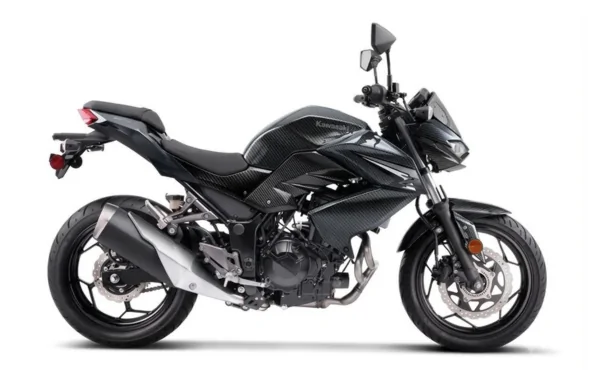
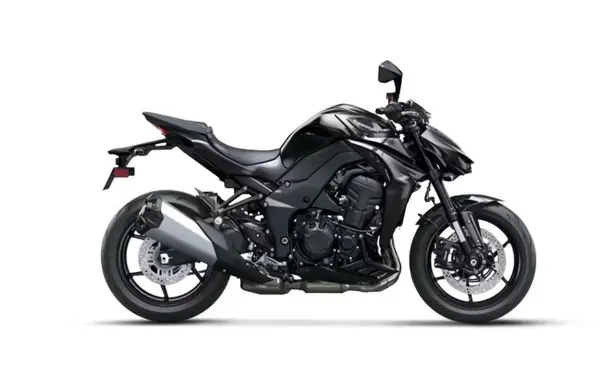
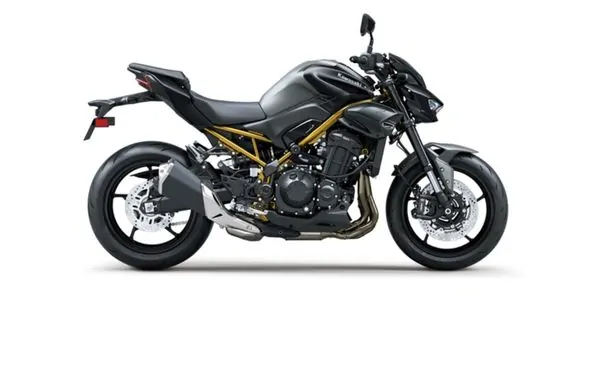
The Z300 uses the Supernaked design instead of the fully faired look of the Ninja 300. The upper edges of the fuel tank stick out and slope forward, giving the tank a wide, sharp look. Large shrouds add to the muscular style and highlight the Z-series identity.
The large tank extensions next to the headlight are a key part of the Z300’s aggressive look. They are not a separate body-style option for a higher variant.
The front has a triple LED headlight inside a sharply shaped cowl. The two upper lights work as low beams, and the single lower light is the high beam. The twin upper lights give the front a unique look.
The latest-design Z “face” is linked to the Z900 through the front-end design language; it does not mean the Z300 uses the Z900’s complete bodywork.
The tank edges that stick out and the large shrouds make the top of the bike look wide. The forward-sloping lines create the dynamic profile Kawasaki mentions, and the lack of a full fairing keeps the naked-bike style.
Both colour options have the same body design. The tank, shrouds, and headlight shape are the same for both colours.
The Z300 features a full-LCD instrument console with a bar-style tachometer built into the display, giving it a digital cockpit look.
The raised handlebar sits above the tank and helps create the bike’s upright naked-bike style. This setup is standard on the model.
Colour Options And Variants
The Kawasaki Z300 in India is available in two colours:
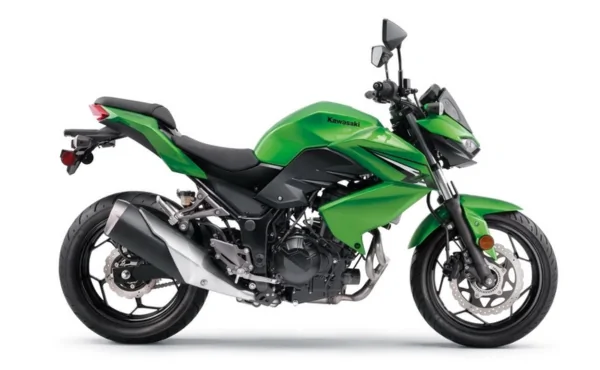
- Candy Lime Green
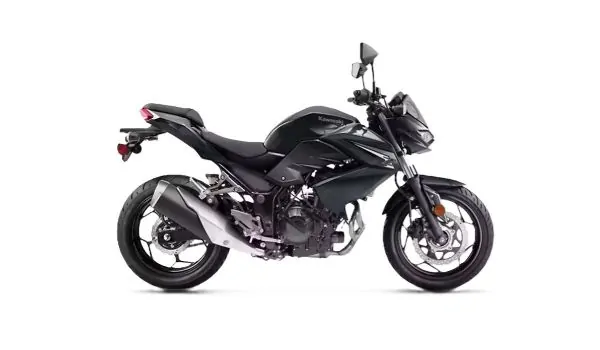
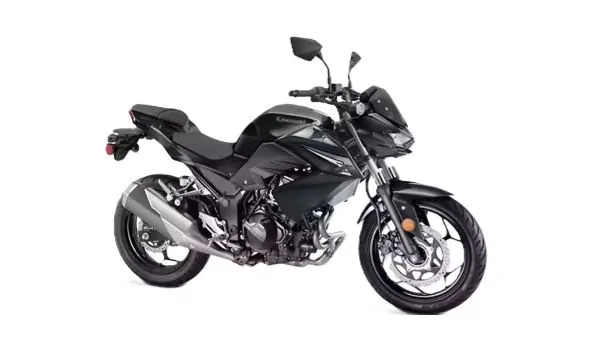
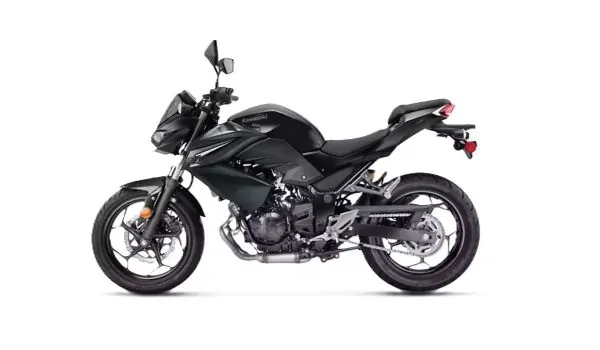
- Metallic Carbon Gray
The full colour combinations are Candy Lime Green/Ebony and Metallic Carbon Gray/Ebony. The names below show the difference between the colour labels and the full descriptions.
Candy Lime Green is the green option, paired with a contrasting black finish. This is just a colour choice in the Standard edition, not a separate variant.
Metallic Carbon Gray is the darker option, also called Metallic Carbon Gray/Ebony, and is listed as a special colour for the Indian market.
The word “Metallic” forms part of the official colour name. This option is not labeled as matte and should not be renamed “Matte Carbon Gray.” Two colour schemes are available: Candy Lime Green and Metallic Carbon Gray.
The Z300 comes only in a single Standard edition. The two paint options do not mean there are different mechanical or equipment versions.
The Standard edition has the same styling features: muscular tank shrouds, a sharp front cowl, a triple LED headlight, and a full-LCD instrument console. There is no SE, Performance, or other special factory edition.
| Variant |
India-market colour choices |
Styling distinction |
| Z300 Standard |
Candy Lime Green and Metallic Carbon Gray; reported as Candy Lime Green/Ebony and Metallic Carbon Gray/Ebony by BikeWale |
Shared bodywork, triple LED headlight and LCD cockpit; colour scheme is the documented choice within the variant. |
Value For Money And Pricing
The Kawasaki Z300 Standard is priced at ₹ 3,24,000 ex-showroom. With only one Standard edition, buyers don’t have to choose between entry, mid-spec, or top-spec versions in the current Indian lineup.
Candy Lime Green and Metallic Carbon Gray are listed, but there are no separate prices for the two colours. There is consequently no colour premium.
The estimated on-road price in Delhi is ₹3,65,128. This includes ₹3,24,000 ex-showroom, ₹26,990 for registration and related charges, and ₹14,138 for insurance. Registration charges may cover the number plate, smart card, and any hypothecation fees.
These are only price estimates, not the final dealership invoice. Insurance costs depend on the coverage you choose, and finance charges apply only if relevant.
A slightly lower estimate for Delhi is ₹3,64,258, which uses ₹26,120 for RTO and other charges and the same ₹14,138 for insurance. The ₹870 difference is due to the non-insurance charges in the two calculations. For the final amount, you should get an itemised quote from the dealership.
A USB Type-C outlet is an optional Genuine Kawasaki Accessory, subject to availability confirmation. No complete accessories package, fixed finance offer, or current cash-discount scheme is published. A discounted purchase price or monthly EMI would therefore require a specific dealer and lender quotation rather than an assumed deduction from the listed amount.
The Z300 stands out mainly for its 296cc parallel-twin engine. It is priced below the Aprilia Tuono 457 Special Edition, another twin-cylinder naked bike, but there are much cheaper single-cylinder options. Its value depends on whether you want a twin-cylinder engine.
Having two cylinders does not automatically make the Z300 the best choice. Some rivals offer more power and features for less money. The Z300 is for buyers who value its engine type and ownership experience over getting the most features for the price.
The Z300 comes with ABS, an Assist & Slipper clutch, a triple LED headlight, and a full-LCD instrument console as standard. These features are not limited to a more expensive version.
However, some competitors offer better equipment, like more advanced displays and rider electronics. The Z300 does not have smartphone connectivity, selectable riding modes, or traction control. So, it is less appealing for buyers who want more electronic features at this price.
The Ninja 300 costs ₹10,000 less than the closely related Z300. This is about 3% of the Ninja’s ex-showroom price. The difference is small, so choosing between them is not mainly about saving a lot of money.
The Z300 is the lower-priced option for someone specifically seeking the naked-bike configuration. A buyer already willing to spend around can also consider the Ninja without moving into a substantially different ex-showroom bracket.
You can judge the Z300’s value by looking at its price and features. For a full ownership cost comparison, you need service quotes, insurance options, real fuel usage, and resale data, not just assumptions.
A dedicated comparison identifies the
- KTM 390 Duke
- Royal Enfield Guerrilla 450
- KTM 390 Duke R
- Aprilia Tuono 457
as relevant alternatives. The prices below use a single comparison basis, so they do not mix unrelated starting prices from different sources.