
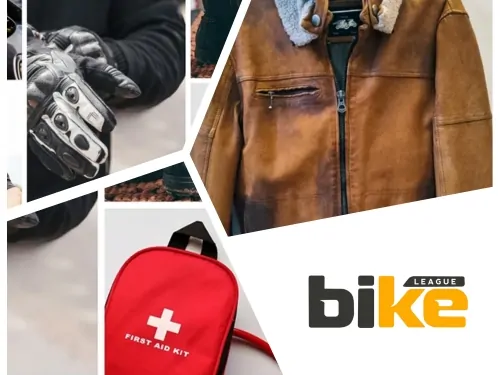
Long story short: A helmet is the most important safety item for every rider and should always come first. Choose an ISI full-face helmet. Next, look for CE-certified jackets, gloves, rider boots, a first aid kit, and a tool kit. Phone holders and chargers are useful, but optional.
Riding a motorcycle is exciting and gives you a sense of freedom, but it also has its own risks. Whether you ride every day or just on weekends, the right accessories matter for comfort and, most importantly, safety.
This guide explains the must-have motorcycle accessories for Indian riders. We cover protective gear, practical add-ons, and the essentials that every responsible rider should take on every trip.
Key Takeaways
- Helmet is Non-Negotiable:A properly fitting, ISI-certified full-face helmet provides the most critical head and face protection. Never compromise on helmet quality or fit.
- Protective Gear Saves Lives: CE-certified riding jackets with armour, gloves with finger and knuckle protection, and sturdy rider boots significantly reduce injury risk in an accident.
- Be Prepared for Emergencies: Carrying a basic tool kit and first aid kit enables riders to handle minor repairs and medical issues on the road, minimising disruption from unexpected incidents.
- Visibility and Eye Protection Matter: High-visibility vests, reflective gear, and eye protection (goggles, face shields, sunglasses) are essential for staying visible and shielded from the elements, especially at night or in harsh weather.
- Convenience and Security Add-ons: Accessories like motorcycle locks, phone holders, and USB chargers enhance security and convenience, but should not take priority over core safety equipment.
The List Of All Basic Motorcycle Accessories
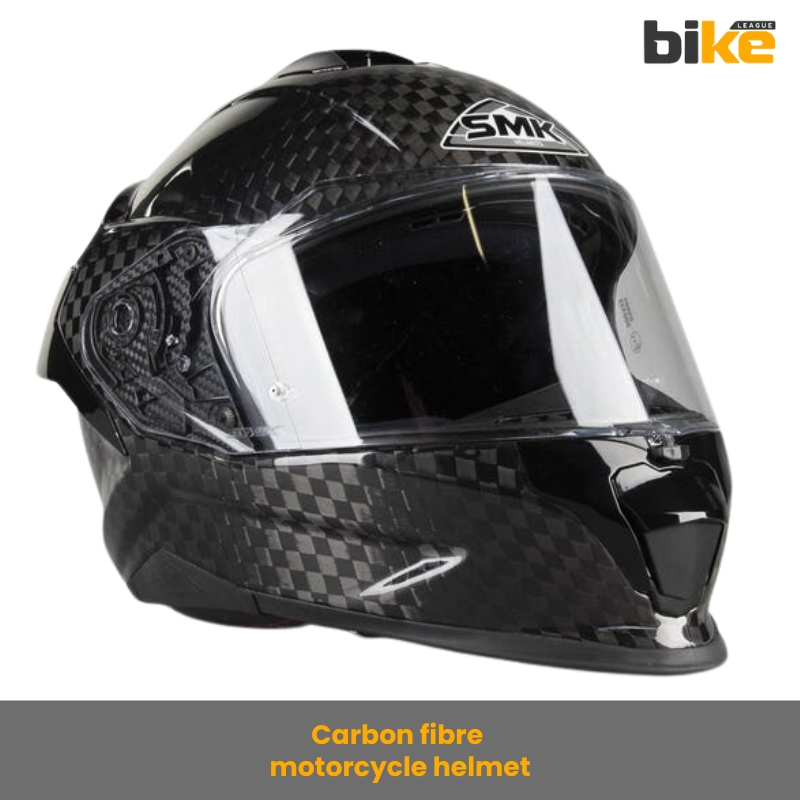
1. Full-face Isi Helmet
Always choose a full-face helmet that meets quality standards. In 2018, the Bureau of Indian Standards established a 1.2 kg weight limit for motorcycle helmets; this restriction was later removed under the Helmet for Riders of Two-Wheelers Motor Vehicles (Quality Control) Order, 2020, which made ISI certification mandatory and opened the market to imported helmets that meet ISI standards. India has many good helmet brands, so choose one that keeps you safe.
Some well-known foreign brands are MT, AGV, KYT, LS2, SHOEI, and SMK.
Popular Indian brands include Studds, Steelbird, Vega, and Aarona.
For a deeper look at helmet types, shell materials, and how to get the right fit, see our motorcycle helmet buying guide.
2. Protective Riding Jacket (reflective)
Pick jackets with reflective tape on the neck to help you stay visible at night. For best protection, look for jackets with armour on the elbows, shoulders, and back, and choose CE-certified options.
Types of Protective riding jackets are:
- Full all-weather jackets
- Conventional riding jackets
- Body armour jackets
3. Eye Protection
It’s a good idea to use eye protection to guard against wind, dust, and debris. Several types are available, so you can choose the one that best suits your needs.
- Goggles: Goggles are popular among motorcycle riders as they offer a wide field of view and effective protection against wind, dust, and debris. Additionally, they are relatively affordable.
- Sunglasses: Sunglasses can be worn underneath a helmet visor to provide extra UV protection. However, they may offer less protection against wind and dust than goggles.
- Face shields: Face shields are attached to helmets and provide the highest protection against wind, dust, and debris. They also help to prevent fogging and reduce glare.
- Safety glasses: Safety glasses are suitable for riders who wear prescription glasses. They are also a good choice for riders who frequently ride in dusty or dirty environments.
- Windshields: Windshields are particularly beneficial for riders who often ride in cold or windy weather conditions. They help to deflect wind and keep the eyes warm and dry.
4. Gloves
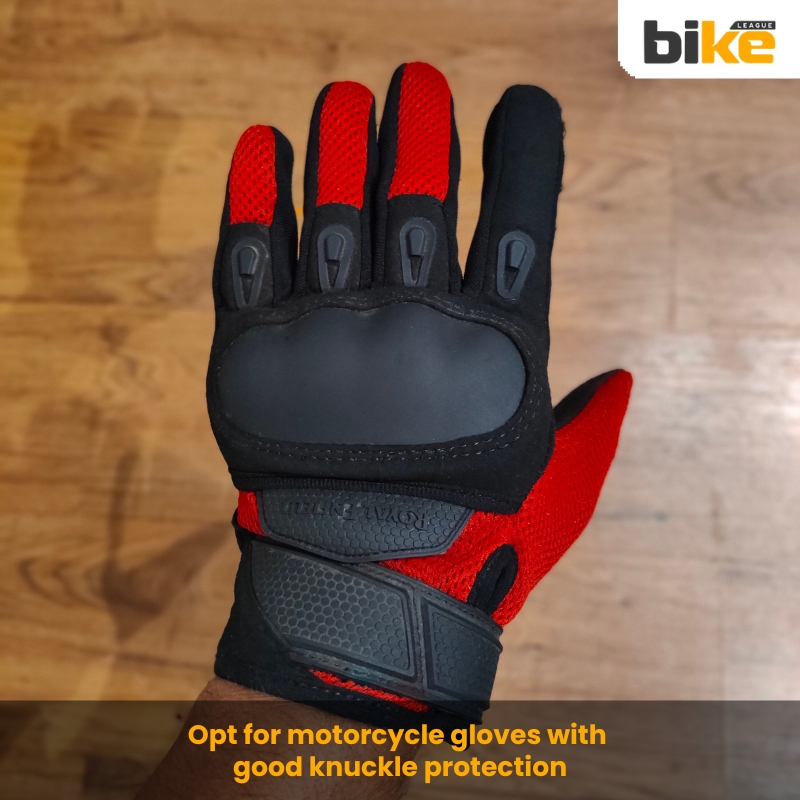
Riding gloves protect your hands and fingers from injuries and bruises in different weather and road conditions. Choose gloves that also protect your finger joints. Our motorcycle gloves buying guide covers sizing, protection levels, and material trade-offs in more detail.
Types Of Gloves According To Type
- Short gloves
- Semi gauntlet gloves
- Full gauntlet gloves
Types Of Gloves According To Material Type
- Mesh gloves
- Mesh + Leather gloves
- Leather gloves
5. Rider Boots
Rider boots, also known as paddock boots, are essential because they protect your feet from twisting, road debris, and hot exhaust pipes.
6. Rain Gear
Riding through an Indian monsoon without proper rain gear is one of the most common ways commutes become dangerous. Wet gear can make it harder to grip the controls, fog up your visor, and make you less visible to others. It’s a good idea to carry a dedicated rain suit, even if you only use it for a few months each year. For more details on monsoon riding gear and tips, check out our Monsoon bike ride in India guide.
Types of rain gear are:
- Two-piece rain suits: A separate jacket and pants, usually worn over your regular riding gear. Easier to put on quickly and more breathable than one-piece suits.
- One-piece rain suits: A single overall-style cover offering the best water sealing with no gap at the waist, but slower to put on and take off.
- Rain ponchos: Lightweight and inexpensive, but prone to flapping at highway speeds and offering less coverage than a proper suit.
- Glove and boot covers: Waterproof covers worn over existing gloves and riding boots, useful when you don’t want to invest in fully waterproof versions of each.
Choose rain gear in bright colours or with reflective piping. Visibility drops a lot in heavy rain, so this also helps keep you safer.
7. High-visibility Reflective Vest
A jacket with reflective tape is helpful, but wearing a separate high-visibility vest over your gear gives you much more reflective area. This is especially important at dusk, at night, and in heavy rain. High-visibility vests are affordable and easy to store, making them one of the best-value safety accessories, especially for riders who travel in low light or during the monsoon.
8. Motorcycle Lock
A good motorcycle lock can help prevent theft. Choosing a robust U-lock or chain lock will improve your bike’s security. Locks come in different types, so choose one that suits your needs.
- U-locks: are a popular choice for motorcycle owners due to their strength and security. They have a hardened steel shackle that is difficult to cut. However, they can be heavy and bulky and may not fit through some frames.
- Chain locks: are also strong and secure, but can be heavy and inconvenient to carry.
- Disc locks: are smaller and more portable, fitting over the brake disc to prevent theft, but are not as strong as U-locks or chain locks.
- Grip locks: attach to the throttle grip, making it impossible for thieves to start the motorcycle, but are not as strong as other locks.
- Alarmed locks: combine a lock with an alarm, deterring thieves with a loud noise, but can be more expensive and require battery replacements.
9. Tools And First Aid Kit
A toolkit with a puncture repair kit is essential. Include the basic tools needed for common repairs.
- Allen wrenches
- Socket wrenches
- Screwdrivers
- Pliers
- Tire pressure gauge
- Spark plug socket
- Spark plug wrench
- Fuses
- Zip ties
- Duct tape
- Flashlight
Your basic first-aid kit should have these items:
- Bandages in assorted sizes
- Antiseptic wipes or solution
- Gauze pads
- Adhesive tape
- Pain relievers
- Allergy medication
- Antacids
- Sunscreen
- Insect repellent
- Hand sanitizer
- Emergency blanket
- First aid guide
10. Storage: Saddlebags, Tank Bags & Tail Bags
A backpack is fine for short commutes, but it’s not great for longer rides. It can strain your back and change your balance. Motorcycle storage bags keep the weight on the bike instead of on you.
- Tank bags: Sit on the fuel tank, usually magnetic or strap-mounted, and are best for items you need quick access to, like a phone, documents, or snacks.
- Saddlebags: Mount on either side of the rear seat or a luggage rack, offering the most storage volume for touring without affecting the bike’s balance.
- Tail bags: Strap onto the rear seat or grab rail, useful for day trips and commuting where you need moderate extra space without the bulk of full saddlebags.
Choose bags made from water-resistant material or use a rain cover, since most budget bags are not fully waterproof. If you ride during the monsoon often, it’s a good idea to use these along with your rain gear.
11. Documents Pouch
Indian traffic rules require you to carry your Registration Certificate (RC), driving licence, PUC (Pollution Under Control) certificate, and a copy of your insurance policy while riding. A small waterproof document pouch, kept in a tank bag or under the seat, protects these papers from rain or damage. You can also save digital copies in DigiLocker, which are accepted during traffic checks, but it’s still a good idea to keep physical copies in case you have no signal or your phone battery runs out.
12. Mobile Phone Holder
A phone holder makes it easier to use navigation and handle calls while riding. Make sure your phone fits securely in the holder.
13. Mobile Phone Charger
Many bikes now come with built-in USB chargers, which are a great convenience. If your bike doesn’t have one, you can have a technician install a USB charger, but it’s best to ask for help.
What About Other Motorcycle Accessories?
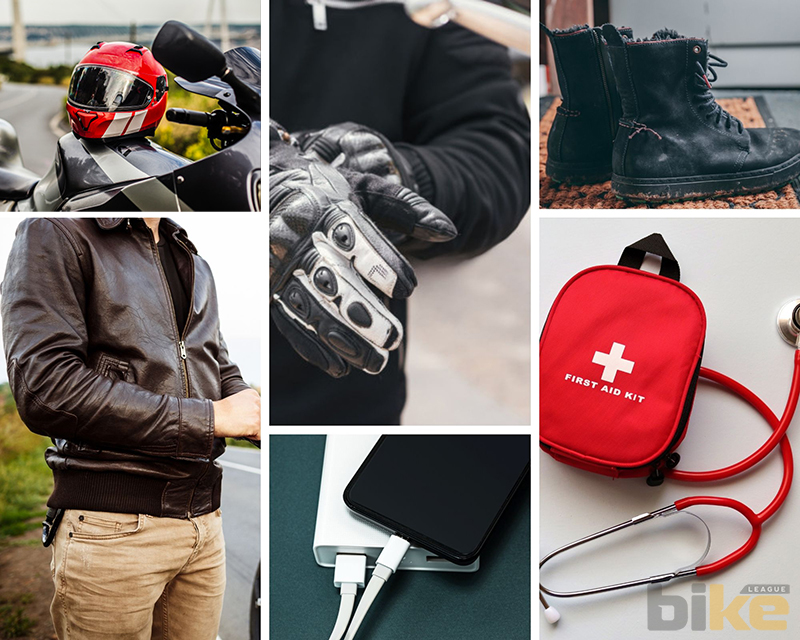
You can add many accessories, but this list focuses on the basics. Feel free to add or remove items based on your riding needs. The essentials are a helmet, protective jacket, gloves, rider boots, a first aid kit, and a tool kit. If you ride on a track, you also need knee and back protection. The list above is designed for basic trips with safety as the main goal.
Common Myths About Motorcycle Accessories
A few misconceptions lead riders to under-protect themselves. Here’s what’s actually true.
- Myth: Any ISI-marked helmet is safe enough. The ISI mark confirms the helmet meets minimum BIS certification, but fit, helmet type, and condition matter just as much. A loose or damaged ISI helmet, or a half-face helmet worn on the assumption that “ISI means safe,” still offers far less protection than a properly fitted full-face one.
- Myth: A riding jacket is only needed in winter. Jackets are primarily abrasion and impact protection, not insulation. CE-certified armour at the elbows, shoulders, and back works the same way in June as it does in December — the temperature has nothing to do with what happens if you go down.
- Myth: Any gloves will do, as long as your hands are covered. Fashion or fabric gloves with no palm reinforcement or knuckle protection offer little defence in a fall. Hands are one of the first things riders instinctively put out, so unprotected gloves are one of the more common sources of preventable injury.
- Myth: A single lock makes your bike theft-proof. No individual lock — U-lock, chain, disc, or grip — is unbreakable on its own. Layering two different lock types (for example, a disc lock plus a chain lock) is significantly more effective than relying on one, since it forces a thief to defeat two different tools.
- Myth: A helmet lasts as long as it looks fine. Helmet liners degrade with sweat, UV exposure, and time, and the protective foam can lose effectiveness even without visible cracks. Riders should replace a helmet every few years of regular use, and always after any crash or hard drop — regardless of how undamaged it looks from outside.
Faq Related To Basic Motorcycle Accessories
1. What Should I Consider When Choosing A Helmet For Indian Travel?
Ensure it is ISI-certified, fits well, has good ventilation, and preferably includes a sun visor to handle the Indian sun and diverse riding environments.
2. What Tools Should I Carry For Motorcycle Repair During A Trip?
Carry basic tools like a puncture repair kit, tyre levers, small spanners, screwdrivers, extra fuses, and cables to handle common bike issues on the road.
3. What Are The Must-have Convenience Accessories For Motorcycle Riders?
Accessories like a phone mount, USB charger, and saddlebags enhance convenience by providing easy access to navigation, charging capabilities, and storage.
4. What Safety Gear Is Essential For Motorcycle Riders?
Essential safety gear includes a helmet, gloves, a jacket, boots, and potentially body armour like elbow and knee pads.
5. What Are Must-have Accessories To Improve Visibility And Safety?
High-visibility reflective stickers, bright LED lights, and waterproof gear with reflective patches enhance visibility, especially in low-light conditions.
6. Are There Any Specific Accessories For Riding Comfort During Long Journeys?
Yes, comfortable riding jackets, padded gloves, cushioned riding pants, and ergonomic riding boots help reduce fatigue and prevent injuries during long rides.
Glossary Of Motorcycle Accessory Terms
- ISI mark: A certification mark issued by the Bureau of Indian Standards (BIS) confirming a product meets the relevant Indian Standard — mandatory on all two-wheeler helmets sold in India.
- BIS (Bureau of Indian Standards): India’s national standards body, responsible for certifying and regulating helmet quality under the Helmet for Riders of Two-Wheelers Motor Vehicles (Quality Control) Order.
- CE certification: A European safety standard used globally for riding jackets, gloves, and armour, indicating the protective inserts have been tested against impact and abrasion.
- Full-face helmet: A helmet that covers the entire head, including the chin and jaw, offering the highest level of protection compared to open-face or half-face designs.
- Gauntlet gloves: Gloves with an extended cuff that covers part of the forearm and overlaps with a jacket sleeve, reducing the chance of a gap during a fall.
- Armour (body armour): Rigid or semi-rigid protective inserts placed at impact-prone points — elbows, shoulders, back, knees — inside jackets, pants, or standalone guards.
- Reflective tape: Retroreflective strips on jackets, helmets, or bags that bounce vehicle headlights back at the source, improving a rider’s visibility at night.
- Disc lock: A compact lock that fits through a motorcycle’s brake disc to physically prevent the wheel from turning.
- U-lock: A rigid, U-shaped locking device with a hardened steel shackle, commonly used to secure a motorcycle to a fixed structure.
- Puncture repair kit: A compact kit — typically plugs, a reamer, an insertion tool, and a CO2 or hand pump — used to seal a tubeless tyre puncture on the road.
Other Related Articles From Bikeleague India
- Must have bike accessories for a long distance trip
- Bike maintenance at home: Save money & time on services
- Bike modification – The dos and don’ts in India
- Defensive driving for bikers in India – The Ultimate guide
- Bike IDV Calculator – Calculate Your Bike’s Value Online
Conclusion
Now you know the essential motorcycle accessories every rider should have. Prioritising quality safety gear—like a certified helmet, riding jacket, gloves, boots, and a first aid kit—not only protects you but also makes every trip more comfortable and better prepared for the unexpected. Investing in these basics shows responsibility as a rider and helps you enjoy the freedom of the road with greater confidence. Ride safe, stay equipped, and make every journey memorable for the right reasons.
If you have any questions, email us at bikeleagueindia@gmail.com or share your thoughts in the comments below. We are always happy to help. You can also connect with Bikeleague India on social media.