
Ultraviolette F77 Mach 2
Last Updated: September 23, 2026
Introduction
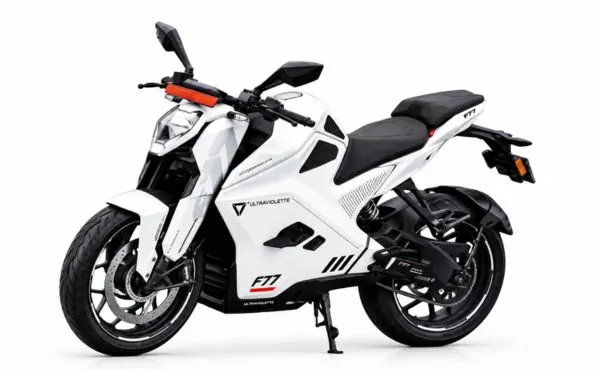
The Ultraviolette F77 Mach 2 is a sportier version of the company’s flagship electric motorcycle in India. Unlike the upright F77 SuperStreet, the Mach 2 features low clip-on handlebars and a more aggressive riding position, focusing on sharp handling, high-speed stability, and quick acceleration. There are two main versions: the Original, which has a 7.1 kWh battery and 27 kW motor, and the Recon, which comes with a larger 10.3 kWh battery and 30 kW motor. Both versions claim a top speed of 155 km/h, but the Recon offers stronger acceleration, more torque, and a much bigger range for riders who often travel on highways. This bike is built for performance, not for basic city commuting.
Gallery
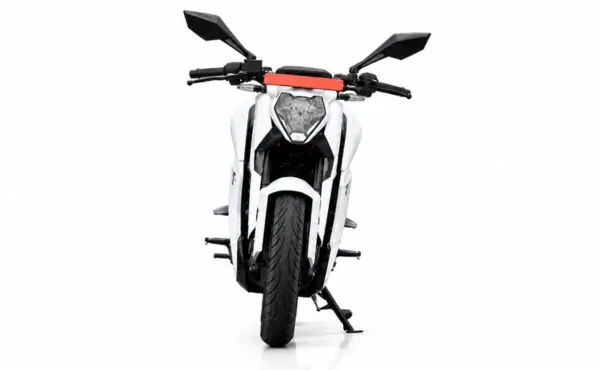
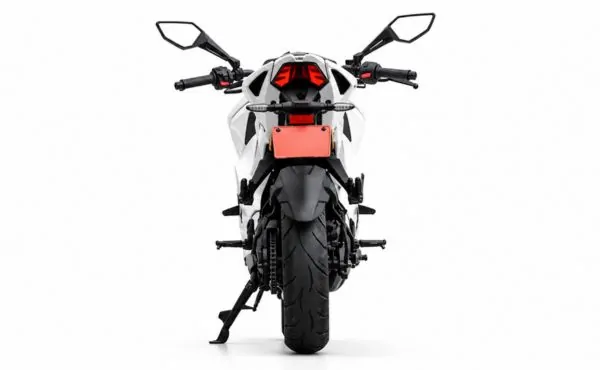
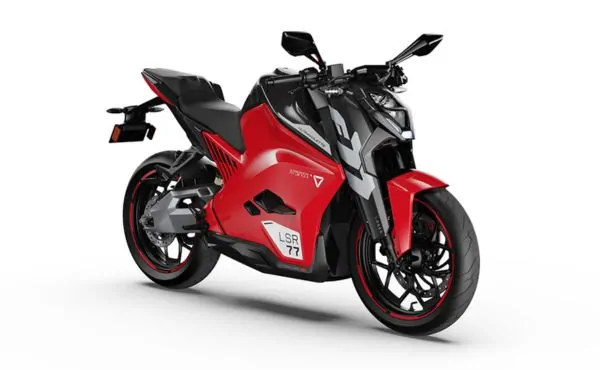
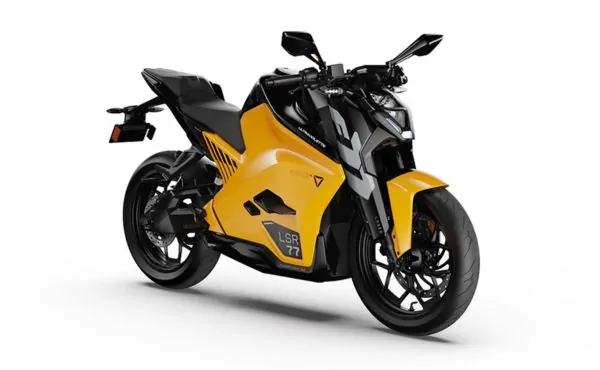
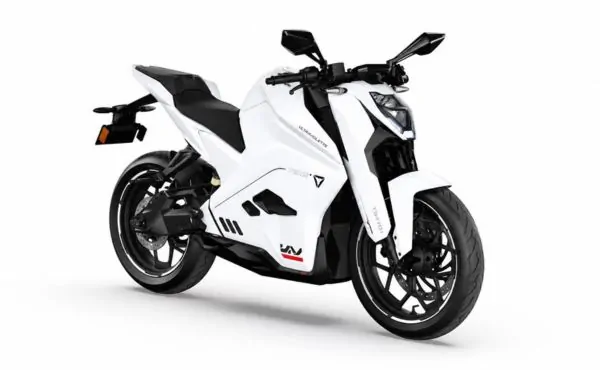
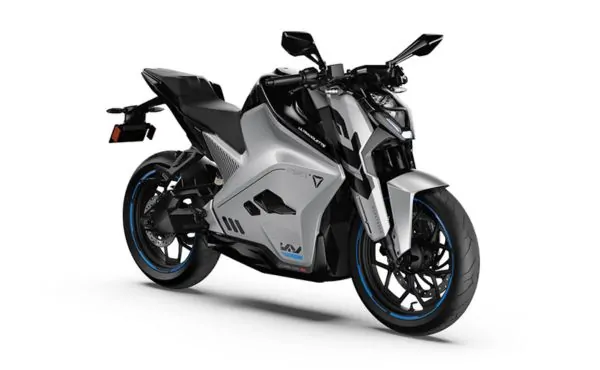
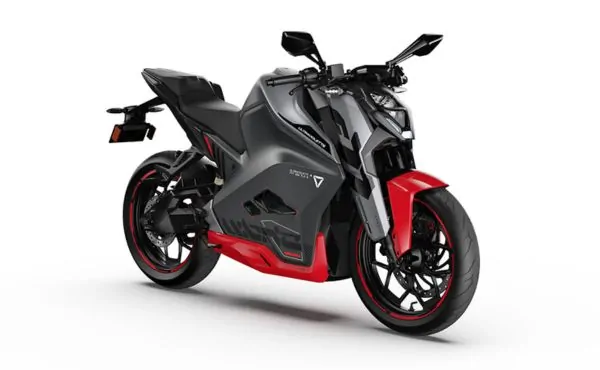
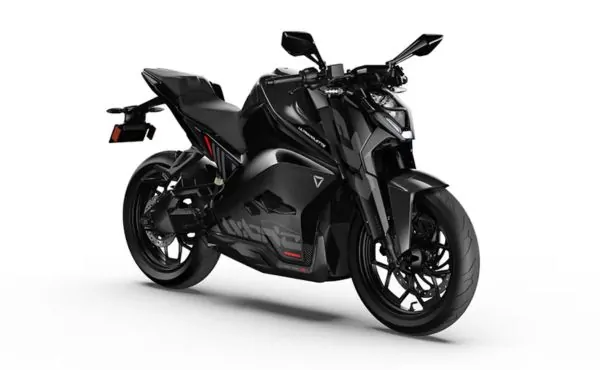
Key Specifications

Motor
PMAC Motor

Range
110-180 km/c

Power
36.7 PS

Torque
90 Nm

Top Speed
155 km/h

Charging Time
3 Hours

Rear Suspension
Monoshock

Kerb Weight
197 kg
Ratings
- 90%
Performance
- 90%
Features
- 90%
Handling
- 95%
Comfort
- 100%
Build Quality
- 100%
Styling
- 95%
Value for Money
- 94%
Total
Ratings calculation is purely based upon pros and cons of the model given below in the overview section.
Price

Special Features
1
Sport-bike Clip-on Handlebars
2
Cell-level Fuse Technology
3
Five-layer Battery Safety
4
Battery Warranty Support
5
Three Ride Modes
6
Traction Control
7
Dynamic Stability Control
8
Five-inch Tft Display
9
Ride Analytics
10
Find My Vehicle
11
Reverse Function
12
Dual-disc Brakes
Full Specifications
| Motor Type | Permanent Magnet AC Motor |
| Power | 36.7 PS |
| Torque | 90 Nm |
| Top Speed | 155 km/h |
| Transmission | Automatic |
| City | 150-180 km/c |
| Highway | 110-150 km/c |
| Speedometer | Digital |
| Tachometer | Yes |
| Tripmeter | Yes |
| Low Battery Indicator | Yes |
| Start Type | Self Start |
| Kill Switch | Yes |
| Clock | Yes |
| Pass Light | Yes |
| ABS | Yes |
| Stand Alarm | Yes |
| Tyres (F) | 110/70 R17 |
| Tyres (R) | 150/60 R17 |
| Brakes (F) | 320 mm Disc |
| Brakes (R) | 230 mm Disc |
| Frame Type | Steel Trellis with Aluminium Bulk head |
| Front Suspension | Upside-down Telescopic fork with a diameter of 41mm |
| Rear Suspension | Monoshock-preload adjustable |
| Wheelbase | 1340 mm |
| Ground Clearance | 160 mm |
| Kerb Weight | 197 kg |
| Seat Height | 800 mm |
| Battery | 7.1kWh Lithium-ion |
| Head Lamp | LED |
| Tail Lamp | LED |
Overview
Performance And Motor
The F77 Mach 2 is powered by a frame-mounted permanent-magnet AC motor. The Original version delivers 27 kW and 90 Nm of torque, while the Recon increases this to 30 kW (about 40.2 hp) and 100 Nm. The Recon is a better fit for riders who often carry a passenger, ride on hilly roads, use highways, or want the fastest acceleration.
According to the company, the Mach 2 Recon can go from 0 to 60 km/h in 2.8 seconds and from 0 to 100 km/h in 7.7 seconds. The Original is also fast compared to regular motorcycles, though it has less power and torque. Both versions deliver instant electric torque, making them especially good for quick moves in the 30–100 km/h range, such as overtaking, merging onto highways, or climbing flyovers.
There are three ride modes: Glide, Combat, and Ballistic. Glide gives the smoothest response and helps maximize range. Combat balances performance and efficiency. Ballistic delivers the strongest acceleration and the most aggressive throttle. Choosing a mode has a big impact on range, so it’s an important part of how you ride, not just a display option.
For the 7.1 kWh Original, Ultraviolette says you can get about 183 km in Glide mode, 144 km in Combat, and 128 km in Ballistic. The Recon’s bigger battery boosts these numbers to around 266 km, 209 km, and 186 km. These figures show the bike can be efficient or fast, but not both at the same time. Using more power or Ballistic mode will reduce your range.
The F77 Mach 2 uses a fully automatic electric transmission. There’s no clutch, gear shifter, or traditional gearbox, and you don’t need to shift gears while riding. Just use the throttle, and the motor sends power straight to the rear wheel.
This setup is a big advantage in city traffic. You don’t have to keep using a clutch, shift to lower gears for overtaking, or change gears in stop-and-go situations. The instant power also makes overtaking on highways easier, since you get a quick response without needing to downshift.
Even though it’s automatic, the Mach 2 isn’t a beginner’s bike. Its Ballistic mode, 155 km/h top speed, and sporty riding position mean you need to control the throttle carefully, especially on wet or dusty roads, rough surfaces, or when carrying a passenger. It’s best to get used to Glide or Combat mode before trying Ballistic mode on public roads.
The F77 Mach 2 has a claimed top speed of 155 km/h in both Original and Recon forms. This puts it among the fastest electric motorcycles currently offered in India and gives it strong highway overtaking ability, as well as capability for city expressways, ring roads, bypasses, and intercity travel within legal limits.
The 155 km/h top speed is the bike’s maximum, not a recommended cruising speed. Riding close to this speed uses up the battery much faster and means you’ll need to stop and charge more often. It also puts more stress on the tyres, brakes, road conditions, and requires more rider skill and attention to weather and visibility.
To get the best mix of travel time and range, it’s better to ride at a steady, moderate speed on the highway. The Mach 2’s riding position feels stable and fun at speed, but it puts more strain on your wrists, neck, and back compared to the SuperStreet’s upright handlebars. If you pick the Mach 2, you should value sporty handling and high-speed control over all-day comfort.
Charging Time
Charging times vary by battery capacity and charger type. On the 7.1 kWh Original, the standard charger is reported to take around 3 hours from 20% to 80%, while the larger 10.3 kWh Recon takes approximately 5 hours over the same charge window. These times are suitable for overnight or workplace charging, with the Recon naturally taking longer because of its larger battery.
Ultraviolette’s optional 3 kW Boost charger improves these figures. Reported 20–80% charging time is about 1.5 hours for the Original and 2.5 hours for the Recon when using a suitable 16 A electrical outlet. The Boost charger is a more practical choice for riders who regularly need quick turnarounds, high daily mileage, or more flexibility while away from home.
The Recon also supports DC fast charging through Ultraviolette’s Supernova network. A 20–80% charge can be achieved in approximately 45–60 minutes, depending on charger and source. This is the most useful charging option for intercity rides, but it depends on an active, accessible, compatible Supernova charger being available on the chosen route.
| Version | Battery capacity | Standard charger, 20–80% | Boost charger, 20–80% | DC fast charging |
|---|---|---|---|---|
| F77 Mach 2 Original | 7.1 kWh | About 3 hours | About 1.5 hours | Confirm availability for chosen configuration |
| F77 Mach 2 Recon | 10.3 kWh | About 5 hours | About 2.5 hours | About 45–60 minutes |
Actual charging speed varies with battery state of charge, battery temperature, charger configuration, electrical supply quality, and battery-management controls. Confirm the supplied charger and Supernova eligibility before purchase.
Range
The F77 Mach 2’s range figures are quoted under the Indian Driving Cycle, or IDC. The Original has a claimed IDC range of 211 km from its 7.1 kWh battery, while the Recon has a claimed IDC range of 323 km from its 10.3 kWh battery. While these figures are sometimes referred to as ARAI claims, Ultraviolette’s primary materials use IDC as the relevant test standard.
| Variant | Battery capacity | Motor output | Official IDC range |
|---|---|---|---|
| F77 Mach 2 Original | 7.1 kWh | 7.1 kWh | Up to 211 km |
| F77 Mach 2 Recon | 10.3 kWh | 30 kW | Up to 323 km |
The IDC figure is valuable for comparing batteries under a common test cycle, but it is not a real-world guarantee. It will fall short in Ballistic mode, aggressive acceleration, high cruising speed, strong headwinds, traffic, hills, rough roads, passenger weight, luggage, incorrect tyre pressure, extreme temperatures, and battery ageing.
Early India-specific owner evidence indicates a meaningful difference between headline IDC range and performance-focused real-world riding. One Mach 2 Recon owner reported that Ballistic mode delivered a maximum of around 168 km from a full charge; the same owner noted that Ballistic becomes unavailable below 30% battery, leaving roughly 90 km of high-performance riding before the motorcycle restricts the rider to lower modes as charge falls. This is a single owner report, not a universal result, but it is a useful illustration of the effect of aggressive riding.
For more typical use, a reasonable planning range for the Recon is about 200–230 km in mixed city-and-highway conditions, with Ultraviolette’s own Glide-mode estimate of 266 km representing a best-case, efficiency-oriented result. Some users give the same 200–230 km practical expectation, depending on riding mode and style.
For the Original, a prudent mixed-use planning figure is approximately 130–160 km, rather than the full 211 km IDC claim. Riders who stay in Glide, maintain moderate speeds, avoid strong acceleration, use correct tyre pressure, and carry light loads may approach 160–180 km. Ballistic riding, highways, steep climbs, heavy traffic, pillion use, luggage, and bad roads can reduce that to around 110–130 km.
| Riding pattern | Original 7.1 kWh: sensible planning range | Recon 10.3 kWh: sensible planning range |
|---|---|---|
| Smooth city use, Glide mode, moderate speed | About 160–180 km | About 240–266 km |
| Mixed city and highway riding | About 130–160 km | About 200–230 km |
| Fast highway use, Ballistic mode, hills, pillion, or luggage | About 110–130 km | About 160–190 km |
These are practical planning estimates based on Ultraviolette’s mode-wise figures and limited ownership reporting, not manufacturer-guaranteed ranges.
For everyday ownership, the F77 Mach 2 Original is appropriate if most daily travel is comfortably below 100–120 km and reliable charging is available at home or work. The Recon is the more suitable version for regular highway users, long-distance riders, or anyone who needs a larger reserve after taking performance, weather, traffic, terrain, and load into account.
Features And Technology
The Ultraviolette F77 Mach 2 is the sport-focused F77 model in India, distinguished from the F77 SuperStreet by its low clip-on handlebars and more committed riding posture. It combines a high-performance electric powertrain with extensive battery protection, selectable rider aids, connectivity, and configurable charging options.
- Sport-bike clip-on handlebars: The Mach 2 uses low-set clip-on handlebars, creating a forward-leaning, performance-oriented riding position. This gives it a more committed sport-motorcycle character than the upright F77 SuperStreet.
- 7.1 kWh and 10.3 kWh battery options: The F77 Mach 2 Original uses a 7.1 kWh battery, while the Recon uses the larger 10.3 kWh battery. The battery choice affects range, output, charging needs, and final price.
- All-aluminium IP67 battery enclosure: The battery is housed in an all-aluminium, IP67-rated enclosure to protect it from dust and water ingress. This supports normal use in rain and dusty Indian conditions, but it does not mean the motorcycle can be safely ridden through deep, flowing, or unknown floodwater.
- Cell-level fuse technology: Ultraviolette’s battery system includes cell-level fuses. This is intended to provide an additional layer of electrical protection at the individual-cell level in the event of an abnormal electrical condition.
- Five-layer battery safety: The company describes five battery-protection layers: thermal, mechanical, electrical, electronic, and software protection. These systems are designed to manage heat, impact, charging, fault detection, and battery-management conditions.
- Battery warranty support: Ultraviolette states that its battery warranty covers up to 1,00,000 km, subject to final warranty terms. Buyers should confirm warranty duration, battery-capacity retention requirements, exclusions, charging conditions, service obligations, and transferability before purchase.
- Three ride modes: Glide, Combat, and Ballistic modes let the rider choose between range-oriented response, balanced performance, and the most aggressive acceleration. The mode selection significantly affects range and throttle response.
- Switchable regenerative braking: Regenerative braking recovers some energy while the motorcycle slows down. The Mach 2 allows the rider to choose regen strength, from low or near-free-coasting settings to much stronger deceleration.
- Ten-level regenerative braking on Recon: The Recon version offers up to ten selectable regeneration levels, including a level-zero coasting setting. Ultraviolette says the stronger settings can return up to 30% of energy to the battery under suitable conditions.
- Three-level regen on Original: The standard Mach 2 Original has three selectable regenerative-braking levels, fewer than the Recon’s ten settings. This is an important variant difference for riders who want finer control over deceleration and energy recovery.
- Traction control: The Mach 2 uses traction control to help limit rear-wheel spin under acceleration on wet roads, loose gravel, dusty tarmac, painted markings, and uneven surfaces.
- Four traction-control levels on Recon: The Recon has four selectable traction-control levels. This gives the rider more adjustment for rain, normal road use, or more performance-oriented riding.
- Three traction-control levels on Original: The Mach 2 Original receives three traction-control levels. It provides meaningful assistance, but buyers seeking maximum adjustability should compare its exact software specification with the Recon.
- Dynamic Stability Control: Dynamic Stability Control works with ABS and regenerative braking to support stability during deceleration, especially when higher regen is used. It can reduce rear-wheel lock tendency, but it cannot overcome poor tyre grip, unsafe speed, or incorrect braking technique.
- Dual-channel ABS: The motorcycle has dual-channel ABS, supporting controlled braking at both wheels. This is particularly important because the Mach 2 is capable of 155 km/h and produces very strong electric torque.
- Auto-dimming headlamp: The Mach 2 includes auto-dimming lights, designed to improve visibility management in changing lighting conditions and reduce glare-related inconvenience during night riding.
- Full-LED lighting: The motorcycle uses full LED lighting, including its distinctive front and rear lighting arrangement. LED units improve energy efficiency and contribute to the Mach 2’s futuristic performance-bike identity.
- Five-inch TFT display: A five-inch TFT console displays speed, battery information, range, ride mode, navigation, alerts, and compatible connected functions. It acts as the central interface for vehicle settings and ride data.
- Navigation and GPS functions: The connected TFT system supports navigation and GPS-related services, allowing compatible route information and vehicle-location functions to be shown through the motorcycle interface.
- Bluetooth, Wi-Fi, LTE, and eSIM connectivity: The Mach 2 supports Bluetooth and Wi-Fi, and also offers LTE connectivity through an embedded eSIM. This allows access to compatible app-based monitoring, connected services, and remote information.
- Ride analytics: The connected system provides selected ride data and analytics. This can help owners track trips, energy use, riding patterns, and motorcycle status.
- Find My Vehicle: The Find My Vehicle function helps an owner locate the motorcycle in a large parking area or after unexpected movement. It is a convenience and monitoring tool, not a replacement for physical security.
- Deep Sleep mode: Deep Sleep is intended to reduce battery drain when the motorcycle is parked for an extended period. It can be helpful for owners who do not ride daily.
- Over-the-air updates: The Mach 2 supports OTA software updates, allowing compatible feature improvements, bug fixes, and vehicle-software refinements without every update requiring a workshop visit.
- Park Assist: Park Assist supports low-speed manoeuvring, helping the rider move the motorcycle in tight parking areas. It is useful for a large-battery performance motorcycle, particularly on inclines or in crowded basement parking.
- Hill-hold assist: Hill-hold assist prevents or limits rollback after the motorcycle stops on an incline. It can be helpful on flyovers, parking ramps, steep driveways, hill roads, and sloping traffic lights.
- Reverse function: The Mach 2 provides reverse assistance, allowing the rider to move the motorcycle backwards at low speed. This reduces effort when backing out of a parking bay or managing the motorcycle on a slope.
- 3 kW portable Boost charger: Ultraviolette offers a 3 kW portable Boost charger that can use a suitable 16 A socket. This supports faster AC charging at a home, office, hotel, or compatible public electrical point.
- Supernova DC fast-charging compatibility: The Recon supports Ultraviolette’s Supernova DC fast-charging network, enabling quicker long-distance top-ups where active compatible chargers are available. Buyers should verify live charger coverage on their intended routes.
- 41 mm USD front fork: The Mach 2 uses a 41 mm upside-down front fork. This provides a more performance-oriented front-end setup than conventional telescopic forks and supports steering precision and high-speed stability.
- Preload-adjustable rear monoshock: The rear monoshock includes preload adjustment, allowing some tuning for rider weight, pillion use, luggage, and road conditions.
- 17-inch alloy wheels and wide tyres: The Mach 2 has 17-inch alloy wheels with 110/70-R17 front and 150/60-R17 rear tyres. This provides a broad tyre footprint and supports stability, braking, and cornering confidence.
- Dual-disc brakes: Braking hardware includes a 320 mm front disc and 230 mm rear disc, paired with dual-channel ABS. This gives the Mach 2 performance-motorcycle-grade stopping hardware.
- Split seat and pillion footrests: The motorcycle has a split-seat layout with provision for a pillion and passenger footrests. It can carry a passenger, although its sport-focused seating position means buyers should test rear-seat comfort before planning regular two-up use.
- Accessory packs: Ultraviolette offers accessory packages such as tank grips, lever guards, aero-disc wheel covers, and touring-oriented soft luggage. These can personalise the Mach 2 for urban riding or longer trips but may require separate purchase.
Build Quality
The F77 Mach 2 has a premium, purpose-built feel that distinguishes it from lower-cost electric motorcycles. It does not look like a conventional commuter converted to electric drive; instead, the motorcycle is structured around its large central battery pack, with angular body panels, a tightly integrated frame-and-battery area, 17-inch alloy wheels, full-LED lighting, and sport-bike proportions. The design is clean and distinctive, with relatively little visual clutter around the central bodywork.
Its battery enclosure is an important part of both perceived and functional build quality. Ultraviolette uses an all-aluminium IP67-rated battery enclosure, intended to protect the cells and electronics against dust and routine water exposure. The company also describes its battery system as using cell-level fuses and multiple thermal, electrical, mechanical, electronic, and software protection layers. For Indian owners, this matters because the motorcycle may be used through monsoon rain, dusty roads, uneven surfaces, vibration, and wide temperature variation. The IP67 rating is useful protection, but riders should still avoid deep, fast-moving, or unknown floodwater.
Users have been notably positive about the Mach 2’s fit and finish. One user described the updated Mach 2 Recon’s build quality as improved over the earlier F77 and “second to none,” reporting very little to complain about during its initial riding experience. Another user similarly noted very good fit and finish, no exposed wires, premium-looking construction, and clear attention to detail.
The motorcycle’s body panels, lighting, switchgear, display integration, battery-side surfaces, wheel finish, and visible chassis areas should nevertheless be checked closely at delivery. As a premium EV with extensive electronic systems, the buyer should inspect panel alignment, paint quality, headlamp and tail-lamp function, clip-on alignment, steering movement, brake hoses, charging-port cover, seat latch, tyre manufacturing dates, TFT responsiveness, supplied charger, software version, warranty paperwork, and app-connectivity activation. A short ride over uneven roads is also worthwhile to identify rattles, suspension noises, or brake-related concerns before accepting delivery.
The Mach 2 Recon weighs around 207 kg, while the lower-battery Original is listed at approximately 197 kg. The weight is substantial, but it is not evidence of poor construction; much of it comes from the performance-capable battery system and robust chassis. Still, owners should be realistic: the bike’s mass becomes clear when pushing it backwards, lifting it from the side stand, manoeuvring in a tight basement, or turning on a steep incline.
Handling
The F77 Mach 2 is tuned as a sporty electric motorcycle, and handling is one of its stronger attributes. Its low clip-on handlebars, sporty footpeg placement, 17-inch wheels, wide tyres, performance-oriented suspension, and relatively concentrated mass give it a planted, agile feel once it is moving. Users consistently describe it as confidence-inspiring through corners and easier to tip into turns than its 197–207 kg kerb weight initially suggests.
The core chassis hardware includes a 41 mm preload-adjustable inverted front fork, a preload-adjustable rear monoshock, a 110/70-R17 front tyre, and a 150/60-R17 rear tyre. These specifications are intended to provide steering accuracy, front-end support under braking, and stability at urban-expressway and highway speeds. The MRF tyres were reportedly developed specifically for the motorcycle, and users attribute part of the Mach 2’s cornering confidence to their grip and profile.
One user found that the Recon can handle low-speed direction changes more easily than its 207 kg weight suggests and can be tipped into corners confidently at higher speeds. Another user similarly reported that the heavy Recon feels nimble once on the move and remains confidence-inspiring across a sequence of corners. Another user also concluded that it feels solid and nimble, with handling broadly similar to the earlier F77 platform.
The motorcycle is not described as razor-sharp in the manner of some lightweight petrol track bikes, but it is still an engaging and capable road motorcycle. One user specifically characterised its handling as pleasant rather than class-leadingly sharp, while noting that it is reasonably easy to move around in parking spaces. That distinction is important: the Mach 2 rewards smooth, deliberate inputs and feels much better in motion than during manual low-speed handling.
Braking hardware consists of a 320 mm front disc and 230 mm rear disc, supported by dual-channel ABS. Users generally describe braking as sharp, controlled, progressive, and confidence-inspiring. One user reported good lever feel and controlled stopping even under hard braking, while another found the system sharp and satisfactory. A later user also called the lever feedback good and noted that regenerative braking supports deceleration effectively without feeling overly intrusive in normal use.
The Mach 2’s adjustable regenerative braking also contributes to its handling character. The Recon gets up to ten levels of regen, while the standard version has fewer settings. Higher regen can create stronger deceleration when rolling off the throttle, allowing experienced riders to manage speed more smoothly before applying the brake lever. However, high regen does not eliminate the need for proper braking technique, and riders should use caution on wet roads, loose surfaces, or while cornering.
Dynamic Stability Control, traction control, and switchable dual-channel ABS add a valuable safety margin. These systems can help manage wheel slip and stability during acceleration or deceleration, especially on Indian roads affected by dust, rain, gravel, broken tarmac, painted lane markings, and unpredictable traction. They assist the rider but cannot compensate for excessive entry speed, poor tyre condition, or abrupt control inputs.
Comfort
Comfort is the Mach 2’s main compromise compared with the F77 SuperStreet. The Mach 2 retains low clip-on handlebars and a sporty rider triangle, so it places the rider in a forward-leaning position. This stance improves front-end feel and fits the motorcycle’s performance purpose, but it transfers more load to the wrists, palms, shoulders, neck, and lower back than an upright roadster-style motorcycle.
The riding posture is still more manageable than an extreme supersport motorcycle. The Mach 2 has an 800 mm seat height, which some users say is accessible to shorter riders, while the slightly rear-set footpegs provide a sporty but manageable lower-body position. Some users also report that taller riders can find the ergonomics reasonably relaxed for the category, although the motorcycle remains more aggressive than the SuperStreet.
Seat comfort is adequate rather than plush. Some describe the seat cushioning as firm, which suits sporty riding but can become noticeable during long stints, particularly over poor surfaces. The rider’s forward lean, rear-set footpegs, firm seat, and wind exposure at highway speed mean that the Mach 2 is best viewed as a performance motorcycle capable of touring rather than a motorcycle optimised for effortless touring.
Ride quality is tuned toward chassis control, not maximum softness. The 41 mm inverted fork and rear monoshock provide good stability and help the bike feel secure on open roads and at higher speeds. Users report a generally effective balance between comfort and handling, with one user calling the ride quality impressive for the category. However, the setup is clearly firm, and sharp bumps, potholes, broken asphalt edges, and repeated low-speed road imperfections can be felt through the motorcycle.
This firm setup works well for riders who use relatively smooth urban roads, expressways, winding roads, and occasional highways. It is less ideal for buyers whose everyday route includes severe potholes, frequent speed breakers, poor rural roads, or heavily broken city streets. The suspension can be adjusted for preload, so owners should have it set appropriately for their body weight, regular luggage, or pillion use; incorrect preload can make the ride harsher or less controlled.
Pillion comfort should be considered limited for regular two-up use. The Mach 2 has a split-seat arrangement and passenger footrests, but its performance-bike packaging places greater priority on rider control and styling than rear-seat space. A buyer expecting frequent pillion use should test the rear seat, footpeg placement, suspension response, acceleration behaviour, and braking with a passenger before booking.
Styling
The F77 Mach 2 has a distinctive design that avoids the appearance of a conventional petrol motorcycle with an electric motor substituted in place of its engine. Its large battery forms the visual centre of the motorcycle, while the compact tail, sharply sculpted side panels, angular front cowl, and low-set cockpit create a futuristic, aircraft-inspired identity.
The motorcycle’s clip-on handlebars are central to its styling and riding character. They sit lower than the SuperStreet’s tubular handlebar, giving the rider a pronounced forward lean and making the Mach 2 look closer to a compact supersport motorcycle. This posture also visually emphasises the long, low front section and makes the bike appear more aggressive while stationary.
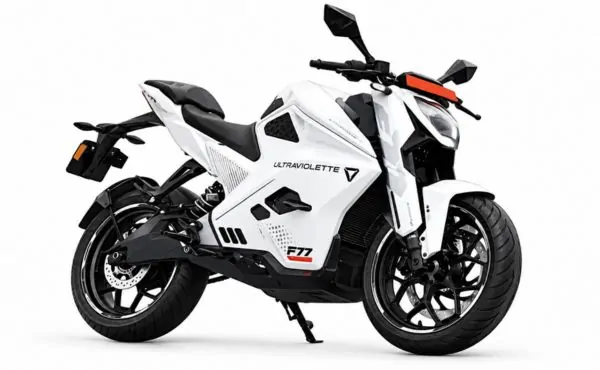
At the front, the Mach 2 uses Ultraviolette’s distinctive LED headlamp arrangement, surrounded by sharply creased body panels and a compact aerodynamic nose. The narrow front profile, low clip-ons, and sculpted front bodywork create a focused, almost aircraft-cockpit appearance. The lighting signature is a major part of the motorcycle’s identity, particularly at night.
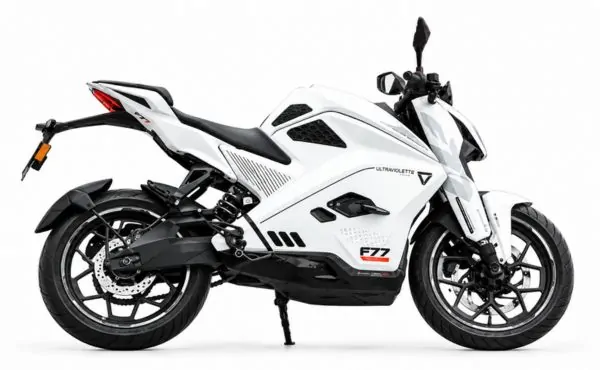
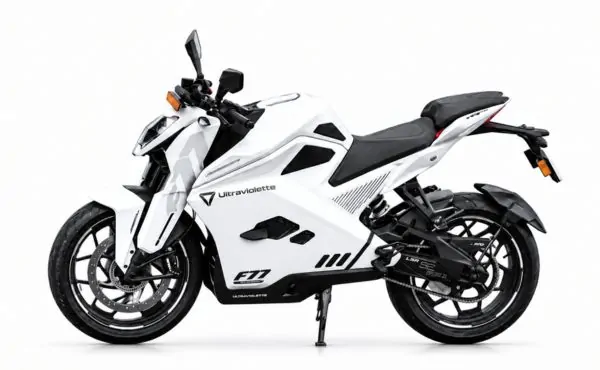
The side profile is dominated by the substantial central battery enclosure and sharply shaped fairing surfaces. Without a conventional petrol tank, Ultraviolette has used the central mass to create an EV-specific silhouette. The result is modern and technical rather than retro-inspired: the motorcycle looks like a performance EV designed around a battery rather than a petrol sport bike designed around an internal-combustion engine.
The rear section is short and purposeful, with a split-seat layout, pillion footrests, broad rear tyre, exposed-looking chassis elements, and a distinctive LED tail-light setup. The compact tail contrasts with the large central battery housing and gives the F77 Mach 2 a muscular, rear-biased visual stance. The 17-inch alloy wheels, wide 150-section rear tyre, large front brake disc, and low rider position reinforce its performance-bike proportions.
In India, the Mach 2 is therefore likely to appeal most to buyers who want an electric motorcycle that makes a strong visual statement. Its styling is more futuristic and technical than that of petrol rivals such as the KTM RC 390, Yamaha R3, Aprilia RS 457, or Kawasaki Ninja 300, while its low clip-ons maintain the familiar visual language of a sport motorcycle.
Colour Options And Variants
Ultraviolette has used aviation-inspired colour naming for the F77 Mach 2. The six colours listed for the F77 Mach 2 in India are:
- Laser Turbo Red
- Laser Afterburner Yellow
- Airstrike Stellar White
- Airstrike Supersonic Silver
- Shadow Stealth Grey
- Shadow Cosmic Black
are the currently available choices.
Laser Turbo Red is the most traditional sport-bike choice. The red bodywork complements the Mach 2’s low clip-ons, sharp nose, battery-side panels, and compact tail. It suits riders who want the motorcycle’s performance intent to be immediately obvious in traffic.
Laser Afterburner Yellow is the boldest choice. The high-visibility yellow finish gives the F77 Mach 2 a more extroverted, EV-specific personality. It also makes the motorcycle more visually noticeable in dense city traffic, although it is likely to appeal mainly to buyers comfortable with a highly conspicuous colour.
Airstrike Stellar White is the cleanest and most contrast-rich option. The light finish highlights the motorcycle’s angular surfaces, black trim, lighting units, exposed mechanical details, and central battery section. It is suitable for buyers who prefer a modern performance appearance without the loudness of yellow or red.
Airstrike Supersonic Silver gives the Mach 2 a technical, metallic appearance that matches Ultraviolette’s aviation-inspired design language. It is often the most premium-looking option in photographs because it emphasises the motorcycle’s sculpted surfaces without hiding the panel detail.
Shadow Stealth Grey is a more mature and subdued finish. It gives the sport bike a serious, understated visual presence and can be easier to live with than brighter colours in everyday use. It still shows the F77’s complex body contours clearly under sunlight.
Shadow Cosmic Black is the least attention-seeking finish. It makes the F77 Mach 2 appear compact and stealthy, while contrasting strongly with the LED lights, brake hardware, wheels, and exposed chassis elements. Like many dark motorcycle finishes, however, dust, water marks, and small surface scratches may be more noticeable depending on the panel finish.
The Ultraviolette F77 Mach 2 is sold in two principal variants in India: the Mach 2 Original and the Mach 2 Recon. Both share the same sport-bike styling, clip-on handlebars, 155 km/h claimed top speed, core frame architecture, 17-inch wheels, low-slung battery-centred design, and F77 Mach 2 visual identity.
| Variant | Battery capacity | Motor output | Claimed IDC range | Claimed top speed |
|---|---|---|---|---|
| F77 Mach 2 Original | 7.1 kWh | 27 kW | Up to 211 km | 155 km/h |
| F77 Mach 2 Recon | 10.3 kWh | 30 kW | Up to 323 km | 155 km/h |
The F77 Mach 2 Original is the entry variant. It has the smaller 7.1 kWh battery and 27 kW motor, but it retains the Mach 2’s sport-bike bodywork, clip-ons, electronics platform, 155 km/h top-speed claim, and core handling hardware. Visually, it does not sacrifice the F77 Mach 2’s distinctive appearance; the key differences lie in the battery, motor output, performance reserve, and available range.
The F77 Mach 2 Recon is the higher-specification variant and is the more complete version for buyers wanting the largest battery reserve. Its 10.3 kWh pack, 30 kW motor, and 323 km IDC range claim make it better aligned with frequent highway riding and higher daily usage. It also carries a more substantial visual and physical presence because of the larger battery system, although both variants retain the same fundamental Mach 2 design.
The Recon is also the variant more closely associated with additional electronic adjustability, including its larger range reserve and expanded regenerative-braking settings. However, buyers should confirm exact feature availability in the final variant specification and invoice, because equipment, charger inclusion, software updates, and accessories can vary by model year and dealer package.
Value For Money And Pricing
The Ultraviolette F77 Mach 2 is available in India in two core variants: the F77 Mach 2 Original and the higher-specification F77 Mach 2 Recon. The Mach 2 Original is priced at ₹ 3,09,000 ex-showroom, while the Mach 2 Recon is priced at ₹ 4,24,000 ex-showroom. This creates a price gap of around ₹1.15 lakh between the two main variants.
The F77 Mach 2 Original is the more accessible version of the sport-electric motorcycle. It uses the 7.1 kWh battery pack and is intended for riders who want the F77 Mach 2’s aggressive styling, low clip-on handlebars, high-performance EV character, and advanced electronic package without paying for the Recon’s larger battery. It is the more logical choice for city, suburban, and occasional highway users who can charge reliably at home or work and do not regularly travel very long distances.
The F77 Mach 2 Recon is the flagship version and costs roughly ₹4.24 lakh ex-showroom. Its price premium pays primarily for the larger 10.3 kWh battery, higher-output 30 kW motor, 100 Nm torque claim, stronger range reserve, and higher-specification performance-and-range package. The Recon is aimed at riders who frequently use highways, cover higher daily distances, carry luggage or a pillion, use stronger ride modes, or want more confidence between charging stops.
The final on-road price will be higher than the ex-showroom price because it includes insurance, registration-related charges, local taxes or fees where applicable, accessories, charger-related costs, and dealer-level charges. In Delhi, indicative on-road prices are about ₹3.27 lakh for the F77 Mach 2 Original and about ₹4.44 lakh for the F77 Mach 2 Recon.
Before choosing a Battery Flex plan, buyers should obtain the full written contract and confirm whether the battery is owned outright, financed separately, tied to a subscription, subject to monthly charges, or covered by specific exit, replacement, transfer, and warranty conditions.
The F77 Mach 2 makes sense as a value purchase only when evaluated as a performance electric motorcycle, not as a basic commuter. The Original costs far more than most city-oriented electric motorcycles and many established petrol motorcycles. Its value comes from its claimed 155 km/h top speed, sport-bike chassis, 27 kW motor, 7.1 kWh battery, advanced electronics, large TFT display, traction control, ABS, regenerative braking, connected features, and distinctive premium construction.
The Original offers the better value proposition for riders whose normal use is urban, suburban, or mixed commuting with occasional highway trips. It delivers the full F77 Mach 2 design and sport-bike riding experience without asking the buyer to pay for a 10.3 kWh battery that may remain underused. If home or workplace charging is dependable and daily travel remains comfortably below roughly 100–120 km, the Original provides sufficient practical range reserve while retaining strong electric performance.
The Recon is the stronger technical package, but not automatically the better-value one. Its ₹1.15 lakh premium is justified for riders who frequently travel long distances, use highways, ride in high-power modes, carry luggage or a pillion, face hilly routes, or want a large reserve after accounting for real-world range losses. Its 10.3 kWh battery allows more flexibility between charging stops and reduces range anxiety on longer journeys, but high speed and aggressive riding will still reduce its practical distance substantially below the 323 km IDC claim.
The Mach 2’s ownership case is strengthened by home and workplace charging. Electricity cost per kilometre is generally lower than petrol running cost, and routine EV maintenance avoids items such as engine oil, oil filters, clutch plates, spark plugs, and conventional gearbox servicing. However, a buyer should not assume that lower running costs quickly offset the high purchase price. The financial case is strongest for riders who cover substantial annual distance, keep the motorcycle for several years, have reliable charging access, and genuinely value its performance and technology.
The biggest value limitation is infrastructure dependence. The Mach 2 is more practical when the owner has a correctly rated 16 A home or workplace supply and can plan longer journeys around compatible fast-charging locations. The Recon’s larger battery reduces the frequency of charging stops, but it does not remove the need for route planning. For a 20–40 km daily city commute, a lower-priced EV can make more financial sense; the Mach 2 is best bought because the buyer wants its acceleration, sport-bike style, electronics, and premium EV experience.
The F77 Mach 2 operates in a small but growing Indian premium electric-motorcycle market. Its closest EV rivals differ considerably in philosophy: some target maximum advertised range at a lower price, some focus on urban roadster practicality, and one uses a conventional multi-speed gearbox to appeal to riders transitioning from petrol motorcycles.
Competitor models are
Choose the Ola Roadster Pro if low purchase price and headline battery/range specifications are more important than the F77’s premium sport-bike identity. Choose the Raptee T 30 if you want a relatively affordable electric performance motorcycle with lower entry cost. Choose the Matter Aera if budget, city practicality, and a conventional four-speed shifting experience matter more than outright automatic-EV performance.
Verdict
The Ultraviolette F77 Mach 2 is a compelling choice for Indian riders who want a genuinely high-performance electric sport motorcycle rather than an economical commuter. Its instant torque, 155 km/h claimed top speed, sharp clip-on riding position, confident handling, advanced electronics, premium battery protection, and connected technology give it a distinctive place in the Indian EV market. The Mach 2 Original is the sensible entry point for riders with reliable home or workplace charging and typical daily travel below about 100–120 km, while the Recon is better suited to frequent highway users and riders who want a stronger performance-and-range reserve.
However, the F77 Mach 2 demands realistic expectations. It is expensive, heavy at low speeds, less relaxed than the upright SuperStreet, and its 211 km and 323 km IDC figures will fall noticeably with high speeds, Ballistic mode, hills, traffic, luggage, or pillion use. The Recon’s ₹1.15 lakh premium is worth paying only when its larger 10.3 kWh battery will be regularly used. Prospective buyers should prioritise a proper test ride, confirm their access to a safe 16 A charging point and active fast chargers on intended routes, and check local service support, warranty terms, charger inclusion, and the final on-road quotation before booking.
Pros
- Very strong electric performance: The F77 Mach 2 offers rapid instant torque, a claimed 155 km/h top speed, and especially strong overtaking performance. The Recon’s 30 kW motor and 100 Nm torque claim make it one of India’s most performance-focused electric motorcycles.
- Large battery and useful range options: Buyers can choose the 7.1 kWh Original with a 211 km IDC range claim or the 10.3 kWh Recon with a 323 km IDC range claim. The Recon provides a substantially better practical range reserve for regular highway use and longer rides.
- Advanced safety electronics: Traction control, dual-channel ABS, Dynamic Stability Control, hill hold, Park Assist, and adjustable regenerative braking provide useful support on India’s wet, dusty, uneven, and unpredictable roads.
- Sharp, confidence-inspiring handling: The combination of clip-on handlebars, a 41 mm USD fork, rear monoshock, 17-inch wheels, wide tyres, and dual-disc brakes gives the Mach 2 a planted, sporty road feel. Users have found it stable and enjoyable through corners despite its weight.
- Premium build and technology: The aluminium IP67 battery enclosure, multi-layer battery protection, five-inch TFT console, navigation support, connected features, ride analytics, and OTA updates give the Mach 2 a more premium and technically sophisticated ownership experience than most Indian electric motorcycles.
- Flexible charging for home use: The Boost charger can use a suitable 16 A outlet, making home or workplace charging practical for owners with dependable parking and electrical infrastructure.
Cons
- Expensive to buy: The Mach 2 Original costs about ₹3.09 lakh ex-showroom, while the Recon is about ₹4.24 lakh. The Recon’s roughly ₹1.15 lakh premium is difficult to justify unless the larger battery and higher range reserve will be used regularly.
- Real-world range is lower than IDC claims: The 211 km and 323 km figures are IDC ratings. Fast highway riding, Ballistic mode, hard acceleration, hills, pillion load, luggage, wind, traffic, and poor roads can significantly reduce real-world range.
- Heavy at parking speeds: At around 197 kg for the Original and 207 kg for the Recon, the Mach 2 is cumbersome when reversing, parking on slopes, moving through narrow spaces, or lifting from the side stand.
- Sporty posture is not ideal for everyone: The low clip-on handlebars and rear-set footpegs create a forward-leaning riding position that can strain the wrists, shoulders, neck, and back during long rides or daily stop-start traffic. Riders prioritising comfort should consider the F77 SuperStreet instead.
- Long-distance use depends on charging access: The bike is most convenient with reliable home charging. Highway touring still requires careful planning around compatible fast chargers, and limited charging infrastructure can create range anxiety.
- Service support may vary by city: Some owners report concerns about the availability of nearby service centres and the cost of parts. Buyers should confirm the location of the nearest authorised workshop, roadside-assistance coverage, and spare-parts support before booking.
Frequently Asked Questions About Ultraviolette F77 Mach 2
1. What Are The Two Versions Of The F77 Mach 2, And How Do They Differ?
The Mach 2 comes in two versions: the Original with a 7.1 kWh battery producing 27 kW and 90 Nm of torque (211 km IDC range), and the Recon with a larger 10.3 kWh battery producing 30 kW and 100 Nm of torque (323 km IDC range). Both claim a top speed of 155 km/h, but the Recon adds 0–60 km/h in 2.8 seconds and 0–100 km/h in 7.7 seconds.
2. How Long Does The F77 Mach 2 Take To Charge?
With the standard charger, the 7.1 kWh Original takes about 3 hours for a 20–80% charge, while the 10.3 kWh Recon takes about 5 hours. Using the optional 3 kW Boost charger cuts this to about 1.5 hours for the Original and 2.5 hours for the Recon. The Recon also supports DC fast charging via the Supernova network, completing a 20–80% charge in about 45–60 minutes.
3. What Is The Real-world Range Of The F77 Mach 2 Compared To Its Idc Claims?
For the Original, a prudent mixed-use planning range is about 130–160 km rather than the full 211 km IDC claim. For the Recon, a reasonable planning range is about 200–230 km rather than the 323 km IDC claim. One owner reported Ballistic mode delivering a maximum of around 168 km on the Recon, with Ballistic becoming unavailable below 30% battery.
4. How Does The F77 Mach 2 Differ From The F77 Superstreet?
The Mach 2 uses low clip-on handlebars for a sportier, forward-leaning riding position, prioritizing sharp handling and high-speed stability over comfort. This places more load on the wrists, shoulders, neck, and back compared to the SuperStreet’s upright riding position, making the Mach 2 better suited to performance riders rather than relaxed daily comfort.
5. What Is The Price Of The F77 Mach 2 Original And Recon?
The F77 Mach 2 Original is priced at ₹3,09,000 ex-showroom, while the Recon is priced at ₹4,24,000 ex-showroom — a gap of about ₹1.15 lakh. Indicative on-road prices in Delhi are about ₹3.27 lakh for the Original and ₹4.44 lakh for the Recon.
Other Related Links From Bikeleague India
List Of All Ultraviolette Electric Bikes
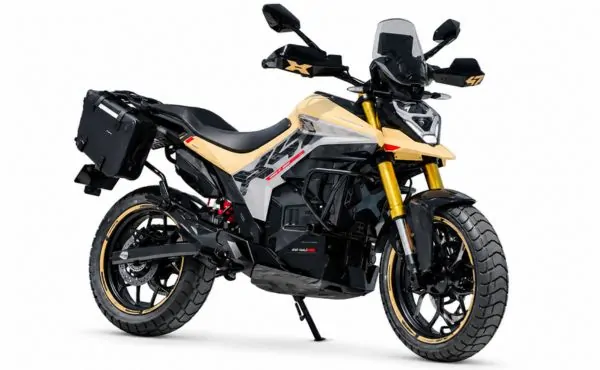
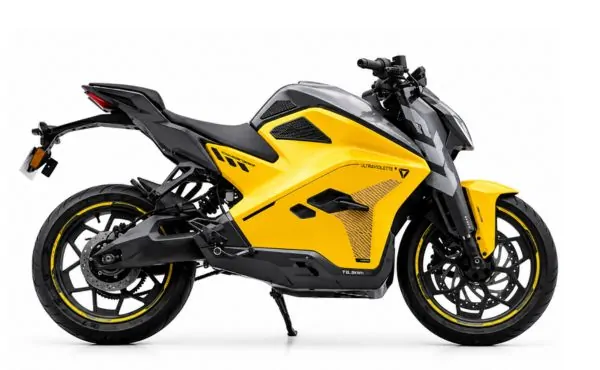
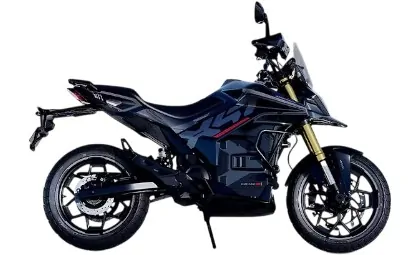
About Ultraviolette Electric Bikes
Ultraviolette Automotive is an electric mobility company based in Bengaluru, Karnataka. Founded in 2017 by Narayan Subramaniam and Niraj Rajmohan, the company set out to build advanced electric motorcycles for both Indian and global markets.
Ultraviolette first made a mark with the F77, a high-performance electric motorcycle meant to show that electric two-wheelers can be more than just city commuters. The F77 was built with special attention to acceleration, handling, battery technology, and smart features.
Ultraviolette builds its products on a core technology platform that includes high-voltage batteries, advanced motor controls, regenerative braking, different ride modes, connected diagnostics, and rider-focused electronics.
| Aspect | Ultraviolette’s position in India |
|---|---|
| Headquarters | Bengaluru, Karnataka |
| Founded | 2017 |
| Founders | Narayan Subramaniam and Niraj Rajmohan |
| Main category | Premium electric motorcycles and future electric scooters |
| Flagship product | Ultraviolette F77 |
| Key markets | India, with growing international expansion plans |
| Brand identity | Performance, technology, design, and electric mobility innovation |
| Key investors | TVS Motor Company and Qualcomm Ventures, among others. |
History And Growth
Ultraviolette started up when India’s EV industry was just beginning to grow. Rather than launching a basic scooter, the company decided to develop a high-performance electric motorcycle. This tougher path helped Ultraviolette stand out as a premium EV brand.
Ultraviolette introduced the F77 concept to the public in 2019. Its sporty look, performance claims, and high-voltage electric design drew a lot of interest. After several rounds of development and engineering updates, the company started delivering the F77 in India in late 2022.
Ultraviolette later released new versions of the F77, such as the F77 Mach 2, with better battery technology, improved electronics, regenerative braking, and updated software. The company also grew its Experience Centre network to make it easier for customers to access products, take test rides, and get support.
| Year or period | Major development |
|---|---|
| 2017 | Ultraviolette Automotive was founded in Bengaluru. |
| 2019 | The F77 electric motorcycle concept was unveiled. |
| 2022 | Commercial F77 production and deliveries began in India. |
| 2024 | F77 Mach 2 introduced with updated performance, technology, and riding features. |
| 2025 | Ultraviolette expanded overseas market activity and strengthened its retail footprint. |
| 2026 | The company expanded its planned product portfolio with the X47, Shockwave, and Tesseract. |
| 2027 onward | Production ramp-up for the Tesseract scooter and broader EV range is planned. |
Ultraviolette has grown carefully, not just by chasing high sales numbers. At first, the company focused on making sure its products were reliable, batteries were safe, charging systems worked well, and customers had a premium experience before aiming for bigger production.
Key Milestones And Developments
The F77 is Ultraviolette’s biggest milestone so far. It gave the company a premium electric motorcycle with a clear performance focus, putting the brand in competition with both petrol bikes and other electric options.
Recent announcements show that Ultraviolette is changing its strategy. The company plans to go beyond premium motorcycles and enter new segments like crossover bikes, street EVs, cruisers, and electric scooters. This wider range should help Ultraviolette reach more customers than the F77 alone.
| Milestone | Details |
|---|---|
| Company formation | Company formation Ultraviolette was founded in Bengaluru in 2017. |
| F77 concept | The original F77 concept was unveiled in 2019. |
| F77 launch | The F77 became Ultraviolette’s first production electric motorcycle in India. |
| F77 Mach 2 | Updated version added improved technology, regenerative-braking settings, and software features. |
| International expansion | The company began pursuing overseas sales and market access beyond India. |
| X47 crossover | Ultraviolette expanded its motorcycle strategy with the X47 crossover platform. |
| Shockwave motorcycle | A more accessible electric motorcycle is planned below ₹2 lakh. |
| Tesseract scooter | Ultraviolette announced an electric scooter expected to be priced below ₹1.5 lakh. |
| BIGGA Factory | A new Hosur plant was announced to scale production for Tesseract and future products. |
Ultraviolette has made it clear that it wants to offer a full range of products, not just one performance motorcycle. Its plans include sports bikes, crossovers, cruisers, street motorcycles, and scooters.
Manufacturing Facilities
Ultraviolette’s main factory is in Bengaluru, Karnataka. It handles current vehicle production and is being expanded to boost output. The plant can make about 30,000 units a year now, with plans to raise that to 50,000–60,000 units through more investment.
In September 2026, Ultraviolette announced plans for a much larger factory called the BIGGA Factory, which stands for Big Global Ambition. This new plant will be at SIPCOT Industrial Park in Shoolagiri, Hosur, Tamil Nadu. It will first produce the Tesseract electric scooter and later support more products.
The new Hosur factory will be built in stages, starting with the ability to make 250,000 electric two-wheelers a year. If demand grows, the plant can be expanded to produce up to 500,000 units annually.
| Facility | Location | Role and capacity |
|---|---|---|
| Existing Ultraviolette plant | Bengaluru, Karnataka | Produces current EV models; planned expansion to around 50,000–60,000 units annually. |
| Existing Bengaluru capacity | Karnataka | Approximately 30,000 units annually before planned expansion. |
| BIGGA Factory | SIPCOT Industrial Park, Shoolagiri, Hosur, Tamil Nadu | Planned production base for Tesseract and future models. |
| BIGGA initial capacity | Hosur, Tamil Nadu | 250,000 electric two-wheelers annually, to be ramped up in phases. |
| BIGGA scalable capacity | Hosur, Tamil Nadu | Up to 500,000 units annually, depending on demand. |
| Combined capacity target | Bengaluru and Hosur | About 300,000 units annually by mid-2027. |
The Hosur plant is expected to create about 2,000 jobs at first, with more jobs added as it grows. Ultraviolette plans to invest around ₹779 crore in this facility over five years, and total investment in both Bengaluru and Hosur could reach ₹1,000 crore.
Market Position And Achievements
Ultraviolette stands out in India’s EV market. Instead of focusing on mass-market scooters, it is a premium electric motorcycle brand aiming to offer a performance-focused alternative to petrol bikes.
Ultraviolette’s main strengths are the F77’s performance, its high-voltage battery, unique design, advanced software, and rider-focused technology. These features attract customers who care about performance and engineering, not just low running costs.
| Primary market | Premium electric motorcycles |
|---|---|
| Current flagship | F77 and F77 Mach 2 |
| Growth categories | Crossover, street, cruiser, entry-performance motorcycle, and scooters |
| Main strengths | Performance focus, advanced battery systems, design, and connected features |
| Retail network | More than 40 Experience Centres reported in 2026. |
| Retail-expansion target | Presence in 100 cities by the end of 2026. |
| Production strength | Existing Bengaluru facility plus planned high-volume Hosur plant |
| Long-term strategy | Build India and exports through a wider electric-two-wheeler portfolio |
Ultraviolette’s biggest achievement is building an Indian performance electric motorcycle brand from scratch. The F77 has made the company known as a specialist EV maker with its own identity, not just another two-wheeler company adding electric models.
The upcoming Tesseract scooter is a key step for Ultraviolette, as it could move the company from a niche brand to a bigger player in the EV market.
Reports say there are over 70,000 paid bookings for the Tesseract, but its real impact will depend on deliveries, conversion rates, production schedules, and customer experience.
Future Plans
Ultraviolette’s future plans focus on quickly expanding its product range, increasing factory capacity, growing retail in India, developing exports, and using more local EV technology.
The company plans to grow beyond the F77 and enter several new categories. Its future lineup includes the Tesseract scooter, Shockwave motorcycle, X47 crossover, and more sport, cruiser, street, and scooter models.
Right now, Ultraviolette’s top manufacturing goal is the BIGGA Factory in Hosur. The company expects the plant to start operating in phases, possibly six to eight months after the September 2026 announcement, with full production aimed for July to September of FY2028. These plans depend on construction, approvals, supply chain, and market demand.
| Tesseract electric scooter | Expected to be the first high-volume product from the Hosur plant. |
|---|---|
| Shockwave electric motorcycle | Planned as a more accessible model priced below ₹2 lakh. |
| Wider motorcycle portfolio | Sports, crossover, cruiser, and street EVs are part of the roadmap. |
| Manufacturing expansion | Scale from Bengaluru production to a combined 300,000-unit annual capacity target by mid-2027. |
| Long-term capacity | BIGGA Factory infrastructure designed to reach 500,000 units annually. |
| Retail growth | Expand from 40+ Experience Centres toward 100 cities by end-2026. |
| Investment | Approximately ₹1,000 crore planned across Karnataka and Tamil Nadu over five years. |
| Export strategy | Use increased manufacturing scale to serve international markets in addition to India. |
Other Related Links From Bikeleague India
User Reviews
There are no reviews yet. Be the first one to write one.

Hiran Narayanan
Founder & CTO at Bikeleague India
Hiran Narayanan is the Founder and CTO of Bikeleague India, bringing over 15 years of experience in motorcycle technical writing. He develops detailed analyses, tools, model overviews, and blogs that contribute to bikeleague.in's improving rankings.