
Ultraviolette F77 Superstreet
Last Updated: September 15, 2026
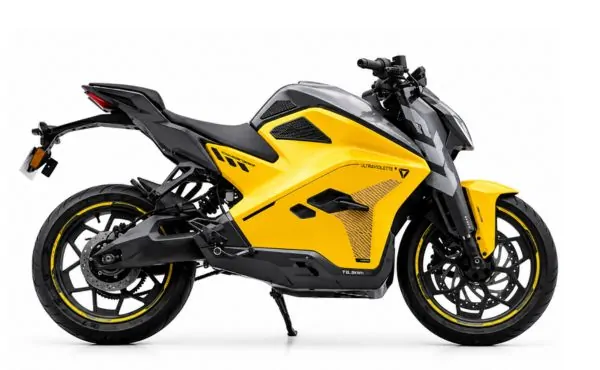
Introduction
The F77 Superstreet is built for riders who want strong electric performance along with a more comfortable riding position than the F77 Mach 2. It comes in two versions: the standard model with a 7.1 kWh battery and the Recon with a larger 10.3 kWh battery. This bike is meant for high-performance road riding but is also better suited for daily commuting, city trips, and longer highway rides. The standard SuperStreet delivers 27 kW of power, while the Recon steps up to 30 kW and a bigger battery. Both versions can reach a top speed of 155 km/h, but the Recon offers more power, torque, and battery life for those who spend more time on highways or travel longer distances each day.
Gallery
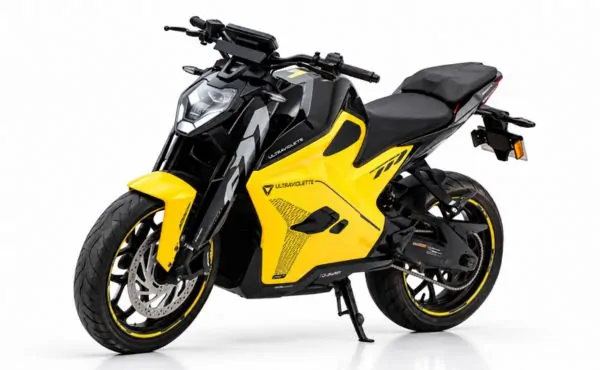
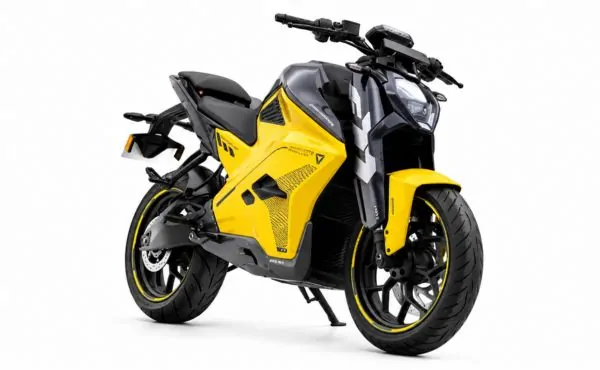
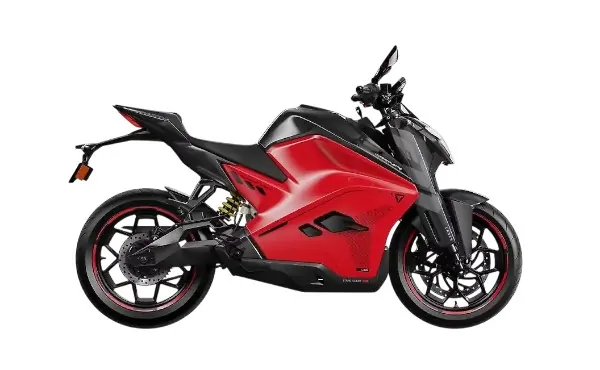
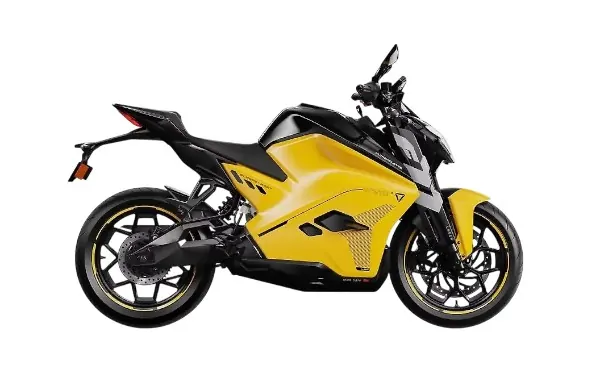
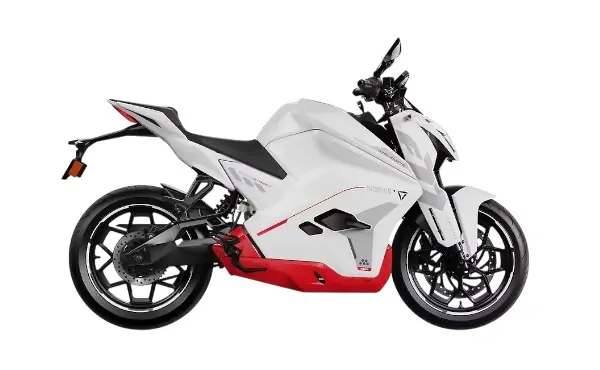
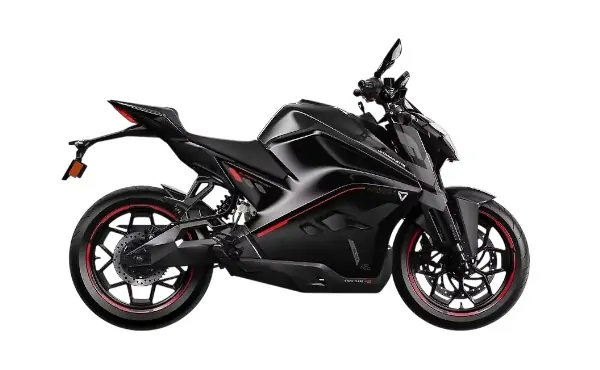
Key Specifications

Motor
PMAC Motor

Range
110-180km/c

Power
36.7 PS

Torque
90 NM

Top Speed
155 km/h

Charging Time
6 Hours

Rear Suspension
Monoshock

Kerb Weight
197 Kg
Ratings
- 80%
Performance
- 95%
Features
- 80%
Handling
- 90%
Comfort
- 100%
Build Quality
- 95%
Styling
- 85%
Value for Money
- 89%
Total
Ratings calculation is purely based upon pros and cons of the model given below in the overview section.
Price
Special Features
1
Street-focused Handlebar
2
Cell-level Fuse Technology
3
Battery Warranty
4
3 Kw Boost Charger
5
Portable Charging
6
Three Ride Modes
7
Four-level Traction Control
8
Switchable Dual-channel Abs
9
Dynamic Stability Control
10
Hill-hold Assist
11
Park Assist
12
Gps Navigation
Full Specifications
| Motor Type | PMAC Motor |
| Peak Power | 36.7 PS |
| Peak Torque | 90 NM |
| Top Speed | 155km/h |
| Transmission | Automatic |
| City | 150-180km/full charge |
| Highway | 110-150km/full charge |
| Speedometer | Digital |
| Tachometer | Yes |
| Tripmeter | Yes |
| Low Battery Indicator | Yes |
| Start Type | Electric |
| Kill Switch | Yes |
| Clock | Yes |
| Pass Light | Yes |
| ABS | Dual Channel |
| Stand Alarm | Yes |
| Tyres (F) | 110/70 R17 |
| Tyres (R) | 150/60 R17 |
| Brakes (F) | 320mm Disc |
| Brakes (R) | 230mm Disc |
| Frame Type | Steel Trellis with Aluminium Bulk head |
| Front Suspension | Upside-down Telescopic fork with a diameter of 41mm |
| Rear Suspension | Monoshock-preload adjustable |
| Wheelbase | 1340mm |
| Ground Clearance | 160mm |
| Kerb Weight | 197kg |
| Seat Height | 800mm |
| Battery | 7.1 kWh Lithium-ion |
| Head Lamp | LED |
| Tail Lamp | LED |
Overview
Performance And Motor
The F77 SuperStreet uses a frame-mounted permanent-magnet AC electric motor. The standard version produces a claimed 27 kW and 90 Nm of motor torque. The Recon version increases output to 30 kW, or approximately 40.2 hp, and 100 Nm of motor torque.
The Recon claims it can go from 0 to 60 km/h in 2.8 seconds and from 0 to 100 km/h in 7.7 seconds. Thanks to its instant electric torque and upright riding position, the SuperStreet should feel quick when pulling away from traffic lights, overtaking on highways, or moving through gaps in traffic.
The F77 SuperStreet offers three main ride modes: Glide, Combat, and Ballistic. Glide focuses on efficiency and smooth power, Combat balances performance with range, and Ballistic gives you the most aggressive acceleration. Using Ballistic mode, riding with a passenger, going up hills, or keeping high speeds on the highway will drain the battery faster than riding gently in Glide mode.
The SuperStreet’s motor is set up for performance, not just basic commuting. It should feel much more powerful than typical electric bikes, especially between 30 and 100 km/h, which is handy for Indian traffic and overtaking. However, because it responds quickly, you’ll need to use the throttle smoothly, especially on wet or dusty roads.
The F77 SuperStreet uses a fully automatic electric transmission. It has no clutch lever, foot-operated gear shifter, multi-speed manual gearbox, or conventional gear changes. Power is delivered directly from the electric motor to the rear wheel through the motorcycle’s final-drive system.
This automatic setup makes the SuperStreet easier to handle in heavy traffic compared to a high-performance petrol bike. You don’t have to worry about using the clutch or shifting to lower gears for gaps, hills, or overtaking. The quick motor response is especially helpful in city traffic, on flyovers, and when merging into faster lanes.
The bike also has Park Assist and a reverse function, which help when moving its heavy battery-equipped frame in tight spots or on slopes. While the automatic system is convenient, you still need to handle the strong power carefully, especially when starting off on wet roads or in Ballistic mode.
The F77 SuperStreet has a claimed top speed of 155 km/h in both standard and Recon versions. It is therefore among the faster electric motorcycles on sale in India and has sufficient performance for city expressways, ring roads, bypasses, highway overtaking, and sustained intercity riding within legal limits. 1193
The top speed isn’t meant for regular cruising. Riding close to 155 km/h uses up the battery much faster because of wind resistance, so you’ll need to stop and charge more often. High speeds also put more stress on the tyres, brakes, rider skills, and require good road conditions and visibility.
For longer trips, keeping a steady, moderate speed usually gives you the best mix of travel time and battery range. The SuperStreet’s upright position is more comfortable than the Mach 2 for city and suburban rides, but at high speeds, you’ll feel more wind, which can make you tired on long highway stretches.
Charging Time
Charging speed varies by charger package. The official F77 SuperStreet page lists a 3.0 kW Boost charger that can charge the battery from 20% to 80% in approximately 2.5 hours through a standard 16 A socket. The company also describes the charger as portable and usable with regular 16 A household outlets.
Ultraviolette’s latest guide gives more details for the bigger battery: the standard charger takes about 2.5 hours to go from 20% to 80%, the Boost charger takes about 1.5 hours, and the Supernova DC fast charger can do it in around 45 minutes. Charging times can vary, so it’s best to check the exact time for your chosen battery and charger.
| Charging method | Reported 20–80% charging time | Practical use |
|---|---|---|
| Standard AC charger | About 2.5 hours; some portal listings quote longer | Overnight, workplace, or planned home charging |
| Boost charger | About 1.5 hours | Faster home or workplace top-up through suitable 16 A supply |
| Supernova DC fast charger | About 45 minutes | Long-distance travel where compatible public charging is available |
Charging speed varies with battery capacity, charger specification, state of charge, battery temperature, grid quality, and software controls. Confirm whether the Boost charger and Supernova access are included or optional.
Ultraviolette says the Boost charger can add up to 75 km of range in an hour. This is handy if you need a quick charge during the day, but always use a proper 16 A electrical outlet with good grounding, not a regular household extension cord.
Range
The F77 SuperStreet has two official IDC range claims, depending on battery size. The standard 7.1 kWh battery is rated at 211 km IDC, while the Recon’s 10.3 kWh battery is rated at 323 km IDC. The 211 km figure is sometimes referred to as an ARAI-claimed range for the standard version, while Ultraviolette’s own materials consistently identify the range benchmark as IDC.
| F77 SuperStreet version | Battery capacity | Motor output | Official IDC range |
|---|---|---|---|
| Standard / Original | 7.1 kWh | 27 kW | Up to 211 km |
| Recon | 10.3 kWh | 30 kW | Up to 323 km |
The 10.3 kWh SuperStreet Recon has mode-based company estimates of around 266 km in Glide, 209 km in Combat, and 186 km in Ballistic. These figures are more useful than the headline 323 km IDC number when evaluating real riding patterns because they show the direct range impact of selecting greater performance.
Treat IDC range claims as comparison points, not guaranteed real-world results. Things like high speed, quick acceleration, Ballistic mode, extra weight, wind, hills, rough roads, low tyre pressure, heavy traffic, hot weather, and battery age can all reduce how far you actually go on a charge.
There isn’t much long-term range data yet for the SuperStreet, but reports suggest you should expect less than the official IDC numbers. For the 10.3 kWh Recon, a realistic range is about 200–250 km in mixed city and highway riding. Some tests have shown around 221 km, so it’s smart to plan conservatively.
For the 7.1 kWh SuperStreet, the company estimates about 183 km in Glide mode, 144 km in Combat, and 128 km in Ballistic. In everyday Indian conditions, it’s wise to plan for 130–160 km per charge instead of relying on the full 211 km IDC claim, at least until you know your own usage pattern.
| Riding pattern | SuperStreet 7.1 kWh: prudent planning range | SuperStreet Recon 10.3 kWh: prudent planning range |
|---|---|---|
| Smooth city use, Glide mode, moderate speeds | About 160–180 km | About 240–265 km |
| Mixed city and highway riding | About 130–160 km | About 200–240 km |
| Fast riding, Ballistic mode, hills, pillion, or luggage | About 110–130 km | About 170–200 km |
These are conservative real-world planning estimates based on Ultraviolette’s mode-wise ranges and earlier related-F77 road testing. They are not guaranteed mileage figures.
For daily commutes, the standard 7.1 kWh SuperStreet works well if you travel less than 100–120 km a day and have reliable charging. The 10.3 kWh Recon is better if you often ride on highways, carry a passenger or luggage, use higher-power modes, or want extra range for peace of mind.
Features And Technology
The Ultraviolette F77 SuperStreet is the street-oriented version of Ultraviolette’s F77 performance electric motorcycle. It differs from the F77 Mach 2 mainly through its more upright single-piece handlebar and relaxed ergonomics, while retaining the same high-performance battery, motor, safety, and connected-technology platform.
- Street-focused handlebar: The SuperStreet uses a single-piece tubular handlebar instead of the Mach 2’s clip-on handlebars. This gives the rider a more upright posture, reduces pressure on the wrists, and makes the motorcycle more comfortable for commuting, traffic riding, and longer city journeys.
- 7.1 kWh and 10.3 kWh battery options: The standard SuperStreet uses a 7.1 kWh battery, while the SuperStreet Recon gets the larger 10.3 kWh unit. The two options let buyers select a lower-cost entry point or a higher-range performance configuration.
- All-aluminium IP67 battery enclosure: The battery is housed in an aluminium, IP67-rated enclosure designed to protect it from dust and water ingress. This supports ordinary Indian rain and dusty-road use, though it does not make the motorcycle suitable for deep or flowing floodwater.
- Cell-level fuse technology: Ultraviolette says its battery has cell-level fuse technology, intended to add electrical protection at the individual-cell level. It forms part of the company’s broader battery-safety strategy.
- Five-layer battery protection: The F77 battery system is described as having thermal, electrical, mechanical, electronic, and software protection layers. These are intended to manage heat, impact, electrical faults, and battery-management events during normal riding and charging.
- Battery warranty: Ultraviolette says the battery is covered for up to 1,00,000 km. Make sure to check the exact warranty period, what’s covered, any exclusions, charging rules, and whether the warranty can be transferred for your chosen SuperStreet model.
- 3 kW Boost charger: The F77 SuperStreet has access to a portable 3 kW Boost charger that can use a standard 16 A socket. Ultraviolette claims a 20–80% charge in about 2.5 hours with this charger.
- Portable charging: The Boost charger is easy to carry and can be used at any 16 A outlet, whether at home, work, hotels, or other places. You can also get wall-mounting hardware to keep the charger in a regular charging spot.
- Three ride modes: The SuperStreet offers Glide, Combat, and Ballistic ride modes. Glide prioritises smooth response and range, Combat balances everyday riding with stronger performance, and Ballistic unlocks the most aggressive throttle response.
- Dynamic regenerative braking: Regenerative braking helps recover energy while slowing down. The SuperStreet has adjustable regen, with the 10-level system associated with the Recon version; on other versions, availability may depend on the chosen configuration.
- Four-level traction control: Ultraviolette lists four selectable traction-control levels. These settings help manage rear-wheel spin when accelerating, particularly on wet tarmac, dusty roads, painted markings, loose gravel, and uneven surfaces.
- Switchable dual-channel ABS: The SuperStreet has dual-channel ABS, with switchable settings that allow the rider to adapt braking assistance according to road or low-grip conditions. It is a useful safety feature for a 155 km/h-capable electric motorcycle.
- Dynamic Stability Control: DSC works with regenerative braking and ABS to support stability while slowing down. It can dynamically adjust braking force to reduce wheel lock tendency during deceleration, although it cannot overcome excessive speed or poor tyre grip.
- Hill-hold assist: Hill-hold assist prevents rollback after stopping on an incline. It is useful on flyovers, parking ramps, apartment entrances, hill roads, and sloping traffic signals.
- Park Assist: Park Assist supports low-speed movement and helps make the SuperStreet easier to manoeuvre in confined parking spaces. This is useful given the motorcycle’s large battery and performance-bike proportions.
- Reverse function: A reverse feature is listed among the specifications. It can reduce the effort needed to back the motorcycle out of a parking bay or move it on a slope. Confirm standard availability in the selected variant’s final specification sheet.
- Five-inch TFT touchscreen: The SuperStreet uses a five-inch TFT instrument display. It shows key riding data and serves as the main interface for vehicle settings, riding modes, connected services, and navigation-related functions.
- Bluetooth, Wi-Fi, LTE, and integrated eSIM: The motorcycle supports Bluetooth and Wi-Fi connectivity and is also listed as offering LTE connectivity through an integrated eSIM. These systems support connected functions, vehicle data, and compatible remote services.
- GPS navigation: The TFT system supports navigation and GPS-based functions, allowing route information to be shown on the instrument display. This reduces reliance on a handlebar-mounted smartphone for navigation.
- Call and SMS alerts: The connected console can display call and SMS notifications from a paired smartphone. Riders should avoid interacting with such alerts while in motion.
- Ride analytics: The F77 platform offers riding data and analytics, allowing owners to review selected trip, efficiency, and riding information through the motorcycle interface and connected system.
- Find My Vehicle: The SuperStreet includes a connected Find My Vehicle feature to help owners locate the motorcycle in large parking areas or after unexpected movement.
- Deep Sleep mode: Deep Sleep is listed as a power-management feature. It is designed to reduce battery drain during extended periods when the motorcycle is parked or not used.
- Over-the-air updates: The F77 supports OTA software updates, enabling Ultraviolette to deliver compatible feature improvements, system refinements, and software fixes without requiring every update to be installed at a service centre.
- Ride-by-wire throttle: The motorcycle uses electronic ride-by-wire throttle control. This enables the three ride modes, traction-control settings, precise throttle mapping, and coordinated stability functions.
- Tyre-pressure monitoring system: The SuperStreet Recon is reported to include TPMS. It can warn the rider about tyre-pressure issues, which can affect handling, braking, efficiency, tyre life, and safety at higher speeds. Verify whether it is standard on the selected SuperStreet variant.
- Dual-disc braking system: The F77 SuperStreet uses a 320 mm front disc and a 230 mm rear disc, paired with dual-channel ABS. The braking performance is described as sharp and progressive.
- Adjustable suspension: The SuperStreet has a 41 mm USD front fork and rear monoshock, with preload adjustment available at both ends. This allows some tuning for rider weight, pillion use, luggage, and road conditions.
- 17-inch alloy wheels and wide tyres: The motorcycle rides on 17-inch alloy wheels with a 110/70-R17 front tyre and 150/60-R17 rear tyre. This supports stability, cornering confidence, and high-speed road use.
- Full-LED lighting: The F77 SuperStreet includes LED lighting, including its distinctive headlamp and tail-lamp arrangement. LED lighting improves energy efficiency and provides a modern visual signature.
- Racing and touring accessory packs: Ultraviolette offers accessories such as Aero Disc wheel covers, tank grips, lever guards, and soft panniers. The Intercity Explorer and Urban Warrior packs are intended to tailor the motorcycle for longer journeys or city use. Accessories remain subject to availability and may require separate purchase.
- Split-seat arrangement: A split-seat setup with a passenger footrest is featured. This supports occasional pillion use while retaining the motorcycle’s sporty road-bike appearance.
Build Quality
The Ultraviolette F77 SuperStreet is built on the same performance-electric-motorcycle foundation as the F77 Mach 2, with the main physical change being its more upright street-oriented cockpit. It retains a premium-looking aluminium battery enclosure, frame-mounted motor layout, 41 mm USD fork, rear monoshock, 17-inch alloy wheels, and full-LED lighting, while the SuperStreet-specific tubular handlebar is positioned 80 mm higher and 30 mm wider than the Mach 2’s clip-ons.
Ultraviolette’s battery construction is a major part of the SuperStreet’s perceived quality. The 10.3 kWh Recon battery uses an all-aluminium IP67-rated enclosure, and the company claims cell-level fuse technology plus five protection layers covering thermal, electrical, mechanical, electronic, and software safeguards. This is designed to protect the battery against dust, water exposure, vibration, impact, and electrical faults in typical Indian operating conditions. It does not mean the motorcycle should be used in deep or flowing floodwater.
Independent reporting on the related F77 platform has generally been positive about fit and finish. The F77 is described as among the best-built electric motorcycles on sale, with most body panels looking good, fitting well, and using sturdy plastic components without obvious panel gaps. The SuperStreet shares the underlying platform, though a buyer should still inspect the delivered motorcycle rather than assume every unit will be identical.
It’s important to carefully inspect your SuperStreet at delivery since it’s a high-tech, premium EV. Look over the panel alignment, paint, lights, switches, handlebar clamp, display, charging port, battery enclosure, brake hoses, wheels, tyre dates, seat latch, and suspension adjusters. Also, check for rattles on rough roads and make sure the charger, accessories, connected features, warranty papers, and software version match your invoice.
Handling
The SuperStreet’s central handling benefit is its revised ergonomics. Its handlebar is 80 mm taller, 30 mm wider, and positioned closer to the rider than the Mach 2’s clip-ons. This creates more leverage at low speed, makes steering inputs easier, improves visibility of the TFT console, and reduces the sense of physical effort during city riding and parking manoeuvres.
Despite its reported 207 kg kerb weight, the SuperStreet is easier to manage at low speed than the Mach 2 because the revised riding position changes the rider’s leverage and perception of mass. Users have noted that the motorcycle feels easier to handle in slow city use even though its actual weight remains unchanged.
The SuperStreet remains a sharp-handling road motorcycle rather than a soft commuter. Handling remains engaging and essentially as sharp as the Mach 2 through corners. Users have noted that it feels nimble when making quick direction changes in traffic and on a go-kart track, and that the wide handlebar makes it easy to ride through traffic and broken roads without compromising cornering clearance.
The 17-inch wheels, 110/70-R17 front tyre, 150/60-R17 rear tyre, 320 mm front disc, 230 mm rear disc, dual-channel ABS, and four-level traction control give it the hardware needed for a 155 km/h-capable electric motorcycle. Indian users describe braking as sharp and progressive, while the traction-control system can provide a useful margin on dusty or wet surfaces. Still, its weight is apparent when pushing it backward, lifting it off the stand, or manoeuvring in tight parking spaces.
The F77 SuperStreet is ideal for riders who want sporty handling but easier city riding than bikes with clip-on handlebars. Before buying, try out low-speed U-turns, full steering lock, parking, stop-and-go traffic, speed bumps, rough roads, and braking. Also, test all three ride modes—Glide, Combat, and Ballistic—since throttle response changes a lot between them.
Comfort
The SuperStreet is appreciably more comfortable than the F77 Mach 2, but it remains a performance-oriented electric motorcycle rather than a relaxed long-distance tourer. The taller, wider, closer handlebar produces a more upright posture, placing less load on the wrists, shoulders, neck, and lower back. This allows the rider to travel longer without the back discomfort associated with the Mach 2’s more aggressive stance.
The SuperStreet is considered more comfortable, with improved TFT visibility and lower-effort urban riding. The relaxed stance can make daily commuting, traffic filtering, city errands, and one- to two-hour road rides more manageable than on the Mach 2. However, the ergonomics do not transform the motorcycle into an adventure tourer; its sporty footpeg placement, performance chassis, and wind exposure remain.
The suspension hardware is unchanged from the Mach 2: a 41 mm USD fork and preload-adjustable rear monoshock. On occasional rough sections, the SuperStreet is somewhat more forgiving, likely because the rider’s body weight is no longer concentrated as heavily on the wrists and front end. It also passes over broken roads slightly better than the Mach 2, despite using the same suspension components.
The 207 kg weight helps the bike feel stable at speed, which is reassuring on highways. However, the heavy frame can be awkward to move by hand. Owners say the upright position is comfortable for daily rides and longer trips, but you’ll still notice the weight when parking.
Pillion comfort is limited by the bike’s sporty design. There’s a split seat and passenger footrests, so you can carry someone occasionally, but if you often ride with a passenger, check the rear seat padding, footpeg position, and how the bike accelerates with two people. A good test ride should last 30–45 minutes and include rough roads, speed bumps, slow traffic, a faster stretch, and a pillion check if you plan to ride two-up regularly.
Styling
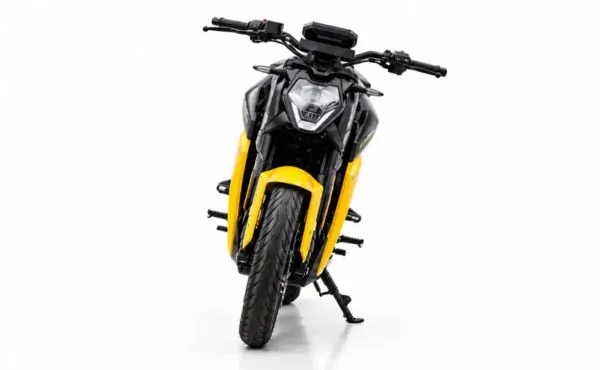
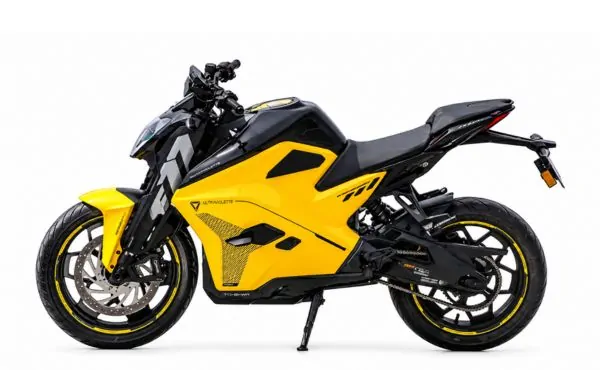
The F77 SuperStreet keeps the futuristic, aircraft-inspired look of the F77 family but swaps the Mach 2’s low clip-on handlebars for a taller, wider, single-piece handlebar. This gives it a more upright roadster stance, while still showing off the sharp front, angular battery area, sculpted sides, short tail, and sporty shape.
The revised handlebar sits approximately 80 mm higher and 30 mm wider than the Mach 2 arrangement. This makes the SuperStreet look less like a committed electric sport bike and more like a performance street motorcycle built for daily city riding, wider road use, and longer saddle time. The raised handlebar also gives the cockpit a more open, accessible appearance.
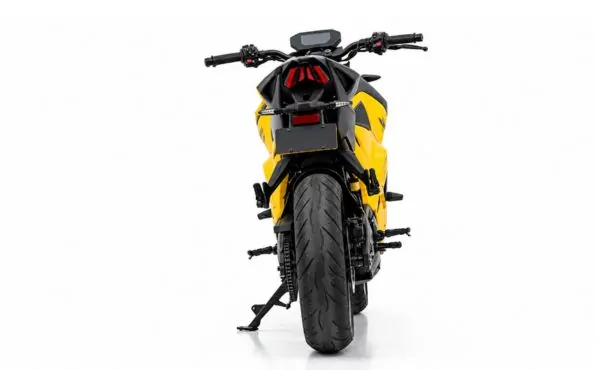
The motorcycle’s defining visual elements include its triangular LED headlamp, sharply shaped front panels, substantial central battery section, exposed-looking frame structure, and twin-pronged LED tail-light design. The lack of a conventional petrol tank allows Ultraviolette to create a tightly sculpted central body section that looks distinctly EV-specific rather than mimicking a petrol motorcycle.
The F77 SuperStreet comes with 17-inch alloy wheels, a 110/70-R17 front tyre, and a 150/60-R17 rear tyre. With its large brakes and raised handlebar, the bike looks wide and stable. It appears more relaxed than the Mach 2 but still keeps a sporty look, not just a basic commuter style.
Ultraviolette also offers accessory packs for owners who want to change the appearance or practical role of the SuperStreet. The Urban Warrior and Intercity Explorer packs can include accessories such as Aero Disc wheel covers, tank grips, lever guards, and soft panniers. These are optional and subject to availability, so they should not be assumed to be included with the motorcycle.
Colour Options And Variants
The F77 SuperStreet is available in four regular India-spec colour schemes:
- Laser Turbo Red
- Laser Afterburner Yellow
- Airstrike Stellar White
- Shadow Cosmic Black
These colour names follow Ultraviolette’s aviation theme and are available for both the SuperStreet Original and Recon, depending on what the dealership has in stock.
Laser Turbo Red is the sportiest-looking option. The red paint shows off the bike’s sharp lines, battery panels, and bold LED front. It’s a good pick if you want your SuperStreet’s sporty style to stand out in traffic.
Laser Afterburner Yellow is the brightest and most eye-catching choice. The high-visibility yellow fits the SuperStreet’s electric performance image and makes it easy to spot in city traffic. It’s the best pick if you want a bold, unmistakable look on the road.
Airstrike Stellar White is the cleanest and most striking colour. The white paint highlights the bike’s body and angular battery area, giving it a modern, technical look. It’s a good choice if you want a light-coloured performance bike without the boldness of red or yellow.
Shadow Cosmic Black is the more subtle option. The black paint gives the SuperStreet a discreet, technical look and lets the LED lights, metal frame, and sharp shape stand out. It’s likely to appeal to those who want a mature, low-key style, but keep in mind that dust and scratches may show up more on the glossy black finish.
The F77 SuperStreet has two main variants:
- F77 SuperStreet Original
- F77 SuperStreet Recon
Both share the same street-oriented ergonomics, 155 km/h claimed top speed, 17-inch wheels, dual-disc brakes, dual-channel ABS, traction control, five-inch TFT console, and the F77 SuperStreet body design. The central differences are battery size, motor output, range, torque, acceleration, and price.
| Variant | Battery capacity | Motor output | Claimed IDC range | Claimed top speed |
|---|---|---|---|---|
| F77 SuperStreet Original | 7.1 kWh | 27 kW | Up to 211 km | 155 km/h |
| F77 SuperStreet Recon | 10.3 kWh | 30 kW | Up to 323 km | 155 km/h |
The F77 SuperStreet Original is the lower-priced model. It uses a 7.1 kWh battery and a 27 kW motor, with a 211 km IDC range claim. It is aimed at riders who want the SuperStreet’s performance-oriented character, upright ergonomics, and 155 km/h capability but do not need the Recon’s larger battery reserve. For primarily city riding with occasional highway use and reliable charging at home or work, it is the more financially accessible SuperStreet.
The F77 SuperStreet Recon is the high-range, higher-output model. Its 10.3 kWh battery, 30 kW motor, 100 Nm motor torque, and 323 km IDC claim make it more suitable for riders who frequently travel on highways, ride long distances, carry luggage, or need a more substantial real-world range reserve. The Recon is the better technical package, but its significant price premium should be justified by actual distance requirements rather than headline range alone.
Both variants can be paired with optional accessories from Ultraviolette’s touring and urban packs. The F77 SuperStreet does not receive the X47 Desert Wing’s factory-fitted panniers, handguards, or standard dashcam package; it remains a street-focused electric motorcycle. Buyers should therefore confirm which accessories, charger package, extended warranty, connectivity services, and colour are included in the final invoice.
Value For Money And Pricing
The Ultraviolette F77 SuperStreet is positioned as a premium performance electric motorcycle in India. It is available in two main versions: the F77 SuperStreet Original, with a 7.1 kWh battery, and the F77 SuperStreet Recon, with a 10.3 kWh battery. Ex-showroom prices are ₹ 3,09,000 for the Original and ₹ 4,24,000 for the Recon.
The final on-road price is higher after insurance, registration-related costs, colour-related premiums, accessories, charging equipment, and dealer charges. On-road prices vary widely across India, ranging from about ₹3.34 lakh for the SuperStreet Original in Turbo Red to about ₹4.68 lakh for the Recon in Afterburner Yellow. Prices will differ by region, so the final decision should be based on a dated local quotation rather than an all-India portal figure.
The four colours can also affect the final quote. In the cited Halol listing, Turbo Red was the lowest-priced option, Stellar White and Cosmic Black carried a moderate premium, and Afterburner Yellow was the highest-priced colour. Before booking, request a quotation that clearly lists the motorcycle version, battery size, colour, charger, optional accessories, battery warranty terms, connected-service cost, and delivery commitment.
The F77 SuperStreet stands out by offering strong electric performance with a more comfortable riding position than the F77 Mach 2. It keeps the same 155 km/h top speed, 27 kW or 30 kW motor, three ride modes, traction control, dual-channel ABS, regenerative braking, five-inch TFT screen, navigation, connected features, and easy charging. The taller, wider handlebar gives a more upright posture, making it a practical choice for commuting, city traffic, and occasional longer rides.
The Original makes the better-value case for riders who mainly use the motorcycle in the city and occasionally ride on highways. It provides a 7.1 kWh battery, a 211 km IDC range claim, a 27 kW motor, and the same 155 km/h headline top speed as the Recon. For a rider with reliable charging and a typical daily requirement below around 100–120 km, the Original has more than enough performance and usable range reserve without paying for the Recon’s larger battery.
The Recon makes sense for buyers who will genuinely need a larger range buffer. Its 10.3 kWh battery, 30 kW motor, 100 Nm torque, and 323 km IDC range claim make it more suitable for frequent highway riding, high daily mileage, weekend touring, and carrying a pillion or luggage. Its 0–100 km/h claim of 7.7 seconds and 266 km Glide-mode estimate also show that it is the more complete performance-and-range package. Its ₹1 lakh premium over the Original must be justified by real usage rather than headline numbers.
The 3 kW portable Boost charger adds meaningful practical value. Ultraviolette claims that it can charge the battery from 20% to 80% in about 2.5 hours from a suitable 16 A socket, while the Supernova DC fast-charging network can reduce this to about 45 minutes where available. The company also advertises up to 75 km of range added in one hour with the Boost charger. For high-mileage riders, charging convenience and access to Supernova locations matter as much as battery size.
The value is different for riders who only travel short distances. If you use the bike just for a 20–40 km daily commute, it may be hard to justify the higher price, even with lower running costs. For this kind of use, other models like the Matter Aera, Ola Roadster X, Oben Rorr, Revolt RV400, or a premium electric scooter might be more cost-effective. The SuperStreet is best for those who want strong performance, advanced features, and a unique EV feel—not just a cheaper way to commute.
The F77 SuperStreet operates in a niche part of the Indian market: premium performance electric motorcycles. Its closest direct EV competitors are the
The Ola Roadster Pro is the most important price-led electric rival. The SuperStreet counters with a more established high-performance EV platform, 155 km/h claimed top speed, refined hardware, and a more mature set of rider aids, but the price difference requires close scrutiny.
The Raptee T 30 is another EV option for riders who want strong electric performance at a lower starting price. It is worth considering for urban and suburban use, but the SuperStreet offers a stronger performance heritage, a larger available battery, 155 km/h claimed top speed, and a well-developed technology suite.
The Matter Aera is a very different proposition. It suits buyers looking for a lower-cost EV with familiar gear-shifting behaviour, whereas the SuperStreet is for riders seeking automatic electric acceleration, sharper performance, and more advanced electronics.
Choose the F77 SuperStreet Original if you want the F77 experience, 155 km/h capability, and upright street ergonomics without paying for the largest battery. It is suitable for riders with reliable charging, predominantly city-and-suburban routes, and occasional highway use. Its main attraction is performance and daily usability rather than maximum touring range.
Choose the SuperStreet Recon if you frequently cover longer distances, ride on highways, carry a pillion or luggage, and want the largest possible real-world range reserve. At roughly ₹1 lakh more than the Original, it is expensive, but the 10.3 kWh battery and 30 kW motor make it the more capable long-distance version. Compare the final on-road price, local charging access, warranty cover, service support, and your realistic daily distance against the Ola Roadster Pro, Raptee T 30, Matter Aera, and Ultraviolette X47 before deciding.
Verdict
The Ultraviolette F77 SuperStreet is a great option for Indian riders who want a high-performance electric bike without the aggressive, wrist-heavy position of the F77 Mach 2. Its upright handlebar, choice of 27 kW or 30 kW motors, 155 km/h top speed, three ride modes, dual-channel ABS, traction control, regenerative braking, connected TFT display, and fast charging make it a strong premium electric road bike. The 7.1 kWh Original is ideal for city commuters who sometimes use highways, while the 10.3 kWh Recon is better for those who ride longer distances, need more range, or often carry luggage or a passenger.
Still, the SuperStreet is aimed more at enthusiasts than at those looking for a budget commuter or a fully relaxed touring bike. Its high price, heavy weight, rear-set footpegs, reduced highway range, and need for reliable charging are all important to keep in mind. The Recon’s higher price is only worth it if you’ll really use the bigger battery and longer range; otherwise, the Original gives you most of the same performance for less. Before buying, take a thorough test ride, check the front brake, mirrors, low-speed handling, and comfort. Also, confirm the charger, fast-charging access, battery warranty, service, and final price compared to other options like the Ola Roadster Pro, Raptee T 30, Matter Aera, and Ultraviolette X47.
Pros
- More comfortable than the F77 Mach 2: The SuperStreet’s single-piece handlebar is 80 mm taller and 30 mm wider than the Mach 2’s clip-ons, changing the riding position from a pronounced forward lean to a much more upright posture. This reduces wrist and palm pressure and makes daily city riding significantly easier.
- High-performance electric powertrain: The Original produces 27 kW, while the Recon reaches 30 kW and 100 Nm of motor torque. Both versions claim a 155 km/h top speed, and the Recon claims 0–60 km/h in 2.8 seconds, delivering rapid acceleration for traffic gaps, highway overtakes, and quick city riding.
- Useful battery choices: The SuperStreet Original uses a 7.1 kWh battery with a claimed 211 km IDC range, while the Recon uses a 10.3 kWh pack with a 323 km IDC claim. The Recon offers a substantially more useful reserve for highway use, longer daily distances, or occasional touring.
- Advanced electronic safety package: The motorcycle includes four-level traction control, dual-channel ABS, Dynamic Stability Control, hill hold, Park Assist, and adjustable regenerative braking. These features provide meaningful assistance on wet roads, dusty tarmac, uneven surfaces, slopes, and city traffic.
- Strong battery-protection design: Ultraviolette’s battery is housed in an all-aluminium IP67 enclosure and uses cell-level fuses plus thermal, electrical, mechanical, electronic, and software protection layers. The company also offers battery warranty cover of up to 1,00,000 km, subject to the applicable terms.
- Practical charging options: The 3 kW Boost charger can charge from 20% to 80% in about 2.5 hours using a suitable 16 A socket. Supernova DC charging can reduce a similar top-up to roughly 45 minutes where compatible charging infrastructure is available.
- Premium technology and connectivity: The five-inch TFT touchscreen, ride modes, navigation, GPS functions, OTA updates, app-linked vehicle monitoring, and ride analytics make the SuperStreet one of the more digitally advanced electric motorcycles in India.
- Sharp road handling: Despite its weight, the SuperStreet retains the F77 platform’s sporty handling. The wider handlebar gives better steering leverage in traffic and makes the motorcycle easier to direct through corners than the Mach 2.
Cons
- High purchase price: The SuperStreet starts at ₹ 3,09,000 ex-showroom for the Original. Some users specifically say that it is not yet a conventional value-for-money proposition at ₹ 3,09,000, even though it delivers strong performance and range.
- Real-world highway range is lower than IDC: The 211 km and 323 km claims are IDC figures. High-speed riding, Ballistic mode, strong acceleration, hills, luggage, pillion weight, wind, heat, and traffic reduce actual distance. Some owners have specifically noted range anxiety while cruising on highways.
- Front-brake feel needs improvement: Some users found that the front brake lacked the expected bite and lever feel, and reviewers experienced the same issue on more than one motorcycle. This is important on a 155 km/h-capable bike and should be carefully assessed during a test ride.
- Fast charging is still not universally convenient: DC fast charging is useful only where a compatible, active Supernova charger is available. Some reviews also describe fast charging as a weak point, so long-distance plans still require route and charging-stop preparation.
- Still heavy at low speed: The SuperStreet weighs around 197–207 kg depending on the variant and listing. The new handlebar improves control, but pushing the motorcycle, reversing on inclines, lifting it off the stand, and manoeuvring in tight parking spaces can still be demanding.
- Mirrors are poorly suited to the new posture: Some users found that the SuperStreet retains Mach 2-style mirror mounts, which can show more of the rider’s elbows than the traffic behind when sitting upright. Longer mirror stalks would better suit the SuperStreet’s ergonomics.
- Sporty footpeg position remains: Although the handlebar is more comfortable, the footpegs remain rear-set. The motorcycle is much less demanding than the Mach 2, but it is still not as relaxed as a true naked roadster or touring motorcycle for very long days in the saddle.
Frequently Asked Questions About Ultraviolette F77 Superstreet
1. What Are The Two Versions Of The F77 Superstreet, And How Do They Differ?
The SuperStreet comes in two versions: the standard model with a 7.1 kWh battery producing 27 kW and 90 Nm of torque (211 km IDC range), and the Recon with a larger 10.3 kWh battery producing 30 kW and 100 Nm of torque (323 km IDC range). Both share the same 155 km/h claimed top speed, but the Recon adds a 0–60 km/h time of 2.8 seconds and 0–100 km/h in 7.7 seconds.
2. How Long Does The F77 Superstreet Take To Charge?
Using the standard 3 kW Boost charger on a 16A socket, a 20–80% charge takes about 2.5 hours. Ultraviolette’s newer guidance for the larger battery lists the Boost charger at about 1.5 hours, and the Supernova DC fast charger can complete the same charge in around 45 minutes where available.
3. What Is The Real-world Range Of The F77 Superstreet Compared To Its Idc Claims?
For the 7.1 kWh Original, realistic planning range is about 130–160 km per charge rather than the full 211 km IDC claim (mode-based estimates: ~183 km Glide, 144 km Combat, 128 km Ballistic). For the 10.3 kWh Recon, realistic planning range is about 200–250 km rather than the 323 km IDC claim (mode-based estimates: ~266 km Glide, 209 km Combat, 186 km Ballistic).
4. What Safety And Rider-assistance Features Does The F77 Superstreet Include?
It comes with switchable dual-channel ABS, four-level traction control, Dynamic Stability Control, adjustable regenerative braking, hill-hold assist, and Park Assist with a reverse function. Braking uses a 320 mm front disc and 230 mm rear disc, and TPMS is reported to be included on the Recon variant.
5. What Is The Price Of The F77 Superstreet Original And Recon?
The F77 SuperStreet Original (7.1 kWh) is priced at ₹3,09,000 ex-showroom, while the Recon (10.3 kWh) is priced at ₹4,24,000 ex-showroom. On-road prices vary by state and colour, ranging from about ₹3.34 lakh for the Original in Turbo Red to about ₹4.68 lakh for the Recon in Afterburner Yellow.
Other Related Links From Bikeleague India
List Of All Ultraviolette Electric Bikes
About Ultraviolette Electric Bikes
Ultraviolette Automotive Pvt. Ltd. is a leading Indian electric motorcycle manufacturer focused on high-performance mobility. Founded in 2016 in Bengaluru, the company aims to shape the future of sustainable transportation by blending bold design with advanced technology. Ultraviolette has quickly become a top name in India’s electric motorcycle market, helping put India on the global EV map with its premium, technology-driven products.
History And Growth
Narayan Subramaniam (CEO) and Niraj Rajmohan (CTO), both experienced in automotive technology, started Ultraviolette to change urban electric motorcycles. Based in Bangalore, they spent almost six years on research and development before launching their first major product, the Ultraviolette F77, in October 2022. Their designs, influenced by aerospace and aviation, give each motorcycle a modern and distinctive look.
With support from major investors such as Lingotto (part of the EXOR Group), Qualcomm Ventures, TVS Motors, and prominent figures like Dulquer Salmaan, Ultraviolette has experienced rapid growth. The company has expanded its product range and established a robust network for premium electric vehicles, along with their supporting infrastructure.
Key Milestones And Developments
- 2016:
- October 2022:
- Early 2023
- 2023-2024
- November 2023
- Late 2024 – Early 2025:
- September 2024 – 2025:
- September 2024:
Company inception in Bangalore.
Launch of Ultraviolette F77, India’s first high-performance electric motorcycle, with a standout range of over 300 km and a jet-inspired design.
Deliveries of the F77 motorcycles began, including special editions like the F77 Recon and F77 Space Edition.
Launch of the F77 MACH 2 (the second generation of the F77 electric motorcycle) and introduction of the UV Supernova fast-charging network (a proprietary network that enables quicker battery recharging for Ultraviolette vehicles).
Unveiling of the F99 Factory Racing Platform concept superbike at EICMA Milan, showcasing India’s first electric superbike with active aerodynamics.
The F99 set new national records for the fastest quarter-mile time and top speed for an Indian-made motorcycle, reaching a top speed of 258 km/h.
Expansion of dealerships and UV Space Stations providing complete sales, service, and spares across India and into Nepal.
Marked first export batch of F77 Mach 2 motorcycles to European Union markets, signifying Ultraviolette’s leap into global markets..
Manufacturing Facilities
Ultraviolette’s modern manufacturing facility in Bengaluru spans 70,000 square feet, underscoring the company’s commitment to growth and innovation. The plant can produce 15,000 motorcycles annually, with the capacity to increase to 30,000 units by adding more shifts. Ultraviolette also plans to build a much larger facility that could make up to 120,000 motorcycles annually. This approach supports the company’s ‘Make in India’ mission and its global goals.
Market Position And Achievements
Ultraviolette is widely recognised as one of India’s top electric performance motorcycle brands and is sometimes referred to as the “Tesla of India” for electric two-wheelers. When the F77 launched, it broke records as India’s fastest electric two-wheeler and featured the largest battery in its class. With its technology, design, and achievements, Ultraviolette has built a strong premium brand.
The company has expanded rapidly within India through experience centres, known as “UV Space Stations,” which offer sales, service, and spare parts. It has opened 11 new locations in just five months. Ultraviolette has posted significant sales growth, with Bengaluru as a primary market, and seeks nationwide expansion. The company has received several awards, including “Green Bike of the Year.” It has secured a presence in both urban mobility and performance sectors.
Internationally, Ultraviolette became the first Indian EV bike maker to launch in 10 European countries. The company plans to expand further globally, starting with Germany, Spain, Italy, France, and the Netherlands. The entry of their F77 Mach 2 model into Europe is a milestone in Indian EV exports and global competitiveness.
Future Plans
Ultraviolette has unveiled an ambitious roadmap to invest about $100 million (approximately ₹870 crore) over the next three to four years. The company will expand its product portfolio, manufacturing capacity, and market presence. Ultraviolette aims to launch 10 new electric two-wheelers spanning multiple segments, including:
1. F Series: Sports performance motorcycles
2. S Series: Electric scooters (two-wheeled vehicles powered by electricity, designed for urban commuting)
3. L Series: Lightweight motorcycles (motorcycles with lower weight for agility and efficiency)
4. X Series: Multi-terrain capable vehicles (vehicles built to handle a variety of surfaces and conditions)
5. B Series: Long-range cruiser motorcycles (electric motorcycles designed for extended travel distances)
They have introduced new products, such as the electric scooter ‘Tesseract’ (a compact two-wheeler designed for city use) and the lightweight motorcycle ‘Shockwave’ (a bike designed with reduced weight for better performance and handling), as part of these plans.
Ultraviolette aims to achieve annual sales of 100,000 units within three to four years. It seeks to achieve operational breakeven at 1,000 units per month and EBITDA positivity at 30,000 units per year.
Alongside aggressive domestic expansion, the company is focusing on international markets, including Europe, Southeast Asia, Latin America, and Australia. Ultraviolette plans to leverage its depth in technology and innovation to solidify its leadership in the global high-performance electric two-wheeler market.
Ultraviolette represents Indian innovation in sustainable mobility, driven by a strong focus on technology, performance, and design. The company’s journey from a Bengaluru startup to a global EV leader has not only boosted the Indian EV industry but also set new standards for electric mobility around the world.
Other Related Links From Bikeleague India
User Reviews
There are no reviews yet. Be the first one to write one.

Hiran Narayanan
Founder & CTO at Bikeleague India
Hiran Narayanan is the Founder and CTO of Bikeleague India, bringing over 15 years of experience in motorcycle technical writing. He develops detailed analyses, tools, model overviews, and blogs that contribute to bikeleague.in's improving rankings.