
Ultraviolette X-47
Last Updated: September 23, 2026
Introduction
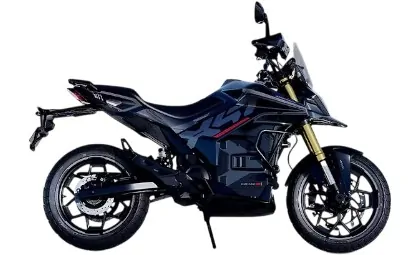
The Ultraviolette X-47 is a high-performance electric street crossover motorcycle sold in India. It’s built for riders who want strong city performance and a bike that can also handle highways and rough roads. The X-47 features upright seating, extra ground clearance, longer suspension travel, a cast-aluminium subframe, and an 820 mm seat height. Its battery uses the SRB-10 power-module platform, and the 10.3 kWh battery pack comes with a warranty of up to eight years or 8 lakh km.
Gallery
Key Specifications

Motor
PMAC Motor

Range
130-150 km/c

Power
36.71 PS

Torque
90 Nm

Top Speed
145 km/h

Charging Time
5 hours

Rear Suspension
Monoshock Preload Adj

Kerb Weight
197 Kg
Ratings
- 90%
Performance
- 90%
Features
- 90%
Handling
- 90%
Comfort
- 90%
Build Quality
- 95%
Styling
- 90%
Value for Money
- 91%
Total
Ratings calculation is purely based upon pros and cons of the model given below in the overview section.
Price

Special Features
1
Uv Hypersense Rear Radar
2
Blind-spot Monitoring
3
Overtake Alert
4
Connected App
5
Movement Alerts
6
820mm Seat Height
7
Dual Channel Abs
8
Hill Hold Assist
9
Park Assist
10
Three Ride Modes
11
Lane-change Assist
12
Dynamic Stability Control
Full Specifications
| Motor Type | Permanent Magnet AC Motor |
| Power | 36.71 PS |
| Torque | 90 Nm |
| Top Speed | 145 km/h |
| Transmission | Automatic |
| City | 150-180 km/full charge |
| Highway | 130-150 km/full charge |
| Speedometer | Digital |
| Tachometer | Yes |
| Tripmeter | Yes |
| Low Battery Indicator | Yes |
| Start Type | Self start |
| Kill Switch | Yes |
| Clock | Yes |
| Pass Light | Yes |
| ABS | Dual Channel |
| Stand Alarm | Yes |
| Tyres (F) | 110/70 R17 |
| Tyres (R) | 150/60 R17 |
| Brakes (F) | 320mm Disc |
| Brakes (R) | 230mm Disc |
| Frame Type | Steel Trellis with Aluminium Bulk head |
| Front Suspension | Upside-down Telescopic fork with a Diameter of 41 mm Preload Adjustable |
| Rear Suspension | Monoshock - Preload Adjustable |
| Wheelbase | 1385mm |
| Ground Clearance | 200mm |
| Kerb Weight | 197kg |
| Seat Height | 820mm |
| Battery | 10.3 kWh Lithium-ion |
| Head Lamp | LED |
| Tail Lamp | LED |
Overview
Performance And Motor
The standard 7.1 kWh X-47 uses a permanent-magnet AC motor with a claimed 27 kW peak output, which is about 36 hp, and 90 Nm of motor torque. It also delivers a claimed 550 Nm of rear-wheel torque. The 10.3 kWh Recon version increases output to 30 kW (about 40 hp), with 100 Nm of motor torque and 610 Nm at the rear wheel.
Both X-47 versions can reportedly reach 145 km/h, which is much faster than most electric commuter motorcycles. The base X-47 is said to go from 0 to 60 km/h in 2.8 seconds, so it should accelerate quickly in city traffic, when overtaking, and when merging onto faster roads.
The motor’s instant electric torque is especially helpful in Indian riding conditions. It lets the X-47 accelerate quickly without shifting gears, whether you’re leaving a traffic light, overtaking, or climbing a flyover. However, frequent hard acceleration, high speeds, carrying a passenger, steep climbs, rough roads, and using higher performance modes will use more battery power than steady, efficient riding.
The range depends on which mode you use. For the 7.1 kWh model, you can expect about 183 km in Glide mode, 144 km in Combat mode, and 128 km in Ballistic mode. The 10.3 kWh version offers about 266 km, 209 km, and 186 km in those modes. These numbers help you plan, showing how your chosen mode affects your range, even before real-world factors come into play.
The X-47 uses a fully automatic electric transmission. There’s no clutch lever, gear shifter, or manual gearbox. You control acceleration with the throttle, and the electric motor sends power to the rear wheel through the final-drive system.
In daily use, the automatic drivetrain makes the X-47 easier to ride in heavy Indian traffic than a petrol performance bike that needs frequent clutch and gear changes. It’s also easier to handle at low speeds, when parking, making U-turns, or starting on slopes. The bike has reverse assist, which helps with the weight and size of its large battery pack.
The regular Ultraviolette X-47 has a claimed top speed of 145 km/h across its standard and Recon variants. This makes it substantially more capable than an electric scooter and places it in performance-motorcycle territory for highway riding, overtaking, city expressways, ring roads, and bypasses.
Remember, 145 km/h is the bike’s top speed, not a speed you should keep up for long stretches. Riding very fast will quickly reduce your range, use more energy, and put extra stress on the tyres, brakes, and rider. On Indian roads, always follow speed limits and adjust your speed for traffic, visibility, weather, road conditions, and your remaining battery.
Range
The X-47 uses IDC range claims, which are Indian test-cycle figures rather than petrol-style fuel-economy ratings. The two primary IDC claims are: 211 km for the smaller battery and 323 km for the larger battery. The entry X-47 has the 7.1 kWh battery and a 211 km IDC rating, while the Recon uses the 10.3 kWh battery and claims 323 km IDC.
| Variant type | Battery capacity | Official IDC range |
|---|---|---|
| Regular X-47 | 7.1 kWh | 211 km |
| X-47 Recon | 10.3 kWh | 323 km |
The IDC range figure is helpful for comparing versions, but it doesn’t guarantee your real-world range. Your range will drop if you accelerate hard, ride fast, use sportier modes, carry a passenger or luggage, climb hills, face headwinds, brake and speed up often, ride on rough roads, have low tyre pressure, deal with extreme temperatures, or have an older battery. Glide mode usually gives you the best range, while Ballistic mode is best saved for when you want extra performance and don’t mind less distance.
There isn’t much long-term, independent owner data for the 2026 X-47 yet, so real-world range may change over time. Early users of the 10.3 kWh Recon have reported getting about 265–270 km per full charge in a mix of city and open-road riding, mostly in Glide mode with some use of sportier modes. These early reports are helpful, but they aren’t controlled tests and may not apply to every rider or route.
For the 7.1 kWh X-47, you can expect about 130–150 km in normal city riding. In Glide mode, the most efficient setting, the estimate is higher at 183 km. Combat mode gives about 144 km, and Ballistic mode about 128 km. It’s wise to plan your routes with a safety margin, especially until you know your usual battery use on familiar roads.
| Riding pattern | X-47 7.1 kWh: prudent planning range | X-47 Recon 10.3 kWh: prudent planning range |
|---|---|---|
| Smooth, efficiency-led city riding | About 150–180 km | About 250–270 km |
| Mixed city and highway riding | About 130–150 km | About 220–250 km |
| Fast highway use or aggressive modes | About 110–130 km | About 180–210 km |
These are careful planning estimates based on mode-specific figures and early reports from Indian owners. They are not official range guarantees.
For most owners, the regular 7.1 kWh X-47 works best if your daily rides are within 100-130 km and you have reliable charging at home, work, or along your usual routes. The 10.3 kWh Recon is a better choice for people who often ride long distances or plan weekend trips, since it maintains more battery reserve after highway riding.
Charging Time
Charging time depends on the battery and charger you use. With the standard portable charger, the 7.1 kWh version takes about 3 hours to charge from 20% to 80%, while the 10.3 kWh Recon takes about 5 hours. The larger battery takes longer to recharge with the same charger.
If you use the optional onboard charger, charging from 20% to 80% takes about 2 hours 40 minutes for the 7.1 kWh X-47 and around 4 hours for the 10.3 kWh Recon. As a general guide, a full charge from 0% to 100% takes about 5 hours with the standard charger and 4 hours with the onboard charger, but actual times can vary depending on battery size and charger setup.
The X-47 has a Type 2-compatible onboard charger. This enables charging via a suitable Type 2 AC source and compatible domestic charging arrangements, subject to the specific electrical setup and charger package.
For faster charging on long trips, the X-47 supports Ultraviolette’s Supernova DC fast-charging system. With this, you can charge from 20% to 80% in about 40 minutes, sometimes under an hour. This is much quicker than using a portable or onboard AC charger and is the best choice for long-distance travel. However, check if Supernova chargers are available along your planned route before your trip.
| Battery version | Claimed charge method | 20–80% charging time |
|---|---|---|
| X-47 7.1 kWh | Standard portable charger | About 3 hours |
| X-47 7.1 kWh | Optional onboard charger | About 2 hours 40 minutes |
| X-47 Recon 10.3 kWh | Standard portable charger | About 5 hours |
| X-47 Recon 10.3 kWh | Optional onboard charger | About 4 hours |
| Compatible X-47 variants | Supernova DC fast charger | About 40–60 minutes |
Features And Technology
The Ultraviolette X-47 is a feature-rich electric crossover motorcycle for the Indian market. This overview covers the regular X-47 line-up. Its equipment focuses on radar-assisted awareness, electronic rider aids, connected functions, touring-oriented charging, and crossover-friendly ergonomics.
- UV Hypersense rear radar: The X-47 has a 77 GHz rear-facing radar system called UV Hypersense. Ultraviolette says it is standard on the regular X-47 range and calibrated for urban road use.
- Up to 200-metre radar monitoring:The Hypersense system monitors vehicles at a claimed distance of up to approximately 200 metres. Its detection field is quoted as 150 degrees horizontally and 68 degrees vertically, intended to support awareness of surrounding and approaching traffic.
- Blind-spot monitoring:Radar technology monitors vehicles in the rider’s blind zones and adjusts its monitoring area based on speed and motorcycle orientation. This can be helpful when merging, riding on multi-lane roads, and checking traffic behind in dense Indian conditions.
- Lane-change assist:The X-47’s radar system warns the rider about relevant traffic when changing lanes. It is a situational-awareness aid, not a substitute for using mirrors, shoulder checks, indicators, or safe lane-change judgement.
- Overtake alert:The system can alert the rider when a fast-approaching vehicle is detected before it enters the motorcycle’s immediate riding zone. This is useful on highways, bypasses, ring roads, and multi-lane city corridors where closing speeds can be high.
- Rear-collision warning:The X-47 warns the rider when a vehicle behind is closing in quickly. The aim is to give the rider additional warning of a potential rear-end risk, particularly during abrupt slowing or traffic changes.
- Upgradable dashcam package:On the standard X-47, the front-and-rear dashcam system is an optional upgradable package rather than standard equipment. Buyers should confirm whether their chosen X-47 includes this package before booking.
- Front and rear camera recording: When equipped with the dashcam package, the motorcycle uses front and rear cameras for ride recording and replay. The system is designed for two-wheelers and can provide useful incident documentation, security footage, and route recording.
- 1080p/30 fps dashcam specification: Ultraviolette lists Sony IMX307 HDR camera sensors, 1080p recording at 30 fps, and a 120-degree wide-angle view for the dashcam module. These specifications should support useful day-to-day footage rather than cinema-quality recording.
- Expandable dashcam storage: The camera system supports storage expansion up to 256 GB. Buyers should verify the supplied storage capacity and the compatible memory card specification in their final vehicle package.
- Dedicated dashcam touchscreen: The dashcam package includes a dedicated touchscreen display above the main instrument area, allowing riders to view camera footage and access related settings.
- Five-inch touchscreen console:The X-47’s main console is a five-inch touchscreen housed in an aerospace-grade aluminium enclosure with anti-theft mounting. It serves as the central rider interface for vehicle information, settings, alerts, and compatible connected functions.
- Vector-theme user interface:The display uses Ultraviolette’s Vector theme, a cockpit-inspired visual layout intended to present riding data in a clear, aviation-influenced format.
- Connected app: The X-47 uses a connected app experience, enabling compatible smartphone-based monitoring and alerts. Exact functionality may differ by software version, subscription, and optional package.
- Movement alerts:The Ultraviolette A.I.-enabled connected system can send alerts when someone comes within a set distance of the motorcycle. This provides an additional layer of parked-vehicle monitoring, but it should complement—not replace—secure parking and a physical lock.
- Switchable dual-channel ABS: The X-47 has dual-channel ABS that can be switched for differing road- and off-road-oriented use. The system is intended to support controlled braking across asphalt, loose surfaces, and variable terrain.
- Bosch 10th-generation ABS:The system is Bosch’s 10th-generation switchable dual-channel ABS. This is particularly important because the X-47 is a high-performance motorcycle designed for mixed road conditions.
- Four-level traction control:The regular X-47 has four selectable traction-control levels to help limit rear-wheel spin during acceleration. This can be especially useful on wet tarmac, loose gravel, dusty shoulders, painted road markings, and uneven Indian surfaces.
- Dynamic Stability Control:The motorcycle includes Dynamic Stability Control, which coordinates electronic safety systems to support controlled riding and braking. It is an assistance system, so it cannot overcome excessive speed, poor tyres, inadequate grip, or unsafe rider inputs.
- Ten-level dynamic regenerative braking: Ultraviolette lists ten selectable regenerative-braking levels that can be adjusted while riding. Regen can return some energy to the battery while slowing, reducing reliance on conventional braking during controlled deceleration.
- ABS–regen coordination:The X-47’s safety systems are designed to coordinate ABS and regenerative braking for greater stability under deceleration. Riders should still use progressive, deliberate brake inputs, especially on wet roads or rough surfaces.
- Hill-hold assist: Hill-hold prevents rollback after stopping on an incline. It is useful on flyovers, steep parking ramps, basement exits, hill roads, and sloping traffic signals.
- Park Assist: Park Assist supports low-speed manoeuvring, including moving the motorcycle in tight parking spots. This is valuable for a performance EV with a large battery pack and crossover proportions.
- Reverse-assist function:The X-47 offers reverse assist, which can reduce effort when backing the motorcycle out of a tight bay, a slope, or a congested parking area. Confirm its standard availability on the exact variant.
- Three ride modes:Reports indicate that the X-47 provides three primary ride modes, typically intended to balance efficiency, normal-road usability, and maximum performance. The exact nomenclature, mode-specific power limits, and availability can vary by variant and software update, so verify these during the showroom demonstration.
- Type 2-compatible onboard charger: The X-47 features an industry-first Type 2-compatible onboard charger. It allows the motorcycle to use compatible AC charging infrastructure and supports charging through a suitable home, office, or public charging arrangement.
- SRB-10 battery architecture:The X-47 uses the SRB-10 power-module architecture. The 10.3 kWh battery pack comes with a warranty of up to eight years or 8 lakh km, subject to stated terms and conditions.
- Patented five-level battery safety approach:The SRB-10 battery system has five layers of safety: thermal, mechanical, electronic, electrical, and software protection. This reflects a multi-layer design strategy, though owners should still follow charging, storage, and service instructions.
- Upright crossover ergonomics: The X-47 uses an upright riding posture to reduce fatigue and improve control in city traffic, on longer highway rides, and over uneven terrain.
- Increased ground clearance:The motorcycle offers greater clearance over obstacles, rough roads, broken tarmac, and light trail-style routes. This supports the crossover concept but does not make the standard motorcycle a dedicated off-road machine.
- Long-travel suspension: The X-47 has a long-travel suspension designed to absorb road imperfections and improve composure over poor urban roads, gravelly sections, potholes, and uneven surfaces.
- Cast-aluminium subframe:The motorcycle uses a cast-aluminium subframe that balances low weight with strength, stability, and load-carrying capacity.
- 820 mm seat height: The X-47 has an 820 mm seat height. This gives the rider a commanding view and should suit many average-to-tall riders, though shorter riders should check confidence at a stop and during low-speed manoeuvres in a test ride.
- Crossover-focused chassis package: The combined upright ergonomics, higher ground clearance, long-travel suspension, safety electronics, and radar system make the X-47 more versatile than a pure street EV. It is aimed at riders who divide their time between city streets, highways, damaged roads, and occasional unpaved stretches.
Build Quality
The X-47 is built as a crossover electric motorcycle rather than a conventional street bike, with the regular X-47 range designed to accommodate city riding, highways, broken roads, and light trail-style use. The design approach includes an aerospace-influenced style, a cast-aluminium subframe, an aluminium-enclosed 5-inch touchscreen, and the SRB-10 battery architecture. The subframe is described as lightweight yet strong enough to improve load-bearing ability and overall stability.
The X-47’s 10.3 kWh SRB-10 battery module is backed by a claimed warranty of up to 8 years or 8 lakh km, subject to stated terms. The battery pack has five protection layers: thermal, mechanical, electronic, electrical, and software safeguards. This is important for an EV motorcycle that will face high ambient temperatures, monsoon conditions, uneven roads, charging variation, and long-distance usage in India.
The core hardware also appears appropriately robust for the motorcycle’s performance. The X-47 has a tubular steel chassis, a cast-aluminium subframe, an upside-down front fork, a rear monoshock, and longer 170 mm suspension travel at both ends. It rides on 17-inch wheels, with a 110/70-R17 front tyre and 150/60-R17 rear tyre. This setup gives the bike a more substantial mechanical base than a basic commuter EV.
However, build quality is not beyond criticism. Some early ride assessments praised the design and overall concept but noted that the fit and finish could be better. Since the X-47 is still relatively new, buyers should inspect body-panel alignment, paint consistency, exposed wiring, switchgear, charging-port flap, seat latch, rear grab rail, wheel finish, brake-line routing, display mounting, and suspension-adjuster operation during delivery.
The regular X-47’s dashcam is an optional upgrade, whereas on the X-47 Desert Wing it is standard. Therefore, buyers should confirm exactly what is included in their selected regular X-47 variant rather than assuming every motorcycle receives the camera module, its screen, storage, or associated wiring from the factory.
Handling
The X-47 is designed to feel more versatile and less committed than Ultraviolette’s F77-based sportier motorcycles. Its major handling changes include a more upright riding position, a tall and wide handlebar, lower-set footpegs, increased ground clearance, and 170 mm of suspension travel at both ends. These changes are intended to make it easier to manoeuvre in city traffic, remain composed on rough roads, and feel more natural on highway journeys.
Some users found that the revised ergonomics make the X-47 feel lighter to steer than the F77, despite both motorcycles weighing the same. The bike remains enjoyable through corners, although it cannot be pushed quite as hard as the F77 because its longer-travel suspension prioritises comfort and versatility over maximum cornering sharpness.
Other road tests similarly found that the X-47 turns more easily than its large battery and performance-focused appearance suggest. The weight distribution is good, and the motorcycle requires only a gentle handlebar input to change direction through a fast chicane. This indicates that the battery mass is packaged relatively well, although buyers should still assess low-speed balance themselves during a test ride.
On Indian roads, the X-47 should be more forgiving than a low-slung street motorcycle. Small potholes, road joints, rumblers, and manhole covers are absorbed cleanly, while taller speed breakers and larger potholes are handled without the motorcycle feeling overly soft or harsh. The 170 mm travel and higher clearance add useful flexibility for damaged roads, uneven village routes, broken urban surfaces, and moderate gravel sections.
The electronic assistance package supports this multi-surface intent. The X-47 has switchable dual-channel ABS, four traction-control levels, and ten-level dynamic regenerative braking. These systems can help manage acceleration and deceleration on wet, dusty, uneven, or loose surfaces, but they cannot create grip where tyres and surface conditions do not provide it. Riders should still use smooth throttle inputs, progressive braking, suitable tyre pressures, and conservative speeds in rain or poor road conditions.
Low-speed confidence will depend on rider height and experience. The official seat height is 820 mm, and riders taller than roughly 5 ft 6 in should find it straightforward to place both feet down, while shorter riders may need to tip-toe. The motorcycle’s narrow midsection and suspension sag can make it feel lower than the stated number, but a proper showroom test is essential—especially for frequent traffic stops, sloping roads, and reverse parking.
Comfort
Comfort is one of the X-47’s main improvements over the more sport-focused Ultraviolette F77. The motorcycle uses a natural upright posture, wide and easy-to-reach handlebars, a spacious seat, and only mildly rear-set footpegs. This combination reduces the forward lean and wrist loading associated with aggressive sport motorcycles, making the X-47 more suitable for office commutes, longer city rides, weekend highway trips, and occasional travel on poor roads.
The longer-travel suspension is a major comfort advantage. Some users describe the suspension as plushier than the F77’s and say it can handle completely broken roads, even though it can feel slightly busy on concrete. The setup is well-tuned for Indian roads, absorbing everyday road imperfections effectively without feeling excessively soft or punishingly stiff.
The seating position should suit taller riders particularly well. Users note that taller riders benefit from the reasonably spacious seat, relaxed ergonomics, and tall, wide handlebar. The seat and ergonomics are welcoming, even for heavier, taller riders. The official 820 mm seat height gives the rider a commanding view of traffic, while the upright stance should reduce fatigue across longer rides.
The main comfort limitation is seat firmness. Some users found that the seat begins to feel firm after roughly 30 minutes, even though the overall posture remains comfortable. The wide seat works well for longer rides but becomes firm after about half an hour. This is not necessarily a deal-breaker, but riders planning frequent two-hour-plus trips should spend enough time on the test motorcycle to assess personal comfort rather than relying only on a short dealership ride.
At highway speeds, the X-47’s stable chassis, wide handlebar, upright position, and 17-inch wheels should make it more confidence-inspiring than smaller electric motorcycles. Road tests have reported stable cruising at around 120 km/h and praised the suspension and overall stability. However, wind exposure remains a natural characteristic of an upright crossover motorcycle, and high-speed comfort will vary with rider height, helmet type, wind conditions, luggage, and road surface.
A good test ride should include slow traffic, a few U-turns, speed breakers, rough roads, a flyover or incline, at least one longer stretch at higher speed, and a check with a passenger if you plan to carry one often. Pay attention to whetherwhether the 820 mm seat height feels comfortable, whether the seat becomes uncomfortable after 30 minutes, whether the suspension feels controlled over bumps, and whether the upright handlebar position suits your reach.
Styling
Ultraviolette calls the X-47 a “high-performance electric street crossover,” and its appearance reflects that positioning. It blends the aggressive, forward-leaning visual language of a performance street motorcycle with the upright stance, taller suspension, and practical proportions associated with adventure-oriented crossovers. The result is neither a conventional naked electric bike nor a full adventure motorcycle; it is intended to look equally at home in city traffic, on highways, and on rougher outskirts roads.
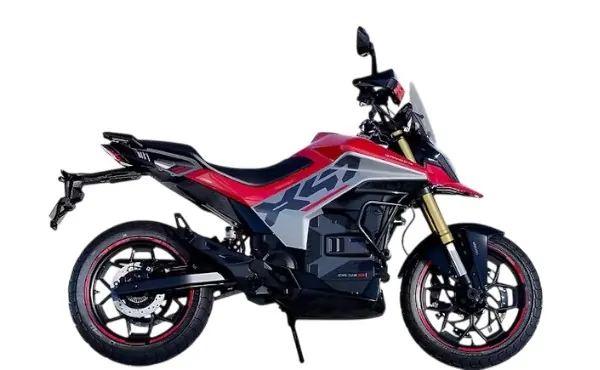
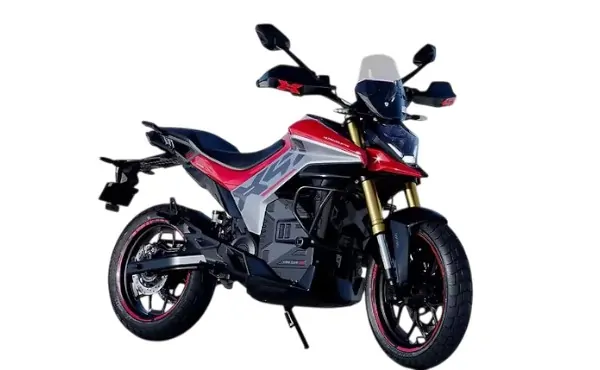
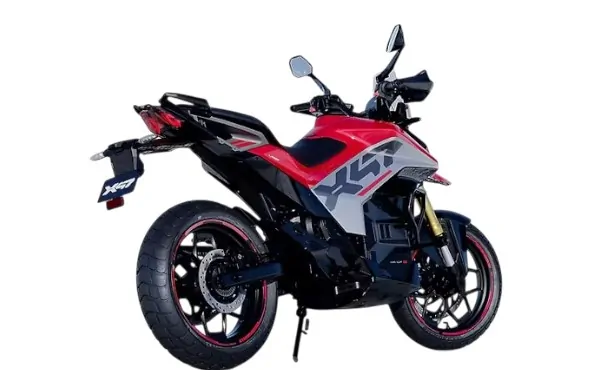
The front end is especially distinctive. It uses a sharply shaped LED headlamp assembly, a compact flyscreen area, muscular shrouds around the battery and frame, and a high-mounted, purposeful nose. The layered body panels, exposed-looking structural elements, and angular tail section reinforce the motorcycle’s technical, performance-led identity. Compared with a conventional petrol crossover, the absence of a fuel tank allows Ultraviolette to create a more sculpted central body section around the battery architecture.
The X-47 also has a more upright and practical riding silhouette than the lower, sportier Ultraviolette F77. Its tall, wide handlebar, 820 mm seat height, increased ground clearance, and longer-travel suspension give it a broader-shouldered stance. These design choices contribute to the bike’s crossover look while also making it visually better suited to mixed Indian road conditions than a low-slung urban street motorcycle.
Ultraviolette’s aviation theme appears throughout the motorcycle. Elements such as the “Aviation DNA,” an aluminium-enclosed five-inch cockpit display, radar technology, and a design approach shaped around sharp lines, precision detailing, and a fighter-jet-inspired visual character all contribute to its highly technical look. This should appeal to buyers seeking an electric motorcycle that visibly differs from both petrol bikes and conventional EVs.
The regular X-47 can also be specified with the optional integrated dashcam package. This package adds a compact front-and-rear camera unit with a dedicated display area, which makes the cockpit look more equipment-rich. However, it is not standard on the regular X-47 range; the Desert Wing is standard, and that model is excluded here.
Colour Options And Variants
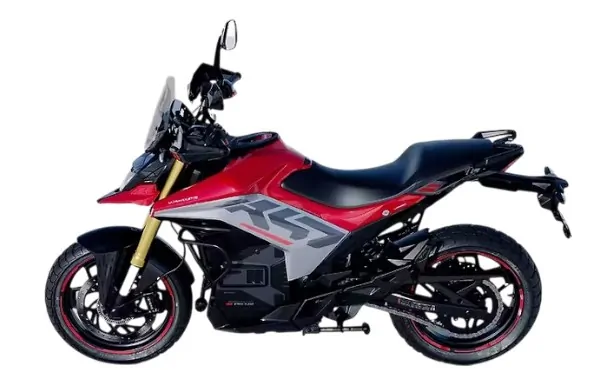
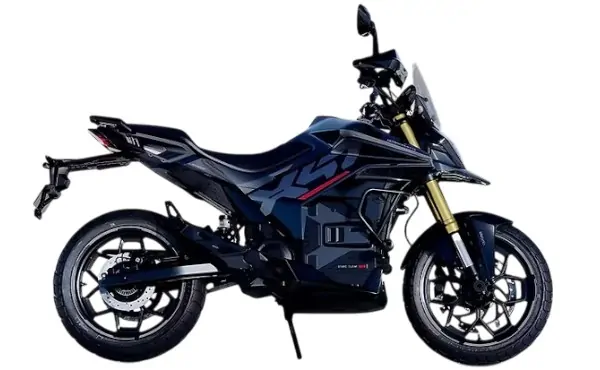
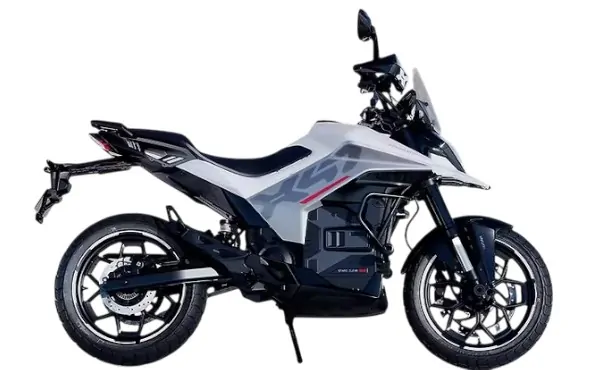
The regular Ultraviolette X-47 range is available in three primary India-spec colour schemes:
- Laser Turbo Red
- Shadow Cosmic Black
- Airstrike Stellar White
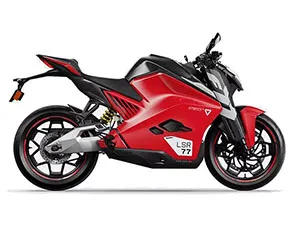
Laser Turbo Red is the most overtly sporty of the regular finishes. It uses gloss red as the dominant colour with white detailing, dark alloy wheels, and red rim stripes. This finish best highlights the X-47’s sharp tank-area shrouds, angular tail, and performance-oriented bodywork. It is the choice for buyers who want the crossover to be immediately noticeable in traffic.
Shadow Cosmic Black is the most understated and stealth-oriented option. It uses metallic black as the main colour, complementing the X-47’s sharp lines, exposed-looking mechanical elements, and dark alloy wheels. The black finish gives the motorcycle a more technical, serious appearance, making it suitable for riders who prefer a discreet yet aggressive road presence.
Airstrike Stellar White is the cleanest and most contrast-heavy option. It uses gloss white bodywork, paired with a gloss-black front fender and alloy wheels with white rim stripes. The lighter finish makes the X-47’s layered side panels, angular nose, and crossover proportions more visible than the darker Cosmic Black scheme.
Colour availability may differ by variant. Buyers should verify the exact finish, delivery time, paint condition standards, and any variant-specific colour restrictions in the final quotation. The Desert Wing’s exclusive sand finish is not a standard X-47 paint option.
The regular X-47 line-up consists of four main versions:
- Original
- Original Plus
- Recon
- Recon Plus
These are organised around two battery capacities and two equipment levels. The Original and Original Plus use the 7.1 kWh battery, while Recon and Recon Plus receive the larger 10.3 kWh battery.
| Regular X-47 variant | Battery capacity | Claimed IDC range | Key positioning |
|---|---|---|---|
| X-47 Original | 7.1 kWh | 211 km | Entry-level regular X-47 with full crossover performance platform |
| X-47 Original Plus | 7.1 kWh | 211 km | Original battery size with additional equipment package |
| X-47 Recon | 10.3 kWh | 323 km | Long-range X-47 for higher-mileage and touring-oriented riders |
| X-47 Recon Plus | 10.3 kWh | 323 km | Top regular X-47 with the larger battery and Plus equipment package |
The X-47 Original is the entry point to the standard line-up. It uses a 7.1 kWh battery and claims a 211 km IDC range. It is intended for riders who want the X-47’s 145 km/h performance, crossover chassis, radar-based safety platform, and electric-motorcycle character, but do not require the largest possible battery reserve.
The X-47 Original Plus retains the 7.1 kWh battery and 211 km IDC range claim, but adds the Plus equipment specification. On the regular X-47, the key distinction commonly associated with the Plus grade is the additional technology and equipment package, such as the optional dashcam-related hardware or upgraded charging provisions depending on the final market specification. Buyers should obtain a variant-wise feature sheet from the dealership for precise equipment details.
The X-47 Recon is the long-range regular model. It uses the larger 10.3 kWh SRB-10 battery, increasing the IDC claim to 323 km. It also steps up to 30 kW of peak output, 100 Nm of motor torque, and 610 Nm of claimed rear-wheel torque, compared with the 27 kW and 90 Nm figures associated with the 7.1 kWh model. It is the most logical standard option for riders who expect regular highway use, higher daily mileage, or longer weekend routes.
The X-47 Recon Plus is the top regular X-47 model. It shares the Recon’s 10.3 kWh battery, 323 km IDC range claim, 30 kW motor output, and 145 km/h top speed, but adds the Plus-level equipment package. It is designed for buyers who want maximum regular X-47 range and performance along with the fuller technology and charging package, without moving to the Desert Wing special edition.
Value For Money And Pricing
The Ultraviolette X-47 is priced from ₹ 2,49,000 ex-showroom in India for the entry-level regular X-47 with the 7.1 kWh battery. This overview excludes the X-47 Desert Wing special edition. The standard X-47 range is structured around the Original, Original Plus, Recon, and Recon Plus variants, with prices increasing with battery capacity and equipment level.
The key pricing distinction is between the 7.1 kWh and 10.3 kWh battery versions. The standard 7.1 kWh motorcycle is the lower-cost entry point, while the larger 10.3 kWh Recon models carry a premium for their higher claimed IDC range, increased performance output, and greater touring reserve.
Before booking, ask the dealership for an itemised quotation that separately states the ex-showroom price, insurance, registration-related costs, charger package, charging cable type, any optional onboard charger or DC-charging eligibility, dashcam package, warranty, extended warranty cost, connected service charges, and delivery commitment. This matters because the X-47’s Plus grades, charging options, and optional dashcam equipment can materially affect the final cost. The dashcam is an upgradable package on the regular X-47 rather than a standard feature.
The X-47 offers its greatest value as a performance-oriented electric crossover motorcycle rather than as a low-cost petrol-bike replacement. Even the base model combines a 27 kW permanent-magnet AC motor, 90 Nm of torque, 550 Nm of rear-wheel torque, a 145 km/h top speed, and a 211 km IDC range claim. That makes it significantly more capable than commuter-focused electric motorcycles in acceleration, highway potential, battery size, braking hardware, and chassis sophistication.
The Recon versions deliver a larger value jump for riders who use the motorcycle intensively. Their 10.3 kWh battery offers a claimed 323 km IDC range, alongside 30 kW of output, 100 Nm of motor torque, and 610 Nm of claimed rear-wheel torque. The Recon is therefore better suited to high-mileage commuters, frequent highway riders, and weekend tourers who need a larger real-world range reserve rather than the lowest possible purchase price.
The standard X-47 equipment is unusually comprehensive for the segment. Ultraviolette includes its Hypersense 77 GHz rear-radar system, which supports blind-spot monitoring, lane-change assist, rear-collision warning, and overtake alerts. It also includes switchable dual-channel ABS, four traction-control levels, ten-level dynamic regenerative braking, a five-inch touchscreen, Type 2-compatible onboard charging, upright crossover ergonomics, longer-travel suspension, and a cast-aluminium subframe. These systems help explain why the X-47 costs more than basic electric motorcycles with smaller batteries and fewer rider aids.
The X-47 shares the company’s high-performance electric-motorcycle direction but offers a more upright, crossover-oriented riding position and higher ground clearance for around ₹60,000 less at the entry level. The F77 remains better suited to riders who want a more focused sport-bike posture and 155 km/h headline speed, while the X-47 favours versatility and all-road usability.
However, the X-47 may not be the best value if you mostly ride short distances each day. If you travel only 20–40 km daily, it’s hard to justify the cost of a 7.1 kWh or 10.3 kWh premium electric motorcycle, especially when cheaper EVs can handle that commute. The X-47 makes the most sense for riders who want performance, long range, advanced electronics, highway ability, and flexibility for different road conditions—not just the lowest cost per kilometre.
The 10.3 kWh battery warranty adds potential long-term value. Coverage of up to 8 years or 8 lakh km is offered for the SRB-10 pack, subject to its terms and conditions. Buyers should nonetheless obtain the written warranty document, including capacity-retention conditions, transferability, exclusions, water-damage provisions, charger requirements, service obligations, and the battery-replacement process.
The X-47 does not have a single perfect like-for-like competitor in India because it combines high electric performance, large battery capacity, crossover ergonomics, radar-based situational awareness technology, and touring intent. Its most direct electric rivals include:
The base 7.1 kWh X-47 is compelling if you want a high-performance electric crossover with radar-based safety technology, a 145 km/h top-speed claim, and a 211 km IDC range claim. The 10.3 kWh Recon is the more convincing choice for riders who frequently travel beyond the city, because its 323 km IDC claim provides substantially better practical range reserve after highway speeds, gradients, rider weight, luggage, and higher ride modes reduce the laboratory figure.
Its price is justified only when its capabilities will be used. If your trips are largely short urban runs and you have no need for radar, high-speed performance, or a large battery, a Matter Aera, Oben Rorr Evo, Revolt RV400, or an electric scooter may be the better-value purchase. If you want a premium, Indian-built electric motorcycle that can combine daily commuting with energetic highway riding and rough-road tolerance, the X-47 has a distinctive proposition. Confirm the local service footprint, charging access, accessory inclusion, and final on-road price before making the decision.
Verdict
Overall, the X-47 is best for enthusiasts who want more than just a basic commuter. Its higher price, longer AC charging times, need for reliable charging, firm seat, 820 mm seat height, and limited long-term ownership data mean you should look closely before booking. The best approach is to take a proper extended test ride, check the nearest authorised Ultraviolette service centre, confirm local charging options and Supernova DC fast-charger availability, and get written details of the exact variant equipment, dashcam package, charger type, battery warranty, and final on-road price. If you plan to use its power, range, safety tech, and crossover features, the X-47 is one of India’s most advanced electric motorcycles. For short city commutes, lower-priced electric options may be a better fit.
Pros
- Very strong performance:The X-47 delivers a claimed top speed of 145 km/h, with up to 30 kW of output and 610 Nm of rear-wheel torque on the 10.3 kWh Recon versions. It is substantially quicker and more highway-capable than a typical electric commuter motorcycle.
- Useful battery choice:The 7.1 kWh model claims 211 km of IDC range, while the 10.3 kWh Recon claims 323 km of IDC range. The larger pack provides meaningful range reserve for regular highway rides and high-mileage ownership.
- Outstanding rider-safety equipment:Hypersense 77 GHz rear radar provides blind-spot monitoring, lane-change assistance, overtake alerts, and rear-collision warnings. The X-47 also has switchable dual-channel ABS, four-level traction control, and ten-level regenerative braking.
- Comfortable, versatile chassis: The upright posture, wide handlebar, 170 mm suspension travel, increased ground clearance, and 17-inch wheels make the X-47 better suited to broken urban roads, highways, speed breakers, and light rough-road use than a low-slung electric sport bike.
- Fast-charging capability:With Ultraviolette Supernova DC fast charging, the X-47 can reportedly charge from 20–80% in about 40–60 minutes, which materially improves long-distance practicality where compatible chargers are available.
- Premium technology package:A five-inch touchscreen, Type 2-compatible onboard charger, connected alerts, and an optional front- and rear-dashcam system give the X-47 a distinctive, high-tech ownership proposition.
Cons
- Expensive, especially in top trims:The X-47 starts at ₹2.49 lakh ex-showroom, but the Recon and Plus variants can approach ₹4.5 lakh. At that point, buyers must be certain they need its range, performance, and technology.
- Real range will be lower than claimed: The 211 km and 323 km IDC figures are laboratory benchmarks. High-speed riding, Ballistic mode, hard acceleration, a pillion, luggage, steep gradients, poor roads, and hot weather will noticeably reduce usable range.
- Charging still needs planning: DC fast charging is useful but depends on compatible, functioning chargers being available. AC charging takes several hours, so the X-47 is best for riders with reliable home or workplace charging.
- Seat can become firm: Some users found the seat begins to feel firm after roughly 30 minutes. This may matter for those planning regular long-distance touring.
- Fit-and-finish and software need checking:Some users noted that fit and finish could be better, and individual owners have reported issues with software, map loading, charging lid, radar, and service. These reports are not universal, but they make a detailed pre-delivery inspection and local service-network check essential.
- Tall for shorter riders:Its 820 mm seat height can be challenging in stop-start traffic, on slopes, and during reverse parking. A proper test ride is essential.
Frequently Asked Questions About Ultraviolette X-47
1. What Is The Range Of The Ultraviolette X-47?
The X-47 uses IDC (Indian test-cycle) range claims. The 7.1 kWh version has an official IDC range of 211 km, while the larger 10.3 kWh Recon version claims 323 km. Real-world range depends on riding mode – Glide mode gives the best efficiency (183 km for the 7.1 kWh, 266 km for the 10.3 kWh), while Ballistic mode offers the least range (128 km and 186 km respectively). Early Recon owners have reported around 265–270 km per charge in mixed use.
2. How Long Does The Ultraviolette X-47 Take To Charge?
Charging time depends on the battery and charger used. With the standard portable charger, the 7.1 kWh version takes about 3 hours (20–80%), while the 10.3 kWh Recon takes about 5 hours. With the optional onboard charger, these times drop to roughly 2 hours 40 minutes and 4 hours, respectively. For fast charging, Ultraviolette’s Supernova DC fast-charging system can take the battery from 20% to 80% in about 40–60 minutes, though availability along a route should be checked beforehand.
3. What Is The Top Speed And Performance Of The X-47?
Both the 7.1 kWh and 10.3 kWh versions of the regular X-47 have a claimed top speed of 145 km/h. The base 7.1 kWh model uses a 27 kW (about 36 hp) motor with 950 Nm of motor torque and 550 Nm of rear-wheel torque, going 0–60 km/h in a claimed 2.8 seconds. The 10.3 kWh Recon steps up to 30 kW (about 40 hp), 100 Nm of motor torque, and 610 Nm of rear-wheel torque.
4. What Safety Features Does The X-47 Come With?
The X-47 includes a 77 GHz Hypersense rear radar system that monitors traffic up to approximately 200 metres away, providing blind-spot monitoring, lane-change assist, overtaking alerts, and rear-collision warnings. It also has Bosch 10th-generation switchable dual-channel ABS, four-level traction control, Dynamic Stability Control, and ten-level dynamic regenerative braking, along with hill-hold assist and Park Assist for low-speed manoeuvring.
5. What Variants And Colours Are Available, And What Is The Price?
The regular X-47 lineup has four variants – Original, Original Plus (both 7.1 kWh), and Recon, Recon Plus (both 10.3 kWh) – priced from ₹2,49,000 ex-showroom for the entry-level model, with top Recon Plus trims approaching ₹4.5 lakh. It comes in three colour options: Laser Turbo Red, Shadow Cosmic Black, and Airstrike Stellar White.
Other Related Links From Bikeleague India
List Of All Ultraviolette Electric Bikes
About Ultraviolette Electric Bikes
Ultraviolette Automotive is an electric mobility company based in Bengaluru, Karnataka. Founded in 2017 by Narayan Subramaniam and Niraj Rajmohan, the company set out to build advanced electric motorcycles for both Indian and global markets.
Ultraviolette first made a mark with the F77, a high-performance electric motorcycle meant to show that electric two-wheelers can be more than just city commuters. The F77 was built with special attention to acceleration, handling, battery technology, and smart features.
Ultraviolette builds its products on a core technology platform that includes high-voltage batteries, advanced motor controls, regenerative braking, different ride modes, connected diagnostics, and rider-focused electronics.
| Aspect | Ultraviolette’s position in India |
|---|---|
| Headquarters | Bengaluru, Karnataka |
| Founded | 2017 |
| Founders | Narayan Subramaniam and Niraj Rajmohan |
| Main category | Premium electric motorcycles and future electric scooters |
| Flagship product | Ultraviolette F77 |
| Key markets | India, with growing international expansion plans |
| Brand identity | Performance, technology, design, and electric mobility innovation |
| Key investors | TVS Motor Company and Qualcomm Ventures, among others. |
History And Growth
Ultraviolette started up when India’s EV industry was just beginning to grow. Rather than launching a basic scooter, the company decided to develop a high-performance electric motorcycle. This tougher path helped Ultraviolette stand out as a premium EV brand.
Ultraviolette introduced the F77 concept to the public in 2019. Its sporty look, performance claims, and high-voltage electric design drew a lot of interest. After several rounds of development and engineering updates, the company started delivering the F77 in India in late 2022.
Ultraviolette later released new versions of the F77, such as the F77 Mach 2, with better battery technology, improved electronics, regenerative braking, and updated software. The company also grew its Experience Centre network to make it easier for customers to access products, take test rides, and get support.
| Year or period | Major development |
|---|---|
| 2017 | Ultraviolette Automotive was founded in Bengaluru. |
| 2019 | The F77 electric motorcycle concept was unveiled. |
| 2022 | Commercial F77 production and deliveries began in India. |
| 2024 | F77 Mach 2 introduced with updated performance, technology, and riding features. |
| 2025 | Ultraviolette expanded overseas market activity and strengthened its retail footprint. |
| 2026 | The company expanded its planned product portfolio with the X47, Shockwave, and Tesseract. |
| 2027 onward | Production ramp-up for the Tesseract scooter and broader EV range is planned. |
Ultraviolette has grown carefully, not just by chasing high sales numbers. At first, the company focused on making sure its products were reliable, batteries were safe, charging systems worked well, and customers had a premium experience before aiming for bigger production.
Key Milestones And Developments
The F77 is Ultraviolette’s biggest milestone so far. It gave the company a premium electric motorcycle with a clear performance focus, putting the brand in competition with both petrol bikes and other electric options.
Recent announcements show that Ultraviolette is changing its strategy. The company plans to go beyond premium motorcycles and enter new segments like crossover bikes, street EVs, cruisers, and electric scooters. This wider range should help Ultraviolette reach more customers than the F77 alone.
| Milestone | Details |
|---|---|
| Company formation | Company formation Ultraviolette was founded in Bengaluru in 2017. |
| F77 concept | The original F77 concept was unveiled in 2019. |
| F77 launch | The F77 became Ultraviolette’s first production electric motorcycle in India. |
| F77 Mach 2 | Updated version added improved technology, regenerative-braking settings, and software features. |
| International expansion | The company began pursuing overseas sales and market access beyond India. |
| X47 crossover | Ultraviolette expanded its motorcycle strategy with the X47 crossover platform. |
| Shockwave motorcycle | A more accessible electric motorcycle is planned below ₹2 lakh. |
| Tesseract scooter | Ultraviolette announced an electric scooter expected to be priced below ₹1.5 lakh. |
| BIGGA Factory | A new Hosur plant was announced to scale production for Tesseract and future products. |
Ultraviolette has made it clear that it wants to offer a full range of products, not just one performance motorcycle. Its plans include sports bikes, crossovers, cruisers, street motorcycles, and scooters.
Manufacturing Facilities
Ultraviolette’s main factory is in Bengaluru, Karnataka. It handles current vehicle production and is being expanded to boost output. The plant can make about 30,000 units a year now, with plans to raise that to 50,000–60,000 units through more investment.
In September 2026, Ultraviolette announced plans for a much larger factory called the BIGGA Factory, which stands for Big Global Ambition. This new plant will be at SIPCOT Industrial Park in Shoolagiri, Hosur, Tamil Nadu. It will first produce the Tesseract electric scooter and later support more products.
The new Hosur factory will be built in stages, starting with the ability to make 250,000 electric two-wheelers a year. If demand grows, the plant can be expanded to produce up to 500,000 units annually.
| Facility | Location | Role and capacity |
|---|---|---|
| Existing Ultraviolette plant | Bengaluru, Karnataka | Produces current EV models; planned expansion to around 50,000–60,000 units annually. |
| Existing Bengaluru capacity | Karnataka | Approximately 30,000 units annually before planned expansion. |
| BIGGA Factory | SIPCOT Industrial Park, Shoolagiri, Hosur, Tamil Nadu | Planned production base for Tesseract and future models. |
| BIGGA initial capacity | Hosur, Tamil Nadu | 250,000 electric two-wheelers annually, to be ramped up in phases. |
| BIGGA scalable capacity | Hosur, Tamil Nadu | Up to 500,000 units annually, depending on demand. |
| Combined capacity target | Bengaluru and Hosur | About 300,000 units annually by mid-2027. |
The Hosur plant is expected to create about 2,000 jobs at first, with more jobs added as it grows. Ultraviolette plans to invest around ₹779 crore in this facility over five years, and total investment in both Bengaluru and Hosur could reach ₹1,000 crore.
Market Position And Achievements
Ultraviolette stands out in India’s EV market. Instead of focusing on mass-market scooters, it is a premium electric motorcycle brand aiming to offer a performance-focused alternative to petrol bikes.
Ultraviolette’s main strengths are the F77’s performance, its high-voltage battery, unique design, advanced software, and rider-focused technology. These features attract customers who care about performance and engineering, not just low running costs.
| Primary market | Premium electric motorcycles |
|---|---|
| Current flagship | F77 and F77 Mach 2 |
| Growth categories | Crossover, street, cruiser, entry-performance motorcycle, and scooters |
| Main strengths | Performance focus, advanced battery systems, design, and connected features |
| Retail network | More than 40 Experience Centres reported in 2026. |
| Retail-expansion target | Presence in 100 cities by the end of 2026. |
| Production strength | Existing Bengaluru facility plus planned high-volume Hosur plant |
| Long-term strategy | Build India and exports through a wider electric-two-wheeler portfolio |
Ultraviolette’s biggest achievement is building an Indian performance electric motorcycle brand from scratch. The F77 has made the company known as a specialist EV maker with its own identity, not just another two-wheeler company adding electric models.
The upcoming Tesseract scooter is a key step for Ultraviolette, as it could move the company from a niche brand to a bigger player in the EV market.
Reports say there are over 70,000 paid bookings for the Tesseract, but its real impact will depend on deliveries, conversion rates, production schedules, and customer experience.
Future Plans
Ultraviolette’s future plans focus on quickly expanding its product range, increasing factory capacity, growing retail in India, developing exports, and using more local EV technology.
The company plans to grow beyond the F77 and enter several new categories. Its future lineup includes the Tesseract scooter, Shockwave motorcycle, X47 crossover, and more sport, cruiser, street, and scooter models.
Right now, Ultraviolette’s top manufacturing goal is the BIGGA Factory in Hosur. The company expects the plant to start operating in phases, possibly six to eight months after the September 2026 announcement, with full production aimed for July to September of FY2028. These plans depend on construction, approvals, supply chain, and market demand.
| Tesseract electric scooter | Expected to be the first high-volume product from the Hosur plant. |
|---|---|
| Shockwave electric motorcycle | Planned as a more accessible model priced below ₹2 lakh. |
| Wider motorcycle portfolio | Sports, crossover, cruiser, and street EVs are part of the roadmap. |
| Manufacturing expansion | Scale from Bengaluru production to a combined 300,000-unit annual capacity target by mid-2027. |
| Long-term capacity | BIGGA Factory infrastructure designed to reach 500,000 units annually. |
| Retail growth | Expand from 40+ Experience Centres toward 100 cities by end-2026. |
| Investment | Approximately ₹1,000 crore planned across Karnataka and Tamil Nadu over five years. |
| Export strategy | Use increased manufacturing scale to serve international markets in addition to India. |
Other Related Links From Bikeleague India
User Reviews
There are no reviews yet. Be the first one to write one.

Hiran Narayanan
Founder & CTO at Bikeleague India
Hiran Narayanan is the Founder and CTO of Bikeleague India, bringing over 15 years of experience in motorcycle technical writing. He develops detailed analyses, tools, model overviews, and blogs that contribute to bikeleague.in's improving rankings.