
Ultraviolette X-47 Desert Wing
Last Updated: September 23, 2026
Introduction
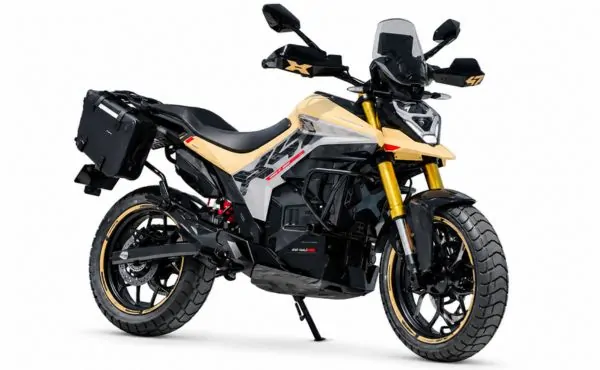
The Ultraviolette X-47 Desert Wing is a special edition of the X47 electric street-crossover motorcycle in India. Designed for touring and exploration, it features a larger 10.3 kWh SRB-10 battery, long-range capability, radar-based awareness tech, soft panniers, and standard front and rear dashcams. This model differs from the 7.1 kWh X47 versions, using the larger battery for an official 323 km IDC range and a claimed top speed of 145 km/h. The Desert Wing also has upright ergonomics, more ground clearance, longer suspension travel, and an 820 mm seat height. Its sand-colored finish and touring accessories set it apart from the regular X47 models.








Ratings
- 90%
Performance
- 90%
Features
- 80%
Handling
- 90%
Comfort
- 95%
Build Quality
- 100%
Styling
- 90%
Value for Money
- 91%
Total
Ratings calculation is purely based upon pros and cons of the model given below in the overview section.
Price
Special Features
1
Battery Warranty Coverage
2
Three Ride Modes
3
Overtake Alert
4
Lane-change Assist
5
Rear-collision Warning
6
Violette A.i Movement Alerts
7
Vector Cockpit Interface
8
Connected Uv App
9
Charge-limit Controls
10
Switchable Dual-channel Abs
11
Four-level Traction Control
12
Hill-hold Assist
Full Specifications
| Motor Type | Permanent Magnet AC Motor |
| Power | 40.8 PS |
| Torque | 100 Nm |
| Top Speed | 145 km/h |
| Transmission | Automatic |
| City | 183-266 km/full charge |
| Highway | 128-186 km/full charge |
| Speedometer | Digital |
| Tachometer | No |
| Tripmeter | Yes |
| Low Battery Indicator | Yes |
| Start Type | Self start |
| Kill Switch | Yes |
| Clock | Yes |
| Pass Light | Yes |
| ABS | Dual Channel |
| Stand Alarm | Yes |
| Tyres (F) | 110/70 R17 |
| Tyres (R) | 150/60 R17 |
| Brakes (F) | 320 mm Disc |
| Brakes (R) | 230 mm Disc |
| Frame Type | Steel Trellis with Aluminium Bulk head |
| Front Suspension | Upside-down Telescopic fork with a Diameter of 41 mm Preload Adjustable |
| Rear Suspension | Monoshock - Preload Adjustable |
| Wheelbase | 1385 mm |
| Ground Clearance | 200 mm |
| Kerb Weight | 208 kg |
| Seat Height | 820 mm |
| Battery | 10.3 kWh Lithium-ion |
| Head Lamp | LED |
| Tail Lamp | LED |
Overview
Performance And Motor
The X47 Desert Wing uses the Recon-level powertrain, with a permanent-magnet AC electric motor that delivers up to 30 kW, 100 Nm of motor torque, and a claimed 610 Nm at the rear wheel. This makes it a high-performance electric motorcycle, not just a commuter. It should feel quick at low and mid speeds, making overtaking, climbing flyovers, carrying luggage, and merging onto faster roads easier.
Ultraviolette says the top X47 can go from 0 to 60 km/h in 2.7 seconds and from 0 to 100 km/h in 8.1 seconds. This means the Desert Wing is likely much quicker than most petrol adventure bikes at city and suburban speeds, where instant electric torque really helps.
The large battery offers three main ride modes: Glide, Combat, and Ballistic. Glide gives the most range and smooth power, Combat balances performance and range, and Ballistic provides the strongest acceleration. The mode you choose affects your range: Ultraviolette says the 10.3 kWh battery can give about 266 km in Glide, 209 km in Combat, and 186 km in Ballistic, based on their tests.
The Desert Wing has four traction-control levels, switchable dual-channel ABS, Dynamic Stability Control, and ten levels of regenerative braking. These features help the bike handle Indian roads, including wet surfaces, dust, rough patches, gravel, and long downhills. They support the rider but do not replace the need for good tyre grip, proper speed, careful braking, or safe riding choices.
The Desert Wing uses a fully automatic electric transmission. With no hand clutch, gear shifter, or manual gearbox, you don’t need to change gears while riding. Just twist the throttle and the motor sends power directly to the rear wheel.
This automatic system makes the bike easier to handle than a regular petrol adventure bike, especially in heavy traffic, on hills, and in crowded town areas during long trips. The instant torque also helps when overtaking or starting off with luggage and a passenger, because you do not need to shift to a lower gear before speeding up.
The Desert Wing includes Park Assist and reverse-assist features to help you move the bike slowly in tight parking spots, on slopes, or when it is loaded for travel. These are especially useful because the larger battery, crossover frame, luggage, and touring gear make it bulkier than a basic electric motorcycle.
The Desert Wing’s top speed is claimed to be 145 km/h. This makes it a high-performance electric motorcycle, with enough speed for city expressways, bypasses, highways, and quick overtakes when it is legal and safe.
The 145 km/h top speed is the bike’s maximum, not the recommended cruising speed. Riding close to this speed uses more energy, reduces range, and means more charging stops. It also puts extra strain on the tyres, suspension, and brakes, and requires more focus from the rider.
Maintaining a moderate speed on highways helps balance travel time and range. Riders should keep in mind that panniers add drag and weight, especially when full. Always follow speed limits and adjust your speed for weather, road conditions, visibility, traffic, and battery level.
Range
The X47 Desert Wing officially claims a 323 km IDC range from its 10.3 kWh SRB-10 battery. IDC is the Indian test cycle for EVs, but it doesn’t guarantee you will get this range in real-world touring.
| Model | Battery capacity | Official claimed range | Test reference |
|---|---|---|---|
| X47 Desert Wing | 10.3 kWh | Up to 323 km per charge | IDC |
Ultraviolette’s own numbers show that range changes with the mode you use. With the 10.3 kWh battery, Glide mode gives about 266 km, Combat mode about 209 km, and Ballistic mode about 186 km. These figures are more helpful for planning than just relying on the 323 km IDC claim.
In real-world use, the Desert Wing’s range drops with high speeds, hard acceleration, Ballistic mode, heavy braking, hills, rough roads, headwinds, extreme temperatures, carrying a passenger, or loaded panniers. To get the best range, use smooth controls, Glide mode, moderate speed, proper tyre pressure, and keep your luggage weight reasonable.
A realistic range for daily use in India is typically less than the 323 km IDC claim. Many users report about 260–270 km per charge in Glide mode, while others plan for around 200 km as a reliable everyday figure. These figures are based on real-world use and can help with trip planning.
One test covered 39 km using 20% of the battery, suggesting about 200 km of range in those conditions. Because the route, speed, traffic, load, weather, and mode can all change, this isn’t a fixed range. It just shows how quickly range can drop with faster or less efficient riding.
| Riding situation | Sensible Desert Wing planning range |
|---|---|
| Steady Glide-mode city and suburban use | About 250–270 km |
| Mixed city and highway use | About 220–250 km |
| Fast highway riding, luggage, hills, or aggressive modes | About 180–210 km |
These planning ranges are based on early owner feedback and Ultraviolette’s mode-wise claims for the 10.3 kWh battery. They are not official manufacturer guarantees.
For reliable touring, plan your routes with about 200–230 km between charging stops, not the full 323 km IDC figure. Keep a charge buffer, especially if you have luggage, might face detours, headwinds, steep hills, or if charger availability could change.
Charging Time
The Desert Wing comes with a 1.6 kW Type 2-compatible onboard charger, which Ultraviolette calls a high-power air-cooled charging solution. Type 2 compatibility means you can use AC charging stations, as well as home or workplace outlets that fit.
Ultraviolette has not provided an official 20–80% AC charging time for the Desert Wing. For the similar X47 Recon 10.3 kWh model, it takes about 4 hours with the onboard charger, and owners say a standard home charger can take around 6 hours. Charging time depends on the charger, battery temperature, starting charge, power supply, cooling, and software settings.
The motorcycle also works with Ultraviolette’s Supernova DC fast-charging network. A 20–80% DC charge can take about 40 to 60 minutes, making it a strong option for long trips if a Supernova charger is available. Owners should check the charger’s location, hours, connector type, uptime, and backup options before planning a route that relies on DC charging.
| Charging method | Battery pack | Practical charge reference |
|---|---|---|
| Type 2-compatible onboard AC charger | 10.3 kWh | About 4 hours from 20–80% in related Recon reporting |
| Standard home charging, owner-reported | 10.3 kWh | About 6 hours; depends on charger and conditions |
| Supernova DC fast charging | 10.3 kWh | About 40–60 minutes from 20–80% |
Features And Technology
The Ultraviolette X47 Desert Wing is the fully equipped, touring-oriented special edition of the X47 crossover electric motorcycle in India. Unlike the regular X47 versions, the Desert Wing includes a special sand finish, soft-kit panniers, an integrated front-and-rear dashcam system, TPMS, handguards, advanced rider aids, a connectivity package, and high-power charging hardware as standard.
- Exclusive Desert Wing specification: The Desert Wing is not simply an X47 with a different paint scheme. It is the top special-edition configuration, designed for touring-focused riders and supplied with its most comprehensive equipment package as standard.
- 10.3 kWh SRB-10 battery pack: The motorcycle uses Ultraviolette’s largest 10.3 kWh SRB-10 lithium-ion battery module. It is the same capacity used in the high-range Recon-level X47, supporting the Desert Wing’s claimed 323 km IDC range.
- Battery warranty coverage: The Desert Wing includes the UV Care Max warranty package, covering the motorcycle for up to 8 years or 8 lakh km, whichever comes first. This is included with the special edition rather than requiring a separate paid warranty extension. Buyers should still obtain the final warranty booklet and exclusions in writing.
- Five-layer battery safety: Ultraviolette describes the SRB-10 system as having five safety layers: thermal, mechanical, electronic, electrical, and software protection. This multi-layer approach is relevant for Indian use across heat, rain, changing terrain, and variable charging conditions.
- 30 kW electric motor: The Desert Wing uses the high-output X47 motor with up to 30 kW peak output. It produces a claimed 100 Nm of motor torque and 610 Nm at the rear wheel.
- Three ride modes: Glide, Combat, and Ballistic are the Desert Wing’s principal ride modes. Glide is range-oriented, Combat balances range and response, and Ballistic unlocks the strongest performance. The rider can choose a mode based on traffic, road conditions, range needs, and riding preference.
- UV Hypersense 77 GHz radar: The Desert Wing includes Ultraviolette’s Gen 6, 77 GHz rear-facing Hypersense radar system. It has a claimed monitoring distance of around 200 metres, a 150-degree horizontal cone, and a 68-degree vertical cone.
- Blind-spot monitoring: The radar monitors vehicles in the blind zones and adjusts the monitored area according to speed and motorcycle orientation. This can be useful when riding in multi-lane traffic, overtaking, changing lanes, or travelling on highways.
- Lane-change assist: The system alerts the rider to relevant traffic while changing lanes. It can improve situational awareness but does not replace mirrors, shoulder checks, indicators, or safe riding judgment.
- Overtake alert: The radar identifies fast-approaching vehicles and warns the rider before they enter the immediate riding zone. This is useful on highways, ring roads, bypasses, and multi-lane city corridors where closing speeds can be high.
- Rear-collision warning: The motorcycle can alert the rider when a vehicle behind is closing in rapidly. This adds another layer of awareness during traffic slowdowns and sudden braking.
- Integrated dual dashcam system: Unlike the regular X47—where the dashcam is optional—the Desert Wing gets the front-and-rear dashcam package as standard. The system records rides and can provide useful evidence in the event of an incident, dispute, or unexpected road event.
- Sony IMX307 HDR camera sensors: The dashcam uses Sony IMX307 HDR sensors with 1080p video recording at 30 fps. This is designed to provide usable video evidence and ride recording under routine riding conditions.
- 120-degree wide-angle video: The camera system has a 120-degree field of view, helping capture a wider section of the road environment ahead and behind the motorcycle.
- Up to 256 GB expandable camera storage: The dashcam storage can be expanded up to 256 GB. Buyers should confirm the supplied storage capacity, recording-loop settings, supported card type, and warranty treatment for the dashcam hardware.
- Dedicated dashcam touchscreen: The camera package includes a compact dedicated touchscreen for viewing recordings and operating dashcam-related functions. It sits above the primary instrument display and adds a touring-oriented cockpit feature.
- Five-inch main touchscreen: The Desert Wing has a console-mounted five-inch touchscreen with anti-theft mounting and an aerospace-grade aluminium enclosure. The main screen provides the core vehicle interface for speed, range, settings, ride information, and vehicle alerts.
- Vector cockpit interface: The display uses Ultraviolette’s Vector visual theme, designed with an aviation-inspired information layout. It presents vehicle data through a cockpit-style interface rather than a conventional analogue motorcycle cluster.
- Connected UV app: The motorcycle integrates with Ultraviolette’s connected-app ecosystem, enabling compatible remote monitoring and ownership functions. Services may change depending on software version, mobile-network coverage, and subscription terms.
- Violette A.I. movement alerts: The connected system can notify the owner if someone approaches or gets unusually close to the parked motorcycle. It is useful for public parking and touring stops, though it should complement secure parking and a physical lock rather than replace them.
- Find My X47 function: The Desert Wing’s connected functions include a feature to help locate the motorcycle in large parking areas or monitor it after unexpected movement.
- Charge-limit controls: The Desert Wing supports charge-limit settings, allowing owners to set a maximum charging target. This can help with daily charging routines when a full charge isn’t necessary.
- Type 2-compatible onboard charger: The Desert Wing includes a Type 2-compatible onboard charger, allowing it to use suitable AC charging infrastructure and compatible domestic or workplace charging points. Ultraviolette describes this as a plug-anywhere approach, although users must always ensure the electrical supply and socket are appropriate.
- Fast-charging capability included: The Desert Wing’s comprehensive package includes high-power/fast-charging capability, unlike lower X47 configurations where charging equipment and eligibility may differ. It supports Ultraviolette’s Supernova DC fast-charging network for more practical touring stops.
- Switchable dual-channel ABS: The Desert Wing has switchable dual-channel ABS. This helps with controlled braking on tarmac and offers a more flexible setting for loose or off-road-style terrain, though riders must still adjust their braking technique for surface conditions.
- Four-level traction control: The motorcycle includes four selectable traction-control levels. These can help manage rear-wheel slip under acceleration on wet roads, gravel, dusty shoulders, damaged tarmac, and loose surfaces.
- Dynamic Stability Control: Dynamic Stability Control coordinates rider-assistance systems to support controlled acceleration and braking. It cannot overcome excessive speed, low tyre grip, unsafe tyre condition, or poor rider inputs.
- Ten-level dynamic regenerative braking: The Desert Wing provides ten adjustable regenerative-braking levels. Riders can alter the level while riding, choosing a freer coasting feel or stronger deceleration and energy recovery depending on traffic, gradients, and preference.
- ABS–regen coordination: The motorcycle’s braking electronics are designed to coordinate conventional braking support and regenerative braking. This is intended to improve stability under deceleration, but it does not remove the need for progressive brake use.
- Hill-hold assist: Hill-hold helps prevent rollback after stopping on an incline. It is useful on flyovers, mountain roads, steep parking ramps, basement exits, and sloping intersections.
- Park Assist: Park Assist helps the rider manoeuvre the Desert Wing slowly in tight spaces. This is valuable because a 10.3 kWh touring motorcycle with luggage equipment can be difficult to move manually on slopes or in crowded parking areas.
- Reverse assistance: The low-speed reverse function makes it easier to back the motorcycle out of a parking bay, a narrow driveway, or an incline.
- Tyre-pressure monitoring system: TPMS is standard on the Desert Wing. It can alert the rider to low tyre pressure, which is important for handling, braking, range, tyre life, and puncture awareness during highway and touring use.
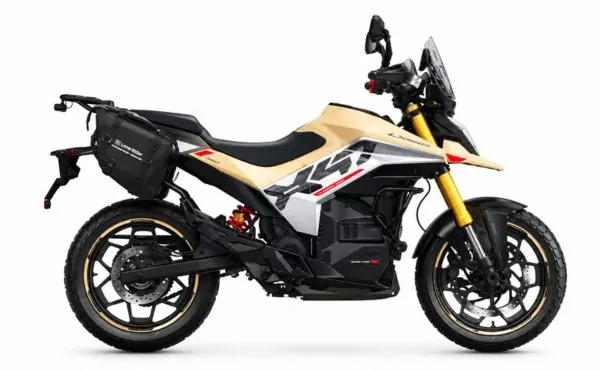
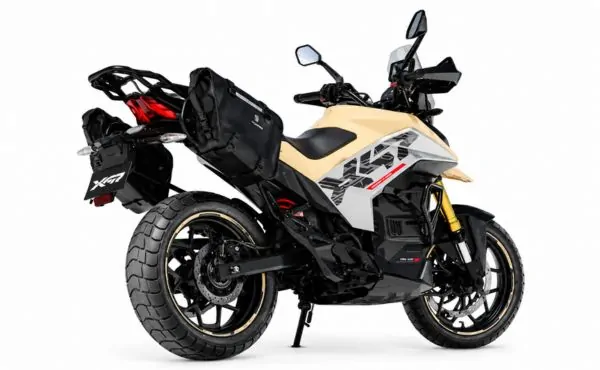
- Soft-kit panniers: The Desert Wing includes soft panniers for luggage storage. These improve its touring practicality for clothing, tools, rain gear, charging cable, and other essentials. Riders should pack evenly, secure the bags correctly, and account for luggage weight and aerodynamic drag. 1151
- Handguards: Handguards are supplied as standard on the Desert Wing. They offer limited protection from wind, rain, branches, gravel, and minor brush contact, while reinforcing the motorcycle’s touring and light-adventure character.
- Upright crossover ergonomics: The Desert Wing uses an upright rider position designed to reduce fatigue on long rides. This posture, along with the wide handlebar and crossover layout, supports city riding, highway cruising, and moderate rough-road use.
- Long-travel suspension: The motorcycle has longer-travel suspension designed to absorb potholes, rough tarmac, gravel sections, broken village roads, and mild trail surfaces while maintaining composure on highways.
- Increased ground clearance: Ultraviolette highlights increased clearance for obstacles, uneven roads, stones, poor surfaces, and light off-road-style routes. It supports the Desert Wing’s touring role but does not make it a dedicated enduro motorcycle.
- Cast-aluminium subframe: The cast-aluminum subframe is intended to balance weight, strength, stability, and carrying ability. Its load-focused design is particularly relevant when the included panniers are fitted and used for touring.
- 820 mm seat height: The Desert Wing has an 820 mm seat height. It offers an upright view of traffic and good leverage while standing or navigating rough surfaces, but shorter riders should assess footing and low-speed confidence during a test ride.
Build Quality
The Ultraviolette X47 Desert Wing is the touring-focused special edition of the X47 crossover and is built around the larger 10.3 kWh SRB-10 battery module, a cast-aluminium subframe, long-travel suspension, and additional standard touring equipment. Unlike the regular X47, the Desert Wing comes factory-equipped with soft panniers, handguards, a front-and-rear dashcam module, and the exclusive sand finish. The integrated equipment gives it a more complete expedition-ready feel than an ordinary accessory-fitted version.
Ultraviolette’s construction approach is strongly technology-led. The company describes the 10.3 kWh SRB-10 battery as having five layers of safety—thermal, mechanical, electronic, electrical, and software protection—and backs it with coverage of up to eight years or 8 lakh km, subject to the warranty terms. The five-inch touchscreen is housed in an aerospace-grade aluminium enclosure with anti-theft mounting, while the dashcam system uses Sony IMX307 HDR sensors, 1080p/30 fps recording, a 120-degree field of view, and expandable storage up to 256 GB.
The Desert Wing’s core X47 hardware supports its performance and touring role. It uses a steel frame, cast-aluminium subframe, 41 mm telescopic front fork, rear monoshock, and 170 mm of suspension travel at both ends. It rides on 17-inch wheels, with reported 110/70-R17 front and 150/60-R17 rear tyres. The cast-aluminium subframe is particularly relevant for this edition because it is intended to support heavier loads, including the supplied soft panniers and touring luggage.
The paint and fit-and-finish quality deserve personal inspection. One 3,000 km Desert Wing owner reported dissatisfaction with the sand-finish paint quality, while early X47 users have generally praised the design and engineering but flagged inconsistent fit and finish in places. This isn’t enough evidence to make a blanket judgment about every unit, but it does make a detailed pre-delivery inspection important. Check paint uniformity, panel alignment, luggage-mounting hardware, wiring around the dashcam, display mounting, switchgear, brake lines, charging-port flap, seat latch, wheel finish, and any rattles over rough surfaces.
Handling
The Desert Wing’s handling is based on X47 crossover fundamentals rather than dedicated off-road geometry. It has an upright rider stance, a wide handlebar, mid-set footpegs, added ground clearance, 17-inch wheels, and 170 mm suspension travel front and rear. This should make it more tolerant of potholes, broken roads, speed breakers, gravel shoulders, uneven village roads, and mild trail-like surfaces than a lower, street-focused electric motorcycle.
Test impressions found that the X47 turns into corners easily and that the wide handlebar gives useful leverage for changing direction. That should translate into manageable city riding and confident steering on twisty roads, despite the motorcycle’s large 10.3 kWh battery pack. A long-term Desert Wing owner also reported that, while the motorcycle feels big and heavy in traffic, it becomes easier to manage with familiarity; reverse mode and Park Assist help in tight parking spaces.
The suspension is tuned toward comfort and versatility. The 170 mm-travel setup is supple and effective at damping sharp-edged bumps on rough roads, while not being excessively soft. The Desert Wing’s block-pattern tyres and crossover stance should enhance confidence over loose or damaged surfaces, though they will not turn the motorcycle into a dedicated enduro machine.
Its rider-aid package supports varied Indian terrain. The Desert Wing has switchable dual-channel ABS, four levels of traction control, Dynamic Stability Control, and ten levels of regenerative braking. These systems can help the rider control acceleration and deceleration across wet tarmac, gravel, dust, and uneven surfaces, but they cannot compensate for excessive speed, poor tyre condition, overloaded panniers, or inadequate rider technique.
Braking feel is broadly positive in early testing. There is solid initial bite and lever feel, though ABS intervention can occur a little earlier than preferred during hard track braking. On public roads, that conservative intervention may reassure many riders, particularly on inconsistent Indian surfaces.
A proper Desert Wing test ride should include slow city traffic, tight U-turns, an incline, rough asphalt, speed breakers, a gravelly or uneven section where permitted, and a brief higher-speed run. Test it both with empty panniers and, if possible, a realistic luggage load because weight placement can change low-speed balance and steering response.
Comfort
Comfort is a major part of the Desert Wing’s crossover purpose. Ultraviolette’s official material highlights its upright ergonomics, natural seating position, wide handlebar, mid-set footpegs, and 820 mm seat height as features intended to reduce fatigue across city rides, highways, and rougher routes. The posture is considerably more relaxed than a committed sport motorcycle, placing less load on the rider’s wrists and lower back.
The 170 mm suspension travel at both ends is central to the Desert Wing’s all-road comfort. It absorbs potholes and sharp road edges better than a short-travel street motorcycle and should stay composed over uneven Indian roads. The suspension is supple and well-tuned, though sharp undulations and brick-paved surfaces can still be felt. In other words, it should be forgiving rather than plush in every situation.
The rider and pillion accommodation is generally positive. The seat is wide and well padded for both occupants, with reports of no discomfort after extended time in the saddle. A Desert Wing owner likewise described the seat and upright position as comfortable, though slightly firm. Another user said the seat, despite appearing thin, remains reasonably comfortable for around 90–120 minutes of uninterrupted riding. Comfort will nevertheless vary with rider build, passenger weight, road quality, and how the panniers are loaded.
The 820 mm seat height provides a commanding view of traffic and useful leverage over rougher surfaces, but it can be demanding for shorter riders in stop-start city traffic, on sloped roads, and when reverse-parking. The motorcycle also becomes physically more challenging when loaded with panniers, so riders should test their ability to plant a firm foot, push the bike backward, and use Park Assist on an incline.
For touring, the most realistic expectation is comfortable day-long riding with planned breaks, not effortless all-day isolation from fatigue. The upright stance, long-travel suspension, standard handguards, and pannier capability are substantial advantages, but wind exposure, seat firmness, luggage weight, and a relatively tall saddle should be assessed in a meaningful test ride before purchase.
Styling
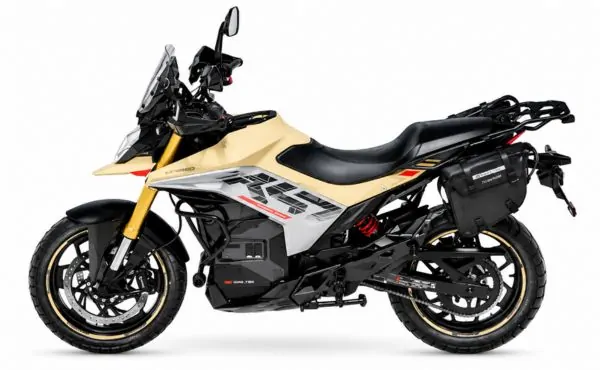
The X47 Desert Wing uses the same sharp, aviation-inspired crossover form as the X47 family, but adds equipment and finish that give it a more expedition-ready look. Its angular LED headlamp, compact front cowl, sculpted battery-section bodywork, exposed structural elements, tall stance, and sharp tail create a futuristic electric-motorcycle identity that is distinct from conventional petrol adventure bikes.
The Desert Wing is not a full-scale off-road enduro, but its visual design clearly leans toward touring and light-adventure use. Upright ergonomics, a wide handlebar, 200 mm of ground clearance, 17-inch wheels, long-travel suspension, and the tall 820 mm seat height give it a purposeful crossover stance. It looks intended for a mixture of urban traffic, highways, rough roads, and occasional unpaved detours rather than purely city-focused commuting.
The touring equipment makes the greatest visual difference. The Desert Wing comes with soft-kit panniers, which add luggage capacity and a wider rear profile, while standard handguards reinforce its adventure-focused appearance. Its dual dashcam unit also adds a distinct technical layer to the cockpit, with a dedicated display placed above the main five-inch touchscreen.
Ultraviolette’s official language describes the motorcycle as “Futuristic. Athletic. Capable,” with aviation DNA reflected in its angular surfaces, cockpit-style display design, aluminium screen enclosure, and radar-led technology. The Desert Wing’s design therefore combines performance EV styling with practical touring accessories, rather than simply offering a cosmetic colour change.
Colour Options And Variants
The exclusive Desert Wing colour is
- Sandstorm Brown
This colour is exclusive to this model. It matches the bike’s desert and adventure theme, making it different from other X-47 versions that come in standard colours. The matte finish gives the motorcycle a rugged but premium look, appealing to riders who want something unique without being too flashy.
This singular colour choice for the Desert Wing resonates well with Indian buyers who prefer understated elegance paired with rugged capability, fitting both urban usage and weekend getaways.
This is described as an “exclusive sand finish,” and it is the colour most closely associated with the Desert Wing special edition. The earthy finish complements the motorcycle’s panniers, handguards, crossover stance, and exploration-focused branding.
The sand-coloured treatment differentiates the Desert Wing from the regular X47 line-up, whose standard finishes include Laser Turbo Red, Shadow Cosmic Black, and Airstrike Stellar White. Buyers looking specifically for the Desert Wing should ensure their booking and invoice clearly identify the Desert Wing special-edition package and its sand finish, rather than merely an X47 Recon Plus or another regular X47 variant.
The X47 Desert Wing is offered as one special-edition variant rather than a series of battery or feature trims. It is based on the 10.3 kWh X47 platform and includes the larger SRB-10 battery, a 323 km IDC range claim, a 30 kW motor, 100 Nm of motor torque, 610 Nm of claimed rear-wheel torque, and a claimed top speed of 145 km/h.
The Desert Wing is positioned above the regular Original, Original Plus, Recon, and Recon Plus versions because it bundles the highest-capacity battery and a comprehensive touring package. Crucially, its front-and-rear dashcam, soft panniers, handguards, tyre-pressure monitoring system, high-power charging equipment, and UV Care Max coverage are part of its special-edition proposition rather than optional accessories that need to be added later.
Value For Money And Pricing
The Ultraviolette X47 Desert Wing is the flagship special edition in the X47 range and is priced at ₹ 4,59,000 ex-showroom in India. It is offered as one fully specified version rather than in multiple battery, feature, or accessory grades. Online on-road estimates are around ₹4.80 lakh to ₹4.96 lakh, depending on the state, insurance provider, registration-related charges, and dealer calculation.
This pricing puts the Desert Wing above the regular X47 versions, which start at ₹2.49 lakh. The ₹2.10 lakh premium over the entry X47 reflects not only its 10.3 kWh battery and 323 km IDC claim but also the bundled special-edition equipment: exclusive sand finish, radar-based Hypersense system, dual dashcams, soft panniers, handguards, Type 2-compatible onboard charging, TPMS, and UV Care Max battery-and-vehicle coverage.
Unlike a base X47 that may require separate upgrades for the dashcam or enhanced charging setup, the Desert Wing is intended to deliver the complete touring-focused package at purchase. Buyers should nevertheless obtain a detailed, written quotation confirming the ex-showroom price, insurance, registration-related charges, charger type, Supernova DC-charging eligibility, dashcam storage hardware, pannier contents, warranty inclusions, connected-service terms, and delivery date.
The Desert Wing’s value lies in its fully loaded touring package, not simply in its large battery. It includes a 10.3 kWh SRB-10 battery with a claimed 323 km IDC range, 30 kW/40.2 hp output, 100 Nm motor torque, 610 Nm claimed rear-wheel torque, 145 km/h top speed, and three riding modes: Glide, Combat, and Ballistic. These performance figures place it among India’s most capable electric motorcycles for highway riding and longer-distance touring.
Its standard technology suite is unusually comprehensive. The 77 GHz Hypersense rear radar supports blind-spot monitoring, lane-change assistance, rear-collision warning, and overtake alerts. The motorcycle also includes switchable dual-channel ABS, four-level traction control, Dynamic Stability Control, ten-level regenerative braking, TPMS, Park Assist, reverse assistance, a five-inch aluminum-enclosed touchscreen, a connected app, and a standard front-and-rear dashcam system.
The included touring accessories further strengthen the package. Soft panniers let you carry luggage without buying a separate accessory, while handguards provide some weather and debris protection. The 820 mm saddle, upright riding position, longer-travel suspension, added ground clearance, and cast-aluminum subframe are all intended to make the Desert Wing more useful on poor roads, highway routes, and light rough-road excursions than a conventional electric street motorcycle.
The included UV Care Max cover is another important part of the value case. Ultraviolette states coverage of up to eight years or 8 lakh km for the 10.3 kWh SRB-10 power module, subject to applicable terms. For a high-value electric motorcycle, this potential long-term protection matters, but buyers should read the warranty document for battery-capacity guarantees, eligibility conditions, charging rules, exclusions, damage coverage, service obligations, and transferability.
The biggest caveat is that it is a very high upfront price for an electric motorcycle. It makes economic sense primarily for riders who will genuinely use the larger battery, touring equipment, high-speed ability, radar features, and fast-charging compatibility. A short-distance urban rider will likely gain better value from a lower X47 variant or a more affordable EV. The Desert Wing is a premium enthusiast-and-touring product, not a low-cost replacement for a petrol commuter motorcycle.
The Desert Wing has no exact like-for-like rival in India because it combines a large 10.3 kWh EV battery, 323 km IDC range claim, 145 km/h performance, radar-based awareness technology, dashcams, touring panniers, and crossover ergonomics. It will nevertheless be cross-shopped with premium electric motorcycles such as the
- Ola Roadster
- Raptee HV T30
The Ola Roadster Pro suits EV buyers who want high technology and performance at a much lower entry price, starting around ₹2 lakh. The Desert Wing costs more than twice as much, but offers an established premium crossover package: much larger battery capacity, touring luggage, radar safety aids, dashcams, traction-control settings, and a special-edition warranty package. Compare actual deliveries, service reach, battery terms, charging availability, and long-term support—not just the headline price.
The Raptee T 30 is another electric alternative, listed at about ₹2.39 lakh in India. It can appeal to riders who want high-performance electric commuting and city riding without committing to the Desert Wing’s costly touring equipment and large battery. However, the Desert Wing has the stronger touring proposition because of its 10.3 kWh pack, claimed 323 km IDC range, fast-charging support, luggage, and crossover ergonomics.
The Desert Wing represents good value only when viewed as a bundled flagship: a long-range performance EV, touring crossover, technology showcase, and accessorised special edition. If you would otherwise add the 10.3 kWh battery, premium charging hardware, dashcam system, panniers, handguards, TPMS, radar functionality, and extended cover to a regular X47, the Desert Wing’s bundled proposition becomes easier to justify.
For most city-only users, however, the high ex-showroom price is difficult to justify. A lower X47 variant, Ola Roadster Pro, Raptee T 30, or even a premium electric scooter may meet the requirement at much lower cost. Buyers expecting frequent remote touring must also weigh the simplicity of petrol alternatives, especially the Himalayan 450 and KTM 390 Adventure, against the Desert Wing’s electric operating-cost advantage and need for planned charging. The right decision depends on annual kilometres, access to reliable home charging, expected touring routes, luggage needs, and the availability of Ultraviolette service and Supernova DC charging in the places you actually ride.
Verdict
The Ultraviolette X47 Desert Wing is a premium electric touring crossover for Indian riders who want high performance, a large battery reserve, advanced safety technology, and factory-fitted travel equipment in one package. Its 10.3 kWh battery, 323 km IDC range claim, 145 km/h top speed, 30 kW motor, radar-assisted alerts, dual dashcams, soft panniers, handguards, TPMS, adjustable regenerative braking, traction control, switchable dual-channel ABS, and long-travel suspension make it one of the most comprehensively equipped electric motorcycles in India. It suits experienced riders who regularly cover long distances, ride on highways and varied road surfaces, need luggage capacity, and have access to reliable home charging and confirmed Supernova DC fast-charging stops along their usual touring routes.
However, the Desert Wing is a specialist flagship rather than a practical choice for every rider. Its high on-road cost, realistic range expectation of about 200–250 km in mixed riding, multi-hour home charging requirement, 820 mm seat height, touring-oriented weight, and limited suitability for serious off-road riding warrant careful consideration. The best way to judge its value is to see it as a fully bundled premium package: if its factory-fitted dashcams, panniers, handguards, advanced rider aids, 10.3 kWh battery, and UV Care Max warranty are genuinely useful, the price becomes easier to justify. Before booking, riders should take an extended test ride, check comfort with luggage and a pillion, confirm the exact charging equipment and warranty terms, verify Ultraviolette service coverage, and map Supernova charger availability on the routes they actually plan to ride.
Pros
- Comprehensive flagship package: The Desert Wing is supplied with equipment that is optional or unavailable on lower X47 variants, including the exclusive sand finish, front-and-rear dashcam, soft panniers, handguards, TPMS, high-power charging hardware, and UV Care Max coverage. This avoids the need to configure a separate touring accessories package.
- Large 10.3 kWh battery and useful touring range: It has a 10.3 kWh SRB-10 battery with a claimed 323 km IDC range. More importantly, early Indian ownership feedback suggests around 200 km as a dependable mixed-use planning figure, with Glide-mode estimates near 250 km in favourable conditions.
- Very strong performance: The Desert Wing produces up to 30 kW/40.2 hp, 100 Nm of motor torque, and 610 Nm claimed rear-wheel torque, with a claimed 145 km/h top speed. This gives it rapid overtaking performance and genuine highway capability.
- Advanced radar safety aids: The 77 GHz Hypersense rear-radar system provides blind-spot monitoring, lane-change assistance, overtake alerts, and rear-collision warning. This is highly relevant for high-speed highway riding and dense multi-lane Indian traffic.
- Strong electronic control package: Switchable dual-channel ABS, four-level traction control, Dynamic Stability Control, hill hold, Park Assist, reverse assistance, and ten-level adjustable regenerative braking give the rider useful support across wet roads, broken tarmac, gravel, hills, and city traffic.
- Touring-friendly riding position: The upright posture, wide handlebar, 820 mm seat height, increased ground clearance, long-travel suspension, and 17-inch wheels should offer more comfort and rough-road tolerance than a low, sport-focused electric motorcycle.
- Integrated incident recording: Standard front-and-rear dashcams with 1080p/30 fps recording, HDR-capable Sony IMX307 sensors, a 120-degree view, and expandable storage can provide useful evidence after traffic incidents or while travelling.
- Potentially strong warranty cover: UV Care Max provides claimed cover of up to eight years or 8 lakh km, subject to the warranty conditions. This is a meaningful assurance for a high-value electric motorcycle with a large battery pack.
Cons
- Very expensive: The Desert Wing reaches approximately ₹4.80–4.96 lakh on-road in published estimates. It competes financially with capable petrol adventure-tourers that are easier to refuel and often have wider service coverage.
- Real-world range is far below 323 km IDC: The 323 km rating is a controlled test-cycle claim. An early owner reported a mixed real-world average of roughly 200 km; fast riding, Ballistic mode, pannier load, passenger weight, hills, heat, and highway speeds can reduce it further.
- Charging requires planning: DC fast charging improves travel flexibility, but route usability still depends on access to active and compatible chargers. Home charging is much slower; one owner reported approximately 8.5 hours for a complete onboard-charger session.
- Software and component concerns in isolated owner feedback: An early owner reported display lag and slow screen animations, a flimsy/noisy component, and a side stand that did not fully retract. Another owner reported a sudden battery-discharge issue and an early ADAS/mirror alert concern. These are individual reports, not proof of a widespread issue, but they justify a thorough test ride and written service-support confirmation.
- Heavy and tall in city conditions: The 10.3 kWh battery, touring hardware, and 820 mm seat height make the Desert Wing less effortless than a light commuter motorcycle during stop-start traffic, tight U-turns, parking, or steep inclines. Park Assist and reverse mode help, but shorter riders should assess confidence carefully.
- Not a true off-road machine: The Desert Wing has ground clearance, long-travel suspension, handguards, and panniers, but it remains an electric crossover rather than a lightweight enduro. Its mass, battery cost, road-oriented use case, and charging needs make aggressive off-road or remote trail riding less practical.
Frequently Asked Questions About Ultraviolette X47 Desert Wing
1. What Battery And Range Does The Ultraviolette X47 Desert Wing Offer?
The Desert Wing uses a 10.3 kWh SRB-10 battery with a claimed 323 km IDC range. Range varies by ride mode — about 266 km in Glide, 209 km in Combat, and 186 km in Ballistic. Realistically, most riders should plan for around 200–250 km in mixed use rather than the full IDC claim.
2. What Is The Performance And Top Speed Of The Desert Wing?
It uses a 30 kW permanent-magnet AC motor producing 100 Nm of motor torque and a claimed 610 Nm at the rear wheel, with a top speed of 145 km/h. Ultraviolette claims 0–60 km/h in 2.7 seconds and 0–100 km/h in 8.1 seconds for the X47 range.
3. How Long Does The Desert Wing Take To Charge?
It comes with a 1.6 kW Type 2-compatible onboard AC charger. For the similar Recon 10.3 kWh model, a 20–80% charge takes about 4 hours via the onboard charger, while owners report around 6 hours on a standard home charger. Using Ultraviolette’s Supernova DC fast-charging network, a 20–80% charge can take about 40–60 minutes.
4. What Safety And Rider-assistance Features Does The Desert Wing Include?
It comes standard with a 77 GHz Hypersense rear radar (blind-spot monitoring, lane-change assist, overtake alerts, rear-collision warning), switchable dual-channel ABS, four-level traction control, Dynamic Stability Control, ten-level regenerative braking, hill-hold assist, Park Assist, reverse assistance, and a tyre-pressure monitoring system (TPMS).
5. What Is The Price Of The X47 Desert Wing, And What Touring Equipment Comes Standard?
The Desert Wing is priced at ₹4,59,000 ex-showroom in India (on-road estimates of roughly ₹4.80–4.96 lakh). It comes standard with soft panniers, handguards, a front-and-rear dashcam system (Sony IMX307 HDR sensors, 1080p/30fps), and UV Care Max warranty coverage of up to 8 years or 8 lakh km — equipment that is optional or unavailable on regular X47 variants.
Other Related Links From Bikeleague India
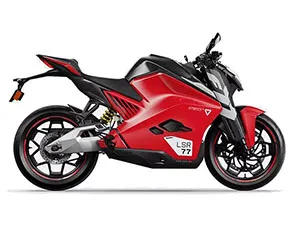
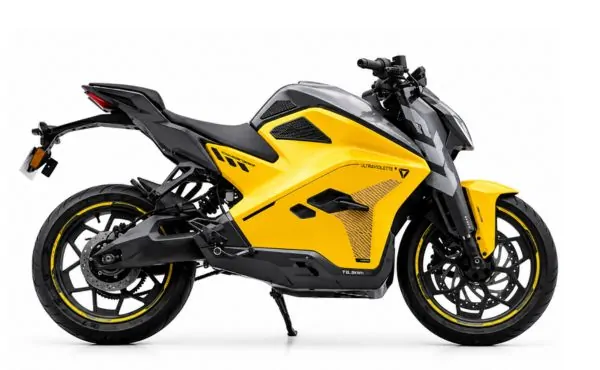
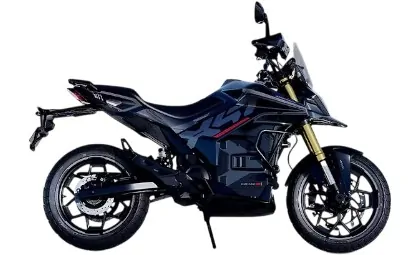
List Of All Ultraviolette Electric Bikes
About Ultraviolette Electric Bikes
Ultraviolette Automotive is an electric mobility company based in Bengaluru, Karnataka. Founded in 2017 by Narayan Subramaniam and Niraj Rajmohan, the company set out to build advanced electric motorcycles for both Indian and global markets.
Ultraviolette first made a mark with the F77, a high-performance electric motorcycle meant to show that electric two-wheelers can be more than just city commuters. The F77 was built with special attention to acceleration, handling, battery technology, and smart features.
Ultraviolette builds its products on a core technology platform that includes high-voltage batteries, advanced motor controls, regenerative braking, different ride modes, connected diagnostics, and rider-focused electronics.
| Aspect | Ultraviolette’s position in India |
|---|---|
| Headquarters | Bengaluru, Karnataka |
| Founded | 2017 |
| Founders | Narayan Subramaniam and Niraj Rajmohan |
| Main category | Premium electric motorcycles and future electric scooters |
| Flagship product | Ultraviolette F77 |
| Key markets | India, with growing international expansion plans |
| Brand identity | Performance, technology, design, and electric mobility innovation |
| Key investors | TVS Motor Company and Qualcomm Ventures, among others. |
History And Growth
Ultraviolette started up when India’s EV industry was just beginning to grow. Rather than launching a basic scooter, the company decided to develop a high-performance electric motorcycle. This tougher path helped Ultraviolette stand out as a premium EV brand.
Ultraviolette introduced the F77 concept to the public in 2019. Its sporty look, performance claims, and high-voltage electric design drew a lot of interest. After several rounds of development and engineering updates, the company started delivering the F77 in India in late 2022.
Ultraviolette later released new versions of the F77, such as the F77 Mach 2, with better battery technology, improved electronics, regenerative braking, and updated software. The company also grew its Experience Centre network to make it easier for customers to access products, take test rides, and get support.
| Year or period | Major development |
|---|---|
| 2017 | Ultraviolette Automotive was founded in Bengaluru. |
| 2019 | The F77 electric motorcycle concept was unveiled. |
| 2022 | Commercial F77 production and deliveries began in India. |
| 2024 | F77 Mach 2 introduced with updated performance, technology, and riding features. |
| 2025 | Ultraviolette expanded overseas market activity and strengthened its retail footprint. |
| 2026 | The company expanded its planned product portfolio with the X47, Shockwave, and Tesseract. |
| 2027 onward | Production ramp-up for the Tesseract scooter and broader EV range is planned. |
Ultraviolette has grown carefully, not just by chasing high sales numbers. At first, the company focused on making sure its products were reliable, batteries were safe, charging systems worked well, and customers had a premium experience before aiming for bigger production.
Key Milestones And Developments
The F77 is Ultraviolette’s biggest milestone so far. It gave the company a premium electric motorcycle with a clear performance focus, putting the brand in competition with both petrol bikes and other electric options.
Recent announcements show that Ultraviolette is changing its strategy. The company plans to go beyond premium motorcycles and enter new segments like crossover bikes, street EVs, cruisers, and electric scooters. This wider range should help Ultraviolette reach more customers than the F77 alone.
| Milestone | Details |
|---|---|
| Company formation | Company formation Ultraviolette was founded in Bengaluru in 2017. |
| F77 concept | The original F77 concept was unveiled in 2019. |
| F77 launch | The F77 became Ultraviolette’s first production electric motorcycle in India. |
| F77 Mach 2 | Updated version added improved technology, regenerative-braking settings, and software features. |
| International expansion | The company began pursuing overseas sales and market access beyond India. |
| X47 crossover | Ultraviolette expanded its motorcycle strategy with the X47 crossover platform. |
| Shockwave motorcycle | A more accessible electric motorcycle is planned below ₹2 lakh. |
| Tesseract scooter | Ultraviolette announced an electric scooter expected to be priced below ₹1.5 lakh. |
| BIGGA Factory | A new Hosur plant was announced to scale production for Tesseract and future products. |
Ultraviolette has made it clear that it wants to offer a full range of products, not just one performance motorcycle. Its plans include sports bikes, crossovers, cruisers, street motorcycles, and scooters.
Manufacturing Facilities
Ultraviolette’s main factory is in Bengaluru, Karnataka. It handles current vehicle production and is being expanded to boost output. The plant can make about 30,000 units a year now, with plans to raise that to 50,000–60,000 units through more investment.
In September 2026, Ultraviolette announced plans for a much larger factory called the BIGGA Factory, which stands for Big Global Ambition. This new plant will be at SIPCOT Industrial Park in Shoolagiri, Hosur, Tamil Nadu. It will first produce the Tesseract electric scooter and later support more products.
The new Hosur factory will be built in stages, starting with the ability to make 250,000 electric two-wheelers a year. If demand grows, the plant can be expanded to produce up to 500,000 units annually.
| Facility | Location | Role and capacity |
|---|---|---|
| Existing Ultraviolette plant | Bengaluru, Karnataka | Produces current EV models; planned expansion to around 50,000–60,000 units annually. |
| Existing Bengaluru capacity | Karnataka | Approximately 30,000 units annually before planned expansion. |
| BIGGA Factory | SIPCOT Industrial Park, Shoolagiri, Hosur, Tamil Nadu | Planned production base for Tesseract and future models. |
| BIGGA initial capacity | Hosur, Tamil Nadu | 250,000 electric two-wheelers annually, to be ramped up in phases. |
| BIGGA scalable capacity | Hosur, Tamil Nadu | Up to 500,000 units annually, depending on demand. |
| Combined capacity target | Bengaluru and Hosur | About 300,000 units annually by mid-2027. |
The Hosur plant is expected to create about 2,000 jobs at first, with more jobs added as it grows. Ultraviolette plans to invest around ₹779 crore in this facility over five years, and total investment in both Bengaluru and Hosur could reach ₹1,000 crore.
Market Position And Achievements
Ultraviolette stands out in India’s EV market. Instead of focusing on mass-market scooters, it is a premium electric motorcycle brand aiming to offer a performance-focused alternative to petrol bikes.
Ultraviolette’s main strengths are the F77’s performance, its high-voltage battery, unique design, advanced software, and rider-focused technology. These features attract customers who care about performance and engineering, not just low running costs.
| Primary market | Premium electric motorcycles |
|---|---|
| Current flagship | F77 and F77 Mach 2 |
| Growth categories | Crossover, street, cruiser, entry-performance motorcycle, and scooters |
| Main strengths | Performance focus, advanced battery systems, design, and connected features |
| Retail network | More than 40 Experience Centres reported in 2026. |
| Retail-expansion target | Presence in 100 cities by the end of 2026. |
| Production strength | Existing Bengaluru facility plus planned high-volume Hosur plant |
| Long-term strategy | Build India and exports through a wider electric-two-wheeler portfolio |
Ultraviolette’s biggest achievement is building an Indian performance electric motorcycle brand from scratch. The F77 has made the company known as a specialist EV maker with its own identity, not just another two-wheeler company adding electric models.
The upcoming Tesseract scooter is a key step for Ultraviolette, as it could move the company from a niche brand to a bigger player in the EV market.
Reports say there are over 70,000 paid bookings for the Tesseract, but its real impact will depend on deliveries, conversion rates, production schedules, and customer experience.
Future Plans
Ultraviolette’s future plans focus on quickly expanding its product range, increasing factory capacity, growing retail in India, developing exports, and using more local EV technology.
The company plans to grow beyond the F77 and enter several new categories. Its future lineup includes the Tesseract scooter, Shockwave motorcycle, X47 crossover, and more sport, cruiser, street, and scooter models.
Right now, Ultraviolette’s top manufacturing goal is the BIGGA Factory in Hosur. The company expects the plant to start operating in phases, possibly six to eight months after the September 2026 announcement, with full production aimed for July to September of FY2028. These plans depend on construction, approvals, supply chain, and market demand.
| Tesseract electric scooter | Expected to be the first high-volume product from the Hosur plant. |
|---|---|
| Shockwave electric motorcycle | Planned as a more accessible model priced below ₹2 lakh. |
| Wider motorcycle portfolio | Sports, crossover, cruiser, and street EVs are part of the roadmap. |
| Manufacturing expansion | Scale from Bengaluru production to a combined 300,000-unit annual capacity target by mid-2027. |
| Long-term capacity | BIGGA Factory infrastructure designed to reach 500,000 units annually. |
| Retail growth | Expand from 40+ Experience Centres toward 100 cities by end-2026. |
| Investment | Approximately ₹1,000 crore planned across Karnataka and Tamil Nadu over five years. |
| Export strategy | Use increased manufacturing scale to serve international markets in addition to India. |
Other Related Links From Bikeleague India
User Reviews
There are no reviews yet. Be the first one to write one.

Hiran Narayanan
Founder & CTO at Bikeleague India
Hiran Narayanan is the Founder and CTO of Bikeleague India, bringing over 15 years of experience in motorcycle technical writing. He develops detailed analyses, tools, model overviews, and blogs that contribute to bikeleague.in's improving rankings.