
Introduction
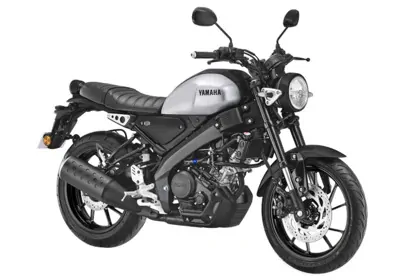
The Yamaha XSR 155 is a neo-retro bike from Yamaha Motor India, using the same 155cc platform as the R15 and MT-15 but with classic ‘Sport Heritage’ looks. It has a round LED headlamp, teardrop tank, and simple bodywork, along with a liquid-cooled VVA engine, Deltabox frame, and modern suspension. This setup makes it a solid pick for daily commutes and relaxed weekend rides. The XSR 155 suits riders who want a stylish 155cc bike that balances performance, efficiency, and everyday use, instead of a full-on sportbike.
Gallery
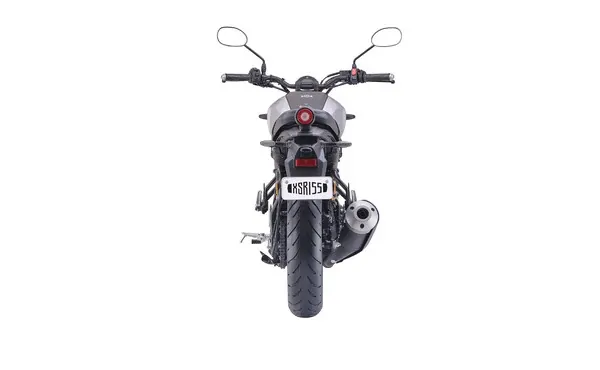
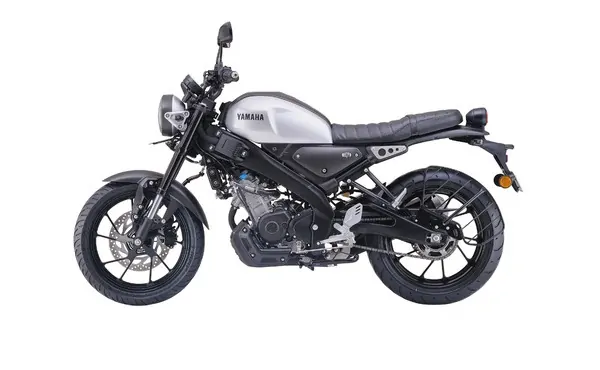
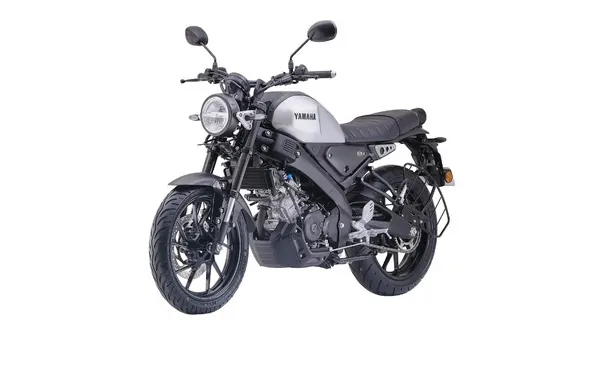
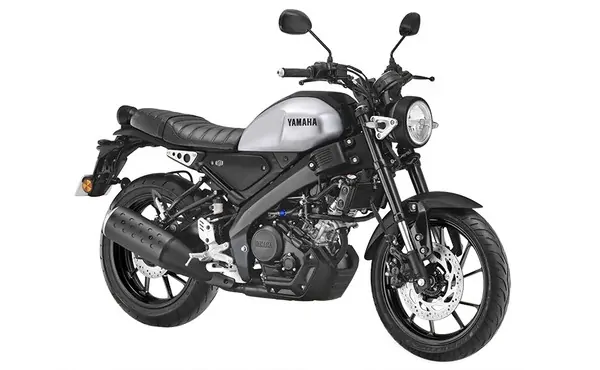
Key Specifications
Displacement
155cc
Mileage
35-45km/l
Power
18.4PS @ 10,000rpm
Torque
14.2Nm @ 7,500rpm
Fuel System
Fuel Injection
Tank Capacity
10 liters
Rear Suspension
Swingarm
Kerb Weight
137Kg
Ratings
- 80%
Performance
- 100%
Features
- 90%
Handling
- 80%
Comfort
- 100%
Build Quality
- 95%
Styling
- 90%
Value for Money
- 91%
Total
Ratings calculation is purely based upon pros and cons of the model given below in the overview section.
Price

Special Features
1
Lc4v Fi Engine
2
6 Speed Transmission
3
Assist & Slipper Clutch
4
Dual Channel Abs
5
Deltabox Frame
6
Aluminium Swingarm
7
Single,flat Seat
8
14omm Rear Radial Tyre
9
Dual Horn
10
Multi Function Console
11
Led Tail & Headlight
12
Side Stand Engine Cut Off
Full Specifications
| City | 35-40km/l |
| Highway | 40-45km/l |
| Tyres (F) | 100/80-17M/C 52P - Tubeless |
| Tyres (R) | 140/70R-17M/C 66H - Tubeless |
| Brakes (F) | Disc 282 mm |
| Brakes (R) | Disc 220 mm |
| Wheelbase | 1,325mm |
| Ground Clearance | 120mm |
| Seat Height | 810mm |
| Length × Width × Height | 2,005mm × 805mm × 1,080mm |
| Kerb Weight | 137kg |
| Fuel Capacity | 10L |
| Engine Type | Liquid-cooled, 4-stroke, SOHC, 4-valve |
| Displacement | 155cc |
| Power | 18.4PS @ 10,000rpm |
| Torque | 14.2Nm @ 7,500rpm |
| Bore x Stroke | 58mm x 58.7mm |
| Compression Ratio | 11.6:1 |
| Fuel Supply | Fuel Injection |
| Transmission Type | Constant mesh, 6-speed |
| Clutch Type | Wet, multi-disc |
| Speedometer | Digital |
| Tachometer | Digital |
| Tripmeter | Digital (2 tripmeters) |
| Fuel Gauge | Digital |
| Low Fuel Indicator | Yes |
| Low Battery Indicator | No |
| Low Oil Indicator | Yes |
| Start Type | Electric / Self-Start Only |
| Kill Switch | Yes |
| Clock | Yes |
| Pass Light | Yes |
| ABS | Dual Channel ABS |
| Stand Alarm | Yes |
| Type | Deltabox frame |
| Front Suspension | Telescopic upside down front fork |
| Rear Suspension | Linked-type Swingarm |
| Battery | 12V, 4.0Ah |
| Head Lamp | LED |
| Brake/Tail Light | LED |
Yamaha Videos
[slide-anything id=”42070″]
Overview
Performance And Engine
The XSR 155 uses Yamaha’s well-known 155cc liquid-cooled, 4-stroke, single-cylinder engine with fuel injection and Variable Valve Actuation (VVA), just like the R15 V4 and MT-15. In India, it makes about 18.4 PS (around 18.1 bhp) at 10,000 rpm and 14.2 Nm of torque at 7,500 rpm. This gives the bike good mid-range power and enough top-end for fun rides, without being too aggressive.
VVA is an important part of how this engine works. Below about 6,500 to 7,000 rpm, it uses a cam profile that gives better low and mid-range torque. Above that, it switches to a more aggressive profile, keeping the engine lively at higher revs. This setup keeps the engine smooth at all speeds, with enough torque for easy city riding and a clear boost after 7,000 rpm on the highway. The XSR 155 goes from 0 to 60 km/h in about 4.3 seconds, 0 to 80 km/h in about 7 seconds, and 0 to 100 km/h in just over 11 seconds, which is quick for a retro-styled 155cc bike.
The Yamaha XSR 155 has a 6-speed manual transmission with a standard 1-down, 5-up shift pattern and chain drive. It also comes with an assist-and-slipper clutch, making the clutch lever lighter and helping smooth out downshifts by reducing rear-wheel hop during hard braking. This is especially helpful in stop-and-go Indian traffic, where a light clutch cuts down on fatigue, and on winding roads, where smooth downshifts keep the bike steady in corners.
The gearbox is smooth and precise, with gear ratios that let the engine work well in both city and highway riding. In city traffic, you can shift early and use the engine’s torque, while on highways, 6th gear lets you cruise comfortably without high revs. Overall, the transmission matches the engine’s flexibility and helps the bike serve as both a daily commuter and a weekend ride.
Reported top speeds for the XSR 155 range from 120 to 135 km/h. In real-world use, the bike is most comfortable cruising at 90 to 100 km/h, where the engine feels relaxed and the bike stays stable.
Since it shares its engine and chassis with the R15 and MT-15, the XSR 155 has enough power for Indian highways without needing a bigger engine. It’s designed for steady, usable speed rather than chasing the highest top speed. You can ride at around 8,000 rpm for long stretches, and the engine stays smooth. For most Indian riders, this makes the XSR 155 well-suited to overtaking and inter-city trips, while remaining easy to handle for those moving up from smaller commuter bikes.
Mileage And Fuel Efficiency
The Yamaha XSR 155 claims a fuel efficiency of 45–50 kmpl. With its 10-litre tank, that means a range of 450–500 km per fill, making it practical for daily commutes and weekend rides. This efficiency also gives it an advantage among 155cc bikes for those who care about running costs and performance.
In real-world use, the Yamaha XSR 155’s mileage is usually a bit lower than the official claims but still solid. Most riders get 35–45 kmpl, with city traffic averaging 35–40 kmpl and highways 40–45 kmpl. Some owners reach up to 50 kmpl with careful riding. With a 10-litre tank, you can expect 400–500 km between refuels, which is good for commuting and trips.
Overall, the Yamaha XSR 155 gives you a smooth, high-revving engine, a light 6-speed gearbox with assist-and-slipper clutch, a practical top speed for relaxed cruising, and realistic fuel economy in the 40–45 kmpl range for everyday Indian conditions.
Features And Technology
The Yamaha R15S is Yamaha’s budget friendly entry into the R15 sportbike family, aimed at Indian riders who want proper sportbike tech without paying a premium. It combines Yamaha’s Racing DNA with everyday practicality by offering E20 fuel compatibility, dual channel ABS, VVA, assist and slipper clutch, all LED lighting, and smartphone connectivity, making it one of the most feature rich 150–160cc sportbikes for Indian roads.
- Y Connect App phone notifications on display: The Yamaha Y Connect App lets basic phone notifications appear on the instrument cluster, so riders can see call and SMS alerts without looking down at their phones. To use it, you download the app and pair your smartphone with the bike. It’s designed to keep riders informed while keeping both hands and attention on Indian traffic.
- Dual channel ABS as standard: The R15S comes with dual channel ABS on both wheels, giving safe, stable braking on dry, wet, or dusty roads. ABS prevents wheel lock up during hard braking, which is crucial on Indian highways and city streets where grip levels can change suddenly.
- Variable Valve Actuation (VVA) engine: Yamaha’s VVA system uses two intake cams—one tuned for low- to mid-RPM and the other for high-RPM—and switches between them at around 7,400 rpm. This keeps torque strong at low speeds for city use while maintaining power at high revs for highway runs, making the R15S flexible for mixed riding in India.
- 155cc E20 compatible liquid cooled engine with fuel injection: The R15S uses a 155cc, liquid cooled, 4 stroke, SOHC, 4 valve engine with fuel injection, designed to run on E20 petrol (up to 20% ethanol), matching current Indian fuel standards. It produces 18.4 PS at 10,000 rpm and 14.2 Nm at 7,500 rpm, balancing performance with long term engine and fuel system health.
- 6 speed gearbox with assist and slipper clutch: A 6 speed constant mesh gearbox makes the R15S comfortable at both city and highway speeds. The assist clutch lightens lever effort in traffic, while the slipper function reduces rear wheel hop during hard downshifts, making the bike more forgiving for riders upgrading from commuter bikes.
- All LED lighting with a sporty design: LED headlamps and LED taillights improve night-time visibility and help other road users see the bike more clearly. At the same time, the sharp LED setup gives the R15S a premium, aggressive look that stands out in Indian traffic.
- Multi function LCD instrument cluster with gear shift indicator: The digital cluster shows gear position, gear shift indicator, trip meter, odometer, and real time fuel efficiency data. It’s easy to read in bright sunlight and helps riders time their shifts for better performance and mileage during daily commutes.
- Side stand indicator with engine cut off function: A side stand warning and engine cut off prevent the bike from being started or ridden with the stand down. This is an important safety layer in Indian stop and go conditions, reducing the chance of accidental stalls or lurching forward.
- 282 mm front disc brake with dual piston caliper: Up front, a 282 mm disc with a dual piston caliper provides strong braking power. This larger disc setup gives confidence for high speed braking, overtaking, and emergency stops on busy highways.
- 220 mm rear disc brake with single piston caliper: At the rear, a 220 mm disc with a single piston caliper offers controlled stopping for city speeds. Working with the front brake and ABS, it helps keep braking balanced and stable in all everyday conditions.
- 17 inch alloy wheels with tubeless tyres: The R15S uses newly designed 5 spoke 17 inch alloy wheels with tubeless tyres. The alloys resist corrosion in humid and monsoon climates, while tubeless tyres make punctures safer and easier to manage on Indian roads.
- 100/80 17M/C 52P front tyre for precise handling: The 100/80 17 front tyre offers precise steering and quick turn in, helping the bike feel agile in city traffic and stable on highways. Its compound is tuned to maintain grip in both dry and wet Indian conditions, supporting safer cornering and sudden maneuvers.
- 140/70R17M/C 66H super wide radial rear tyre: The wide 140/70 radial rear tyre enhances the bike’s sporty stance and provides strong rear end grip. It improves traction during cornering, quick lane changes, and fast highway overtakes, which many Indian riders look for in a sportbike.
- Linked type Monocross rear suspension: The linked type Monocross rear suspension is tuned for sharp handling and cornering stability, with preload adjustability to suit different loads and conditions. It helps absorb the impact of potholes and speed breakers while keeping the bike planted on faster stretches.
- Deltabox frame for superior rigidity: Yamaha’s signature Deltabox frame is a major highlight for handling. Its high rigidity keeps the chassis stable at deep lean angles, making the bike feel light, flickable, and confidence inspiring in corners—useful both on twisting highways and in tight city sections.
- 142 kg kerb weight for light handling: With a kerb weight of around 142 kg, the R15S remains relatively light. This helps low speed control, quick direction changes, and easy parking, all of which matter in crowded Indian cities and narrow streets.
- 170 mm ground clearance for Indian roads: A 170 mm ground clearance provides sufficient clearance to clear large speed breakers, rough patches, and uneven rural roads without frequent scraping. It also maintains confidence when leaning through corners on imperfect highway surfaces.
Build Quality
The Yamaha XSR 155 in India usually feels solid and premium, especially in its main chassis and hardware, though some details aren’t perfect. The build quality is better than the MT-15, with neat welds on the frame and swingarm, and the bike feels well put together when you walk around it or ride it. The aluminium swingarm, metal footpegs, headlamp clamps, and small metal touches around the body add to the sense of quality and attention to detail, giving the bike a ‘big-bike’ vibe even though it’s a 155cc.
Most panels have consistent fit and finish, and the paint quality on popular colours like Metallic Black, silver, or heritage shades looks rich and lasts well. However, if you look closely, you’ll notice a few drawbacks: some switchgear feels just average, and there are occasional uneven panel gaps, especially around the tank-mounted key holder. These aren’t deal-breakers, but they remind you this is still an entry-level neo-retro, not a premium imported bike.
Looking at the long term, key parts like the frame, swingarm, wheels, and engine casings seem strong and ready for daily use on Indian roads. The XSR 155’s 137 kg kerb weight also adds to its durability without making it feel heavy or hard to handle. Overall, the build quality is good for the price, with the main parts feeling premium, while some minor plastic and switchgear bits show where Yamaha has saved costs.
Handling
Handling is one of the XSR 155’s strongest points in India, thanks to its lightweight, Deltabox frame, and sporty suspension setup. At just about 137 kg wet, the bike feels “insanely light” and quick on its feet—easy to roll off the stand, effortless to push around parking lots, and very manageable in dense city traffic. You can snake through traffic with ease, thanks to the wide, upright handlebars that provide good leverage at low speeds.
The shared Deltabox chassis and 17 inch wheels, combined with USD front forks and a linked monoshock, give the XSR 155 sharp responses and stable composure when cornering. The bike feels flickable and stable at higher speeds, making it fun on twisty roads and confidence inspiring when leaned over. It is a “joy to ride hard” and remains composed at highway speeds, which is impressive for a neo retro 155cc machine.
The downside is that the sporty suspension that makes handling sharp also makes the ride feel stiff. You’ll feel potholes and rough patches through your back and lower body, and there isn’t a perfect balance between comfort and sharp handling. Still, if you value nimble, confidence-boosting handling and enjoy spirited riding, the XSR 155 does very well in India. It’s easy to manage because of its low weight and predictable feel, but still fun for those who want to take on corners during weekend rides..
Comfort
Comfort is where the XSR 155 gets the most mixed reviews. On the plus side, the 810 mm seat height and overall ergonomics are good for average-height riders, and the slim seat helps shorter riders reach the ground more easily. The riding position has an upright handlebar and slightly rear-set footpegs, giving a mild forward lean that feels sportier than a pure retro but still more relaxed than a full sportbike.
For short city commutes and medium-length rides, the XSR 155 is fairly comfortable. Its light weight makes low-speed maneuvering and parking in tight spaces easy, which helps reduce fatigue in stop-and-go traffic. The engine is flexible enough that you can ride at 20–25 km/h in higher gears without having to shift all the time, which is useful in city conditions.
However, both the front and rear suspensions can get uncomfortable after a while. The tuck-and-roll retro seat looks great but can feel ‘rock hard’ or stiff, making riders shift around after a few kilometers to stay comfortable. The seat is also quite compact, so riding with a pillion feels cramped and isn’t ideal for frequent two-up use, especially since there’s no big rear grab rail.
Ride quality is another point of criticism. The rear monoshock is tuned quite firmly, and even with a pillion onboard, the ride doesn’t soften much; bumps are still felt, though Yamaha has damped the suspension well enough that they don’t feel sharply jarring. This stiff setup helps handling and makes the bike nimble in corners, but it means long hours in the saddle or rough surface touring can become tiring compared to more comfort oriented motorcycles.
In short, for Indian riders who want a stylish neo-retro daily bike with sharp handling and don’t mind a firmer ride, the XSR 155 is comfortable enough, especially for shorter trips. But if you want a plush suspension, lots of seat space, and easy long-distance touring, the XSR 155’s stiff rear shock, firm seat, and slightly sporty riding position make it better for city use and weekend rides than for all-day highway journeys.
Styling
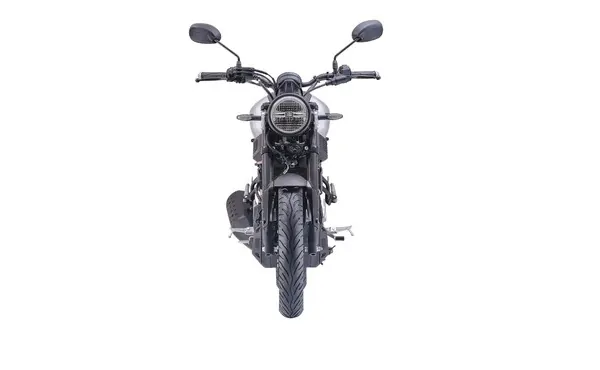
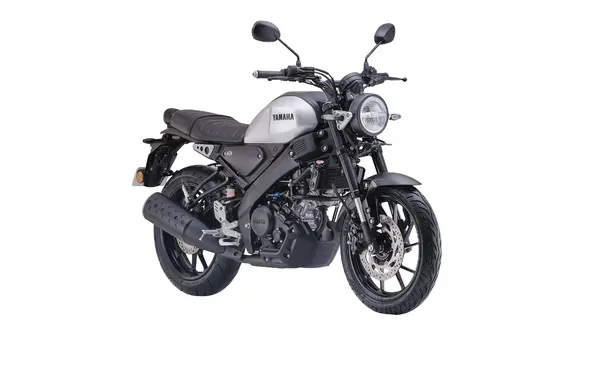
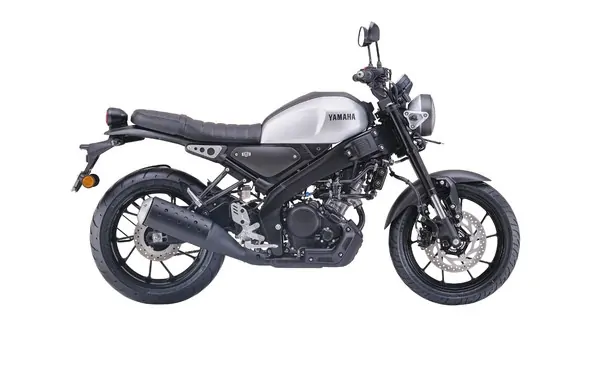
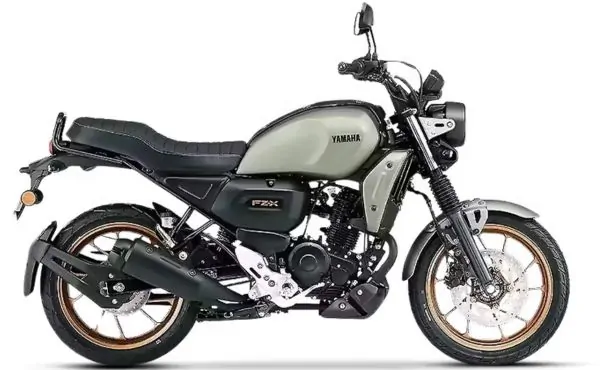
The Yamaha XSR 155 in India follows Yamaha’s “Sport Heritage” philosophy, blending classic lines with modern hardware to create a compact neo retro street bike. The overall design is minimalist and tight, built around a muscular teardrop shaped fuel tank, a long single piece bench seat, and a clean tail section that avoids bulky bodywork. At the front, the bike uses a round LED headlamp with DRLs and a small, simple digital circular console, giving it an old school silhouette with modern lighting and instrumentation.
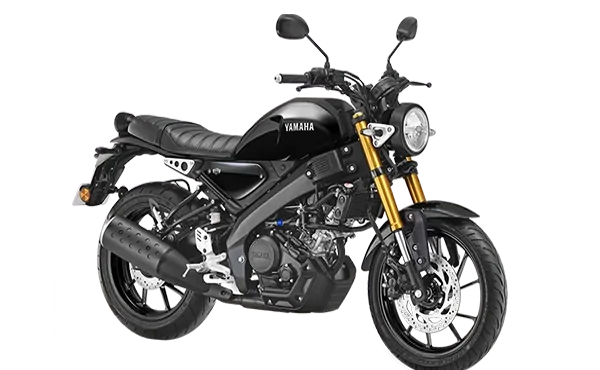
Side on, the XSR 155 showcases its Deltabox frame, golden USD forks, and neatly integrated tank and side panels, all of which enhance its “big bike in a 155cc body” feel. The long tuck and roll seat, exposed frame sections, and compact rear fender underline the retro flavour while keeping the motorcycle visually light and nimble. Yamaha’s own description highlights that the Metallic Black variant, with its all black bodywork and gold USD forks, is designed to accentuate the muscular tank, minimalist bodywork, and signature retro cues for a more premium road presence.
From the rear, the XSR 155 continues the theme with a simple round LED tail lamp, narrow tail unit, and neatly routed exhaust, avoiding the cluttered look seen on many modern street bikes. Overall, the styling aims to appeal to riders who like the idea of a vintage inspired machine but don’t want to give up contemporary technology and sharp handling—making it stand out in Indian traffic among more conventional commuters and sportbikes.
Colour Options And Variants
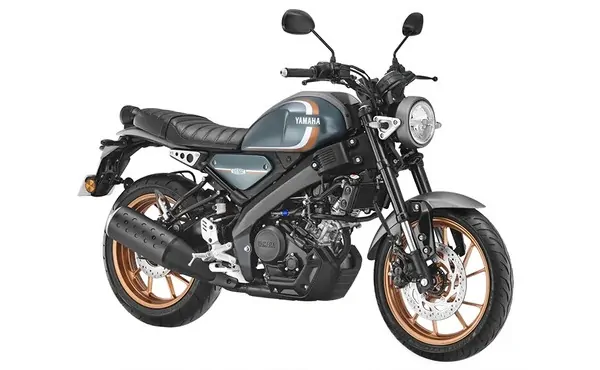
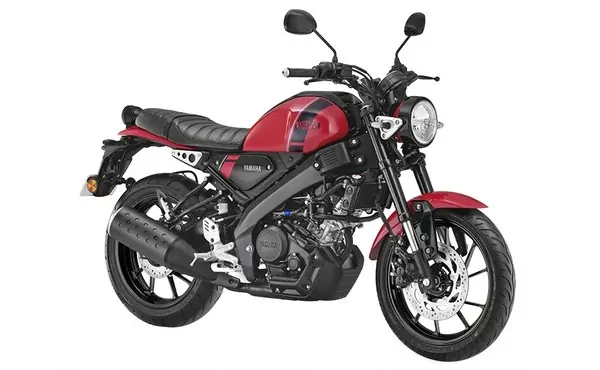
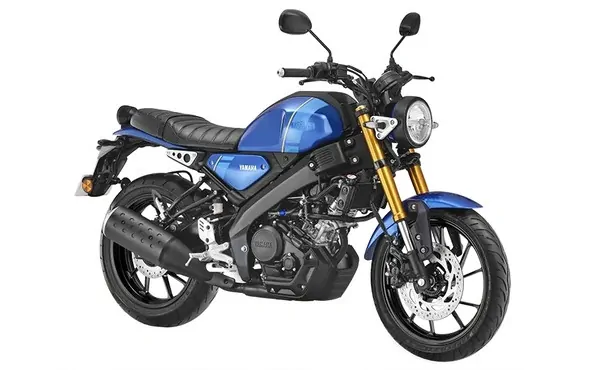
In India, the Yamaha XSR 155 is officially offered in five colour options that each give the bike a distinctive retro personality:
- Metallic Blue
- Vivid Red
- Metallic Grey
- Greyish Green Metallic
- Metallic Black
All these colours are offered in the same mechanical package, so choosing a scheme is purely a matter of personal style—whether buyers prefer bright and youthful (Blue/Red) or muted and classic (Grey/Green/Black).
Yamaha sells the XSR 155 in India in a single mechanical variant, often referred to simply as the XSR 155 Standard (STD), with the different colour options layered on top of this one spec. That standard variant includes the 155cc liquid cooled VVA engine, Deltabox frame, USD forks, monoshock rear suspension, dual channel ABS, traction control, and the round digital LCD console.
To add more variety, Yamaha offers factory accessory kits rather than multiple mechanical variants. Official kits include a Cafe Racer Kit and a Scrambler Kit, which can be purchased separately to alter the bike’s styling and ergonomics—things like different seats, panels, and possibly handlebar setups—without changing the core engine or chassis. This approach lets Indian buyers start with one standard XSR 155 and then personalise it into a café racer style machine or a more scrambler like setup using OEM parts.
The Yamaha XSR 155 in India keeps its variant strategy simple: one fully loaded mechanical trim, five distinct colour options, and optional factory kits for those who want a more customised retro expression. That makes the buying decision straightforward while still giving plenty of visual and stylistic choice within the neo retro segment.
Value For Money And Pricing
Yamaha has positioned the XSR 155 aggressively in India, using an introductory ex showroom price of ₹ 1,49,990 for the single mechanical variant, with color-wise differences above that, making it the most affordable Yamaha 155 in the lineup, undercutting both the R15 and MT 15 while offering the same core engine and chassis. On road prices vary by city, ranging from ₹1.68 lakh to ₹1.98 lakh depending on state taxes, with Delhi at around ₹1.68–1.78 lakh, Mumbai at about ₹1.74–1.85 lakh, and Bangalore at ₹1.75–1.98 lakh.
Crucially, this pricing keeps the XSR 155 in the same band as top spec 160–200 cc commuters and neo retro machines, while giving buyers a liquid cooled VVA engine, Deltabox frame, USD forks, dual channel ABS, and traction control in a retro package.
In terms of value, the XSR 155 offers a strong feature to price ratio within its niche. At around ₹1.50 lakh ex showroom, it is not just Yamaha’s most affordable 155cc motorcycle but also one of the best equipped bikes in its price band, thanks to the liquid cooled VVA engine, 6 speed gearbox with assist & slipper clutch, dual channel ABS, traction control, USD forks, and monoshock. It offers “incredible value” at the introductory price, delivering the same mechanical package as the R15/MT 15, with more relaxed ergonomics and retro styling.
Value also comes from how the bike balances efficiency and performance. Real world tests show fuel economy in the 40–45 kmpl region with highway numbers going higher, which keeps running costs reasonable despite the premium positioning. At the same time, buyers get the emotional appeal of a neo retro design, modern electronics, and Yamaha’s reliability—elements that are often missing or compromised in cheaper air cooled rivals.
That said, it is possible to get bigger capacity or more comfort oriented motorcycles for similar or lower money. The XSR 155 asks you to pay for technology, brand, and styling rather than outright cubic capacity. For riders specifically wanting a light, modern, retro styled 155 with sharp handling and advanced features, its value proposition is very strong; for those focused purely on engine size or long distance comfort, other options may look better on paper.
In India, the XSR 155 sits in a crowded neo retro and entry sport segment, and its competitors span both retro singles and modern commuters:
- Royal Enfield Hunter 350
- TVS Ronin 225
- TVS Apache RTR 160
- TVS Apache RT 200 4V
- Bajaj Pulsar N250
- Bajaj Pulsar 150
- Honda CB350RS
Taken together, the Yamaha XSR 155 in India is priced to sit between premium 160–200cc commuters and larger retro singles, offering a unique blend of neo retro design, advanced 155cc tech, and everyday usability. Its value for money is strongest for buyers who specifically want modern features, Yamaha’s 155cc performance, and light, agile handling in a retro body; those whose priorities are displacement, pillion comfort, or touring friendly ergonomics may find better fits among rivals like the Hunter 350 or Ronin.
Verdict
The Yamaha XSR 155 has made a name for itself in India as a lightweight, feature-rich bike that blends classic looks with modern tech. Built on the trusted 155cc VVA platform from the R15 and MT-15, it offers a smooth, eager engine and an easy-shifting 6-speed gearbox with assist-and-slipper clutch. The agile Deltabox frame, dual-channel ABS, traction control, and real-world fuel efficiency make it both practical and fun. Its compact size, bench seat, round LED headlamp, and bold color options give it a ‘big bike’ feel in a friendly, approachable package. This makes the XSR 155 a great pick for riders who want modern performance and reliability with a retro touch. For solo riders and enthusiasts who value sharp handling, good fuel economy, and unique style, the XSR 155 is a well-rounded choice—often at a better price than Yamaha’s sportier models.
Of course, the XSR 155 isn’t for everyone. Its firm suspension and compact, hard seat aren’t great for long trips. Vibrations at higher speeds can bother riders who want a super-smooth ride, and the price puts it close to bigger, more comfortable retro bikes like the Hunter 350 and TVS Ronin. So, whether the XSR 155 is good value depends on your priorities. If you want a light, nimble, tech-packed 155cc bike with retro looks and Yamaha reliability, the XSR 155 is one of the most unique and rewarding choices in India’s entry-level retro motorcycle market. But if you care more about engine size, pillion comfort, or long-distance touring, you might find better options among its rivals.
Pros
- Proven 155cc VVA liquid cooled engine: Shares the same 155cc, liquid cooled, 4 valve, VVA engine as the R15/MT 15, delivering about 18.4 hp at 10,000 rpm and 14.2 Nm at 7,500 rpm, with strong mid range and an engaging top end for Indian city and highway use.
- Lightweight and easy to handle: With a kerb weight of around 137 kg, the XSR 155 is lighter than its R15 and MT 15 siblings, making it extremely nimble in traffic and easy to manage for newer riders in Indian cities.
- Excellent real world fuel efficiency: Real world mileage is in the 44–53 kmpl range, with gentle riding easily returning 45–50+ kmpl, and some riders seeing around 53 kmpl and ~500 km range from the 10 litre tank.
- Retro styling with modern hardware: Offers a distinctive neo retro look—round LED headlamp, bench seat, teardrop tank—combined with modern elements like USD forks, Deltabox frame, and digital console, giving strong “big bike” visual appeal in a compact package.
- Full safety package (dual channel ABS + traction control): Comes with dual channel ABS and traction control as standard, rare in the 155cc class, helping prevent wheel lock up and rear wheel spin on wet or uneven Indian roads.
- 6 speed gearbox with light clutch and slick shifts: The light clutch action and slick, precise gearbox make daily commuting and spirited riding easier and more enjoyable.
- Strong mid range performance and tractability: The bike delivers tractable city performance (easy to ride at low speeds without constant shifting) and decent mid range punch for highway overtakes, making it practical as an everyday bike.
- Agile, confidence inspiring handling: The combination of the Deltabox frame, USD forks, monoshock, and wide handlebar gives sharp, predictable handling; it feels light, sporty, agile, and stable, especially in urban conditions and on twisty sections.
- Comfortable, approachable riding ergonomics (for solo city use): Upright bar and moderately rear set pegs create an ergonomic triangle that feels neither too committed nor too laid back, making it unintimidating for Indian riders stepping up from commuters.
- Yamaha reliability and shared parts ecosystem: Uses the well known R15/MT 15 platform, so engine parts, tyres and many consumables are familiar to service centres, which supports long term reliability and easier maintenance in India.
Cons
- Price sits close to bigger retro rivals: the XSR 155 is “uncomfortably close” to larger capacity options, which can make it feel expensive for a 155cc motorcycle.
- Noticeable vibrations at mid to high RPM: There are clear vibrations at the handlebars, footpegs, and seat once you cross roughly 4,500 rpm and head toward higher revs, which can reduce perceived refinement on longer or faster rides.
- Firm rear suspension and compromised comfort: The rear monoshock is tuned on the stiff side; while it keeps handling sharp, it makes bad roads and longer rides tiring, and comfort is noted as one of the bike’s weak points.
- The seat is firm and not very spacious: The flat bench seat looks great, but is reported as quite firm and compact; heavier riders and those on longer commutes feel the seat pan edges and find it cramped, especially with luggage or pillion.
- Brakes are adequate but lack a strong initial bite: While dual channel ABS is standard, the front brake feels soft with limited initial bite, which doesn’t fully match the bike’s performance and speed potential.
- Wind blast at highway speeds: As a naked retro bike, it offers little wind protection, which can quickly tire the rider and limit touring comfort.
- Not ideal for heavy or frequent pillion use: The compact seat and rear ergonomics are not ideal for regular two up riding or heavy pillion riders, making it better suited as a primarily solo machine.
- Value depends on priorities: For riders focused on displacement, outright power, or plush comfort, similarly priced bikes like Hunter 350, Ronin 225, or Pulsar N250 can look more attractive, so the XSR 155’s value is strongest only for those who specifically want modern 155cc tech in a retro body.
- Stiff setup limits bad road versatility: On rough Indian roads, it is necessary to slow down and be careful, as the sporty suspension tune prioritises handling over bump absorption, making it less versatile than some softer tuned rivals.
- Design and niche appeal may not suit everyone: The neo retro look and compact proportions strongly appeal to enthusiasts, but some mainstream buyers may prefer more conventional styling or a larger road presence from 250–350cc machines.
Other Related Links From Bikeleague India
List Of All Yamaha Motorcycles In India
About Yamaha Motorcycles
Yamaha is known as one of India’s top two-wheeler brands, thanks to its Japanese engineering, sporty looks, and focus on performance and style. Over the past 40 years, Yamaha has grown from a technical partner to a full manufacturer with local production, research and development, and a strong dealer network. This has made Yamaha important in both commuter and premium motorcycle markets.
History And Growth
Yamaha started its journey in India in 1985 by helping the Escorts Group make motorcycles. In 1996, Yamaha and Escorts formed a 50:50 joint venture called Escorts Yamaha Motor Ltd (EYML). In 2001, Yamaha Motor India became fully owned by Yamaha Motor Co., Ltd., Japan, giving it complete control in India. In 2008, Mitsui & Co. became a joint investor, and the company was renamed India Yamaha Motor Private Limited (IYM), which is still Yamaha’s main company in India.
Key Milestones And Developments
Several milestones mark Yamaha’s journey in India:
- 1985: Initial entry through technical collaboration with Escorts Groups
- 1996: Formation of the 50:50 joint venture with Escorts.
- 2001: Yamaha Motor India becomes a 100% subsidiary of Yamaha Motor Co., Japan.
- 2008: Mitsui & Co. becomes a joint investor, and IYM takes its current form.
- 2015: Inauguration of a third manufacturing plant near Chennai (Vallam Vadagal), expanding Yamaha’s capacity and strengthening exports.
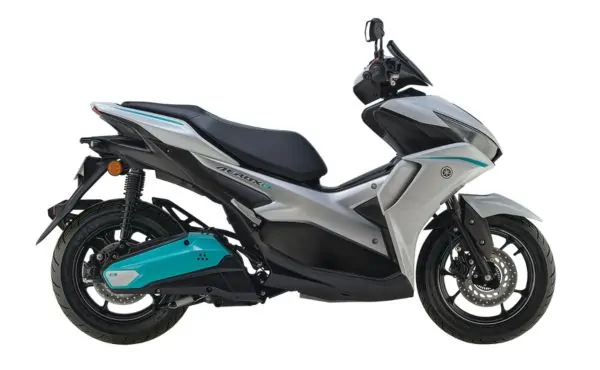
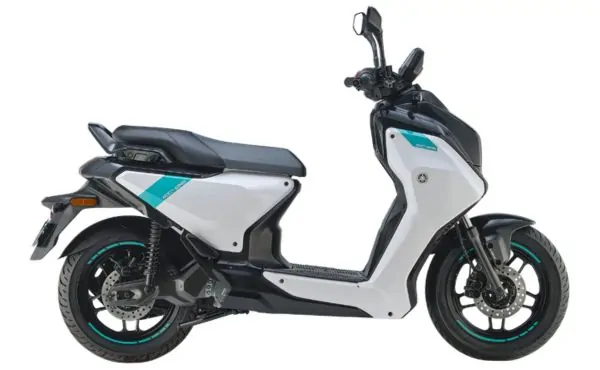
- 2025–2026: Launch of Yamaha’s first electric scooters (AEROX-E and EC-06) and a major product push with around 10 new models and multiple updates planned by the end of 2026.
Yamaha has created well-known models like the RX 100 and RX 135 in its early years. Later, it introduced the YZF-R15, FZ series, MT-15, and RayZR/Fascino scooters, which helped shape Yamaha’s reputation for performance and style in India.
Manufacturing Facilities
Yamaha runs several advanced factories in India that supply both the local market and exports:
- Surajpur (Uttar Pradesh): A key plant for motorcycles and scooters, also housing Yamaha’s R&D operations in India.
- Faridabad (Haryana): Another major manufacturing hub for motorcycles and components, serving domestic and overseas markets.
- Chennai (Vallam Vadagal, Tamil Nadu): Opened in 2015, this plant mainly makes scooters and some motorcycles. It also exports to Africa, ASEAN, and Latin America. Recent investor updates show that Chennai is becoming an important global center for premium motorcycles and scooters.
IYM has the facilities to make motorcycles, scooters, and parts. It handles machining, welding, electroplating, painting, and assembly in-house, and employs over 2,300 people.
Market Position And Achievements
Yamaha is a strong player in India’s 125cc and above motorcycle and scooter market. The company focuses on performance, design, and a premium feel instead of just selling large numbers. Yamaha has over 1,200 customer touchpoints across India, including about 400 dealers and more than 550 Blue Square dealerships for premium products and electric vehicles.
Recently, models like the RayZR, FZ series, MT-15, and YZF-R15 have boosted Yamaha’s sales. The RayZR has become the top seller, making up over 35% of total sales in 2025. Yamaha aims for double-digit growth by focusing more on scooters, premium motorcycles, and exports. It is known as a top choice for riders who want sporty looks and strong performance.
Future Plans
Yamaha’s future plans in India focus on offering more premium products, moving into electric vehicles, and launching many new models:
- Electric mobility: Yamaha has started selling electric scooters in India, including the AEROX-E for performance and the EC-06 for commuting. At first, these will be sold in big cities and about 50 markets where electric vehicles are already popular. Yamaha will roll out these products step by step, making sure dealers and service are ready, and will focus on keeping a premium brand image instead of offering the lowest prices.
- New models: Yamaha plans to launch about 10 new two-wheelers in India by the end of 2026, including both electric and petrol models. There will also be over 20 updates to current products. Some new models expected in 2026–2027 are the Lander 250, MT-09, MT-07, Nmax 155, YZF-R7, YZF-R9, and Tenere 700, which will boost Yamaha’s premium and mid-size range.
- Strategic focus: Yamaha will keep working in the 125cc and above scooter market and the 150cc and above motorcycle market. The company wants to create new types of products, improve technology, and make riding better for customers. Chennai is being developed as a global center for premium two-wheelers, helping both local and export sales.
With this plan, Yamaha is making India a key part of its global growth. The company is balancing its strong background in performance motorcycles with a careful move into electric vehicles and premium scooters.
Other Related Links From Bikeleague India
User Reviews
There are no reviews yet. Be the first one to write one.

Hiran Narayanan
Founder & CTO at Bikeleague India
Hiran Narayanan is the Founder and CTO of Bikeleague India, bringing over 15 years of experience in motorcycle technical writing. He develops detailed analyses, tools, model overviews, and blogs that contribute to bikeleague.in's improving rankings.