
Introduction
The Yamaha FZS-Fi Hybrid combines the classic FZ streetfighter style with new hybrid technology, making it a good choice for Indian commuters who want style, comfort, and better mileage. Its Smart Motor Generator (SMG) assist and Stop & Start technology help the reliable 149 cc engine run more efficiently without adding complexity. The bike is built for smooth acceleration and practical performance, making it suitable for office workers, students, and daily riders in busy cities. If you are moving up from a basic commuter or scooter, the FZS-Fi Hybrid gives you a more premium feel and real-world fuel savings, all without extra ownership hassles.
Gallery
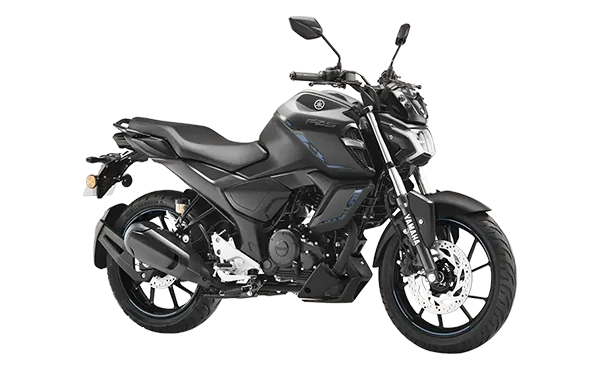
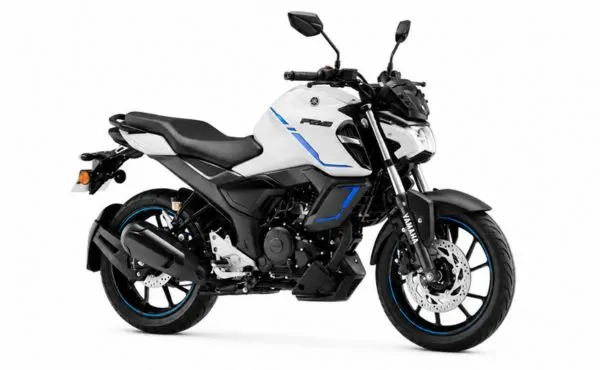
Key Specifications

Displacement
149cc

Mileage
38-53km/l

Power
12.4PS @ 7,250rpm

Torque
13.3Nm @ 5,500rpm

Fuel System
Fuel injection

Tank Capacity
13 liters

Rear Suspension
7 Step monocross

Kerb Weight
138Kg
Ratings
- 95%
Performance
- 95%
Features
- 90%
Handling
- 95%
Comfort
- 90%
Build Quality
- 85%
Styling
- 85%
Value for Money
- 91%
Total
Ratings calculation is purely based upon pros and cons of the model given below in the overview section.
Price

Special Features
1
Single Channel Abs
2
Negative Lcd Console
3
Two-level Seat
4
Led Headlight
5
Under Cowl
6
Chrome Duct Plating
7
140mm Radial Tyre
8
Monocross Suspension
9
Midship Muffler Cover
10
Powerful Fi Engine
11
220mm Rear Disc Brake
12
Blue Core Technology
Full Specifications
| City | 38-48km/l |
| Highway | 48-53km/l |
| Tyres (F) | 100/80-17M/C 52P, Tubeless |
| Tyres (R) | 140/60R17M/C 63P, Tubeless |
| Brakes (F) | Disc 282mm |
| Brakes (R) | Disc 220mm |
| Wheelbase | 1,330mm |
| Ground Clearance | 165mm |
| Seat Height | 790mm |
| Length x Width x Height | 2,000mm x 780mm x 1,090mm |
| Kerb Weight | 138kg |
| Fuel Capacity | 13L |
| Engine Type | Air cooled, 4-stroke, SOHC, 2-valve |
| Displacement | 149cc |
| Power | 12.4PS @ 7,250rpm |
| Torque | 13.3Nm @ 5,500rpm |
| Bore x Stroke | 57.3mm x 57.9mm |
| Compression Ratio | 9.6:1 |
| Fuel Supply | Fuel Injection |
| Transmission Type | Constant mesh, 5-speed |
| Clutch Type | Wet, multi-disc |
| Speedometer | Digital |
| Tachometer | Digital |
| Tripmeter | Yes |
| Fuel Guage | Yes |
| Low Fuel Indicator | Yes |
| Low Battery Indicator | No |
| Low Oil Indicator | Yes |
| Start Type | Electric |
| Kill Switch | Yes |
| Clock | No |
| Pass Light | Yes |
| ABS | Yes |
| Stand Alarm | No |
| Front Suspension | Telescopic |
| Rear Suspension | 7-Step Adjustable Mono-cross |
| Battery | 12V |
| Head Lamp | LED |
| Brake/Tail Light | 12V,21/5W x 1 |
Overview
Performance And Engine
The Yamaha FZS-Fi Hybrid uses a 149 cc, air-cooled, 4-stroke, single-cylinder engine focused on strong low- and mid-range performance rather than top speed. It produces about 12.2–12.4 PS at 7,250 rpm and 13.3 Nm of torque at 5,500 rpm. While these numbers are not the highest in its class, the engine is tuned for good pull at low and mid speeds, which is where most Indian riders spend their time. This makes the bike feel quick when starting from traffic lights, moving through city traffic, or overtaking at city speeds, and you do not have to change gears often. The throttle is smooth and predictable, which helps new riders and those who travel long distances every day.
What sets this bike apart is the Smart Motor Generator (SMG) hybrid assist, which supports the petrol engine when you start moving. The system quietly adds electric power at low speeds, making it easier to get going and reducing engine strain. Over time, this can improve fuel economy, especially in heavy stop-and-go traffic. The Stop & Start System also helps by turning off the engine after a short stop and restarting it when you twist the throttle, saving fuel at signals and junctions. For riders in busy cities such as Mumbai, Delhi, Bengaluru, or Kochi, these features are especially useful.
When you ride, the engine feels relaxed and encourages a calm, efficient riding style rather than aggressive revving. It performs best in the mid-range, with few vibrations and smooth cruising. If you are upgrading from a 125 cc bike, you will notice more torque and better performance. If you already ride a 150 cc bike, the hybrid assist gives you a smoother and quicker start.
The Yamaha FZS-Fi Hybrid comes with a 5-speed manual gearbox and a wet multi-plate clutch, which is typical for 150 cc bikes. The gears are set up to keep the engine in its best range for Indian roads. Second and third gears work well for city traffic, while fourth and fifth are good for ring roads and short highway trips. The clutch is light, making it easier for riders who change gears often during daily commutes. If you are used to scooters or older bikes with heavier clutches, you will find this lighter clutch makes long rides in traffic less tiring.
The FZS-Fi Hybrid’s gear shifts are smooth and precise, with a clear click between gears that feels reassuring. This smooth shifting matches the bike’s focus on efficiency, letting riders shift up early and use the engine’s torque without it feeling weak. If you ride in the city during the week and take short highway trips on weekends, the 5-speed gearbox offers a good mix of simplicity and practicality. The gears are flexible enough for slow traffic, quick lane changes, and easy cruising at 80–90 km/h without frequent shifting.
In terms of ownership and maintenance, the transmission is simple and familiar to most mechanics in India. This helps the bike stay reliable over time, prolongs clutch life, and simplifies servicing. These factors matter to people who use the bike as their primary mode of transportation. The FZS-Fi Hybrid’s transmission is commuter-friendly, easy for new riders, and focused on efficiency rather than speed.
The Yamaha FZS-Fi Hybrid’s top speed is about average for a 150 cc commuter bike. Officially, it is listed at around 100 km/h, which matches the manufacturer’s claim. In real-world Indian conditions, with factors like rider weight, road quality, and wind, speedometer readings of 110–115 km/h on open highways have been observed. This is enough for quick trips on expressways and bypass roads, but the bike is not designed for high-speed touring.
The FZS-Fi Hybrid is most comfortable when cruising between 75 and 90 km/h. At these speeds, the engine stays smooth, and vibrations are low. The hybrid system has already helped during earlier acceleration. If you take long commutes or weekend highway trips, you can maintain this speed for extended periods without stressing the engine. Overtaking is safe if you plan ahead and use the torque, but do not expect sudden, sports-bike-like acceleration.
Mileage And Fuel Efficiency
One of the main advantages of the Yamaha FZS-Fi Hybrid is its impressive fuel efficiency. Official ARAI tests rate it at about 60 km/l, making it one of the most efficient 150 cc bikes. The hybrid assist and Stop & Start technology save fuel during starts and idling, which is ideal for city traffic and daily commuting.
ARAI mileage is a lab benchmark, not a guarantee. Riding with a smooth throttle, steady speeds, and light loads helps you get closer to the claimed figure, while aggressive riding or heavy loads will lower it. The FZS-Fi Hybrid’s fuel-injection and hybrid technologies are designed to improve real-world efficiency.
Most owners report getting 48–53 km/l in mixed city and highway use, especially with relaxed riding and early gear shifts. For daily commutes of 40–60 km, it is a smart, fuel-saving choice compared to less efficient rivals.
In heavy city traffic, mileage may drop to 38–42 km/l, but the hybrid and idle start-stop features help mitigate this. On highways or smooth roads, getting over 50 km/l is common. Buyers can expect real-world mileage of 38-50+ km/l, depending on conditions
Features And Technology
The Yamaha FZS-Fi Hybrid comes with features designed for Indian riders, combining useful hybrid technology, smart connectivity, and daily convenience. These features make commuting smoother, safer, and more enjoyable.
- Smart Motor Generator (SMG) hybrid assist: Provides motor-assisted acceleration at low rpm, enabling quieter starts and a mild-hybrid boost that improves fuel efficiency and smoothness in city traffic.
- Automatic Stop & Start System (SSS): Cuts the engine automatically during idling and restarts it quickly when you engage the clutch or twist the throttle, reducing fuel wastage at signals and junctions
- 149 cc Blue Core, OBD2B, and E20-compliant engine: Uses a 149 cc, air-cooled, fuel-injected Blue Core engine that meets OBD2B norms and runs on E20 fuel, making it aligned with current and upcoming Indian emission and fuel standards.
- 4.2-inch color TFT digital instrument cluster: A crisp TFT console displays speed, gear position, fuel, trip data, real-time efficiency, and hybrid-assist indicators, giving the bike a modern, premium cockpit feel.
- Y-Connect Bluetooth connectivity: Enables smartphone pairing to show call/SMS alerts, app notifications, phone battery status, and basic ride data directly on the TFT display.
- Turn-by-turn navigation integration: Works with the Y-Connect app and Google Maps to display turn-by-turn navigation on the TFT screen, so riders can follow routes without constantly checking their phone.
- Last parked location, ride history, and malfunction notifications: Through the connected app, riders can view the last parked location, trip/ride history, and receive malfunction alerts or basic diagnostics, improving day-to-day usability in Indian cities.
- LED headlamp with integrated LED indicators and LED tail-lamp: Full-LED lighting with integrated front indicators enhances visibility, energy efficiency, and gives the FZS-Fi Hybrid a more upmarket, streetfighter appearance.
- Single-channel ABS with front and rear disc brakes: Uses a 282 mm front disc and 220 mm rear disc with single-channel ABS to provide controlled braking and added safety on wet, broken or unpredictable Indian road surfaces.
- Traction control/traction support system: Selected India listings highlight traction support that helps reduce rear-wheel slip on low-grip surfaces, adding another layer of confidence for everyday riders.
- Telescopic front fork and 7-step adjustable rear monoshock: Suspension tuned for Indian conditions combines a telescopic front fork with a 7-step adjustable monocross rear shock, balancing comfort and stability over potholes and speed breakers.
- 13-litre fuel tank with high-efficiency tuning: A 13-litre tank, combined with the hybrid-assist and start-stop tech, delivers a strong real-world riding range between refuels for long daily commutes.
- Side-stand engine cut-off: Prevents the engine from running when the side stand is down, reducing the risk of riding off with the stand engaged—a practical safety feature for everyday use in India.
- India’s first 150 cc hybrid motorcycle positioning: Marketed as India’s first hybrid motorcycle in the 150 cc class, giving it a unique value proposition among 150–160 cc commuters that still rely only on conventional engines.
Build Quality
Yamaha has brought its usual FZ-series strength to the FZS-Fi Hybrid, and its overall quality is among the best in the 150 cc commuter segment. Panel fit, paint finish, and switchgear feel are generally tight and consistent, with no major rattles reported even after long use on mixed city and highway routes.
The bike uses a diamond-type frame that has already proven itself on earlier FZ models, giving the Hybrid a solid base while keeping the kerb weight in the 136–138 kg range. The updated TFT instrument console, LED lighting, and integrated indicators are well executed and add to the premium feel when you sit on the bike.
Long-term and first-ride impressions indicate that fasteners, welds, and contact points such as levers and footpegs feel sturdy enough for daily Indian commuting and occasional rough roads. While it is not finished to big-bike standards, the FZS-Fi Hybrid feels more solid and better built than many value-focused 150–160 cc rivals sold in India.
Handling
The FZS-Fi Hybrid keeps the light, neutral handling that has been a hallmark of the FZ family in India for years. With a low kerb weight, a 1,330 mm wheelbase, and a wide 140-section rear radial tyre, the bike feels agile in traffic but stable enough at moderate highway speeds.
The steering feels light and responsive at city speeds, making quick lane changes and U-turns easy, even for less experienced riders. The chassis feels balanced. It is not as sharp as a track-focused 160, but it turns predictably and holds a line well for commuting and mild weekend rides.
At higher speeds, the FZS-Fi Hybrid remains stable up to around 80–90 km/h, beyond which the engine, more than the chassis, becomes the limiting factor. The suspension is on the firmer side, which helps the bike stay composed over undulations and during quick direction changes, but it can transmit sharper potholes and broken patches more directly to the rider and pillion.
Single-channel ABS with disc brakes at both ends provides good braking confidence for daily Indian conditions. Overall, the handling package is tuned to be friendly, predictable, and light – ideal for dense urban environments and typical Indian highway cruising rather than hard cornering or aggressive riding.
Comfort
Comfort is a strong point for the FZS-Fi Hybrid, making it one of the more relaxed, easy-going 150 cc motorcycles for Indian commuters. The riding position is upright, with a wide handlebar, neutral footpeg position, and a seat height of about 790 mm, making it accessible to many riders.
The seat is wide and well-cushioned, giving both rider and pillion enough room for city and ring-road commutes. The bike feels especially comfortable for riders who spend long periods in traffic, as the lightweight build, easy low-speed balance, and smooth engine help reduce fatigue.
On rough Indian roads, the firmer suspension helps with stability and control, but can feel harsh over big potholes and sharp speed breakers if you hit them quickly. At normal urban speeds, the ride is comfortable enough for daily use, with only the worst surfaces causing noticeable discomfort.
Vibration levels are well controlled up to around 70–80 km/h, which is where many Indian riders spend most of their time. With the hybrid system’s smoother starts and the Stop & Start function that cuts engine noise at long signals, the overall experience feels refined and calm. This supports the FZS-Fi Hybrid’s role as a practical, comfort-focused commuter for Indian conditions.
Styling
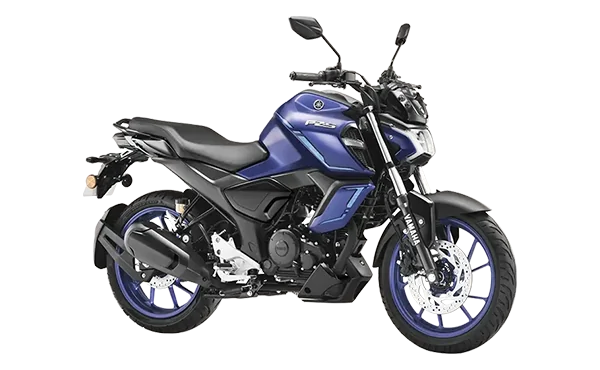
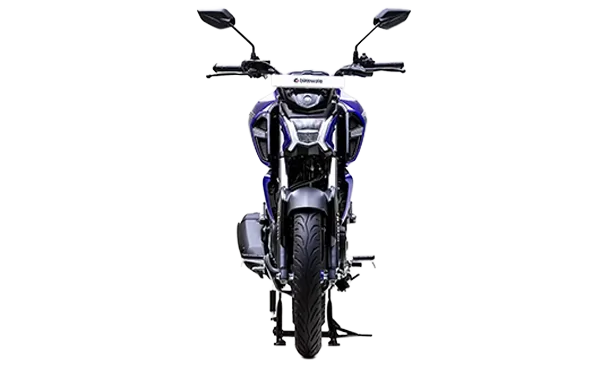
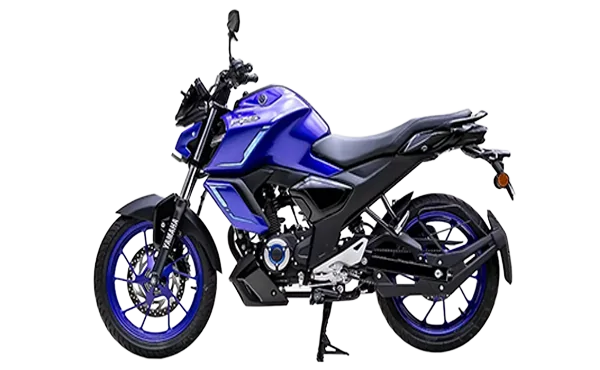
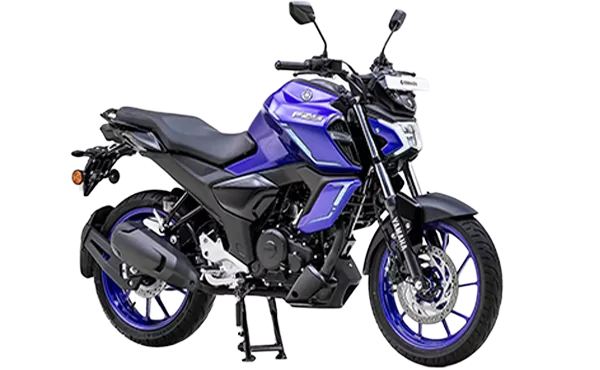
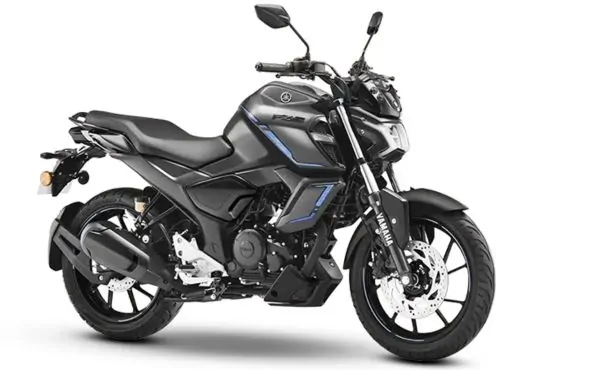
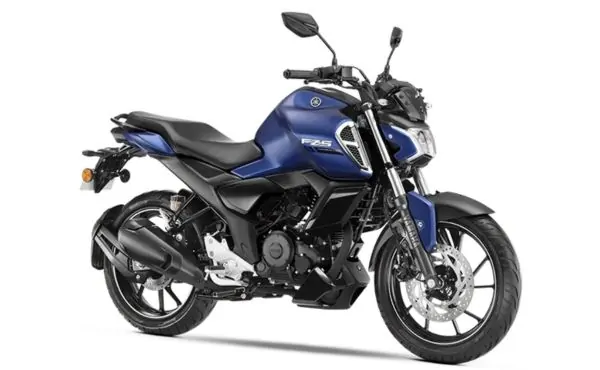
The FZS-Fi Hybrid’s styling builds on the familiar FZ design but adds enough visual changes to feel fresh. The front features a sharp LED headlamp in an angular cowl, with integrated LED indicators that give it a modern, clean look. The muscular fuel tank with pronounced shrouds is still the main visual anchor, creating a broad-shouldered stance that looks substantial even from a distance, which many Indian buyers in the 150 cc segment like.
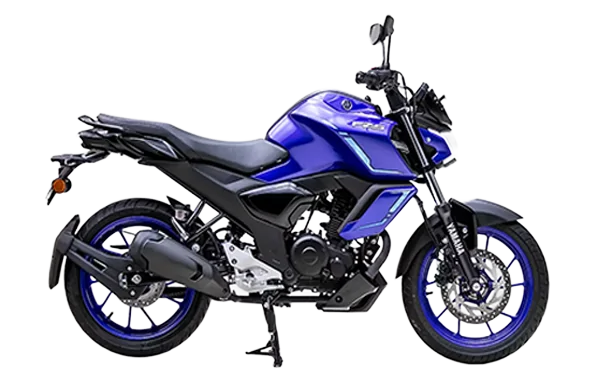
From the side, the bike has strong, chiseled lines running from the tank to the two-level seat and compact tail section. The seat rises slightly towards the pillion, giving a sporty look without losing practicality, while the side panels and under-seat area are kept tight to avoid extra bulk. The slightly upswept exhaust with a textured end cap balances the rear and enhances the sporty feel. The new TFT instrument cluster also adds to the styling. When you turn the ignition, the full-color display lights up with graphics that give a premium feel, a clear upgrade over the older FZ models with simpler LCD units.
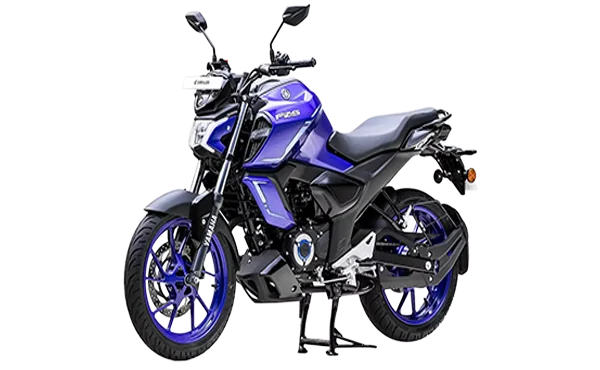
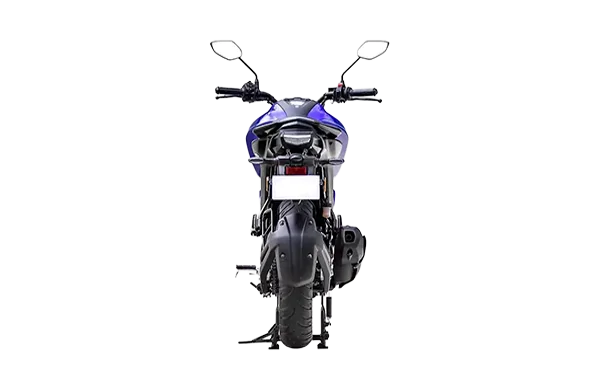
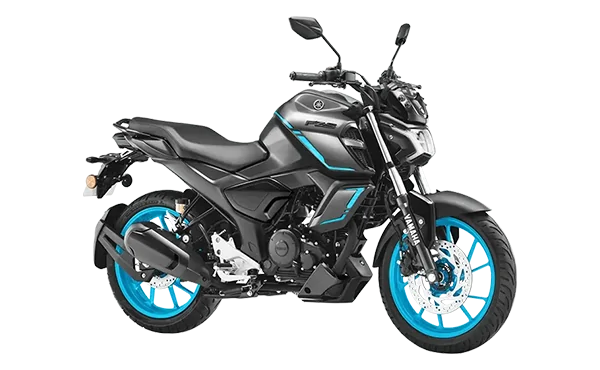
From the rear three-quarter view, the FZS-Fi Hybrid looks compact and purposeful. The slim LED tail lamp sits neatly under the tail, with the number plate hanger and indicators placed to keep the tail looking light. Contrast-finished alloy wheels and hybrid-specific tank graphics set this model apart from the regular FZ-S Fi V4, which is helpful in showrooms where both bikes are displayed together. Overall, the styling makes it clear that this is still an FZ, but updated to look more modern and tech-focused, matching its hybrid features.
Colour Options And Variants
Color choices affect how the FZS-Fi Hybrid stands out on the road. There are three colour options available:
- Cyan Metallic Grey
- Racing Blue
- Matte Black
- Ice Storm
Yamaha’s color palette highlights sportiness and modern style, with Racing Blue as the standout shade. Paired with bold graphics and blacked-out parts, Racing Blue gives the bike a dynamic look.
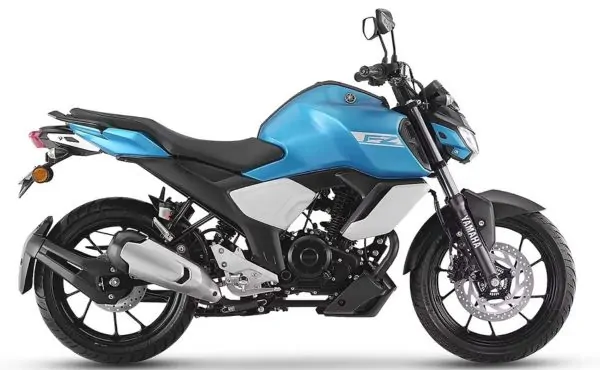
Cyan Metallic Grey is for riders who want a sleek, tech-inspired style. The grey base with cyan highlights gives a modern look that stands out without being too flashy. This color works for daily commuters and those who want a bit of character. Yamaha keeps the Hybrid color options focused and premium, while the regular FZ-S Fi V4 range offers more standard choices. Some dealers may have limited or darker colors at times, but the Hybrid’s main palette is carefully chosen.
For variants, Yamaha keeps it simple: the FZS-Fi Hybrid comes as a single, fully loaded model above the standard FZ-S Fi versions. When buyers ask for the Hybrid, they are shown this top-spec variant with all features included. This makes the FZS-Fi Hybrid the flagship of Yamaha’s 150 cc commuter line. The regular FZ-S Fi V4 is for buyers who want familiar features at a lower price. This clear difference makes it easy for customers to choose between the two.
Value For Money And Pricing
Yamaha positions the FZS-Fi Hybrid above the standard FZ-S Fi range, with an ex showroom Delhi price of ₹ 1,41,200. The starting ex showroom figure is in the ₹1.37–1.38 lakh band, and typical on road prices settle around ₹1.50–1.55 lakh in major cities.
City-wise data show that on-road prices can reach ₹1.70–1.81 lakh in places like Hyderabad, Mumbai, and Bengaluru due to higher local taxes and insurance, while some tier-2 cities are a bit lower. In Yamaha’s India lineup, this puts the FZ-S Fi Hybrid above the regular FZ-S Fi and FZS FI V4, but below larger models in terms of price.
From a value-for-money perspective, the FZS-Fi Hybrid costs about ₹10,000 more than the standard FZ-S Fi V4 for its extra hybrid tech and features. The extra cost covers three main additions: the Smart Motor Generator with idle stop-start and mild electric assist, the 4.2-inch TFT display with Bluetooth connectivity, and a basic traction-support feature.
The bike does not transform performance compared to the non hybrid FZ-S, but it does feel smoother, slightly more efficient, and more premium to live with every day. If you value refinement, tech, and Yamaha reliability more than outright power per rupee, the FZS-Fi Hybrid justifies its premium. For those focused on performance, a regular FZ-S Fi offers a very similar core experience for less money, so budget-sensitive buyers might prefer to save the difference and invest in riding gear or fuel instead.
For Indian urban riders who cover many city kilometers, the Hybrid’s idle stop-start, smooth starts, connected TFT, and slightly better real-world economy can make it a satisfying choice over five years of ownership. For buyers who primarily want acceleration and top-end thrills in the 150–160 cc range, rivals from Bajaj, TVS, and Hero often deliver more performance at a similar or lower price, making them a better value for that audience.
In the Indian market, the Yamaha FZS-Fi Hybrid competes against a cluster of 150–160 cc street motorcycles that balance style, performance, and commuting practicality. Key rivals include:
- TVS Apache RTR 160 4V
- Bajaj Pulsar N160
- Bajaj Pulsar NS160
- Hero Xtreme 160R
The FZ-S Fi Hybrid competes with the TVS Apache RTR 160 4V and Bajaj Pulsar N160 in terms of price and features. These bikes offer better performance for less money but lack the hybrid assist and connected TFT display. Other options include the Pulsar NS160 and even the Pulsar 220F for buyers willing to spend a bit more for extra power and better highway performance.
Within Yamaha’s own lineup, alternatives like the FZ-S Fi V4 and FZ S FI (non-Hybrid) are strong competitors because they are cheaper but share the same 149 cc engine and familiar FZ ergonomics. While the FZ S Hybrid claims slightly better mileage, the FZS FI V4 and older FZ S FI models are still attractive for riders who want Yamaha’s brand and style at a lower price.
Verdict
The Yamaha FZS-Fi Hybrid is designed for Indian commuters who want a practical, comfortable, and modern bike for daily life. It keeps the familiar FZ base but adds helpful hybrid technology, a sleek TFT console with phone connectivity, and an easy, upright riding position. This makes it a great option for office workers, students, and anyone who spends a lot of time riding in city traffic or on short highway trips. If you’re moving up from a basic scooter or commuter bike, the FZS-Fi Hybrid feels like a real upgrade in quality and features, but it’s still simple to use and easy to own every day.
However, the FZS-Fi Hybrid isn’t necessarily the right pick for everyone looking at 150–160 cc bikes. It does cost more than the regular FZ-S Fi V4, and the hybrid system’s benefits are mostly about smoothness and efficiency rather than a big jump in performance. If you just want the best value or the most power for your money, bikes like the Apache RTR 160 4V, Pulsar N160, or even Yamaha’s own non-hybrid FZ-S models might make more sense. But if you care about a smoother ride, cool connected features, and Yamaha’s solid reputation for reliability, the FZS-Fi Hybrid is a smart, future-ready choice that fits daily life in India very well.
Pros
- Hybrid tech for smoother city riding: The Smart Motor Generator (SMG) and Stop & Start System (SSS) make low speed riding and repeated starts in traffic noticeably smoother and quieter compared to a conventional starter setup.
- Better fuel efficiency in real-world use: Real-world use shows an easy 40–45 km/l in mixed conditions, with many riders seeing around 50 km/l when using the start stop system sensibly, which is strong for a 150 cc street bike.
- Refined and relaxed engine character: The familiar 149 cc Blue Core engine remains smooth and tractable, with minimal vibrations up to 70–80 km/h, suiting typical Indian commuting speeds and long daily runs.
- Comfortable, commuter-friendly ergonomics: Upright seating, a wide handlebar, and a friendly seat height make the FZS-Fi Hybrid easy to manage in city traffic and comfortable for riders of varying heights and experience levels.
- Good build quality and Yamaha reliability: The bike shows solid panel fit, durable switchgear, and overall robustness, backed by Yamaha’s reputation for long-term reliability.
- Modern TFT console and connectivity: The 4.2 inch colour TFT display with Y Connect Bluetooth, call/SMS alerts, navigation support, and ride data gives the Hybrid a more premium, feature-rich feel than many rivals.
- Segment-first tech features for the price band: Features like hybrid assist, traction support, TFT dash, and app connectivity in a 150 cc commuter segment are still relatively rare, helping the FZS-Fi Hybrid stand out on showroom floors.
- Strong all-rounder for daily users: The FZS-Fi Hybrid is a smart, no nonsense daily bike that combines comfort, mileage, and a premium feel, making it appealing for office commuters and college riders alike.
- India’s first hybrid 150 cc motorcycle positioning: Being marketed as India’s first hybrid bike in the 150 cc class gives it a unique selling point and “future-ready” image compared to conventional petrol-only competitors.
Cons
- Higher price than non-hybrid rivals: the FZS-Fi Hybrid is significantly more expensive than performance oriented rivals like TVS Apache RTR 160 4V and Hero Xtreme 160R, which undercut it while offering stronger specs.
- Only mild real-world performance gains: The hybrid system primarily aids starts and efficiency; power and torque figures remain similar to the standard FZ-S Fi, so riders do not feel a dramatic performance boost despite the “Hybrid” tag.
- The premium over the regular FZ-S may feel steep: The Hybrid typically costs about ₹10,000 more than the standard FZ-S Fi V4, but the regular FZ-S offers almost the same core experience for less money.
- Not the most exciting in the segment: While efficient and refined, the bike is often described as sensible rather than thrilling; enthusiasts seeking sharp acceleration and high-rev character may find the Apache RTR 160 4V or the Pulsar N160 more engaging.
- Single-channel ABS only: Despite its pricing and tech positioning, the FZS-Fi Hybrid still uses single channel ABS, and some reviewers feel a dual channel setup would better justify the premium and improve braking confidence.
- Design starting to feel familiar/dated: Although updated with LEDs and a TFT, the underlying FZ silhouette is now quite old and could use a full-generation design overhaul.
- Hybrid tag can create unrealistic expectations: Because “Hybrid” suggests strong electric assistance, some Indian buyers expect major performance or mileage jumps, but in reality, the gains are modest and focused on refinement and small efficiency improvements.
- Better-suited to city than highway thrill-seekers: Its comfort zone remains around 70–85 km/h; riders who do frequent high-speed highway runs or aggressive weekend rides may find it less satisfying than more performance-biased 160 cc options.
Other Related Links From Bikeleague India
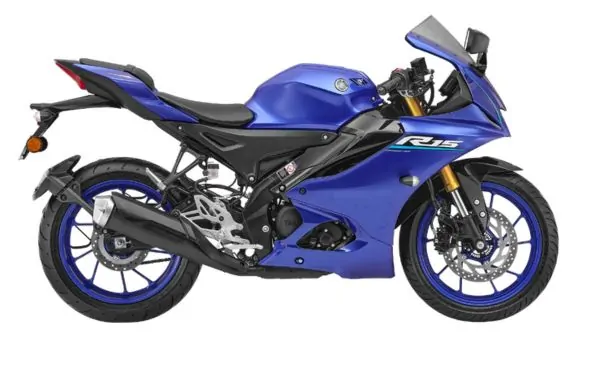
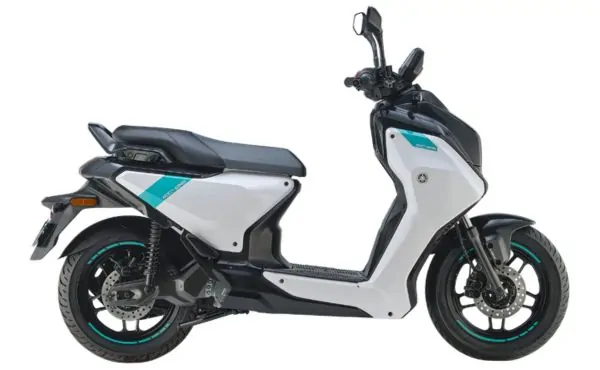
List Of All Yamaha Motorcycles In India
About Yamaha Motorcycles
Yamaha is known as one of India’s top two-wheeler brands, thanks to its Japanese engineering, sporty looks, and focus on performance and style. Over the past 40 years, Yamaha has grown from a technical partner to a full manufacturer with local production, research and development, and a strong dealer network. This has made Yamaha important in both commuter and premium motorcycle markets.
History And Growth
Yamaha started its journey in India in 1985 by helping the Escorts Group make motorcycles. In 1996, Yamaha and Escorts formed a 50:50 joint venture called Escorts Yamaha Motor Ltd (EYML). In 2001, Yamaha Motor India became fully owned by Yamaha Motor Co., Ltd., Japan, giving it complete control in India. In 2008, Mitsui & Co. became a joint investor, and the company was renamed India Yamaha Motor Private Limited (IYM), which is still Yamaha’s main company in India.
Key Milestones And Developments
Several milestones mark Yamaha’s journey in India:
- 1985: Initial entry through technical collaboration with Escorts Groups
- 1996: Formation of the 50:50 joint venture with Escorts.
- 2001: Yamaha Motor India becomes a 100% subsidiary of Yamaha Motor Co., Japan.
- 2008: Mitsui & Co. becomes a joint investor, and IYM takes its current form.
- 2015: Inauguration of a third manufacturing plant near Chennai (Vallam Vadagal), expanding Yamaha’s capacity and strengthening exports.
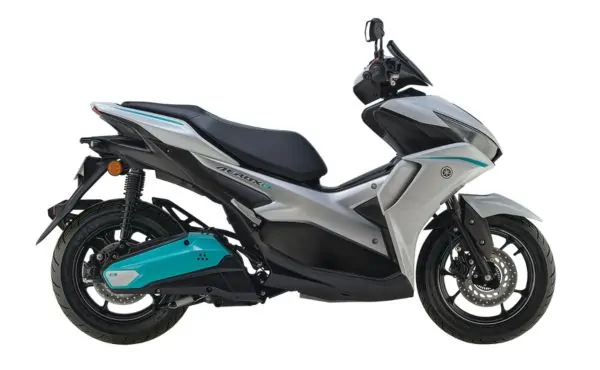
- 2025–2026: Launch of Yamaha’s first electric scooters (AEROX-E and EC-06) and a major product push with around 10 new models and multiple updates planned by the end of 2026.
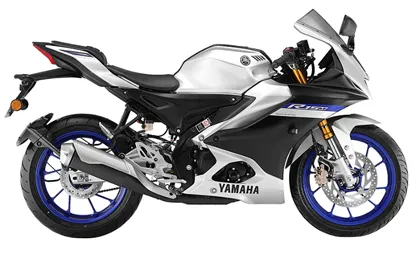
Yamaha has created well-known models like the RX 100 and RX 135 in its early years. Later, it introduced the YZF-R15, FZ series, MT-15, and RayZR/Fascino scooters, which helped shape Yamaha’s reputation for performance and style in India.
Manufacturing Facilities
Yamaha runs several advanced factories in India that supply both the local market and exports:
- Surajpur (Uttar Pradesh): A key plant for motorcycles and scooters, also housing Yamaha’s R&D operations in India.
- Faridabad (Haryana): Another major manufacturing hub for motorcycles and components, serving domestic and overseas markets.
- Chennai (Vallam Vadagal, Tamil Nadu): Opened in 2015, this plant mainly makes scooters and some motorcycles. It also exports to Africa, ASEAN, and Latin America. Recent investor updates show that Chennai is becoming an important global center for premium motorcycles and scooters.
IYM has the facilities to make motorcycles, scooters, and parts. It handles machining, welding, electroplating, painting, and assembly in-house, and employs over 2,300 people.
Market Position And Achievements
Yamaha is a strong player in India’s 125cc and above motorcycle and scooter market. The company focuses on performance, design, and a premium feel instead of just selling large numbers. Yamaha has over 1,200 customer touchpoints across India, including about 400 dealers and more than 550 Blue Square dealerships for premium products and electric vehicles.
Recently, models like the RayZR, FZ series, MT-15, and YZF-R15 have boosted Yamaha’s sales. The RayZR has become the top seller, making up over 35% of total sales in 2025. Yamaha aims for double-digit growth by focusing more on scooters, premium motorcycles, and exports. It is known as a top choice for riders who want sporty looks and strong performance.
Future Plans
Yamaha’s future plans in India focus on offering more premium products, moving into electric vehicles, and launching many new models:
- Electric mobility: Yamaha has started selling electric scooters in India, including the AEROX-E for performance and the EC-06 for commuting. At first, these will be sold in big cities and about 50 markets where electric vehicles are already popular. Yamaha will roll out these products step by step, making sure dealers and service are ready, and will focus on keeping a premium brand image instead of offering the lowest prices.
- New models: Yamaha plans to launch about 10 new two-wheelers in India by the end of 2026, including both electric and petrol models. There will also be over 20 updates to current products. Some new models expected in 2026–2027 are the Lander 250, MT-09, MT-07, Nmax 155, YZF-R7, YZF-R9, and Tenere 700, which will boost Yamaha’s premium and mid-size range.
- Strategic focus: Yamaha will keep working in the 125cc and above scooter market and the 150cc and above motorcycle market. The company wants to create new types of products, improve technology, and make riding better for customers. Chennai is being developed as a global center for premium two-wheelers, helping both local and export sales.
With this plan, Yamaha is making India a key part of its global growth. The company is balancing its strong background in performance motorcycles with a careful move into electric vehicles and premium scooters.
Other Related Links From Bikeleague India
User Reviews
There are no reviews yet. Be the first one to write one.

Hiran Narayanan
Founder & CTO at Bikeleague India
Hiran Narayanan is the Founder and CTO of Bikeleague India, bringing over 15 years of experience in motorcycle technical writing. He develops detailed analyses, tools, model overviews, and blogs that contribute to bikeleague.in's improving rankings.