
Introduction
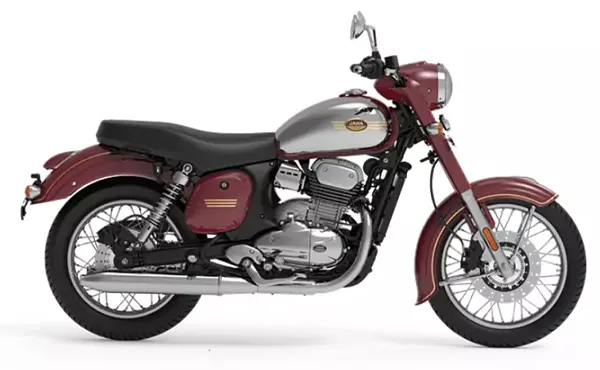
The Jawa 350 carries forward the brand’s classic style with updated engineering. Relaunched in India, it attracts both long-time fans and new riders. Its good looks, comfortable seating, and strong engine make it stand out in the retro motorcycle segment. The bike comes in several versions and colors to match different preferences. As Jawa’s top neo-retro roadster in India, it uses the trusted Alpha2 334 cc engine and adds premium touches, modern features, and better connectivity. The 350 is aimed at experienced riders and enthusiasts who value heritage, technology, and exclusivity, rather than those looking for a mass-market option like the Royal Enfield Classic 350.
Gallery

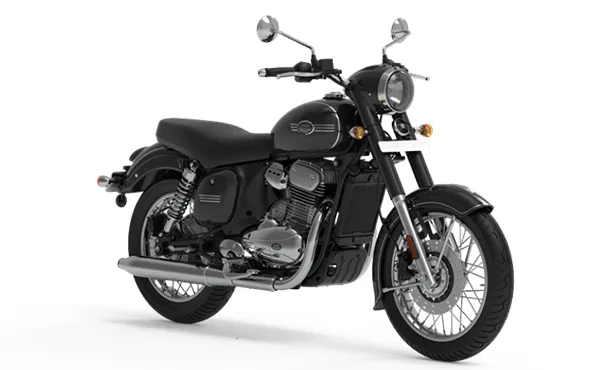
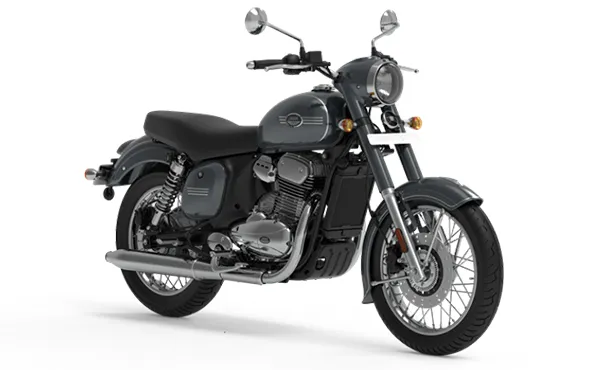
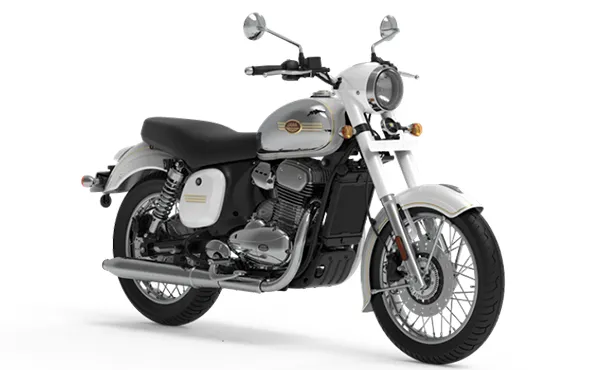
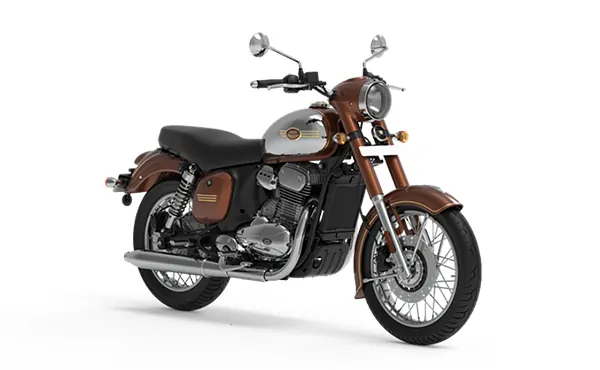
Key Specifications
Displacement
334cc
Mileage
26-36 kmpl
Power
22.57 PS @ 7500 rpm
Torque
28.1 N.m @ 6000 rpm
Fuel System
Fuel Injection
Tank Capacity
13.2L
Rear Suspension
TWIN SHOCK ABSORBERS
Kerb Weight
187KG
Ratings
- 90%
Performance
- 95%
Features
- 95%
Handling
- 95%
Comfort
- 95%
Build Quality
- 100%
Styling
- 95%
Value for Money
- 95%
Total
Ratings calculation is purely based upon pros and cons of the model given below in the overview section.
Price
Special Features
1
Digital Speedometer
2
Liquid Cooled, Dohc Engine
3
Self Start Only
4
Tubed Tyres
5
3 Color Options
6
Halogen Headlight
7
Rear Twin Shock
8
Double Cradle Frame
9
Chain Drive Transmission
10
Telescopic Front Fork
11
Analogue Meteres
12
Dual Channel Abs
Full Specifications
| City | 26–28 km/l |
| Highway | 33–36 km/l |
| Engine Type | Single Cylinder, 4 Stroke, Liquid Cooled, DOHC |
| Displacement | 334cc |
| Power | 22.57 PS @ 7500 rpm |
| Torque | 28.1 N.m @ 6000 rpm |
| Compression Ratio | 9.5:1 |
| Bore x Stroke | 81.0mm x 65.0mm |
| Cooling System | Liquid Cooled |
| Fuel Supply | Fuel Injection |
| Speedometer | Analogue |
| Tachometer | No |
| Odometer | Digital |
| Tripmeter | Digital |
| Fuel Gauge | Analogue |
| Pass Light | Yes |
| Fuel Warning Indicator | Yes |
| Start Type | Self Start |
| Cruise Control | No |
| ABS | Dual Channel |
| Type | Double Cradle Tubular Frame |
| Front Suspension | Telescopic Fork |
| Rear Suspension | Twin Shock Absorber, Gas Filled Emulsion With 5-step Adjustable Preload |
| Wheelbase | 1449mm |
| Fuel Capacity | 13.2 liters |
| Saddle Height | 805mm |
| Ground Clearance | 178mm |
| Kerb Weight | 187Kg |
| Tyres (F) | 100/90-18 |
| Tyres (R) | 130/80-17 |
| Brakes (F) | Dia 280mm Disc |
| Brakes (R) | Dia 240mm disc |
| ABS | Dual Channel |
| Head Lamp | Halogen |
| Tail Lamp | LED |
| Turn Signal Lamp | Halogen Bulb |
| Low Battery Indicator | Yes |
Jawa 350 Videos
[slide-anything id=”41639″]
Overview
Performance & Engine
The Jawa 350 uses a single-cylinder, liquid-cooled, 334 cc engine, upgraded from the previous 293 cc version. It produces 22.57 PS at 7,500 rpm and 28.1 Nm of torque at 6,000 rpm. This engine gives the bike strong acceleration and quick response, whether you’re riding in the city or on the highway. It handles hills and overtaking with ease, thanks to its good low and mid-range power. The smooth power delivery makes riding enjoyable in both traffic and on open roads.
The Alpha2 engine in the 350 uses a secondary balancer shaft and special engine mounts to reduce noise and vibration, especially at 4,000 RPM and below. This makes it smoother than most air-cooled competitors. The engine also has a unique exhaust sound from its dual-tone system, giving it a classic Jawa feel without being too loud (45–55 dB at idle, 85–90 dB while cruising).
In real-world tests, the Jawa 350 goes from 0 to 60 km/h in about 4.5 to 4.9 seconds with a solo rider. Rolling acceleration from 30 to 70 km/h in third gear takes around 3.8 to 4.2 seconds. This makes the 350 faster than the 42 FJ, thanks to its refined tuning for better low-RPM torque. On the highway, cruising at 80 to 100 km/h keeps the engine at 5,200 to 5,500 RPM, which helps with relaxed, fuel-efficient long rides.
The Jawa 350 comes with a 6-speed manual gearbox and a slip-and-assist clutch, making gear changes smooth and easy. This setup helps balance quick acceleration with good fuel efficiency. The gearbox is especially useful on long highway trips, as it keeps the engine running at lower RPMs for better mileage and less wear. The radiator cooling system lets the bike run at full power even in hot Indian summers, which is a big advantage over air-cooled bikes.
The 350 achieves a maximum top speed of 125 km/h, positioning it competitively against the Honda H’ness CB350 (120–125 km/h) and Royal Enfield Meteor 350 (120 km/h). Real-world testing shows 120–128 km/h depending on rider weight, fuel load, and wind conditions; highway cruising at 100 km/h sits at around 5,800 RPM, allowing relaxed long-distance touring without constant throttle input.
Mileage & Fuel Efficiency
The ARAI Automotive Research Association of India certified the Jawa 350 mileage at approximately 32 km/l (tested 30–34 km/l across variants). This figure is based on standardised testing conditions and represents the expected fuel efficiency for all bike variants.
In everyday use, riders usually get about 28 to 31 km per litre, though this depends on how and where you ride and how well the bike is maintained. With a 13.2-litre fuel tank, the Jawa 350 can travel 350-390 km before needing a refill in mixed conditions, or over 400 km on steady highway rides. At its most efficient, cruising at 70 to 80 km/h with a light throttle, you can expect 33 to 36 km/l. In heavy city traffic, mileage may drop to 26-28 km/l.
Features & Technology
The Jawa 350 has an impressive array of modern features that enhance safety and riding experience.
- Dual-channel ABS system: Standard across all variants, with 280 mm front petal disc and 240 mm rear disc brakes; no ABS disable option.
- Electronic Stability Control: Advanced ABS with cornering-sensitive geometry prevents wheel lock during hard braking at lean angles.
- Traction Control System: Not available on 2026 base models; Bluetooth variants enable throttle modulation control via mobile app.
- Advanced braking system: with front and rear disc brakes, providing excellent stopping power (0–60 km/h braking in ~2.4 seconds).
- Advanced braking system(ADAS): Bluetooth connectivity allows call/SMS alerts, missed call logs, and GPS alerts on select premium variants
- Connected vehicle technology for smartphone integration: integrated with the Jawa app, enables navigation alerts, service reminders, and real-time diagnostics.
- Over-the-air (OTA) update capability: Not yet deployed on 2026 models, but promised for a mid-2026 software update.
- Modern telematics systemli: Trip computer displays average speed, range, instant fuel consumption, and total distance.
- Ergonomically designed seating: 805 mm wide, with dual-tone stitching, well-padded pillion seat.
- LED lighting: Full LED headlamp, taillamp, and turn signals with DRL daytime running lights.
- Premium infotainment features: 5-inch TFT display on select trims with Bluetooth audio connectivity (Jawa app integration pending).
- Classic instrument design: Retro-style dual dials (speedo/tach) with integrated digital sub-panel for odometer, fuel level, and gear position.
- Comfortable riding position for long journeys: for long journeys, with neutral handlebar geometry and upright ergonomics.
Build Quality
The Jawa 350 features a robust double-cradle tubular steel frame, providing strength and stability for daily riding and varying road conditions. Built with high-quality materials, the bike is made to last. The premium steel frame and body make it feel solid and help prevent wear over time. The frame weighs about 42 kg, and the total bike weight is 187 kg, which is 2 kg more than the 42 FJ because of extra trim and a stronger undercarriage.
The Jawa 350 has smooth, high-quality paint that looks good and protects the bike from the weather. All parts fit together well, reducing rattling. The use of corrosion-resistant materials helps prevent rust, which is important in India’s changing climate, thereby extending the bike’s life. The spoke wheels are strong and work well on different roads, while the tyres provide good grip and stability. You can choose from matte or glossy paint finishes, and touch-up kits are available from dealers.
Handling
The Jawa 350’s double-cradle frame provides both stability and agility, making the ride well-balanced and easy to control in various situations. The front telescopic forks absorb bumps and potholes for a smoother ride, while the rear twin shock absorbers can be adjusted to suit the rider’s weight and style. The bike is light and responsive, so it’s easy to handle in city traffic where quick turns are common. Its balanced suspension helps with stable cornering and smooth transitions, and the even weight distribution keeps the bike steady during turns.
The Jawa 350 comes with 18-inch spoke wheels and tyres that offer great grip on all kinds of roads, which helps keep the bike stable during fast cornering. Both the front and rear wheels have disc brakes for strong stopping power, and ABS helps prevent wheel lockup in emergencies. The wheelbase and geometry are the same as the 42 FJ, but the 350 has slightly firmer suspension for carrying more weight. The bike gives clear feedback to the rider, making it easier to judge limits and handle different riding situations. Its light build makes it easy to manage in city traffic, while it stays stable and comfortable at higher speeds, even in windy or rough conditions.
Comfort
The Jawa 350 has a comfortable, well-shaped seat that supports both the rider and the passenger, helping reduce fatigue on long trips. The dual-tone seat design looks good and enhances comfort. The seat is 805 mm high and 850 mm long, 20 mm longer than the 42 FJ, for a more premium feel. The upright riding position reduces strain on your wrists, back, and shoulders, making it easier to stay relaxed on both short and long rides. The bike is also built to reduce vibrations, so the ride stays smooth and less tiring over time.
The Jawa 350 keeps its classic look while providing wind protection at higher speeds, making rides more comfortable. The handlebars are 810 mm wide, a bit wider than the 42 FJ, giving a more confident grip. The footpegs are set up to fit riders of different heights, so you can stretch your legs and change positions on long rides. For passengers, premium versions have chrome-plated grab rails and well-placed footrests, though a backrest can help on longer trips. The engine is quiet, so you can enjoy the ride without too much noise. The bike’s design focuses on a natural riding posture, making controls easy to reach and the bike simple to use, enhancing comfort on both short and long journeys.
Styling
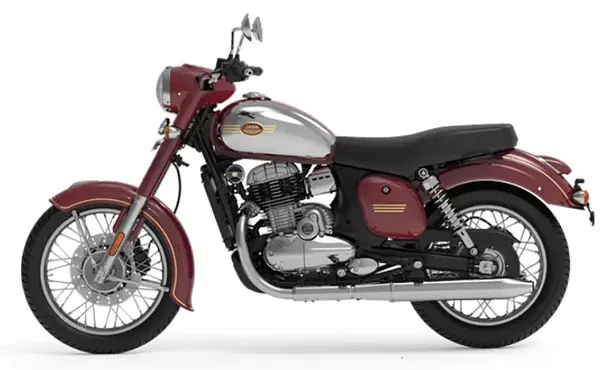
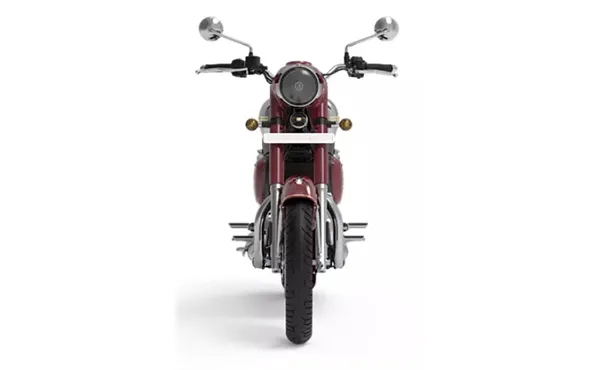
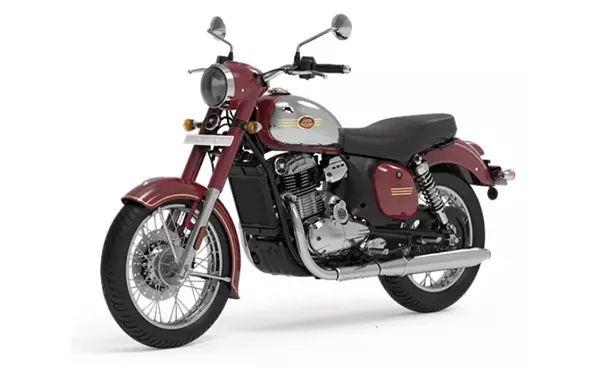
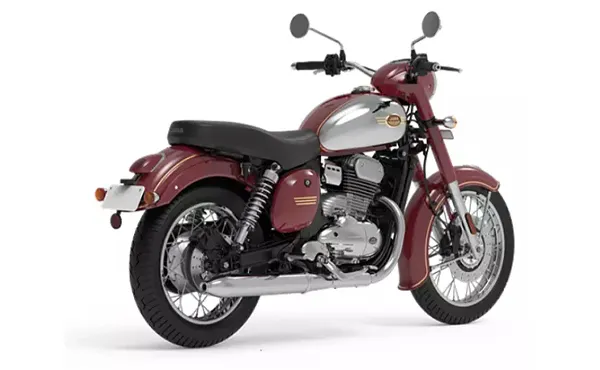
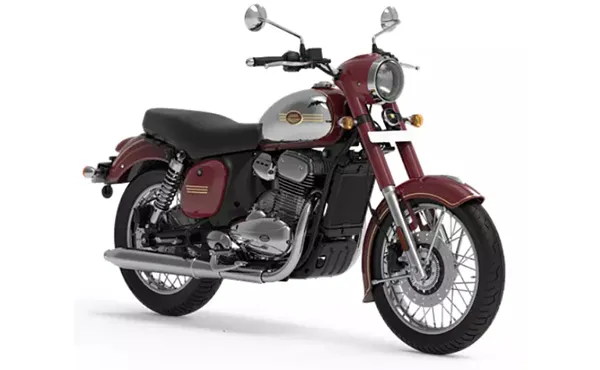
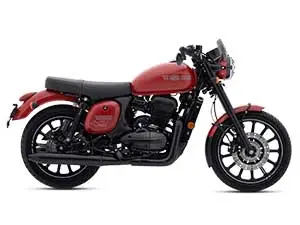
The Jawa 350 keeps its classic shape, staying true to the original model’s style. It has a rounded headlamp, a sculpted fuel tank, and a retro rear end, which appeals to fans of vintage bikes. The round headlamp not only looks retro but also lights up the road well at night. Chrome details around the headlamp add elegance. The fuel tank is shaped for both style and comfort, featuring the classic Jawa emblem that highlights its heritage. The tank’s design also gives the rider a comfortable grip.
The exhaust system is styled like classic Jawa bikes, with a low position and a dual-tone finish. This not only looks good but also gives the bike its signature sound that many riders enjoy. The wheels have a classic spoke design, adding to the retro feel while keeping the bike stable and performing well. The tyre sizes are chosen for both looks and good handling. Chrome accents adorn the fenders, handlebars, and controls, giving the bike a timeless, classic look. Premium versions feature thicker chrome plating on mirrors and fenders than the base 42 FJ.
Colour Options And Variants
The colour options available for the Jawa 350 are designed to cater to a diverse audience. Riders can choose from classic shades like
- Chrome Maroon
- Mystique Orange
- Chrome White
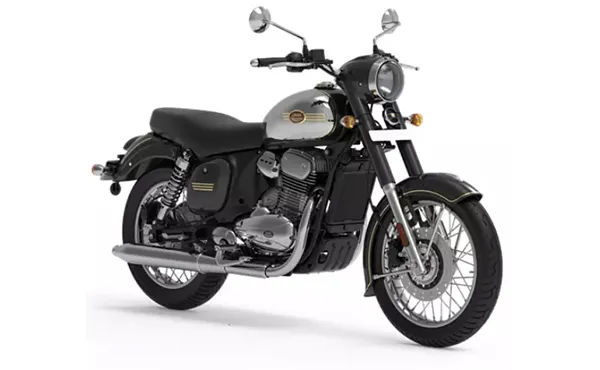
- Chrome Black
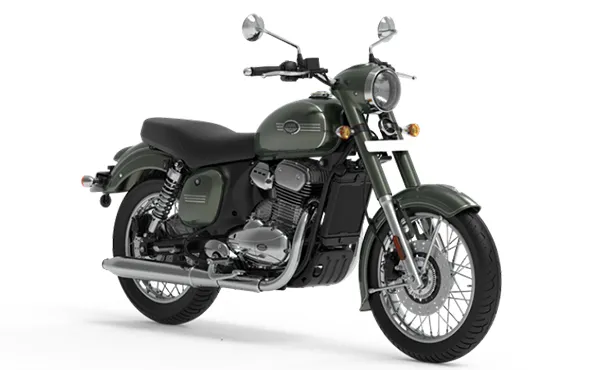
- Deep Forest
- Grey
- Obsidian Black
The variants consist mainly of two trims: Solid and Chrome, with the Chrome variant featuring a fully chrome-finished fuel tank (vs matte/solid paint on the base).
- Jawa 350 (Solid Base):- Standard paint, spoke wheels.
- Jawa 350 (Solid Alloy):- Solid paint, cast alloy wheels.
- Jawa 350 (Chrome Spoke):- Chrome tank, spoke wheels, premium stitching.
- Jawa 350 (Chrome Alloy Premium):- Chrome tank, alloy wheels, Bluetooth, TFT display.
Value For Money And Pricing
The base Jawa 350 price starts at ₹ 2,09,000 (ex-showroom, Delhi). For its price, the Jawa 350 offers great value, standing out among its competitors. It’s priced in the mid-range and combines quality, performance, and classic style. In terms of value for money, the Jawa 350 stands out among its competitors in the ₹1.83–2.25 lakh range. Priced competitively in the mid-range, it offers an excellent blend of quality, performance, and iconic styling hard to match. Compared to bikes like the Royal Enfield Classic 350 and the Honda H’ness CB350, the Jawa 350 offers a similar retro experience, often at a competitive price.
Additionally, the reliability and lower maintenance costs associated with the Jawa brand (liquid-cooled engines require less frequent oil changes) further enhance its value proposition, making it an appealing choice for many riders. The premium features, like extra chrome, a TFT display, better Bluetooth, and high-quality paint, explain the ₹14,000 higher price compared to the 42 FJ. These upgrades appeal to riders who want a heritage-inspired, modern bike.
Direct competitors for the Jawa 350 in India include
- RE Classic 350
- Honda H’ness CB350
- RE Meteor 350
- Yezdi Roadster
Verdict
The Jawa 350 is a strong premium choice for motorcycle fans in India. It mixes classic looks with modern performance and is the top retro roadster in Jawa’s range. Its vintage style attracts those who love timeless designs, while its comfortable seating and smooth engine make it good for both city rides and long trips. With seven colour choices and different variants, riders can pick what suits their style and budget.
There are a few drawbacks to consider, such as the Jawa 350’s heavier weight compared to some rivals, the absence of advanced rider-assist features, and a smaller service network in some regions. Still, the Jawa 350 stands out in the retro motorcycle market, especially for those who value its heritage and want a reliable, stylish, and modern bike with liquid cooling.
Pros
- Iconic Jawa styling: Premium chrome finishes and heritage detailing.
- Premium fit and finish: Better paint quality, chrome plating, and interior trim than 42 FJ
- Attention to design detail: Chrome accents, stitched seats, premium materials.
- Powerful 334 cc engine: Liquid-cooled, matches 42 FJ power but refined for premium appeal.
- Good fuel efficiency:32 km/l ARAI, 13.2 L tank, 420+ km range.
- Smooth power delivery: Reduced vibrations and refined engine mapping.
- Modern engineering: Dual ABS, LED, digital instruments, OTA-ready platformg
- Comfortable riding position: Upright ergonomics suitable for long touring.
- Decent fuel tank capacity: 13.2 L for long rides and practical highway range.
- Premium brand appeal: Exclusive design attracts collectors and enthusiasts willing to pay for heritage.
Cons
- Limited service network: Fewer authorised centres in tier-2/3 towns compared to Royal Enfield, Honda, and Hero.
- Spare parts availability: Challenging in some regions, leading to longer wait times than mass-market rivals.
- Intense competition: Resale value perceptions still lag Royal Enfield due to its brand longevity.
- Higher maintenance costs: Liquid-cooled engine, ABS, and proprietary components vs air-cooled Royal Enfield 350.
- Heavier than key rivals: 187 kg vs RE Classic 350 (202 kg) and Honda H’ness CB350 (194 kg); slightly affects low-speed manoeuvrability
- Missing advanced rider aids: No cornering ABS or traction control on base variants.
- Brand trust building: Long-term reliability data is still limited versus the 50-year Royal Enfield legacy.
Other Related Links From Bikeleague India
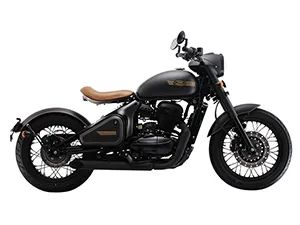
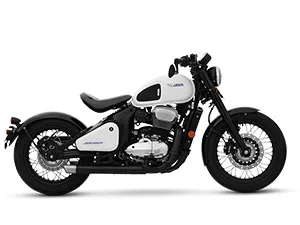
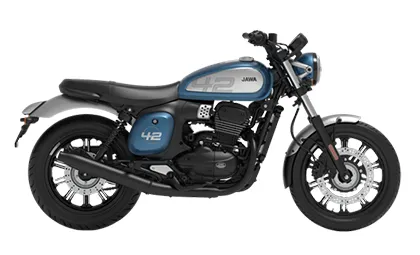
List Of All Jawa Motorcycles In India
About Jawa Motorcycles
Jawa is a well-known motorcycle brand that started in Prague, Czechoslovakia (now the Czech Republic) in 1929, founded by František Janeček. In India, Jawa is remembered both as a popular import from the 1960s and 70s and as a retro brand brought back by Classic Legends (part of Mahindra Group) in 2018. Today, Jawa’s Indian models use 293 to 334cc single-cylinder engines that meet BS-VI standards and feature simple, modern classic designs.
History And Growth(1960s)
Jawa first came to India in 1960 and 1961, when Ideal Jawa (India) Ltd, run by the Irani family, started importing and later making Jawa 250 motorcycles in Mysore, Karnataka. These bikes became popular for their toughness, reliability, and unique tank design, building a loyal fan base before the brand changed to Yezdi in the 1970s.
After many years away, Jawa officially returned to India in 2018. Mahindra Group, through its company Classic Legends, got the rights from Jawa Moto (Czech Republic) to make and sell Jawa motorcycles in India and some other Asian countries. The relaunch started with three models: Jawa Standard, Jawa Forty-Two, and Jawa Perak. These were made at Mahindra’s Pithampur plant and designed as modern takes on the classic Jawa 250.
In the first years after the relaunch, Jawa attracted loyal customers by tapping into nostalgia and offering a good riding experience, even though its sales were lower than Royal Enfield’s. Classic Legends later added new models like the Jawa 42 Bobber, Jawa 42 FJ, and Jawa 350, aiming to make Jawa a more performance-focused, premium retro brand.
Key Milestones And Developments
- 1929–1970s: Founding of Jawa in Prague; global expansion; Jawa 250/350 models exported to more than 120 countries, including India.
- 1961: Jawa branded motorcycles begin local production in Mysore, Karnataka, under Ideal Jawa.
- 1971–1973: Transition from “Jawa” to “Yezdi” in India via the same factory and technical lineage.
- 2016: Mahindra strikes a licensing deal with Jawa Moto (Czech Republic) to revive the Jawa brand in India and eastern Asian markets.
- 2018: Three Jawa models—Jawa, Jawa Forty Two, and Jawa Perak—are formally launched; bookings open online, and production starts at Pithampur, Madhya Pradesh.
- 2019–2020: Jawa rolls out its first dealer network and achieves over 50,000 unit sales within the first 12-month commercial window, despite the onset of the pandemic.
- 2022–2024: Introduction and updates on the Jawa 42 Bobber, 42 FJ, and Jawa 350, with the 350 platform becoming the flagship engine across multiple variants.
- 2024–2025: Expansion of online sales via Flipkart and Amazon in 40+ Indian cities, signalling a push towards digital retail and wider accessibility.
Manufacturing Facilities
Today, Jawa motorcycles are made at Mahindra’s factory in Pithampur, Madhya Pradesh. This plant also makes other Mahindra vehicles and two-wheelers. It handles final assembly, engine fitting, sub-assembly, and quality checks for all Jawa bikes sold in India.
The Pithampur plant uses Mahindra’s strong supply chain and technology, which helps Jawa keep its build quality steady as production grows. Classic Legends also plans to increase capacity as Jawa, Yezdi, and BSA expand, with a goal of making 80,000 to 100,000 bikes per year across all brands.
Market Position And Achievements
Jawa presents itself as a premium retro brand in the mid-300cc motorcycle segment in India. It targets riders who want a bike that is more agile, compact, and easier to use in cities than the bigger Royal Enfield models. Jawa’s main prices range from about ₹1.59 lakh to ₹2.2 lakh, depending on the model and location.
Key market positioning points:
- Design and brand value: Jawa keeps many classic design features but adds cleaner and more modern touches than its older bikes.
- Performance and handling: The 293 to 334cc single-cylinder engines use fuel injection and liquid or semi-liquid cooling, giving a smoother and stronger ride than the old side-valve 350s.
- Dealer and service network: Jawa now has over 400 showrooms and more than 140 service centres across India. This gives the brand a solid, but still niche, presence compared to larger mass-market brands.
In terms of achievements, Jawa has:
Future Plans
Classic Legends has shared big plans for Jawa, Yezdi, and BSA, aiming to make 80,000 to 100,000 motorcycles per year, driven by demand in India and more exports. For Jawa, the company expects to:
- 1. Add more versions based on the 350 platform, including new body styles and possibly lighter adventure or Scrambler-style models using the same engine.
- 1. 2. Update electronics and rider features, slowly adding ride-by-wire, ride modes, and better suspension to higher-end models.
- 3. Look into selling in international markets like Central America, Southeast Asia, Russia, and parts of Europe, where the Jawa name is still respected.
On the digital and retail side, Jawa–Yezdi is likely to:
- 1. Expand online sales and customization options to more platforms and cities, using the city-wide launches on Amazon and Flipkart as a model.
- 2. Put more effort into after-sales service and building a community through ride clubs, events, and customisation programs to keep Jawa’s strong brand image over time.
Other Related Links From Bikeleague India
User Reviews
There are no reviews yet. Be the first one to write one.

Hiran Narayanan
Founder & CTO at Bikeleague India
Hiran Narayanan is the Founder and CTO of Bikeleague India, bringing over 15 years of experience in motorcycle technical writing. He develops detailed analyses, tools, model overviews, and blogs that contribute to bikeleague.in's improving rankings.