Overview
Performance And Engine
The Vespa S Tech 125 uses a single-cylinder, 4-stroke, air-cooled engine with 124.45 cc, producing 9.51 PS at 7100 rpm and 10.1 Nm at 5600 rpm. Its fuel-injected i-get engine offers strong low-end torque, making it great for city traffic and quick overtakes. Owners like its smooth, vibration-free ride and say it feels more responsive than other 125cc scooters like the Access 125 in crowded streets.
It has a smooth CVT automatic transmission with a belt drive, so you don’t need to shift gears in city traffic. The Combi Brake System (CBS) uses a 220mm front disc and a 140mm rear drum for safe, stable braking, even during sudden stops. The belt is durable for long rides, and users appreciate that servicing is quick and easy.
The S Tech 125 reaches a top speed of 86 kmph on smooth roads, with safety and stability in mind. 0-60 kmph comes briskly in under 12 seconds, ideal for lane filtering, while it cruises comfortably at 70-75 kmph for highways with pillion. Indian users confirm reliable speed holding even when loaded, though wind buffeting increases beyond 80 kmph without fairing tweaks.
Mileage And Fuel Efficiency
The S Tech 125 is rated at 45 kmpl by ARAI, thanks to its efficient fuel injection, air cooling, and a light 115 kg weight under BS6-2 standards. This figure shows it is well-tuned for different conditions and matches other scooters in lab tests.
Indian riders say they get 37-45 kmpl in real-world use, with an average of 40 kmpl in city commutes, like in Bangalore. In heavy city traffic, mileage is 37-40 kmpl, while on highways at 50-60 kmph, it can reach 42-45 kmpl, according to owners with over 15,000 km. Mileage can drop to 35 kmpl with hard riding or heavy loads, but regular servicing helps keep the 7.4L tank’s range at 280-320 km.
Features And Technology
The Vespa S Tech 125 adds advanced connectivity and premium features to the sporty S series, designed for India’s city professionals. Its bold styling and i-get technology make it a top choice for style-focused commuters in big cities.
- 5-inch TFT colour display: Bluetooth smartphone pairing for turn-by-turn navigation, call/SMS alerts, riding stats, and Vespa app integration for urban connectivity.
- Keyless ignition system: Proximity smart key with engine immobiliser, handlebar seat opener, and fuel lid unlock for hassle-free starts in traffic.
- USB charging port: Convenient Type-A port alongside a digital console showing a speedometer, tachometer, odometer, trip meter, clock, fuel gauge, and service reminders.
- Combi Brake System (CBS): 220mm front disc (hydraulic calliper) and 140mm rear drum with pass switch, low fuel warning, and DRLs for safe night rides.
- Practical storage solutions: Underseat compartment (fits half- or full-face helmet), glove box, front carry hook, pillion grab rail, footrest, and backrest option.
- Tubeless alloy wheels: 110/70-11 front and 120/70-10 rear tyres on 12-inch rims; monocoque chassis; 770mm seat height, suiting diverse riders.
- 124.45cc i-get air-cooled engine: 9.51 PS @7100 rpm, 10.1 Nm @5600 rpm, CVT belt drive, self-start, 7.4L tank with BS6 Phase 2 EFI compliance.
Build Quality
The S Tech 125 uses a strong monocoque steel frame that resists rust, making it ideal for India’s wet weather and coastal areas. It comes with tubeless MRF or Eurogrip tyres on 11-inch alloy wheels for better grip and fewer punctures. The scooter is light at 115 kg but still feels sturdy. Owners say the paint and plastics last well even after 10,000 km, with no rattles or gaps. However, parts like the belt and TFT screen can be expensive to replace.
Handling
The S Tech 125 handles well in traffic because of its compact size, making U-turns and lane changes easy on busy Indian roads. It has telescopic front forks and dual rear shocks that smooth out bumps, and the steering is light and precise, even with a 770mm seat height. Users say it corners well at 60 kmph and stays balanced with a passenger on board. Some riders notice a slight wobble above 80 kmph if the tyre pressure isn’t adjusted for highway speeds.
Comfort
The S Tech 125 features a roomy single-piece seat at 770mm, fitting riders from 5’4″ to 6′. The wide footboard and upright seating help reduce tiredness in traffic. The suspension handles city bumps well, and owners say it’s comfortable on long commutes, with little engine vibration. The passenger has grab rails and footrests, but some users mention the rear seat is narrow for adults on rides over 30 km. The upright position is great for city trips, but longer highway rides can get tiring.
Styling
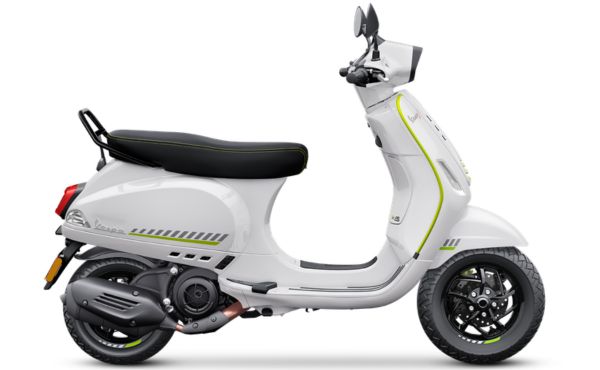
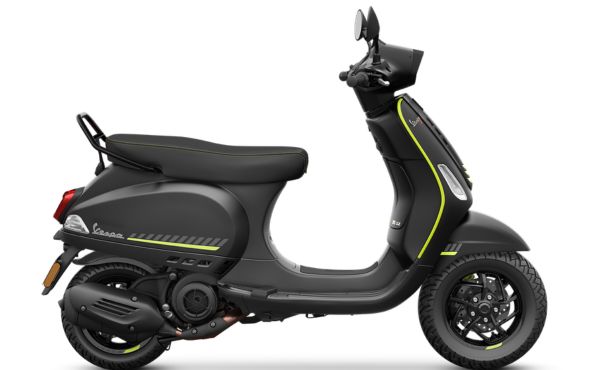
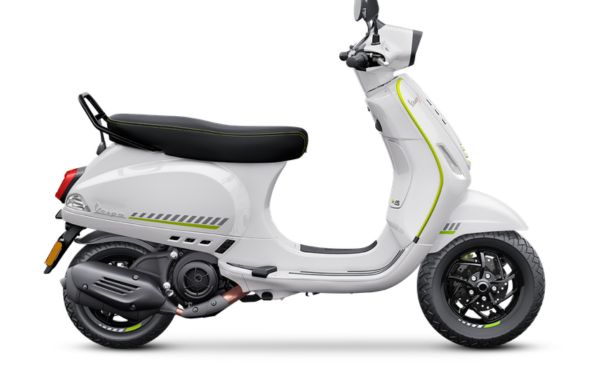
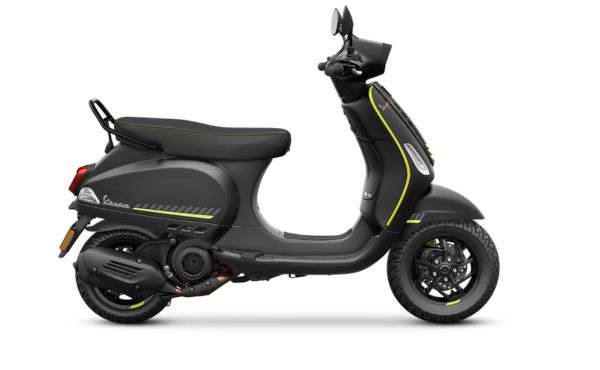
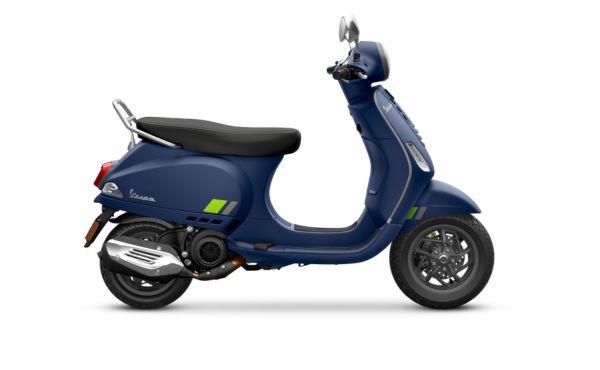
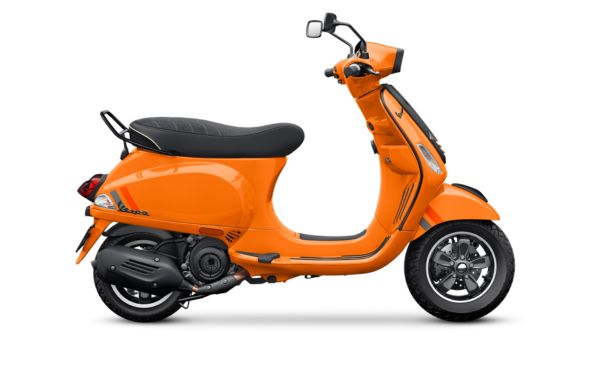
The S Tech 125 sports an athletic profile with angular split LED headlamps, sculpted side panels, and a truncated rear for a compact, aggressive stance measuring 1770mm long and 690mm wide. Blacked-out elements on exhaust, mirrors, grab rail, and 12-inch alloys amplify its street-fighter persona, complemented by “S Tech” badges and dynamic decals that users say “exude premium menace” amid scooter swarms. The monocoque body integrates seamlessly with sporty fenders and chrome grille accents, blending retro Vespa curves with modern edginess, ideal for Instagram-worthy rides on bustling Kochi or Delhi streets.
Colour Options And Variants
Tech-exclusive shades
- Nero Black
- Pearl White
set it apart, available only on the top variant. S Tech 125 reigns as the halo with a TFT screen, keyless ignition, exclusive colours, and a full digital suite. The S Tech 125 Tech prioritises city efficiency; all share an i-get engine, positioning tech as a value-packed flagship for tech-savvy buyers over base practicality.
Value For Money And Pricing
The ex-showroom price of the Vespa S Tech 125 starts at ₹ 1,85,000 lakh in Delhi. The S Tech 125 offers compelling value for premium seekers with a TFT display, keyless entry, CBS brakes, and a refined i-get engine, justifying the price tag against basic 125cc rivals.
Users laud its superior build, smooth 9.51 PS performance, and aspirational styling as “worth every penny” for urban professionals, with strong resale (75-80% after 2 years) offsetting the higher service cost. Drawbacks like 37-40 kmpl mileage and a sparse service network temper long-term costs for daily commuters, but exclusivity and low depreciation make it a smart prestige buy over commoditised options.
Top rivals are
- Suzuki Access 125
- Honda Activa 125
- TVS Jupiter 125
- Yamaha Fascino 125 Fi Hybrid
- Aprilia SR 125
Rival scooters offer sporty handling and premium features, but Vespa stands out for its brand appeal and smooth ride. The S Tech 125 is best for style-focused buyers, while the Activa and Jupiter are better for everyday practicality.
Verdict
The Vespa S Tech 125 is a top choice in India for those who want stylish looks and smooth performance, with 9.51 PS for quick city rides. Its TFT navigation with Bluetooth makes daily commutes easier. The scooter is light, has a strong frame, and keeps a good resale value of 75-80%, making its price fair for city trendsetters who like Italian style. It gets 37-45 kmpl in real use, giving a range of 280-320 km per tank. The stable CBS brakes help in heavy traffic, offering a level of class that stands out.
Still, the Vespa is more of a speciality scooter and might not suit everyone. It gets 35-40 kmpl, which is less than rivals like the Activa or Jupiter. Service centres are mostly in big cities, and maintenance costs range from Rs 2,500 to Rs 4,000. Storage is limited, and the passenger seat is less comfortable than on family scooters like the Access 125 or TVS Jupiter 125, which also cost less. The S Tech 125 is great for those who want to stand out, but if you need practicality, you may want to look at other options. For those who care about style, it offers unmatched class in the scooter market.t.
Pros
- Premium Italian styling: aggressive angular panels, split LEDs, and matte finishes turn heads on the road for unmatched road presence.
- Advanced TFT technology, including a 5-inch colour screen, Bluetooth navigation, keyless ignition, and a USB port, enhances daily convenience in smart cities.
- Refined i-get engine: (9.51 PS/10.1 Nm) offers smooth low-end torque, a vibration-free ride, and responsive acceleration for urban sprints.
- Superior build quality: with a rust-proof monocoque chassis, durable alloys, and quality plastics that endure monsoons and potholes well.
- Nimble handling: stable CBS brakes (220mm disc front) excel in congestion, with compliant suspension soaking up city bumps effectively.
- Strong resale value: from brand prestige, retaining 75-80% after 2 years despite premium pricing.
Cons
- Poor real-world mileage: (35-40 kmpl) trails rivals like Activa, demanding frequent stops with a 7.4L tank in fuel-conscious India.
- High service costs: (Rs 2,500-4,000 per visit) and issues with proprietary parts availability, with a sparse network outside metros.
- Limited storage: fits only a half-helmet, no under-seat light, frustrating for daily carriers on bag-heavy commutes.
- Narrow pillion seat: uncomfortable for adults beyond 20km, plus vibrations at highway speeds over 70 kmph.
- Premium pricing: poor value vs feature-equivalent Access/Jupiter at half the cost for budget families.
- Low ground clearance: scrapes speed breakers with pillion, plus no kickstart for limp-home reliability.
List Of All Vespa Scooters
About Vespa Scooters
Vespa, a legendary brand renowned for its distinctive design and rich history, holds a special place in the hearts of scooter enthusiasts around the world. Originating in the aftermath of World War II, Vespa was introduced by the Italian company Piaggio in 1946. With its sleek, elegant appearance, efficient functionality, and a wide range of Vespa scooters colors, the Vespa scooter quickly became an iconic symbol of Italian engineering and style, capturing the imagination of a generation and leaving an indelible mark on the world of two-wheelers.
The journey of Vespa in India dates back to the 1960s, when it forged a partnership with the esteemed Indian manufacturer Bajaj to produce Vespa scooters in the country. This collaboration brought the elegance and sophistication of Vespa to the Indian masses, setting the stage for a long and enduring relationship with the Indian market. Following the Bajaj era, Vespa continued its Indian venture by partnering with LML Motors, leading to the production and distribution of its renowned scooters throughout the country. This period marked an era of continued growth and popularity for the brand in the Indian two-wheeler market. Despite changes in partnerships and the evolution of the Indian automotive industry, Vespa has always remained synonymous with classic design, superior craftsmanship, and timeless appeal. The brand’s commitment to quality and innovation has made it a global symbol of style and sophistication, attracting a diverse and loyal fan base across different continents and cultures.
The distinctive Vespa scooters features lie in their painted, pressed steel unibody, which seamlessly integrates an engine cowling, a flat floorboard, and a front fairing into a single structural unit. This unique design not only enhances the scooter’s aesthetic appeal but also provides practical benefits such as engine protection, foot safety, and wind resistance, making Vespa an ideal choice for both urban commuting and leisurely rides through scenic landscapes. Vespa’s global presence has expanded over the years, encompassing a diverse range of models and variants, each crafted with meticulous attention to detail and a focus on delivering a superior riding experience. From its humble beginnings as a single-model scooter, Vespa has grown into a comprehensive product line, catering to the varied preferences and demands of scooter enthusiasts worldwide.
Today, Vespa continues to embody the spirit of Italian elegance and craftsmanship, combining its rich heritage with modern technology to create a unique blend of nostalgia and innovation. With its timeless design, enduring legacy, and unwavering commitment to excellence, Vespa remains an enduring symbol of style, freedom, and the joy of the open road, resonating with generations of riders who appreciate the finer things in life.
History And Growth
In the 1960s, Piaggio authorised the production of Vespa in India, turning it into a symbol after independence. Vespa returned in 2012, launching the LX 125 with a new 125cc engine that offered 60 km per litre. By mid-2013, Vespa had sold 52,000 scooters and expanded to 35 cities with 50 exclusive outlets.
Key Milestones And Developments
- April 6, 2012:Vespa made its official debut at the Delhi Auto Expo with the India-specific LX 125, priced at 66,600 INR (about 1,000 EUR).
- April 26,2012:Vespa held a press launch in Mumbai and opened the Baramati factory for full production.
- June 2013:Vespa VX launch in Bombay; announces GTS 300, LXV 125, and flagship 946 models.
- In March 2025:Vespa unveiled its 2025 portfolio at St. Regis Mumbai, celebrating over ten years in India with new features and bold colours for the next generation.
Vespa made changes for easier maintenance and a more premium image, which helped global sales grow from 50,000 units in 2003 to over 150,000 in 2011, before re-entering India.
Manufacturing Facilities
Piaggio’s Baramati factory in Maharashtra opened in April 2012 and covers a large area. It manages every step of Vespa scooter production, from building frames to final assembly. The factory started with a capacity of 150,000 scooters a year and doubled to 300,000 by 2013. Built in 14 months for over Rs. 10 billion, the plant is part of a larger site that also makes three-wheelers and engines. From the beginning, the factory has used only locally sourced parts, making Vespa a scooter made in India for the world.
Market Position And Achievements
Vespa created a premium two-wheeler segment in India for buyers who value style, setting itself apart from regular commuter scooters. It set up exclusive dealerships in major cities, offering models with notable Vespa scooters mileage in India. Official launches highlight Vespa as Piaggio’s top seller, similar to the LX in Europe, and rapid sales growth helped the Group aim for 1 million global vehicles by 2014. Notable achievements include the 75th anniversary edition in 2021 and the (Vespa)RED VXL, which supports global causes.
Future Plans
Piaggio plans to make Vespa an even stronger luxury-lifestyle brand in India. The 2025 lineup features advanced options for younger, style-conscious riders. The strategy includes launching bigger models, investing in premium two-wheelers with Aprilia, and using the Baramati plant to expand. Piaggio aims to grow revenue in Asia by increasing Vespa’s presence in emerging markets, focusing on local innovation, wider distribution, and meeting changing consumer needs.