
Introduction
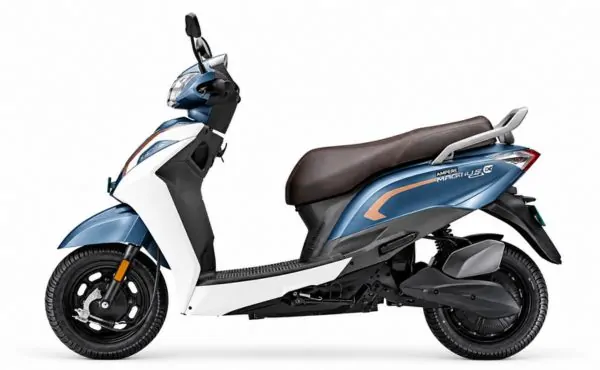
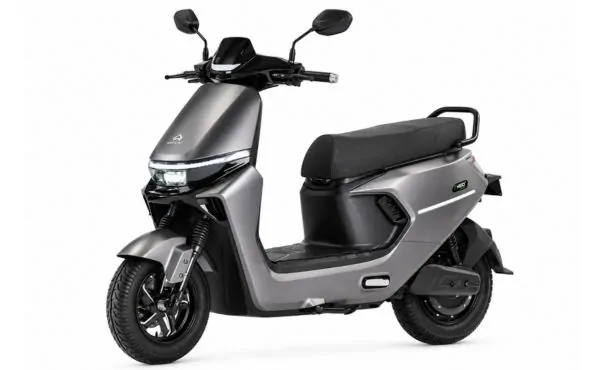
The Ampere Magnus G Max NxG.io is a more connected version of the regular Magnus G Max, made for Indian families who want a practical electric scooter for city rides, office commutes, school runs, errands, and carrying a passenger now and then. It keeps the same 3 kWh fixed LFP battery, a claimed 142 km IDC range, 33-litre under-seat storage, 165 mm ground clearance, 2.4 kW rear hub motor, and a top speed of 65 km/h. What’s new is the NxG.io platform, which adds a 5-inch PMVA digital display, turn-by-turn navigation, cruise control, hill-hold assist, live tracking, geo-fencing, vehicle alerts, OTA updates, and over 30 connected features. The NxG.io costs about ₹7,000 more than the regular G Max and is focused on technology, convenience, and daily family use, not on higher performance. It’s best for riders who have reliable charging at home or work and don’t need to ride on highways, use fast public charging, or go on long trips.
Gallery
Key Specifications
Battery Type
Lithium ion (LFP)
Range
70-110 Km/c
Charging Time
7.5 Hours
Torque
110 Nm
Max Speed
65 km/h
Power
3.26 PS
Rear Suspension
Dual Shock Absorber
Kerb Weight
116 kg
Ratings
- 60%
Performance
- 85%
Features
- 90%
Handling
- 100%
Comfort
- 100%
Build Quality
- 100%
Styling
- 90%
Value for Money
- 89%
Total
Ratings calculation is purely based upon pros and cons of the model given below in the overview section.
Price

Special Features
1
Nxg.io Connected Platform
2
Five-inch Pmva Display
3
Turn-by-turn Navigation
4
Cruise Control
5
Hill-hold Assist
6
Three Riding Modes
7
Reverse Assist
8
3 Kwh Fixed Lfp Battery
9
Battery Warranty
10
Ip67-rated Battery Protection
11
142 Km Idc Range Claim
12
65 Km/h Claimed Top Speed
Full Specifications
| City | 85-110km/c |
| Highway | 70-85km/c |
| Motor Type | BLDC |
| Maximum Speed | 65km/h |
| Rated Power | 3.26 PS |
| Transmission | Automatic |
| Battery charging time | 7.5Hrs |
| Speedometer | Digital |
| Tachometer | No |
| Tripmeter | Yes |
| Fuel Guage | No |
| Low Battery Indicator | Yes |
| Start Type | Electric Start |
| Kill Switch | No |
| Clock | Yes |
| Pass Light | Yes |
| Stand Alarm | Yes |
| Brakes (F) | Drum 130mm |
| Brakes (R) | Drum 130mm |
| Front Suspension | Telescopic Fork |
| Rear Suspension | Dual Shock Absorber |
| Wheelbase | 1390mm |
| Ground Clearance | 165mm |
| PayLoad | 150kg |
| Battery type | 3 kWh Lithium Ion (LFP) |
| Pass Light | Yes |
Overview
Performance And Motor
The Ampere Magnus G Max NxG.io is a more connected version of the regular Magnus G Max, made for Indian families who want a practical electric scooter for city rides, office commutes, school runs, errands, and carrying a passenger now and then. It keeps the same 3 kWh fixed LFP battery, a claimed 142 km IDC range, 33-litre under-seat storage, 165 mm ground clearance, 2.4 kW rear hub motor, and a top speed of 65 km/h. What’s new is the NxG.io platform, which adds a 5-inch PMVA digital display, turn-by-turn navigation, cruise control, hill-hold assist, live tracking, geo-fencing, vehicle alerts, OTA updates, and over 30 connected features. The NxG.io costs about ₹7,000 more than the regular G Max and is focused on technology, convenience, and daily family use, not on higher performance. It’s best for riders who have reliable charging at home or work and don’t need to ride on highways, use fast public charging, or go on long trips.
| Performance item | Specification |
|---|---|
| Motor type | Rear BLDC hub motor |
| Peak output | 2.4 kW |
| Peak torque at wheeln | 130 Nm |
| Claimed 0–40 km/h acceleration | 6.5 seconds |
| Claimed top speed | 65 km/h |
| Gradeability | 12 degrees |
| Riding modes | Eco and Power |
| Parking support | Reverse Assist |
| Kerb weight | 116 kg |
Ampere says the scooter can accelerate from 0 to 40 km/h in 6.5 seconds. This is suitable for starting at traffic lights, stop-and-go commuting, low-speed overtaking, flyovers, and moderate suburban rides. It is not a high-performance scooter like those in the 4 to 6 kW EV class, so you can expect a smooth and practical ride rather than fast acceleration or expressway speeds.
The NxG.io version offers Eco and Power riding modes, plus Reverse Assist. Eco mode helps save energy and gives a gentler throttle response, while Power mode delivers the best performance and lets you reach the scooter’s top speed of 65 km/h. Reverse Assist makes it easier to move the 116 kg scooter backwards out of tight parking spaces, basements, shop fronts, or up gentle slopes.
Ampere says the scooter can handle slopes up to 12 degrees, which is enough for most Indian flyovers, apartment ramps, basement exits, and moderate parking slopes or city hills. However, it is not meant for steep hill rides, especially if you have a heavy passenger or luggage.
The Magnus G Max NxG.io has a fully automatic electric drivetrain. There is no clutch, manual gearbox, gear lever, or gear changes. You just twist the throttle, and the motor sends power straight to the rear wheel.
This setup is convenient for Indian traffic because you do not need to use a clutch in traffic jams or shift gears at traffic lights or before flyovers. The scooter’s smooth low-speed control makes it a good choice for families, people switching from automatic petrol scooters, and new EV riders.
Reverse Assist is helpful since the scooter weighs 116 kg. It lets you back out of tight parking spots or move the scooter on a slope. Riders should still use the throttle carefully, especially in Power mode or with a passenger, because wet roads, dust, loose gravel, painted lines, and potholes can make the tyres slip.
The Ampere Magnus G Max NxG.io has a claimed top speed of 65 km/h. This is suitable for city roads, flyovers, main urban routes, and moderate suburban roads. It is faster than low-speed EVs that don’t require a licence, but it isn’t meant to compete with premium electric scooters that can reach 80–100 km/h or more.
Think of 65 km/h as the scooter’s top speed, but it is not the best speed for long rides. Riding at full throttle for long periods uses more battery, reduces your range, increases wind resistance, and gives you less time to react to potholes, sudden stops, people, animals, rough roads, or traffic changes.
For the best balance of range, comfort, and safety, ride the scooter at moderate city speeds. It can handle some faster suburban roads, but it is not meant for regular highway or high-speed intercity travel.
Charging Time
The Magnus G Max NxG.io charges with an off-board charger. The battery takes about 5 hours and 45 minutes to go from 0% to 80%, and about 7 hours and 25 minutes to reach 100%. The charger provided has a 450 W output and uses a 7.5 A connection.
| Charging item | Specification |
|---|---|
| Charger type | Off-board charger |
| Charger output | 450 W |
| Charging connection | 7.5 A |
| 0–80% charging time | 5 hours 45 minutes |
| 0–100% charging time | 7 hours 25 minutes |
| DC fast charging | Not supported |
This charging time works well for overnight charging at home or during a long work shift. If you travel 30 to 60 km a day, you can usually recharge overnight without any problems. If you travel 70 to 90 km daily, charge every night and keep some range in reserve.
Charging time can vary depending on battery temperature, outside heat, remaining charge, voltage stability, socket condition, and charger health. Always use a dedicated, properly earthed wall socket. Avoid damaged plugs, loose adapters, thin extension boards, overloaded circuits, or poor electrical fittings.
The NxG.io version does not support DC fast charging. Its 3 kWh battery is enough for most daily city trips, but the scooter isn’t built for quick public charging stops or fast intercity travel.
Range
The Magnus G Max NxG.io has a claimed IDC range of 142 km per charge from its 3 kWh LFP battery. This range is based on standard testing, but real-world mileage may vary depending on riding conditions.
| Range reference | Expected distance | Typical riding conditions |
|---|---|---|
| Official IDC claim | 142 km | Standardised test-cycle result |
| Ampere real-world claim | 100+ km | General practical-use reference |
| Eco-mode, careful city use | 100–110 km | Solo rider, smooth roads, steady city speed, correct tyre pressure |
| Mixed city and suburban use | 85–100 km | Traffic, flyovers, normal acceleration, mixed Eco and Power riding |
| Demanding use | 70–85 km | Power mode, sustained 60–65 km/h, pillion, luggage, hills, heat, rough roads |
You can get close to the maximum range if you use Eco mode, ride smoothly at moderate speeds, keep your tyres properly inflated, carry light loads, ride alone, and have good weather and smooth roads. The range will drop if you use Power mode, accelerate hard, ride at 60 to 65 km/h for long periods, face traffic, potholes, hills, heavy loads, a passenger, low tyre pressure, strong winds, high temperatures, or as the battery ages.
In real-world conditions, the scooter can go over 100 km on a single charge, which is a more practical number for Indian riders than the 142 km IDC claim.
For daily use in India, you can expect about 90 to 110 km per charge, depending on your riding style. If you use Eco mode, ride at steady city speeds, travel alone on smooth roads, and keep your tyres properly inflated, you might get 100 to 110 km, matching Ampere’s “100+ km” real-world claim.
With a mix of city and suburban riding, including traffic, normal acceleration, flyovers, a mix of Eco and Power modes, and some uneven roads, a safer planning range is about 85 to 100 km. This is a more realistic number for daily use than the full 142 km IDC range.
If you often use Power mode, ride at 60–65 km/h for long periods, carry a passenger or luggage, face strong winds, hills, hot weather, rough roads, or have an older battery, your range may drop to about 70–85 km. These numbers are careful estimates for planning, not official guarantees.
For example, if you travel 30–40 km a day, you can usually charge every second or third day in good conditions. If you travel 60–80 km daily, it’s best to charge every night. If you often need more than 90–100 km a day, you should have reliable charging at work or consider a higher-capacity, faster-charging EV.
The Magnus G Max NxG.io is a good fit for Indian riders who usually travel 40–70 km a day, have reliable charging at home or work, and want extra storage and connected features without needing high-speed highway performance.
Features And Technology
TThe Ampere Magnus G Max NxG.io adds a substantially more connected ownership experience to the standard G Max platform. Its key distinction is the standard NxG.io system with a 5-inch PMVA display, connected navigation, hill hold, cruise control, live tracking, vehicle alerts, OTA updates, and more than 30 IoT features.
- NxG.io connected platform: The scooter uses Ampere’s NxG.io software platform, which brings more than 30 IoT-based features as standard. It is the primary difference between the NxG.io version and the regular Magnus G Max.
- Five-inch PMVA display:: The NxG.io model receives a 5-inch PMVA digital instrument cluster. It is larger than the regular G Max’s 3.5-inch LCD display and acts as the main interface for vehicle data, navigation, alerts, connected functions, and settings.
- Turn-by-turn navigation:The five-inch cluster can display navigation directions, reducing the need to use a phone for route guidance. Riders should set the destination before moving and avoid interacting with the display while riding.
- Cruise control:Cruise control allows the scooter to maintain a selected speed on suitable, clear roads. It can reduce repeated throttle input during steady riding, but do not use it in dense traffic, rain, crowded streets, poor road surfaces, or areas with frequent pedestrians and cross traffic.
- Hill-hold assist:Hill-hold helps reduce rollback after stopping on an incline. It is useful on flyovers, apartment ramps, basement exits, parking slopes, and hilly city roads, particularly when riding with a pillion or load.
- Three riding modes: The NxG.io version offers three riding modes, allowing the rider to choose between range-focused, everyday, and stronger-performance throttle behaviour. Riders should refer to the scooter’s manual for the precise mode names and speed calibration.
- Reverse assist:Reverse mode helps the rider move the approximately 116 kg scooter backwards at low speed. It is especially useful in apartment parking, narrow driveways, shop-front spaces, and mild slopes.
- 3 kWh fixed LFP battery:The scooter has a fixed 3 kWh lithium iron phosphate battery. LFP chemistry is valued for thermal stability and potential cycle life, and Ampere claims up to 200,000 km of battery life.
- Battery warranty:The LFP battery carries a five-year or 75,000 km warranty. Buyers should confirm the capacity-retention standard, charging rules, water-damage exclusions, transfer terms, and warranty-claim procedure in writing.
- IP67-rated battery protection: :The battery is reported as IP67-rated, indicating protection against dust and temporary water exposure. It suits normal rain and dusty roads but not deep or flowing floodwater.
- 2.4 kW peak BLDC hub motor:The NxG.io uses a rear-mounted BLDC hub motor with 2.4 kW peak output. It is designed for smooth city acceleration, flyovers, and moderate suburban routes rather than high-performance riding.
- 130 Nm wheel-torque claim:The scooter is listed with 130 Nm peak torque at the wheel. This is a wheel-side EV figure and should not be compared directly with a petrol scooter’s engine torque, but it supports low-speed response and ordinary load carrying.
- 142 km IDC range claim:The Magnus G Max NxG.io has a 142 km IDC range claim. Ampere also states a real-world range of more than 100 km, although actual results will depend on mode, speed, load, traffic, terrain, tyre pressure, weather, and battery age.
- 65 km/h claimed top speed: The scooter can reach up to 65 km/h. This suits city roads, flyovers, and moderate suburban connectors, but it is not designed for frequent highway or expressway use.
- Off-board home charger:The NxG.io version uses an off-board charger. Ampere claims a 0–80% charge time of 5 hours 45 minutes and a full 0–100% charge time of about 7 hours 25 minutes. It is best suited to overnight home or workplace charging.
- 33-litre under-seat boot: The scooter offers 33 litres of storage space. This is sufficient for one full-face helmet, one half-face helmet, and a grocery bag, which is useful for office commutes, school drops, local shopping, and family errands.
- Live vehicle tracking: The connected system provides live location tracking through the Ampere Connect app. This can help owners locate the scooter or monitor it after unexpected movement, subject to connectivity and subscription conditions
- Geo-fencing: Geo-fencing allows owners to set a virtual area for the scooter and receive an alert if it leaves the defined boundary. It helps with monitoring but does not replace secure parking, physical locks, or insurance.
- Theft and tow alerts: The NxG.io connected suite includes theft and tow alerts. These may notify the owner about unexpected movement, but effectiveness depends on mobile connectivity, battery charge, software status, and subscription availability.
- Find My Scooter and Ping My Scooter: The Ampere Connect app supports Find My Scooter and Ping My Scooter functions. They can help locate the scooter in a large parking area through app-linked location or audible/visual identification, depending on final implementation.
- Remote diagnostics: The connected platform supports remote diagnostic information, which can help identify potential faults or service needs before a workshop visit. It does not replace physical inspection or scheduled maintenance.
- OTA software updates: Over-the-air updates allow Ampere to deliver compatible software refinements without requiring every update to be installed at a dealership. Availability depends on vehicle compatibility and the company’s update schedule.
- Service booking and maintenance information: : The connected app can support service booking, charging history, battery-health information, and related maintenance data. This can make ownership more convenient for users who prefer app-based vehicle monitoring.
- Call and SMS alerts: Indian specifications list call and SMS notifications. Riders should only view or manage alerts when stopped, not while riding.
- Charging-station locator: The specifications list a charging-station locator among connected functions. It can help identify public charging locations, but owners should verify availability, compatibility, access hours, and operational status before relying on a stop.
- USB charging port: The scooter includes a USB port for charging a phone or small device. Use a weather-resistant cable and avoid handling the phone while riding.
- LED lighting and automatic headlamp operation: The NxG.io version uses LED lighting and automatic headlamp-on functionality, improving energy efficiency and daytime visibility.
- Side-stand indicator: The display system includes a side-stand indicator to help prevent riding away with the side stand deployed. .
- Dual-frame steel chassis: Ampere uses a dual-frame steel structure designed for daily family loads such as groceries, school bags, and regular pillion use.
- 165 mm ground clearance: The scooter has 165 mm of ground clearance, helping it handle normal Indian speed breakers, driveway ramps, patched roads, and moderate potholes. It remains a road scooter rather than an off-road vehicle.
- 12-degree gradeability: The NxG.io version is claimed to manage inclines up to 12 degrees. This suits routine flyovers, basement exits, apartment ramps, and mild city hills.
- Telescopic front suspension: The front uses a telescopic fork designed to absorb normal city-road impacts, speed breakers, and smaller potholes while supporting predictable steering.
- Rear shock absorber arrangement: The rear uses a shock-absorber setup intended for everyday loads, pillion use, and routine city riding. Confirm the exact rear-suspension configuration on the delivered unit.
- 12-inch alloy wheels and tubeless tyres: : The NxG.io scooter uses 12-inch alloy wheels at the front and rear with tubeless tyres. This combination supports regular urban use and can make minor punctures easier to manage, though you should still check tyre pressure regularly.
- Comfort-oriented family layout: The G Max NxG.io has a step-through floorboard, upright ergonomics, an ergonomic seat, pillion provision, and 33 litres of storage. This makes it suitable for commuting, errands, school drops, grocery runs, and occasional two-up travel.
Build Quality
The Magnus G Max NxG.io uses a dual-frame steel chassis and a fixed 3 kWh LFP battery package designed for routine family loads, such as school bags, groceries, and occasional pillion use. Ampere claims the LFP battery is designed for up to 2,00,000 km of life and comes with a five-year or 75,000 km battery warranty. The vehicle warranty is three years or 30,000 km, subject to the final warranty terms.
The scooter’s practical construction is reflected in its 33-litre under-seat compartment, which can carry a full-face helmet, a half-face helmet, and a bag of groceries. The wide step-through layout, flat floorboard, upright cockpit, and relatively substantial bodywork make it better suited to shared household use than a single rider’s commute.
The most visible quality improvement over the regular G Max is its 5-inch PMVA display and integrated connected system. The NxG.io platform supports navigation, vehicle monitoring, alerts, OTA updates, live tracking, geo-fencing, remote diagnostics, and other functions. Buyers should check the display for brightness, touch or switch response, app pairing, navigation loading, mobile-network coverage, and software activation during delivery because connected features depend on the vehicle’s connectivity and subscription status.
The scooter is built to a budget-conscious family-EV standard rather than as a premium metal-bodied product. Before accepting delivery, inspect panel gaps, paint finish, floorboard plastics, handlebar covers, boot-lid and seat-latch operation, charger-port flap, brake-lever feel, steering movement, wheel finish, tyre manufacturing date, display response, lighting, and any rattles over broken roads. Also verify the dealer supplied the NxG.io version, not the regular G Max, by checking the 5-inch PMVA cluster and connected features on the invoice and delivery checklist.
Handling
The Magnus G Max NxG.io is tuned for steady, predictable family-scooter handling rather than sporty responses. Its 116 kg kerb weight, upright ergonomics, 12-inch alloy wheels, tubeless tyres, and wide scooter stance should make it stable in normal city traffic, neighbourhood lanes, flyovers, and moderate suburban routes.
Its 2.4 kW peak hub motor and 65 km/h claimed top speed provide smooth rather than aggressive acceleration. The scooter should feel manageable for riders transitioning from petrol scooters, while Eco and Power modes offer either a softer response and better efficiency or a stronger throttle response for open roads. It is not intended to deliver the sharp turn-in, high-speed stability, or rapid overtaking ability of a more powerful performance EV.
The 165 mm ground clearance and 12-degree gradeability are useful on Indian roads. The clearance should help the scooter cross typical speed breakers, ramps, patchy road sections, and moderate potholes without frequent underbody contact. The 12-degree claimed gradeability should be sufficient for city flyovers, apartment ramps, basement exits, and mild hills, though performance will naturally be less brisk with a pillion and luggage.
At parking speed, the 116 kg kerb weight is noticeable. The scooter will require more effort when pushing it backward, putting it on the centre stand, making full-lock turns, or manoeuvring on a slope. Reverse Assist helps reduce this effort, while hill hold can limit rollback after stopping on inclines.
The supplied NxG.io specifications list 130 mm drum brakes at both the front and rear, with no ABS. This is adequate for normal city use at the scooter’s performance level, but riders should use both brakes progressively, leave additional following distance in wet or dusty conditions, and reduce speed before loose surfaces or broken roads.
Comfort
Comfort is a strong part of the G Max NxG.io’s family-scooter character. Its upright posture, broad single-piece ergonomic seat, flat floorboard, step-through layout, and 33-litre boot support daily commuting, market trips, school runs, local errands, and occasional two-up use. The layout should be approachable for a wide range of riders because it does not force an aggressive forward lean or cramped sport-scooter posture.
The front suspension uses a telescopic fork, while the rear uses dual shock absorbers. This configuration is intended to handle typical city-road irregularities, small potholes, speed breakers, and normal passenger loads. At moderate speeds, it should provide a controlled ride suitable for the scooter’s family-oriented role.
The main comfort compromise is likely to be sharp impacts on badly damaged roads. Telescopic forks handle small tarmac ripples well but can transmit a distinct thump through the rider’s wrists when deep potholes are hit at higher speed. While this is not a dedicated NxG.io road test, the similar commuter-oriented suspension layout makes it a relevant caution: slow down for large potholes, sharp speed breakers, and construction-zone surfaces.
The G Max NxG.io should be comfortable for routine city and suburban riding, but it is not a plush long-distance touring scooter. Riders expecting regular pillion use should test the seat length, rear footrest location, suspension response, slow-speed balance, and braking behaviour with their usual passenger. A meaningful test ride should include full-lock U-turns, stop-start traffic, a flyover, speed breakers, a rough road section, and at least 20–30 minutes in the saddle.
Styling
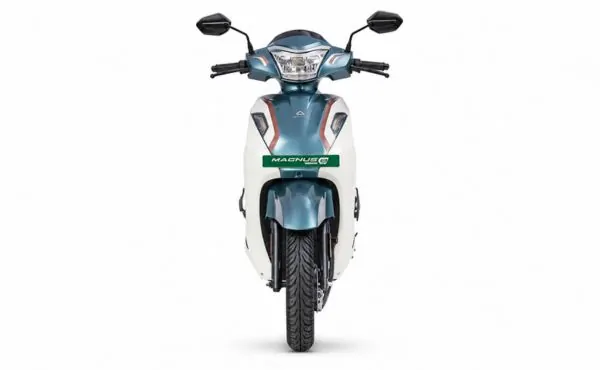
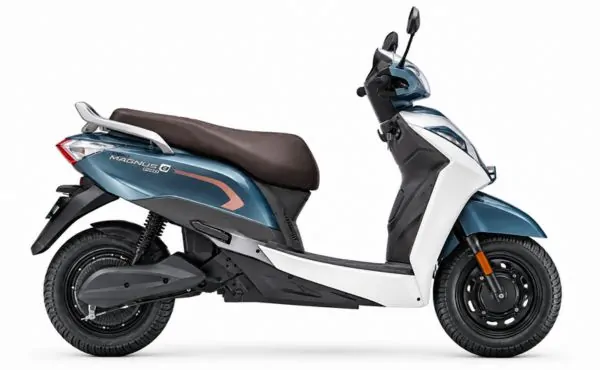
The Magnus G Max NxG.io follows a conventional family-electric-scooter design rather than a sporty or aggressively futuristic one. It has a broad front apron, upright handlebar area, a long single-piece seat, a step-through centre section, and a substantial rear body section designed around practical under-seat storage. The overall shape prioritises approachable everyday use for commuting, school drops, grocery runs, and shared family ownership.
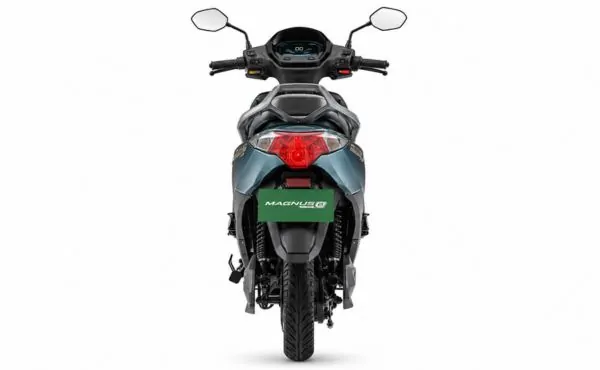
Its styling update is primarily digital rather than a complete exterior redesign. The NxG.io version gets a prominent 5-inch PMVA display in place of the more basic instrument arrangement used on the standard model. This larger screen gives the handlebar area a more contemporary look and is central to the NxG.io identity, displaying connected functions, navigation prompts, alerts, and vehicle information.
The scooter’s bodywork remains relatively rounded and clean, avoiding sharp creases or oversized panels. This gives the G Max NxG.io a mature and practical visual character. It targets buyers who want an electric scooter that looks familiar and easy to live with, rather than one styled as a premium performance EV.
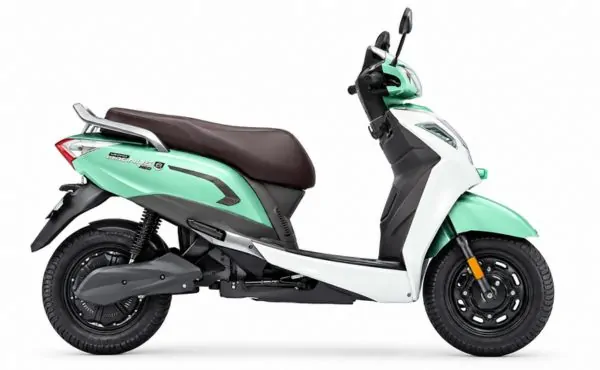
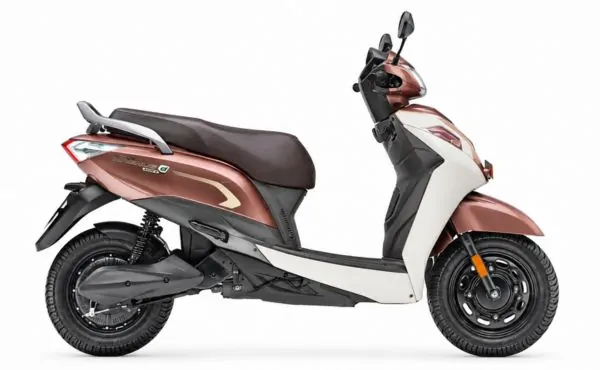
The brown seat is an important visual detail across the available colour treatments. It creates a contrasting two-tone appearance and adds a more premium-looking touch to the otherwise utility-led body design. The overall presentation is welcoming and easy on the eye, with the brown seat helping distinguish the scooter from plain single-colour commuter designs.
Colour Options And Variants
The Ampere Magnus G Max NxG.io is listed in India with three colour options:
- Cinnamon Copper
- Matcha Green
- Monsoon Blue
These colour choices do not change the connected equipment, display, battery, motor, or feature set.
| Colour option | Styling character | Notes |
|---|---|---|
| Cinnamon Copper | Warm, premium-looking, distinctive | This is the new shade highlighted with the NxG.io connected update. It pairs with the scooter’s contrasting brown seat. |
| Matcha Green | Softer, youthful, contemporary | A more distinctive choice for buyers who want a lighter and more modern-looking finish. |
| Monsoon Blue | Calm, traditional, understated | Suits buyers who prefer a cooler, less attention-seeking dual-tone appearance. |
Cinnamon Copper is the newer colour associated with the NxG.io update. It gives the scooter a warmer, more premium look and pairs it with contrasting body elements and the brown seat.
Matcha Green gives the scooter a softer, more youthful dual-tone look. It likely suits buyers who want a distinctive option without choosing a very dark or conservative shade. The colour helps the otherwise practical body shape appear more contemporary.
Monsoon Blue is the cooler, more traditional-looking option in the range. It suits buyers who prefer a calmer, less attention-seeking finish while still retaining the dual-tone visual treatment.
The important distinction is between the wider Magnus G Max lineup and the specific model discussed here. The G Max lineup in India is generally listed with two variants:
- Magnus G Max STD
- Magnus G Max NxG io
| Variant | Position in range | Key identity |
|---|---|---|
| Magnus G Max STD | Regular, lower-priced G Max version | Standard G Max model without the full NxG.io connected package. |
| Magnus G Max | Higher-spec connected version | Magnus G Max Higher-spec connected version Features the NxG.io platform, 5-inch PMVA display, and connected smart-feature package. |
For a buyer choosing the Magnus G Max NxG.io, there is no separate lower- or higher-spec NxG.io trim. The decision is therefore between the three paint colours rather than between different NxG.io mechanical specifications. The 3 kWh battery, connected platform, 5-inch display, and smart-feature package remain the same regardless of colour.
Choose the Magnus G Max NxG.io if the larger digital display, connected interface, newer Cinnamon Copper finish, and smart-scooter identity matter to you. It remains visually conservative enough for family use, but its dual-tone colours, brown seat, and 5-inch connected dashboard prevent it from looking like a basic entry-level EV.
Value For Money And Pricing
The Magnus G Max NxG.io carries an ex-showroom price of ₹ 1,09,999. The price premium is primarily for the NxG.io connected platform, 5-inch PMVA display, navigation, cruise control, hill hold, and the broader connected-feature package.
On-road pricing varies by state, city, insurance choice, registration requirements, dealer charges, incentives, and prevailing EV-policy treatment. In New Delhi, the NxG.io has an on-road price of ₹1,14,729, which includes insurance.
Delhi may be favourable because the state’s EV policy waives road tax and registration fees for eligible electric scooters. Buyers in other Indian states should request a written quotation that separates all relevant costs, including insurance, registration, accessories, warranty, service, delivery, and finance-related fees.
The Magnus G Max NxG.io offers good value as a practical, connected commuter rather than a performance EV. It includes a 3 kWh LFP battery, a claimed 142 km IDC range, 33 litres of under-seat storage, a 5-inch display, and more than 30 connected features. This combination suits households that want a daily-use scooter with navigation and remote-monitoring functions, rather than a basic low-speed city EV.
The additional ₹7,000 over the Magnus G Max STD appears reasonable if the owner will regularly use the 5-inch screen, navigation, cruise control, hill hold, live tracking, alerts, and app-linked functions. For a buyer who simply wants the same core G Max package at the lowest price, the standard variant is likely the better-value option because it costs less and retains the broader platform’s practical strengths.
The LFP battery is another potentially important ownership-value point. The NxG.io version is listed with a five-year or 75,000 km battery warranty, while the battery’s LFP chemistry is positioned around durability and regular use. A longer battery warranty can reduce concern about the cost of the most expensive EV component, although buyers should read exclusions relating to misuse, water damage, unauthorised repairs, charging practices, capacity retention, and warranty transfer.
Value is less convincing for riders who need regular fast charging, frequent highway travel, or rapid 70–90 km/h performance. The scooter focuses on everyday commuting rather than high-speed touring; it uses a 2.4 kW motor and has a claimed top speed of 65 km/h. For those buyers, a faster or more performance-oriented alternative could justify a higher initial cost.
The Magnus G Max NxG.io operates in a crowded Indian electric-scooter market. The closest alternatives are:
is similarly priced.
| Model | How it compares with Magnus G Max |
|---|---|
| TVS iQube | Broad price and battery range; listed with 3.1–5.3 kWh batteries, 121–212 km claimed range and 32–35.5 litres of storage. |
| Ola S1 X Gen 3 | More aggressive starting price and wider 2–5.2 kWh battery range; listed with 108–242 km claimed range and 34 litres of storage. |
| Vida VX2 | Vida VX2 Closely aligned on entry price, making it a direct cross-shop for buyers considering a mainstream connected EV around ₹1.10 lakh. |
| Ola S1 Z | Lower-cost alternative for buyers whose main priority is minimising purchase price rather than matching the Ampere’s connected family-scooter proposition |
t is not automatically the best value for every buyer. If the lowest initial price is the priority, an Ola S1 X or a regular G Max may be more compelling. If brand familiarity, an extensive model range, or a higher-capacity option matters more, the TVS iQube deserves close consideration. The strongest reason to choose the Magnus G Max NxG.io over the regular Magnus G Max is the complete connected-technology package at a relatively modest ₹7,000 premium.
Verdict
The Ampere Magnus G Max NxG.io is a practical choice for Indian families looking for a dependable electric scooter for everyday city travel, school runs, office commutes, and running errands. It stands out for its 3 kWh LFP battery, a claimed 142 km range, 33-litre under-seat storage, and a comfortable, upright design that suits a range of riders. With 165 mm of ground clearance and a top speed of 65 km/h, it handles typical city roads with ease. What really sets the NxG.io apart from the standard Magnus G Max is its smart, connected features: the 5-inch digital display, turn-by-turn navigation, cruise control, hill hold, live tracking, geo-fencing, vehicle alerts, OTA updates, and other app-based tools make daily riding more convenient and enjoyable for those who want technology in their scooter.
That said, think of the NxG.io as a tech upgrade rather than a boost in performance. It uses the same 2.4 kW motor, 3 kWh battery, and core setup as the regular G Max, so if you’re after high-speed highway rides or fast public charging, this isn’t the scooter for you. The extra ₹7,000 makes sense if you’ll make good use of the bigger screen, navigation, security features, hill hold, and the connected ownership experience. If you just want the basics for the lowest price, the regular Magnus G Max might fit your needs better. All in all, the Magnus G Max NxG.io brings together storage, city range, family-friendly design, and smart features—making it a strong fit for riders who have reliable charging at home or work.
Pros
- Connected-feature package:The NxG.io version adds more than 30 connected functions through the Ampere Connect app, including live tracking, geo-fencing, theft and tow alerts, charging information, battery-health insights, remote diagnostics, service booking, Find My Scooter, Ping My Scooter, and OTA-update capability. This is a meaningful upgrade for owners who want more visibility and control over their scooter.
- Large 5-inch PMVA display:The connected model receives a 5-inch PMVA instrument cluster, replacing the smaller 3.5-inch display listed on the regular G Max. The larger screen makes navigation prompts, ride information, notifications, and connected functions easier to access and gives the cockpit a more modern appearance.
- Turn-by-turn navigation: Navigation directions appear on the instrument console, making the NxG.io useful for city riders traveling to unfamiliar offices, markets, client locations, railway stations, or residential areas. It reduces the need to mount and repeatedly check a phone while riding.
- Cruise control:Cruise control is useful on clear, predictable suburban stretches where a rider wants to maintain a steady speed without holding the throttle constantly. It is an uncommon convenience feature in a family-oriented electric scooter at this price point.
- Hill-hold assist:Hill-hold assist helps prevent rollback after stopping on an incline. This is useful for Indian conditions such as flyovers, basement exits, apartment ramps, mall parking areas, and sloping traffic signals, especially when the scooter carries a pillion or groceries.
Cons
- Same mechanical package as the regular G Max: The NxG.io upgrade mainly adds technology. It retains the same battery, motor, and claimed range as the standard Magnus G Max, so buyers should not expect stronger acceleration, a higher top speed, or a fundamentally different riding experience.
- ₹7,000 premium may not suit every buyer:The connected features are good value only if you’ll use them. A rider who doesn’t need navigation, tracking, app diagnostics, cruise control, or hill hold may find the regular Magnus G Max better suited.
- 65 km/h top speed limits versatility:The scooter suits city roads, flyovers, and moderate suburban routes, but its claimed 65 km/h top speed makes it less suitable for regular high-speed highway travel, fast intercity use, or frequent overtaking on open roads.
- No performance gain for the extra money:Despite the higher price, the NxG.io model retains the standard scooter’s motor and battery specifications. Buyers expecting the connected version to deliver higher performance than the regular G Max may be disappointed.
- Connected functions depend on network and app reliability: Tracking, alerts, software features, and remote information depend on mobile connectivity, app function, account activation, vehicle software, and sufficient battery charge. Treat them as helpful aids, not guarantees.
- Hill hold does not replace rider control: Hill hold can reduce rollback, but riders still need to manage the brake and throttle carefully on wet ramps, loose surfaces, steep inclines, or when carrying a heavy passenger and luggage.
- No fast-charging advantage: The Magnus G Max NxG.io remains oriented around normal charging rather than rapid public-charging stops. This makes it better suited to owners with dependable overnight home or workplace charging than to riders who need quick top-ups during long days.
- Software-heavy ownership experience: The NxG.io model relies more on digital interfaces than the regular G Max. Some buyers may prefer a simpler scooter with fewer app permissions, alerts, software settings, and potential connectivity issues
- Security alerts do not eliminate theft risk: Geo-fencing, live tracking, and theft or tow notifications are useful, but they cannot replace secure parking, a physical lock, insurance, and sensible precautions. A weak signal or delayed alert can limit their usefulness.
- Premium EV alternatives may offer stronger performance: Buyers who prioritise quicker acceleration, sustained high-speed riding, or faster charging may find better-suited alternatives in the higher-performance electric-scooter segment, even if those alternatives cost more. The NxG.io’s strength is technology-led family practicality, not performance leadership.
Frequently Asked Questions About Ampere Magnus G Max Nxg.io
1. What Makes The Nxg.io Version Different From The Regular Magnus G Max?
The NxG.io mainly adds a connected technology package to the same core hardware. It includes a 5-inch PMVA digital display (compared to the standard model’s 3.5-inch LCD), turn-by-turn navigation, cruise control, hill-hold assist, and over 30 IoT-based smart features through the Ampere Connect app, such as live tracking, geo-fencing, theft/tow alerts, remote diagnostics, and OTA updates. The battery, motor, and claimed range are the same as the standard G Max, so there is no performance gain, just a ₹7,000 price increase for the added connectivity.
2. What Real-world Range Can I Expect From A Full Charge?
Ampere claims 142 km under IDC test conditions, with a real-world claim of 100+ km. Practical expectations vary by riding style: about 100–110 km in Eco mode with steady, solo city riding; 85–100 km with mixed city/suburban use including traffic and flyovers; and 70–85 km under demanding conditions like Power mode, sustained high speeds, pillion/luggage load, hills, heat, or rough roads..
3. How Long Does It Take To Charge, And Does It Support Fast Charging?
The scooter uses an off-board charger (450 W, 7.5 A) and takes about 5 hours 45 minutes to charge from 0–80%, or 7 hours 25 minutes for a full 0–100% charge. It does not support DC fast charging, so it’s best suited to overnight charging at home or during a work shift rather than quick public top-ups.
4. Is The Magnus G Max Nxg.io Suitable For Highway Or Long-distance Riding?
Not really. It has a claimed top speed of 65 km/h and a 2.4 kW peak motor output, designed for smooth city acceleration, flyovers, and moderate suburban routes rather than sustained high-speed travel. It also lacks ABS (using 130 mm drum brakes front and rear) and isn’t built for regular highway or intercity use. It suits riders covering roughly 40–70 km a day with reliable home or work charging.
5. What Storage, Battery Warranty, And Safety Features Does It Offer?
The scooter has 33 litres of under-seat storage — enough for a full-face helmet, a half-face helmet, and a bag of groceries. Its 3 kWh LFP battery carries a five-year or 75,000 km warranty and is IP67-rated (dust and temporary water resistance, but not deep floodwater). Other practical features include hill-hold assist, reverse assist (useful given the 116 kg kerb weight), a side-stand
Other Related Links From Bikeleague India
List Of All Ampere Electric Scooters In India
About Ampere Electric Scooters
Ampere is an Indian electric scooter brand owned by Greaves Electric Mobility Ltd. (GEML), which is part of Greaves Cotton’s electric mobility business. Founded in 2008, Ampere was one of India’s first electric two-wheeler brands. It started out making low-speed, affordable scooters and has since grown into a wider EV brand, offering everything from entry-level city scooters to more premium models.
Ampere focuses on making electric mobility affordable, especially with scooters that cost less than ₹1 lakh. Unlike brands that target high performance, Ampere aims to help regular petrol-scooter users, including those in smaller cities and semi-urban areas, switch to electric vehicles.
Today, Ampere is Greaves Electric Mobility’s electric two-wheeler brand. It offers several scooter models for different budgets and needs,
| Aspect | Ampere’s position in India |
|---|---|
| Brand origin | India |
| Founded | 2008 |
| Original headquarters | Coimbatore, Tamil Nadu |
| Parent company | Greaves Electric Mobility Ltd. |
| Parent-group link | Greaves Cotton Ltd. |
| Product category | Electric scooters |
| Core focus | Affordable, practical urban mobility |
| Key customer segments | First-time EV buyers, daily commuters, families and value-conscious users |
Ampere stands out because of its long history in the market. The company has sold and serviced electric scooters through different technology phases, from early lead-acid batteries to lithium-ion, and now to connected, higher-performance scooters.
History And Growth
In its early years, Ampere mainly sold low-speed scooters for short trips in South India. During the 2010s, it slowly entered more markets and improved its products with better batteries, longer range, and easier use.
Around 2016 to 2017, Ampere started switching to lithium-ion batteries. This change mattered because lithium-ion batteries are lighter, store more energy, and perform more reliably than traditional lead-acid batteries.
Greaves Cotton bought Ampere in 2018, which was a big change for the brand. Being part of a larger engineering and mobility group helped Ampere grow across India, add more dealers, and start making more scooters locally.
Ampere grew even faster after launching new models like the Magnus, Primus, and Nexus. The Nexus, which came out in 2024, was Ampere’s first step into the premium segment, but the brand still focused on practical and affordable scooters.
| Period | Major development |
|---|---|
| 2008 | Ampere Vehicles was founded in Coimbatore. |
| 2011–15 | Expanded through South Indian markets with affordable electric scooters. |
| 2016–17 | Began transition from lead-acid to lithium-ion battery technology. |
| 2018 | Greaves Cotton acquired Ampere Vehicles. |
| 2019–20 | Expanded into more than 200 Indian cities during the FAME II period. |
| 2024 | Ampere Nexus was launched as the brand’s flagship LFP-battery scooter. |
| FY2026 | Retail sales rose 51% year-on-year to 61,641 units; market share reached 4.4%. |
| June 2026 | Ampere crossed 400,000 scooters manufactured and sold in India. |
Key Milestones And Developments
Ampere’s story is tied to the growth of India’s electric scooter industry. The company started before electric vehicles were common, so it had to grow its business when battery technology, charging options, and customer trust were still developing.
Switching to lithium-ion and later to lithium iron phosphate (LFP) batteries was a key step for Ampere. LFP batteries are known for their stability and long lifespan, which suits Indian conditions and appeals to buyers focused on long-term costs.
| Milestone | Details |
|---|---|
| Early EV presence | Ampere entered India’s EV sector in 2008, making it one of the earlier domestic e-scooter brands. |
| Greaves acquisition | Greaves Cotton acquired the company in 2018, strengthening its manufacturing and expansion capability. |
| National expansion | Ampere expanded into 200+ cities during 2019–20. |
| Premium-range entry | Nexus launched in 2024 as a flagship LFP-battery scooter. |
| Warranty expansion | Five-year/75,000km warranty coverage was extended to Magnus Grand and Magnus G Max in 2025. |
| Value-model launch | Reo 80 was launched in 2026 at ₹59,900, aimed at the entry-level LFP scooter market. |
| Production milestone | Ampere exceeded 400,000 electric scooters manufactured and sold in India by June 2026. |
| Market-ranking progress | Ampere reached fifth place in monthly e-scooter retail sales in February 2026, according to company-reported market data. |
| Next-generation platform | Greaves announced a sixth-generation Ampere scooter for FY2027, aimed at the sub-₹1 lakh segment. |
Ampere is also making its product design simpler. Greaves Electric Mobility plans to combine its current vehicle platforms into one flexible system that can support different products. This should make development easier, allow more shared parts, and help launch new scooters faster.
Manufacturing Facilities
Ampere uses Greaves Electric Mobility’s larger production network. GEML and its subsidiaries run three factories in Hyderabad, Noida, and Ranipet. These sites build both electric two-wheelers and three-wheelers.
The Ranipet factory in Tamil Nadu is the main site for making Ampere’s electric scooters. Greaves Cotton announced this plant in 2021 as a major electric mobility facility, planning to invest ₹700 crore over ten years.
The Ranipet plant can reportedly make about 480,000 Ampere electric two-wheelers each year. Greaves Electric Mobility is also setting up its own battery-pack assembly line there, which is planned to produce up to 400,000 battery packs annually.
| Facility | Location | Role |
|---|---|---|
| Ranipet plant | Tamil Nadu | Main production facility for Ampere electric scooters. |
| Ranipet e-two-wheeler capacity | Tamil Nadu | Reported capacity of 480,000 electric scooters annually. |
| Battery-pack assembly line | Ranipet, Tamil Nadu | Planned in-house battery-pack assembly with 400,000-unit annual capacity. |
| GEML manufacturing facility | Hyderabad | Supports wider electric mobility operations, including two- and three-wheelers. | GEML manufacturing facility | Noida | Supports wider electric mobility operations, including two- and three-wheelers. |
Market Position And Achievements
Ampere competes in India’s large, price-sensitive electric scooter market. It mainly attracts buyers who want a practical option instead of petrol scooters but do not want to pay high prices for premium electric vehicles.
Ampere offers scooters at different prices. The Reo 80 is for entry-level buyers, the Magnus series is for regular city riders, the Primus is for those who want more performance, and the Nexus is the top model. This range lets Ampere meet different needs while staying focused on affordability.
| Area | Ampere’s position |
|---|---|
| Main segment | Affordable and mass-market electric scooters |
| Core price focus | Below ₹1 lakh. |
| Product range | Reo 80, Magnus variants, Primus and Nexus |
| Brand strength | Long operating history and value-oriented product positioning |
| Total milestone | 400,000+ Ampere electric scooters made and sold in India by June 2026. |
| FY2026 retail volume | 61,641 units, up 51% year-on-year. |
| FY2026 market share | 4.4% of the electric scooter segment. |
| February 2026 performance | 4,478 retail units and fifth place in monthly e-scooter sales, based on reported data. |
| Distribution base | More than 420 dealerships across 309+ cities, per Ampere’s published brand history. |
Ampere’s main achievement is growing its business without depending only on premium urban customers. Its scooters have reached buyers in smaller cities and value-focused markets, where price, running costs, service, and battery reliability matter most.
Future Plans
Ampere’s next steps include keeping prices low, launching new products, increasing local content, expanding distribution, and investing in technology. Greaves Electric Mobility has confirmed that Ampere will keep focusing on scooters under ₹1 lakh, seeing this as the biggest long-term opportunity in India.
The company plans to launch its sixth-generation electric scooter in FY2027. Greaves calls it an “ICE Breaker,” meaning it is designed to compete directly with popular petrol scooters in terms of cost, performance, and daily use.
Greaves Electric Mobility also wants to speed up its product launches, aiming to release one new product every quarter in FY2027. According to an August 2026 update, this includes an electric two-wheeler and an electric three-wheeler planned for October.
| Future focus | Planned direction |
|---|---|
| Affordable scooters | Maintain focus on sub-₹1 lakh electric scooters. |
| Sixth-generation scooter | Launch planned in FY2027 to compete with petrol scooters. |
| Product architecture | Use one scalable platform to support multiple models. |
| Dealer expansion | Increase distribution network from about 650 outlets to 1,000 outlets. |
| Market-share target | Aim for double-digit EV market share within two years. |
| Technology | Invest in battery systems, powertrains, battery-management systems, and connected technology. |
| Manufacturing | Increase battery and vehicle-production integration at Ranipet. |
| International growth | Expand presence beyond India as part of Greaves Electric Mobility’s broader plan. |
| Funding | ₹530 crore rights issue completed in 2026 to support next-generation products and growth investment. |
User Reviews
There are no reviews yet. Be the first one to write one.

Hiran Narayanan
Founder & CTO at Bikeleague India
Hiran Narayanan is the Founder and CTO of Bikeleague India, bringing over 15 years of experience in motorcycle technical writing. He develops detailed analyses, tools, model overviews, and blogs that contribute to bikeleague.in's improving rankings.