Long story short: If the right bike accessories are there on your long trip, you travel more comfortably, and so will you mentally and physically.
Planning a long-distance motorcycle trip is exciting and full of new experiences. To enjoy your journey safely and comfortably, it’s important to have the right accessories.
The right gear does more than add convenience; it can mean the difference between a smooth ride and unexpected problems. This guide covers the essential bike accessories every rider should consider before their next long trip.
Key Takeaways
- Safety is the top priority: Investing in high-quality protective gear, such as a full-face helmet, riding jacket, pants, gloves, and boots, as well as additional guards, significantly reduces the risk of injury and enhances rider confidence on long trips.
- Mechanical preparedness prevents breakdowns: Carrying a basic toolkit, a tyre repair kit, spare parts, and chain lube allows riders to tackle common mechanical issues, minimising the risk of being stranded in remote areas.
- Comfort and organisation make a difference: Ergonomic seats, handlebar grips, appropriate travel bags, and hydration solutions help riders stay comfortable and organised, making long journeys more enjoyable and less physically taxing.
- Adaptability to weather and terrain is essential: Equipping yourself with weather-specific gear—such as rain suits, heated grips, cooling vests, and high-visibility accessories—ensures you’re prepared for India’s diverse climates and road conditions.
- Documentation, navigation, and communication are crucial: Always carry essential documents, a spare key, offline maps or GPS, and reliable charging solutions to stay legal, find your way, and remain connected throughout your journey.
What Bike Accessories Should A Rider Carry For A Long Trip?
For a long-distance bike trip in India, the right accessories keep you safe and make your journey smoother and less stressful. Focus on three main things: safety gear, mechanical essentials, and comfort or organization. Here’s a practical checklist for Indian highways, hilly roads, and monsoon travel.
| Accessory | Best For… | Key Benefit | Typical Indian Use Case |
|---|---|---|---|
| Full‑face Helmet | Head protection in crashes and high‑speed touring. | Full impact coverage, better wind‑ and debris‑protection than open‑face. | Highways, inter‑state routes, and hilly or high‑speed riding. |
| Riding Jacket | Abrasion protection plus wind and weather shielding. | Protects torso in falls and reduces heat‑/cold‑ and rain‑fatigue. | Monsoon‑zone highways, night rides, and mixed‑weather touring. |
| Riding Pants | Lower‑body crash protection and long‑mile comfort. | Reinforced knees/hips, reduces saddle soreness and road‑rash injury. | Multi‑day inter‑state rides, hills, and unpaved stretches. |
| Riding Gloves | Grip, hand‑protection, and vibration damping. | Reduces blisters, numbness, and hand injury in slides or falls. | Highways, twisty hill roads, and long‑haul city‑to‑city runs. |
| Riding Boots | Ankle and foot support plus crash‑zone protection. | Protects from hot parts, road debris, and foot‑impact in stops. | Hilly, off‑road‑leaning, or long‑distance inter‑state routes. |
| Knee & Chest Guards | Extra impact protection at key joints. | Low‑cost upgrade to crash‑protection beyond basic gear. | Hilly, twisty, or off‑road‑style touring. |
| First‑aid Kit & Water Bottle | Minor injuries and staying hydrated on long rides. | Enables quick first‑response and continuous hydration without frequent stops. | Any long‑distance or remote‑area ride. |
| Vehicle Papers & Spare Key | Roadside checks, fuel stops, and insurance or breakdown formalities. | Keeps you legal and ready for police, traffic, or workshop situations. | Any inter‑state or highway touring run. |
| Phone, Charger & Powerbank | Navigation, calls, and emergency communication. | Keeps GPS and apps running for hours even in low‑power zones. | Multi‑day trips with limited charging points. |
| Offline Google Maps / GPS Device | Navigation where the mobile signal is weak or absent. | Keeps you on route without depending on live internet. | Himalayan, forest, or rural interior routes. |
| Tyre Repair Kit, Tool Kit & Chain Lube | Punctures, basic roadside fixes, and chain maintenance. | Reduces downtime and avoids long waits for workshops. | Unpaved, hilly, or poorly‑serviced rural roads. |
| Spare Parts Kit | Quick fixes for bulbs, fuses, cables, and spark‑related parts. | Keeps you moving even if a small but critical part fails. | Older bikes or long‑haul trips through remote areas. |
| Phone / GPS Mount | Hands‑free access to navigation or media while riding. | Minimizes phone‑checking and reduces distraction‑related risk. | Any route relying on Google Maps or GPS‑based navigation. |
| Two‑piece Rain Suit / Raincoat | Heavy rain or monsoon‑style downpours. | Keeps you dry and helps prevent hypothermia on long‑distance rides. | Kerala, Konkan, Northeast, or Himalayan monsoon routes. |
| Bungee Cords & Torch | Securing loose bags and working at night or in low light. | Keeps luggage stable and lets you inspect or repair in the darkness. | Dhabas, overnight breakdowns, roadside repairs. |
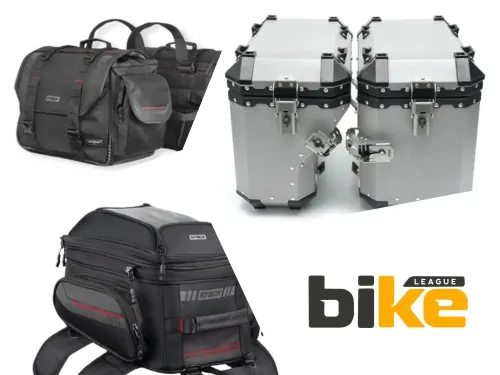
| Luggage (saddlebags / tank bag / tail bag / panniers) | Carrying clothes, tools, and essentials for multi‑day trips. | Keeps gear organised, dry, and weight‑balanced while riding. | Any long‑haul or overnight touring journey. |
| Ergonomic Seat / Seat Cushion | Reducing saddle soreness and back‑fatigue. | Improves comfort on 6–8‑hour‑per‑day riding days. | Commuter‑based touring or long‑distance touring bikes. |
| Quality Handlebar Grips | Reducing hand‑fatigue and vibration. | Better grip and less numbness over long distances. | Highway touring and rough or uneven roads. |
| Windshield / Fairing | Cutting wind blast and improving aerodynamics. | Reduces fatigue on high‑speed, straight‑road stretches. | Highway inter‑state runs. |
| High‑visibility Gear & Reflective Tapes | Visibility at night, rain, or low‑light sections. | Makes you more visible to other vehicles, cutting crash risk. | Night‑driving, hilly hairpins, or heavy traffic zones. |
| ICE Card / Emergency Contact Info | Giving responders quick access to medical info and contacts. | Speeds up medical help when you’re unable to speak or reach your phone. | Any solo or long‑distance off‑beat route. |
| Reflective Vest (for breakdowns) | Visibility when you stop on a highway shoulder. | Makes you clearly visible to overtaking vehicles at night or in low light. | Night‑time or roadside‑repair stops on highways. |
| Portable Emergency Beacon / SOS Device | Emergencies in low‑ or no‑signal remote areas. | Sends your precise location to rescuers via satellite or assisted‑GPS. | Himalayan or very remote off‑road routes. |
| Heated Grips / Vests (for cold) | Cold‑weather or high‑altitude touring. | Reduces hand‑numbness and keeps your core warm without bulky layers. | Himachal, Ladakh, or Nilgiri‑style hill rides. |
| Cooling Vests / Mesh‑panel Gear (for heat) | Staying cool in hot, humid plains or coastal regions. | Manages body heat while still offering abrasion‑protection. | Kerala, Tamil Nadu, or central‑India summer routes. |
1. Full Face Helmet
Never plan a trip without a helmet. It’s best to use a full-face helmet with good ventilation and a UV-filtered visor. Remember, in some Indian states, mounting cameras on helmets is not allowed and can result in a fine.
2. Riding Jacket
A good riding jacket offers protection for your elbows and other joints. It also shields you from harsh weather, whether it’s hot or cold. Choose a jacket that can handle a range of weather conditions, including rain.
3. Riding Pants
Riding pants, like jackets, protect your ankles and knees. They are made from materials that offer great comfort. If you’re on a budget, wearing jeans is an option.
4. Riding Gloves
Gloves are another important accessory that many riders overlook. They protect your hands from injuries, harsh weather, and more. Even in tough conditions, gloves give you a good grip and protect your fingers and wrists.
5. Riding Boots
It’s best to use professional riding boots. If you don’t have them, choose regular boots that protect your ankles. Avoid sneakers or running shoes, as they aren’t designed for riding and can cause problems.
6. Knee & Chest Guards
Knee and chest guards are important for reducing injuries in accidents. They give you extra protection beyond your regular riding gear.
7. Bike Accessories Like First Aid Kit & Water Bottle Holder
Most companies include standard tools and a first-aid kit when delivering motorcycles. However, many riders forget about the first-aid kit. It should include:
- Wash proof plaster
- Sterilized Gauze Swab
- Sterilized elastic plaster
- Elastic gauze bandage
- Antiseptic cream
- Gauze Bandages
- Medical adhesive tape
- Pain reliever tablet
- Small cutter/knife/scissors
Check that your first-aid kit includes all these items and that nothing is expired. Also, remember to stay hydrated on long rides by using a water bottle holder for easy access.
8. Vehicle Papers & Spare Key
Always carry your original motorcycle papers, including your driver’s license, registration, pollution, and insurance certificates. Apps like Digilocker can help, but internet access may be limited in remote areas. Make sure your bike is insured. Also, bring a spare key, as losing it during your trip can cause major problems.
9. Bike Accessories Like Phones, Mobile Chargers & Powerbank
You need all three—phone, charger, and power bank—since anything can happen on a motorcycle trip. Keeping these in your bag helps you handle unexpected situations more easily.
10. Offline Google Map / Gps Device Among Bike Accessories
Don’t rely only on the internet or Google Maps while travelling. Download offline maps of the areas you’ll visit, or use a GPS device. Make sure you know how to use the GPS before your trip.
11. Bike Accessories Like Tyre Repair Kit, Tool Kit & Chain Lube
These tools are essential, and you should know how to use them. In remote areas, repair shops are rare and skilled help is hard to find. Unpaved roads can cause punctures, and off-road riding can make your chain dirty, which affects performance. Carry chain lube and make sure your bike’s tool kit is with you.
12. Spare Parts Among Bike Accessories
Carry spare parts such as headlight bulbs, indicator bulbs, fuses, accelerator and clutch cables, spark plugs, spark plug caps, and extra fuel for your spark plugs. These are important for fixing mechanical issues on your trip.
13. Phone Mount
A phone mount lets you attach your phone to your motorcycle, so you don’t have to reach into your pocket while riding. This helps you stay focused and avoid accidents.
14. Weather‑specific Riding Accessories
1. Cold‑weather Gear (for High‑altitude/night Rides)
When touring in colder regions like Himachal, Ladakh, or the Nilgiris, basic gear can feel insufficient. Consider:
- Heated grips: Reduce numbness and hand fatigue on long, cold‑weather rides.
- Heated vest or jacket liner: Powered from a USB or 12V source, these keep your core warm without bulky layers.
- Thermal innerwear and insulated gloves: Add extra warmth without sacrificing mobility.
- Neck gaiter or balaclava: Protects face and neck from wind and cold while riding at night.
These items are especially helpful for early-morning rides and for driving at night in hilly areas.
2. Hot‑weather Gear (for Plains And Coastal Routes)
In hot, humid regions like Kerala, Tamil Nadu, or central India, overheating is a bigger risk than cold. To stay cool and safe:
- Ventilated or mesh‑panel riding jackets and pants: Allow airflow while still offering abrasion protection.
- Hydration‑focused setups: A 2–3 L hydration bladder or collapsible water bottles keep you hydrated without frequent stops.
- Cooling vests or evaporative vests: Lightweight vests that you wet before riding; they reduce core temperature on long, hot stretches.
- Lightweight, breathable gloves and mesh‑panel boots: Help keep hands and feet ventilated while maintaining grip and protection.
Take regular breaks and wear loose, breathable inner layers with this gear to help prevent heat exhaustion on long rides.
3. Monsoon‑specific Rain Gear (india‑focused)
For Indian monsoon rides, a simple raincoat is not enough. Instead, think of a full system:
- Two‑piece rain suit (jacket + pants) with taped seams and breathable fabric.
- Rain‑specific over‑boots that cover your riding boots and prevent water from seeping in.
- Helmet rain cover or anti‑fog inserts to keep your visor clear in heavy showers.
- Waterproof saddlebags or panniers to keep electronics and documents dry.
A rain suit made from quick-drying, breathable material is much more comfortable than a basic poncho on long rides.
15. Bungee Cord & Torch
A bungee cord is a stretchable strap used to secure bags on your motorcycle, especially if you have more than one. A torch is also useful for checking your bike during breakdowns or in low light. Both are must-haves for any rider.
16. Travel Bag
Choose a water-resistant bag with enough space for your needs. There are several types to consider, such as:
- Saddle bags
- Tank bags
- Tail bags
- Panniers
17. Ergonomic Seats & Cushions
Long rides can be tough on your body. Ergonomic seats or seat cushions help prevent soreness, letting you enjoy the ride more.
18. Handlebar Grips
Good handlebar grips reduce hand fatigue and vibrations, making long rides more comfortable.
19. Windshields
A windshield protects you from wind and debris, making your ride more comfortable and helping with aerodynamics.
20. High-visibility Gear And Reflective Tapes Among Bike Accessories
High-visibility jackets and reflective tape make you easier to see for more clearlydrincreasinglps keep you safe.
21. Emergency Contact And Visibility Gear For Breakdowns
1. Emergency Contact (ice) Card
In an accident, it can be hard for responders to reach your family quickly. An ICE (In Case of Emergency) card inside your wallet or jacket pocket should contain:
- Your full name, blood group, and key medical conditions or allergies
- At least one emergency contact number (and an alternate)
- Insurance helpline and policy reference, if space allows
Many riders also add an “ICE” note to their phone’s contacts or lock screen, but having a physical card is helpful if your phone is damaged or runs out of battery.
2. Reflective Vests For Breakdowns
When your bike breaks down on a highway or at night, a simple high‑visibility vest dramatically reduces the risk of being hit by overtaking vehicles. Look for:
- A lightweight, breathable reflective vest (orange or lime‑green) that fits over your jacket
- CE‑ or EN‑style certified materials with reflective strips on front and back
Keep the vest in your tail bag or pannier so it’s ready if you need to step off the bike on the shoulder or in low-light conditions.
3. Portable Emergency Beacons / Sos Devices
In remote or hilly areas where the cell signal is weak, a dedicated emergency beacon can be a lifesaver. Options include:
- Satellite messengers (e.g., Garmin inReach, Zoleo‑type devices) that send SOS and two‑way messages via satellite
- Personal Locator Beacons (PLBs) that transmit a one‑way distress signal to global rescue networks
These devices are especially useful for long off-road or Himalayan routes. In India, many riders also use compact SOS units or apps that turn a phone into an emergency beacon.
4. Simple Ice Tags Or Stickers
Some riders use small “ICE tags” or stickers on their helmet bag or jacket with a website or QR code that links to emergency contact details. This lets helpers access your information if they can scan the tag, even if your phone is locked or broken.
What Are The Differences Between Motorcycle Storage Options: Saddlebags, Tank Bags, Tail Bags, & Panniers?
Choosing the right storage system affects not only how much you can carry, but also how your bike handles and how comfortable you are on long rides. Here’s how saddlebags, tank bags, tail bags, and panniers compare in practice:
1. Saddlebags
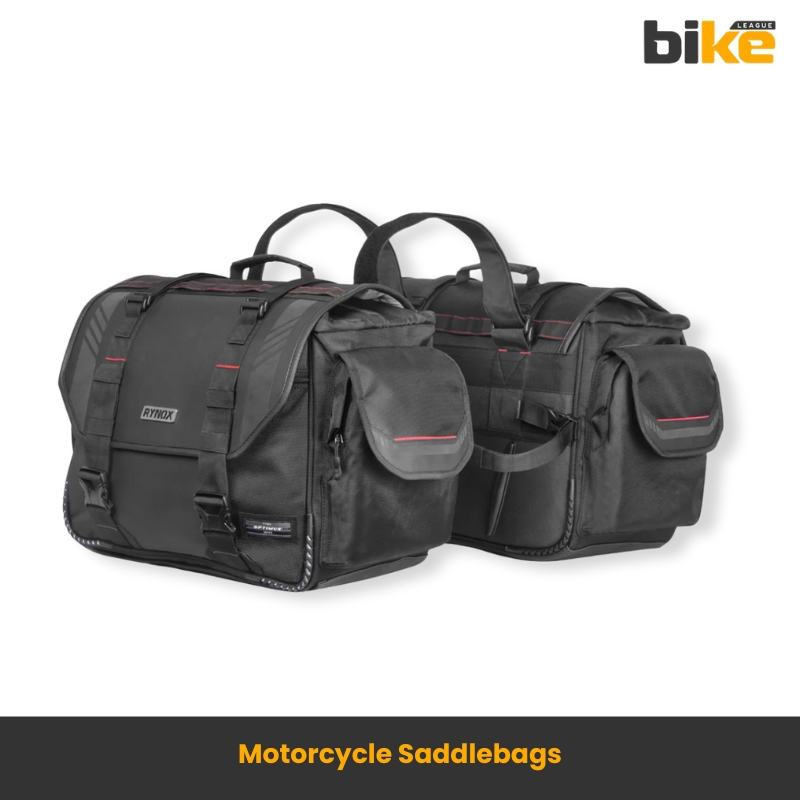
Soft or semi-rigid bags that attach to either side of the rear seat. They are moderately priced, offer moderate capacity, and have minimal impact on handling. Still, they are less secure and not fully weatherproof.
Mounting
Strap or clip to the rear subframe, hanging low on each side
Capacity
10–40 L per side
Pros
- Low-hanging weight keeps centre-of-gravity down
- Quick on/off; collapsible when empty
- Budget-friendly
Cons
- Limited total volume
- Less secure; variable weatherproofing
- May sway if not tightened
2. Tank Bags
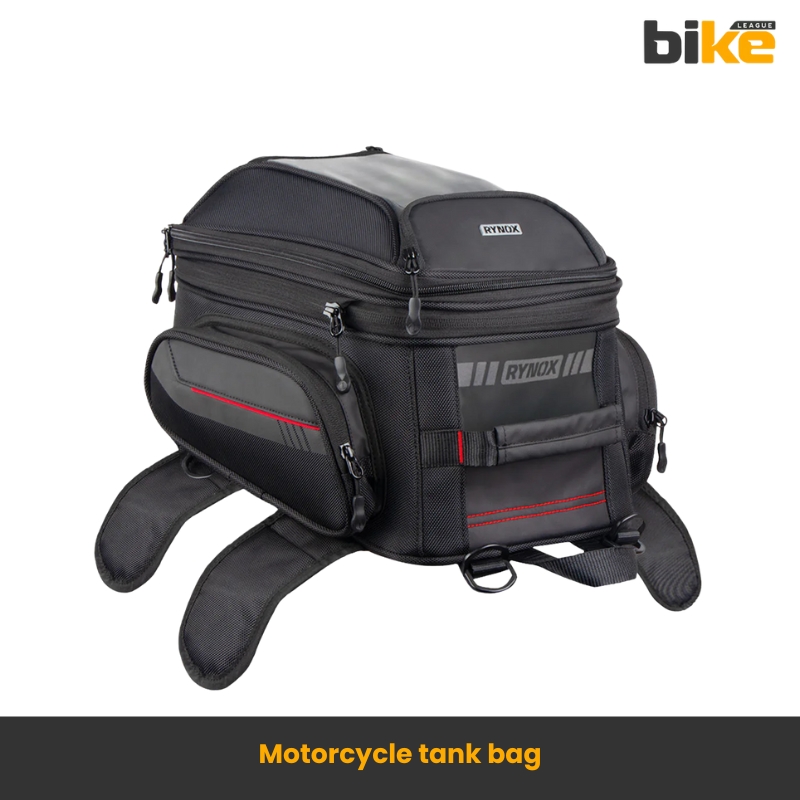
Small bags (3–15 L) that mount on the fuel tank using magnets or straps are great for quick-access items like phones and maps. They have limited space and keep weight centred.
Mounting
Magnets, straps, or a quick-attach plate on the fuel tank
Capacity
3–15 L
Pros
- Instant access to phone, maps, wallet
- Clear map window on top
- Centralised weight, minimal handling impact
Cons
- Very limited space
- Can obstruct fuel-cap or scratch paint
- Not suited for bulky items
3. Tail Bags
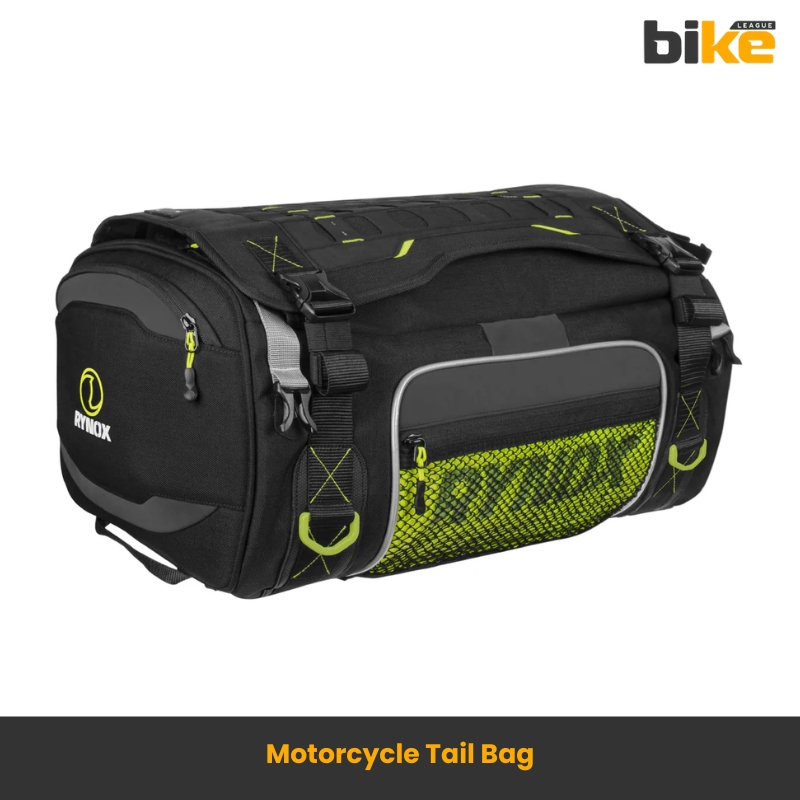
A large bag (10–50 L or more) strapped to the pillion seat or rack is great for carrying bulky gear. These bags are often waterproof and expandable, but they raise the rear load and can block the passenger seat.
Mounting
Strap onto the pillion seat or rear rack
Capacity
10–50 L (often expandable)
Pros
- Single large compartment for bulky gear
- Many models are fully waterproof
- Easy to load/unload
Cons
- Raises rear load—steering feels heavier
- May block passenger seat or taillight
- Less modular than side luggage
4. Panniers (hard Cases)
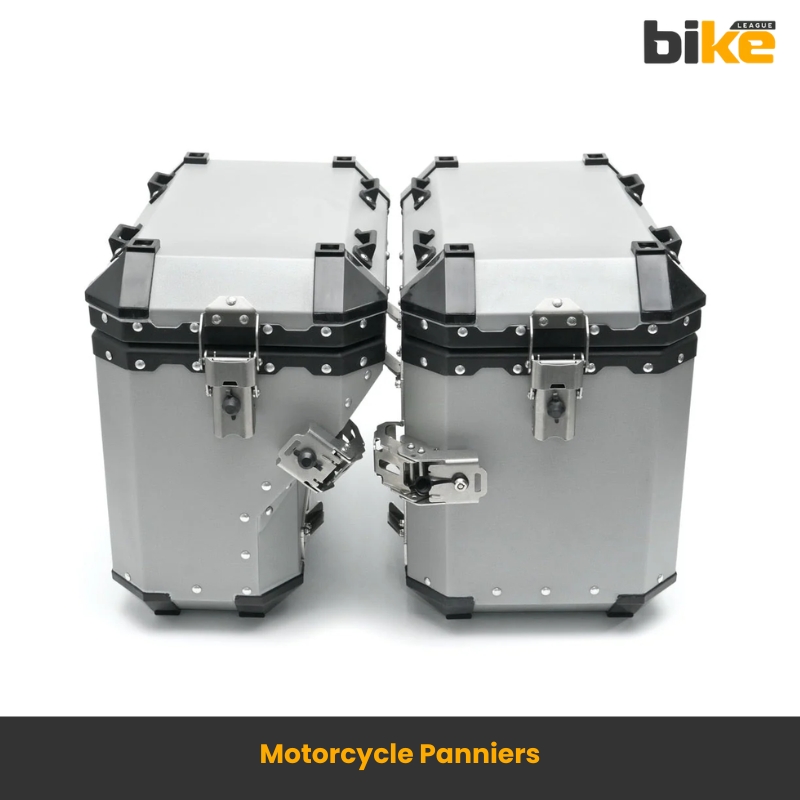
Lockable, weatherproof side cases are mounted on racks. They offer the most storage space (20–50 L or more each) and the best security, but they are heavier, bulkier, and cost more to install.
Mounting
Bolt onto a dedicated rack/frame on each side
Capacity
20–50 L per case (+ optional top-case)
Pros
- Lockable for security
- Excellent weatherproofing and durability
- Organized interior dividers
Cons
- Heaviest and bulkiest option
- Highest cost; permanent rack installation
- Increases bike width
How To Secure Motorcycle Luggage From Theft And Snatchers?
For long-distance rides in India, keeping your luggage secure is just as important as what you pack. In busy places like dhabas, bus stands, and crowded markets, soft bags can be stolen quickly, and panniers can be taken if they aren’t locked. A few simple habits can greatly reduce your risk.
1. Lock Your Panniers And Racks
Hard panniers are great, but loose side‑mounted soft bags are easy targets for “snatch‑and‑run” thieves. To protect them:
- Use panniers or saddlebags with built‑in quick‑lock systems (e.g., QL‑type mounts) that require a key or coded lock to remove the bag from the rack.
- On bikes with basic racks, run small cable locks or hardened‑steel wire loops through the bag’s attachment points and the rack so bags can’t be lifted off in seconds.
- Carry a small padlock that can couple with custom‑made loops or brackets on your own rack.
2. Use Chain Or U‑locks On The Bike And Wheels
Thieves prefer to wheel the whole bike away if it’s loosely parked. When you must leave the bike with luggage:
- Use a heavy‑duty motorcycle chain or U‑lock, running it through the frame or rear wheel and anchoring it to an immovable object (lamp post, railing, bike‑stand anchor).
- Supplement that with a disc lock or alarm lock on the front or rear wheel for extra deterrence.
For long‑distance Indian touring, this is especially important at busy dhabas, bus stands, and crowded market areas.
3. Minimise Visible Valuables And Lock What You Can
Soft bags without locks scream “easy target.” To reduce risk:
- Keep valuables (laptop, camera, extra cash, documents) in one pannier or bag that you can carry inside hotels or restaurants; leave only non‑valuable clothes or tools on the bike.
- Use bags with zip‑pull loops so you can run a small cable lock or zip‑tie through the zippers, making it harder to open the pack quickly.
4. Park Smart: Location And Visibility Matter
Good parking is half the security:
- Park where the bike is in plain view of security staff or CCTV**, not tucked away in dark corners.
- Where possible, park the bike against a wall or railing so one side of the panniers or rack is physically blocked.
If you’re staying for more than one day, take your most valuable luggage with you at night and keep it in your room or the hotel safe.
5. Locking Strategy For Different Luggage Types
- Soft saddlebags: Use bungee cords with integrated cable loops or small padlocks; avoid leaving them bulging with obvious valuables.
- Tail bags: If the bag is large and sits on the pillion seat, at least secure the bike with a chain/U‑lock and disc lock, and keep the bag’s main zipper oriented toward the wall or vehicles.
- Panniers: If your panniers are lockable, lock them to the rack; if not, use cable loops, or zip‑tie hacks through attachment points to make removal slower and more obvious.
Faq Related To Bike Accessories For A Long Trip
1. What Is The Most Important Safety Accessory For A Motorcycle Trip?
The helmet is the most critical safety accessory for any motorcycle trip. It provides essential head protection in an accident and is legally required in India. Always choose a helmet that meets safety standards and fits well for maximum protection.
2. Why Is A Riding Jacket Necessary?
A riding jacket is essential for protection and style. It offers protection against the elements and potential injuries from falls. For added safety, look for jackets with armour at key impact points, such as the elbows and shoulders.
3. What Type Of Pants Should I Wear For A Long Ride?
Riding pants are crucial for comfort and safety. They are designed to protect your lower body from abrasions and impacts. Opt for pants with reinforced areas and breathable materials to ensure comfort during long rides.
4. How Do Gloves Contribute To A Safer Ride?
Gloves are essential for maintaining a good grip on the handlebars and protecting your hands from the elements and injuries. Choose gloves that offer both protection and comfort, especially for long rides.
5. Are Riding Boots Necessary For A Motorcycle Trip?
Riding boots provide stability and protection for your feet and ankles. They are designed to withstand the rigours of long rides and to offer protection in the event of an accident. Look for boots with sturdy soles and ankle support.
6. How Can I Stay Connected During My Trip?
A communication system is vital for staying connected with fellow riders and for navigation purposes. It allows you to communicate hands-free and can be integrated with GPS systems for better route management.
7. What Luggage Options Are Best For Carrying Essentials?
Motorcycle luggage, such as saddlebags, tank bags, and tail bags, is essential for riders carrying gear and personal items. These bags are designed to be durable and weather-resistant, ensuring your belongings are safe and accessible.
8. Why Is A Gps Navigation System Important?
A GPS navigation system is crucial for navigating unfamiliar routes and staying on track. It helps plan your journey and can be a lifesaver in remote areas with scarce road signs.
9. What Should Be Included In A Motorcycle Tool Kit?
A tool kit is essential for handling minor repairs on the road. It should include basic tools like screwdrivers, wrenches, and a puncture repair kit. A tool kit can save you from being stranded due to minor mechanical issues.
10. Is Travel Insurance Necessary For A Motorcycle Trip In India?
Travel insurance is highly recommended for any long-distance motorcycle trip. It covers medical emergencies, trip cancellations, and other unforeseen events. Ensure your policy specifically covers motorcycle travel.
11. Which Full-face Helmets Are Best Suited For Indian Touring Conditions?
Look for a full-face helmet with:
- Dual-density EPS liner for impact absorption
- Removable, washable interiors
- Integrated sun-visor
- Good airflow (multiple vents)
12. How Do I Choose Luggage Solutions (panniers, Saddlebags, Tail-packs) For An India Trip?
Opt for hard panniers (aluminium or ABS) for durability on rough roads or high-quality waterproof soft saddle- and tank bags for flexibility.
Ensure they have:
- 250–350 L combined capacity
- Lockable mounts
- Quick-release system for easy loading at dhabas or hotels.
13. What’s The Best Way To Mount And Protect My Smartphone/gps On The Bike?
Use a rugged, waterproof phone cradle (e.g., X-Grip with TPU cover) or a dedicated GPS unit (Garmin Zumo series). Look for mounts with 360° rotation, anti-vibration rubber inserts, and easy one-hand locking.
15. How Can I Stay Hydrated And Organised On Long Rides?
Carry:
- A 2–3 L hydration bladder in a lightweight backpack or tail-pack
- Collapsible water bottles for easy refills
- Snack pouches with nuts, energy bars, or glucose tablets in accessible pockets
16. Which Rain Gear Is Most Effective For India’s Monsoon Roads?
Invest in a two-piece, breathable rain suit (jacket + pants) made of Gore-Tex or a similar material, with fully taped seams. Over-boots and helmet rain covers keep you dry and improve visibility.
17. How Do I Power And Charge My Gadgets On The Road?
- Fit a 12 V USB-C power outlet on the handlebar ( under professional guidance and support)
- Carry a 10,000 mAh power bank (PD/QC fast-charge)
- Use solar-powered battery packs for multi-day remote stretches
Other Related Articles From Bikeleague India
- Scrambler vs Adventure bike : Choosing the right one in India
- What all basic motorcycle accessories should a rider have
- Motorcycle gloves in India – All in one buying guide
- Best bike trip routes in Kerala
- Motorcycle helmet in India – All in one buying guide
Conclusion
Getting ready for a long-distance bike trip is more than just planning your route. It’s also about making sure you and your motorcycle have the right accessories for safety, comfort, and peace of mind. By choosing the right gear and understanding the challenges of different terrains and weather, you can enjoy a smoother, more enjoyable journey.
Whether you’re an experienced rider or just starting out, investing in good accessories and staying organised can make every trip memorable for the right reasons. Ride safe, stay prepared, and enjoy the adventure.
If you have any questions, feel free to email us at bikeleague2017@gmail.com or share your thoughts in the comments below. We’re always happy to help. You can also connect with Bikeleague India on our social media accounts.