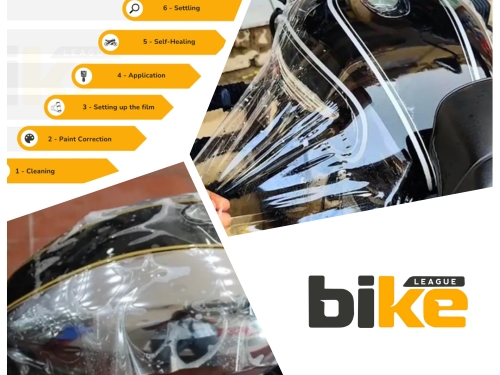
Thinking about Paint Protection Film (PPF) for your motorcycle? First, decide which panels you want to protect, your budget, and whether the package fits your bike. Focus on the product, coverage, installation, and warranty rather than just the brand or advertised lifespan.
This guide covers what to look for before buying PPF in India, like surface compatibility, finishes, installer experience, detailed costs, and aftercare. It also lists questions to ask about removal, replacement, and issues like bubbling, lifting edges, or discolouration.
Use this guide to compare clear package options instead of relying on promises like scratch-proof paint, higher resale value, or avoiding repair costs. For any performance claims, ask for product documentation and details about limitations before you agree to the work.
Note: The manufacturer links in this guide show product examples, not independent tests or proof that a product fits every motorcycle. Some links mention overseas warranties. Always check the exact film, surface compatibility, Indian warranty, and installation details before booking.
Key Takeaways
- Choose coverage around your objective: Identify the contact areas or painted panels you want to preserve, then compare targeted coverage with a larger package. Do not assume every motorcycle needs full painted-panel coverage.
- Distinguish published prices from installed quotations: Garware publishes motorcycle PPF prices, but its table does not clearly specify coverage, installation or taxes. CarzSpa’s detailed motorcycle price table excludes installation. Neither replaces a complete quotation for your bike.
- Assess value using your own figures: Compare the quoted coverage and total expense with your budget, relevant panel-repair or replacement quotations, and the importance you place on preserving the existing finish. Do not count a possible repair bill as guaranteed savings.
- Settle essential questions before booking: Obtain the exact film details, panel list, surface assessment, final payable total, applicable warranty and aftercare instructions. Postpone the decision if important information remains unresolved.
- Keep protection and warranty expectations separate: Check the product’s documented limitations and the policy applicable to your installation. Do not treat PPF as making the motorcycle scratch-proof or crash-proof, or assume that a film warranty covers damage to the underlying paint.
What Is Ppf For Bikes?
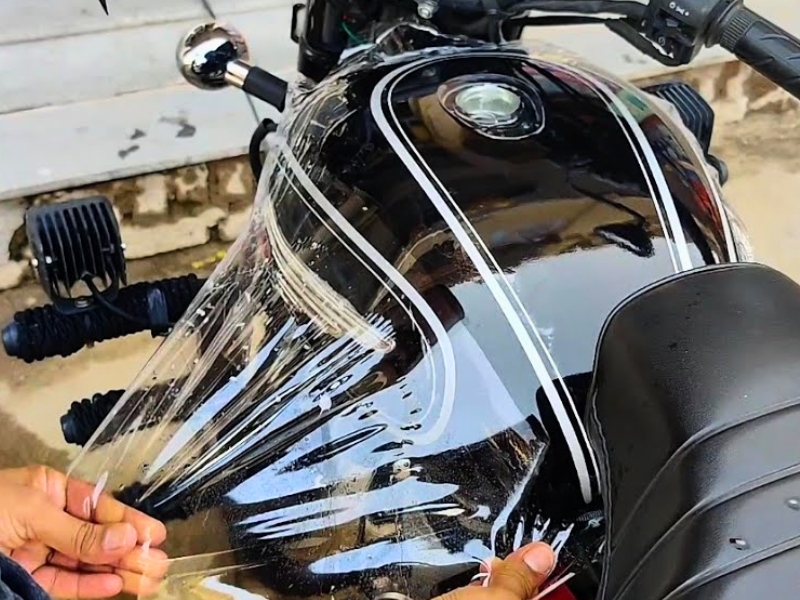
Paint Protection Film (PPF) is a protective film applied to suitable vehicle surfaces. For example, XPEL’s India-facing FAQs describe its PPF as a polyurethane film designed to protect paint against scratches, chips, stains and environmental damage. Treat this as a description of the manufacturer’s products, not proof that every material sold as “bike lamination” has the same construction or performance.
Self-healing has limits. XPEL’s FAQs distinguish minor scratches and swirls from more serious damage that may require assessment or replacement. 3M’s PPF FAQs also distinguish products by features such as self-healing technology and warranty coverage. Check the exact product rather than assuming every PPF offers identical features.
Choose coverage based on the panels you want to preserve, the selected film’s documented limitations and your budget. Do not interpret a surface-protection claim as a guarantee against collision damage, deep scrapes or damage to the underlying paint.
Which Parts Of Your Motorcycle Should You Protect?
Start with the particular surfaces you want to preserve rather than choosing the largest package first. Identify where clothing, a tank bag, or luggage contacts your motorcycle, note any existing wear, and tell the installer your priorities.
The framework below helps you request suitable coverage options. It is not a tested ranking of panel vulnerability or a claim that every motorcycle needs the same protection.
| Your Identified Concern | Coverage to Ask About | What to Establish Before Buying |
|---|---|---|
| Clothing or equipment repeatedly contacts a particular painted area. | A defined contact-area patch and, separately, coverage for the surrounding panel. | The exact contact location, patch boundaries, surface compatibility, visible edges and price difference. |
| A tank bag or luggage contacts painted surfaces. | The actual contact areas identified with the accessory positioned according to its instructions. | Compatibility with both the surface and accessory arrangement. Do not assume that adding film makes an unsuitable mounting arrangement acceptable. |
| You want to preserve several particular panels. | A selected-panel package with each panel listed separately. | Why each panel is included, its installed cost, coverage boundaries and exclusions. |
| Your priority is preserving the overall painted appearance. | A selected-panel quote and a larger painted-panel quote for comparison. | The additional panels, additional cost, expected finish and any uncovered areas. Ask what “full-bike coverage” means in that quotation. |
| The proposed surface is repainted, damaged, decal-covered or of uncertain suitability. | A surface assessment before deciding on coverage. | Written compatibility guidance, preparation requirements, installation and removal risks, and applicable warranty exclusions. |
Compare Three Clearly Defined Options
Ask the installer to price the options relevant to your priorities:
- Identified contact areas only: Specify the location and extent of every patch.
- Selected panels: List each panel and its coverage boundaries.
- Larger painted-panel coverage: Identify everything added to the selected-panel option and everything still excluded.
For each step up in coverage, ask: “Which additional surface am I paying to preserve, and is that worth the extra amount to me?” Do not assume that the largest package is automatically the best value.
Use A Panel-by-panel Approval List
Before installation, record the following for every included area:
- Panel or contact-area name.
- Existing condition, supported by photographs.
- Selected film and finish.
- Confirmed surface suitability.
- Coverage boundaries, visible edges, seams and cut-outs.
- Preparation and component-removal work agreed.
- Installed price or clearly defined inclusion in the package total.
Keep cosmetic preservation separate from crash protection. The coverage decision should address the surfaces and appearance you want to preserve, not a promise that film will prevent damage from a drop or collision.
The Garware motorcycle PPF guide and CarzSpa motorcycle PPF guide provide manufacturer and installer perspectives for product research. Neither should replace a panel-specific assessment and written quotation for your motorcycle.
How Much Does Ppf Cost For A Bike In India?
This guide provides published price references, not a verified average installed price for motorcycles in India. The final cost for your bike must come from a quotation identifying the exact film, covered panels, preparation, installation and applicable taxes.
Film Price, Installation Charge And Package Total: Know The Difference
Before comparing PPF prices, establish whether each figure covers the film alone, fitting work or the complete agreed package. These figures are not interchangeable.
| Price Term | What It Describes | What to Confirm |
|---|---|---|
| Film-only price | The material cost for a stated quantity or assumed coverage. It does not establish the price of a completed installation. | The exact product, quantity or coverage assumption, and whether preparation, installation and taxes are excluded. |
| Installation charge | The quoted fitting work. The scope must be checked rather than assumed. | Whether cleaning, surface preparation, old-film removal, adhesive cleanup and component removal and refitting are included or charged separately. |
| Complete installed price | The final payable amount for the agreed film, panel coverage and work. | The included panels, coverage boundaries, exclusions, preparation, installation, applicable taxes and conditions for additional charges. |
The Garware table below publishes product prices but does not clearly specify the motorcycle model, panel coverage, installation charges or taxes. CarzSpa’s detailed table explicitly excludes installation. Neither should be presented as a confirmed complete installed price for your motorcycle.
Compare quotations only after matching the exact film, covered panels and agreed work. A lower headline figure does not establish a cheaper equivalent package.
What About Full-body Ppf For A Premium Motorcycle?
The sources used here do not establish a reliable average installed price for that category. A “premium motorcycle” is not a defined coverage package, and “full-body” must be explained panel by panel before quotations can be compared.
Request a written quotation for your exact model and finish. Ask the installer to list every included panel, uncovered area, visible seam and cut-out, along with the final payable total. Compare quotations only after matching the film, coverage and preparation work.
Use the published tables below as starting references—not as an average market price, a guaranteed package total or evidence that one installer is cheaper for an equivalent job.
Garware’s Published Motorcycle Ppf Prices
In its motorcycle PPF article dated 30 July 2025, Garware Hi-Tech Films publishes the following prices. The table does not identify a motorcycle model or clearly specify panel coverage, installation charges or taxes. Treat these as published reference figures, not a confirmed installed quote for your bike.
| Garware Product | Published Price |
|---|---|
| Protect PPF | ₹18,000 |
| Plus PPF | ₹21,000 |
| Premium PPF | ₹25,000 |
| Matte PPF | ₹29,000 |
| Titanium PPF | ₹35,000 |
Garware also identifies potential additional expenses, including surface correction, care kits and inspection visits. Confirm the current product, coverage and total payable amount with the installer.
Source: Garware Hi-Tech Films: Paint Protection Film for Bikes.
Carzspa’s Published Film-only Cost Examples
CarzSpa’s motorcycle PPF article, dated 17 December 2024, provides per-square-foot prices and estimated film costs using about 30 square feet for its naked-bike examples and 60 square feet for its superbike examples. These are the page’s calculation assumptions, not measured requirements for your motorcycle.
CarzSpa explicitly states that the prices in its detailed table are for the film itself and exclude installation. The table below reproduces selected examples; it is not a comparison of equivalent products or a ranking.
| Product | Published Film Price per Sq Ft | Film Cost at 30 Sq Ft | Film Cost at 60 Sq Ft |
|---|---|---|---|
| Eternal 300 | ₹1,000 | ₹30,000 | ₹60,000 |
| Ultra 250 | ₹850 | ₹25,500 | ₹51,000 |
| Xceed | ₹650 | ₹19,500 | ₹39,000 |
| SPX | ₹500 | ₹15,000 | ₹30,000 |
| Armor | ₹400 | ₹12,000 | ₹24,000 |
CarzSpa also gives broader approximate ranges elsewhere on the page, but those summaries should not override its explicit film-only disclaimer. Request a written installation quote and tax breakdown before using these figures to set your budget.
Source: CarzSpa: Paint Protection Film for Bikes.
What Should You Budget For Your Motorcycle?
Neither published table establishes a fair installed price for every motorcycle. Obtain separate quotations for the coverage you are actually considering: identified contact areas, selected panels or a larger painted-panel package.
Ask each installer to specify:
- Your motorcycle model, year and paint finish.
- The film manufacturer, exact product series and finish.
- Each included panel, coverage boundary and exclusion.
- Film and installation charges, whether separate or combined.
- Cleaning, surface preparation and any separately agreed paint correction.
- Old-film removal and adhesive cleanup, if required.
- Badge or component removal and refitting.
- Applicable taxes and the final payable total.
- The film warranty and separate workmanship terms.
- Included aftercare, inspections and any compulsory paid maintenance.
- The quotation date, validity and conditions.
Compare equivalent coverage and work rather than headline prices. Do not use the published figures above to infer that one product is cheaper for the same job unless its specifications, covered panels and installation inclusions have been matched.
Is Ppf Worth It For Your Particular Motorcycle?
Assess the package against your motorcycle, intended coverage and priorities. Separate two questions: whether the spending fits your budget, and whether preserving the existing finish matters enough to justify that spending even if no financial saving occurs.
The worksheet below is a comparison tool, not a prediction of future damage, repair savings or resale value. Complete it using written quotations and your own ownership plans rather than assumed prices or damage rates.
| Decision Input | What to Record | How to Use It |
|---|---|---|
| Motorcycle and surface condition | Model, year, paint finish, previous repairs, decals and the condition of the proposed panels. | Resolve surface suitability and preparation requirements before comparing package prices. |
| Your objective | The particular contact area, panel or appearance you want to preserve. | Check whether the quoted coverage addresses the reason you are considering PPF. |
| Targeted-coverage quotation | The final payable price for identified contact areas or selected panels, including agreed preparation, installation and taxes. | Establish the cost of the smallest package that meets your stated objective. |
| Larger-package quotation | The final payable total and the additional panels included. | Decide whether the extra coverage is worth the additional amount to you. |
| Relevant repair quotation | A current written estimate for repairing the same panel and finish, with the proposed work specified. | Use it as a cost reference, not as a repair expense you will necessarily incur without PPF. |
| Relevant replacement quotation | The correct replacement part, finish, decals, labour and taxes where applicable. | Compare the actual quoted replacement option rather than an unrelated panel price or the motorcycle’s purchase price alone. |
| Additional PPF expenses | Any required paid inspections or maintenance, plus available removal and section-replacement quotations. | Identify additional spending and unresolved costs. Do not assume that unknown charges are zero. |
| Ownership plans and personal preference | How long you currently intend to keep the motorcycle and how strongly you value preserving its existing finish. | Judge whether the expense suits your priorities without assuming a guaranteed film lifespan or financial return. |
Choose An Outcome From The Information You Have
- Consider targeted coverage if it addresses your identified concern, surface suitability is confirmed, and the full price fits your budget.
- Consider a larger package if you can identify the additional panels you want to preserve and are comfortable paying the quoted difference.
- Postpone the decision if compatibility, coverage, the final payable amount or warranty eligibility remains unresolved.
- Choose not to install PPF if the quoted package does not address your priorities or preserving the finish is not worth the expense to you.
Is Ppf Worth It For A New Scooter In India?
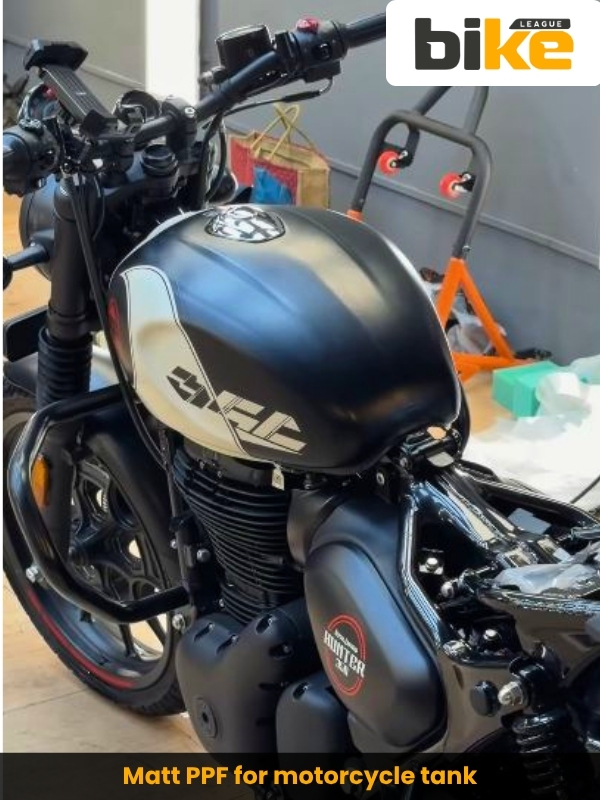
PPF may be worth considering for a new scooter if preserving particular painted panels matters to you, the selected film is suitable for those surfaces and the complete installed price fits your budget. Being new does not, by itself, make the scooter a good candidate for full-body coverage.
Start by identifying the surfaces you want to preserve. Do not assume that a film suitable for painted panels is also approved for textured plastics, decals, lenses or other components. Ask the installer to assess each proposed surface before recommending a package.
- Define the concern: Identify particular painted panels or contact areas rather than buying the largest package first.
- Compare coverage options: Request separate quotations for targeted coverage and a larger package, with every included panel and exclusion listed.
- Check the full expense: Include preparation, installation, taxes and any required paid maintenance. Ask about removal and section-replacement charges.
- Use relevant repair figures: If repair cost influences your decision, obtain a quotation for the same scooter panel and finish. Do not compare the PPF package with an unrelated motorcycle repair price.
- Consider ownership and care: Decide how much preserving the existing finish matters to you and whether you can follow the film’s aftercare requirements.
Choose targeted coverage if it meets your objective at a price you accept. Consider a larger package only when you can identify the additional panels you want to preserve and justify the extra expense to yourself. Postpone or skip PPF if suitability is unresolved or the package does not offer enough value for your priorities.
Treat PPF as an optional finish-preservation purchase, not a guaranteed financial investment. Do not assume it will prevent every repair, recover its installation cost or increase the scooter’s resale value.
Do Not Treat A Repair Quote As Guaranteed Savings
A repair quotation tells you what a specified repair would cost; it does not establish that the damage will happen or that PPF would prevent it. Similarly, a film warranty does not automatically cover impact damage or the underlying paint.
For example, XPEL’s published warranty information distinguishes film coverage from damage to the paint and excludes specified external damage. Check the terms applicable to your installation before treating warranty coverage as part of the financial justification.
Use Published Prices Only As Starting References
The Garware motorcycle PPF guide publishes product prices, while CarzSpa’s detailed motorcycle price table explicitly excludes installation. Neither establishes the complete cost of your chosen package. Enter the final written installer quotation in the worksheet, not a general advertised figure.
Do not calculate a guaranteed payback period from these figures. The comparison does not establish future damage frequency, the cost of future repairs or whether a particular incident would leave the paint unharmed.
How To Choose A Professional Ppf Installer
Use the initial consultation to establish which product will be installed, who will carry out the work and how your motorcycle will be prepared and inspected. Request the agreed scope, charges and support terms in writing.
| Check | What to Ask | What to Verify or Record |
|---|---|---|
| Training and authorisation | Who provided the installer’s training, which products does it cover, and is any claimed manufacturer authorisation current? | Verify claimed authorisation with the supplier or manufacturer where applicable. Do not treat a training claim as a guarantee of workmanship. |
| Motorcycle experience | Can you show completed motorcycle installations involving comparable panels, contours and finishes? | Review relevant work and discuss badges, cut-outs, seams and areas where edges may remain visible. |
| Customer feedback | What do previous customers report about fitting quality, communication and follow-up support? | Read detailed feedback about complaint handling and aftercare. Do not rely on a rating or testimonial alone. |
| Product identification | Which manufacturer, exact product series and finish will be installed, and how will authenticity be documented? | Obtain relevant technical information and ask for the installed film to be identified in the quotation and invoice. |
| Surface assessment | Are the proposed panels, decals and any repainted or repaired areas suitable for this film? | Record existing defects and agree separately on preparation, correction or repair work and its price. |
| Fitting method | Will you use a model-specific pre-cut pattern or custom fitting, and how will trimming be carried out? | Agree on coverage boundaries, visible edges and seams, trimming precautions and any component removal and refitting. |
| Warranty and support | Which film warranty and separate workmanship terms apply to this installation? | Obtain eligibility, exclusions, maintenance requirements, claim procedures and the costs included in an approved claim. |
| Written scope and handover | What is the final payable amount, what is excluded, and what documents and instructions will I receive? | Keep the agreed panel list, charges, collection arrangements, aftercare instructions and process for reporting fitting concerns. |
Manufacturer guidance supports checking installation credentials and documentation. 3M’s PPF FAQs recommend a trained, experienced installer. XPEL’s warranty information specifies proof-of-installation and pre-approval requirements for claims.
Verify the requirements for the exact product and Indian warranty offered to you. These examples do not establish identical conditions for every brand or guarantee the quality of an individual installation.
Where Can You Find Bike Ppf Installers Near You?
Start with the film manufacturer’s official locator rather than relying only on advertisements or marketplace listings. XPEL’s India installer locator provides a route to authorised installers. You can also use 3M India’s Car Care Studio locator to find nearby outlets and enquire about PPF services.
These are starting points, not confirmation that every listed outlet installs PPF on motorcycles. Contact the individual outlet before visiting and ask whether it accepts your motorcycle model, offers your chosen film and has experience with comparable panels and finishes.
- Search your location: Use your city or postcode where the locator supports it. For Delhi or another major city, check the actual workshop address rather than assuming every result is nearby.
- Confirm motorcycle service: Ask whether the outlet installs PPF on motorcycles and request examples of completed work on similar tanks, fairings or other panels.
- Verify authorisation: If the outlet claims manufacturer authorisation, confirm that it is current and relevant to the proposed PPF product. Contact the manufacturer if the listing or claim is unclear.
- Confirm the product and coverage: Request the exact film series, finish, included panels, exclusions and applicable Indian warranty.
- Obtain a complete quotation: Ask for preparation, film, installation, taxes and any component-removal charges to be identified before comparing offers.
If you want to buy film or a pre-cut kit without installation, ask the manufacturer or its listed outlet whether it supplies that product separately. Do not assume that an installation centre sells DIY kits or that an online seller is authorised merely because it uses the brand’s name.
Choose only after confirming product suitability, motorcycle experience, the written scope and aftercare support. A locator listing is not an independent review or a guarantee of workmanship.
Potential Benefits Of Ppf For Bikes
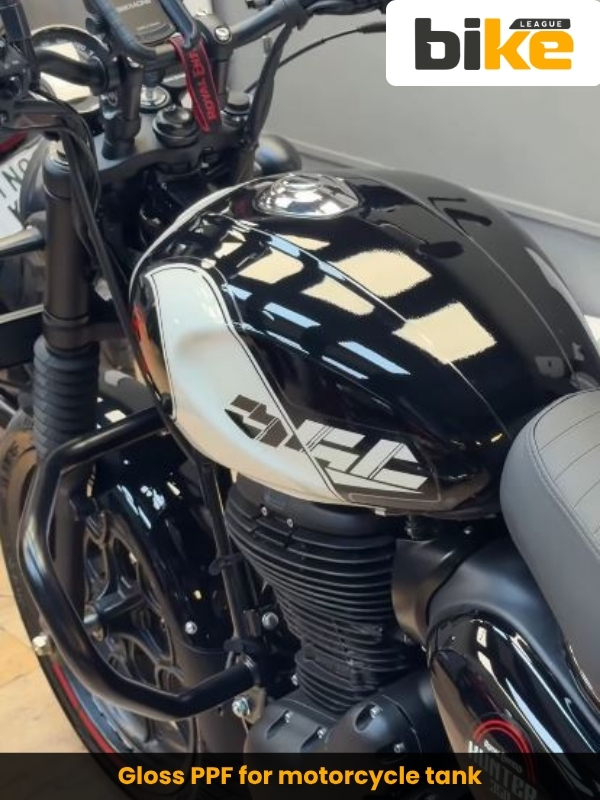
Assess these potential benefits against the documentation for the exact film offered. General brand descriptions and demonstrations should not replace product-specific information.
- Protection for selected surfaces: Check the film’s stated protection against stone chips, surface scratches and scuffs, including its limitations. Confirm which panels are included rather than assuming the entire motorcycle is protected.
- Self-healing, where documented: Check which surface marks the feature addresses and follow the specified care instructions. Do not treat heat application as a universal treatment for damaged film.
- Resistance features, where documented: Review any UV, weathering, stain or chemical-resistance claims. These should not be interpreted as guarantees against paint fading, contamination or damage from every cleaning chemical.
- Choice of appearance: Review a sample of the exact film and agree on the intended finish. Do not assume that every product adds shine or preserves the original gloss and texture exactly.
- Cleaning-related features: If the film advertises water repellency or other cleaning-related properties, check their maintenance requirements. Do not assume that installation eliminates routine washing or contamination removal.
For product-specific examples, XPEL’s FAQs describe the satin appearance of STEALTH and the hydrophobic topcoat of ULTIMATE FUSION. These descriptions should not be extended to every PPF product.
Protection claims and warranty coverage are different. For example, XPEL’s published PPF warranty terms cover specified manufacturing defects but exclude listed external causes, including collision damage and physical impacts from rocks or road debris. Its warranty information also distinguishes coverage for the film from damage to the paint itself. Read the policy applicable to your installation rather than assuming that every hazard the film is intended to reduce is covered by warranty.
Consider paint preservation separately from financial returns. Do not count on a higher resale price, a fixed payback period or reimbursement of the installation cost by a future buyer.
Limitations And Costs To Consider Before Buying Ppf
Assess the complete expense, coverage limits and ongoing commitments before approving a package. PPF should not be treated as protection against every form of damage or as a maintenance-free purchase.
| Limitation or Cost | What to Consider | What to Confirm Before Buying |
|---|---|---|
| Total expense | The purchase may involve preparation, installation, maintenance, removal and future section replacement. | Obtain the complete installed price and identify additional or unresolved charges. Compare the expense with your budget and relevant panel-repair or replacement quotations. |
| Coverage boundaries | A package name does not identify every protected or excluded area. Edges, seams and cut-outs may remain visible. | Request a panel list and coverage boundaries. Ask for a written definition of any package advertised as “full-bike coverage.” |
| Protection limits | Do not rely on film to prevent damage from a collision, drop, deep scrape or every stone strike. | Read the exact product’s documented limitations. If the film is damaged, have the underlying surface assessed rather than assuming it is unharmed. |
| Appearance differences | The selected film and fitting boundaries may affect the appearance of the finished panels. | Review samples and completed work. Agree on texture, gloss, visible boundaries and the intended result, especially on matte, satin or custom finishes. |
| Maintenance obligations | The film has product-specific washing methods, treatment restrictions and any applicable inspection requirements. | Obtain written aftercare instructions and identify required paid visits. Decide whether you can follow the requirements. |
| Damage and replacement | A damaged section may require assessment and replacement. Do not assume impact damage or associated labour is covered by warranty. | Ask how replacement is assessed and priced, whether individual sections can be replaced and which costs an approved warranty claim includes. |
| Removal risks | Eventual removal should not be treated as risk-free, particularly where existing defects, repairs, repainting or decals require assessment. | Disclose the surface history and discuss removal requirements, risks, charges and applicable warranty exclusions before installation. |
Protection claims and warranty coverage are different. Read the exact policy rather than assuming that every hazard the film is intended to reduce is covered by warranty.
XPEL’s warranty information and 3M’s published PPF terms illustrate how exclusions, claim conditions and remedies can differ. Obtain the terms applicable to your selected product and Indian installation before booking.
How To Compare Ppf Finishes And Features For Bikes
Assess appearance, documented performance and surface suitability separately. A finish label doesn’t indicate the film’s protection level or warranty coverage.
1. Matte Vs Gloss Ppf: What Is The Difference?
Matte and gloss describe the film’s appearance, not its protection level. Choose the finish according to the result you want, then compare the exact products’ documented features, surface compatibility and warranty separately.
| Comparison Point | Gloss PPF | Matte or Satin PPF |
|---|---|---|
| Intended appearance | Consider when your intended result is a glossy appearance. Confirm the result using the exact film sample. | Consider when you want a less glossy appearance. Inspect matte and satin samples separately; do not assume they look identical. |
| Effect on existing paint | Ask how the selected film affects the paint’s existing gloss and texture. | Confirm whether the selected film will preserve the intended finish or change its appearance. |
| Partial coverage | Check visible edges and any appearance difference between covered and uncovered areas. | Check visible edges and any finish contrast between covered and uncovered areas. |
| Protection and service-life claims | Compare the exact product’s documented protection, self-healing features and service-life claims. A gloss label does not establish performance. | Compare the exact product’s documented protection, self-healing features and service-life claims. A matte or satin label does not establish performance. |
| Compatibility and aftercare | Confirm suitability for the proposed surface and obtain the selected film’s care instructions. | Confirm suitability for both the surface and intended finish, then obtain film-specific care instructions. |
Finish changes are product-specific. For example, XPEL describes STEALTH as having a satin finish that can change the appearance of glossy paint. Review a sample and agree on the intended result before approving the work.
Neither a matte nor a gloss label proves better scratch resistance, self-healing performance or longer service life. Use the technical information for the individual films to assess those claims.
On matte, satin or custom paint, obtain surface-specific compatibility guidance before installation. Coloured and textured films also require a separate appearance assessment. Before a proposed colour change, confirm the applicable requirements with your registering authority rather than assuming removable film is exempt.
2. Documented Performance Features
- Self-healing: Ask which surface marks the feature addresses and what conditions apply.
- Water repellency and stain resistance: Review the technical information and maintenance requirements.
- Thickness and construction: Request the product specifications. Do not choose on thickness alone.
- Service-life claims: Check the stated conditions and care requirements. Do not treat warranty duration as a guaranteed lifespan or replacement interval.
For example, XPEL identifies ULTIMATE FUSION as having a hydrophobic topcoat. This is a product-specific feature, not evidence that every PPF repels water in the same way or requires the same care.
3. Surface Compatibility
Confirm suitability for each proposed surface, including painted panels, decals and repainted areas. For matte, satin or custom finishes, obtain surface-specific guidance and agree on the intended appearance before installation.
Do not assume that a film intended for painted body panels is suitable for headlight lenses, textured plastics, mirrors, fork components or other functional parts. Ask for compatibility confirmation before adding these to the package.
When Should You Postpone Ppf Installation?
Do not approve installation while information essential to your decision remains unresolved. The checklist below identifies questions to settle before you pay or authorise preparation work. It is a buying safeguard, not a claim that every issue makes PPF permanently unsuitable.
| Unresolved Issue | What to Obtain Before Proceeding |
|---|---|
| The exact film is not identified. | The manufacturer, product series, finish and relevant technical information, recorded in the quotation. |
| The included panels or coverage boundaries are unclear. | A written panel list or marked photographs showing included areas, exclusions, seams and visible edges. |
| Surface suitability has not been established. | An assessment covering the actual finish, decals, previous repairs, repainted areas and existing defects. If suitability remains uncertain, request guidance from the relevant film or paint supplier before proceeding. |
| Preparation work has not been agreed. | A description and price for proposed cleaning, correction, old-film removal and component removal. Do not authorise unspecified polishing or repair work. |
| The final payable amount is unclear. | A written total identifying film, installation, preparation, applicable taxes and conditions for any additional charges. |
| Warranty promises are verbal or incomplete. | The applicable written film warranty and any separate workmanship terms, including eligibility, exclusions, registration requirements and claim contacts. |
| The expected appearance has not been agreed. | A sample of the proposed finish and an explanation of fitting boundaries, texture or gloss differences relevant to the quoted work. |
| You have not received the aftercare requirements. | Written instructions for the first wash, permitted products, washing methods, initial restrictions and required inspections, so you can decide whether you can follow them. |
Written warranty details matter because claim requirements can be specific. For example, XPEL’s warranty information specifies proof-of-installation and pre-approval requirements. Check the policy applicable to your product and Indian installation rather than assuming the same conditions apply to every brand.
Product-specific care instructions also matter. XPEL’s care guidance distinguishes between film products and their maintenance requirements. Obtain the instructions for the product actually quoted, not a generic care sheet.
Proceed only after the questions relevant to your motorcycle have been answered to your satisfaction. If the information remains incomplete, compare another installer or postpone the purchase rather than filling the gaps with assumptions.
Can You Apply Bike Ppf Yourself, Or Should You Hire An Installer?
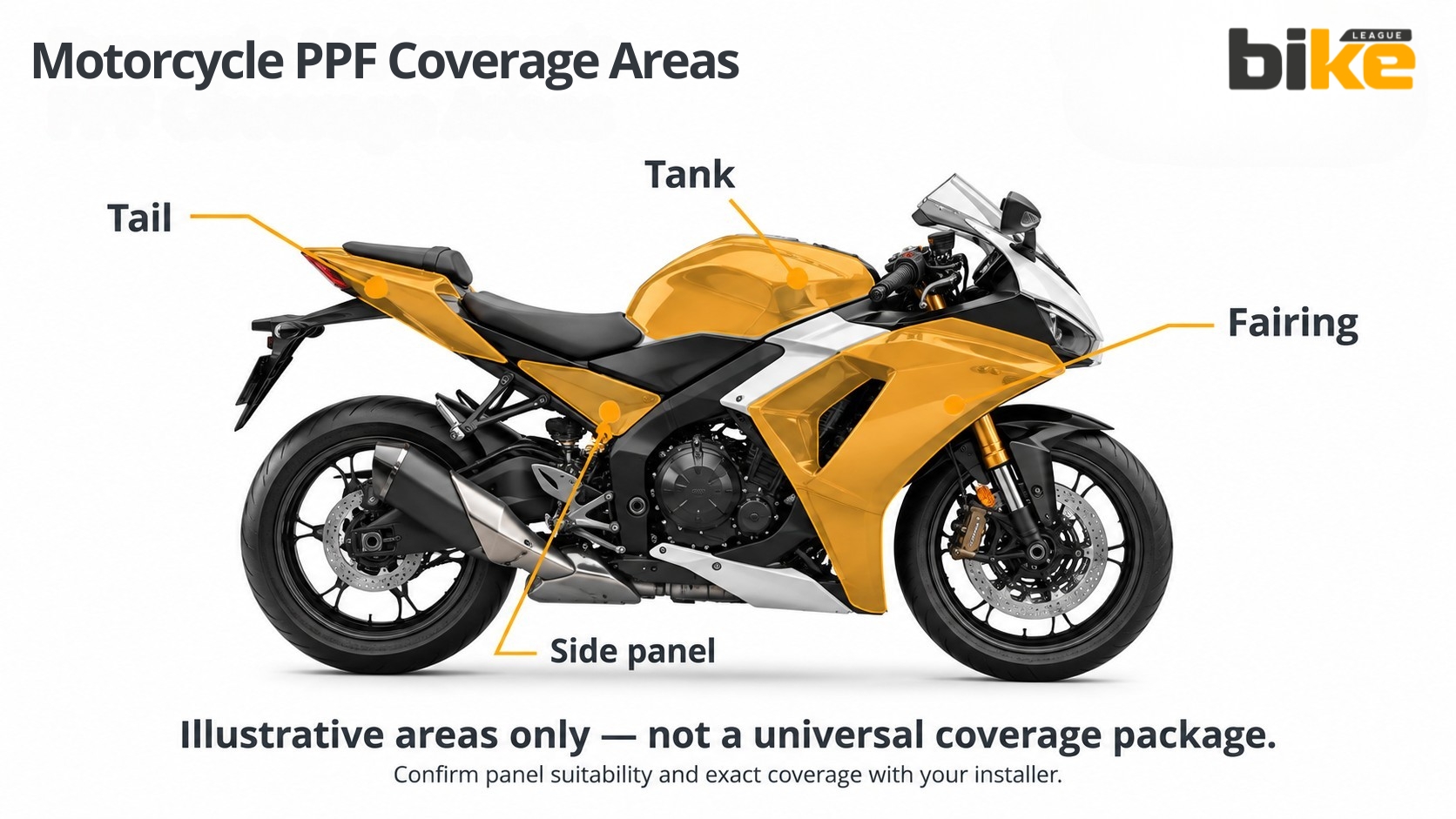
For the products discussed in this guide, professional installation is the better-supported choice. For example, 3M recommends a trained and experienced installer to help ensure the quality, appearance and durability of its PPF. This is manufacturer guidance for its products, not a guarantee of every installer’s workmanship.
Consider DIY application only if the exact kit is expressly intended for owner installation, its supplier confirms compatibility with your motorcycle’s surfaces, and you can follow the complete product-specific instructions. Do not assume that a pre-cut kit is suitable for beginners or that instructions for another film will apply.
| Decision Factor | Before Choosing DIY | Before Hiring an Installer |
|---|---|---|
| Product and coverage | Confirm that the kit is intended for owner installation, matches your motorcycle model and identifies the included panels and coverage boundaries. | Obtain the exact film series, finish, panel list, coverage boundaries and exclusions in writing. |
| Surface suitability | Confirm compatibility before application. Seek professional assessment if paint, decals, coatings or previous repairs create uncertainty. | Disclose repainted panels, repairs, decals, existing coatings and paint defects. Ask for an assessment before approving preparation. |
| Fitting requirements | Review the required tools and complete instructions, including any stretching, trimming, heat application or component removal. Do not improvise if you cannot follow the procedure. | Ask about pre-cut patterns or custom fitting, trimming precautions, visible seams and any component removal and refitting. |
| Complete cost | Include the kit, required tools and preparation products rather than comparing the kit price alone. | Request a final payable quotation identifying preparation, film, installation, applicable taxes and additional charges. |
| Warranty eligibility | Confirm whether owner installation is permitted and what documentation is required. Do not assume eligibility or exclusion. | Obtain the applicable film warranty and separate workmanship terms. Verify any authorisation requirements. |
| Support and aftercare | Check the supplier’s fitting support, aftercare instructions and procedure for reporting problems before buying. | Confirm handover checks, written aftercare, follow-up support and how fitting concerns will be assessed. |
Choose DIY only after resolving the product, surface, fitting and warranty questions relevant to your kit. If important requirements remain unclear or you cannot follow the specified procedure, postpone application and seek professional advice.
If you choose a service, review completed motorcycle installations and obtain the exact film details, agreed panel coverage, final payable price and written warranty terms before booking. The following section explains what to establish during professional installation.
What To Expect During Professional Ppf Installation
This is an owner’s checklist, not a universal DIY application guide. Ask the installer to follow the selected film manufacturer’s instructions and explain preparation, fitting, inspection and aftercare before work begins.
1. Inspect And Document The Surfaces
- Record existing scratches, chips, clear-coat defects, repairs and repainted areas.
- Disclose decals, existing coatings and previous paintwork.
- Confirm whether each proposed surface is suitable for the selected film.
- For recently repainted panels, obtain application-timing guidance from the paint supplier or repairer.
2. Agree On Cleaning And Preparation
- Ask the installer to use methods and products suitable for both the surface and the selected film.
- Agree on any paint-correction work separately. Do not assume polishing is required for every panel.
- Do not prescribe a generic clay-bar treatment, chemical decontaminant or panel-wipe solution without checking compatibility.
- Confirm preparation requirements separately for matte paint, satin paint, decals and repainted panels.
3. Confirm Coverage And Fitting
- List the included panels and agree on coverage boundaries.
- Ask where visible edges, seams and cut-outs will remain.
- Discuss the proposed pre-cut pattern or custom-fitting approach.
- Obtain approval before badges or other components are removed, and include associated charges in the quote.
- Confirm how trimming will be carried out without damaging paint or adjacent components.
4. Apply The Film According To Product Instructions
Ask the installer to follow the selected film’s application requirements, including specified conditions, solutions, tools and handling methods. Coverage must not obstruct lights, openings, moving parts or other functional components.
Do not attempt to stretch, puncture, reposition or smooth installed film yourself. Raise alignment, edge or fitting concerns with the installer.
5. Follow Product-specific Finishing Instructions
Do not treat heat application or self-healing activation as a mandatory finishing step for every film. Ask the installer to follow the manufacturer’s procedure.
If the product has a self-healing feature, obtain written guidance on the marks it addresses and the permitted care methods. Do not use a heat gun or hairdryer unless the manufacturer expressly permits that method and provides instructions. Product-specific guidance is available in resources such as XPEL’s care instructions.
6. Inspect The Motorcycle At Handover
- Check the agreed coverage, edges, seams, cut-outs and areas around badges.
- Photograph concerns and ask how they will be assessed.
- If moisture or cloudy patches are visible, ask whether these are consistent with the selected film’s curing process and when they should be reassessed.
- Obtain written instructions for the first wash, permitted washing methods and any initial restrictions.
- Collect the itemised invoice, exact product details, warranty confirmation and installer contact information.
- Confirm any follow-up inspection and whether it involves an additional charge.
Ppf Brands To Research Before Choosing An Installer
The following names are research leads, not a ranking or endorsement. Inclusion does not confirm current motorcycle-specific availability, suitability or warranty eligibility. Compare exact products and equivalent coverage packages rather than brand names alone.
| Brand and Official Website | Research Starting Point | What to Verify Before Booking |
|---|---|---|
| KAVACA by Ceramic Pro — Official India PPF Page | Review Ceramic Pro India’s KAVACA film information, then ask the outlet to identify the exact product and finish included in its quotation. Distinguish the protection film from a ceramic-coating-only service. | Exact film series, motorcycle-surface compatibility, included panels, installer credentials, complete installed price, applicable Indian warranty and product-specific aftercare. Do not assume that every outlet offers motorcycle installation or that all KAVACA products have identical features. |
| Ultraguard — Official Product Website | Review the published product range, then request documentation for the exact film proposed by the supplier or installer. | Product name, technical information, finish, motorcycle-surface compatibility and written warranty for the proposed installation. |
| UltrashieldX — Official Website | Use the brand website for initial research and ask the supplier or installer to identify the quoted product series. | Finish, technical specifications, surface suitability, installation requirements and applicable warranty. |
| XPEL — Official India-Facing FAQs | Review the product FAQs and use the official India installer locator when researching installation options. | Exact film series, documented features, motorcycle compatibility, applicable Indian warranty and installer authorisation where required. |
| 3M — Official India Car Care Website | Review 3M India’s Car Care information and use its studio locator to enquire about local PPF services. | Exact film series, motorcycle service availability, surface suitability and applicable Indian terms. Do not assume overseas warranty conditions apply in India. |
| LLumar — Official PPF Website | Review the manufacturer’s PPF information, then request details for the exact product offered locally. | Film specifications, Indian availability, motorcycle suitability, installer credentials and warranty eligibility. Do not assume global product information confirms local availability. |
| Aegis by CarzSpa — Official PPF Page | Review CarzSpa’s Aegis product information and its separate motorcycle PPF guide. | Quoted product, included panels, complete installed price and warranty. The detailed price table in its motorcycle guide excludes installation. |
| Garware — Official Motorcycle PPF Guide | Review the company’s published motorcycle PPF product and price information. | Exact film, coverage, installation charges, taxes and current warranty. Do not treat the published price table as a complete installed offer. |
For every quotation, record the manufacturer, exact product series, finish, proposed panels, preparation work, final payable total and applicable warranty. Ask how product authenticity will be documented.
Do not assume that every film sold under one brand has the same construction, features or protection. This table is a research checklist, not independent testing, a product review or evidence that one brand is best for every motorcycle.
Ppf Maintenance And Aftercare
Obtain written instructions for the exact film installed. Use those instructions as the basis for cleaning, storage, inspection and additional treatments.
Aftercare differs between products. For example, XPEL’s product-care page specifies a 48-hour wait before washing for ULTIMATE PLUS, ULTIMATE FUSION and STEALTH, but 72 hours for COLOR PPF. 3M’s PPF care FAQ gives a one-week wait before washing or waxing for the products discussed there. These are examples, not interchangeable instructions. Follow the current guidance for your installed film.
1. Washing And Contamination Removal
- Follow the manufacturer’s timing for the first wash and subsequent cleaning.
- Use cleaning products approved for the film and finish. A generic label such as “mild” or “PPF-safe” should not replace a compatibility check.
- Base cleaning on the motorcycle’s condition and use rather than a universal interval.
- Follow the specified method for bird droppings, insect residue and other contamination.
- Observe pressure-washing restrictions, including nozzle direction and distance. Do not direct a jet at lifted or damaged edges.
For ULTIMATE PLUS, ULTIMATE FUSION and STEALTH, XPEL warns against using high-pressure water near film edges because it can lift or damage the film. Follow the pressure, distance and nozzle-direction requirements applicable to your product.
2. Drying
Follow the film manufacturer’s drying instructions and use permitted towels or equipment. Do not assume that any towel or drying method is suitable for every film and finish.
If water spots remain, ask for an approved treatment rather than using abrasive products or unapproved chemicals. Manufacturer care resources, including XPEL’s product-care instructions, distinguish between routine care and product-specific treatments.
3. Parking, Storage And Exposure
- Follow initial curing-period restrictions and subsequent storage guidance.
- Check documented weathering, UV and temperature-performance claims instead of assuming all films perform alike.
- If using a motorcycle cover, confirm its suitability and precautions for newly installed film.
- Discuss regular outdoor parking, coastal exposure or monsoon use with the installer without treating PPF as a substitute for routine care.
4. Inspecting And Reporting Damage
- Follow any inspection schedule required by the warranty or agreed with the installer.
- Photograph lifting edges, persistent bubbles, tears, cracking or discolouration and report them.
- Do not pick, peel, trim, puncture, glue or attempt to repair the film yourself.
- Keep the invoice, product details, warranty confirmation and maintenance records available.
5. Check Before Changing Your Aftercare Products
Before applying a coating, wax, sealant or other treatment, check that the exact product is permitted for your installed film and finish. Follow the film manufacturer’s instructions and check the applicable warranty rather than relying on a general “PPF-safe” description.
Keep a record of the approved products and instructions supplied at handover. If you want to use a different treatment later, obtain compatibility guidance before application. XPEL’s product-care instructions provide examples of guidance organised by film product.
For choosing whether to purchase a coating with PPF, see “PPF or Ceramic Coating: Which Matches Your Goal?” below.
Ppf Or Ceramic Coating: Which Matches Your Goal?
Choose the treatment according to the concern you want to address, not simply the package name. XPEL’s India-facing FAQs distinguish PPF’s physical protection role from ceramic coating’s hydrophobic and appearance-related features. Check the claims and limitations of the exact products being offered.
For an Indian motorcycle-specific coating perspective, Ceramic Pro India’s guide to ceramic coating for bikes describes water repellency, enhanced gloss and easier cleaning as intended benefits. The article also notes that ceramic coating doesn’t make a motorcycle completely scratch-proof and that regular washing is still necessary.
These are supplier descriptions, not an independent comparison of coating and PPF performance. Ask which coating product the quotation includes, whether it suits your motorcycle’s finish and what preparation, maintenance and warranty conditions apply. Do not treat general claims about long-term savings or resale value as evidence that a package will pay for itself.
| Your Main Objective | Option to Investigate | What Must Be Established |
|---|---|---|
| You want protection against stone chips, surface scratches or scuffs on particular panels. | A PPF product with documented claims relevant to those concerns. | The product’s limitations, suitable surfaces, exact coverage and complete installed cost. Do not interpret the claims as crash protection. |
| You are primarily interested in water repellency or a particular appearance. | A suitable ceramic coating or a film that specifically documents the feature you want. | The exact product’s stated effect, compatibility with the existing finish and maintenance requirements. Do not assume that a coating offers the same chip-protection role as PPF. |
| You want to change or preserve a gloss, matte or satin appearance. | A product explicitly suitable for the intended finish. | A sample or demonstrated result, surface compatibility and the agreed appearance. Do not assume every treatment adds gloss or preserves the original texture. |
| You want to add a coating over PPF. | A combination approved for the exact installed film. | Compatibility, warranty implications, additional cost and aftercare. Do not assume that combining treatments doubles protection. |
| You are considering routine wax or sealant instead of a professionally installed package. | A product approved for the paint finish and any existing protection. | Its stated purpose, application instructions, reapplication requirements and cost. Do not assume that all waxes and sealants provide the same result. |
Check Combined Packages Before Paying Extra
Manufacturer approval is product-specific. 3M’s support information discusses applying its ceramic coating over its PPF. This does not establish compatibility between every coating and film.
Warranty restrictions can also affect the choice. XPEL’s published terms for certain PPF products list non-XPEL-branded ceramic coatings among their exclusions. Obtain the terms applicable to your Indian installation before authorising an additional treatment.
Ask the installer to quote PPF alone and the combined package separately. Pay for the additional treatment only after its intended benefit, compatibility and ongoing requirements are clear to you.
Ppf Removal, Replacement And Troubleshooting
If film changes in appearance or becomes damaged, document the concern and ask for an assessment. Do not begin an unapproved repair or removal procedure before checking product instructions and the applicable warranty.
1. Removing Ppf
- Ask the installer to assess the film and underlying paint before removal. Disclose previous repairs, repainted panels, decals and known defects.
- Follow the exact film manufacturer’s removal instructions. Do not use a universal heating temperature, peeling angle or tool recommendation.
- If owner removal is expressly permitted, follow the specified procedure. Stop if the film resists removal, repeatedly tears or appears to lift paint. Do not force removal or increase heat to overcome resistance.
- Arrange professional removal if the film is brittle, the paint is damaged, or the panel has been repainted.
- If adhesive remains, have it assessed and removed using a method approved for the underlying surface. Do not use petrol or unapproved solvents.
- After removal, have the exposed surface inspected before selecting a finishing treatment. Follow finish-specific care guidance, particularly for matte or satin paint.
Both XPEL’s removal guidance and 3M’s PPF FAQs recommend professional removal. Follow the product’s exact instructions rather than using a universal heating or peeling procedure.
Professional removal should not be interpreted as a universal guarantee against paint damage. For example, 3M’s published PPF warranty terms on its support page exclude paint pull during removal. Have existing defects and previous paintwork assessed, and confirm the terms applicable to your installation.
Request a written removal quote specifying the panels, adhesive cleanup, additional preparation and taxes. Ask how existing surface defects and removal risks will be recorded.
2. When To Replace Ppf
Do not decide on replacement based only on film age or warranty duration. Follow the manufacturer’s inspection and replacement guidance and ask the installer to assess the condition.
- Arrange an inspection for tears, exposed paint, persistent edge lifting, cracking, discolouration or other deterioration.
- Ask whether an isolated section can be replaced rather than removing all the film.
- Request a quote identifying old-film removal, adhesive cleanup, preparation, replacement film, installation and taxes.
- Check whether the issue qualifies for a warranty claim and which associated costs are included.
Warranty remedies depend on the policy. Review the terms supplied with your installation; XPEL’s published warranty information provides examples of covered defects, exclusions and claim requirements.
3. Ppf Troubleshooting: Bubbles, Lifting Edges And Discolouration
If the film develops a visible concern, photograph it and contact the installer. Appearance alone does not establish the cause, the required treatment or whether the issue qualifies for warranty coverage.
| Visible Concern | What to Record | What to Ask the Installer | What to Avoid |
|---|---|---|---|
| Bubbles or cloudy patches | Clear photographs, the installation date, when the concern appeared and whether it is changing. | Is this consistent with the selected film’s curing process? When should it be reassessed, and what changes should be reported sooner? | Do not puncture, press, peel or heat the affected area yourself. |
| Peeling or lifting edges | Photographs showing the affected edge, its location and the surrounding film. | Can the section be corrected, or does it require replacement? Does the concern qualify for assessment under the film warranty or separate workmanship terms? | Do not pull, trim, glue or attempt to reseal the film. Avoid directing a pressure-washer jet at the affected edge. |
| Yellowing or discolouration | Photographs, the exact product details, installation date and available maintenance history. | What assessment is needed to establish the cause? Do the applicable warranty terms cover the assessed issue, and what claim procedure must be followed? | Do not attempt to restore clarity with abrasive polish, bleach or unapproved solvents. |
Bubbles and curing: XPEL’s FAQs explain that application-related bubbles may settle over a period of days to weeks. This is not a diagnosis of every bubble or a reason to ignore persistent or worsening defects. Obtain a product-specific review date from the installer.
Lifting edges and washing: XPEL’s care guidance warns that high-pressure water near the edges of its specified films can lift or damage them. Follow the washing instructions applicable to your film and do not attempt an unapproved repair.
Discolouration and warranty: XPEL’s published terms for ULTIMATE PLUS and STEALTH include yellowing among specified manufacturing defects, subject to conditions and exclusions. This does not establish the cause of a particular colour change or guarantee approval of a claim. Check the terms applicable to your product and Indian installation.
Before authorising corrective work, confirm the proposed treatment, any charges and whether warranty approval is required. If replacement is recommended, request a quotation identifying the affected section, removal, adhesive cleanup, preparation, replacement film, installation and taxes.
4. Peeling Or Lifting Edges
Contact the installer and provide photographs. Do not pull, trim, glue or try to reseal the lifted film yourself. Avoid directing a pressure-washer jet at the affected edge; XPEL’s care guidance warns that high-pressure water near edges can lift or damage its specified films.
Ask whether the section can be corrected, requires replacement or qualifies under the film warranty or separate workmanship terms.
5. Yellowing Or Discolouration
Ask the installer to assess the change rather than assuming its cause. Provide the product details, installation date and maintenance history.
Some product warranties cover specified discolouration defects. For example, XPEL’s published terms for ULTIMATE PLUS and STEALTH include yellowing among listed manufacturing defects, subject to conditions and exclusions. This does not establish the cause of a particular change or guarantee approval of a claim.
Follow the applicable claim procedure. Do not attempt to restore clarity with abrasive polish, bleach or unapproved solvents.
Common Myths About Ppf For Bikes
Do not use appearance promises, brand names or warranty duration as substitutes for checking the exact product and installation. Use the following questions to test common claims before booking.
| Common Myth | What to Understand | What to Check |
|---|---|---|
| Every PPF installation will be invisible. | Edges, seams, cut-outs and changes in gloss or texture may affect the finished appearance. | Review the exact film sample and completed motorcycle work. Agree on visible boundaries and the intended finish. |
| Car PPF experience is enough to choose a motorcycle installer. | Your decision should include the installer’s experience with the motorcycle panels, contours and surfaces involved. | Ask to see relevant motorcycle installations. If a pre-cut kit is proposed, confirm the model, coverage and exclusions. |
| PPF makes a bike scratch-proof or crash-proof. | Do not rely on film to prevent damage from a drop, collision, deep scrape or every stone strike. Protection claims are not blanket compensation for paint damage. | Read the exact product’s limitations, panel coverage and warranty exclusions. |
| A higher price or longer warranty guarantees better protection. | Price, thickness, brand name and warranty duration do not replace a product-and-installation comparison. | Compare equivalent coverage, preparation, documented features, fitting work and written terms. |
| PPF removes the need for routine care. | The installed film still has cleaning requirements, product restrictions and any applicable inspection obligations. | Obtain the exact film’s written aftercare instructions before paying and confirm that you can follow them. |
| PPF removal is always risk-free. | Do not assume removal cannot affect paint or that the film warranty covers damage to the underlying surface. | Have paint and film assessed. Disclose chips, peeling clear coat, repairs, repainting and decals, and confirm applicable removal terms. |
| Removable coloured film never requires a registration check. | Removability alone should not be treated as proof that a proposed colour change is exempt from applicable requirements. | Describe the treatment to your registering authority and confirm current approval and registration-update requirements before installation. |
For appearance examples, XPEL’s FAQs discuss partial-coverage edge visibility and differences in finish. Agree on the result for your chosen product rather than relying on an “invisible finish” promise.
Keep protection claims separate from warranty remedies. XPEL’s published warranty information excludes specified external damage and does not provide blanket coverage for the underlying paint. 3M’s published PPF terms also illustrate why removal conditions matter, including exclusions relating to paint pull during removal. Verify the terms applicable to your Indian installation.
For maintenance, follow the instructions for the exact installed film. Resources such as XPEL’s product-care guidance and 3M’s PPF care FAQs provide product-specific requirements, not one interchangeable routine for every film.
For colour-changing film, Section 52 of the Motor Vehicles Act, 1988 addresses alterations that put registration-certificate particulars at variance with those originally specified by the manufacturer. It is not a product-specific ruling on every film installation. Distinguish transparent protection, a gloss-to-matte finish change and a change to the motorcycle’s predominant visible colour when seeking guidance from your registering authority.
Faqs About Ppf For Bikes In India
1. What Is Ppf For Bikes?
PPF is a protective film applied to suitable vehicle surfaces. For example, XPEL describes its PPF as polyurethane film designed to protect paint against specified forms of surface damage.
Compare the exact film’s documented features, finish and compatibility. Do not assume that every product sold as bike lamination has the same construction or performance.
2. How Much Does Ppf Cost For A Bike In India?
There is no single installed price established by the sources used in this guide. You should budget based on a quotation for your motorcycle, selected film, and agreed panel coverage.
For published reference figures, Garware’s motorcycle PPF article lists ₹18,000 for Protect PPF through ₹35,000 for Titanium PPF. Its table doesn’t clearly specify the motorcycle model, panel coverage, installation charges, or taxes, so these figures shouldn’t be treated as confirmed installed prices.
CarzSpa’s detailed motorcycle price table provides film-only calculations and explicitly excludes installation. Do not compare those figures directly with an installed package.
See “How Much Does PPF Cost for a Bike in India?” above for the product tables and their limitations. Before booking, obtain a written quotation identifying the exact film, covered panels, preparation, installation, applicable taxes and final payable total.
3. How Should I Compare Ppf Brands?
Compare exact products rather than brand names alone. Request technical information, written warranty terms and quotes for the same panels. Check authenticity documentation, installer authorisation (where applicable), motorcycle experience, and aftercare support.
Use manufacturer resources such as XPEL’s India-facing FAQs and 3M’s product support information as starting points, then obtain the documentation applicable to your Indian installation.
4. Should I Choose Ppf Or Ceramic Coating?
Choose according to your main objective. If you want protection against stone chips, surface scratches, or scuffs on specific panels, look for a PPF product with documented claims relevant to those concerns. XPEL’s India-facing FAQs distinguish this physical protection role from ceramic coating’s hydrophobic and appearance-related features.
If your priority is water repellency, gloss or cleaning-related features, investigate a coating approved for your motorcycle’s finish. Ceramic Pro India’s motorcycle-coating guide describes these as intended benefits, but also acknowledges that ceramic coating does not make the bike completely scratch-proof and that regular washing remains necessary.
Compare the exact products, treated surfaces, preparation, total installed prices and maintenance requirements. Do not assume that either option will pay for itself or increase resale value.
Before combining a coating with PPF, confirm compatibility and the applicable warranty conditions. See “PPF or Ceramic Coating: Which Matches Your Goal?” for the comparison checklist.
5. What Should I Check In A Bike Ppf Warranty?
- Eligibility for your motorcycle, selected panels and installation.
- Warranty duration, covered defects and exclusions.
- Maintenance, inspection and registration requirements.
- Separate installer workmanship terms.
- Whether an approved claim includes removal, replacement film and installation labour.
- The claim procedure and any transfer conditions for a subsequent owner.
For examples of why the details matter, XPEL’s warranty documentation specifies proof-of-installation and pre-approval requirements, while 3M’s published PPF terms distinguish manufacturer coverage from additional remedies an installer may offer.
Obtain current terms for your product and Indian installation. Keep the invoice, product details and warranty confirmation rather than relying on verbal promises.
6. Can Ppf Be Applied Over Custom Paint, Repainted Panels Or Decals?
Ask the installer to assess the surface and confirm compatibility. Disclose repainting, repairs, decals and existing defects. For recent paintwork, ask the paint supplier or repairer when film application is permitted.
Discuss installation and removal risks, expected appearance and warranty eligibility before approving the work. Do not infer surface eligibility from a general product advertisement.
7. Is Ppf Worth It For A Daily Commuter?
Daily use alone is not enough to decide. Base your choice on the surfaces you want to preserve, confirmed product suitability, the full installed price and how much preserving the existing finish matters to you.
- Identify the concern: Record the particular contact areas or painted panels you want to preserve. Do not assume that commuting requires full painted-panel coverage.
- Price the relevant options: Obtain a quotation for those areas and a separate quotation for any larger package you are considering.
- Check the comparison costs: If repair expense is part of your reasoning, obtain a current quotation for repairing or replacing the same panel and finish. Treat this as a reference, not a cost you will necessarily incur without PPF.
- Review the commitments: Check preparation, aftercare, required paid visits, removal considerations and warranty conditions before deciding.
- Choose or postpone: Proceed with the coverage that meets your priorities and budget, or defer installation if important details remain unresolved.
Use the “Which Parts of Your Motorcycle Should You Protect?” section and the worksheet under “Is PPF Worth It for Your Particular Motorcycle?” to record your comparison.
Do not substitute an advertised price for your final quotation. Garware publishes motorcycle PPF product prices, while CarzSpa’s detailed motorcycle price table excludes installation. Confirm the coverage, preparation, installation and taxes included in the amount you will actually pay.
PPF may be a discretionary paint-preservation purchase rather than a money-saving one. Don’t assume it will pay for itself, prevent every repair, or increase your motorcycle’s resale value.
8. How Long Does Bike Ppf Last, And How Will It Look After Five Years?
There is no single lifespan established for every motorcycle PPF installation. Check the exact film’s documented service-life guidance, installation requirements and care instructions. Do not use a manufacturer’s warranty period as a guaranteed replacement interval.
Warranty periods vary by product. For example, 3M’s EMEA warranty document lists seven years for Paint Protection Film Series 100 Gloss and ten years for certain other listed films, subject to conditions. These are regional warranty examples, not measured motorcycle lifespans or confirmation of the terms available for your Indian installation.
After five years, assess the film’s actual condition rather than assuming it will look unchanged, turn yellow or automatically need replacement. Inspect for discolouration, cracking, tears, persistent bubbles and lifting edges. Photograph concerns and ask the installer whether an affected section needs attention or replacement.
- Before installation: Request the exact product name, any documented service-life claim and the warranty applicable to your motorcycle and location.
- During ownership: Follow the specified cleaning, inspection and maintenance requirements. Report deterioration or damage rather than waiting for the warranty to expire.
- Before replacement: Ask whether only the affected section needs replacing and obtain a quotation covering removal, preparation, film, installation and taxes.
Keep age, condition and warranty coverage separate. A five-year-old installation does not automatically require removal, and a film that remains within its warranty period is not automatically covered for every concern. Have its condition assessed before deciding what work is needed.
9. Can I Take My Ppf-covered Motorcycle To A Wash Centre?
Use a wash centre only if it can follow the care instructions for your installed film and the washing precautions for your motorcycle. PPF does not make every washing method or cleaning product suitable. Before the first wash, observe the waiting period specified for the exact film.
Tell the operator that your motorcycle has PPF and confirm the cleaning products and washing method before work begins. If pressure washing is permitted, follow the film manufacturer’s nozzle-distance and direction requirements. Do not direct a jet at lifted or damaged film edges.
For example, XPEL’s product-care guidance warns against high-pressure water near the edges of its specified films because it can lift or damage them. This is product-specific guidance, not approval for every wash-centre process.
If the wash centre cannot follow the applicable instructions, choose another service. Have persistent bubbles, tears or lifting edges assessed by the installer rather than asking the wash operator to repair them.
10. What Should I Avoid Using On My Bike’s Ppf?
Avoid products and methods that are not approved for your exact film and finish. Follow the film manufacturer’s written care instructions rather than assuming that a product labelled “mild” or “PPF-safe” is suitable.
- Unapproved cleaning chemicals and solvents: Do not use petrol or unapproved solvents to remove adhesive or contamination. Ask for a treatment compatible with the film and underlying surface.
- Abrasive treatments: Do not try to remove marks or discolouration with abrasive polish or other abrasive products unless the film manufacturer’s instructions expressly permit the treatment.
- Unapproved heat treatments: Do not use a heat gun or hairdryer to repair marks, bubbles or lifting edges unless the manufacturer expressly permits the method and provides instructions.
- Sharp tools and DIY repairs: Do not puncture bubbles, trim lifted edges, apply glue or attempt to reseal damaged film yourself. Photograph the concern and contact the installer.
- Unverified coatings, waxes and sealants: Confirm compatibility with the installed film and finish, along with any warranty implications, before applying an additional treatment.
- Pressure-washer jets aimed at vulnerable edges: Follow the product’s pressure-washing restrictions and do not direct a jet at lifted or damaged film edges.
Manufacturer guidance differs by product. Resources such as XPEL’s product-care instructions provide film-specific care guidance. Use the instructions applicable to your installation rather than treating every PPF product alike.
Related Articles From Bikeleague India
- Types of Bike Coating: Ceramic, PPF, Teflon and More
- Bike Ceramic Coating: Everything You Need to Know
- Bike Wash: Methods, Procedures and Precautions
- Motorcycle Storage: Short- and Long-Term Tips and Precautions
- Nano Coating for Bikes: Less Wash, More Ride
Conclusion
Begin by deciding which surfaces you want to protect, then get a full quote for that coverage. Only compare bigger packages after you know which extra panels are included and how much more they cost.
Use the cost-and-priority worksheet to see if the expense fits your motorcycle and budget. Treat published prices as reference points, not as a replacement for a detailed quote that lists the film, panels, preparation, installation, and taxes. Don’t count a possible repair bill as guaranteed savings.
Move forward only when you understand the surface suitability, expected look, final price, warranty, and aftercare. Pick targeted coverage, a bigger package, wait, or skip PPF based on your needs—not on promises that the film will pay for itself or stop all damage.
If you have questions about this guide, email bikeleagueindia@gmail.com or leave a comment below. For questions about a specific film, installation, or warranty, contact the manufacturer or your installer with your product details and records.