Long story short: Discover the thrill of solo or group motorcycle rides in India and explore the benefits and cons of each option.
Riding a motorcycle across India is more than just getting from one place to another. It’s an adventure full of self-discovery and memorable moments. Whether you like riding alone or with a group, each option has its own rewards and challenges. In a country as diverse as India, choosing to ride solo or with others can shape your entire trip, from the roads you travel to the memories you create.
This article explores the key differences between solo and group motorcycle rides in India, providing insights to help you choose the style that best fits your personality, goals, and riding aspirations. Also, please do check out the link – Ride with a pillion or without a pillion – Which is best for a bike trip?. So, let’s get deep into the topic.
Key Takeaways
- Solo motorcycle rides in India offer freedom and self-reliance, allowing riders to set their own pace and itinerary, but require heightened self-sufficiency and preparedness.
- Group rides enhance safety, support, and social interaction, but demand coordination, compromise, and respect for group dynamics.
- Both riding styles present unique challenges—solo riders must be vigilant about safety and logistics. In contrast, group riders need clear communication and shared expectations.
- Choosing between solo and group riding depends on personal goals, comfort levels, and the type of experience you seek—from introspective journeys to shared adventures.
- Regardless of your choice, thorough planning, respect for local cultures, and adaptability are crucial for a rewarding and memorable motorcycle journey across India.
Solo Motorcycle Ride In India
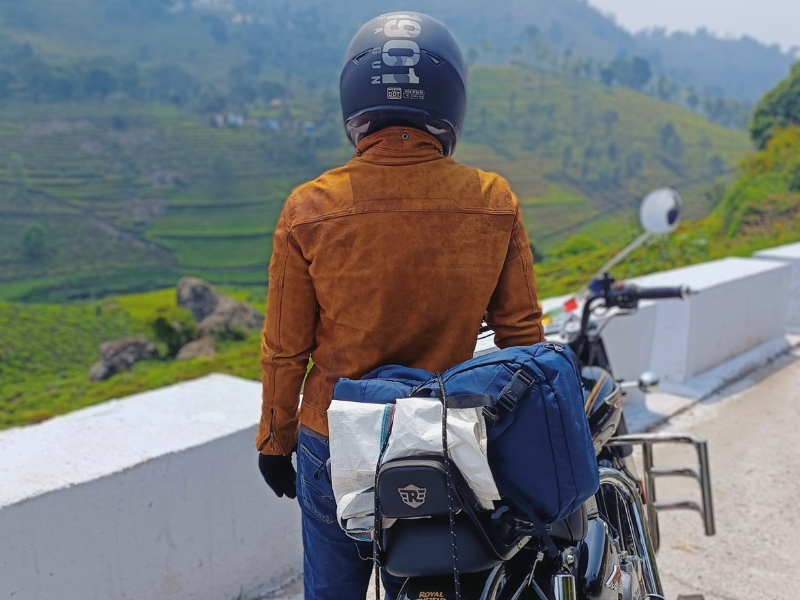
Picture yourself riding on open roads without a set plan. A solo motorcycle trip in India lets you create your own adventure, discover hidden temples, explore lively markets, and take in the scenery at your own pace.
Every moment, from sharing chai with a farmer to fixing a breakdown, becomes part of your story. Let’s look at what’s good and what’s challenging about riding solo.
Pros Of The Solo Motorcycle Ride
- Unleash Your Inner Explorer: Detour at whim, chase the sun and discover hidden gems untouched by guidebooks. India’s magic lies in its serendipitous corners, waiting for solo riders to stumble upon them.
- Deepen Your Connection with Nature: With only the rumble of your engine and birds chirping, you’ll feel an intimate connection to the Indian landscape. Every turn reveals a new vista; every scent tells a story.
- Boost Your Confidence: From navigating chaotic city traffic to conquering mountain passes, solo riding throws challenges your way. Overcoming them builds self-reliance and a sense of accomplishment that’s uniquely empowering.
- Forge Authentic Connections: Solo riders are magnets for local interactions. Strike up conversations with chai wallahs, share a meal with roadside families, and experience the warmth of Indian hospitality firsthand.
Cons Of The Solo Motorcycle Ride
- Safety Concerns: Riding alone raises safety concerns, particularly in remote or unfamiliar regions where assistance may not be readily available. Solo riders must rely on their resourcefulness until help arrives.
- Loneliness and Isolation: Solo tours may lead to feelings of loneliness and isolation, especially during long stretches on the road. Riders may need to find ways to keep themselves entertained and motivated.
- Higher Costs and Planning Burden: Solo riders bear all costs alone, including accommodations and supplies, which can be more expensive. They are also solely responsible for meticulous planning and logistics, which can be overwhelming.
Pros & Cons Of Solo Motorcycle Ride As A Table
Solo riding in India means freedom, a close connection with the road, and personal growth. However, it also means you take on more responsibility and risk. The table below sums up the main pros and cons to help you decide if solo riding fits you.
| Aspect | Pros | Cons |
|---|---|---|
| Freedom & flexibility | Dive into hidden routes, change plans on the fly, and ride at your own pace. | No one to help if you get stuck; must handle all decisions yourself. |
| Safety | Learn to be self‑reliant and handle real‑world challenges on the road. | Higher risk in remote areas if no mobile coverage or help nearby. |
| Cost & planning | Total control over budget and expenses. | You pay all costs yourself and manage the entire planning. |
| Experience & people | Form deeper, more personal interactions with locals and roadside communities. | Can feel lonely on long stretches without companions. |
Group Motorcycle Ride In India
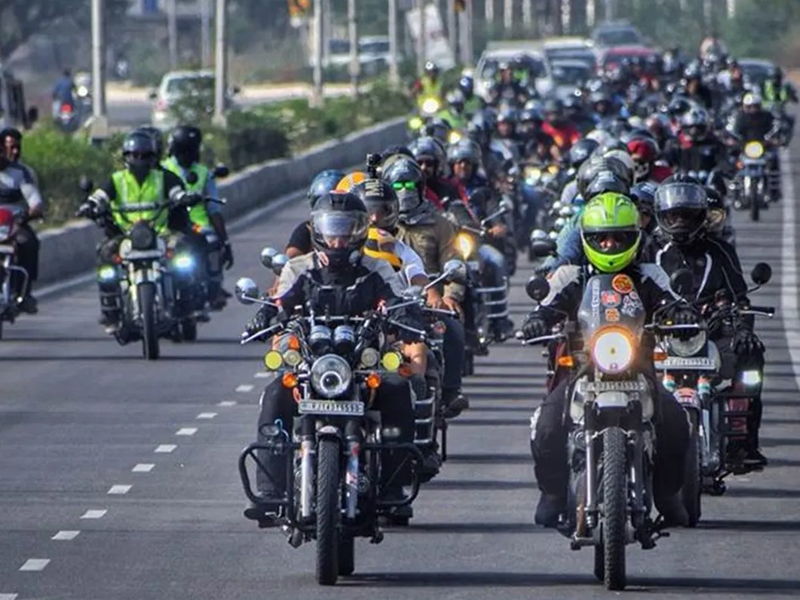
Picture yourself riding down the highway with other bikers, sharing laughs along the way. Group rides in India are about being together and sharing a love of motorcycles. You eat together, help each other out, and make memories as part of a lively community.
Pros Of The Group Motorcycle Ride
- Enhanced Safety and Support: Riding in a group enhances safety, as riders can support each other in case of emergencies, breakdowns, or challenging road conditions. The presence of others also deters potential threats like theft.
- Camaraderie and Shared Experiences: Group rides foster a sense of camaraderie and companionship, allowing riders to share their experiences, laughter, and memorable moments on the road. This social aspect is a significant draw for many riders.
- Cost-Effectiveness and Resource Sharing: Group rides can be cost-effective, as expenses like accommodations and meals are shared among participants. Additionally, groups can distribute spare parts and tools among members, reducing individual burdens.
- Local Insights and Organised Itineraries: Group tours often include local guides who provide valuable insights into the regions being explored, enriching the travel experience. They also follow organised itineraries, saving riders the hassle of planning.
Cons Of The Group Motorcycle Ride
- Limited Flexibility and Spontaneity: Group rides require coordination and compromise, as riders must align their schedules, interests, and riding styles. The need to adhere to a fixed itinerary can limit spontaneity and individual preferences.
- Potential for Conflicts and Personality Clashes: Riding with a diverse group of individuals may require some adjustment and compromise to ensure a harmonious experience. Differences in riding styles, personalities, or interests can lead to conflicts during the journey.
- Longer Wait Times and Synchronisation Issues: The group needs to synchronise their movements, leading to waiting times for slower riders or stops for group coordination. This can be frustrating for some riders.
- Restricted Interaction with Locals: In larger groups, interaction with locals may be limited, preventing a deeper cultural immersion. The presence of a group can also make it less approachable for curious onlookers.
Pros & Cons Of Group Motorcycle Ride As A Table
Group rides in India are about friendship and shared stories, not just reaching your destination. They make safety and planning easier, but you’ll need to coordinate with others. You may have less freedom to make sudden changes. The table below shows the main pros and cons, so you know what to expect.
| Aspect | Pros | Cons |
|---|---|---|
| Safety & support | Help available for breakdowns, navigation, medical issues, and rough roads. | Follow strict protocols; more rules than spontaneous solo rides. |
| Social experience | Strong camaraderie, shared stories, and group bonding. | Personality clashes or riding‑style conflicts can arise. |
| Cost & logistics | Shared accommodation, food, and tools; usually cheaper per person. | Group decisions slow down spontaneity and side trips. |
| Itinerary & planning | Pre‑planned route and organised stops reduce your workload. | Less flexibility; hard to change route or stop whenever you want. |
| Interaction with locals | Group can be more approachable for some villagers or shopkeepers. | In larger groups, personal conversations with locals may be limited. |
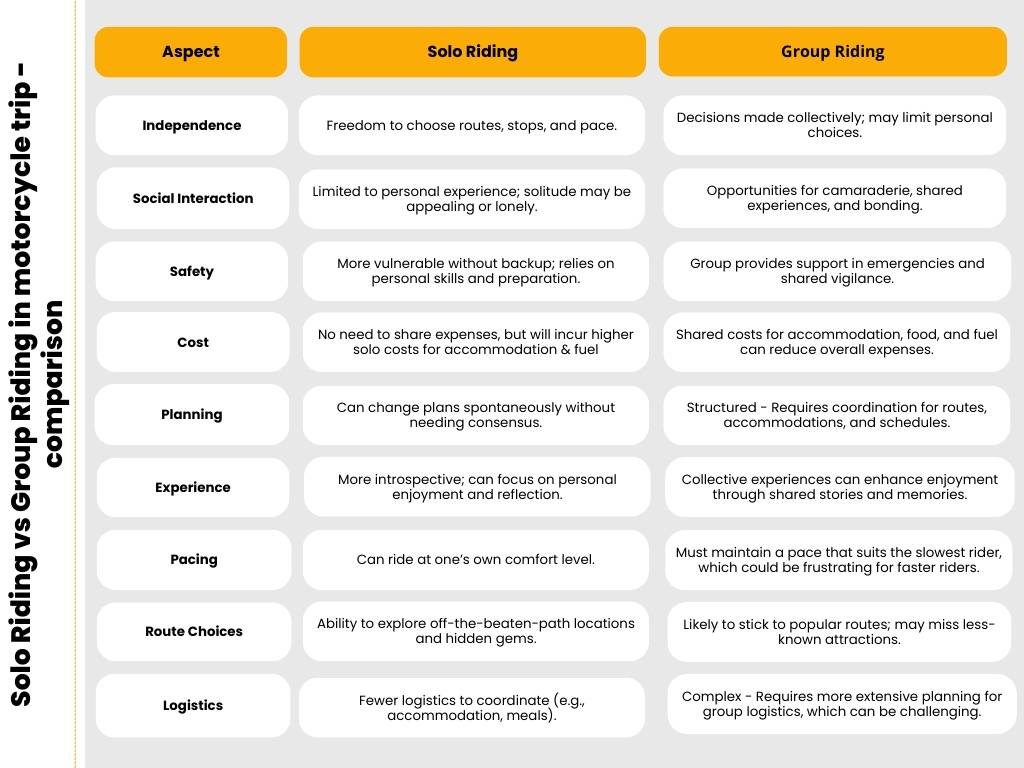
Solo Vs Group Motorcycle Rides: Overall Comparison Table
Solo and group rides each give you a different experience on Indian roads. Solo rides are about freedom and self-reflection, while group rides focus on safety and shared fun. The table below highlights the main differences, including safety, cost, flexibility, and meeting locals.
| Factor | Solo ride | Group ride |
|---|---|---|
| Freedom & flexibility | Maximum freedom; you choose route, pace, stops, and schedule. | Limited by group Itinerary and others’ preferences. |
| Safety | Higher risk if something goes wrong; no immediate help in remote areas. | More support in breakdowns, medical issues, and rough roads. |
| Costs | You bear accommodation, food, fuel, and tools alone; often more expensive per person. | Cost‑sharing on stay, meals, and group tools makes it cheaper per rider. |
| Social experience | More solitude; fewer riding companions but deeper local interactions. | Strong camaraderie, shared laughter, and group bonding. |
| Planning burden | You do everything: navigation, route, stops, emergencies. | Leaders or organisers handle much of the planning. |
| Cultural immersion | Easier to stop, talk to people, and live local experiences. | May feel like a “tour group”; less one‑on‑one time with locals. |
What To Pack, How To Prep Your Bike, Or Gear Recommendations Specific To Solo Vs Group Motorcycle Riding?
What you pack, how you get your bike ready, and the gear you choose can vary significantly depending on whether you ride solo or in a group in India.
1. What To Pack For A Motorcycle Trip: Solo Vs Group
If you ride solo, you need to be self-sufficient, so your packing list is longer. You’ll need to bring all the tools, spares, and essentials you might need for any problems. In a group, you can share things like tools, first-aid kits, and fuel, so you can pack lighter and travel more comfortably.
| Item type | Solo rider | Group rider |
|---|---|---|
| Tools & spares | Basic toolkit, puncture kit, chain‑lube, spare tyre‑tubes (if applicable), small chain‑tensioning tool, pipe‑tape, electrical tape. | Agree within the group on which tools; you can reduce overlap and share big items like a portable air‑pump or stand. |
| First‑aid & meds | Full personal first‑aid kit, painkillers, motion‑sickness, basic antiseptic, band‑aids, tapes, and any personal medicines. | One or two riders can take a central first‑aid kit; others carry only personal meds. |
| Food & water | Clean‑water bottle, instant food, energy bars, and basic snacks; you cannot rely on teammates to share at the last moment. | Carry snacks for yourself; trust the group to stop at agreed points for proper meals and refills. |
| Clothes | Pack for all scenarios: light clothes, a jacket, rain‑proof gear, one spare set, and warm layers for hills or night rides. | Clean‑up bag with essentials (two to three sets of clothes, quick‑dry fabrics); you can re‑use and wash more often in group stops. |
| Electronics & docs | Charger, power‑bank, mobile mount, spare SIM, ₹/digital maps, and all documents (registration, insurance, ID, hotel info). | Share navigation; at least one rider has offline maps, and each has their own documents and cards. |
2. How To Prep Your Motorcycle For A Ride: Solo Vs Group
Checking your bike before a trip is a must, but what you focus on changes depending on whether you’re riding solo or with a group. For solo rides, your bike should be in top shape since you might not have help if something goes wrong. In a group, bikes are often checked together before the ride, and others can help with small problems. Still, your bike should be reliable so you don’t slow down the group.
| Prep area | Solo ride | Group ride |
|---|---|---|
| Tires & brakes | Ensure tyres are in good condition with at least 70–80% tread and correct pressure. Test brakes and levers, and replace worn pads early. | Check tyres and brakes; ensure you can stop quickly and safely in tight group formations. Avoid riding on unsafe tyres. |
| Oil & fluids | Change oil if due; top up engine oil, coolant, and brake fluid. Carry a small bottle of each. | Follow normal service schedule; carry a small oil and coolant top‑up only if doing long highway stretches. |
| Lights & signals | Test all indicators, brake lights, and headlights; carry a spare bulb or LED set if possible. | Essential for group safety; faulty lights can confuse other riders and create blind‑spots. |
| Chain & sprockets | Clean, lube, and adjust the chain with proper tension check; carry a small chain‑lube spray. | Check for stretch and noise; a sloppy chain can be dangerous in group‑ride conditions. |
| Mounts & luggage | Secure all bags, tank bag, phone mount, and accessories so they do not vibrate loose during long rides. | Keep fairings and bags tidy; avoid items that flap or create drag affecting the rider in front. |
3. Gear Recommendations For Motorcycle Trip: Solo Vs Group
You always need protective gear, no matter how you ride. Helmets, gloves, boots, and a good jacket are must-haves. If you’re riding solo, it’s smart to bring extra rain gear, stronger boots, and more protection, since you’re on your own. In a group, you can pack a bit lighter because teammates can share some tools or spares.
| Gear piece | Solo recommendation | Group recommendation |
|---|---|---|
| Helmet | Full‑face ISI‑certified helmet; consider a modular or dual‑sport lid if you stop often in heat. | Full‑face or open‑face, but always snug‑fit and certified; modular if group rides include city + highway. |
| Jacket | Hard‑shell or hybrid jacket with CE‑rated armour on shoulders, elbows, and back; add a light rain‑proof outer. | Mesh or ventilated armoured jacket for long highway rides; keep a light rain‑proof jacket in luggage. |
| Gloves | Full‑finger armoured gloves; extra pair of light riding gloves for hot days. | Comfortable riding gloves with good grip; avoid flimsy fabric-only gloves. |
| Boots | High‑ankle, abrasion‑resistant boots with good grip and some waterproofing. | Comfort‑oriented riding boots; you can share a small repair kit for minor issues. |
| Rain & cold protection | Compact rain‑suit, balaclava, and light thermal layer for unexpected weather. | Just a light rain‑suit; group rides usually have a weather plan and stop‑points. |
How To Find A Motorcycle Group To Ride With In India?
If you’re new to riding, group rides might seem intimidating at first. But there are now many safe and welcoming motorcycle communities in India you can join.
- Check social platforms: Use Facebook groups, WhatsApp/Telegram channels, and Instagram pages for local bike clubs (e.g., “Bangalore Bikers”, “Mumbai Riders”, “Bikerni” for women). These groups share ride invites and guidelines and often vet riders before allowing them on long trips.
- Visit authorised dealers and workshops: Many dealerships and big‑event workshops host small group rides or community events; you can meet experienced riders and test‑ride with them before committing to long tours.
- Start small: Join a city‑ride or short‑distance meetup (20–50 km) first, with full safety gear and a well‑serviced bike. If you feel comfortable, gradually move to overnight or hilly routes.
How To Stay Safe Motorcycle Riding Solo For The First Time In India?
Riding solo can seem intense at first, but following these steps will help you feel confident and in control.
- Ride within your skill limits: Avoid overnight highway‑only dashes as your first solo; choose a 180–250 km loop with villages, mixed traffic, and defined stops. Ride at 80–90% of your comfort speed, with enough margin for sudden potholes, cows, or trucks.
- Plan key stops in advance: Mark fuel pumps, decent food stops, and one or two backup overnight stays along your route. Carry a physical backup map or an offline‑route app so you are not stuck if mobile data drops.
- Stay visible and predictable: Wear brighter gear, keep your headlight on, and use clear signals and lane‑positioning cues. Avoid weaving aggressively; instead, ride smoothly so other vehicles can anticipate your movements.
- Carry basic safety items: A phone charger, a power bank, ORS/water, a small first‑aid kit, and a basic toolkit help you handle minor issues and delays without panic.
What Are The Mistakes To Avoid As A First‑time Motorcycle Rider (solo Or Group)?
Here are some common mistakes that many new Indian riders make, but they’re easy to avoid.
- Not checking the bike properly before the ride: Ignoring tyre wear, a loose chain, or low brake fluid can lead to breakdowns or accidents. Do a simple pre‑ride check (tyres, brakes, lights, chain, oil level) every single time.
- Bundling into a group without communication: Joining a group without understanding the leader’s pace, intervals, or hand signals is risky. Clarify roles (leader, sweeper, rear‑rider) and basic gestures before the ride.
- Trying to “keep up” recklessly: New riders often push speed or ride in bad formation to impress others. Instead, ride at your own pace; if you feel uncomfortable, drop back and stay safe.
- Riding tired or under‑hydrated: Highway fatigue and summer heat can dull your reflexes fast. Plan 30–40‑minute breaks every 2–2.5 hours, hydrate well, and stop if you feel drowsy or dizzy.
- Not telling anyone your route: Whether solo or in a small group, share your planned route, major stops, and expected arrival time with at least one trusted person so they know where you are.
Faq Related To Solo Or Group Motorcycle Rides In India
1. What Are The Main Benefits Of Solo Motorcycle Rides?
Solo motorcycle rides offer unparalleled freedom and flexibility. Riders can choose their routes, destinations, and pace without having to accommodate others’ preferences. This autonomy allows for spontaneous detours and unplanned stops, enhancing the adventure. Additionally, solo rides provide ample time for introspection and self-discovery, fostering personal growth and a deeper connection with nature.
2. What Are The Potential Drawbacks Of Riding Solo?
While solo rides offer freedom, they also come with challenges. Safety is a significant concern, as solo riders may struggle to get help in emergencies, especially in remote areas. The lack of companionship can lead to loneliness and isolation during long stretches on the road. Moreover, solo riders bear the full responsibility for planning, navigation, and expenses, which can be overwhelming.
3. What Benefits Do Group Motorcycle Rides Provide?
Group rides enhance safety, as riders can support each other in emergencies and challenging conditions. They also foster camaraderie and shared experiences, making the journey more enjoyable. Additionally, group rides can be cost-effective because expenses such as accommodations and meals are shared among participants.
4. What Are The Challenges Associated With Group Rides?
Group rides require coordination and compromise, as riders must align their schedules, interests, and riding styles. Waiting for slower riders or coordinating stops can lead to delays. Furthermore, larger groups may limit interactions with locals, reducing cultural immersion.
5. How Does Riding In A Group Impact Safety?
Riding in a group generally enhances safety by increasing visibility and enabling mutual assistance in emergencies. However, group safety depends on effective communication, skilled riding, and adherence to group protocols.
6. What Are The Social Aspects Of Group Rides?
Group rides offer opportunities for socialising and bonding over shared interests and experiences. They also provide a platform for learning from more experienced riders, which can boost confidence and skills.
7. How Do Solo Rides Contribute To Personal Growth?
Solo rides challenge riders to overcome fears and navigate independently, which builds confidence and self-reliance. The solitude allows for action and mindfulness, offering a break from daily routines and responsibilities.
8. What Are The Financial Implications Of Solo Vs Group Rides?
Solo rides can be more expensive, as riders bear all costs, including accommodations and supplies. In contrast, group rides allow for cost-sharing, making them a more economical option for some riders.
9. How Do Group Rides Affect Travel Flexibility?
Group rides often follow a fixed itinerary, which can limit spontaneity and individual preferences. Riders must adhere to the group’s schedule and route, which may not align with personal interests.
10. What Are The Cultural Experiences Associated With Motorcycle Rides In India?
Motorcycle rides in India, whether solo or in a group, offer unique cultural experiences. Solo riders may have more opportunities for meaningful interactions with locals, gaining insights into local cultures and traditions. Group rides, while potentially limiting individual interactions, still provide a sense of community and shared cultural exploration.
Other Related Articles From Bikeleague India
- Must have bike accessories for a long distance trip
- Bike insurance jargons & addons in India Guide
- Bajaj Freedom 125
- Aprilia RS 660
- jawa 42 bobber
Conclusion
Choosing between a solo or group motorcycle ride in India is a deeply personal decision, shaped by your preferences, priorities, and sense of adventure. Both styles offer distinct joys and challenges—solo rides foster independence and introspection. At the same time, group journeys celebrate camaraderie and shared discovery.
Ultimately, the best ride is the one that aligns with your spirit and aspirations, allowing you to experience India’s breathtaking landscapes and vibrant cultures on your own terms. Whether you ride alone or with friends, embrace the journey, respect the road, and savour every mile.
If you have more questions, you can email us at bikeleague2017@gmail.com or leave a comment below. We’re always happy to help.