
Introduction
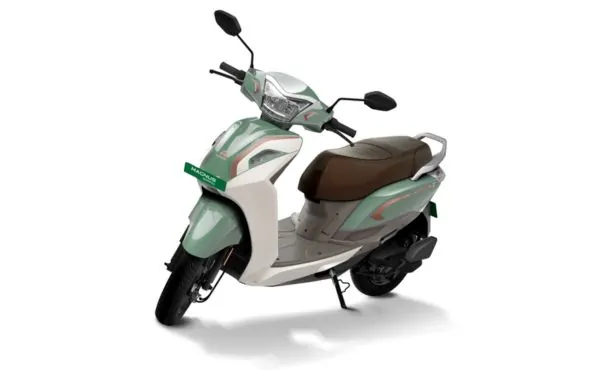
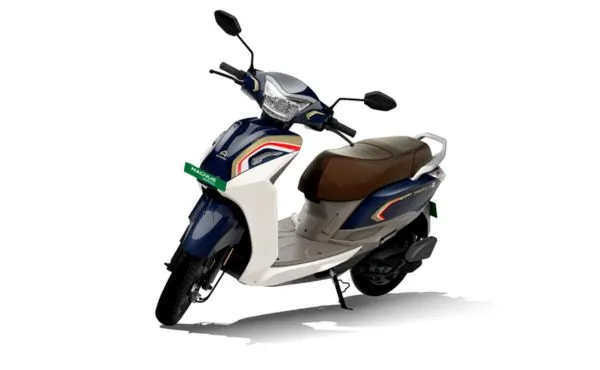
The Ampere Magnus Grand, launched in September 2025, features a durable LFP battery for longer life and enhanced safety. It uses a hub-mounted BLDC motor rated at 1.5 kW, weighs 108 kg, and has 165 mm ground clearance. The 12-inch steel wheels with 90/90 tubeless tyres and drum brakes with CBS help it handle rough Indian roads. It can carry up to 150 kg, making it suitable for riders and light cargo. The scooter is available in Ocean Blue and Matcha Green. It includes useful features such as 22 L of underseat storage, a USB port, and a digital console that displays speed, odometer, tripmeter, and battery status.
Ratings
- 90%
Performance
- 85%
Features
- 90%
Handling
- 90%
Comfort
- 90%
Build Quality
- 85%
Styling
- 90%
Value for Money
- 89%
Total
Ratings calculation is purely based upon pros and cons of the model given below in the overview section.
Price

Special Features
1
Three Riding Modes
2
Usb Charging Port
3
Push Button Start
4
Portable Home Charger
5
Safe Drum Brakes
6
Removable Battery
7
Spacious Underseat Storage
8
High Ground Clearance
9
Led Lighting
10
Dual Steel Frame
11
Long Seat
12
Digital Console
Full Specifications
| City | 70-85km/Charge |
| Highway | 80-95km/Charge |
| Motor Type | BLDC |
| Maximum Speed | 65km/h |
| Rated Power | 1500W |
| Transmission | Automatic |
| Battery charging time | 5-6Hrs |
| Speedometer | Digital |
| Tachometer | No |
| Tripmeter | No |
| Fuel Guage | No |
| Low Battery Indicator | Yes |
| Start Type | Electric Start |
| Kill Switch | No |
| Clock | Yes |
| Pass Light | Yes |
| Stand Alarm | Yes |
| Brakes (F) | 130mm dia Drum |
| Brakes (R) | 130mm dia Drum |
| Front Suspension | Hydraulic Telescopic |
| Rear Suspension | Coil Spring |
| Wheelbase | 1390mm |
| Ground Clearance | 165mm |
| PayLoad | 150kg |
| Charger output | 7.5A |
| Battery type | Lithium Iron Phosphate |
Ampere Videos
[slide-anything id=”45869″]
Overview
Performance And Motor
The Magnus Grand uses a 2.4 kW peak (1.5 kW rated) electric motor that goes from 0 to 40 km/h in 6.5 seconds, making it well-suited for city traffic in places like Mumbai and Bangalore. It can climb slopes up to 12 degrees alone or 10 degrees with a passenger, which helps on hilly roads like those in Kerala. Regenerative braking improves efficiency during frequent stops. In tests in Dhanbad, it kept steady power even after 2,700 km, reaching up to 50 km/h and staying safe at higher speeds.
The scooter has a single-speed automatic hub motor that drives the rear wheel, so there are no gears or clutches to worry about. This makes it easy to maintain and simple for new riders. Power is smooth in all modes, and the reverse assist at 3 km/h helps with parking in small spaces. It also gives instant torque up to 30 Nm for quick starts.
The Magnus Grand can reach a top speed of 65 km/h in City or Power mode under ideal conditions. Eco mode keeps the speed between 45 and 50 km/h to help the battery last longer. Tests near Indore show it can reach 61-65 km/h on highways, which is suitable for safe overtaking. Speed governors keep the ride stable and within city speed limits, and the digital display is accurate within 2-3 km/h.
Range
The ARAI-certified range is 118 km per charge under lab conditions, tested in Eco mode with a 2.3 kWh LFP battery. This positions it favourably against 110cc petrol scooters in terms of cost-per-km savings, with a battery life of over 1,000 charges and suitability for humid Indian climates. The range is based on standard 7.5A charging and regenerative braking, demonstrated across all variants without relying on fast charging.
In everyday use, the scooter usually covers 80-95 km in a mix of Eco and City modes on city roads. The range drops to 70-85 km with a passenger or in heavy traffic, especially during hot Delhi summers. The display shows about 85 km at full charge. If the rider weighs around 80 kg and rides at 30-40 km/h, the range can go down to 75 km.
The scooter is well-suited for daily commutes of about 50 km. If you use City mode more aggressively, the range is about 60-70 km. Regenerative braking can add 5-10 km to your range in stop-and-go traffic. Still, some users notice the battery often drops below the 20% warning.
Charging Time
Charging the battery from 0 to 100% takes 5-6 hours with the included 7.5A charger on a regular 230V socket, using 2.2-2.5 kWh of electricity (about Rs 25-35 per charge at Rs 10/unit). In objective tests, a full charge takes around 6 hours and 20 minutes, while charging from 0 to 50% takes about 2.5-3 hours for a quick top-up.
The battery is swappable, so you can charge it indoors to avoid theft at night. There is no DC fast charging, as the focus is on keeping costs low. The LFP battery can be charged often without losing capacity, making it a good fit for home charging in Indian apartments.
Features And Technology
The Ampere Magnus Neo includes features that make daily commuting in India safer and easier.
- Removable swappable 2.3 kWh LFP battery: This battery isn’t just water-resistant (IP67 rated) for monsoon safety—it also lasts 30% longer than most, and comes with a 5-year or 75,000 km warranty.
- Digital Instrument Console: Features a clear digital speedometer, odometer, and tripmeter for easy monitoring of speed, distance, and trip data during rides.
- Multiple Riding Modes: Eco and City modes, plus 3 kmph Reverse Speed assist for precise low-speed manoeuvres in tight parking spaces common in Indian cities.
- Underseat Storage: Spacious 22 L boot space accommodates helmets, groceries, and daily essentials, making it ideal for family shopping trips.
- USB Charging Port: Front-mounted USB port keeps phones powered on long commutes, enhancing connectivity for navigation apps.
- Charging Point Accessibility: Dedicated port supports standard 7.5A home charging, with a low-battery indicator for timely top-ups via household sockets.
- Passenger Footrest and Carry Hook: Ensures comfort for pillion riders and quick bag hanging, making it suited for two-up family use on Indian roads.
- Single Seat Design: Ergonomic single seat with ample cushioning provides comfort for rider and passenger over potholed urban stretches.
- Gradeability Support: Handles 12-degree inclines, reliable for hilly areas or speed breakers in cities like Kochi or Mumbai.
- Display Integration: A comprehensive display shows all vital info, including battery status, for at-a-glance, distraction-free use.
- Steel Wheels with Tubeless Tyres: 90/90-12-inch tubeless tyres on steel wheels offer puncture resistance and stability on varied Indian surfaces.
Build Quality
The Ampere Magnus Grand uses a strong, high-tensile steel dual-frame chassis that stands up well to daily bumps from speed breakers and rough roads in Indian cities. Reviewers note the solid fibre body panels and good-quality plastics, which stay quiet and rattle-free even after 2,700 km of use. The 108 kg weight helps the scooter feel stable without being too heavy.
The 165 mm ground clearance keeps the underbody safe on rough roads, and the 12-inch steel wheels with 90/90 tubeless tyres help prevent punctures on gravel or waterlogged streets. Users say the seat lock feels strong, even though there were some early concerns. The LFP battery and corrosion-resistant frame are built for long-term use in humid Indian weather, and the scooter comes with a 5-year/75,000 km warranty.
Handling
The hub-mounted motor drives the rear wheel directly, giving stable cornering and making low-speed moves easy. The 3 km/h reverse mode helps with parking in crowded spots. Telescopic front forks and twin rear shocks keep the scooter balanced up to 65 km/h, and the 90/90-12 tyres grip well on city roads and gentle slopes. Carrying heavier loads makes it less agile on highways.
The drum brakes with CBS give average stopping power at 50 km/h and feel safe in traffic, as shown in tests on Dhanbad streets. New riders like the light steering, which helps with U-turns and weaving through traffic. The 150 kg payload means the scooter stays steady with a passenger or cargo, reducing wobbles on bumpy roads in Kerala or Maharashtra.
Comfort
The long, wide single seat with medium-soft cushioning keeps both rider and passenger comfortable on commutes of 50-60 km. The upright seating and flat floorboard give good legroom for people of different heights. The suspension is balanced, not too soft or too stiff, and handles city potholes well. On very rough roads, it can feel harsh, so some users prefer it for daily city rides instead of long trips.
Grab rails and footrests for the passenger make the scooter more family-friendly and help reduce tiredness on bumpy roads. The design also prevents taller riders from leaning forward too much. Users say the scooter stays stable on long city rides and doesn’t cause body aches at higher speeds. Good seat ventilation and low vibrations from the electric motor enhance comfort, especially in hot Indian weather.
Styling
The scooter has a boxy, upright look with sharp lines on the side panels and a wide stance that makes it look stable. The 12-inch steel wheels add a tough, urban feel and resist scrapes from parking. The digital console fits neatly into the dashboard, keeping things tidy, and the split grab rail and foldable footrest at the back give it a clean finish.
Users like the simple, practical design that hides the hub motor and keeps the scooter’s lines smooth from front to back. Aerodynamic touches, such as the tapered visor, help cut down wind noise at 65 km/h. The mirrors match the scooter’s colour and feature turn indicators, making it safer in heavy city traffic in Delhi or Kochi.
Colour Options And Variants
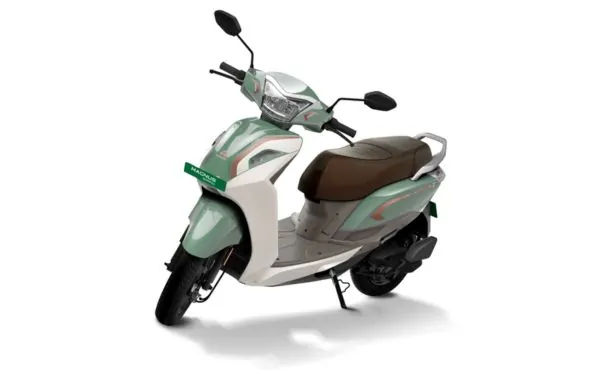
Ampere offers two vibrant colour schemes for the Magnus Grand.
- Ocean Blue
- Matcha Green
- Ola S1 X
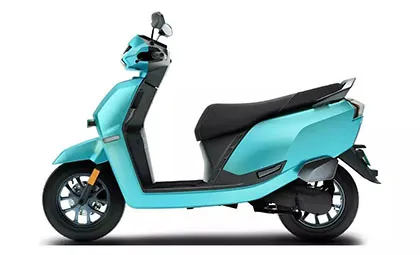
- TVS iQube
- Hero Electric Optima
Both colours have a glossy finish that resists fading in strong Indian sunlight. Ocean Blue is a deep, shiny blue with metallic flecks that look good with chrome parts, making it popular in coastal cities. Matcha Green is a soft, modern pastel that stands out in city crowds and matches the scooter’s eco-friendly image without being too flashy.
The dual-tone colours cover both the wheels and panels, as shown in high-quality images on BikeWale and BikeDekho. Ocean Blue looks sportier and may appeal to younger riders, while Matcha Green is a good choice for families. There are no matte or tri-tone options, which helps keep the price down.
The Magnus Grand comes in one Standard variant, with a 2.3 kWh LFP battery, a 2.4 kW peak motor, an ARAI range of 118 km, and features like a USB port, 22L storage, and reverse mode on every unit. The only choice buyers have is the colour, and a portable charger is included as standard.
Value For Money And Pricing
The Ampere Magnus Grand is priced at Rs ₹ 89,999 across India for the Standard variant. This price includes the portable 7.5A charger and the 2.3 kWh LFP battery. The Magnus Grand offers excellent value with a 5-year/75,000 km battery warranty and a claimed range of 118 km. This works out to Rs 0.25-0.35 per km, compared to Rs 2-3 for 110cc petrol scooters.
The hub-motor drivetrain needs no maintenance, saving about Rs 5,000 a year on oil and service. Reviews point out the 22L storage, USB port, reverse mode, and 65 km/h top speed as standout features for the price. It beats basic rivals in family use and battery safety, with the LFP battery lasting over 1,000 cycles in humid Indian weather.
In real use, the 80-95 km range easily covers daily commutes of 50 km at a low cost. The warranty can be extended by two years, and the scooter’s resale value is helped by Ampere’s network of over 200 dealerships. Users in Dhanbad give it a 4.3 out of 5 for its good balance of features and price, making it a wise choice for buyers looking to switch from petrol as prices rise above Rs 100 per litre.
Magnus Grand rivals budget electric scooters like
The Magnus Grand costs Rs 5,000 more than Ampere’s Magnus Neo, but offers a more extended 118 km range and updated styling. The TVS Orbiter has a slightly better range but is 10-15% more expensive and takes longer to charge (about 4 hours). Bajaj Chetak and Ather Rizta are aimed at the premium market, but the Magnus Grand lacks app connectivity.
Verdict
The Ampere Magnus Grand is a dependable electric scooter, great for Indian families with daily commutes up to 50 km. It comes with a 5-year/75,000 km LFP battery warranty, a removable 2.3 kWh battery, and a real-world range of 80-95 km. This makes it a good choice for places with unreliable charging, like Kochi and Ernakulam. After subsidies, it costs less than Rs 1 lakh, which is 15-20% cheaper than rivals like the TVS iQube and Ola S1 X. It also offers a top speed of 65 km/h, 22L storage, and key features like a USB port and reverse mode. Users like its stable 165 mm ground clearance, quick acceleration (0-40 km/h in 6.5 seconds), and CBS brakes for safety.
With its light build, tubeless tyres, and Eco and City modes, the Magnus Grand is affordable to run at about Rs 0.25 per km. Users report it stays reliable with no loss in performance after 2,700 km. While it doesn’t have advanced features like app connectivity and uses drum brakes, it offers excellent value for buyers who want durability and low maintenance. Overall, it’s a strong pick for city commuting and is recommended for most urban riders.
Pros
- Removable IP67-rated 2.3 kWh LFP battery: Offers thermal stability in hot Indian climates, 30% longer cycle life, 80-95 km real-world range in Eco mode for 40-60 km daily commutes, and class-leading 5-year/75,000 km warranty reducing ownership costs to ₹0.18/km.
- Exceptional Battery Warranty: 5-year/75,000 km coverage on the 2.3 kWh removable LFP battery ensures longevity with 1,000+ charge cycles, outperforming rivals in humid Indian conditions and backed by Ampere’s 200+ service centres for hassle-free ownership.
- Practical Real-World Range: Delivers 80-95 km in mixed Eco-City mode on city roads, covering typical 50 km daily family commutes with regenerative braking, adding 5-10 km in traffic, at Rs 0.25-0.35 per km versus Rs 2-3 for petrol scooters.
- Family-Friendly Storage and Features: 22L underseat boot fits helmets and groceries, plus front USB port, 3 kmph reverse mode for tight parking, and digital console showing speed, odometer, tripmeter, and battery status—ideal for Indian households.
- Smooth City Performance: 2.4 kW peak motor (1.5 kW rated) achieves 0-40 kmph in 6.5 seconds with instant 30 Nm torque, handling 12-degree inclines solo via hub-drive, suiting stop-go traffic in Mumbai or Delhi without overheating after 2,700 km tests.
- Low Ownership Costs: Zero maintenance on a single-speed automatic transmission and hub motor saves Rs 5,000 yearly on services/oil, with 5-6 hours of home charging at Rs 25-35 per complete cycle using standard sockets, plus EMPS subsidies, bringing the effective price under Rs 95,000 in Kerala.
- Stable Handling and Build: 165 mm ground clearance, 108 kg weight, and 90/90-12 tubeless tyres on steel wheels provide pothole resilience and grip up to 65 kmph, with CBS drum brakes ensuring safe stops in urban chaos.
Cons
- No Alloy Wheels:Steel rims scratch easily on curbs and potholes, standard in Indian cities, lacking the premium look and lighter weight of alloys on rivals like TVS iQube, impacting resale aesthetics after a year.
- Missing Connectivity: Lacks Bluetooth app integration for navigation, geofencing, or theft alerts, as found in the Ola S1 X, forcing reliance on phone mounts for Google Maps during navigation-heavy commutes.
- Drum Brakes Only: Single rear drum with CBS offers an average 50 kmph stopping without front disc bite, and is less confident than disc setups on highways or wet roads, compared to Ather Rizta or Hero Optima CX.
- Limited Top Speed: 65 kmph cap (45-50 kmph in Eco) suffices for cities but restricts ring-road overtakes, and wind blast above 55 kmph can fatigue taller riders, unlike 80+ kmph peers.
- Basic Ride Quality: Telescopic forks and twin shocks transmit sharp bumps on severely uneven surfaces, feeling harsh for pillion or loads over 60 km, better suited to flat urban runs than extended trips.
- No Fast Charging: 5-6 hours for a full charge (no DC option), delaying quick top-ups at work; 0-50% takes 2.5-3 hours, trailing fast-charge rivals despite the removable battery’s convenience.
Other Related Links From Bikeleague India
List Of All Ampere Electric Scooters In India
About Ampere Electric Scooters
Ampere Electric is one of the leading brands for electric scooters in India.
Ampere electric scooters in India are popular for their affordable pricing, low maintenance and reliable performance. Buyers can check Ampere scooter price in India, explore various Ampere electric bike models,understand
Ampere electric scooter range and view detailed Ampere electric scooter specifications before choosing the right model.
Ampere Electric Scooter Models And Specifications
Ampere was one of the first Indian companies to make electric vehicles, focusing on practical scooters for daily use as fuel prices rose. When Greaves Cotton took a majority stake in 2018, the company expanded quickly, improving research and manufacturing. Sales grew from 75,000 units in 2021 to over 200,000 by mid-2023, and doubled in the first quarter of FY24, even with changes to subsidies. In early 2025, sales grew by 53% year-on-year, helped by new models like the Magnus Neo and Nexus with advanced battery systems, raising market share by 4.2%.
Key Milestones And Developments
- 2008: Founded by Hemalatha Annamalai as Ampere Vehicles in Coimbatore.
- 2018: Acquired by Greaves Cotton, boosting resources for nationwide expansion.
- 2021: Crossed 75,000 sales; opened 300th showroom and announced Ranipet plant.
- 2023: Achieved 1 lakh retail sales in FY23; surpassed 200,000 cumulative sales by Q1 FY24.
- Oct 2023: Rolled out the 50,000th scooter from the Tamil Nadu megasite.
- 2025: Launched Magnus Neo (₹79,999, 85-95km range, 2.3kWh battery); Nexus Exec and Xyber concept at Auto Expo; climbed to 5th in EV two-wheeler rankings.
Manufacturing Facilities
Ampere’s main factory is the Industry 4.0 Ranipet plant in Tamil Nadu, which covers 1.4 million square feet and cost ₹700 crore to build. It started with a 2021 capacity of 100,000 units and can be expanded to 1 million units. This plant supports models like the Magnus and Nexus. Other factories in Telangana and Uttar Pradesh help increase production for both Indian and export markets, create jobs, and support the Make in India program. The facilities use advanced automation, LFP batteries, and battery management systems to improve safety and performance.
Market Positions And Achievements
Ampere is one of India’s leading electric scooter brands, with a strong presence in Tier 2 and 3 cities, over 500 dealerships, and a growing business customer base. Popular models like the Magnus Neo, with a 1.5kW motor and a top speed of 65 kmph, and the Nexus attract buyers with features like a 7-inch TFT display, extended warranties (5 years or 75,000 km), and financing at 5.75% interest. The company has sold over 200,000 units, set a record for the Magnus Neo’s endurance run, and leads in affordable family e-scooters, competing with brands like Ola and TVS.
Future Plans
Ampere plans to keep growing by launching new products, including improved Nexus models and the Xyber electric motorcycle concept shown at Auto Expo 2025. The company wants to reach more Tier 3 and 4 cities, develop cobalt-free batteries, and offer charging in under 15 minutes by 2028. Ampere aims to increase its market share through lower costs, battery swapping, and exports, supporting India’s goal of 35-40% EV scooter use by 2030. Investments in net-zero targets and partnerships will help the company scale up to millions of units each year.
User Reviews
There are no reviews yet. Be the first one to write one.

Hiran Narayanan
Founder & CTO at Bikeleague India
Hiran Narayanan is the Founder and CTO of Bikeleague India, bringing over 15 years of experience in motorcycle technical writing. He develops detailed analyses, tools, model overviews, and blogs that contribute to bikeleague.in's improving rankings.