
Introduction
The Ampere Magnus Neo is a practical and affordable electric scooter made for city riders in India. It looks and feels like a regular scooter, offers enough range for daily trips, and keeps running costs low. Instead of aiming for high speeds or long-distance rides, it focuses on everyday needs. The scooter comes with a 2.3 kWh lithium iron phosphate (LFP) battery, a BLDC hub motor, automatic transmission, and can reach up to 65 km/h. This makes it a good choice for commuting, errands, school runs, market visits, and short trips around town. LFP batteries are valued for their thermal stability and long life, which is important in India’s hot, dusty, and rainy weather, especially with frequent charging.
Gallery
Key Specifications
Battery Type
Lithium ion
Range
55-95 Km/c
Charging Time
5 Hours
Torque
110 Nm
Max Speed
65 km/h
Power
2.04 PS
Rear Suspension
Dual Shock Absorber
Kerb Weight
104Kg
Ratings
- 70%
Performance
- 80%
Features
- 95%
Handling
- 100%
Comfort
- 95%
Build Quality
- 100%
Styling
- 100%
Value for Money
- 91%
Total
Ratings calculation is purely based upon pros and cons of the model given below in the overview section.
Price

Special Features
1
2.3 Kwh Lfp Battery
2
Battery Warranty
3
Bldc Hub Motor
4
110 Nm Wheel-torque
5
Three Riding Modes
6
Reverse Assist
7
Distance-to-empty Display
8
Battery-percentage Indicator
9
Low-battery Alert
10
Digital Trip Meter
11
Push-button Start
12
Usb Charging Port
Full Specifications
| City | 70-95km/Charge |
| Highway | 55-70km/Charge |
| Motor Type | BLDC |
| Maximum Speed | 65km/h |
| Power | 2.04 PS |
| Transmission | Automatic |
| Battery charging time | 5-Hrs |
| Speedometer | Digital |
| Tachometer | No |
| Tripmeter | Digital |
| Fuel Guage | No |
| Low Battery Indicator | Yes |
| Start Type | Electric Start |
| Kill Switch | No |
| Clock | Yes |
| Pass Light | Yes |
| Stand Alarm | Yes |
| Brakes (F) | 130mm Drum |
| Brakes (R) | 130mm Drum |
| Front Suspension | Telescopic Fork |
| Rear Suspension | Dual Shock Absorber |
| Wheelbase | 1390mm |
| Ground Clearance | 156mm |
| PayLoad | 150kg |
| Charger output | 7.5A |
| Battery type | Lithium Ion |
Overview
Performance And Motor
The Ampere Magnus Neo has a BLDC hub motor and a 2.3 kWh LFP battery. The motor is set up for smooth and steady acceleration in city traffic, not for high speeds. It can go from 0 to 40 km/h in about 6.5 seconds, which is enough for starting at traffic lights, overtaking, merging, and climbing flyovers. While it’s not as fast as premium 4–5 kW electric scooters, its performance is well suited for solo commuting and daily local rides.
The updated Magnus Neo delivers up to 110 Nm of wheel torque. This number is measured differently than it is for petrol scooters, so you can’t compare them directly. In daily use, the scooter offers good low-speed pickup for city riding, climbing slopes, and carrying moderate loads.
The scooter has Eco, City, and Power ride modes, along with a Reverse mode. Eco mode gives you the most range and a gentle throttle. City mode is best for daily riding, while Power mode gives stronger acceleration and lets you reach up to 65 km/h. Reverse mode helps you back out of parking spots or move up small slopes.
The Ampere Magnus Neo is fully automatic. There’s no clutch, gear shifter, or manual gearbox. Just twist the throttle and the rear hub motor powers the wheel.
This automatic setup is convenient for India’s stop-and-go traffic. Riders don’t need to use a clutch, change gears at signals, or downshift before a flyover. The simple operation is especially helpful for new EV riders and those switching from automatic petrol scooters.
Reverse mode helps when backing out of parking spots, moving through narrow apartment lanes, or handling the scooter on small slopes. The Magnus Neo weighs about 103–108 kg, which is lighter than many premium EVs, but reverse assist still makes parking easier.
Use the throttle gently, especially on wet roads, gravel, painted surfaces, potholes, or when turning. New riders should start in Eco mode before trying City or Power mode.
The Ampere Magnus Neo can reach a top speed of 65 km/h in Power mode. This is enough for most city roads, flyovers, and suburban routes in India. It is not designed to reach the 80–100 km/h speeds of more expensive electric scooters.
Think of 65 km/h as the scooter’s top speed, not a speed to keep for long stretches. Riding at full throttle uses more energy, lowers your range, and gives you less time to react to potholes, people, traffic changes, animals, rough roads, or sudden stops.
For the best balance of range, comfort, and safety, ride the Magnus Neo at moderate city speeds. It’s great for daily city commutes but not meant for regular high-speed highway trips.
Charging Time
The Magnus Neo is mainly meant for home charging. It uses an off-board charger and doesn’t support DC fast charging. Charging from 0 to 80% takes about five hours, and a full charge from 0 to 100% takes around six hours.
Charging time can vary depending on the charger and battery condition. For daily use, plan for about six hours for a full charge and five hours to reach 80%.
This charging schedule is good for overnight charging. If you travel 30–50 km a day, you can usually charge the scooter after coming home and have it ready by morning. If you ride 60–75 km daily, you’ll need to charge it every night, especially if you often use City or Power mode.
Charging times can change based on battery temperature, outside heat, voltage stability, remaining charge, charger condition, and socket quality. Always use a dedicated, properly grounded wall socket and avoid damaged plugs, loose adapters, thin extension cords, or overloaded circuits.
Range
The Magnus Neo claims an IDC range of 118 km per charge with its 2.3 kWh LFP battery. Use this as a comparison number, not a guarantee that you’ll always get 118 km in real Indian conditions.
You’re most likely to get close to the claimed range if you use Eco mode, accelerate gently, ride alone, keep your tyres properly inflated, stick to smooth roads, and maintain a steady pace. The range drops if you often use Power mode, ride at 60–65 km/h for long periods, go up hills, hit potholes, face strong winds or heat, carry heavy loads or a passenger, accelerate hard, or get stuck in traffic.
It’s better to keep a range buffer instead of running the scooter close to empty. Having some charge left helps you deal with detours, traffic jams, rain, lower efficiency, battery ageing, or a lack of public charging points.
Owners usually get less range than the 118 km IDC claim. In normal city use, the range is typically about 80–95 km, while real-world numbers are often between 75 km and the high 80s, depending on ride mode, terrain, traffic, speed, load, and weather.
Reported range varies: some users get about 87 km per charge, others around 82 km, and some over 75 km in daily use. These aren’t controlled tests, so results will differ, but it’s safer to expect less than the official IDC figure.
If you ride gently in Eco mode, plan for about 80–95 km of range. In typical city conditions with some traffic, flyovers, and a mix of Eco and City modes, expect around 70–85 km. If you often use Power mode, carry a passenger, ride on rough roads or hills, or face heat and strong winds, plan for about 55–70 km and keep some charge in reserve.
For example, if your daily round-trip is 25–35 km, you can usually charge every other day. If you travel 50–60 km a day, plan to charge overnight. If you often travel 70–80 km or more, think about whether the Magnus Neo’s real-world range and charging routine will fit your needs.
The Magnus Neo is best for Indian buyers who travel less than 60–70 km daily and have reliable charging at home or work. It can handle longer trips sometimes, but plan these around a realistic range of 70–85 km, not the official 118 km IDC claim.
Features And Technology
The Ampere Magnus Neo is a practical Indian electric scooter made for simple commuting, not premium performance or complex technology. Key features include a 2.3 kWh LFP battery, three riding modes, reverse assist, a digital LCD console, 22-litre under-seat storage, a tubular steel chassis, and family-friendly touches like a single-piece seat and pillion grab rail.
- 2.3 kWh LFP battery: The Magnus Neo uses a 2.3 kWh lithium iron phosphate battery pack. LFP chemistry is generally chosen for its thermal stability and long-term cycle life, making it suitable for regular charging and hot Indian operating conditions.
- Battery warranty:Ampere offers a five-year or 75,000 km battery warranty. Check the written warranty for details on capacity retention, exclusions, water-damage coverage, charging requirements, transfer policy, and how to make a claim.
- BLDC hub motor:The scooter has a rear-mounted BLDC hub motor, so there’s no chain, clutch, or manual gearbox like in regular motorcycles. This makes the drivetrain simpler, quieter, and better for busy city traffic.
- 110 Nm wheel-torque:The Magnus Neo gives up to 110 Nm of wheel torque. This is measured at the wheel and means you get good low-speed response for starting in traffic and climbing moderate inclines.
- Three riding modes:The scooter has Eco, City, and Power riding modes. Eco mode helps you get the best efficiency, City mode balances response and range for commuting, and Power mode gives the strongest throttle and lets you reach the claimed 65 km/h top speed.
- Reverse assist: Reverse mode works at about 3 km/h and helps you back out of parking bays, narrow lanes, or a sloping driveway. It’s a handy feature, even though the scooter’s 104 kg weight is still easy to manage.
- Digital LCD instrument cluster:The Magnus Neo has a digital LCD display. It shows the basics you need for riding, without the fancy touchscreen or app-heavy interface you find on premium EV scooters.
- Distance-to-empty display:The console shows a distance-to-empty readout, which helps you estimate how far you can go before charging. Use it as a guide, not a guarantee, since things like traffic, terrain, load, tyre pressure, temperature, and riding mode can affect energy use.
- Battery-percentage indicator:The battery percentage readout lets you monitor the charge more precisely than a simple bar gauge. This helps you plan home charging and keep a sensible battery reserve.
- Low-battery alert:The scooter gives a low-battery warning, so you know when to slow down, switch to Eco mode, or plan a recharge.
- Digital trip meter:The digital trip meter helps you track daily or individual journey distances. It lets you see your usual range and charging habits.
- Push-button start:The Magnus Neo uses push-button starting, with a simple key-and-button process that most scooter users will find familiar.
- Physical key and multifunction lock:The scooter comes with a physical key and multifunction lock, which is a simple and familiar setup. Owners should still use a good external lock and secure parking, since this isn’t a replacement for theft protection.
- USB charging port: The scooter has a USB charging port to help keep your phone charged during navigation or daily travel. Use a secure cable and don’t use or look at your phone while riding.
- LED turn indicators: The Magnus Neo uses LED turn indicators. They use less power than regular bulbs and give the scooter a more modern look.
- Hazard warning indicator: The scooter has a hazard-light function, which is useful if you stop because of a breakdown, emergency, roadside obstruction, or any situation where riders behind need extra warning.
- Pass-beam switch: The pass-beam switch lets you briefly flash the headlamp to signal your presence to traffic ahead. Use it responsibly and don’t rely on it instead of good overtaking judgment.
- Side-stand warning indicator: The scooter has a side-stand warning to alert you if the stand is still down. This helps prevent riding off without retracting it.
- Telescopic front suspension: The front suspension uses a telescopic fork, a common scooter design that helps absorb everyday bumps, potholes, patchy roads, and speed breakers.
- Twin rear shock absorbers: The rear has dual shock absorbers to support normal daily loads and occasional pillion use. Test the ride on your usual roads, especially if they have potholes or sharp speed breakers.
- Dual-frame steel chassis: The scooter has a dual-frame steel construction. This gives basic strength and support for daily commuting, pillion use, and regular city-road bumps.
- Tubeless tyres: The Magnus Neo uses tubeless tyres, which lose air more slowly than tube-type tyres after a small puncture and are often easier to repair. Keeping the right tyre pressure is important for range, grip, and tyre life.
- 12-inch front and 10-inch rear wheels: The scooter has a 12-inch front wheel and a 10-inch rear wheel, both with 90/90-section tyres. The bigger front wheel helps with steering stability over bumps, while the smaller rear wheel keeps the scooter’s classic shape.
- Front disc and rear drum brake: The Magnus Neo has a front disc and rear drum brake setup. This works well for normal city riding, but you should brake smoothly, keep enough distance, and be extra careful in rain, dust, or on loose surfaces.
- 165 mm reported ground clearance: The scooter has about 156–165 mm of ground clearance. This should help with normal speed breakers, ramps, and moderate road bumps, but check the exact figure on your specification sheet.
- 777 mm seat height: The seat height is about 777 mm, which should suit many riders in city traffic. Taller and shorter buyers should still check if they can place a foot securely at stops.
- Single-piece seat and pillion support: The scooter has a single-piece seat, pillion footrests, and a grab rail. The long seat is good for two-up city rides, school runs, errands, and family use.
- 22-litre under-seat storage: The Magnus Neo has about 22 litres of under-seat storage, which is handy for a raincoat, documents, small shopping, a compact bag, or some helmets. Check if your own helmet fits before booking.
- Spacious flat floorboard: The scooter has a flat floorboard, which is useful for carrying a small bag, groceries, or other light items between your feet. This is especially handy for family errands and daily city use.
Build Quality
The Magnus Neo uses a conventional dual-frame steel chassis, a rear hub-motor layout, and simple scooter bodywork. This approach keeps the scooter affordable and relatively easy to maintain, while providing adequate structural support for solo use, occasional pillion travel, market runs, and normal urban-road impacts. It is not intended to offer the premium fit, materials, or visual sophistication of higher-priced electric scooters such as the Ampere Nexus, TVS iQube ST, Ather 450X, or Bajaj Chetak.
Owner feedback is broadly positive about the scooter’s everyday perceived quality. Several users mention good build quality, a quiet motor, smooth acceleration, useful ground clearance, and a solid enough suspension setup for normal daily riding. The scooter’s LFP battery and five-year/75,000 km warranty also reassure buyers concerned about long-term EV ownership.
However, the Magnus Neo remains a price-conscious electric scooter, so buyers should inspect it closely at delivery. Check body-panel alignment, paint and plastic quality, panel rattles, floorboard trim, switchgear feel, brake-lever action, seat latch, under-seat-storage hinge, grab rail, charging-port flap, wiring, tyre manufacturing dates, wheel finish, headlamp alignment, and display function. A short ride over uneven roads is worthwhile to check for suspension noise or loose body panels.
The current model is commonly reported with roughly 156–165 mm of ground clearance. That should be sufficient for usual Indian speed breakers, ramps, small potholes, and patchy city roads, but it is not intended for severe off-road use or repeated deep pothole impacts.
Handling
The Magnus Neo is designed to be easy to manage in city traffic. Its kerb weight is around 103–108 kg, considerably lower than larger premium electric scooters, so it should be easy to push, park, manoeuvre through narrow lanes, perform U-turns, and place on the centre stand. Reverse assist adds further convenience when backing out of tight parking spaces or moving the scooter on a slight incline.
The scooter uses a 12-inch front wheel and a 10-inch rear wheel, with tubeless tyres. This is a conventional, practical setup for a commuter EV: the larger front wheel should help steering stability over ordinary road imperfections, while the compact rear wheel supports the scooter’s packaging and easy low-speed handling. At city speeds, it should feel predictable and sufficiently composed rather than sporty or aggressive.
The Magnus Neo is adequately composed at normal city speeds, the environment it’s designed for. Its smooth power delivery and low weight should make it easy for first-time EV users, senior riders, and people shifting from petrol scooters. The claimed 65 km/h top speed is enough for city roads and limited suburban stretches, but the scooter isn’t meant for frequent high-speed use or hard cornering.
Braking is handled by drum brakes at both ends, though some specification details list a front-disc/rear-drum setup. This conflict means buyers should confirm the exact hardware fitted to the 2026 unit they are considering. The drum brakes provide good stopping power in normal use, but the Magnus Neo does not list ABS. Riders should use progressive braking, keep tyre pressures correct, and leave more following distance on wet, dusty, or uneven roads.
Comfort
Comfort is one of the Magnus Neo’s main attractions for short urban journeys. It has a wide single-piece seat, a spacious floorboard, and a grab rail for the pillion, giving it a family-friendly layout. Owners frequently praise the seat, legroom, smooth acceleration, and dual rear shocks for daily commuting, errands, and short two-up rides.
The telescopic front fork and twin rear shock absorbers are tuned for low- to moderate-speed city use. The suspension works well at these speeds and provides decent comfort over normal city-road imperfections. Several owners also describe the scooter as smooth over speed breakers and sufficiently comfortable for everyday use.
The main ergonomic limitation is the distance between the seat and floorboard. This creates a knees-up riding position that can become uncomfortable over time, particularly for taller riders or on longer rides. The seat suits short commutes, but the riding triangle isn’t ideal for extended time in the saddle.
The rear suspension can handle ordinary bumps and speed breakers reasonably well, but riders shouldn’t expect a plush ride on severely broken roads. Deep potholes, sharp-edged bumps, rough construction zones, and high-speed hits will be felt more clearly because the Magnus Neo is a lightweight commuter scooter with simple suspension. It is most comfortable on normal city roads at moderate speeds.
For a realistic assessment, take the test scooter through stop-start traffic, low-speed U-turns, a speed breaker, rough patches, and an incline, and ride it with a pillion if that’s part of regular use. Taller riders should specifically check knee clearance, foot position, and whether the knees touch the handlebar during full-lock turns.
Styling
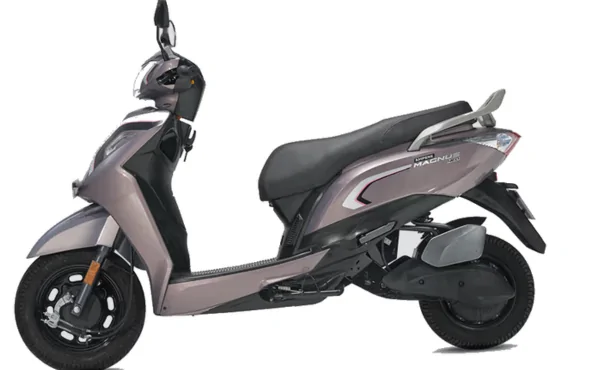
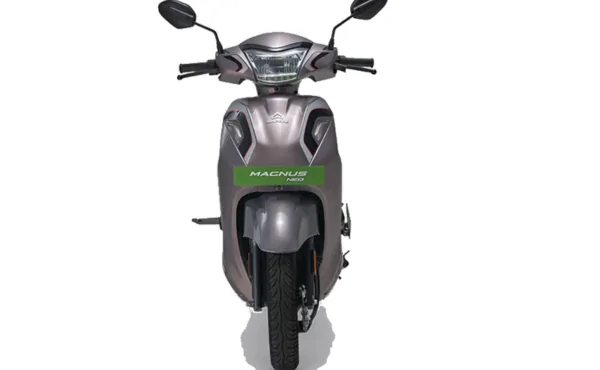
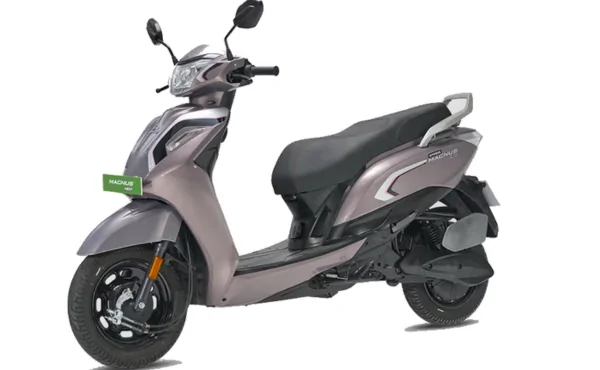
The Ampere Magnus Neo follows a traditional electric-scooter design rather than a futuristic, aggressively angular one. Its front section has a conventional apron, integrated headlamp area, handlebar-mounted mirrors, and a compact overall profile. The design is meant to feel approachable for buyers moving from a petrol scooter, rather than looking radically different because it is electric.
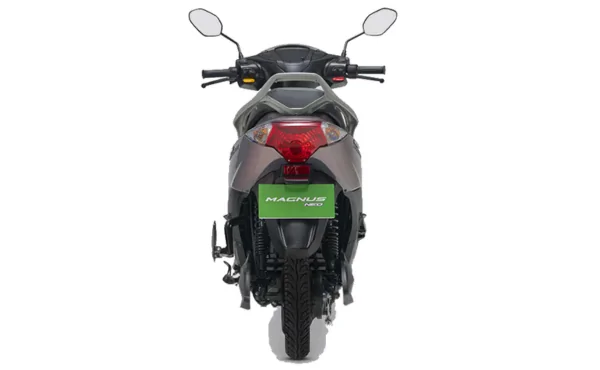
From the side, the scooter has flowing body panels, a practical step-through design, and a wide flat floorboard. This floorboard is useful for placing a small backpack, grocery bag, or other light items between the rider’s feet. The long, single-piece seat, pillion footrests, and chunky rear grab rail reinforce the Magnus Neo’s family-scooter role.
The scooter’s 12-inch front wheel and smaller 10-inch rear wheel maintain a conventional commuter-scooter stance. The 156–165 mm reported ground clearance should also help it handle typical Indian speed breakers, driveway ramps, patched roads, and moderate potholes without the underside scraping easily.
The overall styling is clean and functional. It does not aim to compete visually with sportier EVs such as the Ola S1 Pro or Ather 450X. Instead, it targets buyers who value a familiar design, easy access, comfortable seating, simple controls, and understated everyday usability.
Colour Options And Variants
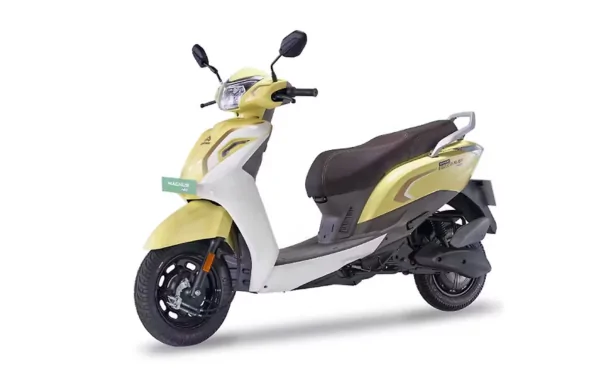
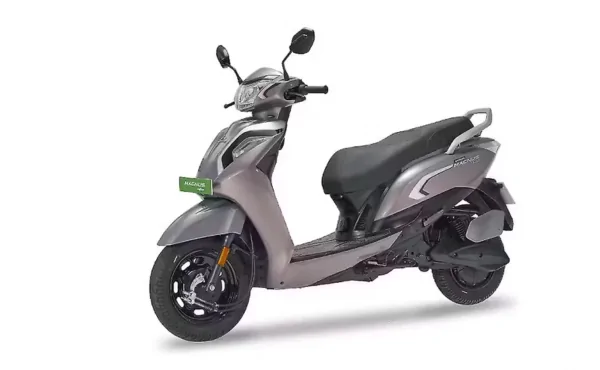
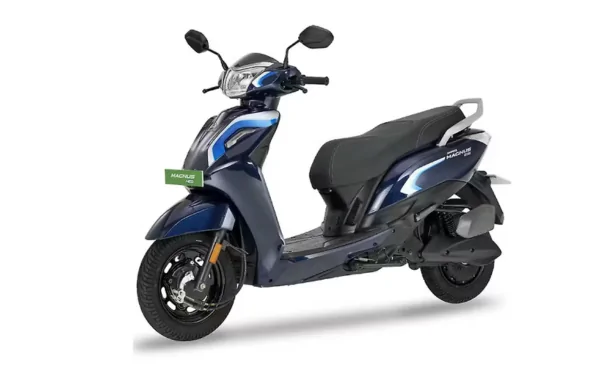
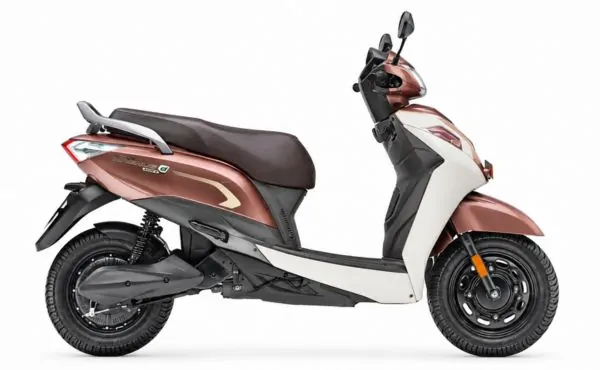
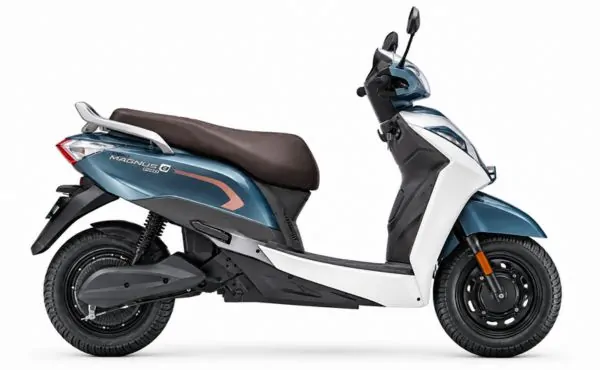
The Ampere Magnus Neo is available in three colour options in India:
- Turmeric Latte
- Mystic Mauve
- Ocean Blue
These shades give the otherwise practical, family-oriented electric scooter a more contemporary and youthful visual identity.
Turmeric Latte is a warm, light-toned finish that gives the Magnus Neo a fresh and distinctive look. It suits riders who want a brighter alternative to conventional black, grey, or white commuter scooters without choosing an excessively sporty colour.
Mystic Mauve is the more unusual and style-led choice. Its muted purple-toned appearance helps the scooter stand out in city traffic while still matching the Magnus Neo’s clean, practical design. It is likely to appeal to buyers who want something less common than a traditional blue or neutral finish.
Ocean Blue is the most classic and broadly appealing option of the three. The blue colour complements the scooter’s flowing body panels and familiar commuter-scooter silhouette, making it a suitable choice for buyers who want a modern but understated everyday finish.
The Ampere Magnus Neo is available in one single variant in India. It comes with the 2.3 kWh LFP battery, approximately 2.4 kW BLDC hub motor, three ride modes, reverse assist, a claimed 65 km/h top speed, and an IDC range claim of up to 118 km per charge.
The single-variant approach simplifies the buying decision: customers don’t need to choose between different battery sizes, motor outputs, or feature grades. The main choice is the colour—Turmeric Latte, Mystic Mauve, or Ocean Blue—subject to local dealership stock and delivery availability.
Value For Money And Pricing
The refreshed Ampere Magnus Neo was launched at an ex-showroom price of ₹90,999 in Delhi. On-road pricing will be higher and can differ substantially by state. For example, on-road starting prices are about ₹97,549 in Erode and around ₹1.02 lakh to ₹1.06 lakh in places such as Jaipur, Mumbai, Pune, Bengaluru, Hyderabad, Chennai, and nearby markets. These amounts can change based on insurance, registration costs, dealer charges, accessories, state EV incentives, and local promotional offers.
The Magnus Neo is currently available in one main variant in India. The buyer’s primary choice is therefore colour—Turmeric Latte, Mystic Mauve, or Ocean Blue—rather than battery capacity or motor-output configuration. Before booking, obtain a quotation that clearly specifies the final ex-showroom price, insurance, registration and handling charges, accessories, battery warranty, supplied charger, and promised delivery period.
The Magnus Neo offers its best value as a daily-use urban EV, not as a performance scooter or long-distance machine. At under ₹1 lakh ex-showroom in most current listings, it is priced close to several basic electric scooters but includes a 2.3 kWh LFP battery, approximately 2.4 kW motor output, three riding modes, reverse assist, a 22-litre under-seat storage compartment, a wide seat, a flat floorboard, and a claimed 118 km IDC range.
Its LFP battery chemistry matters at this price. LFP packs are generally associated with good thermal stability and long cycle life, while the battery warranty is five years or 75,000 km. This gives the Magnus Neo a more reassuring ownership proposition than an unbranded low-speed e-scooter, provided the warranty terms, battery-capacity guarantee, exclusions, and local service process are confirmed in writing.
The realistic range is the key qualification. While the 118 km IDC claim is competitive, practical use is more likely to be around 70–85 km in mixed urban riding and approximately 80–95 km in gentle Eco-mode conditions. Riders using Power mode, travelling at 60–65 km/h, carrying a passenger, climbing flyovers, facing heavy traffic, or riding over rough roads may see closer to 55–70 km. For a 20–40 km daily commute with reliable overnight charging, this is usually sufficient and can make the Magnus Neo cost-effective compared with petrol.
The scooter is less convincing for those who cover 70–80 km or more every day, depend only on public charging, regularly use fast suburban roads, or frequently carry a heavy pillion. Its approximately six-hour full charging time, 65 km/h claimed top speed, basic drum-brake setup, and lack of ABS mean it is best treated as a calm commuter rather than an all-purpose replacement for a larger petrol scooter.
For buyers who ride less than 40–50 km daily and can charge at home, the Magnus Neo can offer good overall value through lower electricity and routine-maintenance costs. It is particularly sensible for people shifting from a conventional petrol scooter who want a lightweight, easy-to-use EV with a conventional layout and do not need premium performance, a large touchscreen, or fast charging.
The Magnus Neo competes with affordable full-speed electric scooters from various brands.
The right alternative depends on whether the buyer prioritises price, certified range, speed, service reach, riding comfort, or brand familiarity.
The Ampere Magnus Neo is a sensible value option for Indian buyers who commute around 20–50 km daily, have reliable overnight charging, prefer a conventional scooter shape, and want to reduce petrol and routine servicing costs. Its price, LFP battery, reverse assist, practical seat and floorboard, and moderate real-world range make it well suited to urban household use.
It is less suitable for riders who need frequent 70 km-plus daily travel, fast highway ability, public fast charging, ABS, or a premium digital experience. In those cases, spending more on a stronger, longer-range EV—or retaining a petrol scooter—may be more practical. The most important pre-purchase checks are the final on-road quote, actual colour and delivery availability, local workshop quality, battery-warranty conditions, real-world range on your route, and a proper test ride with a pillion if two-up use will be regular.
Verdict
The Ampere Magnus Neo is a practical electric scooter for people who want a simple, affordable way to get around. With its 2.3 kWh LFP battery, automatic motor, easy ride modes, reverse assist, lightweight body, comfortable seat, flat floorboard, roomy storage, and five-year battery warranty, it’s great for office commutes, errands, school runs, and everyday family use. If you travel about 20–50 km a day and can charge at home, the Magnus Neo is a smart choice for low running costs and easy ownership, especially if you prefer a familiar scooter feel instead of chasing top speed or high-tech features.
However, it’s important to be realistic. The 118 km range is based on test conditions; in real city riding, you’ll likely get 70–85 km, or 55–70 km if you use Power mode often, carry a passenger, or ride in tough conditions. The 65 km/h top speed, six-hour charging time, lack of fast charging, basic brakes, and some mixed service feedback mean this scooter is best for relaxed city use, not frequent long-distance or highway travel. Before deciding, take a test ride, look into the warranty and service options, check the on-road price, and make sure your daily route fits within the Magnus Neo’s real-world range.
Pros
- Affordable full-speed electric scooter: Magnus Neo is priced within reach of buyers who want a branded electric scooter without entering premium EV price territory. It can be a financially sensible substitute for a petrol scooter when daily running is moderate, and home charging is available.
- LFP battery and long warranty:The scooter uses a 2.3 kWh lithium iron phosphate battery, a chemistry generally associated with thermal stability and long-term durability. Indian listings state a battery warranty of five years or 75,000 km, which adds useful protection against battery-related ownership anxiety.
- Practical real-world urban range: The 118 km IDC claim should not be treated as a guaranteed figure, but users report roughly 75–80 km in normal city use. This is adequate for many office commutes, local errands, school runs, and market trips, particularly for riders covering 20–40 km per day.
- Easy to ride and manoeuvre:At approximately 103–108 kg, the Magnus Neo is lighter and easier to manage than many premium electric scooters. Its automatic drivetrain, smooth low-speed acceleration, and reverse mode make it convenient in stop-start traffic, narrow streets, apartment basements, and crowded parking areas.
- Comfortable family-oriented layout:The wide single-piece seat, spacious flat floorboard, pillion grab rail, dual rear shocks, and 22-litre under-seat storage make it suitable for routine family use. Users specifically mention its generous legroom, plush seat padding, and ability to carry daily items in the boot.
Cons
- Real-world range is lower than the IDC claim: While the official IDC figure is 118 km, practical urban use is more likely to be around 70–85 km, with some user reports near 75–80 km. Range will decline further in Power mode, with a pillion, at higher speeds, on rough roads, in hills, in heavy traffic, and in hot conditions.
- Limited performance for faster roads:The 65 km/h claimed top speed is adequate for the city but restrictive for frequent high-speed suburban or highway travel. The Magnus Neo is not designed for regular expressway riding, fast overtakes, or long-distance use.
- Slow charging and no DC fast-charging support:The scooter takes about five hours to reach 80% and around six hours to fully charge. It is designed mainly for overnight home charging and doesn’t offer the rapid public-charging flexibility of higher-priced EV scooters.
- Basic wheels and braking hardware:Owner feedback mentions the absence of modern alloy wheels, and the scooter does not list ABS. Its braking setup suits normal city use, but it requires cautious, progressive inputs—particularly in rain, dust, or on uneven roads.
- Not a feature-rich premium scooter:The Magnus Neo offers useful basics but lacks the large touchscreen, advanced navigation, app-based telemetry, traction control, multiple sophisticated rider aids, and premium hardware found on costlier electric scooters. It is deliberately positioned as a practical commuter rather than a technology flagship.
- Service quality should be verified locally: Minor plastic gaps, knees-up posture fatiguing on 60+ km rides, growing but limited service network in smaller towns outside metros.
- Not ideal for high daily distances: Minor plastic gaps, knees-up posture fatiguing on 60+ km rides, growing but limited service network in smaller towns outside metros.
Frequently Asked Questions About Ampere Magnus Neo
1. What Is The Range Of The Ampere Magnus Neo, And How Does It Compare To Real-world Use?
The Magnus Neo claims an IDC range of 118 km from its 2.3 kWh LFP battery. In actual city use, owners typically get around 70–85 km, with reports ranging from 75–87 km depending on ride mode, terrain, and traffic. Riding gently in Eco mode can get closer to 80–95 km, while heavy Power mode use, a pillion, or rough roads can bring it down to about 55–70 km.
2. What Is The Top Speed And Performance Of The Magnus Neo?
The Magnus Neo has a BLDC hub motor and can reach a claimed top speed of 65 km/h in Power mode, delivering up to 110 Nm of wheel torque. It goes 0–40 km/h in about 6.5 seconds and offers three ride modes — Eco, City, and Power — plus a Reverse mode for parking.
3. How Long Does The Magnus Neo Take To Charge?
The Magnus Neo uses an off-board home charger with no DC fast-charging support. Charging from 0–80% takes about five hours, while a full charge from 0–100% takes around six hours, making it best suited for overnight charging.
4. Does The Ampere Magnus Neo Have Abs?
No, the Magnus Neo does not have ABS. It uses a front disc and rear drum brake setup (though some spec listings mention drum brakes at both ends), and buyers should confirm the exact configuration on their unit. Braking is adequate for normal city use but requires progressive, cautious inputs, especially in rain or on loose surfaces.
5. What Is The Price And Warranty Of The Ampere Magnus Neo?
The refreshed Magnus Neo launched at ₹90,999 ex-showroom in Delhi, with on-road prices ranging from about ₹97,549 in Erode to ₹1.02–1.06 lakh in cities like Mumbai, Pune, Bengaluru, and Hyderabad. It comes with a five-year or 75,000 km battery warranty and is available in a single variant across three colours: Turmeric Latte, Mystic Mauve, and Ocean Blue.
Other Related Links From Bikeleague India
List Of All Ampere Electric Scooters In India
About Ampere Electric Scooters
Ampere is an Indian electric scooter brand owned by Greaves Electric Mobility Ltd. (GEML), which is part of Greaves Cotton’s electric mobility business. Founded in 2008, Ampere was one of India’s first electric two-wheeler brands. It started out making low-speed, affordable scooters and has since grown into a wider EV brand, offering everything from entry-level city scooters to more premium models.
Ampere focuses on making electric mobility affordable, especially with scooters that cost less than ₹1 lakh. Unlike brands that target high performance, Ampere aims to help regular petrol-scooter users, including those in smaller cities and semi-urban areas, switch to electric vehicles.
Today, Ampere is Greaves Electric Mobility’s electric two-wheeler brand. It offers several scooter models for different budgets and needs,
| Aspect | Ampere’s position in India |
|---|---|
| Brand origin | India |
| Founded | 2008 |
| Original headquarters | Coimbatore, Tamil Nadu |
| Parent company | Greaves Electric Mobility Ltd. |
| Parent-group link | Greaves Cotton Ltd. |
| Product category | Electric scooters |
| Core focus | Affordable, practical urban mobility |
| Key customer segments | First-time EV buyers, daily commuters, families and value-conscious users |
Ampere stands out because of its long history in the market. The company has sold and serviced electric scooters through different technology phases, from early lead-acid batteries to lithium-ion, and now to connected, higher-performance scooters.
History And Growth
In its early years, Ampere mainly sold low-speed scooters for short trips in South India. During the 2010s, it slowly entered more markets and improved its products with better batteries, longer range, and easier use.
Around 2016 to 2017, Ampere started switching to lithium-ion batteries. This change mattered because lithium-ion batteries are lighter, store more energy, and perform more reliably than traditional lead-acid batteries.
Greaves Cotton bought Ampere in 2018, which was a big change for the brand. Being part of a larger engineering and mobility group helped Ampere grow across India, add more dealers, and start making more scooters locally.
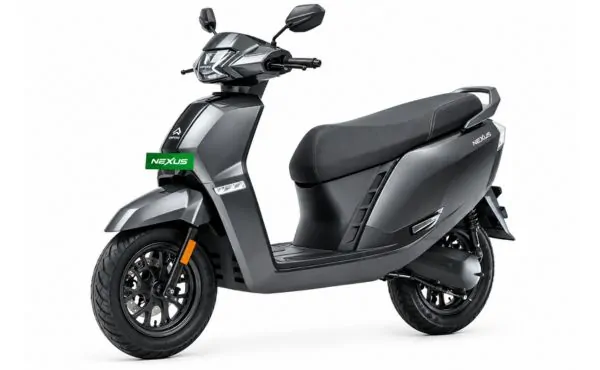
Ampere grew even faster after launching new models like the Magnus, Primus, and Nexus. The Nexus, which came out in 2024, was Ampere’s first step into the premium segment, but the brand still focused on practical and affordable scooters.
| Period | Major development |
|---|---|
| 2008 | Ampere Vehicles was founded in Coimbatore. |
| 2011–15 | Expanded through South Indian markets with affordable electric scooters. |
| 2016–17 | Began transition from lead-acid to lithium-ion battery technology. |
| 2018 | Greaves Cotton acquired Ampere Vehicles. |
| 2019–20 | Expanded into more than 200 Indian cities during the FAME II period. |
| 2024 | Ampere Nexus was launched as the brand’s flagship LFP-battery scooter. |
| FY2026 | Retail sales rose 51% year-on-year to 61,641 units; market share reached 4.4%. |
| June 2026 | Ampere crossed 400,000 scooters manufactured and sold in India. |
Key Milestones And Developments
Ampere’s story is tied to the growth of India’s electric scooter industry. The company started before electric vehicles were common, so it had to grow its business when battery technology, charging options, and customer trust were still developing.
Switching to lithium-ion and later to lithium iron phosphate (LFP) batteries was a key step for Ampere. LFP batteries are known for their stability and long lifespan, which suits Indian conditions and appeals to buyers focused on long-term costs.
| Milestone | Details |
|---|---|
| Early EV presence | Ampere entered India’s EV sector in 2008, making it one of the earlier domestic e-scooter brands. |
| Greaves acquisition | Greaves Cotton acquired the company in 2018, strengthening its manufacturing and expansion capability. |
| National expansion | Ampere expanded into 200+ cities during 2019–20. |
| Premium-range entry | Nexus launched in 2024 as a flagship LFP-battery scooter. |
| Warranty expansion | Five-year/75,000km warranty coverage was extended to Magnus Grand and Magnus G Max in 2025. |
| Value-model launch | Reo 80 was launched in 2026 at ₹59,900, aimed at the entry-level LFP scooter market. |
| Production milestone | Ampere exceeded 400,000 electric scooters manufactured and sold in India by June 2026. |
| Market-ranking progress | Ampere reached fifth place in monthly e-scooter retail sales in February 2026, according to company-reported market data. |
| Next-generation platform | Greaves announced a sixth-generation Ampere scooter for FY2027, aimed at the sub-₹1 lakh segment. |
Ampere is also making its product design simpler. Greaves Electric Mobility plans to combine its current vehicle platforms into one flexible system that can support different products. This should make development easier, allow more shared parts, and help launch new scooters faster.
Manufacturing Facilities
Ampere uses Greaves Electric Mobility’s larger production network. GEML and its subsidiaries run three factories in Hyderabad, Noida, and Ranipet. These sites build both electric two-wheelers and three-wheelers.
The Ranipet factory in Tamil Nadu is the main site for making Ampere’s electric scooters. Greaves Cotton announced this plant in 2021 as a major electric mobility facility, planning to invest ₹700 crore over ten years.
The Ranipet plant can reportedly make about 480,000 Ampere electric two-wheelers each year. Greaves Electric Mobility is also setting up its own battery-pack assembly line there, which is planned to produce up to 400,000 battery packs annually.
| Facility | Location | Role |
|---|---|---|
| Ranipet plant | Tamil Nadu | Main production facility for Ampere electric scooters. |
| Ranipet e-two-wheeler capacity | Tamil Nadu | Reported capacity of 480,000 electric scooters annually. |
| Battery-pack assembly line | Ranipet, Tamil Nadu | Planned in-house battery-pack assembly with 400,000-unit annual capacity. |
| GEML manufacturing facility | Hyderabad | Supports wider electric mobility operations, including two- and three-wheelers. | GEML manufacturing facility | Noida | Supports wider electric mobility operations, including two- and three-wheelers. |
Market Position And Achievements
Ampere competes in India’s large, price-sensitive electric scooter market. It mainly attracts buyers who want a practical option instead of petrol scooters but do not want to pay high prices for premium electric vehicles.
Ampere offers scooters at different prices. The Reo 80 is for entry-level buyers, the Magnus series is for regular city riders, the Primus is for those who want more performance, and the Nexus is the top model. This range lets Ampere meet different needs while staying focused on affordability.
| Area | Ampere’s position |
|---|---|
| Main segment | Affordable and mass-market electric scooters |
| Core price focus | Below ₹1 lakh. |
| Product range | Reo 80, Magnus variants, Primus and Nexus |
| Brand strength | Long operating history and value-oriented product positioning |
| Total milestone | 400,000+ Ampere electric scooters made and sold in India by June 2026. |
| FY2026 retail volume | 61,641 units, up 51% year-on-year. |
| FY2026 market share | 4.4% of the electric scooter segment. |
| February 2026 performance | 4,478 retail units and fifth place in monthly e-scooter sales, based on reported data. |
| Distribution base | More than 420 dealerships across 309+ cities, per Ampere’s published brand history. |
Ampere’s main achievement is growing its business without depending only on premium urban customers. Its scooters have reached buyers in smaller cities and value-focused markets, where price, running costs, service, and battery reliability matter most.
Future Plans
Ampere’s next steps include keeping prices low, launching new products, increasing local content, expanding distribution, and investing in technology. Greaves Electric Mobility has confirmed that Ampere will keep focusing on scooters under ₹1 lakh, seeing this as the biggest long-term opportunity in India.
The company plans to launch its sixth-generation electric scooter in FY2027. Greaves calls it an “ICE Breaker,” meaning it is designed to compete directly with popular petrol scooters in terms of cost, performance, and daily use.
Greaves Electric Mobility also wants to speed up its product launches, aiming to release one new product every quarter in FY2027. According to an August 2026 update, this includes an electric two-wheeler and an electric three-wheeler planned for October.
| Future focus | Planned direction |
|---|---|
| Affordable scooters | Maintain focus on sub-₹1 lakh electric scooters. |
| Sixth-generation scooter | Launch planned in FY2027 to compete with petrol scooters. |
| Product architecture | Use one scalable platform to support multiple models. |
| Dealer expansion | Increase distribution network from about 650 outlets to 1,000 outlets. |
| Market-share target | Aim for double-digit EV market share within two years. |
| Technology | Invest in battery systems, powertrains, battery-management systems, and connected technology. |
| Manufacturing | Increase battery and vehicle-production integration at Ranipet. |
| International growth | Expand presence beyond India as part of Greaves Electric Mobility’s broader plan. |
| Funding | ₹530 crore rights issue completed in 2026 to support next-generation products and growth investment. |
User Reviews
There are no reviews yet. Be the first one to write one.

Hiran Narayanan
Founder & CTO at Bikeleague India
Hiran Narayanan is the Founder and CTO of Bikeleague India, bringing over 15 years of experience in motorcycle technical writing. He develops detailed analyses, tools, model overviews, and blogs that contribute to bikeleague.in's improving rankings.