Overview
Performance And Motor
The Orbiter uses a brushless DC (BLDC) hub motor with a maximum output of 2.5 kW. This hub-mounted setup puts the motor at the wheel, rather than using a central engine and chain drive.
| Motor and battery specification |
TVS Orbiter V1 |
TVS Orbiter V2 |
| Battery capacity |
1.8 kWh |
3.1 kWh |
| Motor arrangement |
BLDC hub motor |
Hub-mounted electric motor |
| Published maximum motor output |
2.5 kW |
2.5 kW |
| Published top speed |
68 km/h |
68 km/h |
| Current official IDC range |
92 km |
158 km |
Battery capacities, IDC figures, motor output, and top-speed information are presented directly, without referencing external sources.
The Orbiter’s acceleration feels smooth and is tuned for easy city riding. Some users have mentioned times when the 2.5 kW motor could use a bit more power.
These comments are based on riding impressions, not on measured acceleration tests. No one has recorded 0–40 km/h times or overtaking results.
The Orbiter offers two riding modes: Eco and City. Eco mode limits the speed to about 45 km/h, while City mode lets you use the scooter’s full performance. Most riders use both modes during daily city rides.
There isn’t a certified range for each riding mode. The IDC range is given for each battery version, not for Eco or City mode separately.
The test scooter kept up steady acceleration even when the battery was low. There are no specific battery percentage thresholds, timed acceleration comparisons, or results for both battery versions. This is based on one test ride.
The Orbiter has an automatic electric drive with a hub-mounted motor. It has no clutch or gear shifting like a manual motorcycle. Its electric system is different from a petrol scooter’s belt-driven CVT, though both use twist-and-go controls.
The hub-motor setup powers the wheel directly, so there’s no visible motorcycle-style chain. The specs don’t mention a selectable gearbox, gear ratios, or a manual transmission.
Eco and City are electronic modes, not physical gears. The main difference is in performance and top speed, not in gear ratios chosen by the rider.
Charging Time
Charging times are given for charging the battery from 10% to 80%. The scooter comes with a 650 W charger, and there’s an optional 950 W charger. Note that the 10–80% time is not the same as a full charge or a 0–80% charge.
| Charging configuration |
Orbiter V1: 1.8 kWh |
Orbiter V2: 3.1 kWh |
| 10–80% with included 650 W charger |
2 hours |
3 hours 30 minutes |
| 10–80% with add-on 950 W charger |
1 hour 30 minutes |
1 hour 30 minutes |
The table shows the published charging times. Both versions have the same 90-minute charging time when using the optional charger.
Neither battery has a published charging time for a full 0–100% charge. So, an official full-charge time isn’t available.
You can’t use the 10–80% charging time to estimate a full charge, since the charging rate isn’t constant across the whole battery range.
The specs list a top speed of 68 km/h for both V1 and V2. The bigger battery doesn’t mean a higher top speed in these listings.
There is also a claim of a 69 km/h top speed, but the most reliable specification is 68 km/h. The 69 km/h figure is mentioned separately.
Eco mode limits the speed to about 45 km/h, while City mode allows the higher published top speed. These numbers are based on the modes, not on GPS-measured speeds.
There isn’t a GPS-verified top speed or a specific number from a GPS test. So, 68 km/h is the listed specification, not a GPS-confirmed result.
Range
The published IDC range for the 1.8 kWh Orbiter V1 is 92 km, though some sources list 86 km for the same version. There’s no clear reason for this difference, so both numbers are mentioned. The 3.1 kWh Orbiter V2 has an IDC range of 158 km.
IDC is a certification-cycle range claim. Road-test results below are separate observations and should not be relabelled as official IDC figures.
Some users say they get about 120 km per charge in city riding, while others report around 100 km per charge after 2,800 km of use. These are personal experiences, not official averages.
Owner reports don’t always specify whether they’re for V1 or V2, so it’s not possible to get separate averages for the 1.8 kWh and 3.1 kWh versions. Each account is valuable for its individual experience.
A long-term test of the 3.1 kWh V2 found a real-world range of 90–100 km using both Eco and City modes. This is just one test, not an average of many users.
There’s also a test result of 97.5 km under mixed conditions, but it’s not clear which battery version was used, so it can’t be linked to V1 or V2.
Collected owner reports show a range of different figures, and these aren’t always separated by battery version. Sometimes, people use petrol-style “kmpl” labels for the electric scooter, but these aren’t actual fuel-efficiency numbers or specific to each version.
To keep things clear, owner reports should be given in kilometres per charge and kept separate from professional tests and official numbers.
The main difference is between certified range claims and real-world results. Long-term tests show the V2 gets 90–100 km in city use, but owner reports don’t point to a single average for either version.
Features And Technology
The TVS Orbiter comes with practical features and connected technology. It has a colour LCD display, turn-by-turn navigation, smartphone alerts, cruise control, hill-hold assist, and forward and reverse parking assist. There’s also a long seat, 34-litre underseat storage, and a straight footboard for extra utility. App-based security alerts and over-the-air updates add to its connected features.
- Connected Colour LCD Display: The TVS Orbiter has a 5.5-inch colour LCD instrument console that connects to your smartphone. The display is easy to read in different lighting and has a clean layout. It’s an LCD panel, not a TFT touchscreen.
- TVS SmartXonnect Integration: The SmartXonnect app lets owners check vehicle information on their phones. It includes location info, alerts, and update support. These features work through the app and don’t all function without a paired phone or network connection.
- Turn-by-Turn Navigation: When connected to a smartphone, the instrument console shows turn-by-turn navigation prompts. This gives the rider directions on the display. Only turn-by-turn navigation is offered, not full-map navigation.
- Call and Message Alerts: The instrument cluster shows call and message notifications from your connected phone. This doesn’t mean the scooter has built-in speakers, a headset, or its own cellular calling.
- Live Vehicle Location: The app lets you see where your scooter is in real time. This live-location feature is separate from the turn-by-turn navigation on the dashboard.
- Geo-Fencin: The app includes geo-fencing, which lets you set a virtual boundary for your scooter. The minimum boundary size and how quickly notifications are sent aren’t specified.
- Time-Fencing: The Orbiter’s connected features include time-fencing, which lets you monitor the scooter during set time periods. This is different from geo-fencing and isn’t the same as a physical immobiliser or a guarantee against unauthorised use.
- Anti-Theft Notifications: The app can send anti-theft alerts for your scooter’s security. However, this doesn’t guarantee theft prevention, recovery, or remote immobilisation.
- Crash and Fall Alerts: The connected features include crash and fall alerts. While these alerts are available, there’s no confirmation of automatic emergency service dispatch or specific detection thresholds. Don’t assume the scooter has these extra features without confirmation.
- Over-the-Air Updates: The Orbiter can get software updates over the air. However, not every future update or new feature is guaranteed to be free.
- Cruise Control: Cruise control lets the rider maintain a selected speed without holding the throttle continuously. This is conventional cruise control, not an adaptive system that automatically maintains distance from traffic ahead.
- Hill-Hold Assist: Hill-hold assist helps prevent the scooter from rolling backwards when stopped on an incline. The maximum operating gradient or hold duration is not specified.
- Forward and Reverse Parking Assist: Forward and Reverse Parking Assist: Parking assist lets you move the scooter forward and backward at low speeds to help with tight parking. It’s a simple aid, not a self-parking system.
- Eco and City Riding Modes: The Orbiter has Eco and City modes. Eco limits the speed, while City gives you full performance. Some earlier articles called City mode “Power,” but “City” is the term used here.
- Regenerative Braking : Regenerative braking helps recover some energy when slowing down, but the amount isn’t specified, and there’s no set increase in riding range.
- hirty-Four-Litre Underseat Storage: The Orbiter offers 34 litres of underseat storage. For example, you can fit a backpack and the scooter’s charger together, showing the space in real terms instead of just quoting the volume.
- Helmet-Fit Limitation: While it’s claimed the storage can hold two helmets, a full-face helmet usually won’t fit and will need to be carried separately. So, don’t assume all helmets will fit just because of the 34-litre capacity.
- Long Seat: The seat length is specified as 845 mm, confirming a substantial seating surface. Seat length alone does not determine comfort for every rider-and-pillion combination.
- Straight-Line Footboard: The Orbiter has a straight-line footboard. The layout provides legroom and accommodates irregularly shaped everyday items. It remains necessary to distinguish available floor space from an officially specified luggage-load limit, which is not specified.
- USB Charging Provision: The scooter includes a front-mounted USB charging port. Its connector type, power output or fast-charging capability are not specified, so it should not be labelled USB-C or described as a fast charger without further confirmation.
- LED Headlamp: The Orbiter is listed with an LED headlamp. This helps identify the headlamp technology, but it does not, by itself, establish that every lamp on the scooter uses LEDs.
- Standard and Optional Charger Choices: Both battery versions include a 650 W charger, and you can choose a 950 W charger as an extra. The higher-output charger is an optional add-on, not standard equipment.
- Separately Listed Practical Accessories: Practical accessories include a pillion footrest, screen guard and centre stand. Their presence does not establish that all three are included with every purchase. In particular, the centre stand should not be presented as universally standard without checking the applicable vehicle package.
- Connected-Service Subscription Qualification: You get one year of advanced app subscription included. This matters because it doesn’t mean you’ll have lifetime access or that you’ll know the renewal cost after the first year.
Build Quality
A first-ride review found the Orbiter’s fit and finish to be good, with no visible panel gaps on the scooters checked. This is a positive sign for body-panel alignment at that event, but it doesn’t guarantee the same for all units.
The same review found loose folding pillion footpegs on some test scooters. This was only seen on certain examples and doesn’t mean all retail Orbiters have this issue. It’s also unclear whether the problem exists on customer scooters.
The mirrors give a good view behind, but their material feels less premium compared to the rest of the scooter. This is just a comment on the mirrors, not the whole body or build quality.
Visibility and material quality are separate. In this review, the mirrors worked well for rear visibility, even if their finish and feel drew some criticism.
No water got into the underseat compartment during monsoon rides. This shows the storage stayed dry in real wet-weather use.
This doesn’t mean the whole scooter is waterproof or safe for flooded roads. The result only applies to the storage compartment in the conditions tested, not an official waterproof rating.
The Orbiter is said to have passed over 600 safety tests. However, there’s no detail on what these tests involved or their results, so this doesn’t prove long-term durability in all Indian conditions.
Reviews don’t show how well the scooter resists corrosion, fading, loose parts, or panel wear over years. The initial panel finish got good feedback, but some fittings and materials were criticized.
Handling
The Orbiter is often praised for its easy steering. Riders mention light effort, quick response, and simple direction changes.
It’s easy to get through heavy traffic thanks to its slim shape and familiar scooter feel. These points come from actual riding, not just specs.
The scooter handles corners well and the tyres grip the road confidently. It stays steady and controlled even during quick turns.
These results show good steering and cornering in the tested conditions. However, they don’t measure how it handles in emergencies or on wet, dusty, or dirty roads.
The 14-inch front wheel helps the scooter handle rough roads and stay stable when changing direction. A complete opinion on ride quality will come after more public-road testing.
The scooter is easy to control on rough city roads. Still, the firm suspension means you’ll feel bumps, even if the scooter stays on course.
The Orbiter has drum brakes at both ends with a Combined Braking System. A reviewer found the controls easy to use but wished for stronger braking, especially with extra weight or going downhill.
The brakes stop the scooter well, and the rear brake feels good. Still, a front disc brake would be a good upgrade. Overall, the brakes work but could be better—they’re not the best or the worst.
The Orbiter is light enough to move around a parking lot without always needing powered parking help. This is based on real use, not a formal test.
Forward and reverse parking assistance is available for tight spaces. It’s especially handy in basement parking, where you often need to move the scooter back and forth.
Comfort
The seat is 845 mm long, giving enough space for a passenger without crowding the rider. Its flat shape also lets the rider move around during long city rides.
Both the seat’s length and rider feedback show that the seating area is roomy. The flat seat lets you shift positions instead of being stuck in one spot.
The seat feels well cushioned on short commutes and stays comfortable on longer rides. The foam is thick enough to give support even after a long time.
The scooter is said to be comfortable for daily city rides. Still, comfort can vary depending on the rider, posture, or how long you ride.
The seat height is 760 mm. For example, a rider who is 5 feet 7 inches tall could put both feet flat on the ground, showing how accessible it is.
The seat is considered easy to get on, but how well your feet touch the ground also depends on the seat’s width and your own leg length.
The scooter has upright handlebars and a relaxed riding position. There’s plenty of legroom on the floorboard, which goes well with the roomy seat.
The straight, wide footboard gives the rider useful space in front. However, reviews don’t say much about how it works for riders of different heights.
The main complaint is the firm suspension. A 63 kg rider could feel most bumps and potholes and often had to slow down on rough roads. Having a passenger only made the ride a little better.
This is more about how the scooter handles potholes, compared to earlier comments about it absorbing small bumps well. It’s possible for a scooter to handle minor rough spots okay but still feel harsh over bigger bumps.
The scooter is easy to handle on uneven roads, but you’ll still notice the firm ride on rough patches.The seat is long enough for a passenger without crowding the rider. Passengers like the broad, flat seat.
But having more seat space doesn’t mean the suspension is soft. The road test showed only a small improvement in bump absorption with a passenger, so the firm ride is still noticeable on rough roads.
On longer open roads, holding the throttle wide open can feel tiring. Cruise control helps by letting you relax your grip on steady stretches.
This is just a comfort note, not a complaint about the riding position overall. The seat stayed comfortable, but holding the throttle for a long time was tiring.
Some worry that the visor above the headlamp doesn’t really protect you and could get close to your face if you move forward suddenly. However, no reports of injuries or accidents involving the visor have emerged.
So, the visor cannot be considered proven wind protection. Its position is more about ergonomics than showing any confirmed safety issue.
Styling
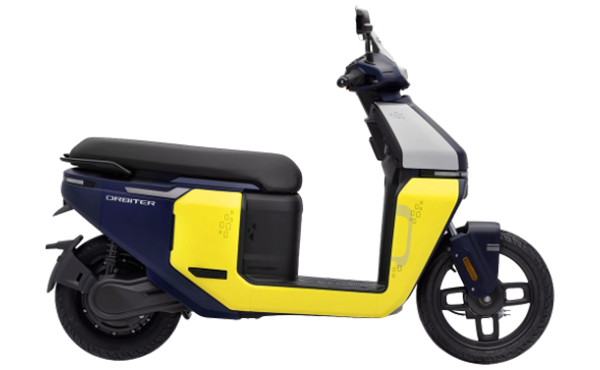
The Orbiter has a “minimalistic” look. Its bodywork features broad, simple surfaces, and the contrast between painted and dark sections shapes its style. This design moves away from a more family-focused look.
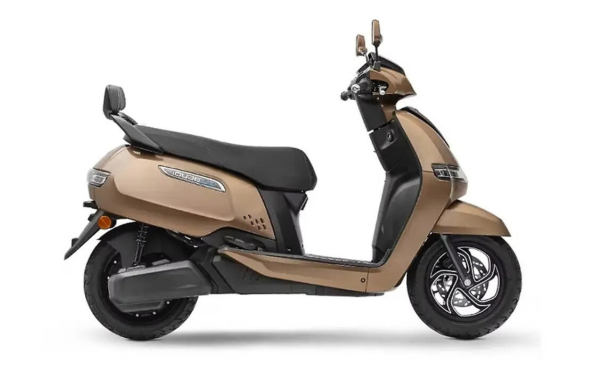
The colour combinations set the Orbiter apart. Instead of using only sculpted panels or lots of graphics, it uses contrasting colours on the apron and side panels to create a unique look. Martian Copper, Stellar Silver, and Neon Sunburst show this style.
The front apron has contrasting sections that flow into the side panels. For Martian Copper, the apron sides and front panels are bronze, while the center and rear are dark blue. For Stellar Silver, these areas are silver with dark-grey graphics.
This setup means the colour names refer to the main shade, not a single-colour scooter. The darker panels play a key role in how the Orbiter looks.
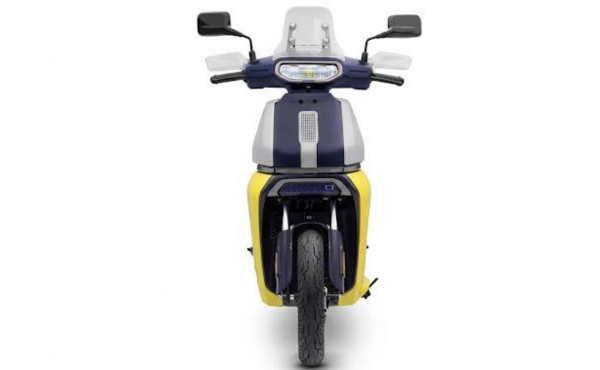
The tall visor above the headlamp stands out as a key styling feature. It is best seen as a unique design detail, not as a proven touring screen. This explains why the visor is different from the rest of the simple bodywork.
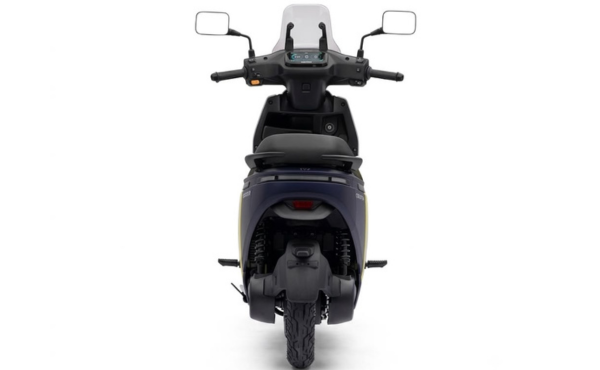
The Orbiter’s long seat creates a clear horizontal line along the side. At 845 mm, the seat is long, with extra space and a roomy floorboard. These features give the scooter a simple, practical look.
V1 and V2 use the same platform. The main difference is the battery, not the body. So, they are versions of the same scooter, not two different designs.
Colour Options And Variants
TVS’s official Indian page lists
- Neon Sunburst
- Stratos Blue
- Lunar Grey
- Stellar Silver
- Cosmic Titanium
- Martian Copper
There are six colour options for the Orbiter, but these are not separate equipment variants.
Neon Sunburst stands out with its fluorescent yellow body and a subtle dark-blue contrast. This bold mix makes the scooter look brighter than the metallic or grey options.
Always use the full name, Neon Sunburst, when talking about this scheme. Calling it just yellow leaves out the contrast that makes it unique.
Stratos Blue is one of the six colours and offers a blue option in the lineup. It’s not clear if all panels use the same shade or what the exact finish is.
Martian Copper features bronze on the apron sides and front panels, while the center and rear are dark blue. This creates a strong contrast with the warm main colour.
This colour is confirmed for the V1, making it one of the two options for that version.
Stellar Silver uses silver on the apron sides and front panels. Dark-grey graphics add contrast and stand out against the bright base colour.
Like Martian Copper, Stellar Silver is a V1 colour. Don’t confuse it with Cosmic Titanium or Lunar Grey, which are different colours in the range.
Cosmic Titanium and Lunar Grey are their own colour options, even though they are among the more subtle choices in the Orbiter’s range.
There’s no detailed breakdown or confirmed matte or gloss finish for these colours. You can use their official names without guessing about the finish.
The Orbiter V1 has the smaller battery and comes in Martian Copper and Stellar Silver.
In terms of style, the V1 keeps the same body design as the Orbiter. Its two colours use contrasting panels, not a different shape or special styling.
The Orbiter V2 has a bigger battery but uses the same platform. Its body design is not different from the V1.
There are six colours in total, but this list doesn’t mean every colour is always available for the V2 everywhere.
| Variant |
Confirmed position in the range |
Colour information |
| Orbiter V1 |
Smaller-battery version sharing the Orbiter platform. |
Martian Copper and Stellar Silver |
| Orbiter V2 |
Larger-battery version sharing the same platform. |
TVS lists six colours across the range |
V1 and V2 are the Orbiter’s version names. Neon Sunburst, Stratos Blue, Martian Copper, Cosmic Titanium, Stellar Silver, and Lunar Grey are the colour names. Keeping these categories separate helps describe the lineup clearly.
In India, the Orbiter is best described as a two-version scooter with six colours and two clear V1 options. Its look comes from shared, simple bodywork and contrasting colours, not big design changes between versions.
Value For Money And Pricing
In Delhi, the TVS Orbiter’s ex-showroom price is ₹ 1,00,650 which includes GST and the charger. After a ₹3,750 PM E-Drive subsidy, ₹5,296 for insurance, and ₹700 in taxes and other fees, the on-road price is ₹1,02,896.
The quote also includes a ₹15,000 self-claim state subsidy, which brings the effective on-road cost down to ₹87,896. This effective price differs from the on-road price because the state subsidy is a separate claim.
TVS advertises credit-card EMI discounts up to ₹10,000. Examples include 7.5% offers with HSBC, AU Small Finance, DBS, and Federal Bank; a 5% HDFC offer (up to ₹10,000); and a 5% IDFC FIRST offer (up to ₹7,500). These discounts depend on payment method and are not automatic.
Finance discounts are separate from borrowing costs. TVS’s EMI example uses an 11% interest rate and mentions processing fees and other charges, so the biggest discount doesn’t always mean the lowest total cost.
TVS says the booking amount is ₹5,000, which is taken off the final payment. It’s an advance, not an extra ₹5,000 on top of the vehicle price.
The official page lists a pillion footrest at ₹804, a screen guard at ₹176, and a centre stand at ₹899. While “standard accessories” are mentioned, it’s not clear which items are included. Ask for an itemised dealer quote to avoid double-counting or assuming something is free.
The main price difference between the two versions is the bigger battery. The V1 has a 1.8 kWh battery with a 92 km IDC claim, while the V2 has a 3.1 kWh battery and a 158 km claim. The V2 costs ₹14,298 more on-road but offers a bigger battery and longer range.
This means the V1 is the cheaper option in these quotes, while the V2 is worth it if you want more battery. The IDC difference doesn’t guarantee extra daily range or fixed savings.
TVS includes the 650 W charger in the ex-showroom price. The purchase also includes one year of advanced app access and a five-year/70,000 km extended warranty, each with its own terms. These extras matter when looking at the full package.
The warranty summary doesn’t list every covered part, exclusion, or claim rule. Also, one year of app access doesn’t mean you get it for life. Check the actual purchase documents to know what’s included.
The Orbiter’s value depends on your local quote, what’s included (like the charger and warranty), and how much battery you need. Don’t judge the price based only on the lowest ad or the biggest EMI discount.
Competitor Models in India are
- Bajaj chetak 2903
- VIDA VX2
- Bajaj Chetak Premium
- Ola S1 X
The Orbiter comes in two versions: the cheaper V1 and the bigger-battery V2. City listings show a ₹14,298 on-road price difference. TVS’s official page also says the charger, subsidy, insurance, and extra charges are included in the quote.
The best value comes from choosing the version that fits your needs and comparing the full package with the Chetak C25, VIDA VX2, Chetak, and Ola S1 X. The listed prices help you compare, but don’t guarantee the lowest price or cost across India.