Overview
Performance And Engine
The Kawasaki Ninja 500 uses a 451cc, liquid-cooled, four-stroke, parallel-twin engine with DOHC and four valves per cylinder. It has a bore and stroke of 70.0 mm x 58.6 mm, a compression ratio of 11.3:1 and electronic fuel injection through two 32 mm throttle bodies.
This engine makes 45 PS at 9,000 rpm (33.4 kW) and 42.6 Nm of peak torque at 6,000 rpm. These numbers give the Ninja 500 a clear edge over 200cc–400cc single-cylinder sportbikes, especially for mid-range acceleration, easy highway overtakes, and holding higher speeds without pushing the engine too hard.
Peak torque comes in early at 6,000 rpm, which is helpful for a sport motorcycle. In real Indian traffic, this means the Ninja 500 feels more flexible in the city and more responsive for overtaking on highways than smaller engines that need to be revved hard. Kawasaki says the power is spread across the whole rpm range, from city speeds to highway riding.
The Ninja 500 is fairly light for a 451cc parallel-twin sportbike, with a listed kerb weight of 176 kg and an estimated dry weight of 162 kg. With 45 PS, 42.6 Nm of torque, and this weight, it offers quick acceleration, solid highway performance, and easier handling than heavier middleweight bikes.
Kawasaki uses a high-tensile-steel trellis frame, with the engine mounted rigidly as a stressed member. The company says the frame layout balances rigidity and lightness, supporting predictable handling and mass centralisation.
The Kawasaki Ninja 500 gets a six-speed return-shift manual gearbox with chain final drive. The six-speed transmission lets the parallel-twin engine use its broad powerband: lower gears provide quick acceleration, while the upper ratios support more relaxed highway cruising.
The gearbox uses the following ratios: first gear is 2.929, second is 2.056, third is 1.619, fourth is 1.333, fifth is 1.154, and sixth is 1.037. The close spacing in the lower and middle gears should help the rider keep the engine in its effective torque and power range during quick acceleration or overtaking.
Kawasaki gives the Ninja 500 an Assist & Slipper Clutch as standard. The assist feature makes the clutch lever lighter, reducing fatigue in stop-and-go city traffic. The slipper function reduces back torque during hard or sudden downshifts, helping prevent rear-wheel hop, skidding, or instability when braking before a corner.
This clutch system is particularly useful for riders progressing from smaller displacement motorcycles. It provides a lighter clutch feel during daily use while adding useful rear-wheel control during sportier riding, without requiring an electronic quickshifter or automated transmission.
Kawasaki claims the Ninja 500 can reach about 190 km/h in India. This top speed matches its 451cc engine, 45 PS output, aerodynamic fairing, and six-speed gearbox. The Ninja 500 can easily handle high-speed highway riding, but riders should always follow speed limits and road safety rules.
Actual top speed can vary with rider weight, riding posture, wind conditions, road gradient, tyre condition, fuel load, motorcycle condition and whether the reading comes from the instrument console or GPS equipment. For editorial purposes, it is safest to state that the Ninja 500 has a claimed top speed of around 190 km/h rather than presenting the figure as an independently verified GPS top speed.
Mileage And Fuel Efficiency
The Kawasaki Ninja 500 has an ARAI-certified fuel-efficiency figure of 26.31 kmpl in India. This is the government-certified laboratory mileage value for the 451cc Ninja 500. Official figures list fuel consumption at 3.8 litres per 100 km, which converts to approximately 26.3 kmpl. This aligns closely with the claimed 26.31 kmpl.
ARAI mileage is tested in controlled conditions and may not reflect real-world results. In daily use, fuel consumption depends on factors like city traffic, throttle use, cruising speed, rider and passenger weight, road and tyre conditions, maintenance, and how often you ride at high revs.
The Ninja 500 also includes Kawasaki’s Economical Riding Indicator. When riding conditions favour lower fuel consumption, an “ECO” mark appears on the instrument display, helping the rider identify a more fuel-efficient throttle, gear and engine-speed combination.
In real-world Indian conditions, the Kawasaki Ninja 500 averages about 21 kmpl. This gives a more accurate idea of what owners can expect than the official ARAI figure.
Real-world mileage is around 21.2 kmpl, reinforcing the expectation that many owners will get around 21 kmpl.
Expert mileage is 28.7 kmpl, which is higher than the 21 kmpl average. This difference highlights how strongly fuel consumption can change with riding conditions: a controlled, steady-speed test may return a stronger number, while urban commuting, frequent rapid acceleration, high-speed riding and heavy traffic can reduce real-world mileage substantially.
For practical purposes in India, it’s reasonable to expect 21–22 kmpl in mixed riding. Riders in heavy traffic or who ride fast may get less, while those who cruise steadily and use the ECO indicator could see mileage closer to the official 26.31 kmpl.
Features And Technology
The current India-spec Kawasaki Ninja 500 is a fully faired parallel-twin sportbike that combines Ninja-family styling, a 451cc engine, dual-channel ABS, smartphone connectivity and an assist-and-slipper clutch. Here are some of the main features listed
- 451cc parallel-twin engine: The Ninja 500 uses a liquid-cooled, fuel-injected, DOHC 451cc parallel-twin engine producing 45 PS at 9,000 rpm and 42.6 Nm at 6,000 rpm. Kawasaki says the engine is tuned to deliver usable low- and mid-range acceleration for city riding, with enough high-rpm performance for the highway.
- Six-speed manual gearbox: A six-speed return-shift transmission is standard, allowing the rider to use the wide powerband effectively during acceleration and maintain a more relaxed engine speed while cruising on highways. Power is sent to the rear wheel through a chain final drive.
- Assist-and-slipper clutch: The Ninja 500 gets Kawasaki’s Assist & Slipper Clutch. The assist function helps reduce clutch-lever effort during everyday riding, while the slipper function limits excessive back torque during hard downshifts to reduce rear-wheel hop and instability.
- Trellis frame: The motorcycle uses a high-tensile-steel trellis frame inspired in design by the Ninja H2. Kawasaki uses the engine as a stressed member and says the frame has been designed to balance rigidity, low weight and mass centralisation.
- Lightweight sportbike chassis: Kawasaki describes the chassis as compact and user-friendly, with a supersport-style short-wheelbase and long-swingarm layout. The configuration, along with an optimised trail setting, is intended to provide light, natural handling and easier manoeuvring in traffic or while parking.
- Dual-channel ABS: The India-spec Ninja 500 gets ABS with front and rear disc brakes. Anti-lock braking support is particularly valuable during panic stops and when braking on wet asphalt, loose road surfaces or other low-grip conditions.
- 310 mm semi-floating front disc: The front brake uses a 310 mm semi-floating disc, the same disc diameter Kawasaki uses on the Ninja ZX-6R. The Ninja 500 features a two-piston front calliper, giving it a substantial front braking package for a middleweight sportbike.
- 220 mm rear disc brake: The rear wheel uses a 220 mm disc with a dual-piston calliper. Together with the ABS-equipped front brake, it supports controlled braking in city riding, highway use and spirited cornering.
- 41 mm telescopic front fork: Front suspension is handled by a 41 mm telescopic fork with 120 mm of wheel travel. This conventional, practical setup delivers predictable road behaviour and manageable maintenance rather than premium upside-down-fork hardware.
- Rear monoshock with preload adjustment: The rear uses a swingarm-mounted monoshock with 130 mm of wheel travel. Rear preload adjustment can help owners compensate for a pillion, luggage or different rider weights.
- Full LED projector headlamps: The Ninja 500’s front end centres on two compact LED projector headlamps. Kawasaki pairs them with forward-projecting spoilers to create a sharp, modern Ninja-family face. Daytime running lights are standard.
- LED tail-light and hazard warning lights: The motorcycle gets an LED brake/tail-light and hazard warning lights. These features improve visibility to other road users, particularly during night riding, rain, low-visibility conditions and roadside stops.
- Full LCD instrument console: The India-spec Standard Ninja 500 lists a 5-inch LCD instrument display with brightness control. The console presents key riding information in a clear digital layout intended for everyday usability.
- Bluetooth smartphone connectivity: The LCD display supports smartphone pairing through Kawasaki’s RIDEOLOGY app. When connected, the rider can access vehicle information such as odometer readings, fuel level and maintenance schedule; view compatible riding logs; receive call and mail notifications; and adjust selected display settings through the phone.
- Economical Riding Indicator: An ECO mark appears on the instrument display when riding conditions favour lower fuel consumption. Kawasaki says the system monitors fuel use continuously and can help riders identify more economical throttle, gear-selection, and engine-speed habits.
- Racing-inspired full-fairing bodywork: The Ninja 500 features flowing, layered full-fairing bodywork with sharp lines, a compact front profile and a large-volume design. Kawasaki says the bodywork gives it a race-inspired, big-bike appearance while also creating a closer connection between the rider and motorcycle.
- Wind-protective fairing design: The large-volume full fairing provides wind protection, which can reduce rider fatigue during longer highway journeys compared with a naked motorcycle. This complements the Ninja 500’s broader sport-touring usability.
- Comfort-oriented rider triangle: Kawasaki has designed the Ninja 500 with a relatively relaxed riding position compared with more extreme supersport motorcycles. An elevated handlebar position and slightly forward-set footpegs aim to provide control while reducing strain during daily commuting and longer rides.
- 785 mm seat height: The Ninja 500 has a 785 mm seat height. Kawasaki combines this with a slim seat and narrow rear-engine area to give the rider a more direct reach to the ground, which can improve confidence during traffic stops and low-speed manoeuvres.
- Thick, low-rebound seat cushioning: Kawasaki uses thick seat cushioning with low-rebound urethane. The seat’s flat front area provides padding without compromising the rider’s ability to place their feet on the ground.
- Stepped pillion seat: The motorcycle includes a stepped pillion seat with passenger footrests and a grab rail. This makes it more practical for occasional two-up use than a strictly solo-focused track motorcycle, although the sporty tail section still prioritises rider-focused styling.
- ERGO-FIT compatibility: Kawasaki’s ERGO-FIT system helps riders adapt the motorcycle’s interface points, such as the handlebar, footpegs and seat, through compatible adjustable or interchangeable parts. The availability and adjustment range depend on model-specific accessories.
- 17-inch alloy wheels: The Ninja 500 runs on 17-inch alloy wheels with a 110/70R17 front tyre and a 150/60R17 rear tyre. This tyre combination supports sporty road handling, predictable steering response and broad tyre-replacement availability in India.
- 14-litre fuel tank: The motorcycle has a 14-litre fuel tank. Combined with its officially listed fuel consumption of 3.8 litres per 100 km, or about 26.3 kmpl under the stated test method, the tank capacity should provide a usable riding range for daily travel and weekend highway rides.
Build Quality
The Ninja 500 uses a high-tensile-steel trellis frame inspired by the Kawasaki Ninja H2’s construction concept. Kawasaki says it employed dynamic rigidity analysis to balance structural rigidity with low weight, while the engine is rigid-mounted and works as a stressed member. This construction helps create a compact sportbike chassis with a reported estimated dry weight of 162 kg; Kawasaki’s official India specification lists its kerb mass at 176 kg.
The motorcycle’s layered full-fairing bodywork gives it the sharp, large-capacity Ninja-family appearance buyers expect in this segment. The fairing flows from the compact dual-headlamp front end to the tail section and is designed to create a closer visual and physical connection between the rider and motorcycle. The fairing also serves a practical purpose by offering useful wind protection on highway rides.
The Ninja 500 is equipped with a 310 mm semi-floating front disc—matching the disc diameter used on the Ninja ZX-6R—and a rear disc brake, supported by ABS. This hardware indicates a serious focus on braking assurance and complements the motorcycle’s higher-performance parallel-twin engine.
However, Indian buyers should note the difference between the strong chassis and the finish of some parts. Overall build quality is decent, but the plastic panels and switchgear could be better. This is important at the Ninja 500’s price, especially when compared to locally assembled sportbikes in a similar range.
The MY27 India update also brings E20 fuel compliance, making the Ninja 500 compatible with petrol containing up to 20 per cent ethanol. This is a practical ownership advantage as E20 fuel becomes more widely available across India.
Handling
The Ninja 500’s handling is built around a compact chassis with a short wheelbase and long-swingarm supersport layout. Kawasaki states that its optimised trail setting, light chassis design and mass centralisation aim to deliver natural steering response and predictable behaviour, whether filtering through traffic, negotiating corners or manoeuvring while parking.
The motorcycle has a 1,375 mm wheelbase, 24.5-degree rake and 92 mm trail. These dimensions indicate a balance between agility and stability: the Ninja 500 should feel easier to steer than a larger, heavier middleweight while retaining sufficient composure for highway speeds and fast sweepers.
The 451cc parallel-twin engine also supports usable handling in Indian conditions. Its 42.6 Nm torque output arrives at 6,000 rpm, and Kawasaki says it provides accessible low- and mid-range acceleration. This should reduce the number of gear changes needed during ordinary city riding compared with a smaller, high-revving sportbike, while the upper rev range remains available for open-road riding.
Suspension consists of a 41 mm telescopic front fork with 120 mm travel and a rear monoshock with 130 mm wheel travel. The rear suspension offers preload adjustment, allowing you to adapt the setup to rider weight, a pillion or light luggage. The front fork lacks preload adjustment, so riders seeking extensive suspension tuning may find the setup relatively basic for the price.
The Ninja 500 runs on 17-inch alloy wheels, shod with a 110/70R17 front tyre and 150/60R17 rear tyre. This conventional sportbike tyre configuration should support predictable turn-in and good availability of replacement tyres in India. The 145 mm ground clearance is adequate for a faired road bike, but riders should still slow down for tall or sharply profiled speed breakers.
According to Kawasaki, the India-spec Ninja 500 has a curb weight of 176 kg. It is much easier to handle than most bigger 650cc parallel-twin sportbikes, making it more manageable in traffic, while parking, and during slow U-turns.
The assist-and-slipper clutch further benefits everyday control. Its assist function makes the clutch lever feel lighter, while its slipper mechanism reduces rear-wheel hopping or skipping caused by excessive engine braking during quick downshifts. This helps make the Ninja 500 friendlier in traffic and more composed during spirited corner entry.
Comfort
The Ninja 500 adopts a less aggressive riding posture than a track-focused supersport. Kawasaki uses a comparatively elevated handlebar position and slightly forward-set footpegs, creating a rider triangle intended to combine control with greater comfort for varied rider sizes and riding situations.
This riding position helps in India because it makes the bike easier to handle in slow traffic and less tiring on long highway rides than bikes with low handlebars and rear-set footpegs. While it still has a sportbike feel with some forward lean, it is more versatile than a pure track bike.
The 785 mm seat height should be accessible to a broad range of riders. Kawasaki complements this with a slim seat profile and a narrow rear-engine area, giving riders a clearer path to place their feet on the ground at stops. This can improve confidence while balancing the motorcycle in traffic, at toll booths, on uneven parking surfaces or during U-turns.
Kawasaki uses thick seat cushioning with low-rebound urethane, and the front section of the seat is relatively flat to retain padding without compromising ground reach. Some users also describe the seat as spacious and supportive, adding that the ERGO-FIT system can help riders find a more suitable riding position, with compatible accessories available.
The large-volume full fairing is another meaningful comfort feature. It provides wind protection at highway speeds, which can reduce fatigue on longer rides compared with naked motorcycles. The 14-litre fuel tank also supports practical highway range, although actual distance between fuel stops will vary according to traffic, cruising speed and riding style.
For pillion use, the Ninja 500 includes a stepped passenger seat, footrests and a grab rail. It suits occasional two-up riding, but its sportbike layout, raised rear section, and rider-focused ergonomics mean long-distance pillion comfort is unlikely to match a dedicated touring motorcycle.
Styling
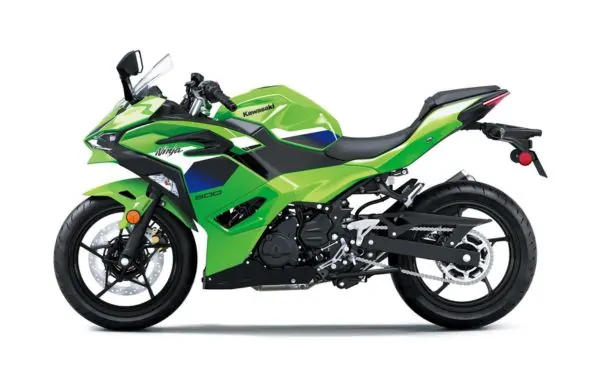
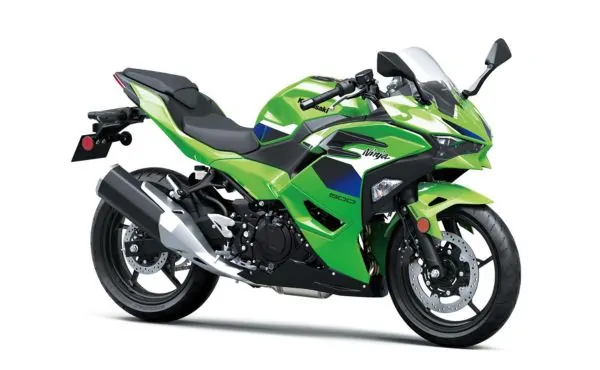
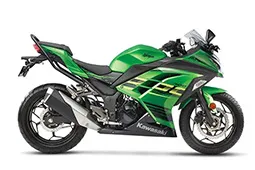
The Ninja 500 uses a race-inspired full-fairing design that creates a clear visual link with larger Kawasaki Ninja motorcycles. Kawasaki describes the bodywork as flowing and layered from the front to the tail, giving the motorcycle a sporty yet substantial appearance rather than the minimal bodywork of a naked streetfighter.
The front end is dominated by two compact LED projector headlamps, which form the motorcycle’s distinctive Ninja-style face. Two protruding spoilers below the headlamps sharpen the fascia further and give the bike a more aggressive, aerodynamic look. The closely positioned headlamp units, short windscreen and sharply sculpted fairing panels contribute to the familiar supersport profile.
From the side, the Ninja 500 has a forward-leaning silhouette created by the full fairing, sculpted fuel tank, exposed trellis-frame sections, compact engine area and raised tail section. Kawasaki uses large-volume body panels, which make the motorcycle look larger and more premium than a typical entry-level sportbike. The fairing also provides practical wind protection on the highway, so it is not only a styling element.
The tail section follows a clean, upward-swept sportbike format. It includes a stepped pillion seat, LED tail light, passenger footrests and a grab rail. This design keeps the rider-focused appearance intact while retaining limited passenger practicality for short rides or occasional use.
The Ninja 500 looks modern and aggressive, not retro or minimalist. It’s made for buyers who want a recognisable Japanese fully faired sportbike with the classic Ninja look, but not an extreme track-style design. The 785 mm seat height and relaxed riding position give it sporty styling without forcing a full racing posture.
Colour Options And Variants
The current India-spec Kawasaki Ninja 500 is available in a single
- Lime Green
colour option. This is Kawasaki’s signature performance colour and gives the Ninja 500 a strong visual connection with the brand’s racing heritage and the wider Ninja family.
The Lime Green finish is paired with contrasting dark body panels, black alloy wheels and sport-oriented graphics. The bright colour gives the motorcycle a highly visible road presence and is likely to appeal to buyers who want the Ninja 500 to look unmistakably like a Kawasaki rather than blend into traffic.
The new Lime Green paint scheme is the primary visible update for the MY27 Ninja 500 launched in India. The design and mechanical package otherwise remain unchanged from the previous model.
The Kawasaki Ninja 500 is offered in one variant in India:
- Ninja 500 Standard
The single-variant approach keeps the Indian Ninja 500 line-up simple. Buyers do not have to select between different engine outputs, wheel types, brake configurations or electronic packages. The Standard variant uses the 451cc parallel-twin engine, six-speed gearbox, assist-and-slipper clutch, full LCD console with Bluetooth connectivity, dual-channel ABS, dual LED projector headlamps and the full-fairing Ninja bodywork.
Kawasaki’s global product material says Ninja 500 SE models can use a TFT instrument display, while standard models use a full LCD unit. However, the current Indian listing identifies only the Standard version, so the SE should not be described as an officially available India-spec variant unless the manufacturer announces it separately.
The India-spec Standard variant also does not list a quickshifter, traction control or cruise control. It focuses on the fundamental Ninja 500 package: a lightweight parallel-twin sportbike, ABS-equipped disc brakes, full fairing, assist-and-slipper clutch, smartphone connectivity and a practical 14-litre fuel tank.
Value For Money And Pricing
Kawasaki India lists the Ninja 500 at ₹ 5,76,000 ex-showroom. This is the official price for the single India-spec Ninja 500 Standard variant. The on-road price differs by state because it includes road tax, registration, insurance and other local charges.
The MY27 update adds a Lime Green colour scheme and E20 fuel compatibility, while its mechanical package remains unchanged. The model continues with the same 451cc parallel-twin engine, six-speed gearbox, assist-and-slipper clutch and ABS-equipped braking package.
The Ninja 500’s strongest value lies in its refined 451cc parallel-twin platform. It develops 45 PS at 9,000 rpm and 42.6 Nm at 6,000 rpm, offering stronger mid-range performance and a more relaxed, smoother highway character than most single-cylinder sport motorcycles. Kawasaki also highlights usable power across the rev range, from urban acceleration to higher-speed highway riding.
The Ninja 500 comes with useful features for daily use, like a six-speed gearbox, assist-and-slipper clutch, dual-channel ABS, a 310 mm front disc, LED lights, Bluetooth LCD display, a 14-litre fuel tank, and a 785 mm seat height. The full fairing helps with wind protection, and the relaxed riding position makes it less tiring than more aggressive supersport bikes.
The motorcycle’s chassis is another positive. Kawasaki uses a high-tensile-steel trellis frame with the engine acting as a stressed member, while the compact short-wheelbase/long-swingarm layout is intended to provide light, predictable handling. Kawasaki lists a 176 kg curb mass; regardless of the stated difference, it remains manageable for a faired parallel-twin motorcycle.
The Ninja 500’s main downside is its price. Buyers pay a premium for the Kawasaki brand, smooth parallel-twin engine, and Ninja styling, even though it has a standard telescopic fork, a basic LCD screen instead of a TFT display, and lacks features like traction control, quickshifter, or cruise control.
Build-finish expectations also deserve consideration. The overall construction is acceptable, but the plastic and switchgear quality could be improved. For buyers spending close to ₹6 lakh ex-showroom, this may be a deciding factor when competing motorcycles offer more modern components, stronger electronics packages or locally assembled pricing.
In summary, the Ninja 500 is a good choice for buyers who want a smooth Japanese parallel-twin engine, comfortable sportbike ergonomics, classic Ninja looks, and reliable real-world performance. It is less appealing for those who want the most power for their money, advanced electronics, or a track-focused setup.
The Ninja 500’s direct Indian-market competitors are the
- Aprilia RS 457
- KTM RC 390
These motorcycles differ considerably in engine layout, price, equipment and intended riding character as the Ninja 500’s principal rivals in India.
The Aprilia RS 457 is likely the strongest value-based alternative because it offers a similar parallel-twin format and sportbike purpose at a lower price point. The Ninja 500 counters with Kawasaki’s 451cc engine, comfortable rider triangle, 785 mm seat height, assist-and-slipper clutch and a more relaxed sport-touring temperament.
The KTM RC 390 is likely to suit riders seeking sharper, more aggressive performance and a sportier chassis feel. In comparison, the Ninja 500 should appeal to riders who want smoother twin-cylinder power delivery, better long-distance composure and a less demanding daily riding posture.