

Long Story Short: Stay safe on India’s monsoon roads with our bike ride tips. Discover key strategies for a secure and enjoyable ride.
The monsoon season is a natural blessing that helps everything grow. It’s important for the environment, and we should stay active and ready during this time. Many people travel during the monsoon for work or other reasons, so safety should come first. Preparing your bike for the rainy season is a must, not just a recommendation.
This guide from the Bikeleague India team shares tips for riding in the rain and staying safe. We’ll talk about how to get your bike ready and how to ride better in wet weather. These tips have been tried and tested. By following them, you’ll be ready to handle the challenges of riding during the monsoon.
Key Takeaways
- Get Your Bike & Gear Ready: Before the rains hit, give your motorcycle a little extra love—check the tyres, brakes, lights, and electricals, and use waterproof chain lube. Invest in comfortable rain gear: a reflective jacket, a full-face helmet, gloves, and waterproof boots will keep you safe and dry.
- Ride Smooth and Smart: Be gentle on the throttle, avoid slamming the brakes, and give yourself more space from other vehicles. Watch out for slippery patches and low visibility—keep your headlights on low beam and signal your moves early.
- Stay Cautious in Flooded Areas: Before tackling any waterlogged roads, double-check your tyres and brakes. Go slow, avoid deep water, and if you ride an EV or petrol bike, make sure you know the right steps to protect your engine and electronics.
- Plan Your Route Like a Pro: Use weather and flood alert apps to map out your journey. Stick to higher roads and avoid flood-prone shortcuts. Stay updated with local news, and don’t hesitate to change plans if the rain gets heavy.
- Look After Your Gear (and Bike) Afterwards: After a wet ride, dry and store your rain gear so it lasts longer. Give your bike or EV a good clean to keep rust and electrical issues at bay—your next ride will thank you!.
How To Prepare For The Monsoon Bike Ride & Travelling In India?
To stay safe while riding in the monsoon, make sure your motorcycle is in good condition. Here’s a checklist to help you get ready for your next ride:
1. Tyres
The most critical aspect to know is the tyre’s condition. Tyres are the only thing that comes in contact with the ground. Keep that in mind. Ensure adequate tread depth (at least 3-4 mm) for tyres to have a good grip on wet roads. Consider switching to monsoon-specific tyres, such as the Michelin Pilot Road 4, designed for superior water drainage, as they can significantly enhance your safety during the rainy season.
2. Brakes
Have a mechanic check your brake fluid, pads, and disc rotor for any signs of wear or ageing. If needed, get the brakes bled to remove moisture. This involves opening the brake bleeder valve to let out old fluid and any trapped air or water. This step is important for safe braking in wet weather.
3. Lights
Check that all your lights, including headlights, taillights, brake lights, turn signals, and hazard lights, are working well. Good lighting is important because rain makes it harder to see and be seen.
4. Electricals
Ask a mechanic to check all electrical connections for corrosion or loose wires. Moisture can cause problems, so make sure everything is secure and protected from water.
5. Chain And Sprockets
Use waterproof chain lube often to stop rust and keep your chain working well. Clean the chain after every rainy ride to remove dirt, and check the chain’s slack, too.
6. Air Filter
A clean air filter helps your engine run well. Change it if it’s clogged to avoid engine trouble and keep your bike running smoothly.
How To Gear Up For The Monsoon Motorcycle Ride/trip In India?
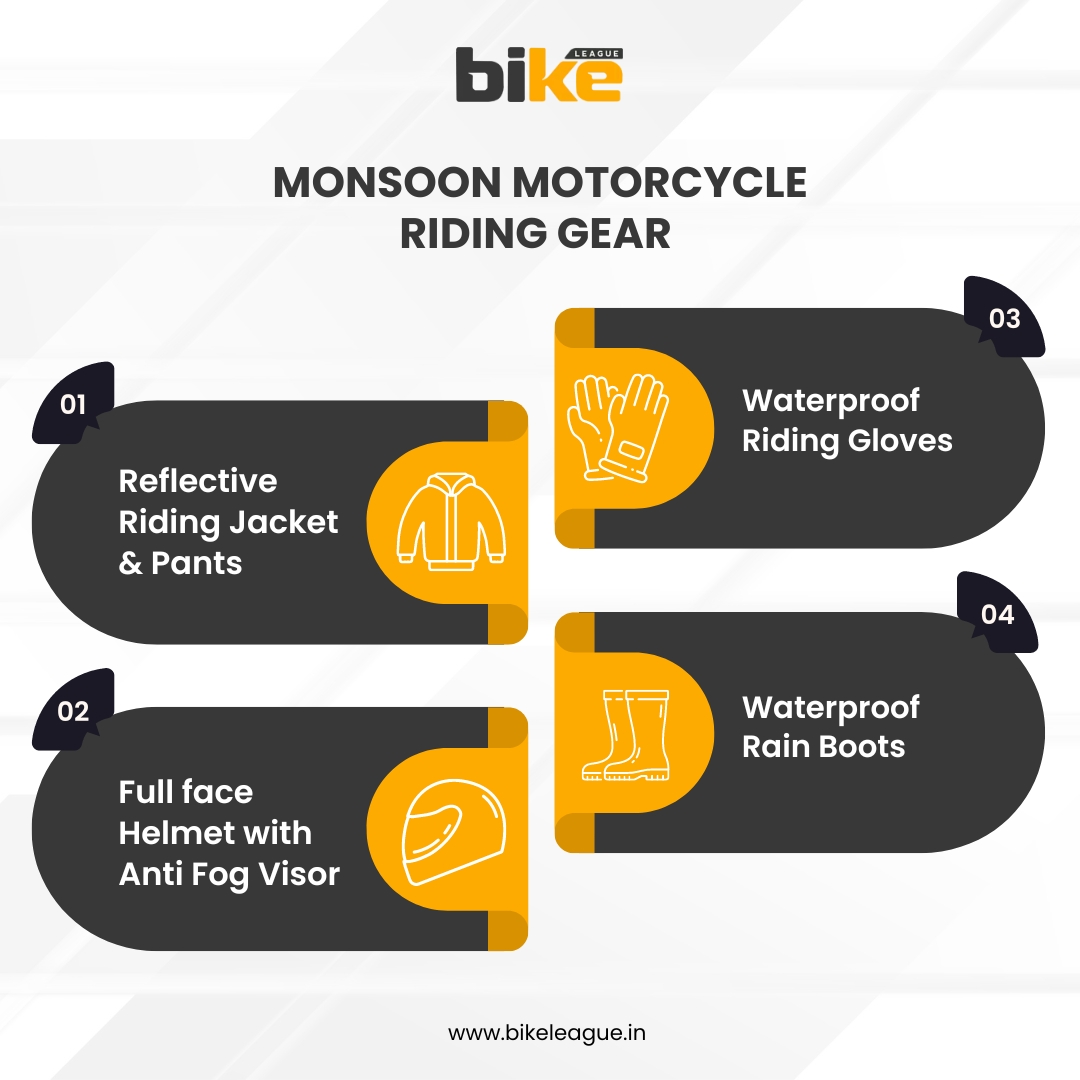
Wearing the right rain gear is important for a comfortable and safe ride. Here’s what you should have:
- Reflective Riding Jacket & Pants:Reflective Riding Jacket & Pants: Choose waterproof, reflective, and breathable jackets and pants for riding in the rain. Look for vented designs for better air flow, especially in hot weather.
- Full-face Helmet: Full-face Helmet: Use a good quality full-face helmet with an anti-fog visor. Clean the visor regularly to keep your vision clear.
- Riding Gloves: Wear waterproof gloves with a good grip to keep your hands dry and maintain control of the handlebars.
- Rain Boots: Choose waterproof boots to keep your feet dry and protected from the rain.
How To Pack For Monsoon Travelling In India?
Don’t forget to pack these extra items for your monsoon motorcycle trip:
- Puncture Repair Kit: A flat tyre is even more difficult in the rain. Carry a repair kit so you can fix it and get moving again.
- Extra Spark Plugs: Moisture can affect spark plugs. Carrying spares ensures a smooth ride in case of a malfunction.
- Microfiber Cloth: Use a microfiber cloth to wipe your visor or headlight while riding.
- Waterproof Phone Pouch: Protect your phone from rain, especially if you use it for navigation.
How To Master Riding For Monsoon Conditions In India?
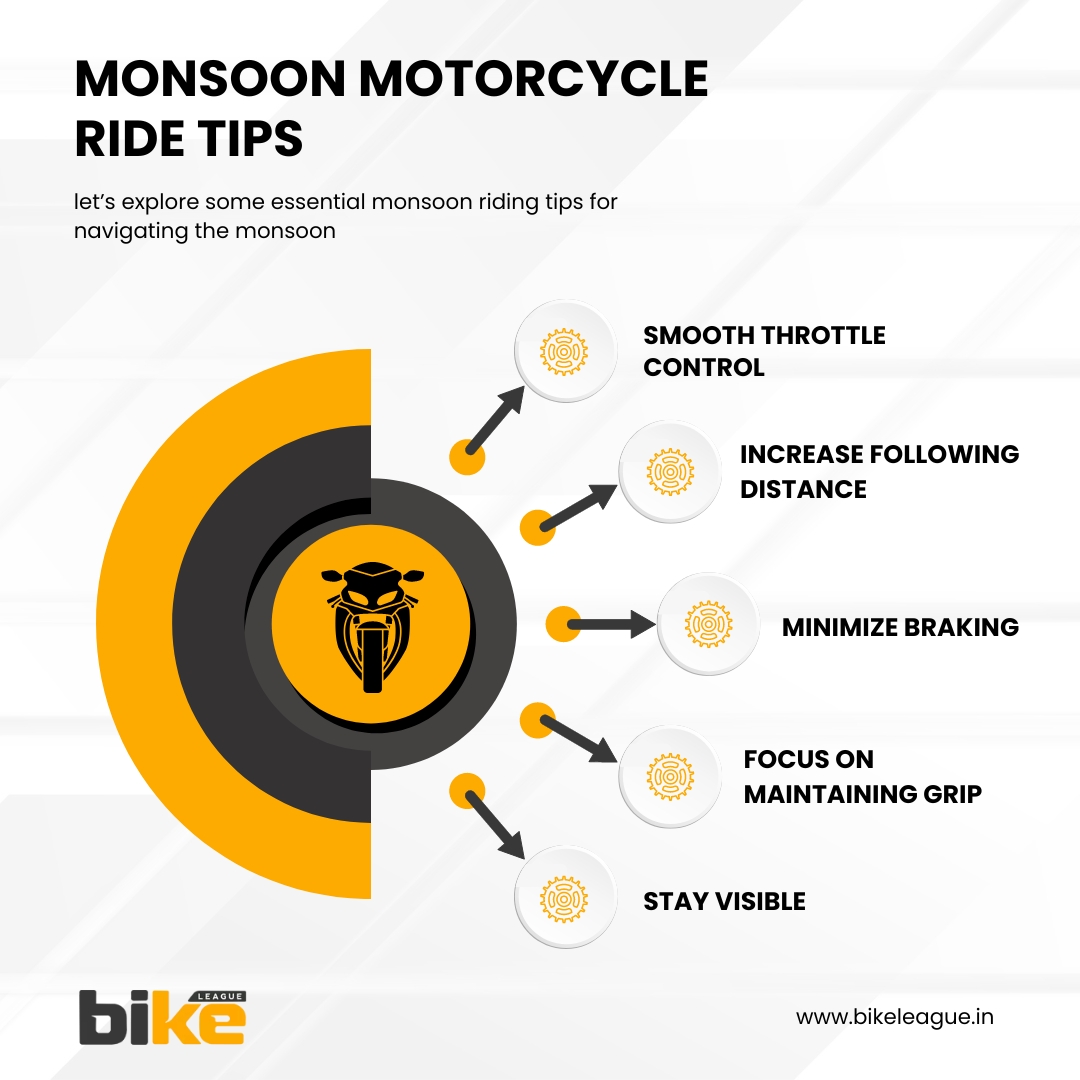
Now that you and your bike are set, here are some key tips for riding safely during the monsoon:
- Smooth Throttle Control:Avoid sudden acceleration or braking. Keep your throttle steady to prevent wheel spin or skidding.
- Increase Following Distance: In the rain, double or even triple your following distance. This gives you more time to react if the vehicle ahead stops suddenly.
- Minimize Braking: Plan ahead and try to avoid sudden stops. Use your brakes gently, especially when turning. You can also use engine braking by downshifting to slow down smoothly.
- Focus on Maintaining grip: Be careful on slippery surfaces such as painted road markings, metal gratings, or loose gravel.
- Stay Visible: Keep your headlights on low beam during the day for better visibility. Use your turn signals early to let others know your moves.
How To Ride A Motorcycle In Flooded Areas In India?
Riding motorcycles through flooded streets demands caution due to hidden hazards like potholes and poor traction on Indian roads. Monsoon flooding affects millions annually, making preparation essential for both ICE and EV riders. Key precautions prevent engine damage, electrical failures, and accidents.
1. Essential Pre-ride Checks
Inspect tyres for deep treads to grip wet surfaces and maintain pressure for stability. Verify brakes, lights, and fluids; for EVs, confirm IP67/68 ratings on the battery and motor, which typically handle 200-600mm of water depth, depending on models like the Ather Rizta (400mm) or the Ampere (600mm). Elevate parking in flood-prone areas by installing stands or covers to shield the undercarriage.
2. On-road Riding Techniques
Maintain steady low speeds (under 20 km/h) in first gear, keeping RPM at 2,000-3,000 to prevent water from entering the exhaust on ICE bikes. Brake gradually using engine braking over sudden stops, and walk the bike if the water exceeds ankle depth. Avoid puddles, edges, and manhole covers; scan ahead for currents or debris common in cities like Mumbai or Chennai.
3. Ev-specific Precautions
EV two-wheelers like the Revolt RV400 or BGauss MAX offer higher wading limits (230-300mm), but avoid knee-deep floods to prevent battery shorts, despite IP ratings. Dry the bike fully before charging, as water on the ports can cause faults. Check manufacturer specs—Ola or Suzuki e-Access handles submersion better, but warranties are voided for reckless wading.
4. Insurance And Post-flood Care
Opt for comprehensive two-wheeler insurance with engine protection and zero-depreciation add-ons covering floods, vital in India where waterlogging damages bikes more than cars. Post-wade, don’t restart stalled engines—tow to service; for EVs, inspect seals immediately. Pump brakes on a dry road to clear water from drums.
How To Plan Safe And Stress-free Routes For The Monsoon For Avoiding Floods And Navigating Rainy Roads In India?
Planning your ride during the Indian monsoon is all about staying ahead of the weather and picking the safest path. Before you set out, check for flood-prone zones and look up real-time weather updates, so you don’t get caught in waterlogged roads. Two-wheeler riders, especially, need to be extra careful. Use apps and ask locals to find out which routes are safest—often, elevated highways are better than city underpasses that might flood quickly. With climate change bringing heavier rains, putting safety first is more important than ever.
1. Handy Apps To Help You Navigate
Here are some apps you can count on for flood alerts and real-time route planning during the rainy season:
- FloodWatch India: This app gives you a 7-day flood forecast, real-time river levels from hundreds of stations, and location-based risk updates in both English and Hindi. It’s perfect for checking river basins like the Ganga or Godavari before you head out.
- IMD Mausam: Get rain radar, lightning alerts, and instant weather updates. Pair this with Google Maps to avoid areas highlighted in orange or red for heavy rainfall.
- Drive Weather: This app gives you route-specific weather forecasts, radar overlays, wind chill info for bikers, and time sliders so you can pick the driest window for your journey.
- AccuWeather/Windy: Both apps offer hyperlocal rain predictions and track storms, making it easier to dodge sudden downpours while you’re on the highway.
2. Safer Route Strategies
Choose routes that stick to higher ground and roads that are monitored for safety. This simple step can help you avoid most flood risks.
| Strategy | Details | Examples |
|---|---|---|
| Elevated Highways | Stick to NH48 (Delhi-Mumbai) or NH44 stretches with drainage; avoid underpasses. | Mumbai-Pune Expressway over coastal lows. |
| Avoid Low-Lying Areas | Bypass riverbanks, urban flood hotspots like Delhi’s Yamuna or Chennai’s suburbs. | Use the CWC Flood Forecast map for real-time basin status. |
| Hilly Alternatives | Skip landslide zones like Dharamshala-Manali; choose Wayanad’s maintained roads. | Munnar via NH85 if clear. |
3. Pre-trip Planning Steps
- Check the IMD or CWC weather forecasts a day or two before your trip, especially if you’re planning to ride for more than one day. Turn on app notifications so you stay updated while on the road.
- Enter your planned route in your weather or navigation app to see if rain is expected along the way. If heavy rain is predicted, it’s best to postpone your ride for safety.
- Check local updates from traffic police on social media or use highway apps to find out about any diversions or road closures before you travel.
- Bring something to help park your bike in an elevated spot if you need to stop, and make a note of the nearest dry shelters along your route—just in case the weather turns worse than expected.
How To Take Care Of Your Rain Gear During The Indian Monsoon (cleaning, Drying & Storage)
Looking after your rain gear properly during India’s heavy monsoon season means it will keep you dry, comfortable, and protected for longer. With a little regular care, you can stop problems like mildew, leaky seams, and lost waterproofing—even with all the humidity and tropical downpours.
1. Cleaning Your Gear
- After every ride, give your gear a quick rinse with lukewarm water and a mild, pH-neutral soap. This washes away mud, salt, and road grime that can block the fabric’s breathability.
- You can hand-wash your raincoat, or use a gentle machine cycle at around 30–40°C with all the zippers closed. Stay away from bleach, fabric softeners, or hot water—they can damage the waterproof layer. If your gear is really dirty, try a special technical wash like Nikwax.
- Pay extra attention to areas that get dirty fast, like cuffs and hems. Spot-clean these, then rinse everything twice to make sure no soap is left behind before you start drying.
2. Drying Your Gear
- Let your rain gear air-dry in a shady, breezy place—don’t leave it in direct sunlight or near a hot surface, or you might damage the waterproofing. Hang it upside down on a wide hanger and leave it for a day or two until it’s totally dry.
- If your gear is lined, you can use a fan or a tumble dryer on low heat for a short time—just make sure there’s no moisture left, so you don’t get mould or bad smells later.
- To check if it’s really dry, press the fabric with your hand. If it still feels damp, let it dry longer. Damp rain gear can lose its waterproofing faster if you use it again too soon.
3. Storing Your Gear
- Store your rain gear only when it’s completely clean and dry. Fold it loosely or hang it on a padded hanger, and keep it in a breathable cotton bag in a cool, dry place. Try not to use plastic bags or store your gear in a damp cupboard, as this can trap moisture and cause problems.
- If the water doesn’t bead up on your gear anymore, it’s time to reapply a DWR (waterproofing) spray—usually every month or after washing. Check the seams once a year to make sure there are no cracks or leaks.
- If you use your rain gear a lot, think about replacing it after 2–3 monsoon seasons. Cheaper rain suits may need to be replaced even sooner, especially with India’s long rainy spells.
What Is The Step-by-step Guidance For Caring For Your Motorcycle Or Ev After A Monsoon Ride In India?
After riding through floods or heavy rain, it’s important to look after your bike right away. This helps prevent damage such as engine trouble, rust, or electrical problems—issues common during India’s monsoon season. The steps are different for regular motorcycles (ICE) and electric bikes (EVs), but the goal is always the same: keep your ride safe and ready for your next adventure.
1. If You Have A Petrol/diesel Motorcycle (ice):
- Do not restart: Don’t try to restart your bike if it’s been in deep water. Instead, push it to a dry place and disconnect the battery to avoid short circuits.
- Drain out any water: Remove the spark plugs and crank the engine to drain it. If the oil looks milky, drain it and refill with a flushing oil or kerosene mix. Let the engine idle for about 10 minutes, then add fresh oil.
- Dry the air filter and the exhaust: Remove the wet air filter and either let it dry or replace it with a new one. Make sure to clear any water from the exhaust, too.
- Clean the electrical parts: Use a cloth or compressed air to dry any wires or connectors. Adding a bit of dielectric grease helps keep water out.
- Prevent rust: Spray chrome parts and the chain with WD-40, then wipe them dry. Lubricate the chain, and apply petroleum jelly to the rubber seals to protect them.
- Do a final check: Pump the brakes to dry them out and test your lights and horn. If your bike stalls in water, it’s best to take it to a mechanic.
2. For Electric Two-wheelers (evs):
- Park and drain: Put your bike on the centre stand in a sheltered spot to let any water drain out. Don’t charge the bike until it’s completely dry.
- Dry the outside: Use a blower (or a vacuum in reverse mode) to dry the charging ports, frame, and brakes. Wash off any mud or dirt.
- Check seals and electrical components: Ensure the battery and motor seals are intact. Dry off any connectors—EVs don’t need oil changes like petrol bikes.
- Prevent rust: Wipe down the frame and chain, and use WD-40 or an anti-rust spray once a week. Add a bit of grease to exposed metal parts.
- Do a quick check after drying: Make sure the display, lights, and brakes are all working. Listen for any unusual noises from the belt and have it checked if needed.
- Charge safely: Wait until everything is fully dry, then use the official charger to power up your EV.
3. Tips For Both Types Of Bikes
A good insurance policy can help cover repairs or towing if your bike gets stuck in deep water during the monsoon. Whenever possible, store your bike in an elevated spot, and check it regularly—especially during the rainy season.
Faq About Monsoon Bike Ride Tips
1. How Should I Prepare My Motorcycle For Monsoon Riding?
Before the monsoon season, conduct a thorough inspection of your motorcycle. This includes checking the brakes, tyres, and lights and ensuring all electrical components are water-protected. Regular servicing is crucial to maintain optimal performance during the rainy season.
2. What Type Of Tyres Are Best For Riding In Wet Conditions?
Tyres with deep treads are essential for maintaining grip on wet surfaces. Dual-purpose tyres are recommended for better traction, and it’s advisable to keep tyre pressure slightly below the manufacturer’s recommendation for improved performance in the rain.
3. How Can I Maintain Visibility While Riding In Heavy Rain?
Wear a reflective raincoat and helmet with a clear visor to maintain visibility in heavy rain. Use anti-fog spray on your visor, and consider installing an anti-fog windshield if your bike doesn’t have one. Ensure your bike’s lights work correctly and use them even during the day.
4. What Safety Gear Is Essential For A Monsoon Motorcycle Ride?
Essential safety gear for monsoon riding includes a high-quality rain suit, waterproof gloves, and boots. Wear a full-face helmet with a clear anti-fog visor to protect against rain and wind. Reflective gear can enhance your visibility to other road users.
5. How Should I Handle Slippery Roads And Waterlogged Areas?
When encountering slippery roads or waterlogged areas, reduce your speed and avoid sudden braking or sharp turns. Maintain a steady throttle and use both brakes gently. If the water level is high, avoid riding through it to prevent engine damage and loss of control.
6. What Should You Do If A Motorcycle Gets Stuck In Waterlogged Areas?
When a motorcycle gets stuck in waterlogged areas, ensure the water level is below the exhaust or the silencer before starting. Otherwise, water will be sucked into the engine through the exhaust, causing severe damage.
7. What Should I Do If My Bike Skids On A Wet Road?
If your bike skids on a wet road, do not panic. Avoid abrupt movements and gently ease off the throttle. Steer in the direction of the skid to regain control. Keep both hands firmly on the handlebars and use light braking if necessary.
8. How Can I Stay Dry And Comfortable During Monsoon Rides?
To stay dry and comfortable, invest in a high-quality waterproof rain suit. Wear moisture-wicking base layers to keep sweat away from your body. Ensure your gloves and boots are waterproof and have a good grip. Take breaks in sheltered areas to avoid prolonged exposure to rain.
9.are There Any Specific Tips For Riding A Bike In Rainy And Wet Conditions During The Monsoon?
Yes, there are particular riding techniques for monsoon conditions. Ride at a reduced speed, maintain a safe distance from other vehicles, and avoid sudden braking or acceleration. Use engine braking where possible and stay in the lane where the water is less likely to accumulate.
10. How Can I Protect My Motorcycle’s Electrical Components During The Monsoon?
Protect your motorcycle’s electrical components by applying dielectric grease to connectors to prevent water ingress. Cover exposed wiring with insulation tape and check for any signs of wear or damage. Ensure your battery is in good condition and fully charged.
11. What Should I Do To Maintain My Motorcycle After Riding In The Rain?
After riding in the rain, clean your motorcycle thoroughly to remove dirt and mud. Lubricate the chain to prevent rust and ensure smooth operation. Regular maintenance checks are essential to keep your bike in good condition.
Other Related Articles To Monsoon Bike Ride
- Bike clutch – Different types explained with pros & cons
- Bike wash – Different types, procedures, precautions, FAQ
- Braking in motorcycle – All expert tips for bikers
- Motorcycle fuel tank – How to maintain properly
- BGauss
Conclusion
Monsoon rides can be some of the most memorable journeys you’ll ever take—if you’re prepared. With a little extra care for your bike, the right rain gear, and smart planning, you can enjoy every rainy adventure without worry. Remember, it’s not just about getting to your destination, but also about enjoying the ride and staying safe along the way. Embrace the rain, keep your spirits high, and let every ride become a story worth sharing.
Enjoy the monsoon, face the weather, and make great memories on your motorcycle trips! If you have any questions about riding in the rain, email us at bikeleague2017@gmail.com. We’re always happy to help. You can also connect with Bikeleague India on social media.
hero
Can you please elaborate the requirement?
Can you please elaborate the requirement?
India Uttar Pradesh Pratapgarh
Can you please elaborate the requirement?