Long story short: Are you curious about the best way to ride on a motorcycle trip in India? Explore our insights on riding with apillion versus going on individual bikes without a pillion for your next journey!
Most discussions focus on group or solo riding. We have a separate article on that topic— feel free to check it out. Here, we look at another option: riding pillion or each person riding their own bike. Remember, solo riding and riding individual bikes without a pillion are different, since the latter means more than one motorcycle.
When planning a motorcycle trip in India, there’s more to think about than just the route or what to pack. One key choice is your riding setup: will you ride with a pillion, or will everyone have their own bike? This guide covers the pros, cons, and practical tips for both, so you can pick what works best for your adventure, safety, and budget.
Key Takeaways
- Riding Setup Matters: Choosing between riding with a pillion or on individual bikes significantly impacts cost, comfort, and safety. Each approach has distinct pros and cons that should be weighed according to the journey type and rider experience.
- Economy vs Independence: Riding with a pillion is more economical, offering shared fuel and maintenance costs, but can compromise handling and comfort. Individual bikes provide more control and flexibility, but double fuel and maintenance expenses.
- Safety and Legal Considerations: Helmet use is mandatory for both rider and pillion, with pillion riders at higher risk of serious injury—especially if not properly equipped. Legal compliance and proper safety gear are crucial for everyone on the trip.
- Preparation and Communication: Riding with a pillion requires specific motorcycle adjustments (suspension, tyre pressure) and good communication between rider and passenger. Solo riders must coordinate more using hand signals or intercoms, especially when travelling in a group.
- Choose Based on Route and Experience: The best riding setup depends on the terrain—pillion riding is ideal for city and highway routes, while solo riding is better for mountains and off-road conditions. Careful planning and an honest assessment of skills ensure a safer, more enjoyable journey.
1. Motorcycle Ride With A Pillion
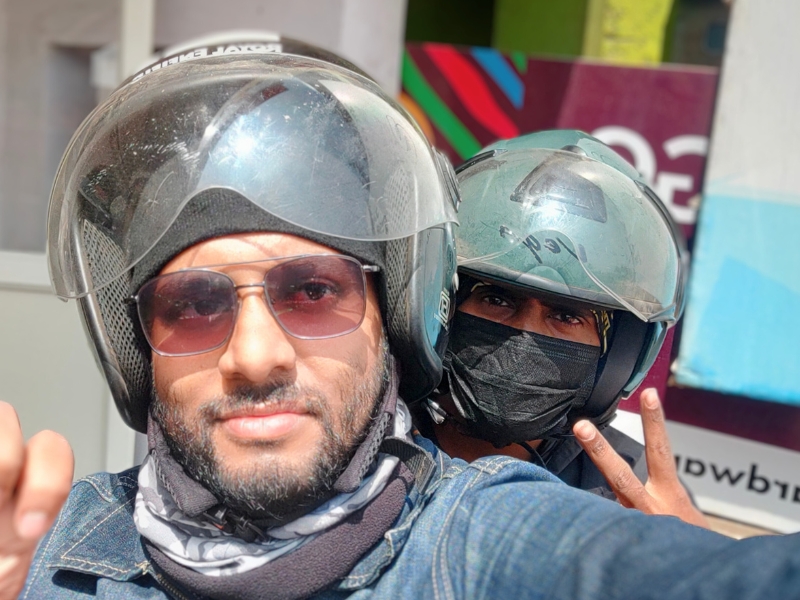
Pros
- Shared fuel costs between rider and pillion make it more economical per person compared to riding two separate motorcycles
- Maintenance costs can be shared between both parties, reducing individual financial burdens
- Lower overall fuel consumption compared to two separate motorcycles.
- Creates opportunities for bonding and shared experiences
- Provides mutual support during emergencies
- Enhanced visibility to other road users due to a larger profile
- Practical assistance during mechanical issues or emergencies
Cons
- Higher vulnerability for pillion riders
- Increased risk of head and facial injuries, especially when helmets aren’t worn
- Side-saddle seating position (common among female pillions) significantly increases accident risk
- Additional weight affects motorcycle handling and performance
- Requires specific suspension adjustments and tyre pressure modifications
- May need seat modifications and proper handhold installation
- Increased wear on tyres, brakes, and suspension components
Regulations
- Mandatory helmet use for both rider and pillion under Section 129 of the Motor Vehicles Act
- Maximum of one pillion rider allowed per motorcycle
Communication And Coordination
- Direct communication between rider and pillion
- Easier coordination for stops and route changes
- Immediate feedback on comfort and needs
- Shared decision-making during the journey
2. Motorcycle Ride On Individual Bikes Without A Pillion

Pros
- Better manoeuvrability and control for each rider
- Individual freedom to choose riding style and pace
- Reduced risk associated with weight distribution issues
- Greater stability and handling for each motorcycle
- Individual control over riding position and comfort
- There is no compromise on seating space
- Better temperature management (especially in hot Indian weather)
- Freedom to take breaks as needed
Cons
- Double fuel consumption as two engines are running
- Individual maintenance costs for each motorcycle
- Separate insurance and registration expenses
- Individual gear requirements increase the overall cost
Regulations
- Each rider must have a valid driving license and documentation
- Individual responsibility for traffic rule compliance
- Separate insurance and registration requirements for each vehicle
Communication And Coordination
- Requires communication systems or pre-planned protocols
- There is a need for clear hand signals and group riding formation
- Regular stops to ensure group cohesion
- More complex coordination for route changes or emergencies
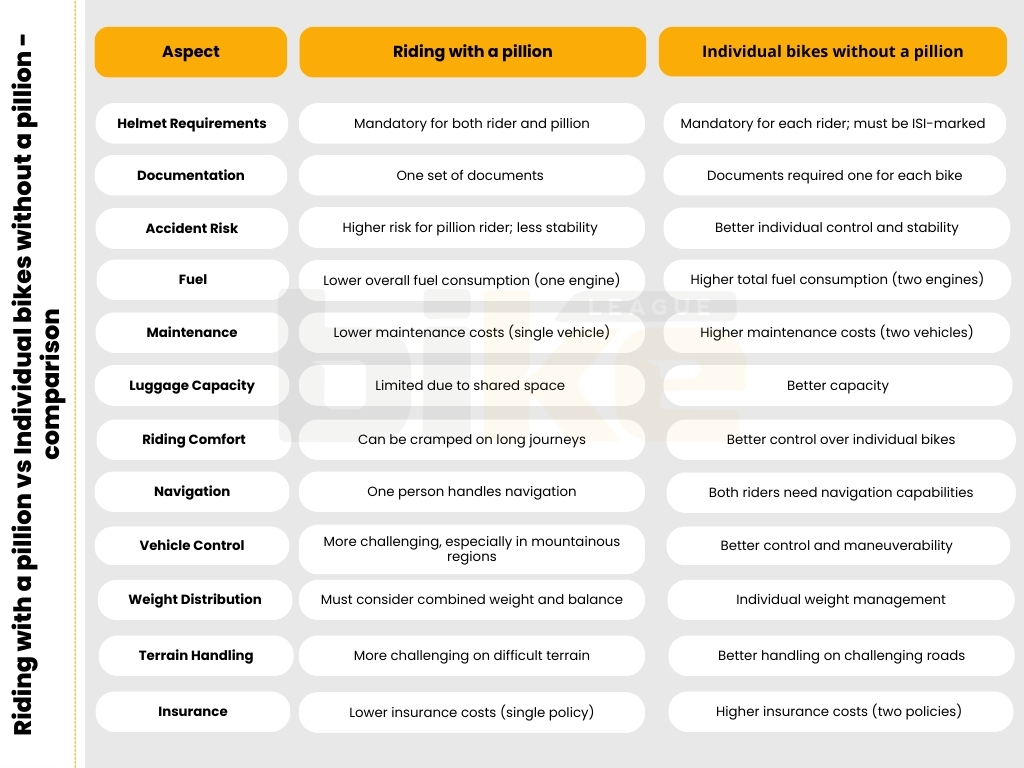
Comparison Of Motorcycle Rides With Or Without A Pillion
As you plan your motorcycle trip in India, you’ll have to choose between sharing a bike with a pillion or riding separate bikes. We’ll look at important factors like safety, fuel use, terrain, and insurance to help you decide what suits your route, trip length, and budget.
| Aspect | Riding with a pillion | Individual bikes without pillion |
|---|---|---|
| Helmet Requirements | Mandatory for both rider & pillion | Mandatory for rider; pillion is optional |
| Documentation | One set of documents | Documents required for each bike |
| Accident Risk | Higher risk for rider; less stability | Better individual control & stability |
| Fuel | Lower fuel consumption (one engine) | Higher total fuel consumption (two engines) |
| Luggage Capacity | Lower luggage; shared space | Higher luggage capacity per vehicle |
| Riding Comfort | Can be cramped on long journeys | Better comfort on individual bikes |
| Navigation | One person handles navigation | Both need navigation capabilities |
| Vehicle Control | More challenging especially in mountainous regions | Better control & manoeuvrability |
| Weight Distribution | Must consider combined weight and balance | Individual weight management |
| Terrain Handling | More challenging on difficult terrain | Better handling on challenging roads |
| Insurance | Lower insurance costs (single policy) | Higher insurance costs (two policies) |
Best Scenarios For Motorcycle Rides By Pillion Vs Solo By Route Type
Roads in India call for different approaches. Riding with a pillion is more cost-effective on highways and in cities, but solo riding is better for mountains and tough routes. The table below shows which setup is best for places like Leh Ladakh, the Western Ghats, and daily commutes, so you can plan based on the terrain, distance, and your experience.
| Route/Terrain | Best Setup | Why |
|---|---|---|
| City Commutes | Pillion | Saves parking/fuel; easy |
| Highway Tours | Pillion | Fuel savings; stable cruising |
| Mountain Ghats | Solo | Better traction/control in hairpins |
| Multi-day Tours | Mix | Alternate prevents fatigue |
| Off-road | Solo | Max clearance, easier handling |
Pro tip: Planning to ride with a pillion in Leh-Ladakh? It’s possible if you pack light and have an experienced rider, but solo riding is safer for those new to the area.
What Specific Adjustments Should Be Made To The Motorcycle For Riding With A Pillion In India?
Before you ride with a pillion in India, adjust your motorcycle to keep both you and your passenger safe and comfortable.
1. weight Distribution And Suspension Adjustments
Carrying a pillion adds extra weight, affecting the motorcycle’s handling. It’s crucial to adjust the suspension settings to accommodate this additional weight. This may involve:
- Increase the preload on the rear shock absorbers to maintain proper ride height and stability.
- Adjusting damping and rebound settings ensures the bike handles well under the extra load.
2. tyre Pressure
Check and adjust the tyre pressure according to the manufacturer’s recommendations for riding with a pillion. Proper tyre pressure is vital for maintaining grip and stability, especially when carrying extra weight.
3. footpegs And Seating
Ensure the footpegs are correctly positioned for the pillion rider. They should be easily accessible and comfortable. Additionally, if your motorcycle has a dedicated pillion seat, ensure it is well-padded and secure.
4. safety Gear
Both the rider and the pillion should wear appropriate safety gear. This includes:
- Helmets: Both riders must wear helmets that meet safety standards.
- Protective Clothing: Encourage the pillion to wear protective jackets, gloves, and sturdy footwear to minimise injury risk in case of an accident.
5. riding Techniques
Adjust your riding style when carrying a pillion:
- Smooth Acceleration and Braking: Avoid sudden movements. Gradual acceleration and braking help maintain balance and comfort for the pillion.
- Communication: Establish signals with your pillion for when to lean or brace themselves, especially during turns or sudden stops.
What Are The Actionable Comfort Tips: Stretches For Pillion Riders, Seat Cushion Recommendations, And Advice For Long-duration Rides?
Pillion riders can get numbness, back pain, or tired on long rides because of vibrations and posture. Simple stretches, seat cushions, and good habits help a lot. Take regular breaks, sit properly, and use the right gear to stay comfortable on rides over 300 km.
Stretches For Pillion Riders
Do these at every stop (every 1-2 hours) to relieve hip flexors, lower back, and legs strained from constant sitting.
- Standing lunge (hip flexor stretch):Step one foot forward into a lunge, push hips forward until you feel the stretch in the rear hip; hold 20-30 sec per side.
- Seated forward fold: From the seat edge, reach forward to touch toes; stretches hamstrings and back (10-15 sec).
- Shoulder rolls and neck tilts: Roll shoulders backwards 10x, tilt head side-to-side; eases upper body tension from gripping.
Seat Cushion Recommendations
Gel or air cushions distribute pressure and absorb shocks, ideal for Indian roads’ bumps.
| Type | Best For | Examples (India-available) | Price Range |
|---|---|---|---|
| Gel pads | Budget, daily/long rides | Zana Universal Gel (₹1,500-2,000), Airhawk | ₹1,000-3,000 |
| Air cushions | Vibration reduction | SW-Motech Traveller Pillion, Air Comfy (37×20 cm) | ₹2,500-5,000 |
| Backrest + pad | Tours with back pain | OEM add-ons or aftermarket for RE/Himalayan | ₹1,500+ |
If your ride is over 150 km, a firm seat is usually better than a very soft one. Add extra padding only if your seat is narrow.
Long-ride Advice
- Posture: Feet firm on pegs, thighs gripping seat, one hand on grab rail/waist; lean with rider in corners.
- Rider habits: Smooth throttle/brakes, no sudden leans; communicate via helmet intercom or taps.
- Breaks & prep: Stop every 80-100 km to walk/stretch; adjust suspension preload for weight. Hydrate, wear padded gloves/jacket for vibes.
Many riders have used these tips to enjoy Royal Enfield or Himalayan tours, which are popular in India.
What Hand Signals Are Recommended For Rides On Separate Motorcycles In India?
Using hand signals while riding motorcycles is essential for communication. Here are some key hand signals that are commonly recommended for riders in India: For a detailed guide, refer to our dedicated article by visiting this link
1. Left Turn Signal
Extend your left arm straight to the side to indicate a left turn. This universally recognised signal helps inform other riders of your intended direction.
2. Right Turn Signal
For a right turn, you can either extend your right arm straight out or use your left arm by bending it at the elbow and pointing upwards. The latter is often preferred in India due to traffic positioning.
3. Stop Signal
Extend your left arm downwards with your palm facing back to signal that you are stopping. This signal alerts other riders to slow down or stop.
4. Hazard Warning
If there is a hazard on the road, point with your left hand toward the hazard. For example, if the hazard is on the left, point left; if it’s on the right, use your right hand to indicate.
5. Slow Down Signal
To indicate that the group should slow down, extend your left arm downwards with your palm facing back, similar to the stop signal, but with a more relaxed posture.
6. Double File Signal
When riding two-by-two, raise two fingers on your left hand. This signal helps organise into a more compact formation.
7. Police Or Speed Trap Warning
To warn others about a police speed trap, extend your left arm to the side and repeatedly tap the top of your helmet. This is a standard signal among riders to promote safety.
How To Pack Efficiently When Riding With A Pillion Versus On Individual Bikes?
If you’re riding solo, keep your luggage small, centred, and low. For pillion rides, focus on your passenger’s comfort and use side or low-mounted bags instead of stacking everything on the back. Because space is tight with a pillion, pack lighter even if your bike can carry more.
Best Luggage Setups
- Solo rides: tank bag for quick-access items, tail bag for clothes/rain gear, and small panniers or a duffel if you need more space.
- With pillion: saddlebags/panniers are usually the best choice because they keep weight low and free up the seat; a small tank bag is fine if it does not interfere with steering.
- Long tours: modular hard cases or well-secured soft panniers work best, because they carry more while keeping the load balanced side-to-side.
Packing Logic
Pack the heaviest items low and close to the bike’s centre, put medium-weight items near the rider, and keep light, bulky things like clothes or rain gear on top or at the back. Don’t load too much behind the pillion, as it can make the front end lighter, affect braking, and cause the bike to wobble at speed.
Pillion Impact
When riding with a pillion, the passenger already adds significant weight, so space and comfort are limited. Carry fewer bulky items, use compression bags, and avoid stacking luggage high, as this can raise the centre of gravity or block the pillion’s movement.
Practical Setup
For two-up touring, use balanced saddlebags for most of the weight, a small tank bag for documents and electronics, and a light tail or top bag only if the bike still feels stable. If your bike has adjustable suspension, increase the preload for the extra load and test the bike before a long ride.
What Additional Insurance Considerations Exist When Riding A Motorcycle With A Pillion Passenger In India?
When riding with a pillion passenger in India, there are several essential insurance considerations to keep in mind to ensure both the rider and passenger are adequately protected:
1. Pillion Rider Coverage
Make sure your motorcycle insurance includes coverage for pillion riders. According to IRDAI rules and the Indian Motor Act, third-party bike insurance must cover damages for both the rider and pillion passengers in case of an accident.
2. Comprehensive Insurance Benefits
While third-party insurance is mandatory, comprehensive insurance offers better protection. This policy covers third-party liabilities and compensates pillion riders for injuries, accidental death, or permanent disability.
3. Additional Premiums For Enhanced Coverage
Consider adding pillion passenger covers, which may require additional premiums. These add-ons enhance coverage for events like accidental death or disability, ensuring better protection for both riders and passengers.
4. Legal Compliance
Ensure that your insurance policy complies with legal requirements for covering pillion passengers. This protects you from liability in the event of an accident.
5. Communication With Insurer
Before carrying pillion passengers, check with your insurance provider about coverage limits, exclusions, and the claims process for passenger injuries. This helps prevent complications if an accident occurs.
Safety Data: Pillion Vs Solo Motorcycle Riding Risks
About 75,000 people die in two-wheeler accidents each year in India. Pillion riders face higher risks, even though there are fewer crashes involving them. Here’s what the data shows:
| Metric | Solo Riders | Pillion Riders | Source |
|---|---|---|---|
| Helmet Use | 9.9% | 2.5% | 6,579 crash study |
| Unhelmeted Deaths | ~30,000 (2/3) | ~14,500 (1/3) | National |
| Injury Rate (Lone Crashes) | 21.2% | 35.5% | Iran study (similar patterns) |
Key takeaway: Pillion riders are at higher risk for serious head and neck injuries and are less likely to wear helmets, which makes accidents more severe. Always make sure both the rider and pillion wear helmets.
Common Myths About Pillion Riding
Some believe pillion riding is always riskier or that solo rides are always more fun, but that’s not true. The real difference comes down to preparation and technique. With the right approach, riding with a pillion can be just as safe and enjoyable as riding solo. Data and expert opinions back this up.
| Myth | Reality |
|---|---|
| Pillion riding always riskier than solo | Risk from poor prep, not passengers. Helmets + smooth riding = comparable safety. |
| Solo always more fun/better handling | Two-up builds skills, shares adventure. Proper load keeps handling solid. |
| Pillion doesn’t need full gear | No control = higher vulnerability. Helmets cut fatalities 40-70%. |
Faq Related To Riding With A Pillion Or Individual Bikes Without A Pillion In India
1. What Are The Main Pros And Cons Of Riding With A Pillion On A Motorcycle Trip In India?
Riding with a pillion is more economical and encourages shared experiences, but it can compromise handling, increase the pillion’s accident risk, and require extra preparation for comfort and safety.
2. How Does Riding On Individual Bikes Without A Pillion Differ From Riding Two-up?
Riding individual bikes offers more control, freedom, and comfort for each rider, but it doubles fuel and maintenance costs and requires more coordination among riders.
3. Are There Specific Legal Requirements For Pillion Riders In India?
Yes. Both the rider and the pillion must wear helmets, and only one pillion is allowed per motorcycle, as per Section 129 of the Motor Vehicles Act.
4. What Motorcycle Adjustments Are Needed When Riding With A Pillion?
Adjust suspension settings, increase tyre pressure as per manufacturer guidelines, and ensure proper seating, footpeg position, and handholds for the pillion.
5. What Safety Gear Is Recommended For Pillion Riders?
Both rider and pillion should wear helmets and protective gear such as jackets, gloves, and sturdy footwear to minimise injury risk.
6. How Should Luggage Be Packed Differently For Pillion Versus Solo Rides?
When riding with a pillion, pack lighter, use saddlebags or panniers, and avoid stacking luggage high behind the passenger. For solo rides, you have more flexibility but should still keep the load centred and balanced.
7. What Are The Best Communication Methods For Riders On Separate Bikes?
Use helmet intercoms, pre-arranged hand signals, and regular stops to coordinate. Clear group riding protocols enhance safety and cohesion.
8. Are There Additional Insurance Considerations For Pillion Riders?
Check that your insurance policy covers pillion passengers, and consider add-ons for enhanced protection. Comprehensive policies offer better coverage for both the rider and the pillion in the event of an accident.
9. What Stretches Or Comfort Tips Help Pillion Riders On Long Journeys?
Regularly stretch hips, back, and shoulders at breaks, use gel or air seat cushions, and maintain good posture to reduce fatigue and discomfort.
10. Is Pillion Riding Always Riskier Than Solo Riding?
Not always. The risk depends on preparation, safety gear, and riding technique. With proper precautions, riding with a pillion can be as safe and enjoyable as solo riding.
Other Related Articles From Bikeleague India
- Must have bike accessories for a long distance trip
- Motorcycle Hand Signals in India Explained
- Best bike trip routes in Kerala
- QJ Motor SRC 250
- Harley Davidson Low Rider S
Conclusion
In the end, the best way to enjoy a motorcycle trip in India depends on what matters most to you—cost, comfort, safety, and the type of adventure you want. Riding with a pillion helps you share memories and save money, but it does need extra preparation and attention to safety.
Riding individual bikes gives you the most freedom and control, but it costs more and comes with more responsibility. Whatever you choose, plan well, follow safety rules, and make the trip your own. Safe travels!
If you have questions or need more help, email us at bikeleague2017@gmail.com or leave a comment below. You can also follow Bikeleague India on social media.