
Long story short: In short, you can keep your motorcycle’s fuel tank in great shape by following these maintenance tips. Use the advice below to prevent rust, avoid leaks, and keep your gas tank working well.
Taking care of your motorcycle’s fuel tank is important for smooth rides and long-lasting performance. Whether you ride daily or occasionally, a clean, leak-free tank keeps your engine running well. It also reduces unexpected repairs. This guide shares practical tips to prevent rust and leaks. It helps you handle modern fuels so your gas tank stays in great shape for Indian roads.
Key Takeaways
- Rust forms when moisture condenses inside a steel tank, so keeping the tank full and using water-resistant covers during humid or rainy weather are the simplest ways to prevent it.
- Water enters the tank through a poorly sealed cap or contaminated fuel; draining and refilling with good-quality fuel is the most reliable fix once it’s inside.
- Tank leaks usually happen because of rust or wear and are rarely worth fixing yourself. Replacing the tank is a safer long-term solution than trying to patch it.
- Plastic or polymer tanks, which are common on scooters and some modern bikes, do not rust. However, they can be damaged by sunlight and stress cracks, so they need a different care routine than steel tanks.
- With E20 fuel now standard at most Indian pumps, regular fuel system cleaner, rubber component checks, and avoiding long-term fuel storage matter more than they did with older E10/E5 blends.
What Are The Common Issues Faced By Motorcycle Fuel Tanks?
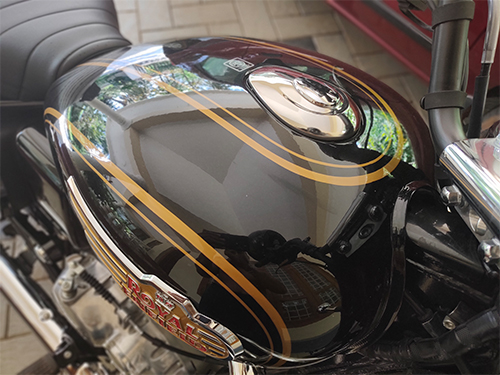
The main issues faced in motorcycle fuel tanks are
- Rust in the motorcycle tank (steel tanks)
- Water in the motorcycle tank
- Motorcycle tank leakage
- Cracking or degradation (plastic/polymer tanks)
- Galvanic corrosion and denting (aluminium/alloy tanks)
Quick reference — jump to the section that matches your tank material:
| Material | How to Identify | Main Failure Mode | Repairable? |
|---|---|---|---|
| Steel | Magnetic, sharp/rigid tap sound | Rust from condensation | Yes — cleaning, resealing, or replacement |
| Plastic/Polymer | Non-magnetic, dull/flexible tap sound | UV degradation, stress cracking, permeation odour | Rarely — replacement usually required |
| Aluminium/Alloy | Noticeably lighter, non-magnetic | Galvanic corrosion, denting, weld seam leaks | Yes — specialist TIG welding |
Most of these problems, especially rust, affect steel tanks. If your motorcycle or scooter has a plastic fuel tank, you can skip to the plastic tank section below, since it needs different care. For people who own their motorcycles for a long time, rust and leaks are the main concerns with steel tanks. Let’s look at these issues and how to fix them.
1. Rust In The Motorcycle Gas Tank
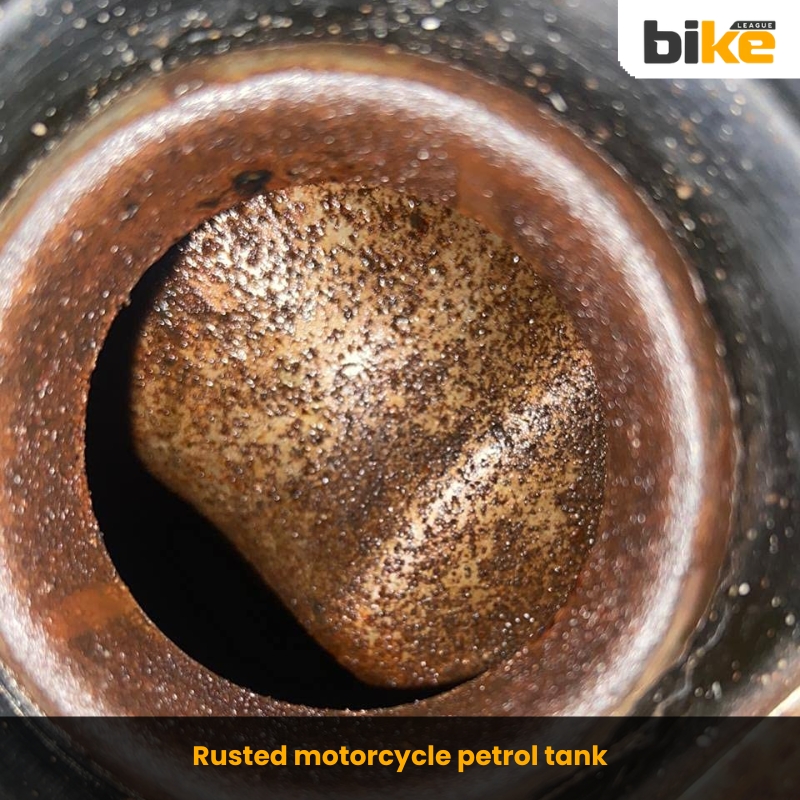
Causes Of Rust In The Motorcycle Tank
Most motorcycle fuel tanks are made from galvanised steel, which has a zinc coating to slow down rust. However, all steel eventually rusts. The main reason is condensation. When water vapour turns into liquid inside the tank, it gets trapped. This water then reacts with the iron and forms rust.
How To Prevent Rust In The Motorcycle Gas Tank?
To prevent rust in the motorcycle tank,
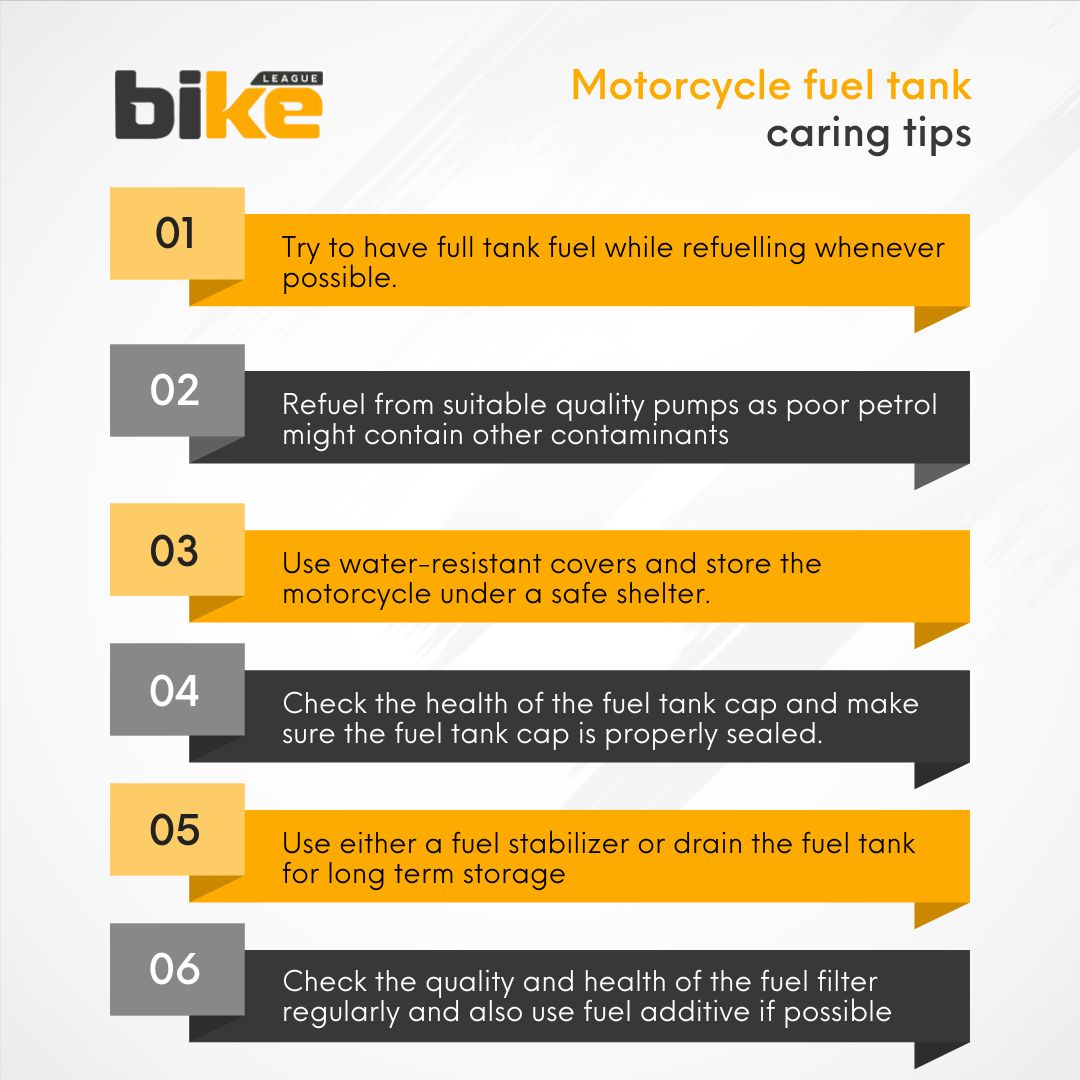
- Try to have a full tank of fuel while refuelling, which helps reduce corrosion as most of the tank material is covered in fuel.
- Try to refuel at reputable petrol pumps. Poor-quality petrol can contain contaminants that harm the tank, carburettor, and injector.
- If you live in an area where it rains or is humid, use water-resistant covers for your motorcycle while keeping it outside.
How To Clean Rust Inside A Motorcycle Gas Tank?
Cleaning a motorcycle fuel tank requires some experience and is not always a do-it-yourself job. Before you start, make sure to disconnect the petrol tank from other parts to keep things safe.
- Inspect the tank using a flashlight and determine whether it can be cleaned. Replacement is the best option if the tank is highly rusty or damaged.
- Remove the tank by draining the fuel. Unhook all the gas lines and sensors. It would be helpful if you didn’t do all of this yourself.
- Pour vinegar or a commercial cleaner and add nuts and bolts as agitators. Shake the tank several times in a day, or longer if needed, to loosen the rust.
- After shaking the solution, pour it out and rinse the tank with a garden hose. Add five gallons of hot water mixed with dish soap, then shake and empty it again. Dry the tank with a hairdryer or heat gun on low. Coat the inside with kerosene or a commercial sealer to stop new rust. Replace the fuel gasket before you reinstall the tank if it looks worn or old.
2. Water In The Motorcycle Gas Tank
Causes Of Water Present In The Motorcycle Tank
Water can get into your motorcycle’s tank by condensation or fuel pump leaks. Even a little water can cause problems.
How To Prevent Water From Entering The Motorcycle Tank?
- Check the bike’s petrol tank cap and make sure the fuel tank cap is properly sealed and tightened to prevent water from getting into the tank.
- Use a fuel stabiliser if your motorcycle sits unused for more than 30 days. Stabilisers absorb water in the fuel and help you avoid draining the tank.
- Use covers and store the motorcycle under a safe shelter if not using.
How To Clean Water Inside A Motorcycle Tank?
- Drain & refill is the ideal solution to drain the tank, clean it, and refuel it with good-quality fuel.
- Replacing the old fuel filter is another good option. A fuel filter serves as a barrier to prevent water from entering the vehicle’s engine through the fuel tank.
- Rubbing alcohol can help remove water from the tank by settling at the bottom and absorbing it.
- Adding fuel additives to the fuel tank will help dilute the fuel and water.
3. Motorcycle Tank Leakage
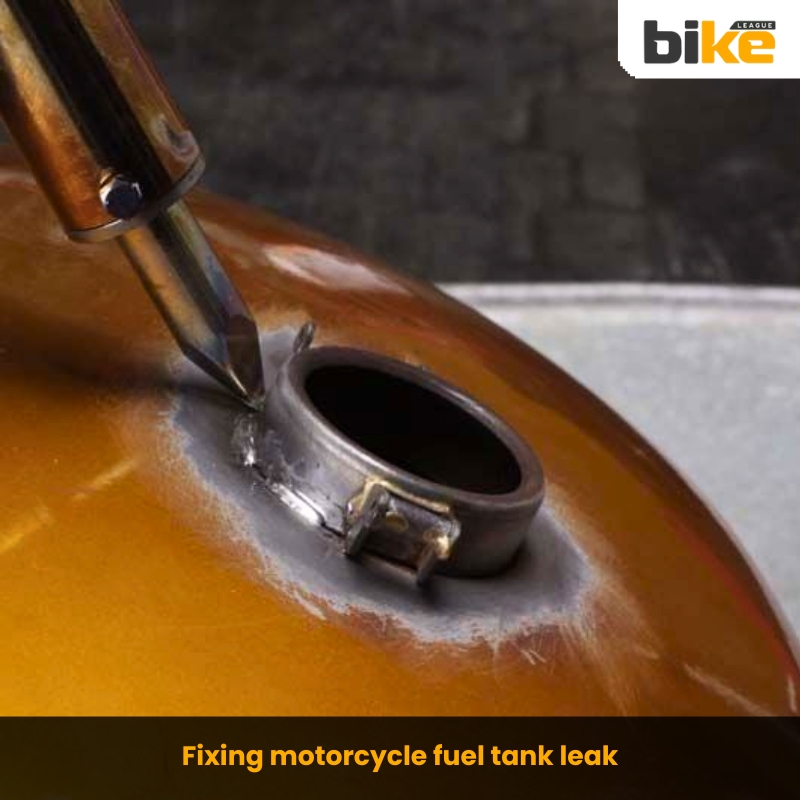
Causes Of Motorcycle Tank Leakage
A hole in your motorcycle’s tank often forms because of rust or wear and tear. Fuel leaks can also come from other parts, not just the tank.
How To Prevent Motorcycle Tank Leakage?
The tips for preventing rust in the motorcycle fuel tank also apply here. Please refer to them above.
How To Test For A Motorcycle Fuel Tank Leak At Home?
Before assuming the worst, a simple soapy-water test can help you find and confirm a leak without any special tools.
- Clean and dry the tank’s exterior, especially around seams, the fuel cap, the petcock, and any welds or mounting points, so old residue doesn’t give a false positive.
- Mix a solution of mild dish soap and water in a spray bottle — a few tablespoons of soap per cup of water is enough.
- With the tank full or near-full, spray the solution generously over seams, the fuel cap area, the petcock, and any spot you suspect might be leaking.
- Watch for small bubbles forming. A steady stream or cluster of bubbles pinpoints the exact leak location, even for pinhole leaks too small to see fuel dripping from.
- Mark the spot with a piece of tape or a marker once found, so you don’t lose track of it while drying the tank off.
- Wipe the tank dry afterwards and avoid riding until you’ve decided on a repair or replacement, since the test confirms a leak but doesn’t fix it.
This test is safer than running the engine to find leaks. It also works well for seepage you can smell but not see. If you can’t find bubbles but still notice a fuel smell, the problem may be fuel permeation (see the plastic tank advice). It could also be a leak elsewhere in the fuel line.
How To Seal A Motorcycle Tank Leak?
The safest way to fix a leaking petrol tank is to replace it. If you want to try repairing the leak, consult a skilled technician and discuss your options to determine the best course of action. Keep in mind that repairs can be risky and may not always be effective or last.
What To Do If You Smell Fuel While Riding
If you smell petrol while riding, treat it as an immediate safety issue, not something to check once you get home.
- Pull over as soon as it’s safe to do so — don’t wait for your destination. Move well away from traffic to the roadside or a parking area.
- Turn off the engine and ignition immediately. Don’t rev or idle the bike while diagnosing the smell.
- Don’t smoke, light a match, or start the bike near any open flame or heat source until you’ve confirmed there’s no active leak. Petrol vapour can ignite from a spark, not just an open flame.
- Look for visible fuel around the tank seams, fuel cap, fuel lines, and underneath the bike. A wet patch or drip on the ground confirms an active leak.
- If you see or smell strong fuel with no visible leak, it may just be a loose fuel cap or spillage from refuelling — check the cap is seated and tightened before assuming a tank problem.
- If a leak is confirmed, don’t ride the bike further. Call a mechanic or use roadside assistance to have it towed rather than risking a ride home with a compromised fuel tank.
- Once safely stopped, refer to the causes and fixes above to figure out whether it’s rust, a cracked tank, or a loose cap or fuel line.
4. Plastic/polymer Fuel Tanks: A Different Set Of Rules
Not all motorcycles or scooters in India have steel tanks. Many scooters and some newer bikes use tanks made from high-density polyethylene (HDPE) or reinforced polymer instead of steel. If your tank is plastic, most of the rust advice above does not apply, but plastic tanks still need regular care.
How To Tell If Your Tank Is Plastic Or Metal
Tap the tank gently near the filler neck. A dull, flexible sound means plastic, while a sharp, rigid sound means steel. The owner’s manual or a sticker near the fuel cap should also specify the tank material.
Common Issues With Plastic Fuel Tanks
- UV degradation: Prolonged sun exposure breaks down the polymer over years, making the tank brittle and more prone to cracking, particularly around mounting points and seams.
- Fuel permeation odour: Older or lower-grade polymer tanks can allow tiny amounts of fuel vapour to pass through the tank wall over time. This causes a persistent petrol smell even when there’s no visible leak. This is a material property, not a fault. It’s more noticeable in hot Indian conditions.
- Stress cracking at mounts and welds: Unlike steel, plastic tanks don’t dent — they crack, usually at stress points like mounting brackets or seam welds, often after an impact or from prolonged vibration.
- No rust, but sediment still collects: Plastic tanks won’t rust, but dust, sludge, and ethanol-related gum deposits can still build up at the bottom over time.
How To Maintain A Plastic Motorcycle Fuel Tank?
- Park in shade or use a cover when parking outdoors for extended periods — UV exposure is the main long-term threat to polymer tanks, not moisture.
- Avoid harsh solvents like acetone or strong acids (the vinegar/acid cleaning method used for rust in steel tanks can damage plastic tanks) — stick to mild soap-and-water or a cleaner specifically labelled safe for polymer/plastic fuel tanks.
- Inspect visually every few months for hairline cracks near the mounting brackets, filler neck, and seams, especially after any drop or minor accident.
- If you notice a persistent fuel smell with no visible wet spot, get the tank checked by a mechanic — it could be permeation reaching the end of the tank’s service life rather than an active leak.
Can A Cracked Plastic Fuel Tank Be Repaired?
Unlike steel tanks, plastic tanks generally can’t be soldered or patched with standard tank sealants. Specialist plastic-welding repair is possible for some cracks, but replacement is usually the safer and more reliable option, particularly for tanks carrying pressurised fuel-injection systems.
5. Aluminium/alloy Fuel Tanks: A Third Category
Steel and plastic aren’t the only tank materials on Indian roads. Some sportier and premium motorcycles use aluminium alloy tanks. Examples include the KTM Duke and RC range, several BMW models, and many higher-end naked or adventure bikes. Aluminium doesn’t rust like steel or crack under UV like plastic. However, it brings unique failure modes that owners often don’t expect.
How To Tell If Your Tank Is Aluminium
Aluminium tanks are lighter than steel tanks, and magnets won’t stick to them. The owner’s manual or a sticker near the fuel cap will also tell you the material, so check before you start any maintenance.
Common Issues With Aluminium/alloy Fuel Tanks
- Galvanic corrosion: Aluminium doesn’t rust like steel, but it can corrode when touching other metals, such as at mounting bolts or fuel cap threads. This corrosion appears as white, powdery spots instead of the reddish-brown flakes of steel rust.
- Denting instead of cracking: Steel tanks resist small impacts, and plastic tanks crack under stress. However, aluminium tanks dent more easily. If you drop your bike or a stone hits the tank, it may leave a dent without breaking the seal. If the same spot is dented many times, the metal can weaken and crack.
- Weld seam vulnerability: Aluminium tanks are typically welded rather than stamped in one piece like many steel tanks. These weld seams are the most likely failure point for leaks, especially after an impact or years of vibration.
- Fuel additive sensitivity: Some aggressive fuel system cleaners and tank sealants formulated for steel tanks can react with bare aluminium. Always check that a product is labelled safe for aluminium before using it.
How To Maintain An Aluminium Fuel Tank?
- Use dielectric grease or an anti-corrosion compound at points where the tank contacts steel hardware (mounting bolts, brackets) to reduce galvanic corrosion.
- Avoid pressure-washing directly at seams and mounting points, as trapped moisture there is what triggers galvanic corrosion in the first place.
- Inspect visually after any drop or low-speed tip-over — dents that aren’t obviously deep can still be sitting on a stressed weld seam underneath.
- Stick to cleaning products and fuel additives explicitly labelled safe for aluminium; when in doubt, mild soap and water is the safest default, same as with plastic tanks.
Can A Dented Or Leaking Aluminium Tank Be Repaired?
Minor dents can often be worked out by a specialist without affecting the tank’s integrity, unlike plastic. Leaks at weld seams can usually be TIG-welded and repaired by someone experienced with aluminium fabrication. This is more repairable than a cracked plastic tank, but it’s a specialist skill, not a general motorcycle mechanic job. Ask specifically for aluminium welding experience rather than a general fuel tank repair shop.
How To Maintain A Motorcycle Fuel Tank When Using E20 Fuel?
To maintain a motorcycle fuel tank with E20 fuel (20% ethanol), follow these important practices:
Key Maintenance Tips For E20 Fuel In Motorcycles
- Use Fuel System Cleaner Regularly: Adding about 40-50 ml of fuel system cleaner every 1,000 km helps prevent gum and deposit buildup caused by ethanol, especially on throttle bodies and fuel injectors.
- Monitor Engine Performance: Watch for rough idles, engine hesitation, or hard hot starts, which could signal throttle body clogging or fuel filter issues requiring cleaning or replacement.
- Inspect and Maintain Rubber Components: Ethanol can cause swelling or cracking in rubber fuel hoses, injector O-rings, and fuel pump seals. Have these checked during service and replaced if needed.
- Avoid Long-term Fuel Storage: Ethanol’s hygroscopic nature attracts moisture, which can cause phase separation and corrosion. Avoid leaving E20 fuel in the tank for extended periods, especially if the bike is not ridden regularly. If needed, use a fuel stabiliser to protect the fuel.
- Keep the Fuel Tank Full: Keeping the tank topped up reduces the air and moisture inside, minimising corrosion risks.
- Check Compatibility: Ensure your motorcycle is compatible with E20 fuel by checking the owner’s manual or sticker on the fuel cap. Most BS6-compliant motorcycles and newer models than 2023 are compatible.
- Professional Servicing: Regularly visit authorised service centres for fuel system cleaning and inspections relevant to ethanol use.
- Oil Monitoring: Ethanol can dilute engine oil, so monitor oil levels and adhere to recommended oil change intervals to maintain proper lubrication.
Additional Precautions
- Avoid water entry during vehicle washing or rainy conditions by ensuring the fuel cap is tightly closed.
- Drain the fuel and disconnect the battery if the vehicle will be parked for over a month.
- Expect a small drop in fuel efficiency (about 1-6%) due to ethanol’s lower energy content.
- For older motorcycles not designed for E20, consider following extra safeguards, such as additives or possibly sticking to lower ethanol blends until upgrade or adaptation is possible.
Following these steps reduces the negative effects of ethanol in E20 fuel. Your motorcycle’s fuel system, engine, and overall performance will stay in good shape for longer.
What Are The Signs That A Motorcycle’s Fuel Tank Needs Cleaning Or Replacement In India ?
Signs that a motorcycle fuel tank in India needs cleaning or replacement include:
- Presence of rust inside the tank, which may cause fuel contamination and clogging.
- Sludge or sediment buildup is visible during inspection or felt when fuel flow is irregular.
- Symptoms include engine sputtering, misfiring, reduced fuel efficiency, or difficulty starting the motorcycle.
- Unusual noises from the fuel pump or a clogged fuel filter require frequent replacement.
- Water contamination is indicated by rough idling, engine hesitation, white smoke from the exhaust, or a foul odour from the fuel.
- Difficulty in fuel flow control if the petrol cock (fuel valve) becomes clogged or rusty, causing sluggish engine performance or sudden stalls.
- Fuel leakage or inconsistent engine power due to corroded or damaged tank parts.
Check your fuel tank regularly, especially in India’s humid weather, which speeds up rust and water problems. Inspect the tank every few months. Clean or replace it as necessary if you notice any issues.
Use good-quality fuel and add fuel stabilisers to prevent rust. Proper storage helps your tank last longer and lowers the risk of rust or water. Keeping your fuel tank clean also helps your engine run smoothly, which is especially important in India’s riding conditions.
How Much Does Motorcycle Fuel Tank Cleaning Or Replacement Cost In India?
Costs vary by bike model, tank material, and whether you go the DIY or professional route. Here’s a rough breakdown to help you budget:
| Service/Item | Typical Cost | Frequency | Notes |
|---|---|---|---|
| Fuel system cleaner (E20 protection) | ₹80–100 per 40 ml dose | Every tank-up (~₹320–400/month for weekly refuellers) | Higher for frequent refuellers (e.g. delivery riders) |
| Professional tank cleaning/descaling | Few hundred to ~₹2,000 | As needed (rust/sludge buildup) | Varies by city and mechanic — get 2–3 quotes |
| Aftermarket steel tank (commuter models) | ₹2,000–6,000 | One-time replacement | Excludes fitting labour and repainting |
| Genuine OEM tank | Higher than aftermarket | One-time replacement | Cost scales with bike segment (commuter vs. premium) |
How Often Should I Check For Rust Or Water In My Motorcycle Gas Tank In India ?
Because of India’s climate, tank inspection frequency depends on the season and how the bike’s been used:
| Condition | Recommended Check Frequency |
|---|---|
| General/routine riding | Every 3–6 months |
| Rainy/monsoon season | Every 2–3 months |
| After extended storage/non-use | Before first ride back |
If you haven’t used your motorcycle for a long time, check the fuel tank before riding again. Condensation can cause rust or water to build up. Check the fuel filter and petcock regularly to spot problems early. Fuel stabilisers help with water issues. However, you should still look inside the tank yourself.
This routine prevents costly repairs and helps maintain optimal engine health in Indian riding conditions.
Is There A Specific Type Of Fuel Stabiliser That Is More Effective For Preventing Water Contamination In Motorcycle Fuel Tanks In India?
To prevent water contamination in motorcycle fuel tanks in India, the most effective fuel stabilisers are those that combine corrosion inhibitors with ethanol protection and water tolerance properties. These stabilisers help prevent rust caused by water, suspend small amounts of absorbed water in the fuel to avoid phase separation, and some advanced types even enable the combustion of trace water in the engine. Products such as K100-G and STA-BIL are popular examples recommended for humid climates like India’s.
When choosing a fuel stabiliser, look for these key features:
- A corrosion inhibitor to protect the metal inside the tank from rust.
- Ethanol fuel stabilising properties to prevent ethanol-related water absorption and phase separation.
- Water tolerance that prevents water from separating and settling.
- Compatibility with gasoline and motorcycles.
Notably, fuel stabilisers do not remove water already present, but they minimise its harmful effects and prevent future contamination. Combining stabiliser use with regular tank inspection and proper fuel storage enhances fuel system health in Indian conditions.
Choosing these advanced stabilisers will help effectively safeguard your motorcycle’s fuel tank against water-related damage.
What Specific Types Of Fuel Stabilisers Are Recommended For Use In A Motorcycle In India, With Links ?
Recommended fuel stabilisers for motorcycles in India that effectively prevent water contamination and protect against ethanol-related issues include:
Some links in this table go to third-party retailers, and Bikeleague India may earn a commission on qualifying purchases at no extra cost to you. This does not affect which products we recommend. Our selections are based on the protection features explained above.
| Product | Best For | Key Protection | Fuel Freshness Duration | Link |
|---|---|---|---|---|
| Putoline Fuel Stabiliser | Bikes unused for a month or longer | Prevents petrol oxidation, corrosion, and deposits during storage | 1+ month storage | Product Link |
| K100-G Fuel Treatment | E10/E20 ethanol-blended fuel, common across India | Chemically bonds with water to eliminate it and prevent phase separation; also cleans the fuel system and improves mileage | Not specified by manufacturer | Product Link |
| STA-BIL Storage Fuel Stabiliser | Long-term storage in humid climates | Prevents corrosion; protects fuel system from ethanol and non-ethanol fuels | Up to 24 months | Product Link |
| PROCTANE-EVO Ethanol Stabiliser | Indian-market E10/E20 petrol blends specifically | Prevents rust, improves throttle response, boosts octane | Not specified by manufacturer | Product Link |
| H-D Ethanol Guard Fuel Stabiliser | Harley-Davidson motorcycles exposed to ethanol-blended fuel | Protects fuel systems from ethanol damage | Up to 12 months | Product Link |
Select a fuel stabiliser that protects against rust, ethanol, and water for optimal results in India. You can find these products online or at local bike shops. Using them, along with regular checks and cleaning, will help keep your fuel tank and engine in good shape.
What Are The Best Practices For Safely Disconnecting And Removing The Fuel Tank For Cleaning In India?
Best practices for safely disconnecting and removing a motorcycle fuel tank for cleaning in India include:
- Work in a well-ventilated, fire-safe area: Fuel vapours are highly flammable, so perform all work outdoors or in a garage with plenty of airflow. Avoid open flames, sparks, and smoking in the vicinity.
- Gather necessary tools and safety gear: Use gloves, safety glasses, and a fire extinguisher nearby. You’ll need basic tools, such as screwdrivers, wrenches, pliers, and possibly fuel line clamps.
- Turn off the fuel supply: Close the fuel petcock to stop fuel flow. Drain the remaining fuel either by running the engine until it dies or by carefully siphoning it into a safe container designed for petrol storage.
- Disconnect battery negative terminal: To prevent electrical sparks, always disconnect the motorcycle battery’s negative terminal before working on fuel components.
- Disconnect fuel lines and hoses: Use pliers or clamps to carefully loosen fuel lines from the tank. Be prepared to catch any dripping fuel with rags or a drain pan.
- Remove fuel tank mounting bolts: Typically found on the tank’s underside or sides, remove these bolts with the proper wrench or socket. Support the tank as you remove the hardware to prevent it from dropping.
- Lift and remove the tank carefully: Gently lift the tank away from the frame, taking care to avoid scratching paint or damaging hoses and wiring.
- Clean the tank safely: Empty any remaining fuel properly. Use recommended fuel tank cleaning solutions or a mild soap and water solution to clean rust, sludge, and residues. Avoid harsh chemicals that can damage paint or tank coating.
- Dry and inspect: Thoroughly dry the tank inside and out. Inspect for rust or damage needing repair or sealing before reinstalling.
- Reinstall carefully: Reverse removal steps. Ensure all hoses and electrical connectors are securely reattached, and reconnect the battery terminal last.
By taking these safety steps, you can properly maintain your motorcycle’s fuel system in India’s climate and reduce the risk of spills, fires, or other problems resulting from handling mistakes.
Why Does My Motorcycle Stall Or Lose Power Shortly After Refuelling?
If your bike runs well for a few minutes after refuelling but then loses power, stalls, or feels like it is not getting enough fuel, a blocked fuel cap vent (breather) is a common cause. This problem is often mistaken for a bigger fuel system issue.
How Does A Fuel Cap Vent Work?
Every fuel tank cap has a small vent or breather hole that lets air into the tank as fuel is drawn out. Without it, the tank would form a vacuum as fuel level drops, and the fuel pump or gravity feed wouldn’t be able to pull fuel through effectively.
Vacuum-operated Petcocks: A Related But Different Cause
Many older carbureted Indian commuters (and some current models) use a vacuum-operated petcock rather than a manual on/off valve. This petcock relies on engine vacuum, drawn through a small hose connected to the intake manifold, to open and let fuel flow. It’s worth telling this apart from a blocked vent because the symptoms overlap, but the fix is different.
- Similar symptom, different cause: A perished, cracked, or disconnected vacuum hose can cause the same gradual power loss or stalling pattern as a blocked cap vent, since the petcock stops opening properly rather than the tank failing to breathe.
- Key difference in diagnosis: Loosening the fuel cap won’t improve performance if the real issue is the vacuum petcock — that hissing/improvement test only confirms a vent problem, not a petcock one.
- Check the vacuum line first if the vent test is inconclusive: Inspect the small rubber vacuum hose running from the petcock to the intake manifold for cracks, perishing, or a loose connection — this is a common ageing-rubber issue, especially under E20 fuel (see the E20 section below).
- If your bike has a manual petcock instead (a simple ON/OFF/RES lever with no hose), this doesn’t apply — go back to the vent-blockage checks above.
Quick comparison if you’re not sure which one you’re dealing with:
| Check | Blocked Fuel Cap Vent | Failing Vacuum Petcock |
|---|---|---|
| Loosening the cap improves it? | Yes — hissing sound, immediate improvement | No — no change |
| Where to inspect | Vent hole/valve on the fuel cap | Rubber vacuum hose from petcock to intake manifold |
| Common cause | Dust, wax residue, paint overspray | Perished, cracked, or disconnected hose |
| Applies to | All bikes with a fuel cap vent | Only bikes with a vacuum-operated petcock |
Signs Your Fuel Cap Vent Is Blocked
- The engine runs normally for a few minutes to a few kilometres, then loses power or stalls, especially noticeable on inclines or at higher speeds.
- Loosening the fuel cap slightly (as a diagnostic step, not a permanent fix) causes a hissing sound and the engine performance immediately improves.
- The bike restarts and runs fine after being switched off for a few minutes, then repeats the same stalling pattern once riding resumes.
What Causes The Vent To Get Blocked
Dust, mud, dried polish or wax residue, and paint overspray from a respray can clog the tiny vent hole. It’s also a common issue after a bike wash if the vent gets packed with grime, or after the bike has been parked somewhere dusty for an extended period.
How To Fix A Blocked Fuel Cap Vent
- Remove the fuel cap and inspect the underside for a small vent hole or valve — this is often on the cap itself rather than the tank opening.
- Clear the vent gently using a fine wire, needle, or compressed air. Avoid widening the hole, as this is sized deliberately.
- If the vent uses a one-way valve (common on newer bikes), check that the valve moves freely and isn’t stuck shut with dried residue.
- If cleaning doesn’t resolve the issue, the cap itself may need replacement, as vent valves can wear out or crack over time.
This is a quick, low-cost check worth doing before assuming a fuel pump, filter, or injector problem, since it’s often mistaken for something more serious and expensive to diagnose.
Faq Related To Maintaining The Motorcycle Fuel Tank
1. Why Is Regular Cleaning Of The Petrol Tank Important?
Regularly cleaning the petrol tank is essential for fuel efficiency and preventing engine issues. A dirty tank can clog fuel filters and injectors, causing the engine to work harder and burn more fuel.
2. What Are The Signs That My Petrol Tank Needs Cleaning?
Signs that indicate your petrol tank needs cleaning include a noticeable decrease in fuel efficiency, frequent refuelling, engine sputtering or misfiring, and unusual noises from the tank. Additionally, finding water, dirt, or other impurities in your fuel clearly indicates that the fuel needs to be cleaned.
3. How Often Should I Clean My Motorcycle’s Fuel System?
The fuel system should be cleaned regularly, according to your motorcycle’s recommended maintenance schedule, which typically occurs every 5,000 to 10,000 miles. Consult your owner’s manual for precise guidance.
4. What Type Of Fuel Should I Use For My Motorcycle?
Always use high-quality fuel with the right octane level for your motorcycle. In India, most petrol pumps now offer E20-blended petrol (20% ethanol) as the standard, and ethanol-free petrol is not widely available. Instead of searching for ethanol-free fuel, follow the E20 maintenance tips mentioned earlier in this article. Regularly use fuel system cleaner, check rubber parts, and avoid storing fuel for long periods. These steps are more important for protecting your fuel system with today’s Indian fuel.
5. What Are Fuel Stabilisers, And When Should I Use Them?
Fuel stabilisers are additives that prevent fuel degradation and clogging during extended storage periods. They slow the oxidation process and prevent gasoline from absorbing water and evaporating, which is particularly important in humid or rainy areas.
6. How Can I Clean Rust Out Of My Motorcycle’s Petrol Tank?
To remove rust from a petrol tank, you can use a fuel tank cleaner specifically designed for motorcycles. Alternatively, products like Sea Foam or vinegar can be effective. Commercial products like ‘Evaporust’ can be used for severe rust, followed by a tank sealant to prevent future rust.
7. Is It Necessary To Use A Fuel Injector Cleaner For Motorcycles With Carburettors?
No, fuel injector cleaners are formulated for motorcycles with fuel injectors. If your bike uses a carburettor, prioritise carburettor cleaning and maintenance instead.
8. What Preventive Measures Can I Take To Maintain My Petrol Tank?
Preventive measures include keeping your tank full to minimise corrosion, using water-resistant covers to protect against moisture, and regularly inspecting all fuel system components for signs of deterioration. To sustain optimal performance, promptly replace any damaged parts.
9. Should I Seek Professional Maintenance For My Motorcycle’s Fuel System?
Beyond personal maintenance efforts, periodic professional servicing with a certified mechanic is advisable for comprehensive inspections and adjustments. This ensures flawless fuel system operation and addresses any potential issues that may not be visible during routine checks.
10. How Should I Handle Old Or Stale Fuel In My Motorcycle?
If your motorcycle has been in storage for a few months, drain the fuel in the tank and add fresh gas, along with a fuel stabiliser. For shorter storage periods, adding a fuel stabiliser at the time of storage can still be beneficial. Products like Sea Foam can also remove varnish from the fuel tank.
Other Related Articles From Bikeleague India
- Second hand motorcycle: Things to know when buying It
- E20 fuel & older motorcycles in India: What riders must know
- Ethanol blended petrol for Indian bikers – E10 & E20 Fuel
- Bike wash – Different types, procedures, precautions, FAQ
- Motorcycle chain – how to clean, adjust & maintain
Conclusion
Taking care of your fuel tank is important for every motorcycle owner who wants a reliable, safe, and enjoyable ride. Learn about the different tank materials and do regular maintenance. Adjust to modern fuels like E20. These steps help protect your bike from rust, leaks, and expensive repairs.
Check and clean your fuel tank regularly. Use recommended products and ask a professional for help if you spot problems. By following these tips, you can keep your motorcycle’s fuel tank in good shape and your engine running well for many miles.
This guide covered common motorcycle tank problems, their causes, prevention, and maintenance. For questions, email us at bikeleague2017@gmail.com or contact us on Bikeleague India’s social media pages. We are always happy to help.