
Long story short: There are various motorcycle engine types, from single-cylinder to V-twin. Learn about the different types and their pros and cons in this guide.
The engine is the heart of every motorcycle. It affects how much power you get, how the bike performs, and how it feels to ride. Engines range from simple single-cylinder bikes to powerful multi-cylinder superbikes and even modern electric models.
No matter if you’re new to riding, have years of experience, or are just interested, this guide will help you understand the main types of motorcycle engines, their benefits, and what makes each one special.
Key Takeaways
- Motorcycle engines come in various types—including single-cylinder, twin, triple, four-cylinder, six-cylinder, electric, and hybrid—each offering distinct advantages for different riding styles and preferences.
- The evolution from two-stroke to four-stroke engines has improved fuel efficiency, reduced emissions, and shaped the landscape of modern motorcycles, especially in India.
- Engine configuration impacts performance, maintenance, comfort, and cost; it’s important to match the engine type to your specific needs, whether it’s city commuting, touring, or high-performance riding.
- Electric and hybrid motorcycle engines are rapidly gaining popularity due to environmental concerns and technological advancements, offering new options for riders.
- Many myths persist about motorcycle engines, but understanding the facts helps riders make informed decisions and get the most out of their bikes.
Brief History Of Motorcycle Engine Development
Motorcycle engines have come a long way in just over a century, evolving from simple inventions to the advanced machines we see today.
1. 1885-1900: Birth Of The Single
- Daimler Reitwagen (1885): World’s first petrol motorcycle—362cc single-cylinder, 0.5hp, top speed 12kmph. Wooden bicycle frame with exposed flywheel.
- Indian connection: No motorcycles yet—horses and bicycles ruled.
2. 1900s-1920s: Twins Take Over
- Harley-Davidson (1903) popularised the 61ci V-twin—big torque for police/work bikes.
- Flathead era: Side-valve singles/twins dominate (cheap, simple).
- India: British Royal Enfield imports begin (1914), singles for military.
3. 1930s-1960s: Ohv And Power Boom
- Overhead valves (OHV) replace flatheads—2x power.
- Yamaha RD350 (India 1980s): Iconic 2-stroke twin (smoky, 7bhp/34kmpl).
- India’s 2T golden age: Hero Honda CD100 and Yamaha RX100 ruled with unbeatable mileage.
4. 1970s-1990s: Multi-cylinder Revolution
- Honda CB750 Four (1969): Inline-four changes everything—67bhp, smooth.
- DOHC + liquid-cooling standardised (1980s Kawasaki ZXR).
- India: Pulsar 180 (2001) brings DOHC single performance to the masses.
5. 2000s-2010s: Efficiency + Emissions
- Fuel injection + BS3/BS4 kill 2-strokes (2017 India).
- Variable valve timing (VVT) on premium bikes.
- India: Splendor’s air-cooled single becomes an eternal bestseller.
6. 2020s: Electric + Hybrid Disruption
- Ather 450X (2018): BLDC electric motor, 6kW instant torque.
- Yamaha FZ Hybrid (2024): Mild hybrid petrol + electric assist (+25% mileage).
- India: FAME subsidies → 10 lakh EVs/year by 2026.
Two-stroke Vs Four-stroke Motorcycle Engines
Every motorcycle engine, whether a single, twin, or V4, falls into one of two categories: two-stroke or four-stroke. Understanding these basics helps you appreciate why different engines feel, sound, and perform the way they do.
Two-stroke Motorcycle Engines
A two-stroke engine fires every time the piston completes a cycle—meaning every revolution of the crankshaft. The intake, compression, power, and exhaust processes all happen in just two strokes. This design makes the engine lighter and simpler, with fewer moving parts.
You’ll usually find two-stroke engines in older motorcycles and classic dirt bikes like the Yamaha RD350 or Suzuki RG. They offer quick acceleration and a unique, raspy sound.
Pros
- High power-to-weight ratio (more punch for the size)
- Simple design (no valves to worry about)
- Lightweight and nimble
- Quick to rev, with instant response
Cons
- Burns more fuel and oil (less efficient)
- Produces more smoke and emissions
- Noisier and rougher
- Engine parts wear out faster
- Phased out in India due to strict emission norms (since BS3/BS4)
Four-stroke Engines
Four-stroke engines are now standard in India and most other countries. In these engines, firing happens once every two turns of the crankshaft, which gives a smoother and quieter ride. Each stroke—intake, compression, power, and exhaust—has its own movement, and valves control the airflow.
You’ll find four-stroke engines in virtually every modern Indian motorcycle. They’re known for reliability and efficiency.
Pros
- Much better fuel economy
- Cleaner emissions
- Smooth, predictable power delivery
- Longer engine life
- Quieter operation
- Meets current Indian (BS4/BS6) standards
Cons
- Heavier construction
- More complex maintenance
- Higher service costs
- Less power per cc
- More parts to fail
Why India Went All Four-stroke
When India moved from BS3 to BS4 emission standards, two-stroke engines were banned because of pollution concerns. Today’s four-stroke engines offer similar power to old two-strokes, but with better fuel efficiency and less impact on the environment.
Different Types Of Motorcycle Engines
The major engine types in motorcycles are as follows.
- Single cylinder engine
- Two / twin cylinder engine
- Triple cylinder engine
- Four cylinder engine
- Six-cylinder engine
- Electric motorcycle engine
- Hybrid motorcycle engine
| Engine Type | Best For | Why | Drawbacks |
|---|---|---|---|
| Single-Cylinder | City commuting, beginners, light off-road | Lightweight, simple, fuel-efficient, easy maintenance | Less highway power, more vibration |
| Parallel-Twin | Urban/highway commuting, touring, entry sport | Smoothness, balanced power, versatile performance | Less exciting for performance seekers |
| V-Twin | Cruisers, touring, characterful torque | Strong low-end torque, distinct sound, relaxed delivery | Heavier, more heat, higher maintenance |
| Inline-Three | Sport-touring, performance commuting | Torque + top-end blend, smooth, compact | Less common, pricier |
| Inline-Four | High-speed touring, sport riding, enthusiasts | High power, smoothness, top-end acceleration | Heavier, complex, less low-end torque |
| Boxer | Long-distance touring, adventure riding | Low center of gravity, stability, smoothness | Wide profile, complex servicing |
| V4 | High-performance sport touring, superbikes | Compact, high-revving, powerful, unique sound | Expensive, complex maintenance |
| Electric Motor (BLDC/PMSM) | City commuting, short-range delivery | Instant torque, zero maintenance, silent, regen braking | Range anxiety (80-200km), charging time, high upfront cost |
| Mild Hybrid | Mixed city/highway, mileage-focused commuters | 20-30% better mileage, electric boost, petrol range | Slightly heavier, more complex, higher service cost |
1. Single-cylinder Motorcycle Engine
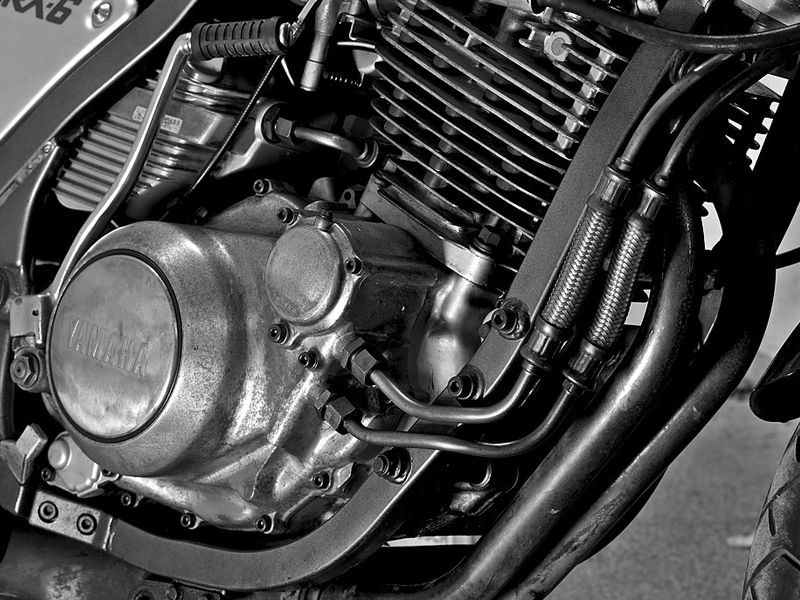
As the name suggests, a single piston powers the motorcycle. This type of engine is common in entry-level and small bikes because it’s affordable, compact, and light. While it doesn’t match the performance of larger engines, it’s great for city driving and offers good fuel economy.
Example: Hero Hf 100
Pros Of Single Cylinder Engine
- Lightweight
- Fuel efficient
- Inexpensive
- Compact
Cons Of Single Cylinder Engine
- Limited performance
- Higher vibrations in top speed
2. Two-cylinder Bike Engine
In the two-cylinder engine, there are four configurations.
- Parallel Twin
- V Twin
- L Twin
- Boxer
1. Parallel Twin
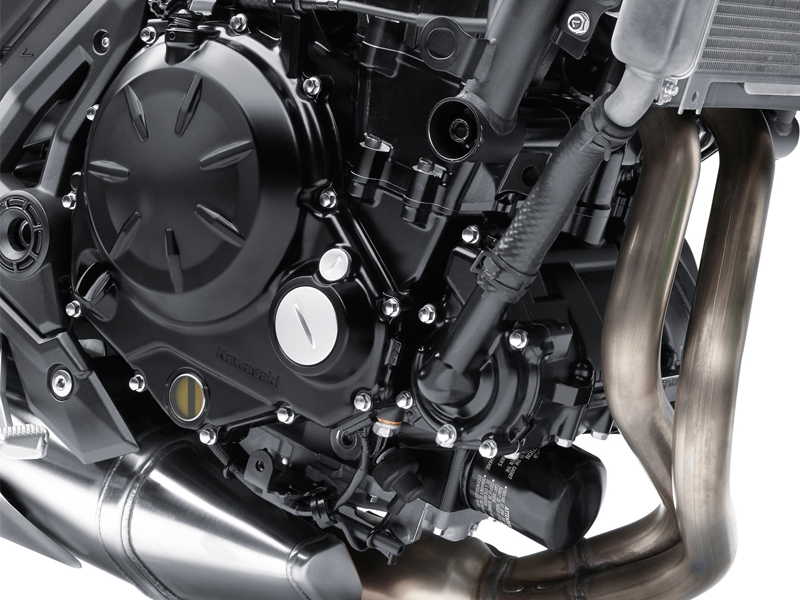
A parallel-twin engine has both cylinders lined up along the same crankshaft. You’ll find this engine in many medium and high-displacement bikes. Some 200-300cc entry-level sports bikes also use parallel twins. Brands like Honda, Yamaha, and Kawasaki offer several models with this engine type.
Example: Kawasaki Ninja 300
Pros Of Parallel Twin Engine
- Excellent performance
- Lower vibrations
- Excellent torque
Cons Of Parallel Twin Engine
- Higher vibrations compared to other premium engine types
2. V Twin
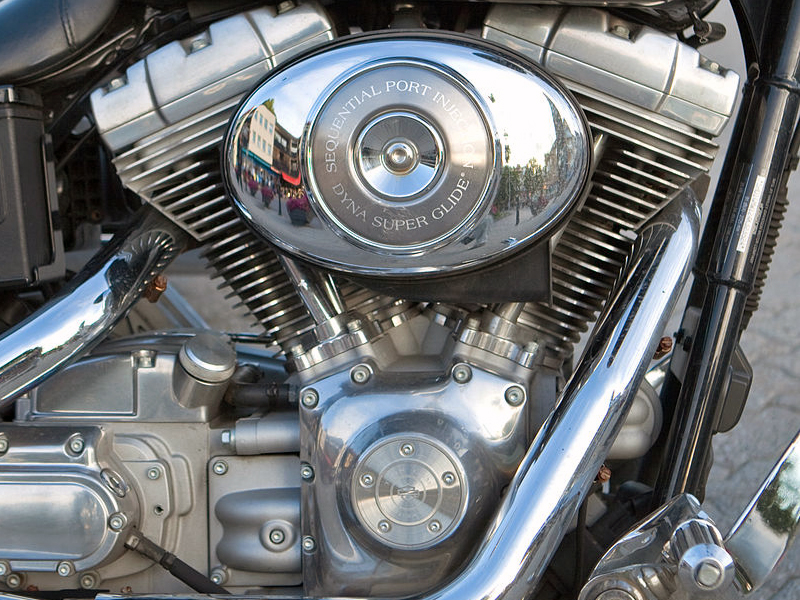
Here, two cylinders are arranged in a V configuration around a common crankshaft. Harley-Davidson is a company that widely uses V-Twin engines. Most dedicated touring models use V-Twin configurations, providing excellent torque and comfort for long hauls.
Example: Harley Davidson Fat Boy
Pros Of V Twin Engine
- Excellent performance
- Lower vibrations
- Excellent torque
- Good comfort
Cons Of V Twin Engine
- Higher vibrations compared to parallel twin
3. L Twin Motorcycle Engine
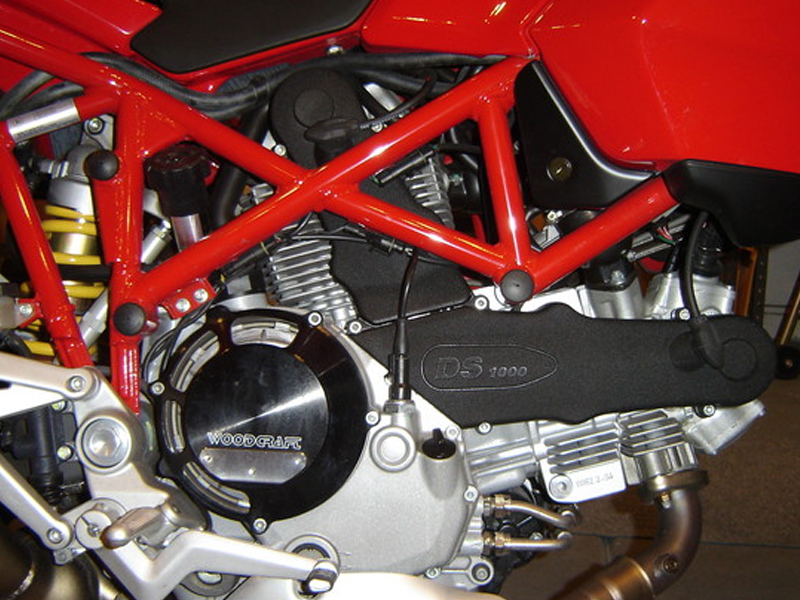
Here, two cylinders are arranged to form an L over a common crankshaft with a 90-degree angle between them. Ducati is a company that widely uses L Twin engines. Several Ducati models use the L-Twin to achieve high-revving performance.
Example: Ducati Scrambler Icon
Pros Of L Twin Engine
- Same as V twin engines
- Very low vibrations compared to V Twin
- Best for high revving
Cons Of L Twin Engine
- Same as V twin engines
4. Boxer / Flat Twin Bike Engine
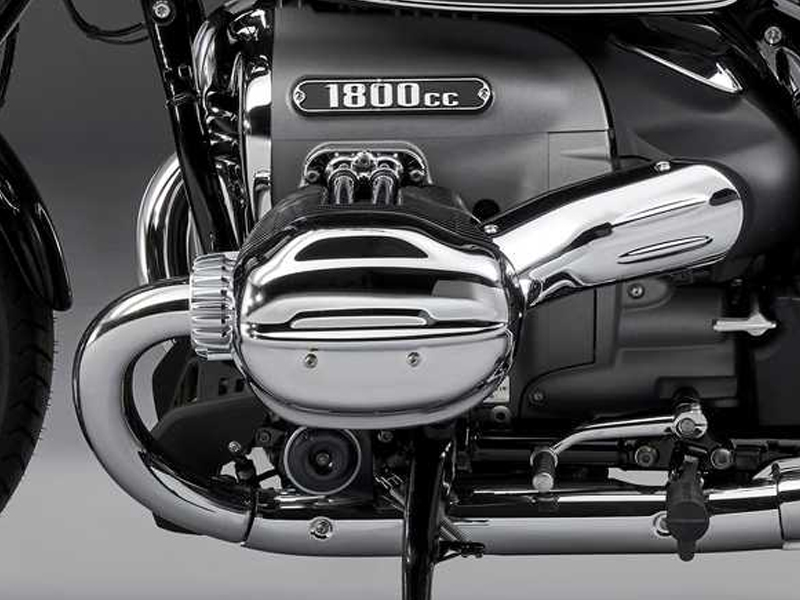
Flat twin or boxer engines use a “boxer” configuration, where each pair of opposing pistons moves in and out simultaneously, like boxing competitors punching their gloves together before a fight. These engines are present on many BMW models.
Pros Of Boxer Engine
- ow vibration
- Excellent performance
- Superb air cooling
- No balance shaft is required
Cons Of Boxer Engine
- Less fuel efficient
3. Triple-cylinder Motorcycle Engine
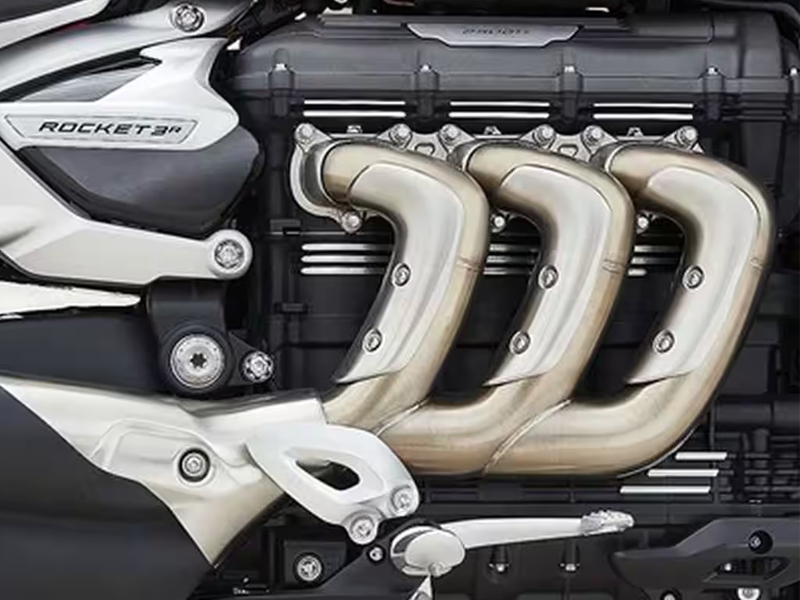
A straight-three engine, inline-triple, or inline-three is a three-cylinder piston engine with cylinders arranged in a line along a common crankshaft. Triple-cylinder engines are much smoother than a V-twin, narrower, and lighter than an inline-four. They are mainly found in Triumph motorcycles.
Example: Triumph Rocket 3R
Pros Of Triple Cylinder Engine
- Low vibration
- Excellent performance
- Superb comfort
Cons Of Triple Cylinder Engine
- Less fuel efficient
4. Four Cylinder Engine
Four-cylinder motorcycle engines are popular due to their balance of power, smoothness, and reliability. Within the four-cylinder engine, there are two configurations.
- Inline Four Engine
- V-Four Engine
1. Inline Four Engine
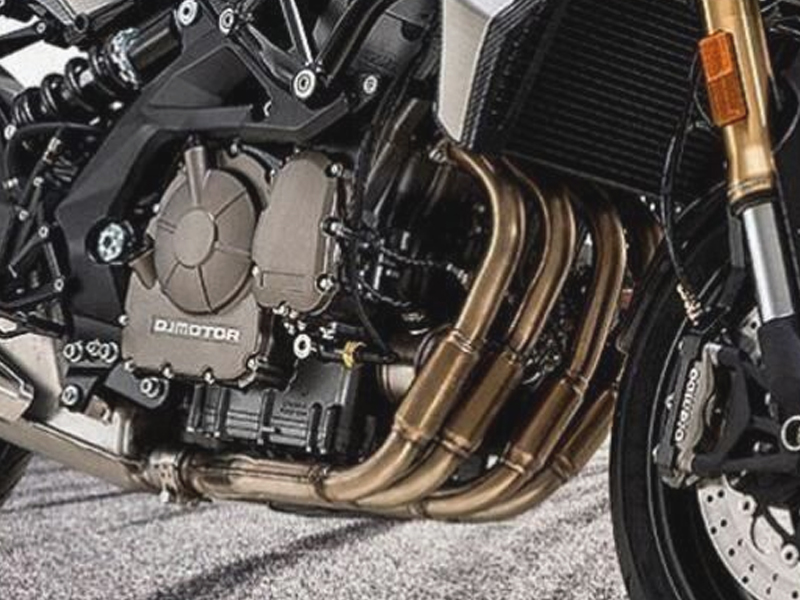
Straight- or inline-four engines have all cylinders aligned in a single row, with no offset. Most premium racing models from Honda, Suzuki, Kawasaki, and others feature inline-four engines.
Example: Kawasaki Z 900
Pros Of Inline Four Engine
- Low vibration
- Excellent performance
- Superb comfort
Cons Of Inline Four Engine
- Large dimensions & size
2. V-four Engine
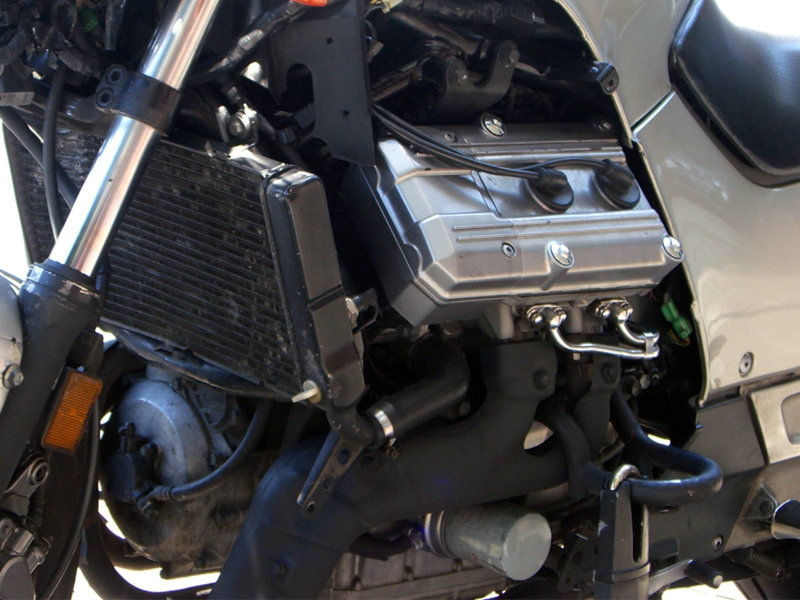
A V4 engine is a four-cylinder piston engine in which the cylinders share a common crankshaft and are arranged in a V configuration. Ducati offers several V2 and V4 engine models, including the Panigale V4S and the Streetfighter V4.
Example: Ducati Multistrada V4 S
Pros Of V-four Engine
- Low vibration
- Excellent performance
- Superb comfort
Cons Of V-four Engine
- Complexity in construction
- Heavier
5. Straight Six Engine / Flat-six Engine
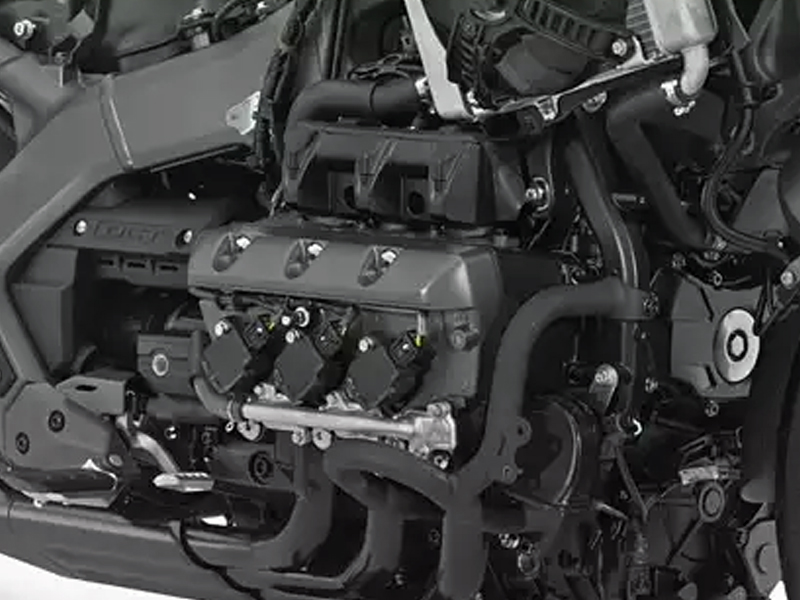
Straight-six engines are like flat-twin / boxer engines but with more cylinders. These engines are rare and rarely seen outside large touring models. Straight-six engines have three cylinders horizontally on either side of the engine.
Example: Honda Goldwing
Pros Of Straight Six Engine
- Excellent performance
- Superb comfort and smoothness
- Lots of power and torque
- Provides excellent balance and stability
Cons Of Straight Six Engine
- Expensive
- Heavier
- Larger in dimensions
6. Electric Motorcycle Motor
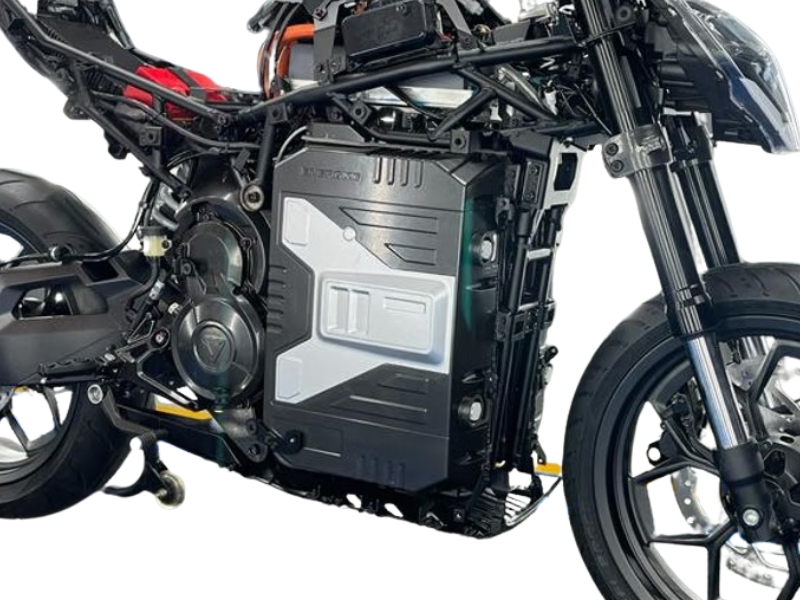
Electric motorcycles use battery-powered motors, making them very different from traditional bikes. Instead of pistons and fuel, you get a quiet ride with instant torque. You don’t have to wait for the engine to rev; just twist the throttle and go. Maintenance is simpler, since there are no oil changes or spark plugs. These bikes are great for city riding, especially in stop-and-go traffic. However, many riders worry about range and charging time, and electric bikes often cost more upfront.
Example: Ultraviolette F77
Pros Of Electric Motors
- Instant torque – quick acceleration
- Very low maintenance
- Quiet operation
- Regenerative braking adds efficiency
- Great for city commutes
Cons Of Electric Motors
- Range anxiety (typically 80–150 km)
- Longer charging times
- Higher upfront cost
- Limited highway performance
- Batteries eventually need replacement
7. Hybrid Motorcycle Engine
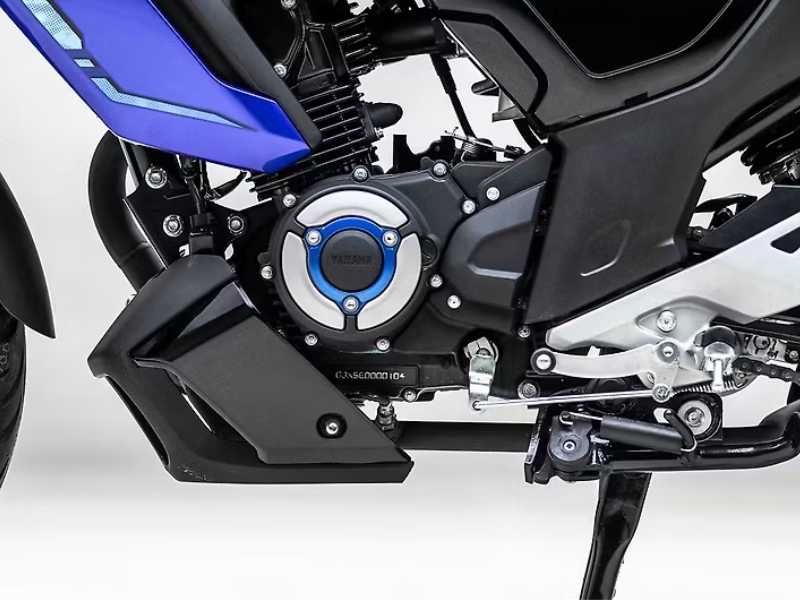
Hybrid motorcycles use both a petrol engine and an electric motor, so you get the benefits of each. The electric motor gives quick bursts of power and helps save fuel, while the petrol engine is used for longer trips. You don’t need to plug these bikes in because the battery charges while you ride, so refueling is as simple as stopping at a petrol station. Hybrids are still rare, but they offer a promising option for more eco-friendly riding.
Example: Yamaha FZ-S FI Hybrid
Pros Of Hybrid Engines
- Better mileage compared to petrol-only bikes
- Extra electric power for overtaking
- No range anxiety—just refuel and go
- Easy to fill up at any petrol station
- A bridge between petrol and electric bikes
Cons Of Hybrid Engines
- A bit heavier than regular motorcycles
- More complex mechanics (two powertrains)
- Servicing can cost more
- Electric-only riding is limited to short distances
Common Myths About Motorcycle Engine Types
Myth #1: More Cylinders Always Mean Better Performance
Fact Check: False Multi-cylinder engines provide smoother operation, but they’re not always better. Different engine configurations serve various purposes. Single and twin-cylinder engines can perform well for specific riding needs. Engine efficiency depends on several factors beyond just the number of cylinders.
Myth #2: Single-cylinder Engines Are Only For Budget Bikes
Fact Check: False Single-cylinder engines are used in various motorcycle segments, from entry-level to premium models. They are common in adventure and off-road bikes, and some premium motorcycles up to 700cc feature this configuration. These engines provide excellent low-end torque and are more straightforward in design.
Myth #3: Four-stroke Engines Are Always More Fuel-efficient
Fact Check: Partially True Fuel economy can vary for several reasons. The move to 4-stroke engines in India aimed at improving efficiency and meeting environmental standards. Riding style and maintenance greatly influence fuel efficiency. Additionally, modern engine technology is key to achieving better efficiency.
Myth #4: Premium Motorcycles Must Have Large-displacement Engines
Fact Check: False The premium motorcycle segment includes various engine sizes. Motorcycles with engine capacities between 250cc and 500cc comprise a large part of this market. Premium features and build quality depend not solely on engine size, as many premium motorcycles prioritise technology and refinement over displacement.
Myth #5: V-twin Engines Are Only For Cruisers
Fact Check: False V-twin engines are found in various motorcycle types and provide strong low-end torque. Many sport and adventure bikes utilise V-twin configurations. The engine’s character, rather than the bike type, dictates the configuration choice.
Myth #6: Bigger Engines Always Need More Maintenance
Fact Check: False Maintenance needs vary based on several factors beyond engine size. Modern engines use advanced technology to enhance reliability, and predictive maintenance techniques can optimise service intervals. Ultimately, regular maintenance is crucial for longevity, regardless of engine size.
Myth #7: All Multi-cylinder Engines Are Fuel-hungry
Fact Check: False Fuel efficiency is influenced by engine design and technology. Modern multi-cylinder engines often achieve high fuel efficiency. Riding style and maintenance play a crucial role in fuel consumption. New technologies enhance efficiency in all engine types.
Myth #8: High-performance Engines Can’t Be Used Daily
Fact Check: False Thanks to advanced technologies that enhance reliability and usability, high-performance engines are now built for everyday use. Maintenance is more manageable, and many high-performance bikes make good daily riders.
Glossary Of Technical Terms
- CC (Cubic Centimeter): A unit of measurement for engine displacement. Higher CC generally means more power.
- Crankshaft: The rotating shaft in an engine that converts the up-and-down motion of pistons into rotational motion.
- Displacement: The total volume swept by all the pistons inside the engine’s cylinders, usually expressed in CC.
- DOHC (Double Overhead Camshaft): An engine with two camshafts above the cylinders—one for intake valves and one for exhaust valves—allowing for better performance at high RPMs.
- Firing Order: The sequence in which the cylinders in a multi-cylinder engine ignite.
- Fuel Injection: A modern system that sprays fuel directly into the engine, improving efficiency and performance over carburettors.
- Horsepower (HP): A measurement of engine power output—higher horsepower means more speed and acceleration potential.
- Parallel Twin: An engine configuration with two cylinders placed side by side and sharing a common crankshaft.
- Piston: The moving component inside a cylinder that is pushed by expanding gases, driving the crankshaft.
- Stroke: The movement of the piston from top to bottom inside the cylinder. Two-stroke and four-stroke refer to the number of strokes required for a power cycle.
- Torque: The twisting force produced by the engine, important for acceleration and pulling power.
- Valves: Components that open and close to let air/fuel in and exhaust out of the combustion chamber.
- V-Twin: An engine configuration where two cylinders are arranged in a V shape around a common crankshaft.
- Boxer Engine: An engine with horizontally opposed cylinders that “punch” outwards, creating a low centre of gravity.
- BLDC (Brushless DC Motor): A type of electric motor commonly used in electric motorcycles, offering high efficiency and low maintenance.
- Hybrid Engine: A powertrain that combines a traditional internal combustion engine with an electric motor for improved efficiency.
Faq Related To Different Types Of Motorcycle Engines
1. What Are The Main Types Of Motorcycle Engines?
The main types include single-cylinder, parallel-twin, V-twin, L-twin, boxer/flat-twin, triple-cylinder, inline-four, V-four, six-cylinder, electric motors, and hybrid engines.
2. What Is The Difference Between A Two-stroke And A Four-stroke Motorcycle Engine?
A two-stroke engine fires every revolution and is lighter and simpler, while a four-stroke engine fires every other revolution, offering smoother operation, better fuel efficiency, and cleaner emissions.
3. Why Were Two-stroke Engines Phased Out In India?
Two-stroke engines produce more emissions and were banned due to stricter BS3 and BS4 emission standards in India.
4. What Are The Pros And Cons Of Single-cylinder Engines?
Pros: lightweight, fuel-efficient, inexpensive, and compact. Cons: limited performance and higher vibrations at high speeds.
5. What Is Special About V-twin Engines?
V-twin engines offer strong low-end torque and a distinct sound, making them popular in cruisers and touring bikes. However, they tend to be heavier and require more maintenance.
6. How Do Electric Motorcycle Motors Differ From Traditional Engines?
Electric motors use batteries instead of fuel, offer instant torque, require less maintenance, and are quiet, but have limited range and longer charging times.
7. What Advantages Do Hybrid Motorcycle Engines Offer?
Hybrid engines combine petrol and electric power for better mileage and extra acceleration, with no range anxiety, but are heavier and more complex.
8. Are Multi-cylinder Engines Always Better Than Single-cylinder Engines?
Not necessarily. Multi-cylinder engines are smoother and more powerful, but can be heavier and more complex. Single-cylinder engines are better for city commuting and beginners.
9. Do All Premium Motorcycles Have Large-displacement Engines?
No. Premium motorcycles can range from 250cc to over 1000cc, with features, technology, and build quality often being more important than displacement.
10. Is Maintenance Higher For Bigger Engines?
Not always. Maintenance depends on design, technology, and service intervals, not just engine size. Modern engines are often designed for reliability regardless of size.
Other Related Articles From Bikeleague India
- Different types of motorcycles explained
- Which bike chassis is right for your riding style
- Diesel bikes in India: Why are they absent on Indian roads?
- Electric motorcycles & scooters in India: Examining the pros & cons
- BMW R 12 nineT
Conclusion
Motorcycle engines have changed a lot over the years, giving riders many choices for different styles and needs. Whether you prefer a simple single-cylinder, a powerful four-cylinder, or the latest electric and hybrid engines, understanding engine types helps you pick what’s best for you.
As technology advances, motorcycle engines will continue to evolve in interesting ways. No matter what bike you ride, knowing your engine helps you enjoy your rides with confidence.
If you have more questions, you can email us at bikeleague2017@gmail.com. We’re always happy to help. You can also connect with Bikeleague India on social media.