
Introduction
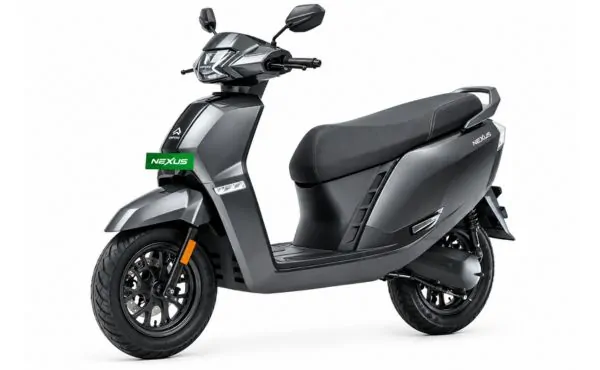
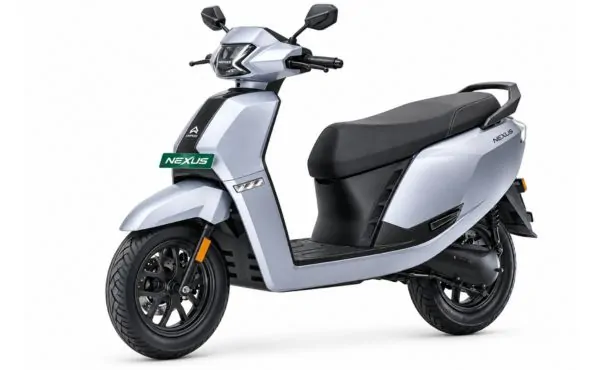
The Ampere Nexus EX Plus is a high-end electric scooter made for Indian riders who want more power and range than a basic city EV. It comes with a 3 kWh LFP battery, a mid-mounted motor that can reach up to 5 kW at its peak, four riding modes, and a claimed top speed of 93 km/h. These features set it apart from most low-speed commuter scooters. Ampere presents the Nexus EX Plus as a flexible choice for daily commutes, trips to the suburbs, flyovers, and even short highway rides. With a claimed IDC-certified range of 136 km, 170 mm ground clearance, 18-degree gradeability, and a 93 km/h top speed, it is made for more than just short city trips.
Gallery
Key Specifications

Battery Type
LFP

Range
70-100 km/c

Power
5.44 PS

Torque
202 Nm

Max Speed
93 km/h

Charging Time
3.10 Hours

Rear Suspension
Dual Shock Absorber

Kerb Weight
126.4 Kg
Ratings
- 90%
Performance
- 100%
Features
- 90%
Handling
- 90%
Comfort
- 100%
Build Quality
- 100%
Styling
- 80%
Value for Money
- 93%
Total
Ratings calculation is purely based upon pros and cons of the model given below in the overview section.
Price

Special Features
1
Call And Sms Alerts
2
Hill Hold Function
3
4 Riding Modes
4
Tow Alert
5
Geo-fencing
6
Turn-by-turn Navigation
7
Remote Vehicle Diagnostics
8
Usb Charging Port
9
765 Mm Seat Height
10
Guide-me-home Lighting
11
Dual Rear Shock Absorbers
12
Charging-station Locator
Full Specifications
| City | 80-100 km/c |
| Highway | 70-80 km/c |
| Motor Type | PMSM |
| Maximum Speed | 93 km/h |
| Rated Power | 5.44 PS |
| Transmission | Automatic |
| Battery Charging Time | 3.10 Hours |
| Speedometer | Digital |
| Tachometer | No |
| Trip Meter | Yes |
| Battery Level Indicator | Yes |
| Low Battery Indicator | Yes |
| Start Type | Electric Start |
| Clock | Yes |
| Pass Light | Yes |
| Stand Alarm | Yes |
| Tyres (Front) | 12 Inches |
| Tyres (Rear) | 12 Inches |
| Brakes (Front) | Disc |
| Brakes (Rear) | Drum |
| Chassis | Underbone Frame |
| Front Suspension | Telescopic Fork |
| Rear Suspension | Dual Shock Absorber |
| Wheelbase | 1320 mm |
| Ground Clearance | 170 mm |
| Seat Height | 765 mm |
| Pass Light | Yes |
| Battery Type | Lithium-ion Battery |
Ampere Videos
[slide-anything id=”45869″]
Overview
Performance And Motor
The Nexus EX Plus has a mid-mounted electric motor. According to Ampere, it can reach a peak output of 5 kW. The reported output may vary depending on whether it refers to continuous or peak power, or how the specifications are presented. Buyers should check the official invoice and spec sheet to confirm the exact motor rating.
A mid-mounted motor gives the scooter better balance compared to a hub-motor setup. This design helps the scooter feel more stable when you accelerate, turn, ride on rough roads, carry a passenger, or go up flyovers. Ampere says the Nexus can handle slopes up to 18 degrees, which is helpful for steep parking ramps, hilly roads, and city flyovers.
The Nexus EX Plus offers four riding modes: Eco, City, Power, and Limp Home. Eco mode saves energy and limits speed to about 42 km/h, making it good for city rides. City mode allows speeds up to around 63 km/h and is a balanced choice for daily commutes. Power mode lets you reach the full 93 km/h top speed and gives the fastest acceleration. Limp Home mode helps you get to a charger or your destination when the battery is low.
The Nexus goes from 0 to 40 km/h in about 4.5 seconds. This is fast enough to start at traffic lights, overtake slower vehicles, merge into faster lanes, and climb flyovers. It works best for city and suburban use, not for long-distance high-speed rides.
Ampere points out that it holds five national records and has shown the Nexus on different terrains, like Himalayan roads and towing a 2-ton pickup. These stunts show what the motor can do, but buyers should see them as promotional events, not examples of daily use.
The Ampere Nexus EX Plus has a fully automatic electric drivetrain. There is no clutch lever, no foot gear shifter, and no traditional gearbox. You simply twist the throttle, and the motor sends power directly to the rear wheel.
This automatic setup makes the scooter easy to handle in India’s stop-and-go traffic. You do not need to use a clutch in traffic jams, change gears to overtake, or shift down before a flyover. The electric motor’s instant torque also helps you move quickly from traffic lights or when passing slower vehicles.
The scooter has a Reverse mode that helps when you need to back out of a parking spot, move on a slope, or handle tight spaces in apartment or office parking. Since the Nexus weighs about 126.4 kg, this feature makes low-speed moves much easier.
Power mode delivers a stronger throttle response, so use it carefully, especially in rain, on loose gravel, dusty roads, sharp turns, or when carrying a passenger. New riders should get used to the scooter in Eco or City mode before using Power mode often.
The Ampere Nexus EX Plus can reach a claimed top speed of 93 km/h in Power mode. This is much higher than the 45–70 km/h top speeds of most commuter electric scooters, so it handles wide city roads, ring roads, bypasses, suburban routes, and short highway trips better.
Eco mode lets you go up to about 42 km/h, City mode up to 63 km/h, and Power mode unlocks the full 93 km/h. This setup lets you choose efficiency for heavy traffic or more power when the road and traffic allow.
It is not a good idea to ride at 93 km/h all day. Staying near top speed uses more battery, lowers your range, and exposes you to more wind, bumps, and traffic risks. Riding at a steady, moderate speed usually gives the best balance of travel time, comfort, and range.
Range
Ampere says the Nexus EX Plus can go 136 km per charge according to IDC tests. This number is more of a certified comparison than a guarantee that every rider will get 136 km in real traffic.
This range comes from the 3 kWh LFP battery and is easiest to reach if you accelerate gently, use Eco mode, ride at moderate speeds, stick to smooth roads, carry less weight, keep your tyres properly inflated, and have good weather. The range drops if you use Power mode, accelerate quickly, carry a passenger, ride uphill, get stuck in traffic, ride fast, face strong winds, or ride in very hot weather.
The 136 km claim is still good for this type of scooter, but you should not expect to reach that distance every day. To keep your battery healthy and avoid stress, do not run it down to empty often. It is wise to leave some charge in reserve, especially when you are far from known charging spots.
Road tests and owner feedback show that the real-world range is usually less than the 136 km IDC claim. One test in Eco mode got 99.8 km, and other estimates put the real range at about 100–105 km.
Owner feedback varies, as it does for electric scooters. Some users report getting 80 km or 70 km per full charge. Others say they get about 85–90 km in Eco mode, 65–70 km in City, and 55–60 km in Power. These are personal experiences, not official tests, but they show how much road conditions and ride mode affect range.
For India, a good planning estimate is about 90–105 km for calm, mixed riding. If you ride faster, use Power mode, travel on hilly or busy roads, carry a passenger, or accelerate hard, you should expect less. In these tougher conditions, plan for 70–90 km.
For example, if you commute 40 km a day, you’ll usually need to charge every two days, not every day. But if you travel 80–100 km daily, you’ll need reliable overnight or workplace charging and shouldn’t plan your route based on the full 136 km IDC claim.
So, the Nexus EX Plus suits riders who usually travel less than 70–90 km a day and have charging at home or work. It can handle longer trips now and then, but you should plan those based on the real range, not just the IDC figure.
Charging Time
The Nexus EX Plus comes with a standard home charger and is meant to be charged from a regular household outlet. Ampere says it takes about 3 hours and 10 minutes to charge from 0 to 80%. Charging fully from 0 to 100% usually takes around 4 hours, though some real-world tests show it can be as quick as 3 hours 20 to 35 minutes if the power supply is good.
For everyday use, it is safest to plan on four hours for a full charge. Most people will charge overnight, at work, or during a long break instead of waiting by the scooter. Charging to 80% is often enough for daily trips, especially if you travel 30–70 km a day.
Charging time can change depending on the battery’s charge level, battery and room temperature, voltage stability, and the condition of your socket and wiring. Always use a properly earthed socket and avoid loose adapters, cheap extension boards, overloaded circuits, or damaged fittings.
Ampere doesn’t market the Nexus EX Plus as a scooter for public DC fast charging. It’s mainly designed for home or work charging. If you plan to take long trips often, be realistic about charging stops and check for any compatible public chargers before you depend on them.
Features And Technology
The Ampere Nexus EX Plus is a premium electric scooter for India that combines a 3 kWh LFP battery, 5 kW peak motor output, a claimed top speed of 93 km/h, a claimed IDC range of 136 km, and a technology-focused feature package. Its equipment aims to make daily urban and suburban use more convenient, safer, and more connected than a basic electric scooter.
- Mid-mounted electric motor: The Nexus EX Plus uses a mid-mounted motor rather than a conventional hub-motor layout. Ampere says this arrangement helps create more balanced weight distribution, which can improve stability and control during acceleration, cornering, pothole impacts, flyover climbs, and pillion use.
- 5 kW peak motor power: Ampere claims 5 kW of peak motor output, with the higher peak output intended to support quicker acceleration and the claimed 93 km/h top speed.
- High torque claim: The EX Plus is listed with up to 202 Nm of motor torque. As with most electric scooter torque figures, this is best understood as a motor-side claim rather than a direct comparison with a petrol engine’s crankshaft torque. In practice, it contributes to quick initial response in traffic and on gradients.
- Four riding modes: The scooter offers Eco, City, Power, and Reverse modes. Eco is intended for efficiency, City is designed for everyday commuting, Power provides the strongest response and highest-speed capability, while Reverse assists with slow-speed parking manoeuvres.
- Reverse parking assistance: Reverse mode allows the scooter to move backwards under motor power at low speed. This is useful when backing out of narrow parking spaces, manoeuvring on slopes, or handling the 126.4 kg scooter in apartment basements and crowded office parking areas.
- 3 kWh LFP battery: The Nexus EX Plus uses a 3 kWh lithium iron phosphate battery. Ampere says its LFP chemistry is engineered for improved thermal stability and a service life of up to 2,00,000 km, though actual life depends on charging behaviour, operating temperature, load, maintenance, and battery-management controls.
- Nine-feature battery-management system: Ampere describes the battery as being supported by a nine-feature BMS. The system is intended to monitor and manage charging, temperature, voltage, operating limits, and battery protection.
- IP67 battery protection: The battery is identified as IP67 rated for dust and water protection. This supports use during normal rain and dusty-road conditions, but riders should not interpret the rating as permission to ride through deep, flowing, or unknown floodwater.
- Five-year battery warranty: Ampere lists a five-year battery warranty or 75,000 km. Buyers should confirm the exact capacity-retention standard, exclusions, water-damage conditions, charging requirements, transfer policy, and claim procedure in the final warranty document.
- Aeronautics-grade dual-frame steel chassis: Ampere says the Nexus uses a dual-frame chassis made from SPFH 590 steel, described as aeronautics-grade. The company claims the architecture spreads loads across multiple stress paths and is designed to handle daily loads of up to 200 kg.
- 170 mm ground clearance: The scooter’s 170 mm ground clearance helps with Indian speed breakers, ramp entrances, patchy roads, potholes, and moderately uneven surfaces. It should offer more underbody clearance than many low-slung city scooters.
- 18-degree gradeability: Ampere claims that the Nexus EX Plus can climb gradients of up to 18 degrees. This should help on flyovers, parking ramps, steep apartment entrances, hill roads, and routes ridden with a pillion or modest luggage.
- 6.2-inch PMVA cluster: Ampere’s official page lists a 6.2-inch PMVA instrument cluster. The display presents essential riding and vehicle information, including speed, ride mode, battery status, warning alerts, trip information, and distance-related data.
- Bluetooth and smart-app connectivity: The scooter supports smartphone connectivity through the Ampere Connect app. This enables compatible connected functions and lets the owner access selected vehicle information through a paired phone.
- Turn-by-turn navigation: Navigation support can display route guidance through the instrument console. This helps riders navigate without continuously looking at a phone mounted on the handlebar.
- Call and SMS alerts: The Nexus EX Plus can show call and message alerts from a paired smartphone. Riders should avoid reading or interacting with notifications while moving; these features are safest to use only when stopped.
- Geo-fencing: Geo-fencing lets the owner define a virtual operating area and can support alerts when the vehicle moves outside the chosen boundary. It can help with vehicle monitoring but should not replace physical locks, secure parking, or insurance.
- Tow alert: The connected feature list includes a tow alert, intended to notify the owner of unexpected movement or possible towing. It is useful for monitoring but depends on connectivity, software status, and the active subscription or service terms.
- Remote vehicle diagnostics: The scooter supports remote diagnostic functions, allowing compatible system information to be monitored remotely. This may help identify faults or service needs before a workshop visit.
- Over-the-air firmware updates: Firmware-over-the-air support allows Ampere to deploy eligible software improvements and fixes without requiring every update to be carried out at a service centre. Whether a specific update is available depends on the company’s software rollout and vehicle compatibility.
- Ride statistics and trip reports: The connected system can provide ride statistics, trip reports, charging history, battery-health information, and battery-calibration reminders. These tools can help owners understand their use pattern and identify inefficient riding or charging habits.
- Charging-station locator: The EX Plus includes a charging-station locator in its connected feature set. It can help identify listed charging points, although riders should verify whether a point is active, accessible, compatible, and operational before depending on it during a trip.
- Tyre-pressure monitoring system: The Nexus lists a TPMS. It can alert the rider to low tyre pressure, which can affect handling, braking, range, tyre wear, and stability. Riders should still check tyre pressures manually at regular intervals.
- Hill-hold function: The Nexus lists a hill-hold feature. It is designed to limit rollback when stopped on a slope, helping on flyovers, ramps, hill roads, and inclined parking areas.
- Front disc and rear drum brake: The scooter uses a front disc brake and rear drum brake. This configuration is common in the segment and should provide adequate everyday braking when paired with the right tyres, appropriate speed, and regular brake maintenance.
- Hydraulic telescopic front suspension: The front suspension uses a hydraulic telescopic fork. It is intended to absorb normal urban road imperfections and maintain steering stability over speed breakers and uneven pavement.
- Dual rear shock absorbers: The rear uses twin shock absorbers to support everyday load carrying and ride comfort. This setup can help riders who regularly carry a passenger or travel on less-than-perfect city roads.
- 12-inch alloy wheels with tubeless tyres: The Nexus rides on 12-inch alloy wheels with tubeless tyres. This setup supports stability and easier puncture repair compared with tube-type tyres, though a tyre-pressure check remains essential for safe handling and range.
- Diamond-cut LED headlamp: The scooter uses a diamond-cut LED headlamp design, supported by LED daytime running lights. The LED system gives the Nexus a modern appearance and provides energy-efficient illumination for regular evening commuting.
- Guide-me-home lighting: Guide-me-home lights are listed among the Nexus’s additional features. They can keep the lights active briefly after parking, which is useful when walking through a dark residential parking area or driveway.
- 22-litre under-seat storage: The Nexus EX Plus offers 22 litres of under-seat storage. It suits small daily items, documents, a raincoat, a compact bag, or selected helmet types, but buyers should check whether their full-face helmet fits before purchase.
- 263 mm floorboard space: Ampere lists 263 mm of floorboard space. This improves day-to-day practicality for carrying a backpack, grocery bag, small parcel, or other light items placed securely between the rider’s feet.
- USB charging port: The EX Plus lists a USB charging port. It can help keep a phone charged during navigation, but riders should use a weather-resistant cable and avoid handling devices while riding.
- 765 mm seat height: The 765 mm seat height is relatively accessible for many Indian riders. It can make it easier to place one or both feet on the ground during traffic stops, parking, and low-speed turns.
Build Quality
Ampere’s strongest construction claim for the Nexus EX Plus is its dual-frame chassis, made from SPFH 590 steel, which the company describes as aeronautics-grade. Ampere says the dual-frame layout distributes loads across multiple stress paths rather than concentrating them in one area, and claims the structure can handle daily loads of up to 200 kg. This should matter for Indian users who regularly carry a pillion, ride on uneven roads, cross speed breakers, or carry bags and other routine loads.
The chassis comes with 170 mm of ground clearance, a practical advantage on Indian roads. This clearance should help reduce the likelihood of scraping the underside over taller speed breakers, ramp entrances, potholes, rough urban lanes, and mildly uneven rural-road sections. It does not make the Nexus an off-road scooter, but it gives it more confidence over typical broken-road obstacles than a very low-slung urban EV.
The 3 kWh LFP battery is another notable part of the scooter’s engineering package. Ampere says the battery is designed for up to 2,00,000 km and is supported by a nine-feature battery-management system. LFP battery chemistry is generally valued for thermal stability and cycle life, which is useful in Indian conditions involving heat, repeated charging, long parking periods, and daily urban use. The standard battery warranty is listed as five years or 75,000 km, subject to the final terms and exclusions.
The Nexus has a notable visible fit and finish, with well-aligned panels, no obvious gaps, and premium-feeling switchgear. Panel fit, switch feel, exposed wiring, charging-port fitment, seat latch operation, and display response all strongly influence the day-to-day ownership experience.
Inspect the scooter at delivery for body-panel alignment, paint quality, floorboard trim, handlebar plastics, switchgear, seat and boot latch operation, charger-port flap, display responsiveness, brakes, wheel finish, tyre manufacturing date, suspension noises, and connected-feature activation before accepting the scooter.
Handling
The Nexus EX Plus should feel light, neutral, and easy to use in everyday traffic. Its mid-mounted motor places more mass centrally than a hub-motor scooter, and Ampere says this improves weight distribution. Combined with the 12-inch wheels, 90-section tyres, relatively accessible 765 mm seat height, and scooter-style ergonomics, the layout is intended to make the Nexus easy to guide through dense city roads, U-turns, narrow lanes, and parking areas.
The handling is one of the scooter’s strengths. The Nexus is comfortable and nimble, making it easy to move through traffic and offering a good balance between ride comfort and handling. It feels light and nimble, turns into corners easily, and has tyres that provide reassuring grip for normal or mildly spirited riding.
The combined effect of the mid-mounted motor, 12-inch wheels, tyres, and firmer suspension produces capable handling. The scooter can be cornered at reasonable lean angles, and the relatively firm suspension aids control. For a family-oriented electric scooter, this means the Nexus should feel more composed on wide city roads and sweeping turns than a softer, more comfort-focused scooter.
At very low speeds, the 126.4 kg kerb weight is not excessive by premium electric-scooter standards, and the reverse function can help in tight parking or on inclines. Still, buyers should test full-lock turns, reversing, centre-stand use, moving the scooter on a ramp, and parking with a pillion, since these situations reveal more about practical manageability than a short ride on open roads.
Braking uses a front disc and rear drum arrangement. The brakes are effective once applied firmly, though they may need a stronger lever pull to extract the full stopping performance and may lack a sharp initial bite. The stopping power is decent, but the system is not as sharp as some premium EV competitors and could offer better lever feedback. Riders should use progressive braking, maintain additional space in rain or dust, and remember that ABS is not listed for the Nexus.
Comfort
Comfort is one of the Nexus EX Plus’s principal strengths for city and family use. It has a 765 mm seat height, which should be approachable for a wide range of riders and makes frequent traffic stops less intimidating. Its long, wide, single-piece seat is designed for two occupants and accommodates two adults well.
The Nexus’s seat is large and roomy for two people, well padded, long, and wide enough for two well-built adults, making it suitable for ordinary two-up commuting, school runs, local errands, and short suburban travel.
The suspension configuration consists of a telescopic front fork and twin rear shock absorbers. At ordinary city speeds, the ride is controlled and comfortable. The setup handles unexpected bumps well and irons out most road imperfections at low speeds. It feels plush on smooth tarmac and handles routine bumps and potholes reasonably well.
The compromise is that the rear suspension is relatively firm. Potholes can feel harsh, especially when riding solo, although it becomes more compliant with a pillion because of the additional rear load. Harder impacts at higher speeds can also produce an occasional sharp thud. The suspension is on the stiffer side, which improves cornering support but can reduce comfort on badly damaged roads.
This means the Nexus EX Plus is likely to be comfortable on smooth urban roads, moderate broken patches, speed breakers taken at sensible speeds, and routine suburban routes. It is less likely to feel plush over deep potholes, rough construction zones, sharp-edged bumps, or fast rides on severely damaged roads. Assess the scooter on the roads you use most often rather than relying only on a showroom ride.
Taller riders should also check ergonomics carefully. Users noted that riders above approximately 5 ft 11 in may find their knees touch the handlebar during U-turns. This may not affect average-height riders, but it can be important in tight traffic manoeuvres. A proper test ride should include a pillion, low-speed U-turns, speed breakers, rough patches, a flyover, and at least 20–30 minutes in the saddle to evaluate seat support, rear-suspension firmness, legroom, and control comfort in realistic Indian conditions.
Styling
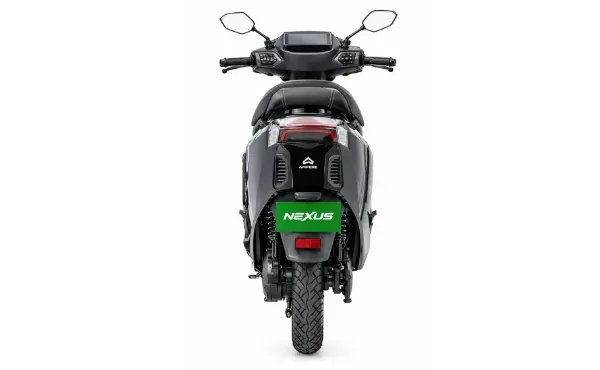
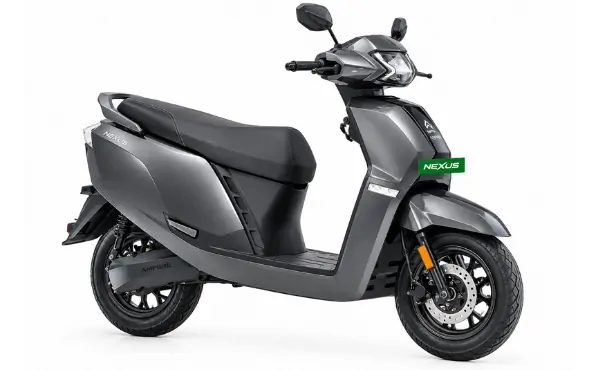
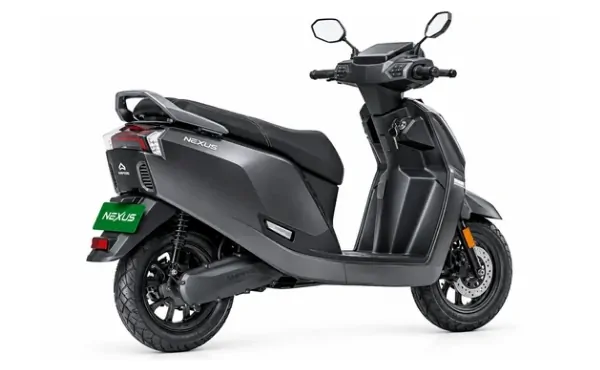
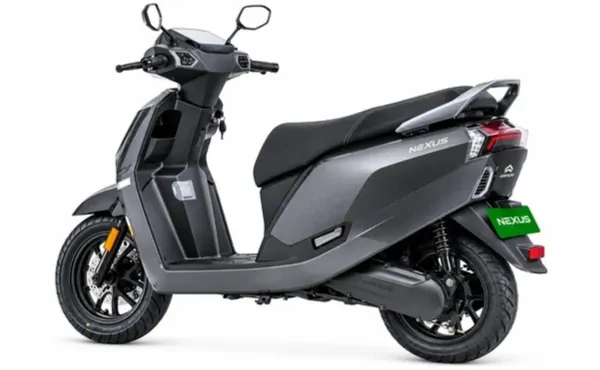
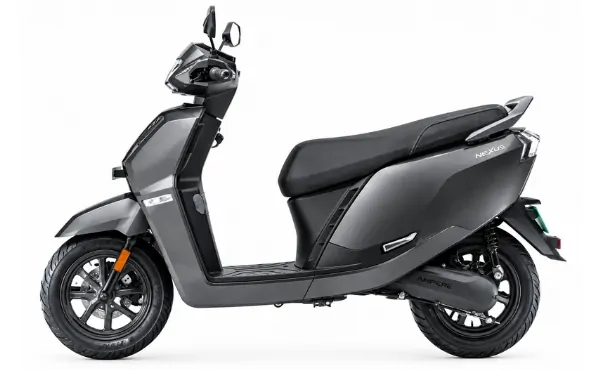
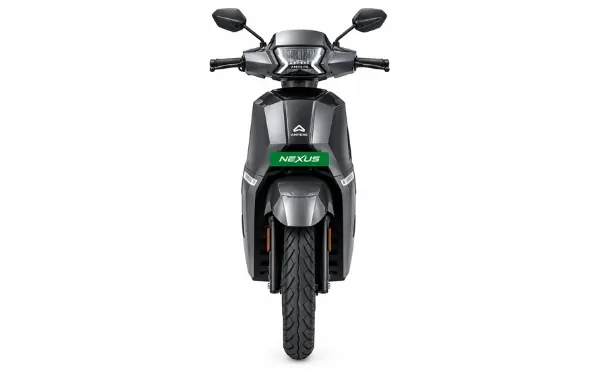
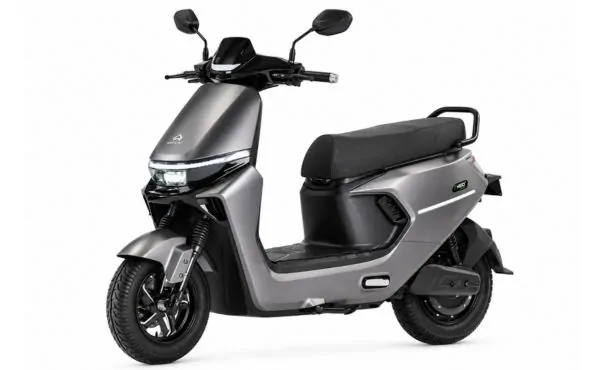
The Ampere Nexus EX Plus uses a contemporary scooter design rather than a retro-inspired shape. Its visual identity centres on a wide front apron, a sharply contoured LED headlamp area, integrated daytime-running-light elements, a compact windscreen section, and a broad handlebar cowl that gives it a more substantial appearance than a basic commuter EV.
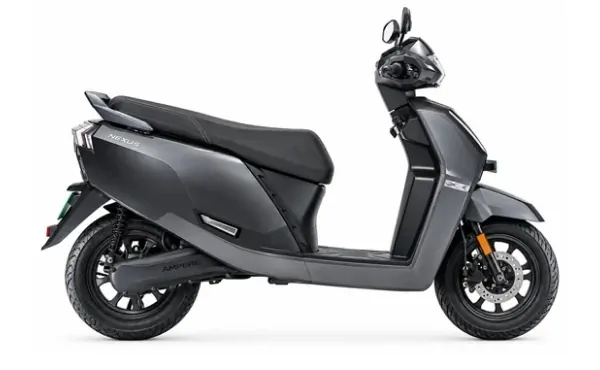
From the side, the Nexus has conventional family-scooter proportions: a flat and usable floorboard, a long one-piece seat, full body-coloured panels, pillion footrests, and a gently rising rear section. This layout looks practical as well as premium, rather than aggressively sporty. The 12-inch alloy wheels and 170 mm ground clearance also give it a planted stance suited to Indian speed breakers, potholes, ramps, and uneven city streets.
The front uses a diamond-cut LED headlamp design with LED DRLs, while the rear receives an LED tail-lamp treatment. These lighting elements add a more upmarket look, especially after dark, and set the Nexus apart from simpler halogen-equipped scooters. The overall design is clean and approachable, intended to appeal to individual riders and families rather than only younger performance-focused buyers.
The 765 mm seat height, 263 mm floorboard space, 22-litre under-seat storage, and long seat also shape the scooter’s visual and practical design. The Nexus lacks the compact, tightly packaged look of a sporty electric scooter; instead, it has a broader, more functional silhouette that suits commuting, errands, and regular pillion use.
Colour Options And Variants
The EX Plus is available in two colour options:
- Carbon Knight
- Steel Grey
These are the most relevant colours for the current EX Plus listing and should be treated as the primary reference for buyers.
Carbon Knight is the darker, more dramatic finish. Ampere describes it as “a futuristic rendition of a secret warrior class from India’s history.” Visually, it gives the Nexus EX Plus a more technical, premium look, with the dark bodywork helping the LED lighting, wheels, trim, and body contours stand out. It likely suits buyers who prefer a stealthier, more modern-looking electric scooter.
Steel Grey is the more understated option. Ampere says it draws inspiration from India’s industrial reliability, and the finish matches the Nexus’s practical, solid design. It is likely to appeal to riders who want a mature colour that is less noticeable than a bright finish but still fits the scooter’s premium image.
The Nexus EX Plus is the featured variant. Mandatory accessory costs are additional, so buyers should request a final written quotation that separates ex-showroom price, insurance, registration, accessories, extended warranty, and any connected-service charges.
For buyers specifically considering the Nexus EX Plus, the key point is to verify the actual variant name printed on the quotation and invoice. Confirm that the scooter includes the expected 3 kWh LFP battery, 5 kW peak-power claim, 136 km IDC range claim, 93 km/h top-speed claim, 6.2-inch PMVA display, four riding modes, 22-litre storage, and the selected Carbon Knight or Steel Grey finish.
Value For Money And Pricing
Ampere lists the Nexus EX Plus at ₹ 1,29,999 across Delhi, Gujarat, Maharashtra, Rajasthan, Karnataka, and other Indian states. This is the stated starting price; Ampere specifies that mandatory accessory costs are additional. The final on-road price will vary by state because of insurance, registration-related expenses where applicable, dealer handling, accessory charges, extended-warranty choices, and local offers.
The Nexus EX Plus has an ex-showroom price of ₹1,29,999 and an approximate on-road price in Delhi of ₹1,63,142. This on-road figure is only indicative; buyers should obtain a dated, itemised quotation from their nearest Ampere dealer before booking.
The quotation should clearly separate the scooter’s ex-showroom price from required accessories, insurance, any registration charges, charger inclusion, connected-service fees, delivery charges, extended warranty, and finance costs. Do not compare a low advertised price with another scooter’s final on-road price unless both include the same items.
The Nexus EX Plus makes the strongest case for buyers who need a capable daily-use electric scooter with enough speed and range for city and suburban travel. Its 5 kW peak-output mid-mounted motor, 93 km/h claimed top speed, 136 km IDC range claim, 170 mm ground clearance, 22-litre under-seat storage, 263 mm floorboard space, and 765 mm seat height make it more versatile than a basic 45–60 km/h city scooter.
The LFP battery is a key differentiator. Ampere states that the 3 kWh pack is engineered for up to 2,00,000 km of battery life and includes a five-year/75,000 km warranty, supported by a nine-feature battery-management system. The real value of this claim depends on the written warranty terms and the owner’s use pattern, but LFP chemistry, a long battery warranty, and a claimed focus on thermal stability are useful attributes for hot-weather Indian ownership.
The scooter also offers practical ownership features that add value: a mid-mounted motor for better balance, reverse mode, four riding modes, hill-hold support, turn-by-turn navigation, Bluetooth-enabled functions, geo-fencing, tow alerts, TPMS, OTA updates, and a charging-station locator. These features make the EX Plus feel more complete than an entry-level electric scooter, especially for riders who commute daily or share the scooter within a family.
However, the Nexus EX Plus is not the best choice for every rider. Its 136 km IDC figure is a certified comparison claim, not a daily guarantee.Independent Indian testing and owner feedback show that the practical range is usually closer to 80–105 km, depending on speed, rider weight, mode, traffic, road condition, terrain, tyre pressure, and pillion use. Buyers who regularly travel more than about 70–90 km a day should have reliable home or workplace charging and keep a realistic reserve.
The Nexus EX Plus also competes with better-known rivals that have wider service networks or stronger brand recognition in some cities. It lacks ABS, even though it claims a 93 km/h top speed, and users have said the brake feel is adequate but not especially sharp. Its final value depends a lot on local Ampere service support, dealer quality, real-world range on your daily route, and the final on-road price.
For someone who rides about 30–60 km most days, has secure parking and a proper charging point, sometimes carries a pillion, and values comfortable seating with useful technology, the Nexus EX Plus can be a good value. If your commute is only 15–25 km daily, a less expensive electric scooter may offer similar running-cost benefits for less upfront money.
The Nexus EX Plus competes mainly with premium practical electric scooters such as:
These alternatives target slightly different types of Indian buyers: some prioritise family comfort and service reach, others focus on technology, range, boot space, speed, or initial price.
The Ampere Nexus EX Plus is a strong choice for Indian buyers who want one electric scooter for commuting, errands, pillion trips, suburb-to-city travel, and occasional faster-road use. Its starting price is reasonable if you will benefit from its 93 km/h claimed speed, stronger motor, extra range, practical seat and floorboard, and extended battery warranty.
Pick the Nexus EX Plus over a cheaper EV if you often ride beyond short neighbourhood distances, regularly carry a passenger, deal with uneven roads or speed breakers, and have reliable charging at home or work. Choose a TVS iQube, Ather Rizta, or Bajaj Chetak instead if local service, brand familiarity, specific storage needs, or a particular riding feel are more important to you than the Nexus’s performance and LFP-battery features. For any option, compare final on-road prices, take a test ride on local roads with a pillion if needed, and check the nearest authorised service centre before buying.
Verdict
The Ampere Nexus EX Plus is a premium electric scooter designed for Indian riders who want more than just a basic city EV. With its 3 kWh LFP battery, 5 kW mid-mounted motor, and a claimed top speed of 93 km/h, it offers solid performance for everyday use. The scooter’s spacious seat, 170 mm ground clearance, reverse assist, and smart connected features make it practical for daily commutes, trips to the suburbs, and carrying a pillion. If you typically travel 30–60 km a day and have easy access to charging at home or work, the Nexus EX Plus provides a comfortable and convenient ride, plus extra features and power compared to entry-level electric scooters.
That said, it’s important to keep your expectations realistic. The 136 km range figure is more of a lab-tested benchmark than what you’ll get day to day. In typical Indian conditions, you can expect about 90–105 km if you ride at moderate speeds, or 70–90 km if you use Power mode, carry a pillion, or tackle hills and heavy traffic. Some trade-offs to keep in mind: the rear suspension is on the firmer side, there’s no ABS even though it can reach 93 km/h, and service quality may vary by location. Before you decide, make sure to take a proper test ride on your usual roads, check the comfort and storage in person, and review the final on-road price and warranty details.
Pros
- Strong performance for an electric scooter: The 5 kW peak mid-mounted motor, 93 km/h claimed top speed, and 18-degree gradeability give the Nexus EX Plus more capability than a typical low-speed commuter EV. It should feel useful for city overtakes, flyovers, suburban routes, and short faster-road stretches.
- Good claimed range and practical battery chemistry: Ampere claims 136 km IDC range from its 3 kWh LFP battery. LFP chemistry offers better thermal stability and longer cycle life, while Ampere claims up to 2,00,000 km of battery life.
- Long battery warranty: The EX Plus includes a five-year or 75,000 km battery warranty, which provides useful ownership reassurance for buyers concerned about long-term battery replacement costs. Still check the exact warranty exclusions and capacity-retention conditions in writing.
- Comfortable, family-friendly packaging: The 765 mm seat height, long single-piece seat, roomy floorboard, 22-litre under-seat storage, pillion suitability, and 170 mm ground clearance make it more practical for everyday Indian family use than a small or aggressively sporty EV scooter.
- Easy, nimble city handling: The mid-mounted motor, 12-inch wheels, and manageable 126.4 kg kerb weight help the scooter feel balanced and easy to guide through traffic, narrow lanes, U-turns, and parking areas. Indian users generally found it light and confidence-inspiring once moving.
- Useful technology and convenience features: The Nexus EX Plus includes four riding modes, reverse assist, hill hold, navigation support, connected functions, geo-fencing, tow alerts, TPMS, OTA updates, and a charging-station locator. These features improve convenience for regular commuters.
- Robust frame and practical clearance: Ampere uses a dual-frame SPFH 590 steel chassis and claims it can handle a 200 kg daily load. Along with 170 mm of clearance, this should help on speed breakers, ramps, potholes, broken roads, and routine two-up riding.
- Convenient home charging: The scooter’s claimed 0–80% charging time is about 3 hours 10 minutes, with a full charge generally taking around four hours. This is convenient for overnight charging or a workplace top-up where a safe, properly earthed socket is available.
Cons
- Real-world range can be much lower than 136 km: The 136 km figure is an IDC claim. Indian owner reports vary widely, with some reporting about 70–80 km per charge at around 45 km/h or in higher-speed use. Hard acceleration, Power mode, a pillion, hills, rough roads, traffic, heat, and higher speeds all reduce usable range.
- Firm suspension on broken roads: Users indicate that the rear suspension can feel stiff, especially when riding solo over potholes, sharp bumps, and poor road surfaces. One owner reported back discomfort after about 30 km, although comfort can improve with a pillion because of additional rear load.
- No ABS despite the 93 km/h top speed: ABS is not listed for the Nexus EX Plus. Its front-disc and rear-drum braking system is adequate for ordinary use, but users say the brakes may need a firmer pull and lack the sharp initial bite of some premium competitors. This makes progressive braking and extra following distance particularly important on wet or dusty roads.
- Not ideal for frequent high-speed or long-distance travel: The Nexus can reach 93 km/h, but it is still primarily a city and suburban scooter. Sustained fast riding reduces range significantly and increases rider fatigue, so buyers planning regular long highway trips should consider a larger-battery EV or a petrol alternative.
- Service experience may differ by location: Some owner feedback reports slow customer service and dealer support. Before purchase, confirm the nearest authorised workshop, appointment availability, roadside support, spare-parts lead times, warranty claim process, and whether service pickup is offered in your city.
- Test seat and boot practicality in person: The seat is spacious for many riders, but some owners find it uncomfortable on longer rides. The 22-litre under-seat storage is useful for daily items, but it may not accommodate every full-face helmet. A test ride and physical helmet-fit check are important before booking.
Frequently Asked Questions About Ampere Nexus Ex Plus
1. What Is The Range Of The Ampere Nexus Ex Plus, And How Does It Compare To Real-world Use?
Ampere claims a 136 km IDC range from its 3 kWh LFP battery, but real-world testing usually shows less. One test in Eco mode returned 99.8 km, and owner feedback varies widely — some report around 80–90 km in Eco mode, dropping to 55–60 km in Power mode. A realistic planning estimate for mixed riding is about 90–105 km, or 70–90 km in tougher conditions.
2. What Is The Top Speed And Performance Of The Nexus Ex Plus?
The Nexus EX Plus has a claimed top speed of 93 km/h in Power mode, with a 5 kW peak mid-mounted motor and up to 202 Nm of motor torque. It offers four ride modes — Eco (up to ~42 km/h), City (up to ~63 km/h), Power (full 93 km/h), and Limp Home — and goes 0–40 km/h in about 4.5 seconds.
3. How Long Does The Nexus Ex Plus Take To Charge?
Using the standard home charger, it takes about 3 hours 10 minutes to charge from 0–80%, with a full charge generally taking around 4 hours. Some real-world tests have shown full charging in as little as 3 hours 20–35 minutes under good power supply conditions. It is designed for home/work charging rather than public DC fast charging.
4. Does The Ampere Nexus Ex Plus Have Abs?
No, the Nexus EX Plus does not have ABS, despite its 93 km/h top-speed claim. It uses a front disc and rear drum brake setup, described as adequate but requiring a firmer lever pull and offering less initial bite than some premium competitors.
5. What Is The Price And Warranty Of The Nexus Ex Plus?
The Nexus EX Plus is priced at ₹1,29,999 ex-showroom (approximately ₹1,63,142 on-road in Delhi), with mandatory accessory costs additional. It comes with a five-year or 75,000 km battery warranty, and Ampere claims the 3 kWh LFP battery is engineered for up to 2,00,000 km of life, supported by a nine-feature battery-management system.
Other Related Links From Bikeleague India
List Of All Ampere Electric Scooters In India
About Ampere Electric Scooters
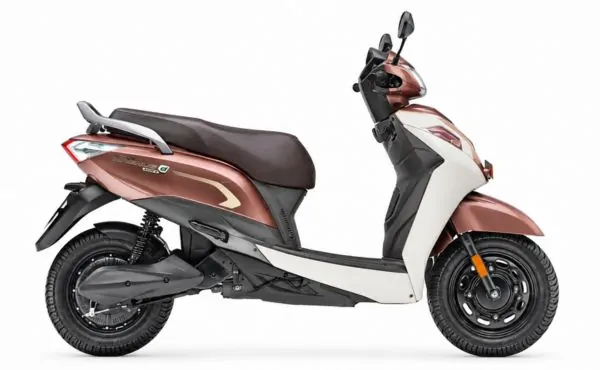
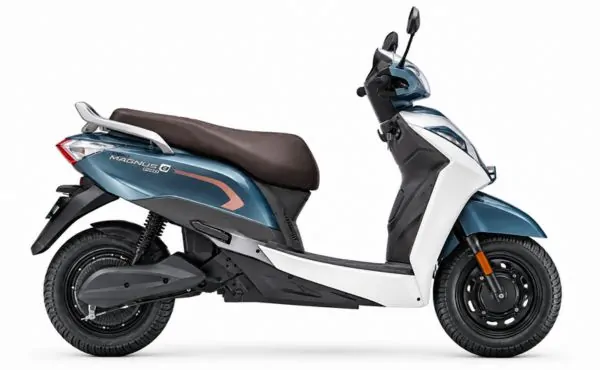
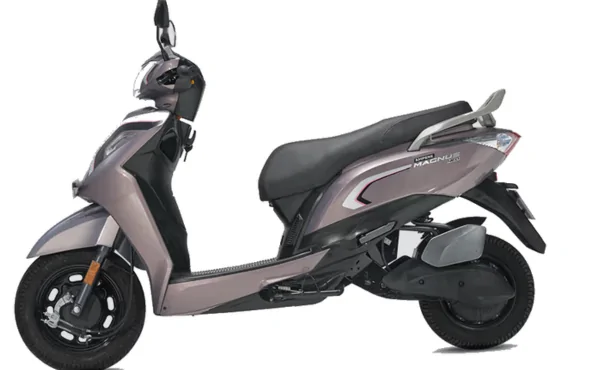
Ampere is an Indian electric scooter brand owned by Greaves Electric Mobility Ltd. (GEML), which is part of Greaves Cotton’s electric mobility business. Founded in 2008, Ampere was one of India’s first electric two-wheeler brands. It started out making low-speed, affordable scooters and has since grown into a wider EV brand, offering everything from entry-level city scooters to more premium models.
Ampere focuses on making electric mobility affordable, especially with scooters that cost less than ₹1 lakh. Unlike brands that target high performance, Ampere aims to help regular petrol-scooter users, including those in smaller cities and semi-urban areas, switch to electric vehicles.
Today, Ampere is Greaves Electric Mobility’s electric two-wheeler brand. It offers several scooter models for different budgets and needs,
| Aspect | Ampere’s position in India |
|---|---|
| Brand origin | India |
| Founded | 2008 |
| Original headquarters | Coimbatore, Tamil Nadu |
| Parent company | Greaves Electric Mobility Ltd. |
| Parent-group link | Greaves Cotton Ltd. |
| Product category | Electric scooters |
| Core focus | Affordable, practical urban mobility |
| Key customer segments | First-time EV buyers, daily commuters, families and value-conscious users |
Ampere stands out because of its long history in the market. The company has sold and serviced electric scooters through different technology phases, from early lead-acid batteries to lithium-ion, and now to connected, higher-performance scooters.
History And Growth
In its early years, Ampere mainly sold low-speed scooters for short trips in South India. During the 2010s, it slowly entered more markets and improved its products with better batteries, longer range, and easier use.
Around 2016 to 2017, Ampere started switching to lithium-ion batteries. This change mattered because lithium-ion batteries are lighter, store more energy, and perform more reliably than traditional lead-acid batteries.
Greaves Cotton bought Ampere in 2018, which was a big change for the brand. Being part of a larger engineering and mobility group helped Ampere grow across India, add more dealers, and start making more scooters locally.
Ampere grew even faster after launching new models like the Magnus, Primus, and Nexus. The Nexus, which came out in 2024, was Ampere’s first step into the premium segment, but the brand still focused on practical and affordable scooters.
| Period | Major development |
|---|---|
| 2008 | Ampere Vehicles was founded in Coimbatore. |
| 2011–15 | Expanded through South Indian markets with affordable electric scooters. |
| 2016–17 | Began transition from lead-acid to lithium-ion battery technology. |
| 2018 | Greaves Cotton acquired Ampere Vehicles. |
| 2019–20 | Expanded into more than 200 Indian cities during the FAME II period. |
| 2024 | Ampere Nexus was launched as the brand’s flagship LFP-battery scooter. |
| FY2026 | Retail sales rose 51% year-on-year to 61,641 units; market share reached 4.4%. |
| June 2026 | Ampere crossed 400,000 scooters manufactured and sold in India. |
Key Milestones And Developments
Ampere’s story is tied to the growth of India’s electric scooter industry. The company started before electric vehicles were common, so it had to grow its business when battery technology, charging options, and customer trust were still developing.
Switching to lithium-ion and later to lithium iron phosphate (LFP) batteries was a key step for Ampere. LFP batteries are known for their stability and long lifespan, which suits Indian conditions and appeals to buyers focused on long-term costs.
| Milestone | Details |
|---|---|
| Early EV presence | Ampere entered India’s EV sector in 2008, making it one of the earlier domestic e-scooter brands. |
| Greaves acquisition | Greaves Cotton acquired the company in 2018, strengthening its manufacturing and expansion capability. |
| National expansion | Ampere expanded into 200+ cities during 2019–20. |
| Premium-range entry | Nexus launched in 2024 as a flagship LFP-battery scooter. |
| Warranty expansion | Five-year/75,000km warranty coverage was extended to Magnus Grand and Magnus G Max in 2025. |
| Value-model launch | Reo 80 was launched in 2026 at ₹59,900, aimed at the entry-level LFP scooter market. |
| Production milestone | Ampere exceeded 400,000 electric scooters manufactured and sold in India by June 2026. |
| Market-ranking progress | Ampere reached fifth place in monthly e-scooter retail sales in February 2026, according to company-reported market data. |
| Next-generation platform | Greaves announced a sixth-generation Ampere scooter for FY2027, aimed at the sub-₹1 lakh segment. |
Ampere is also making its product design simpler. Greaves Electric Mobility plans to combine its current vehicle platforms into one flexible system that can support different products. This should make development easier, allow more shared parts, and help launch new scooters faster.
Manufacturing Facilities
Ampere uses Greaves Electric Mobility’s larger production network. GEML and its subsidiaries run three factories in Hyderabad, Noida, and Ranipet. These sites build both electric two-wheelers and three-wheelers.
The Ranipet factory in Tamil Nadu is the main site for making Ampere’s electric scooters. Greaves Cotton announced this plant in 2021 as a major electric mobility facility, planning to invest ₹700 crore over ten years.
The Ranipet plant can reportedly make about 480,000 Ampere electric two-wheelers each year. Greaves Electric Mobility is also setting up its own battery-pack assembly line there, which is planned to produce up to 400,000 battery packs annually.
| Facility | Location | Role |
|---|---|---|
| Ranipet plant | Tamil Nadu | Main production facility for Ampere electric scooters. |
| Ranipet e-two-wheeler capacity | Tamil Nadu | Reported capacity of 480,000 electric scooters annually. |
| Battery-pack assembly line | Ranipet, Tamil Nadu | Planned in-house battery-pack assembly with 400,000-unit annual capacity. |
| GEML manufacturing facility | Hyderabad | Supports wider electric mobility operations, including two- and three-wheelers. | GEML manufacturing facility | Noida | Supports wider electric mobility operations, including two- and three-wheelers. |
Market Position And Achievements
Ampere competes in India’s large, price-sensitive electric scooter market. It mainly attracts buyers who want a practical option instead of petrol scooters but do not want to pay high prices for premium electric vehicles.
Ampere offers scooters at different prices. The Reo 80 is for entry-level buyers, the Magnus series is for regular city riders, the Primus is for those who want more performance, and the Nexus is the top model. This range lets Ampere meet different needs while staying focused on affordability.
| Area | Ampere’s position |
|---|---|
| Main segment | Affordable and mass-market electric scooters |
| Core price focus | Below ₹1 lakh. |
| Product range | Reo 80, Magnus variants, Primus and Nexus |
| Brand strength | Long operating history and value-oriented product positioning |
| Total milestone | 400,000+ Ampere electric scooters made and sold in India by June 2026. |
| FY2026 retail volume | 61,641 units, up 51% year-on-year. |
| FY2026 market share | 4.4% of the electric scooter segment. |
| February 2026 performance | 4,478 retail units and fifth place in monthly e-scooter sales, based on reported data. |
| Distribution base | More than 420 dealerships across 309+ cities, per Ampere’s published brand history. |
Ampere’s main achievement is growing its business without depending only on premium urban customers. Its scooters have reached buyers in smaller cities and value-focused markets, where price, running costs, service, and battery reliability matter most.
Future Plans
Ampere’s next steps include keeping prices low, launching new products, increasing local content, expanding distribution, and investing in technology. Greaves Electric Mobility has confirmed that Ampere will keep focusing on scooters under ₹1 lakh, seeing this as the biggest long-term opportunity in India.
The company plans to launch its sixth-generation electric scooter in FY2027. Greaves calls it an “ICE Breaker,” meaning it is designed to compete directly with popular petrol scooters in terms of cost, performance, and daily use.
Greaves Electric Mobility also wants to speed up its product launches, aiming to release one new product every quarter in FY2027. According to an August 2026 update, this includes an electric two-wheeler and an electric three-wheeler planned for October.
| Future focus | Planned direction |
|---|---|
| Affordable scooters | Maintain focus on sub-₹1 lakh electric scooters. |
| Sixth-generation scooter | Launch planned in FY2027 to compete with petrol scooters. |
| Product architecture | Use one scalable platform to support multiple models. |
| Dealer expansion | Increase distribution network from about 650 outlets to 1,000 outlets. |
| Market-share target | Aim for double-digit EV market share within two years. |
| Technology | Invest in battery systems, powertrains, battery-management systems, and connected technology. |
| Manufacturing | Increase battery and vehicle-production integration at Ranipet. |
| International growth | Expand presence beyond India as part of Greaves Electric Mobility’s broader plan. |
| Funding | ₹530 crore rights issue completed in 2026 to support next-generation products and growth investment. |
User Reviews
There are no reviews yet. Be the first one to write one.

Hiran Narayanan
Founder & CTO at Bikeleague India
Hiran Narayanan is the Founder and CTO of Bikeleague India, bringing over 15 years of experience in motorcycle technical writing. He develops detailed analyses, tools, model overviews, and blogs that contribute to bikeleague.in's improving rankings.