
Long story short: Master the art of fuel priming pump care for your motorcycle. Discover how to maintain the fuel priming pump, essential practices, usage guidelines and FAQ for optimal Fuel injection system health.
As more motorcycles in India usefuel injection, it’s important to know about the parts that keep your bike running well. The fuel priming pump is one of these key parts. Whether you have years of riding experience or are new to fuel-injected bikes, understanding how the fuel priming pump works and how to look after it can really improve your motorcycle’s performance and reliability. This article explains what fuel priming pumps do, how to maintain them, how to fix common problems, and shares tips for Indian riding conditions.
Key Takeaways
- The fuel priming pump is an essential component of fuel-injected motorcycles, ensuring proper fuel pressure and air removal for reliable engine starts and smooth performance.
- Regular maintenance and inspection of the fuel priming pump, along with attention to fuel quality and system electronics, help prevent common issues and extend the life of your motorcycle.
- Recognising symptoms of a failing pump—such as hard starting, unusual noises, poor acceleration, and decreased fuel efficiency—enables timely intervention and avoids major breakdowns.
- Automatic priming systems in modern motorcycles eliminate the need for manual priming, and maintenance should be done as per the manufacturer’s recommendations rather than relying on myths or assumptions.
- Adapting fuel priming pump care and starting procedures to India’s unique climate and riding conditions is crucial for optimal performance, safety, and enjoyment.
What Is A Fuel Priming Pump?
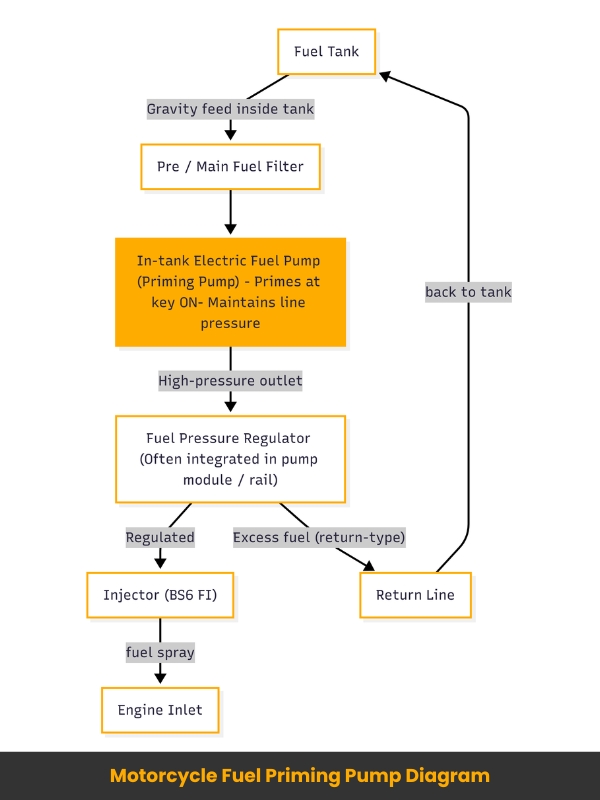
The fuel priming pump is an important part of your motorcycle’s fuel injection system. It ensures the fuel system is pressurised and free of air before you start the engine. This allows the fuel injection system to work smoothly by giving a steady flow of fuel.
What Is The Purpose Of The Fuel Priming Pump?
The primary functions of a fuel priming pump include:
- Removing any air that may have entered the system
- Filling the fuel lines with fuel
- Building up the necessary pressure in the fuel lines
These steps matter because air pockets can block fuel flow, making it harder to start your bike and leading to poor engine performance. Priming the system helps the injectors spray fuel correctly and deliver it efficiently to the engine.
Working Mechanism Of Fuel Priming Pumps
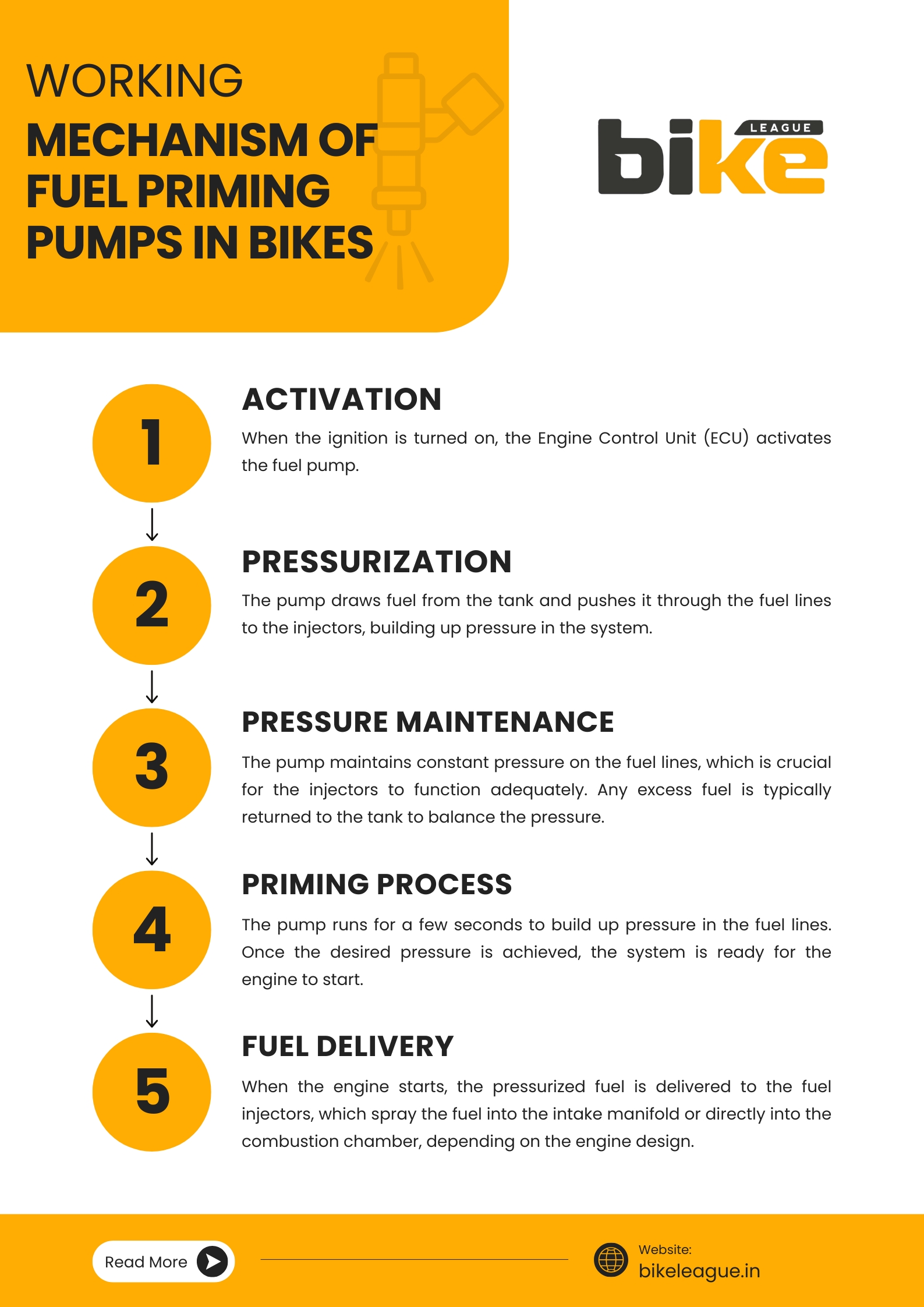
Most fuel-injected motorcycles have an electric fuel priming pump located inside or near the fuel tank. Here’s how it works:
- Activation: When the ignition is turned on, the Engine Control Unit (ECU) activates the fuel pump.
- Pressurisation: The pump draws fuel from the tank and pushes it through the fuel lines to the injectors, building up pressure in the system.
- Pressure Maintenance: The pump maintains constant pressure on the fuel lines, which is crucial for the injectors to function adequately. Any excess fuel is typically returned to the tank to balance the pressure.
- Priming Process: The pump runs for a few seconds to build up pressure in the fuel lines. Once the desired pressure is achieved, the system is ready for the engine to start.
- Fuel Delivery: When the engine starts, the pressurised fuel is delivered to the fuel injectors, which spray the fuel into the intake manifold or directly into the combustion chamber, depending on the engine design.
This process ensures your engine gets a steady supply of fuel from the moment you start it, helping your bike perform well and run efficiently.
How Does The Fuel Priming Pump Differ From A Traditional Carburettor System In Motorcycles?
1. Working On A Fuel Priming Pump Operation
Fuel priming pumps ensure the engine has fuel, especially when you start the bike. Their main job is to send fuel to the right places so the engine can run properly.
This is especially useful if the fuel system has been emptied or if the motorcycle hasn’t been used for some time. The main parts of a fuel priming pump system include:
- Fuel Pump: The core component is responsible for moving fuel from the tank to the engine. It operates electrically and is controlled by the motorcycle’s ECU (Engine Control Unit).
- Fuel Lines: Conduits through which fuel travels from the tank to the engine.
- Fuel Filter: Removes impurities from the fuel before they reach the engine.
- Pressure Regulator: Maintains consistent fuel pressure, ensuring a steady fuel supply to the engine.
- Fuel Tank: Where the fuel is stored before being pumped into the engine.
In fuel-injected systems, a separate priming pump is usually not needed because the injection system is designed to measure and deliver the exact amount of fuel needed for each intake stroke.
2. Working Of A Traditional Carburettor System Operation
On the other hand, traditional carburettor systems in motorcycles work differently:
- Air Intake: Air enters the carburettor through the air filter.
- Fuel Mixing: As air passes through the Venturi (a narrowed section of the carburettor), the pressure drop causes fuel to be drawn from the float chamber into the airstream.
- Mixture Adjustment: The throttle valve adjusts the amount of air-fuel mixture entering the engine. The needle and jet further fine-tune the fuel flow.
- Combustion: The air-fuel mixture is then drawn into the engine cylinder, which is compressed and ignited by the spark plug, producing power.
Carburettors use the Venturi effect to draw fuel into the airflow, mixing it with air to make a blend the engine can burn. This mixture is made in the carburettor before it enters the engine cylinders.
3. Key Differences Between A Fuel Priming Pump And A Traditional Carburettor System
- Fuel Delivery: Priming pumps actively pump fuel to the engine. At the same time, carburettors passively draw fuel using the Venturi effect.
- Precision: Fuel priming pumps, mainly used with fuel injection systems, offer more precise control over fuel delivery than carburettors.
- Cold Start Performance: Priming pumps can improve cold start performance. However, carburettors may require manual adjustments or additional priming in cold conditions.
- Efficiency: Systems using priming pumps with fuel injection are generally more efficient than carbureted engines, as the fuel/air mixture is more precisely controlled.
- Complexity: Carburettors are generally simpler in design and easier to maintain, while priming pump systems are more complex but offer better automation and efficiency.
Things To Take Care Of While Starting Fuel-injected Bikes
India’s weather can be very hot or very wet, so starting and looking after a fuel-injected bike needs some extra attention. Here are some key things to remember:
1. Follow The Fine-c Procedure
This well-known method helps you follow all the right steps to start your motorcycle safely and smoothly:
- F: Check Fuel Supply/Fuel Level
- I: Turn on the Ignition
- N: Ensure the bike is in Neutral
- E: Check the Engine Cutoff/Emergency Shutdown switch
- C: For fuel-injected bikes, no choke is needed, but ensure the clutch is engaged if required
2. Ensure Adequate Fuel Supply
Before starting your bike, check that the tank is full. This helps prevent air from entering the fuel lines, which can make starting harder.
3. Allow Priming Time
When you turn on the ignition, wait a few seconds for the fuel pump to prime the system before starting the engine. You should hear the fuel pump running, which shows it’s working.
4. Adapt To Weather Conditions
In hot weather, fuel can turn into vapour more quickly, which is common in India. This can cause issues like a vapour lock, making it hard to start the engine or causing it to stall. If your bike has been in the sun, let it cool down before starting.
Be careful about water getting into your bike during the monsoon. Fuel-injected systems usually handle wet weather better than carburettors, but too much water can still cause electrical or sensor problems.
5. Use Quality Fuel
Good fuel quality helps fuel-injected bikes run smoothly. Poor fuel with a lot of gum can clog the injectors and cause problems. Always buy fuel from trusted sources, and consider using additives that clean injectors and improve fuel quality, especially if you’re unsure about the quality in your area.
6. Regular Maintenance
Fuel-injected systems need less frequent maintenance than carburettors, but repairs require special skills and tools. It’s important to regularly check electronic components and sensors to keep everything running smoothly.
- Perform regular oil changes and air filter checks (every 10,000 kilometres)
- Clean and lubricate the chain regularly
- Check the battery condition periodically.
7. Address Issues Promptly
If you notice your engine running differently, have trouble starting, or hear odd noises from the fuel pump, have a professional check your system right away. You can also use tools like the Ancel MT700 before starting the bike to check for error codes that could show a fuel system problem.
Symptoms Of A Failing Fuel Priming Pump In A Motorcycle
1. Starting And Idling Issues
A common sign of a failing fuel priming pump is having trouble starting your motorcycle or keeping it idling. This happens because the pump can’t provide enough fuel pressure to the engine, which is needed for smooth running. You might notice:
- The motorcycle failed to start at all.
- Extended cranking periods before the engine fires up
- Inconsistent or rough idling once the engine is running
2. Absence Of Priming Sound
When you turn the ignition key to “on,” a working fuel pump should make a short humming sound as it primes the system. If you don’t hear this, the pump might not be priming properly. This is a helpful early warning sign of fuel pump problems.
3. Intermittent Starting Problems
Some riders find their motorcycles only start after turning the ignition or flipping the kill switch several times. This stop-and-start behaviour points to a problem with the fuel pump priming process and can be a clear sign the pump is failing.
4. Engine Performance Issues
A failing fuel priming pump can cause different engine performance problems, such as:
- Engine Sputtering or Stalling: This is especially noticeable at high speeds or under heavy loads due to inconsistent fuel delivery.
- Loss of Power: This is particularly evident when accelerating or climbing hills, as the engine isn’t receiving adequate fuel.
- Poor Acceleration: The motorcycle may struggle to increase speed smoothly due to insufficient fuel supply.
- Inconsistent RPMs: You might notice fluctuating RPMs, even at a steady throttle, indicating irregular fuel flow to the engine.
- Engine Misfires: Incomplete combustion due to incorrect fuel delivery can cause the engine to misfire.
5. Unusual Noises
Listen for any unusual sounds coming from the area around the fuel tank:
- Whining Noise: A high-pitched whining sound from the fuel tank can indicate a struggling fuel pump motor.
- Clicking Sound: Constant clicking from the fuel pump relay might suggest electrical issues affecting the pump’s operation.
6. Decreased Fuel Efficiency
If your motorcycle uses more fuel than normal for the same distance, it could mean the fuel pump is failing. The engine might not run as well because it’s not getting fuel consistently.
7. Check Engine Light
A failing fuel pump can trigger the check engine light on modern motorcycles with electronic fuel injection. While this light can indicate different problems, consider checking the fuel system if you notice other symptoms as well.
8. Electrical Issues
Sometimes, fuel pump priming problems are caused by electrical issues. These can show up as:
- Blown fuses related to the fuel system
- Faulty relays that control the fuel pump
- Damaged wiring or connectors in the fuel pump circuit
Remember, these symptoms can also come from other fuel system or engine problems. That’s why it’s important to get a proper diagnosis. If you notice any of these signs, have a qualified mechanic check your motorcycle and run the appropriate tests to determine whether the fuel priming pump is the problem.
Motorcycle Fuel Priming Pump Care: Dos And Don’ts
| Type | Do | Don’t |
|---|---|---|
| Pump & Hose Inspection | Regularly inspect the pump and related hoses for signs of wear or leaks. | Don’t ignore warning signs such as hard starting, sputtering, or loss of power. |
| Maintenance Schedule | Follow the manufacturer’s maintenance schedule. | Don’t neglect safety precautions—avoid open flames or sparks near the fuel system. |
| Fuel Quality | Use clean, high‑quality fuel to avoid contamination. | Don’t use low‑quality or adulterated fuel. |
| Priming Procedure | Prime the pump properly before starting the engine, especially after fuel system work. | Don’t bypass or disable the priming pump for convenience. |
| Noise & Performance | Listen for unusual noises from the pump and address them promptly. | Don’t delay replacement if the pump shows persistent problems. |
| Electrical Connections | Ensure all electrical connections to the pump are secure and corrosion‑free. | Don’t attempt repairs without basic knowledge or proper tools. |
| Pump Replacement | Replace worn‑out or faulty pumps with genuine or recommended parts. | Don’t mix old and new pump parts unless compatible. |
| Work Environment | Work in a well‑ventilated area when inspecting or servicing the pump. | Don’t let dirt, dust, or water enter the fuel tank or pump during maintenance. |
Common Myths And Misconceptions About Fuel Priming Pumps
Myth 1: If My Bike Won’t Start, The Fuel Pump Always Needs Replacing
Fact: Starting issues can be caused by various factors such as electrical faults, clogged filters, or an empty fuel tank—not just a faulty pump. Proper diagnosis is essential before replacing parts.
Myth 2: You Need To Manually Prime The Fuel Pump On Fuel-injected Motorcycles
Fact: Most modern fuel-injected motorcycles have an automatic priming system that is triggered when you turn the ignition on. Manual priming is not required or recommended.
Myth 3: All Fuel Pumps Make Loud Noises When Priming.
Fact: While a faint hum is normal, loud or unusual noises can indicate a problem such as a clogged filter or a failing pump. Routine operation should be quiet and consistent.
Myth 4: Fuel Additives Always Fix Fuel Pump Issues
Fact: While certain fuel additives can help clean injectors, they are not a cure-all for mechanical or electrical fuel pump faults.
Myth 5: Fuel Priming Pump Maintenance Is Unnecessary
Fact: Regular inspection and adherence to manufacturer guidelines can extend your pump’s life and prevent unexpected breakdowns.
Faq About Fuel Priming Pumps In Motorcycles In India
1. Why Is My Motorcycle’s Fuel Pump Not Priming?
A fuel pump may fail to prime due to electrical issues such as a poor ground connection, a bad fuse, or a malfunctioning rollover sensor. Sometimes, it could be due to a faulty relay or wiring problems. You should check these components and use a multimeter to diagnose electrical connections.
2. What Are The Signs Of A Failing Fuel Pump In A Motorcycle?
Common signs include engine stalling, difficulty starting, loss of power during acceleration, unusual fuel pump noises, and inconsistent fuel delivery. If you experience these symptoms, it’s advisable to have your fuel pump inspected.
3. Why Is My Motorcycle’s Fuel Pump Making Loud Noises?
Loud fuel pump noises can indicate several issues, including clogged filters that lead to cavitation, excessive pressure that causes the pump to over-amp, or wear and tear on the pump components. If you notice any unusual noises, it’s best to have the pump inspected by a professional.
4. How Do I Prime The Fuel Pump After Changing The Fuel Filter?
After changing the fuel filter, it’s essential to prime the system to ensure proper operation. This typically involves turning the ignition on and off a few times to allow the pump to pressurise the system. Specific steps may vary depending on your motorcycle model, so consult your owner’s manual for precise instructions.
5. What Type Of Fuel Additives Are Safe To Use With Fuel-injected Motorcycles?
Using fuel system cleaners, fuel stabilisers, and corrosion inhibitors for fuel-injected motorcycles is generally safe. However, always ensure the additives are compatible with your specific motorcycle model and follow the manufacturer’s usage recommendations.
6. What Should I Do If My Motorcycle’s Fuel Pressure Drops When The Tank Is Below A Quarter Full?
If you experience a drop in fuel pressure when the tank is low, it could be due to a clogged fuel module filter screen. This prevents fuel from entering the pump. In such cases, it’s advisable to have the fuel system inspected and cleaned by a professional.
7. Can I Use Aftermarket Fuel Pumps In My Motorcycle?
Aftermarket fuel pumps can be used, but it’s essential to ensure they’re compatible with your motorcycle’s specifications. Using incompatible pumps can lead to performance issues or even damage the fuel system. Always consult your mechanic or refer to your owner’s manual before making replacements.
8. How Often Should The Fuel Priming Pump Be Inspected Or Serviced?
It’s recommended to inspect the fuel priming pump during routine maintenance, typically every 10,000 to 15,000 kilometres. However, if you notice symptoms like difficulty starting or unusual noises, have the pump checked sooner.
9. Is It Safe To Ride With A Malfunctioning Fuel Priming Pump?
Riding with a faulty fuel priming pump is not advisable. It can lead to poor performance, stalling, or even engine damage. Address any fuel system issues promptly to avoid breakdowns and ensure safety.
10. Does A Failing Fuel Priming Pump Affect Emissions?
Yes, a malfunctioning fuel priming pump can result in improper fuel delivery, leading to incomplete combustion and increased emissions. Keeping your fuel system healthy is crucial for meeting emission standards and protecting the environment.
Other Related Articles From Bikeleague India
- Motorcycle fuel – Types, things to know & take care in India
- Electric scooter maintenance – Top tips for longevity
- Fuel Injection vs Carburetor of motorcycle – Comparison
- Push start vs Jump start in Fi motorcycle: What works
- Mileage in Two wheelers – Proven & useful tips
- Contact Us
Conclusion
Knowing how to look after your motorcycle’s fuel priming pump is key to steady performance, easy starts, and a healthy engine. By following these tips, watching for pump problems, and adjusting your care for the weather, you’ll get the most out of your fuel-injected bike. Taking care of your fuel priming pump helps your motorcycle last longer and gives you a smoother, safer, and more enjoyable ride.
If you have any questions, you can email us at bikeleague2017@gmail.com or leave a comment below. We’re always happy to help. You can also connect with Bikeleague India on social media.