
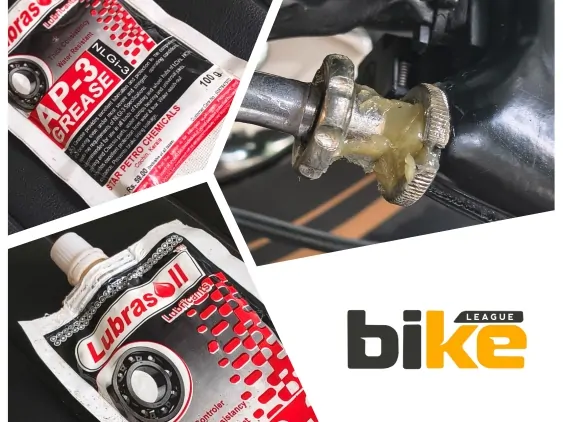
Long story short: Find out which Motorcycle Grease fits your motorcycle in India. Get expert advice on types, brands, usage, and maintenance for long-lasting performance.
Riding a motorcycle in India isn’t easy on your bike. Not only does the combination of blazing heat, relentless monsoons, thick dust, rough roads, and constant stop-and-go traffic put a lot of stress on every part, but it also means you have to be extra vigilant about maintenance. While most riders remember to change their engine oil, it’s easy to forget how important the right grease for bike maintenance is. However, if you use the wrong grease for bikes—or skip it completely—you can slowly damage your bearings, linkages, cables, and controls. Consequently, your ride may feel rougher and less enjoyable over time.
Key Takeaways
- Regularly greasing motorcycle components is just as vital as changing engine oil, as it protects critical parts from the harsh Indian climate and road conditions.
- Choosing the correct type of grease—paying attention to NLGI grade, additives, and temperature ratings—ensures optimal performance and longevity of motorcycle parts.
- Lithium or lithium-complex NLGI 2 EP grease is usually the safest and most effective choice for Indian motorcycles due to its versatility and resistance to water and heat.
- Grease colour is not an indicator of its quality or suitability; always verify product specifications and labels for proper application.
- Dirty, dark, or milky grease is a warning sign that maintenance is overdue—clean and reapply fresh grease to avoid long-term damage and ensure a smooth ride.
What Exactly Is Grease?
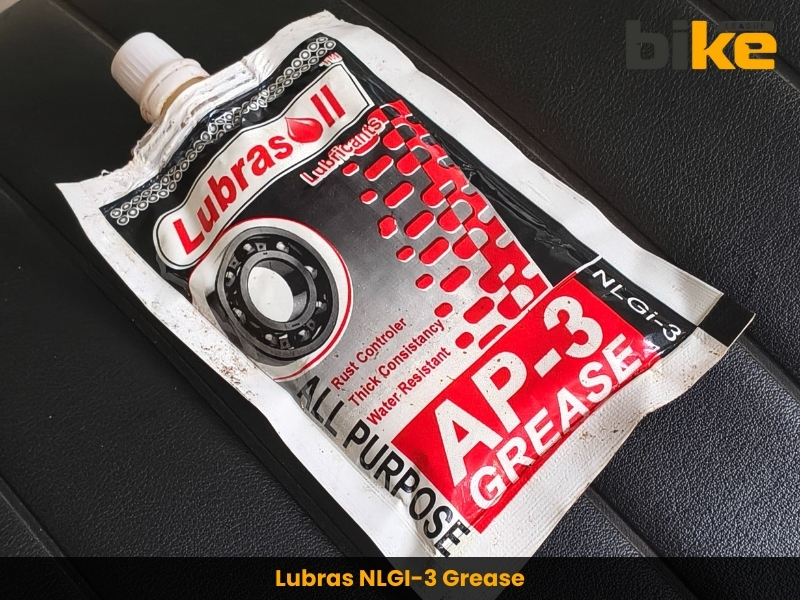
Grease is simply made of three key ingredients:
- Base oil – This actually lubricates.
- Thickener or soap – This holds the oil in place and gives grease its thick, semi-solid texture.
- Additives – these boost protection against wear and rust, and, in addition, help grease work under heavy pressure (EP).
What Matters When Choosing Grease For Your Motorcycle?
NLGI stands for National Lubricating Grease Institute. This U.S.-based non-profit trade association, founded in 1933, sets global standards for lubricating greases. In particular, it defines the NLGI consistency grades (0-6) that measure grease hardness—NLGI 2 (the most common for motorcycles) is like peanut butter consistency.
Additionally, they certify greases with symbols such as GC-LB for automotive use.
- NLGI Grade: This tells you how thick or stiff the grease is.
- NLGI 2: the usual choice for most motorcycle bearings and pivots
- NLGI 3: a stiffer type, only used in places where you really don’t want the grease to move around
- Thickener type: Common ones are lithium, lithium complex, and calcium.
- Temperature range and any EP (Extreme Pressure) markings: Furthermore, always check these on the label.
For most Indian motorcycles, lithium or lithium‑complex NLGI 2 EP grease is usually the safest choice. Therefore, you should always prioritise the recommended specifications for optimal results.
Types Of Motorcycle Grease Commonly Used On Motorcycles In India
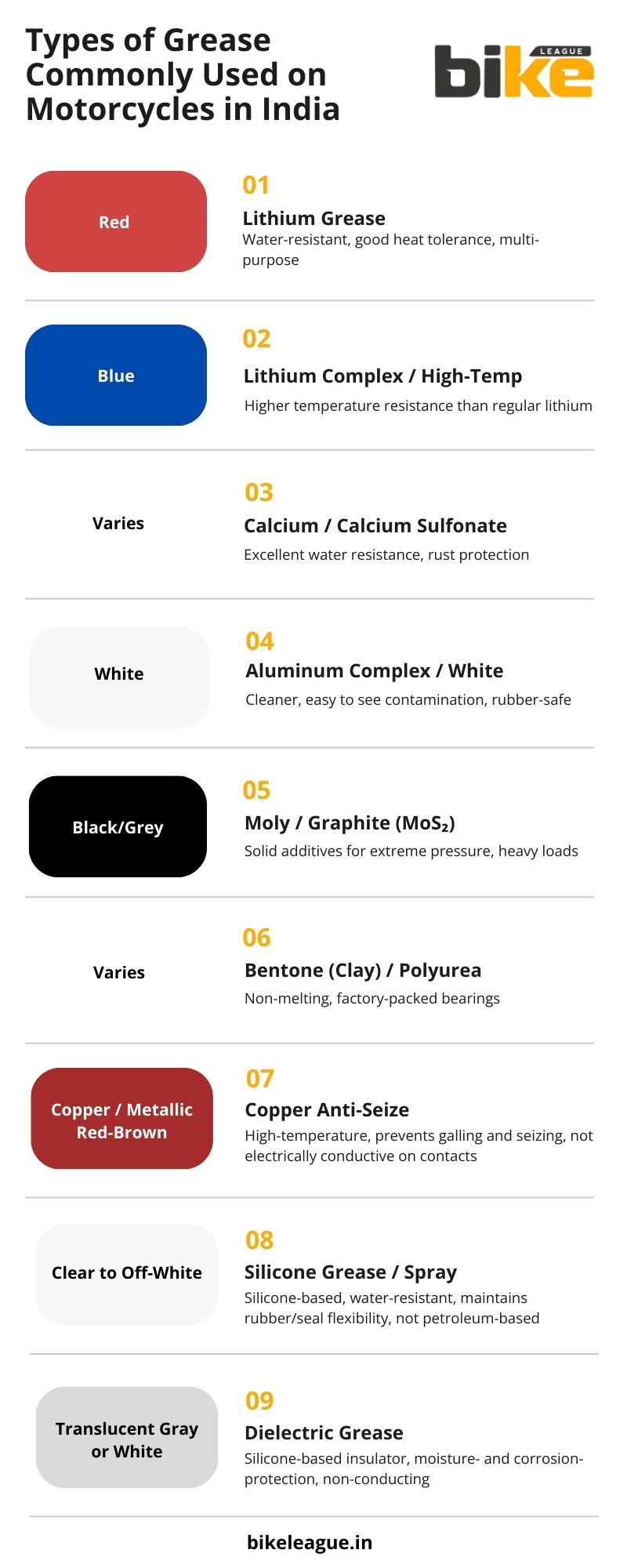
1. Lithium Grease (often Red)
- This is the most common all-rounder grease you’ll spot in motorcycle workshops across India.
- It does a decent job of resisting water and holds up well in both everyday heat and rain. As a result, it is suitable for most regular riding conditions.
- Where it works best:
1. Wheel bearings
2. Steering head bearings
3. Swingarm pivots
4. Footpeg hinges and brake pedal pivots.
5. Side/centre stand pivots
6. Lever pivots (applied thinly)
2. Lithium Complex / High‑temperature Grease (often Blue Or Dark)
- This grease can withstand much higher temperatures than regular lithium grease, so it’s perfect for parts that really heat up. Consequently, it is ideal for high-stress or high-speed components.
- Best for:
1. Front and rear wheel bearings during sustained high‑speed or long‑distance riding
2. Heavily loaded or performance‑oriented usage
3. Calcium And Calcium Sulfonate Grease
- It’s excellent at keeping out water and stopping rust. Thus, it is a great choice if you ride in the rain or through puddles.
- Very handy for exposed parts on your bike that move slowly—especially those that get splashed or soaked a lot:
1. Side/centre stand pivots
2. Footpeg hinges
3. Exposed linkage joints
4. Aluminium Complex / White Grease
- You’ll often find this sold as white lithium or multi-purpose grease. In fact, it’s easy to spot and less messy to work with.
- It’s less likely to make a mess, and it’s much easier to see when you’re applying it. Moreover, this makes maintenance less of a hassle.
- Best used for:
1. Clutch and brake lever pivots
2. Visible linkage points
3. Light‑duty bearings where you want to easily see contamination
5. Moly (molybdenum Disulfide) / Graphite Grease (black Or Grey)
- This grease has solid particles (like molybdenum or graphite) mixed in to provide extra protection where parts are under high pressure. As a consequence, it is especially valuable for components that experience heavy loads.
- It’s excellent for slow-moving parts that handle heavy loads—think splines and certain joints.
- On motorcycles, you’ll use this for:
1. Splines (where the design uses them)
2. Certain high‑load linkages
3. If you ever run out of proper chain lube, you can use this in a pinch on your chain or sprockets until you can get the right stuff.
6. Bentone (clay) And Polyurea Grease
- These greases don’t melt easily, so manufacturers often use them in factory-packed bearings or in electric motors.
- Usually, if these bearings wear out, you’ll just replace the whole bearing instead of trying to add more grease—unless, of course, your bike’s manual tells you otherwise. In any case, always follow the manufacturer’s instructions.
7. Speciality Products For Motorcycles
- Copper anti‑seize – Use this on exhaust studs, clevis threads, and any bolts that have a habit of rusting or getting stuck.
- Silicone grease/spray – Spray or dab this on rubber bits (like fork seals or switchgear boots) and on some plastics to keep them supple and prevent cracking.
- Dielectric grease – This stuff is great for protecting your motorcycle’s important electrical connections from moisture and corrosion.
| Type / Specialty Product | Common Color | Key Features | Best Motorcycle Applications |
|---|---|---|---|
| Lithium Grease | Often Red | Water-resistant, good heat tolerance, multi-purpose | Wheel bearings, steering head bearings, swingarm pivots, footpeg hinges, brake-pedal pivots, side/centre-stand pivots, lever pivots (thin layer) |
| Lithium Complex / High-Temp | Blue or Dark | Higher temperature resistance than regular lithium | Front/rear wheel bearings (high-speed/long-distance), heavily loaded parts |
| Calcium / Calcium Sulfonate | Varies | Excellent water resistance, rust protection | Side/centre-stand pivots, footpeg hinges, exposed linkage joints (wet conditions) |
| Aluminum Complex / White | White | Cleaner, easy to see contamination, rubber-safe | Clutch/brake lever pivots, visible linkages, light-duty bearings |
| Moly / Graphite (MoS₂) | Black/Grey | Solid additives for extreme pressure, heavy loads | Splines, high-load linkages, emergency chain use |
| Bentone (Clay) / Polyurea | Varies | Non-melting, factory-packed bearings | Replace bearings (don’t repack unless manual specifies) |
| Copper Anti-Seize | Copper / Metallic Red-Brown | High-temperature, prevents galling and seizing, not electrically conductive on contacts | Exhaust studs, clevis threads, threaded fasteners near hot components |
| Silicone Grease / Spray | Clear to Off-White (spray can often greyish in film) | Silicone-based, water-resistant, maintains rubber/seal flexibility, not petroleum-based | Rubber seals, fork boots, fork-cap O-rings, plastic trim, weather-seals, window seals |
| Dielectric Grease | Translucent Gray or White | Silicone-based insulator, moisture- and corrosion-protection, non-conducting | Electrical connectors, spark plug boots, battery terminals, bulb sockets, multi-pin plugs in wet/harsh environments |
What Do Grease Colours Really Mean For Motorcycles?
Don’t get fooled by colour! There isn’t any universal rule that connects a grease’s colour to how well it works. The colour is just added dye. However, here’s what you’ll commonly spot on Indian motorcycles:
| Colour | Typical Type / Additives | Typical Motorcycle Use (Not a hard rule) |
|---|---|---|
| Red | Lithium multi-purpose | Bearings, levers, stands, general chassis |
| Blue | Lithium complex / high-temperature | Wheel bearings, swingarm, wet conditions |
| Black / Grey | Moly/graphite EP | Splines, slow heavy-load joints |
| White | White lithium or aluminum complex | Levers, visible linkages, seals |
| Green | Often synthetic or special blends | Brand/model-specific cases |
Key points for riders:
- Always check the label on the grease tub or tube. Specifically, look for terms like “lithium”, “EP2”, “NLGI 2”, and the temperature range. Don’t just trust the colour—you need the right specs!
- If the grease you remove looks really dark, gritty, or milky, that’s a warning sign. In this case, it means the grease is worn out, dirty, or has absorbed water—so make sure to clean the part and apply fresh grease.
What’s The Best Motorcycle Grease For Bike Maintenance And Every Part?
| Part / Area | Recommended Grease Type | Notes |
|---|---|---|
| Front & Rear Wheel Bearings | High-temp lithium complex, NLGI 2 (often blue/white) | High speed + heat; must handle water and load |
| Steering Head Bearings | Lithium EP2 (usually red) | Smooth steering, rust protection |
| Swingarm & Suspension Linkages | Waterproof lithium or marine-grade, NLGI 2 | Exposed to water, mud, pressure |
| Rear Shock Bushes (if greasable) | Lithium EP2 or calcium sulfonate | Thin film is enough; avoid over-packing |
| Clutch & Brake Lever Pivots | Light lithium (red/white) or white lithium spray | Thin layer only, avoid dripping on grips |
| Clutch Cable Ends | Cable lube + little lithium/silicone grease | Use a cable luber tool where possible |
| Throttle Cable Ends & Throttle Tube | Cable lube + a touch of light grease | Improves throttle return, avoid on bar surface |
| Side Stand & Centre Stand Pivots | Normal lithium EP2 (red) | Reduces squeaks and wear |
| Footpeg Hinges & Pedal Pivots | Lithium EP2 | Light coating, wipe extra |
| Chain & Sprockets | Proper chain lube or chain wax (not chassis grease) | Grease collects dirt; use only in emergency |
| Splines (if any) | Moly/graphite EP grease (black) | Thin application |
| Exhaust Studs, Clevis Threads | Copper anti-seize | Prevents seizure, future removal easier |
| Battery Terminals | Petroleum jelly or dielectric grease | Protects against corrosion |
1. Wheel Bearings
- Use high‑temperature lithium complex EP2.
- Wheel bearings on your bike spin at high speeds, get hot when you brake, and take a beating from rough roads. Using a top-quality grease helps prevent leaks, thinning, and early wear.
2. Steering Head Bearings
- Use lithium EP2.
- Choose a grease that can handle getting wet—whether from rain or washing—so your steering stays smooth and effortless.
- If your handlebar feels notchy or tries to snap back to the middle on its own, it’s a sign you should check, clean, and re-grease—or even replace—those bearings.
3. Swingarm & Suspension Linkages
- Use water‑resistant lithium or calcium EP2.
- These parts are always moving and under pressure, and they are constantly splashed with water and mud.
- If you ride off-road or go on long tours, make sure to use the best water-resistant grease you can get.
4. Levers, Stands, Pegs, Pedals
- Lithium EP2 is your go-to for:
1. Side and centre stand pivots
2. Footpeg hinges
3. Rear brake pedal pivot - For clutch and brake levers, just a thin layer of lithium or white lithium spray is enough—don’t cake it on.
- This keeps your controls feeling smooth, quiet, and responsive.
5. Chains & Sprockets
- Use a dedicated motorcycle chain lube or chain wax.
- If you use regular chassis grease on your chain, it’ll trap dust and dirt, turning into a gritty paste that quickly wears out your chain and sprockets.
- Stuck somewhere without chain lube? A little light oil or thin grease will do in a pinch, but switch back to proper chain lube as soon as you can.
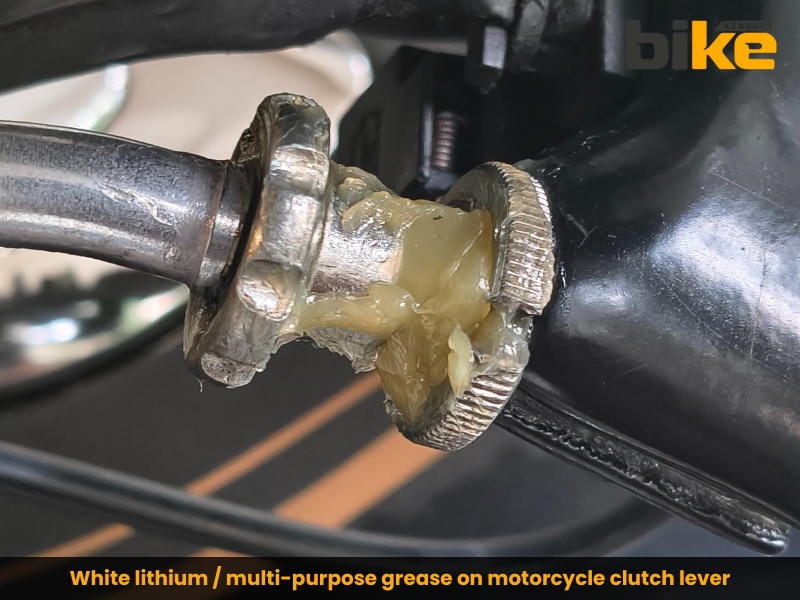
6. Clutch Lever & Clevis Lubrication
If you ride in city traffic, your clutch lever gets put to work constantly—probably more than any other part of your motorcycle. All that action means it needs a little extra care to stay smooth.
1. For The Pivot Bolt And The Hole In The Lever
- Just use a small amount of lithium EP2 grease (red or white) to keep things moving freely—no need to overdo it.
- White lithium spray is a neat trick for this—it keeps things tidy and is simple to apply.
2. If Your Bike Has A Lower Clevis At The Clutch Actuator End
- Dab a bit of copper anti-seize on the clevis threads. This will keep them from rusting or getting stuck over time.
- Add a thin layer of lithium grease to any moving pins in this area. This keeps everything working smoothly.
3. For The Cable Ends At The Lever And The Clutch Arm
- Drip a few drops of cable lube (the thin, oil-type kind) so your cables glide easily and don’t start sticking.
- Finally, add a tiny dab of lithium or silicone grease right where the cable nipple sits. This prevents squeaks and keeps everything moving without friction.
Motorcycle Grease Maintenance Schedule For Indian Conditions
| Part/Area | Recommended Interval (km) | Monsoon/Heavy Use | Notes & Action Required |
|---|---|---|---|
| Wheel Bearings (Front/Rear) | Every 20,000-25,000 km (or tyre change) | Every 15,000 km | Pack 30-50% full with lithium complex; repack if opening hub |
| Steering Head Bearings | Every 15,000-20,000 km | Every 10,000 km | Thin layer; adjust preload if notchiness felt |
| Swingarm Pivot/Linkages | Every 10,000-15,000 km | Every 7,500 km | Waterproof lithium; clean mud first for off-road bikes |
| Side/Centre Stand Pivots | Every 5,000 km | Every 2,500-3,000 km | Light lithium; prevents squeaks/seizure in rain |
| Clutch/Brake Lever Pivots | Every 5,000 km | Every 2,500 km | Thin film white lithium spray; wipe excess to avoid dirt |
| Footpeg Hinges/Brake Pedal | Every 5,000-7,500 km | Every 3,000 km | Lithium EP2; quick wipe-on during services |
| Shock Bushings (if greasable) | Every 10,000 km | Every 7,500 km | Thin coat; check for play |
| Cable Ends (Clutch/Throttle) | Every 5,000 km (lube) | Every 2,500 km | Cable lube + dab of lithium; use lube tool |
| Splines (if applicable) | Every 10,000-15,000 km | Every 7,500 km | Moly black; thin application only |
| Exhaust Studs/Clevis Threads | Every 10,000 km (anti-seize) | Every 5,000 km | Copper anti-seize; prevents monsoon rust |
Fine-tuning For Indian Riding Conditions
1. Coastal / High‑humidity + Strong Monsoon (e.g., Kerala)
- Cut all the above intervals by about 30–50%.
- Switch to water-resistant grease for exposed parts like stands and linkages when riding in wet or coastal areas.
2. Dusty Interior Or Highway Riding
Be sure to clean the parts thoroughly before applying grease, and don’t go overboard.
3. Off‑road / Trail / Adventure Use
If you ride off-road or on muddy trails, check your swingarm, linkages, wheel bearings, and levers more often—especially after muddy rides or pressure washing.
Key Tips
- Logbook: Note the odometer at each service.
- High-Mileage Touring (e.g., Kerala routes): Halve intervals post-monsoon; inspect at fuel stops.
- RE/Hero Specific: First service 500-1,000 km (inspect), then every 10k km major grease points.
- Tools Needed: Grease gun, rag, brush for cleaning; total time per full session: 1-2 hours.
- Check the service manual: Check the owner’s / service manual first-hand before anything else.
Motorcycle Grease: Myths And Mistakes Riders Make
Busting the Biggest Grease Myths for Motorcycles
| Myth / Habit | Why It’s a Problem | Correct Approach |
|---|---|---|
| “Any grease works everywhere on the bike” | Wrong type can melt, thin or damage seals | Use lithium EP2 as a base, follow manual |
| Using engine oil or thick chassis grease on chain | Attracts dust, becomes abrasive paste | Use motorcycle chain lube or wax |
| “More grease is always better” | Excess traps dirt, overheats bearings | Apply a thin, even film, wipe extra |
| Mixing different greases randomly | Some mixtures soften/harden unpredictably | Clean out old grease when changing types |
| Never lubing levers and cables | Heavy clutch, stiff throttle, cable snap risk | Lube levers and cables at regular intervals |
| Ignoring steering and swingarm lubrication | Hidden wear until handling becomes unsafe | Service per km schedule, especially on older bikes |
Reliable Motorcycle Grease Brands & Products In India
If you’re looking for good Motorcycle Grease for bike maintenance in India, you’re in luck—there are several trusted brands that most riders rely on. Names like Veedol, Castrol, Servo (IOCL), HPCL, and Bosch are easy to find on Amazon and Flipkart, usually with 4-star ratings or better.
They’re also used by big bike makers like Royal Enfield, Bajaj, and Hero, so you can trust them. The most common type you’ll see is lithium EP2 NLGI 2 grease, which holds up well in both the scorching summer and the monsoon. Expect to pay anywhere from ₹150 to ₹500 for a tube (180–500g).
Top Recommended Products
| Brand/Product | Type/Color/Key Features | Best For Motorcycles | Price (Amazon India) |
|---|---|---|---|
| Veedol Silk Shield Ultra Plus | Lithium complex EP2 (blue) | Wheel bearings, swingarm | ₹250-350/500g |
| Veedol AP-3 Supreme | Lithium EP2 (red) | Levers, stands, general chassis | ₹180-250/400g |
| Castrol LMX Lithium | Multi-purpose lithium EP2 (red) | Bearings, linkages | ₹200-300/400g |
| Servo RR No.3 (IOCL) | Lithium EP3 (red/brown) | Universal, high-load pivots | ₹150-220/500g |
| HPCL Lithon MP3 | Multi-purpose lithium (red) | Chassis, pedals | ₹160-250/1kg |
| Bosch F002H23025 Wheel Bearing | NLGI3 MP3 EP3 (multi) | High-speed bearings | ₹300-400/500ml |
| WD-40 Specialist White Lithium Spray | White lithium (spray) | Levers, cables (light duty) | ₹350-450/can |
Top Picks
- For daily riders on a budget, Servo or Veedol red tubes (₹150–200) are a safe, affordable choice.
- If you want something a bit fancier for long rides or premium bikes, go for Castrol or Veedol complex greases.
How To Avoid Fake Grease For Bikes
Unfortunately, there are a lot of fake products out there—especially from unknown sellers online. Some fakes use cheap fillers and skip important additives, which can ruin your bearings. In fact, over 8,000 counterfeit oils were seized in 2024! Here’s how to spot the real thing:
- Check the packaging for things like holograms, tamper-proof caps, and sharp, clear printing. Blurry labels or smudges are a bad sign. Some brands let you check the batch or UPI code.
- Look at the grease itself: Genuine grease is smooth and creamy with a uniform colour (usually red). Fakes might look watery, have odd colours, or even separate into oil and solids.
- Beware of prices that seem too good to be true. If a can costs less than ₹100 for 400g or feels lighter than usual, it’s probably fake. Real grease costs around ₹40–60 per 100g.
- Always buy from authorised dealers, official online stores, or trusted service centres. Avoid roadside stalls or unknown sellers on OLX.
- Some brands offer QR or scratch codes you can scan with an app or on their website—if it doesn’t check out, it’s not real.
- Give the grease a sniff and feel: Real stuff has a mild odour and feels smooth, not gritty. Fakes often smell strongly of chemicals.
If you’re in Kerala or anywhere with heavy rains, stocking up on Veedol or Servo from IOCL outlets is a smart choice—they hold up well in wet conditions. Also, check online reviews for mentions of “genuine” to be extra sure.
Motorcycle Grease “don’ts”: Avoid These Common Mistakes
It’s easy to make a few slip-ups when it comes to greasing your motorcycle, but some mistakes can really cost you down the line. Here’s what to watch out for:
| Don’t Do This | Why It Hurts Your Bike | Do This Instead |
|---|---|---|
| Over-grease bearings/levers | Traps dirt, causes spin-out/overheat (common in dust/monsoons) | Pack 30-50% full for bearings; thin film on levers, wipe excess |
| Mix incompatible greases | Lithium + calcium separates/softens, ruins protection | Clean thoroughly; stick to one type (e.g., all lithium) |
| Ignore rubber seals/plastics | Petroleum grease swells/cracks fork seals, boots | Use white lithium/silicone—safe for rubber |
| Grease chains with chassis grease | Attracts grit into abrasive paste; kills sprockets fast | Dedicated chain lube/wax only |
| Skip cleaning before greasing | Old dirt + new grease = grinding paste | Degrease surfaces first |
| Use WD-40/oil as grease substitute | Evaporates; no lasting film or EP protection | Lithium EP2 for pivots/bearings |
| Forget monsoon checks | Water dilutes grease, causes rust/seizure | Inspect/re-grease stands/levers every 2-3k km in rain |
Quick Tip: After you grease, tighten everything to the specs in your manual and take your bike for a short test ride. This simple habit can double the lifespan of your bike’s moving parts on tough Indian roads!
Glossary Of Motorcycle Grease Terms
If you’re new to motorcycle maintenance, don’t worry—these technical terms aren’t as scary as they sound. Here’s a simple, no-jargon breakdown:
- NLGI Grade: This is just a fancy way of saying how thick the grease is, kind of like peanut butter.
- NLGI 2: standard for most bikes—it’s smooth, sticks well, but isn’t too stiff.
- NLGI 3: thicker and used only for spots that vibrate a lot.
- Thickener/Soap: Think of this as the “glue” in grease. It’s what keeps the oil from leaking out and gives grease its body. Lithium-based thickeners are the all-rounders, while calcium-based ones are champs at keeping water out.
- Base Oil: This is the main lubricating part of grease (about 70-90%). If you see “synthetic,” it means the grease will handle high heat even better.
- EP (Extreme Pressure) Additives: These are special chemicals (such as molybdenum, or “moly”) that protect parts under heavy loads, such as linkages. They prevent metal parts from grinding against each other.
- Multi-Purpose Grease: This is the all-around lithium EP2 grease that covers about 80% of your bike’s needs—good for heat, water, and rust.
- Lithium Complex: An upgraded version of regular lithium grease. It’s made for parts that get really hot or work extra hard, like wheel bearings. “Drop point” here means it can handle heat up to 250°C, compared to 180°C for standard lithium.
- Anti-Seize: A thin paste (often copper-coloured) for threads and bolts to prevent rust and seizing. Don’t use it on moving parts—it’s not slippery enough for that.
- Dielectric Grease: A special non-conductive silicone used on electrical connections (like battery terminals and spark plugs). It keeps water out and prevents short circuits.
- Cable Lube: This is a thin oil (not grease!) for clutch and throttle cables. It works its way inside the cable for smooth, easy pulls.
- Drop Point: The temperature at which grease begins to melt or thin. For Indian weather, aim for a drop point above 200°C so your grease won’t break down in the summer or monsoon.
Quick-glance Motorcycle Grease Cheat Sheet
- For most parts of your bike’s frame and moving joints: use lithium EP2 grease (it’s usually red).
- When you’re dealing with wheel bearings or any part that gets extra hot: Go for lithium complex or high-temp EP2 grease (often blue or white).
- For your clutch and front brake levers: Just a thin layer of lithium or white lithium spray is all you need—no need to pile it on.
- When it comes to your chain: Always use a proper motorcycle chain lube or chain wax—never regular chassis grease.
- For splines and those slow-moving, high-pressure joints: Pick moly or graphite EP grease for these jobs.P grease for these jobs.
- For exhaust studs and any really important threaded joints: copper anti-seize is your go-to.
Faqs For Motorcycle Grease In India
1. Electric Motorcycles/scooters In India: Do Greasing Needs Differ?
With EVs like Ather 450X, Ola S1, Bajaj Chetak, and Bounce Infinity surging (2M+ sold by 2025), greasing is similar to petrol bikes for chassis/suspension but simpler overall—no engine oil or clutch plates. Focus on mechanical parts; motors are sealed (no DIY greasing).
2. Can I Use Wd-40 Instead Of Grease On My Motorcycle Levers Or Bearings?
No, you shouldn’t! WD-40 isn’t actually a lubricant—it’s more of a cleaner and penetrant. It dries out quickly and doesn’t provide real protection, so your levers or bearings will wear out. Stick to lithium EP2 grease for smooth, long-lasting movement. Save WD-40 for freeing up rusty bolts before you grease them.
3. Is More Grease Always Better For Motorcycle Parts Like Wheel Bearings?
Nope! More grease isn’t always better. If you pile it on, it just traps dirt, overheats, and turns into a sticky mess—especially with all the dust and muck on our roads. For bearings, pack them only 30-50% full, then wipe away the excess. A thin, even layer is all you need.
4. Can Any Grease Work For All Parts Of My Motorcycle?
No, different parts have different needs. For example, wheel bearings need a tough, heat-resistant grease like lithium complex, while levers work best with a lighter lithium grease. If you use the same grease everywhere, you might end up with poor performance, damaged seals, or water getting in during the monsoon.
5. Should I Use Engine Oil Or Grease As Chain Lube On My Bike?
Never! Using engine oil or regular chassis grease on your chain is a recipe for disaster—it’ll grab every bit of dust and turn into gritty sludge, wrecking your chain and sprockets in no time. Always use a proper motorcycle chain lube or wax, especially after riding in the rain.
6. What Does Grease Colour Mean For My Motorcycle Maintenance?
Don’t let colour fool you! Red, blue, black—these are just dyes and don’t tell you how well the grease will work. Instead, always check the label for the NLGI 2 rating, EP rating, and thickener type. That’s what really matters.
7. Can I Mix Different Greases On My Motorcycle’s Swingarm Or Steering Bearings?
Try not to mix greases unless you’re sure they’re compatible. Lithium and aluminium greases usually get along, but mixing them with calcium can cause the grease to break down or separate. Always clean old grease out before using a new type.
8. How Often Should I Grease My Motorcycle’s Clutch Lever And Cables?
Every 5,000-7,000 km, or after the monsoon, give your clutch lever and cables some love. Use just a little lithium grease on the pivots (don’t glob it on!), and put cable lube on the ends. Ignoring this step leads to sticky pulls and snapped cables, especially in areas with heavy rainfall and high humidity, like Kerala.
9. Is White Lithium Grease Safe For Rubber Seals On My Bike’s Forks Or Levers?
Yes! White lithium or silicone grease is safe for rubber and perfect for fork dust seals, lever boots, and plastic parts. Just don’t use petroleum-based greases—they can make rubber swell or crack over time.
10. Does Grease Go Bad Or Expire On My Motorcycle Toolkit Shelf?
Grease doesn’t really have an expiry date, but it can go bad—especially if it sits on a hot shelf or the tube is left open. In 2–5 years, you might notice it’s separated or hardened. Always store tubes tightly closed, check if it still looks and feel right before using, and buy new grease for bikes’ important parts like bearings.
11. Can I Use Copper Anti-seize Instead Of Grease On My Bike’s Clevis Pins Or Exhaust Studs?
Don’t use copper anti-seize on moving pins—it’s meant for threads and studs only. Use light lithium grease for anything that moves, and copper anti-seize to prevent bolts from rusting or getting stuck after monsoons or prolonged heat. Never swap them, since anti-seize doesn’t lubricate moving parts well enough.
Other Related Links From Bikeleague India
- Motorcycle chain – how to clean, adjust & maintain
- Honda E-Clutch Technology Explained – Benefits, Pros & Cons
- Bike clutch – Different types explained with pros & cons
- Ola S1 X
- Tunwal Sport 63 Mini
Conclusion
Keeping your motorcycle well-greased is one of the easiest and most effective ways to ensure your ride stays smooth, safe, and reliable—even in tough weather and on rough roads in India. To protect your motorcycle, choose the right NLGI 2 lithium or lithium-complex EP grease, use it as your manual suggests, and stick to a regular maintenance routine.
Doing this shields your bike’s most important parts from dust, water, heat, and heavy loads. You’ll also notice your controls feel lighter and your ride is just more enjoyable. Don’t think of Motorcycle Grease as an afterthought—treat it like chassis “engine oil”: a regular, essential part of your bike’s health that makes a real difference every day.
Just stick to a few simple habits—don’t use chassis grease on your chain, don’t over-pack your bearings, avoid mixing different types of grease, and remember to re-grease after the monsoon or any off-road adventures. As a result, you’ll be miles ahead of most riders. Many riders underestimate proper bike grease in India maintenance practices.
And if you use trusted Indian brands (like Veedol, Servo, Castrol, HP, Bosch, or WD‑40 Specialist) from reliable shops, your bike’s bearings, levers, and pivots will last longer and keep working smoothly—no matter if you’re tackling Kerala’s rains, dusty highways, or busy city streets. If you have any questions about bike grease in India, you can email us at bikeleague2017@gmail.com. We’re here to help.
If you have more questions or doubts about bike grease, you can email us at bikeleague2017@gmail.com or leave a comment below. We are always happy to help. You can also find Bikeleague India on social media.