
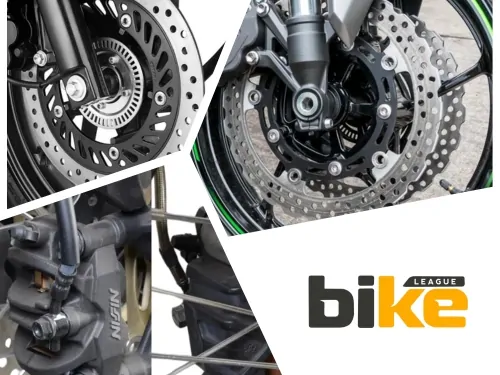
Long story short: the disk brake in a bike is an essential component of any bike. Learn about motorcycle disc brakes and their types in this comprehensive guide.
Disc brakes play a big role in keeping motorcycles safe and performing well. No matter if you ride every day, travel long distances, or race, knowing how disc brakes work and what options you have can help you pick the best setup for your needs. This guide covers the main types of motorcycle disc brakes, their pros and cons, and answers common questions so you can ride with confidence.
Key Takeaways
- Disc brakes offer superior stopping power and heat dissipation compared to drum brakes, making them the preferred choice for most modern motorcycles and performance riding.
- Regular inspection and timely replacement of brake pads and discs are crucial for maintaining optimal braking performance and ensuring rider safety.
- The materials you choose, like sintered, organic, or ceramic pads and steel or composite discs, have a big impact on how long your brakes last, how they feel, and which riding styles they suit best.
- Upgrading parts like adding dual discs or high-performance pads can boost braking, but you should make sure the new parts fit your bike and won’t affect how it handles.
- Taking care of your brakes by cleaning them, checking for wear, and bleeding the brake lines helps them last longer and prevents problems like brake fade or weak braking.
How Do Motorcycle Disc Brakes Work?
When you squeeze the front brake lever, it activates the master cylinder and pushes a piston that pressurizes the brake fluid. This pressure travels through the brake lines to a piston in the calliper, which then presses the brake pads against the rotor. The friction between the pads and rotor slows down the bike.
Different Types Of Motorcycle Disc Brakes
1. Cross Drilled Rotor
Cross-drilled rotors have holes drilled through the brake disc. These holes help air flow better, keep the disc cooler, and remove water and gases that build up during hard braking.
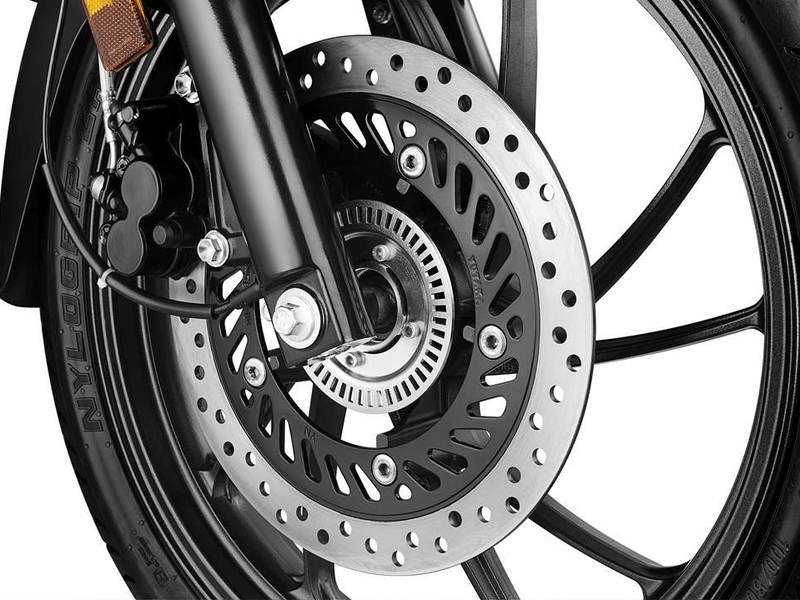
Advantages Of The Cross-drilled Rotor
- Improved Heat Dissipation: Drilled holes act as vents to help hot air and gases escape, reducing the risk of brake fade during repeated hard stops.
- Water Dispersion: The holes clear water from the disc surface, providing better initial bite in the rain.
- Enhanced Aesthetics: Drilled rotors are lighter than solid discs, improving suspension response and handling slightly.
- Sporty Appearance: For many riders, the visually aggressive style is a bonus.
Disadvantages Of The Cross-drilled Rotor
- Prone to Cracking: Under extreme heat cycles and heavy braking (like on track days), cracks can develop around the holes.
- Increased Pad Wear: Sharp edges at the hole boundaries can wear pads more quickly than plain rotors.
- Limited Self-Cleaning: Compared to slotted rotors, drilled types are less effective at scraping debris off pad surfaces.
2. Cross Slotted Rotor
Slotted rotors have straight channels, called slots, cut into the surface where the pads touch. These slots go to the edge of the disc and help clean the pads as they move.
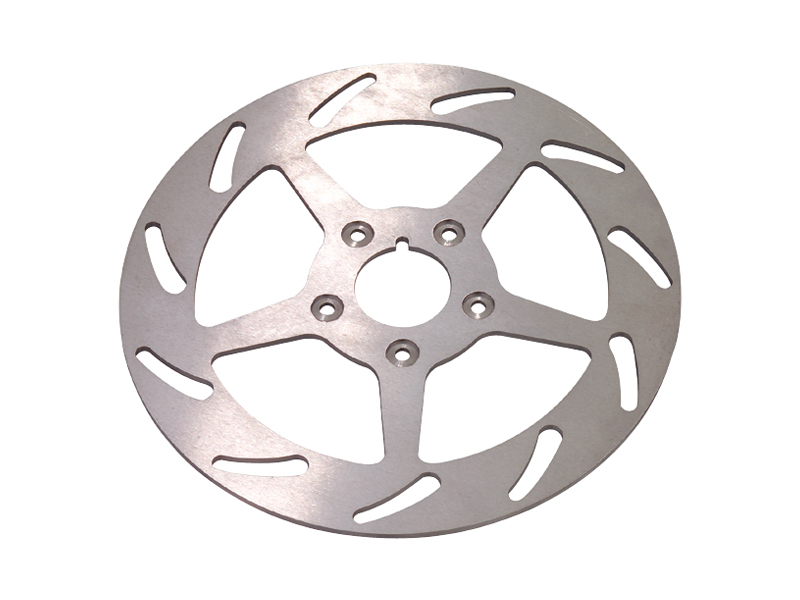
Advantages Of The Cross Slotted Rotor
- Excellent Debris Removal: Slots channel away dust, debris, and gases for a cleaner, fresher pad/disc interface.
- Superior Performance in Wet Conditions: Water is quickly moved off the surface, restoring maximum brake effectiveness rapidly.
- Better Initial Bite: The edges of the slots enhance contact for sharper braking response in all conditions.
- Reduced Glazing: Slots help prevent brake pad glazing, which can occur after frequent heavy use and leads to poor braking.
Disadvantages Of The Cross Slotted Rotor
- Greater Pad Wear: The scraping effect increases brake pad consumption.
- Slightly Heavier: Slotted designs don’t shed as much material as drilled, so weight reduction is less.
- Can Be Noisier: Some riders notice increased noise during braking.
3. Petal Rotor Or Wave Disc
Petal rotors, also known as wavy or scalloped rotors, have a special edge shape that helps with cooling and makes them lighter. Instead of being round, the edge of the rotor has a wave-like pattern.
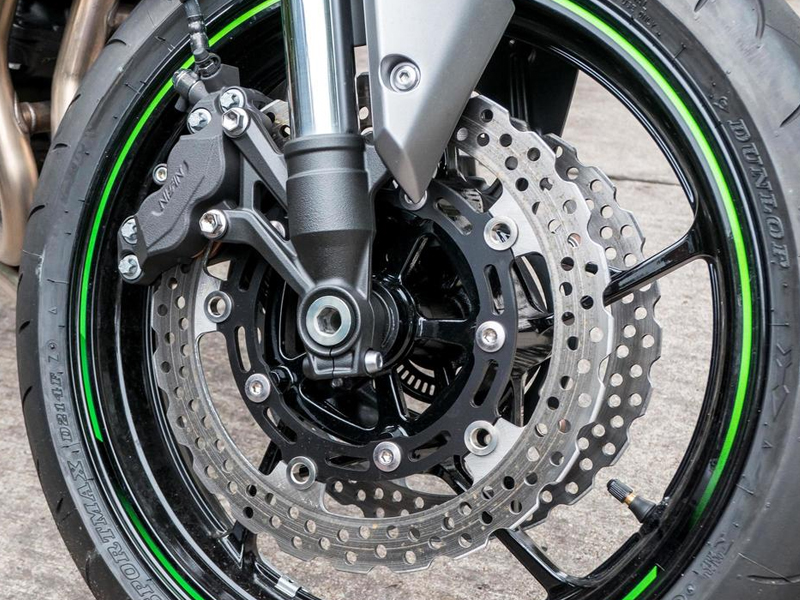
Advantages Of The Petal Disc Rotor
- Exceptional Cooling: The wave pattern draws air over a larger area, rapidly cooling the disc.
- Lightest Design: Petal rotors are often lighter than both drilled and slotted types, reducing unsprung weight for more responsive handling.
- Improved Debris Clearing: The sharp profile edge is effective at pushing away dirt and dust.
- Distinct Aesthetic: Many riders like the aggressive, modern looks.
Disadvantages Of The Petal Disc Rotor
- Fastest Pad Wear: The aggressive edge causes brake pads to wear out more quickly.
- Higher Cost: Manufacturing complexity and performance orientation increase price.
- Noise: Whirring noises at higher speeds are possible, especially as the wave passes through the calliper.
4. Floating Mount Callipers
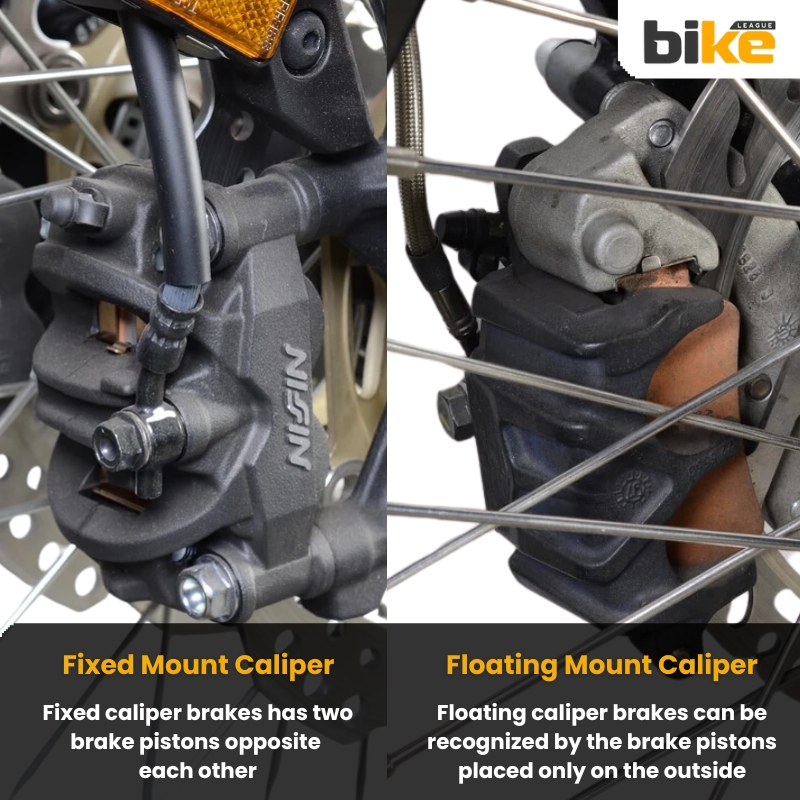
A floating calliper slides side to side on guide pins whenever you use the brake. Hydraulic pressure pushes one side of the calliper, and as it moves, the other pad also presses against the disc.
Pros Of Floating Mount Callipers
- Cost-Effective: Simpler to design and produce—used on most mainstream motorcycles.
- Self-Centering: Sliding action ensures both pads engage evenly.
- Lightweight: Less material leads to a lighter overall system.
- Easier Maintenance: Fewer components mean lower maintenance costs.
Cons Of Floating Mount Callipers
- Some Flex/Deflection: Hard stops may expose some calliper movement, resulting in a less direct, “spongier” brake feel.
- Lower Maximum Performance: Not as rigid as fixed/radial callipers, so ultimate braking force is slightly less.
- Potential Uneven Pad Wear: Pins must remain clean and lubricated, or pads can wear unevenly.
5. Fixed Mount Callipers
Fixed callipers are solidly attached and use pistons on both sides to press the brake pads. Since there are no sliding parts, the braking pressure is direct and even.
Pros Of Fixed Mount Callipers
- Superior Stopping Power: Both pads are driven with equal force, maximising stopping capability.
- Direct Feel: No calliper flex translates to very precise lever feedback.
- Even Pad Wear: Both pads contact the disc equally on every application.
- Performance-Oriented: Preferred in high-performance and heavy-duty motorcycles.
Cons Of Fixed Mount Callipers
- Heavier: More material and complex design means added weight.
- More Expensive: Complexity raises both purchase and maintenance costs.
- Maintenance: More moving parts can be more challenging to service.
6. Radial Mount Callipers
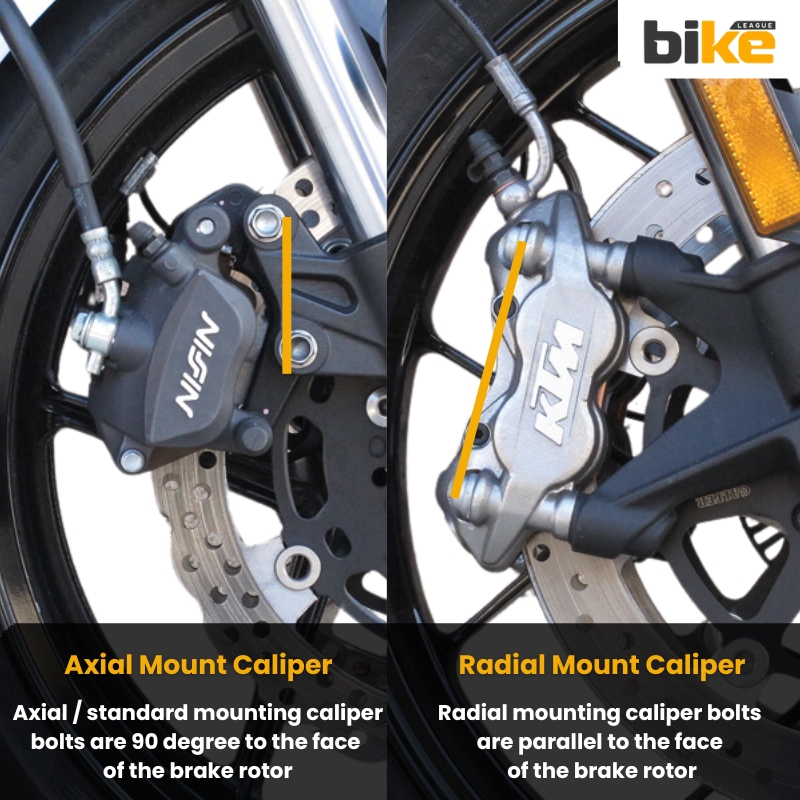
Radial mount callipers are attached to the motorcycle’s fork with bolts that run parallel to the wheel’s radius. This design makes the setup more rigid and improves braking efficiency.
Pros Of Radial Mount Callipers
- Maximum Rigidity: Virtually no flex under heavy braking loads.
- Outstanding Performance: Ideal for racing and aggressive riding due to precise feedback.
- Accommodates Bigger Discs/Callipers: Allows easy upgrades for improved braking.
- Superior Pad Wear: Delivers even, consistent pad usage.
Cons Of Radial Mount Callipers
- High Cost: Primarily found on premium or high-performance motorcycles.
- Complex Installation: Not easily retrofitted to all frames/bikes.
- Weight: Can be heavier than basic axial floating systems, but less so than some fixed systems.
7. Axial Mount Callipers
Axial mount callipers are attached in line with the fork, which is the most common setup. The calliper bolts are placed perpendicular to the face of the disc.
Pros Of Axial Mount Callipers
- Cost-Effective: Simpler mounting—the industry standard for most motorcycles.
- Adequate for Most Uses: Capable of performing very well in everyday riding.
- Compatibility: Broad aftermarket and OEM support.
- Simpler Servicing: Basic tools and skills can usually handle maintenance.
Cons Of Axial Mount Callipers
- Some Flex: Under heavy braking, the system may deflect slightly, which can reduce feel.
- Less Precise: Does not offer the same sharpness as radial mounts, especially under extreme loads.
- Limited Upgradability: Not ideal for oversized calliper/disc upgrades.
Tablewise Comparison Of Different Types Of Motorcycle Disc Brakes
| Type | Dry Performance | Wet Performance | Heat Dissipation | Weight | Pad Wear | Cost | Notes |
|---|---|---|---|---|---|---|---|
| Cross Drilled Rotor | Good | Good | Moderate | Lighter | Normal | Moderate | May crack under high stress; visually appealing. |
| Cross Slotted Rotor | Very Good | Very Good | High | Heavier | Faster | Higher | Keeps pads cleaner; longer disc life. |
| Petal/Wave Rotor | Very Good | Good | Excellent | Lightest | Faster | High | Best cooling and weight; wears pads faster. |
| Floating Mount Calliper | Good | Good | Moderate | Lighter | Normal | Lower | Common on entry bikes, slight flex, less bite. |
| Fixed Mount Calliper | Excellent | Excellent | High | Heavier | Even | High | Superior stopping power and pedal feel. |
| Radial Mount Calliper | Excellent | Excellent | High | Heavier | Even | High | Less flex, best brake feedback, used on high-end bikes. |
| Axial Mount Calliper | Very Good | Very Good | Moderate-High | Moderate | Uneven | Moderate | More flex, slightly less feedback, but cost-effective. |
What Are The Recent Advancements And Future Trends In Disc‑brake Technology In Two-wheelers?
Motorcycle disc-brake technology is moving forward quickly, driven by new electronics, lighter materials, and more electric bikes. Today’s systems focus on strong stopping power, reliable performance, better energy efficiency, and smooth integration with rider-assist features.
1. Electronic Braking And Brake‑by‑wire
Some high-end and electric motorcycles now use electronic Motorcycle braking systems – Wikipedia (EBS) or brake-by-wire setups. In these systems, sensors detect the rider’s lever input and an electronic control unit (ECU) converts it into hydraulic pressure. This offers:
- More precise and consistent brake force throughout the lever’s movement.
- Customisable brake feel and response, with selectable modes like “Eco” or “Sport” on some bikes.
- Easier integration with ABS, traction control, and advanced cornering-ABS systems.
Companies like Brembo are developing ‘active’ or semi-active brake systems that build up pressure before you even pull the lever. This helps reduce reaction time and makes sudden stops safer.
2. Electronic Brake Distribution (ebd) And Advanced Abs
Beyond standard ABS, many premium bikes combine disc brakes with Electronic Brake Distribution (EBD) and multi-channel ABS units. These systems can adjust braking force between the front and rear wheels based on lean angle, load, and road conditions. Benefits include:
- Safer braking that takes weight transfer into account, especially during hard braking.
- Lower risk of rear-wheel lift or front-wheel lock-up during aggressive riding.
- Better brake control on mixed surfaces, such as wet roads or gravel patches.
You can now find these features not only on top sport-touring and adventure bikes, but also on many mid-range and some commuter models.
3. High‑performance And Composite Materials
Disc and pad materials are also getting better:
- Carbon-ceramic rotors are showing up on high-end touring and performance bikes. They provide excellent heat resistance, are lighter, and last longer—but they do cost more.
- High-carbon and ceramic composite discs are becoming standard on track-focused and performance models, where heavy braking happens often.
These materials work best when used with advanced callipers and cooling rotors like petal or wave rotors. When combined, they make up a full high-performance braking system instead of just a single upgrade.
4. Regenerative Braking In Electric Motorcycles
On electric motorcycles, traditional disc brakes often pair with regenerative braking systems that recover energy during deceleration. Here’s how it works:
- When you apply the brakes, the electric motor briefly acts as a generator, converting some of the bike’s kinetic energy into electricity to recharge the battery.
- It can increase usable range by around 5–15%, depending on how and where you ride.
- Reduces heat on the disc brakes, since some braking is performed by the electric motor rather than the pads.
- Helps provide smoother deceleration and better control in stop-and-go traffic.
Manufacturers like Revolt and Ultraviolette adjust the balance between regenerative and disc braking to match riding modes such as Eco, Sport, or combined braking. This helps improve both how the brakes feel and how efficient they are.
5. Smart And Connected Braking Features
Newer scooters and electric bikes are adding smart braking features:
- One-lever combined braking with regen, where a single lever or pedal applies both regenerative and disc braking, adjusting force automatically.
- Brake-related diagnostics and warnings, shown on the instrument cluster or a smartphone app (like low brake fluid, pad wear alerts, or uneven braking).
- Predictive safety features that use brake pressure, throttle closure, and rider habits to anticipate braking and pre-adjust the system.
Soon, you’ll see more AI-powered braking systems that learn your riding style and road conditions, then automatically adjust ABS and EBD settings. These features will be similar to the advanced driver-assist systems found in cars.
Faq Related To Motorcycle Disc Brakes
1. What Are The Differences Between Single And Dual Disc Brakes?
Single-disc brakes use one rotor and calliper per wheel, which is sufficient for most motorcycles and provides adequate stopping power for everyday riding. On the other hand, dual disc brakes use two rotors and callipers per wheel, offering enhanced braking performance, and are typically found on high-performance motorcycles.
2. What Are Floating Discs, And How Do They Differ From Fixed Discs?
Floating discs feature a rotor blade that can move independently of the carrier, enabling better heat dissipation and reduced warping under extreme conditions. Fixed discs, made from a single piece of steel, are more cost-effective but less efficient in managing heat.
3. How Do Slotted Or Drilled Discs Improve Braking Performance?
Slotted or drilled discs feature holes or slots that facilitate better heat dissipation and water evacuation, thereby enhancing braking performance, particularly in wet conditions. These features make them ideal for high-speed or performance-oriented riding.
4. What Are The Benefits Of Using High-carbon Or Ceramic Composite Discs?
High-carbon or ceramic composite discs offer superior heat resistance and durability compared to standard steel discs. These materials are particularly beneficial for riders who engage in high-performance or track riding, as they can withstand higher temperatures without degrading their performance.
5. How Do Axial-mount Callipers Differ From Radial-mount Callipers?
Axial mount callipers are bolted perpendicular to the disc, a traditional mounting method. Radial mount callipers are bolted parallel to the disc, providing a more rigid setup that can improve braking performance and feel.
6. How Do Floating Mount Callipers Differ From Fixed Mount Callipers?
Floating callipers are designed to move slightly relative to the disc. This movement allows the calliper to self-centre over the rotor, ensuring even pad wear and consistent braking performance. Fixed callipers are rigidly mounted and do not move relative to the disc.
7. How Does The Disc Size In The Bike Affect The Braking Force?
In simple terms, the larger the diameter of the motorcycle brake disc, the larger the force available to stop the motorcycle.
8. Why Do Motorcycle Brake Discs Have Holes?
The holes in a disc brake
- enable the brake to dissipate heat and perform optimally.
- Aid in removing water and dirt between the disc and brake pads
- Increases braking effectiveness
- Reduces wear
- Reduces brake weight
9. When Should The Bike’s Disk Brake Plate Be Replaced?
Replace the front disc if it is worn more than 1mm on either side. Replace the rear disc if it is worn by over 0.5mm to 0.75mm. For best safety, change both discs at the same time. Check every six months or at every service, regardless of the number of kilometres.
10. When Should I Change The Disk Brake Pads On My Bike?
Replace your disc brake pads when there’s 1.5mm or less of braking material remaining. Check every six months or at every general service, rather than a specific km range, for a safer approach.
11. Why Does A Motorcycle Disc Brake Make Noise?
Noise can be generated for various reasons, mainly because your brake pads are worn. If the pads are worn down to the bare metal, you’ll hear metal rubbing on the disc rotor. Replace the brake pad as soon as possible.
12. What Causes Motorcycle Disc Brakes To Squeal?
In most cases, worn brake pads are the primary reason. Poor brake calliper alignment, contaminated pads, a bent disc rotor, and other issues can also cause squealing in bike disc brakes. All these issues can only be identified by skilled technicians, making it never a DIY task.
13. How To Clean A Disc Brake On A Bike?
In most cases, there is no need to clean the disc brake rotor, as the brake pads clean it during operation. But if oil or any other residue is on the disc rotor, use a dedicated automotive shampoo.
14. Can We Adjust The Disk Brake On The Bike?
No, you cannot adjust brake tightness manually. Motorcycle disc brakes use fluid pressure. If braking is poor, there is likely a loss of brake fluid pressure. Refill brake oil and check for leaks or air pockets. The brakes self-adjust once the oil is topped up.
15. How Long Do Bike Disk Brake Pads Last?
There is no fixed km interval for brake pads; instead, they should be checked at every general service or every 6 months. Several factors can affect the lifespan of brake pads, including the number of kilometres ridden, riding environment, and riding style. Therefore, do not just focus on the km change interval.
16. How Long Do Bike Discs Last?
There is no fixed kilometre change interval for brake discs; instead, check the brake pads once during a general service within a year or once a year. Several factors can affect the lifespan of brake discs, including the distance ridden, riding environment, and riding style. Therefore, do not just focus on the km change interval.
Other Related Articles From Bikeleague India
- Braking in motorcycle – All expert tips for bikers
- What is Motorcycle ABS? – Doubts, Queries and FAQ
- Engine braking in bikes: Detailed guide for riders
- Bike riding in summer in India – Tips to beat the heat
- QJ Motor SRK 400
Conclusion
Knowing about the different types of motorcycle disc brakes and what makes each one unique helps riders make better choices for safety, performance, and maintenance. As technology moves forward, with things like advanced ABS, electronic braking, and regenerative systems, disc brakes are becoming more efficient, reliable, and suitable for all kinds of riding.
Picking the right disc brake setup gives you the best braking performance and more confidence while riding. Keep up with new developments and always take care of your brakes for a safer, smoother ride.
If you have more questions, feel free to email us at bikeleague2017@gmail.com or leave a comment below. We’re here to help. You can also reach out to us on Bikeleague India’s social media pages.