
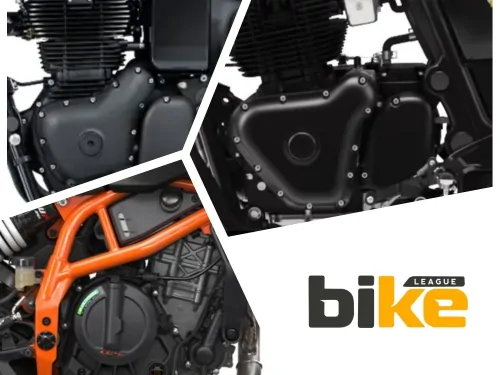
Long story short: Air-cooled, oil-cooled, and liquid-cooled bikes in India—what works, what doesn’t, real-world examples, and simple tips to avoid overheating.
Efficient cooling is vital for the performance, reliability, and longevity of two-wheeler engines—especially in India’s challenging climate and traffic conditions. As modern motorcycles and scooters become more advanced, the technology used to keep them running at the right temperature has evolved as well.
This guide explains why engine cooling matters, explores the main types of cooling systems found in two-wheelers, and helps you decide which is best for your needs. Whether you’re a daily commuter, weekend tourer, or performance enthusiast, understanding these systems will help you get the most from your ride.
Key Takeaways
- Efficient cooling is crucial for two-wheeler engine performance, reliability, and longevity, especially in demanding climates like India’s.
- There are four main types of cooling systems in two-wheelers: air-cooled, oil-cooled, liquid-cooled, and hybrid/specialised systems—each with distinct advantages and disadvantages.
- Liquid-cooled engines offer the highest performance and temperature stability, but at the cost of greater complexity and maintenance compared to air- and oil-cooling.
- The right cooling system depends on riding environment, usage intensity, budget, and performance needs; city riders may prefer simpler systems while performance enthusiasts benefit from advanced cooling.
- Regular maintenance tailored to the specific cooling system—such as cleaning fins, checking coolant or oil levels, and inspecting hoses—prevents overheating and extends engine life.
Why Two-wheeler Engines Need Cooling?
In a petrol engine, combustion can raise temperatures to several hundred degrees Celsius. Only some of the fuel’s energy turns into power; the rest becomes heat. If this heat isn’t properly removed, engine oil can thin, metal parts might expand or warp, and components like pistons, valves, and cylinder heads could seize or wear out prematurely. A good cooling system keeps the engine at the right temperature, which helps with performance, lowers emissions, improves fuel efficiency, and extends engine life.
Different Types Of Cooling In Two-wheelers
Today, most two-wheelers use one of three main types of cooling systems:
- Air-cooled engines
- Oil-cooled engines
- Liquid-cooled engines (often called water-cooled or coolant-cooled)
- Hybrid and specialised cooling
Older sources sometimes mention basic water or steam cooling, but modern motorcycles and scooters mainly use air, oil, or liquid cooling.
1. Air-cooled Engines
How Air Cooling Works
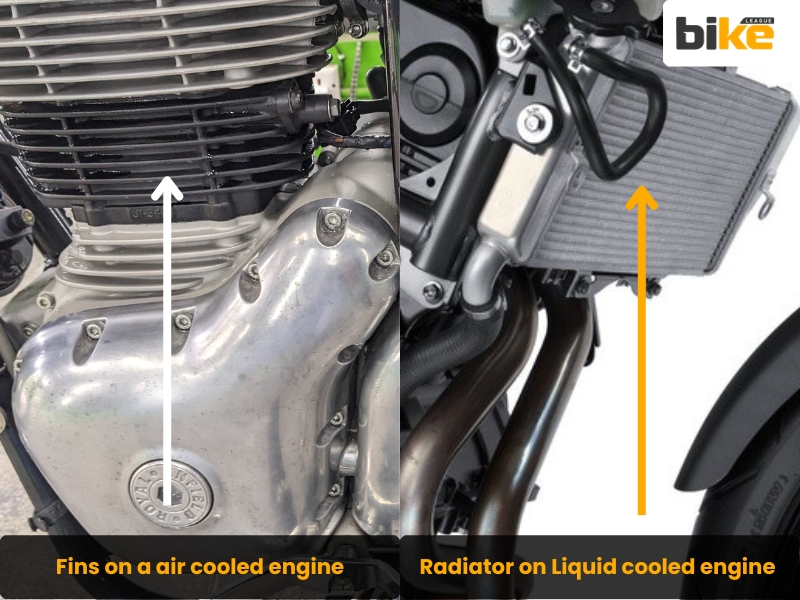
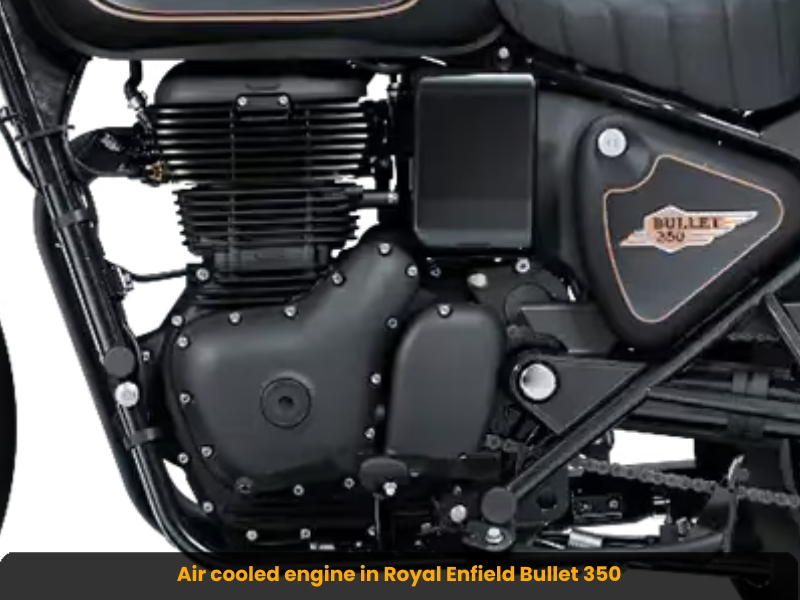
Air-cooled engines use airflow over the engine’s surface to get rid of heat. The cylinder block and head have large aluminium fins to increase surface area. As the bike moves, air flows over these fins, cooling the metal. Some small scooters or mopeds have a fan or blower to push air over the fins at low speeds or when stopped, helping cool them in traffic.
Advantages Of Air Cooling
- Air-cooled engines are simple because they don’t need radiators, coolant hoses, or water pumps. This makes them lighter and cheaper to build.
- With fewer parts, fewer things can go wrong, so maintenance is usually easier and less frequent.
- Since there are no coolant circuits, the engine weighs less. This can improve fuel efficiency slightly compared to more complex systems.
Disadvantages Of Air Cooling
- How well air cooling works depends a lot on how fast the bike is going and the outside temperature. Engines can struggle to stay cool in hot weather or during long stops in heavy traffic.
- t’s harder to keep the engine at the best temperature with air cooling, so power and emissions can’t always be tuned as well.
- Without liquid cooling, air-cooled engines are usually noisier. The large fins can also let more engine and combustion noise reach the rider.
Typical Use Cases And Examples
Air-cooled engines are often found in commuter motorcycles and scooters because they are affordable, simple, and easy to service. Many budget and mid-size Indian bikes, like the
have traditionally used air-cooled systems. These engines are good for moderate speeds, short to medium commutes, and for riders who want low running costs instead of top performance.
2. Oil-cooled Engines
How Oil Cooling Works
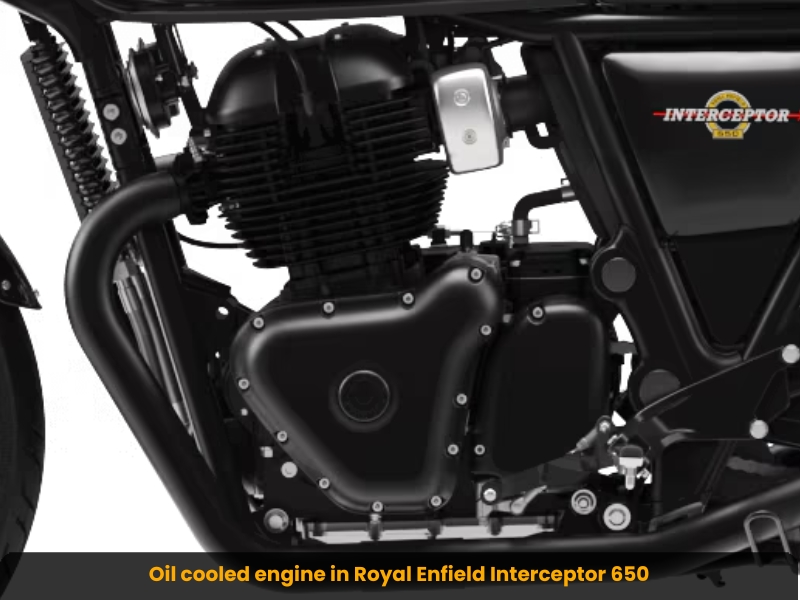
Oil-cooled engines use engine oil for both lubrication and cooling. Hot oil from the engine flows to an external oil cooler, which resembles a small radiator in the airflow. The oil loses heat there, then returns to the engine to pick up more heat. Since the oil is already moving for lubrication, manufacturers add extra passages and an oil cooler to boost cooling without needing a separate coolant system.
Advantages Of Oil Cooling
- Oil cooling works better than air cooling alone, helping the engine keep a steadier temperature when working harder.
- Enhanced lubrication because cooler oil retains its viscosity and protective properties longer, reducing wear on components like pistons, camshafts, and bearings.
- Oil cooling is less complicated than full liquid cooling. It usually just needs an oil cooler, some extra pipes, and sometimes a bigger oil pump, so weight and cost stay reasonable.
Disadvantages Of Oil Cooling
- Oil cooling still can’t match the cooling power of liquid systems, so it may not be enough for very high-performance or heavily used engines in tough conditions.
- Oil cooling depends on both airflow and oil movement. In slow traffic or hot weather, cooling can still drop off significantly.
- You need to change the oil regularly and check the oil cooler and lines, so maintenance is slightly higher than with a basic air-cooled engine.
Typical Use Cases And Examples
Oil-cooled systems are common in mid-range motorcycles, where makers aim for a balance of cost and performance, such as sporty commuters or entry-level performance bikes. In India, examples include the
- Royal Enfield Interceptor 650
- Royal Enfield Continental GT 650
- TVS Apache RTR series
that use external oil coolers. This setup is good for riders who want better performance than basic commuters but don’t need the full complexity of liquid cooling.
3. Liquid-cooled Engines
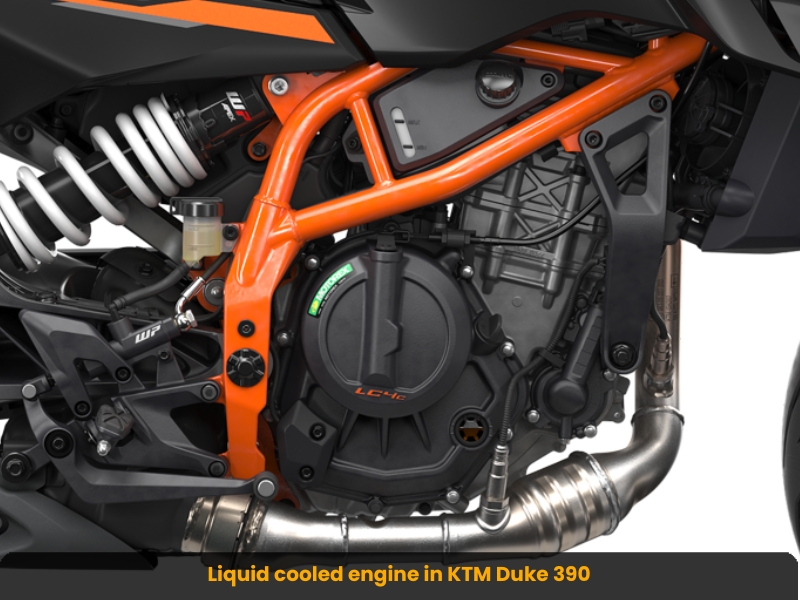
How Liquid Cooling Works
Liquid-cooled engines move a coolant (usually a mix of water and antifreeze) through channels around the cylinder and head. As the coolant flows, it picks up heat from the engine and then passes through a radiator in the airflow, where thin fins help dissipate the heat. An electric fan helps cool the engine when the bike is stopped or moving slowly. A thermostat controls the coolant flow so the engine warms up fast and stays at the right temperature, which helps it run better and last longer.
Advantages Of Liquid Cooling
- Liquid cooling is the most efficient of all common motorcycle systems. It keeps the engine at the right temperature even in very hot weather, at high speeds, or during long rides at high revs.
- Liquid cooling allows for higher compression, tighter engine parts, and more aggressive tuning. This means more power, cleaner emissions, and better fuel efficiency when set up right.
- The coolant and its parts help block engine noise, so liquid-cooled engines run more quietly and feel smoother than air-cooled ones.
Disadvantages Of Liquid Cooling
- Liquid cooling systems are more complex, with additional components such as radiators, water pumps, hoses, and tanks. This makes them cost more to build and adds weight.
- These systems need more maintenance. Riders have to check coolant levels, change the coolant as recommended, and look out for leaks or broken parts.
- If any key part, such as the pump, fan, hose, or radiator, fails, the engine can overheat quickly. It’s important to find and fix problems right away.
Typical Use Cases And Examples
Liquid-cooled engines are common in high-performance sports bikes, premium commuters, and many modern mid-size motorcycles, where power, smoothness, and emission control matter most. In India, popular examples include the
- KTM Duke 390
- KTM RC 390
- Yamaha R15 V4
- Yamaha MT‑15 V2
and similar models from other brands that are built for high revs, fast riding, or long-distance touring. Liquid cooling is especially helpful in tough weather and for riders who often go fast or carry heavy loads.
4. Hybrid And Specialised Cooling
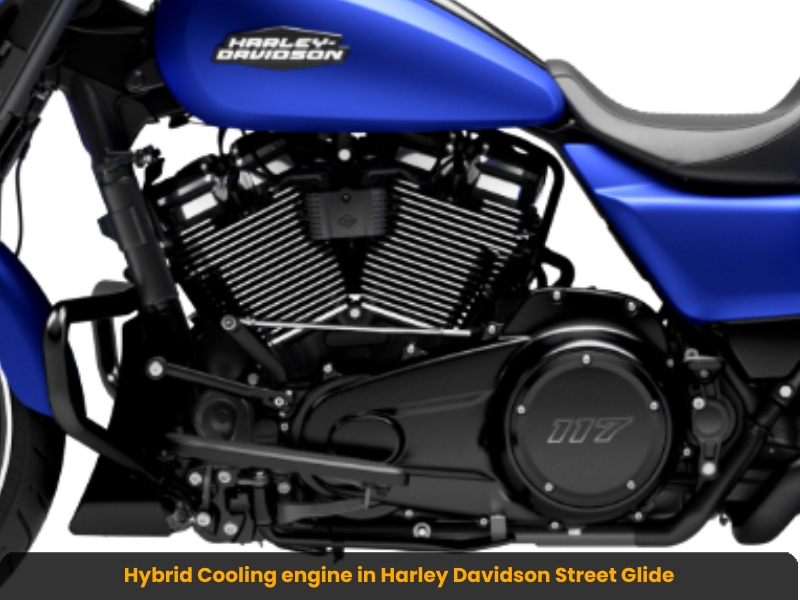
Hybrid and specialised cooling approaches combine air, oil, and liquid methods—or sometimes use electric fans—to manage heat in today’s two-wheelers. As performance and emissions standards (like India’s BS6 norms) get stricter, these systems help keep engines running cool without making bikes heavier or more complicated. They’re designed to cool the hottest parts—like the cylinder head or exhaust area—while keeping the bike simple, light, and comfortable for riders in real-world Indian traffic.
Advantages Of Hybrid And Specialised Cooling
- Rider Comfort: Dramatically reduces radiant heat to the legs in traffic/hot weather; engine temps drop 5-10°F at stops vs rising 20-30°F on air/oil-cooled engines.
- Performance Gains: Enables higher compression (e.g., 10.1:1 on Twin Cam 103), adding 5-6 lb-ft torque, sustained power without timing retard/spark knock on hot days.
- Consistency: Steadier temps across conditions improve reliability, emissions, and no power loss from overheating.
Disadvantages Of Hybrid And Specialised Cooling
- Complexity & Cost: Adds pumps, radiators (hidden in fairings), hoses—higher upfront price, more maintenance (coolant checks, no extended intervals).
- Failure Risk: Coolant leaks or pump failure can lead to rapid overheating; manuals advise against riding if compromised (though air-cooled cylinders provide a fallback).
- Hotter Baseline: Higher compression generates more heat overall vs air/oil equivalents; still gets hot, just manages it better.
Typical Use Cases And Examples
Harley-Davidson India’s touring lineup, including the
With Milwaukee-Eight 114/117 engines, it employs “Twin Cooling”: air/oil cools cylinders, while discreet liquid circuits chill cylinder heads via hidden radiators and pumps. This cuts leg heat in traffic, boosts torque by 5-10%, and meets emissions without altering the classic cruiser aesthetic—popular among premium Indian buyers.
Comparison Table: Air Vs Oil Vs Liquid Cooling In Two-wheeler Engines
| Feature | Air-Cooled | Oil-Cooled | Liquid-Cooled |
|---|---|---|---|
| Primary medium | Ambient air over fins | Engine oil via external oil cooler | Water–coolant mix via radiator |
| Cooling efficiency | Basic, speed and weather dependent Hero Splendor, Honda Shine |
Moderate, better than air only RE Interceptor 650, TVS Apache RTR 200 |
Superior, stable across conditions Yamaha R15 V4, KTM Duke 390 |
| System complexity | Lowest, very few parts | Moderate, adds cooler and plumbing | Highest, includes radiator, pump, hoses |
| Maintenance needs | Low, mainly general engine care | Moderate, oil changes and cooler checks | High, coolant service and leak checks |
| Noise levels | Higher, little insulation | Moderate | Low, coolant and hardware insulate noise |
| Model Examples | Budget commuters, small scooters RE Classic 350, TVS Radeon |
Sporty commuters, mid-segment bikes Bajaj Pulsar N160, RE Continental GT 650 |
Performance bikes, premium commuters Yamaha MT-15, KTM RC 390 |
| Cost impact | Lowest purchase cost | Mid-range pricing | Highest initial and maintenance cost |
The information in this comparison comes from several technical and manufacturer sources that explain the differences in efficiency, complexity, and typical uses.
What About Cooling In Electric Two-wheelers?
In electric two‑wheelers, cooling shifts from combustion heat to managing heat from the lithium‑ion battery pack and the electric motor. These components heat up during fast charging, high‑speed riding, and prolonged hard acceleration, so proper thermal management is critical for safety, range, and longevity—especially in India’s 40 °C+ summers.
Common Cooling Strategies In Electric Two-wheelers?
Passive Air Cooling
- Many budget e‑scooters rely on simple vents, fins, and cell spacing within the battery casing to let heat escape through natural airflow while riding.
- This keeps costs and weight low, but it can struggle in heavy traffic or very hot conditions, leading to faster degradation or a higher fire risk under a poor‑quality BMS.
Forced Air (fan‑based) Cooling
- Some designs add a small fan or duct‑assisted airflow through the battery or motor enclosure, improving heat removal at low speeds or when stopped.
- This is still lighter and cheaper than liquid systems but more effective than purely passive designs.
Liquid Cooling (active Btms)
- Premium and performance EVs increasingly use active liquid‑cooled battery packs, where coolant channels or plates run around the cells, and a radiator/mini‑pump rejects heat.
- Such systems can keep cell temperatures around 20–40 °C, improving cycle life, range consistency, and safety even during fast charging and highway‑capable running.
Emerging And Hybrid Methods
Some research and newer packs use heat‑carrier plates, phase‑change materials (PCM), or heat‑pipe‑based layouts to smooth out hot spots inside the battery.
These approaches aim to combine low weight with better temperature uniformity, which is especially important for compact under‑floorboard packs in Indian scooters.
Practical Impact For Riders In India
- In hot climates, air‑cooled commuter EVs (like budget e‑scooters) may show more noticeable range drop and faster capacity loss over time, while liquid‑cooled or well‑designed forced‑air systems help maintain performance and safety.
- For city riders doing short commutes, basic air‑cooling is often “good enough,” but if you frequently ride long distances, carry loads, or use fast‑charging in summer, active cooling (fan‑assisted or liquid‑based) becomes a meaningful upgrade.
Examples
- Budget: Air/fan-cooled – TVS iQube, Bajaj Chetak (PCM aids).
- Premium: Liquid-cooled – Matter Energy 1.0 (India’s first active pack), Ather 450X, Ultraviolette F77 motors—sustain high speeds safely.
How To Choose The Right Cooling Type For Your Two-wheeler Needs?
Picking the best cooling system for your two-wheeler isn’t just about specs—it’s about what fits your daily life. Think about how you ride, the local weather, your budget, and whether you want easy maintenance or top performance. For Indian riders, tough traffic, blazing summers, heavy rains, and strict BS6 rules all play a part: air cooling meets basic needs, while oil or liquid cooling suits more demanding use.
Key Decision Factors
- Riding Environment: If you spend a lot of time in city traffic, oil- or liquid-cooling helps keep engine temperatures steady. For highway rides at higher speeds, air cooling can handle the job.
- Usage Intensity: Short daily commutes? Air cooling is enough. Regular long tours or high-rev riding? Go for liquid cooling.
- Budget & Maintenance: Want to keep costs low? Air cooling is simple and affordable. Willing to invest more for reliability and smoothness? Liquid or hybrid cooling is the way to go.
- Performance Needs: If you’re after power and a smooth ride, liquid cooling delivers. For basic torque and simplicity, oil cooling works well.
Recommendations By Rider Profile
| Profile | Best Cooling | Why | Indian Examples |
|---|---|---|---|
| Budget Commuter (city, less than 100km/day, low speeds) | Air-cooled | Cheapest, simplest, low maintenance; fine for moderate heat if fins clean. | Hero Splendor, Honda Shine,RE Classic 350 |
| Sporty Urban/Mid-Distance (traffic, 50-150km, spirited) | Oil-cooled | Better heat control than air, affordable upgrade, good lubrication. | RE Interceptor 650, Bajaj Pulsar N160, TVS Apache RTR 200 |
| Performance/Touring (highway, loads, heat) | Liquid-cooled | Consistent temps, max power/emissions control, quiet/smooth. | Yamaha R15, KTM Duke 390, RE Himalayan 450 |
| Premium Cruiser/Tourer | Hybrid (e.g., Twin Cooling) | Balances style/comfort with efficiency; less leg heat. | Harley Road Glide, BMW R1250 variants |
Always test-ride bikes in your typical conditions, check the service network (brands like Hero/TVS are everywhere), and remember that insurance costs can be higher for liquid-cooled models. For electric two-wheelers, battery cooling is key—especially in India’s hot climate, where systems like Ather’s liquid cooling are worth considering.
What Are The Maintenance Tips For Different Cooling Systems In Two-wheelers?
Keeping your two-wheeler’s engine cool isn’t just about performance—it’s about preventing costly repairs and ensuring your ride is safe and reliable in the long run. Each type of cooling system, whether air, oil, or liquid-cooled, has its own unique needs. By understanding and following the proper maintenance steps for your bike’s system, you can avoid overheating, improve efficiency, and extend your engine’s life.
Air-cooled Engine Maintenance
- Air-cooled engines use fins to shed excess heat. Make it a habit to clear off dirt, dust, or oil using a soft brush or gentle compressed air—especially after rides on dusty roads.
- Staying on top of this simple step helps your engine breathe and cool as it should. Skip high-pressure water, which can easily bend cooling fins.
- Whenever you change your oil (every 3,000–5,000 km), take a quick look for any cracks or bent fins. On hot days, try to avoid long idling and look for shady parking spots—your engine will thank you.
Oil-cooled Engine Maintenance
- Change your oil every 3,000–4,000 km, or as recommended by your owner’s manual. Using the right oil grade is key to cooling and keeping everything running smoothly.
- When you’re servicing your bike, gently brush the oil cooler fins and check all hoses for leaks or blockages. Swap out the oil filter at the same time for best results.
- Give your oil level a quick check before heading out, and pay attention to any odd noises—they could be an early sign of oil pump trouble.
Liquid-cooled Engine Maintenance
- Once a week, check your coolant reservoir (when the engine’s cool) and top up with a 50/50 mix of antifreeze and water if needed. Plan to flush and replace the coolant every 1–2 years or 20,000 km.
- Every 800–1,600 km, rinse radiator fins with a gentle water spray or compressed air. If you spot any bent fins, use a fin comb to straighten them.
- Make sure the fan moves freely, and during your regular service, inspect hoses, the thermostat, water pump, and radiator cap for any leaks or wear. After topping up coolant, bleed out any trapped air to prevent hot spots.
General Cooling Maintenance Tips
- Stick to your service schedule—every 3,000–5,000 km, or every 6 months if you often ride in heavy traffic. Regular care goes a long way in keeping your cooling system healthy.
- Always use genuine parts from trusted dealers to avoid fakes, and act fast if you spot warning lights or see steam—don’t ignore any signs of overheating.
Frequently Asked Questions About Different Types Of Cooling In Two-wheelers
1. Which Cooling System Is Best For City Commuting In India?
If you mostly ride at low speeds in city traffic, air-cooled engines usually do the job well. They’re simple and require little maintenance, making them well-suited for daily city use.
2. Is Oil Cooling Better Than Air Cooling?
Oil cooling is a step up from air cooling, especially if you want better temperature control during longer or faster rides. It gives a good balance between easy upkeep and improved performance.
3. Are Liquid-cooled Bikes Expensive To Maintain?
Liquid-cooled bikes do need a bit more attention—like checking coolant levels and watching for leaks. The parts and service can cost more, but you get more consistent performance in return.
4. Do Liquid-cooled Engines Perform Better In Indian Summers?
Yes, liquid cooling is great at keeping engine temperatures steady, even in extreme heat or heavy traffic. If you ride long distances or in hot weather, this system makes a difference.
5. Can I Upgrade My Air-cooled Bike To Oil Or Liquid Cooling?
Upgrading isn’t usually practical. It requires major changes to the engine and frame, so it’s easier to choose a new bike with the system you prefer.
6. What Type Of Cooling Do Electric Two-wheelers Use?
Most budget electric scooters use air or fan-based cooling for their batteries and motors. Higher-end models may use liquid cooling for better heat management and longer battery life.
7. How Do I Prevent My Engine From Overheating?
Keep up with regular maintenance,clean the cooling fins or radiators, and check oil or coolant levels. Avoid long periods of idling in hot weather if you can.
8. Does The Choice Of Cooling System Affect Fuel Efficiency?
Air-cooled engines are often a little more fuel-efficient due to their lighter weight, but well-designed liquid-cooled engines can deliver better real-world performance and lower emissions.
9. What Are The Signs Of Cooling System Failure?
If you see warning lights, steam hear, odd noises,or notice a loss of power or leaks, stop riding and check your cooling system. Early attention can prevent bigger problems.
.
10. How Often Should I Service My Cooling System?
Clean air filters during each service, change oil as recommended, and flush coolant every 1–2 years or 20,000 k for liquid-cooled bikes. Always follow the manufacturer’s advice.
Other Related Links From Bikeleague India
- Bike riding in summer in India – Tips to beat the heat
- Bike engine oil – Everything you need to know explained
- Motorcycle engine – Understanding the different types
- Tick tick sound in motorcycles after ride – Reason & causes
- Mileage in Two wheelers – Proven & useful tips
Conclusion
Choosing the right cooling system for your two-wheeler is essential for optimal performance, reliability, and engine longevity—especially in India’s demanding riding conditions. Whether you prefer the simplicity of air cooling, the balanced approach of oil cooling, or the advanced stability of liquid or hybrid systems, understanding each option’s strengths and maintenance requirements helps you make an informed decision.
With proper care, any cooling system can deliver years of trouble-free riding. Evaluate your riding style, environment, and priorities to pick the solution that fits you best—and always stay on top of maintenance to ensure your engine keeps its cool, mile after mile.
If you have any other doubts or queries, email us at bikeleague2017@gmail.com. You can also share your doubts or opinions in the comments section below. We are always eager to help and assist you. Also, here are several social media accounts for Bikeleague India that should raise your suspicions.