
Long story short: Ever wonder what makes this unique tick-tick sound in motorcycles after you turn off the engine? You might have heard this after you turned off the bike after a short ride, right?. This tick-tick sound occurs when various motorcycle components respond to changes in temperature.
Have you ever noticed a distinct tick-tick sound coming from your motorcycle after you turn off the engine? Many riders are curious about this phenomenon, especially after a short ride.
This article explores why motorcycles make this sound after shutdown, what causes it, and whether you should be concerned. Understanding the science behind the tick-tick noise helps you ride with confidence and appreciate your bike’s engineering.
Key Takeaways
- The “tick-tick” sound after shutting off a motorcycle engine is caused by thermal expansion and contraction of metal parts as they cool down.
- The exhaust system, engine, and transmission are the main sources of this noise because they are exposed to high temperatures during a ride.
- This ticking sound is generally normal and not a cause for concern, especially if it comes from the exhaust or catalytic converter.
- The sound usually lasts only a few minutes, but its duration can vary depending on factors such as ambient temperature, engine size, and ride intensity.
- If the ticking is unusually loud, persistent, or accompanied by other symptoms (like power loss or warning lights), it may indicate a mechanical issue that requires attention.
Causes Of The Tick Tick Sound In Motorcycles After Turning Off The Engine
1. Thermal Expansion And Contraction:
The leading cause of the ticking sound is thermal expansion and contraction in the motorcycle’s metal components. Here’s how it works:
1.1 During The Ride:
- The engine and its components heat up significantly as you ride your bike due to combustion and friction.
- This heat causes the metal parts to expand slightly, as most materials expand when heated due to the increased movement of atoms and molecules.
1.2 After Turning Off The Engine:
- Once you turn off the engine, these heated components cool down.
- As they cool, the metal parts contract and return to their original dimensions.
- This contraction process produces the characteristic “tick-tick” sound.
2. Specific Components Involved
Several parts of the motorcycle contribute to this ticking sound
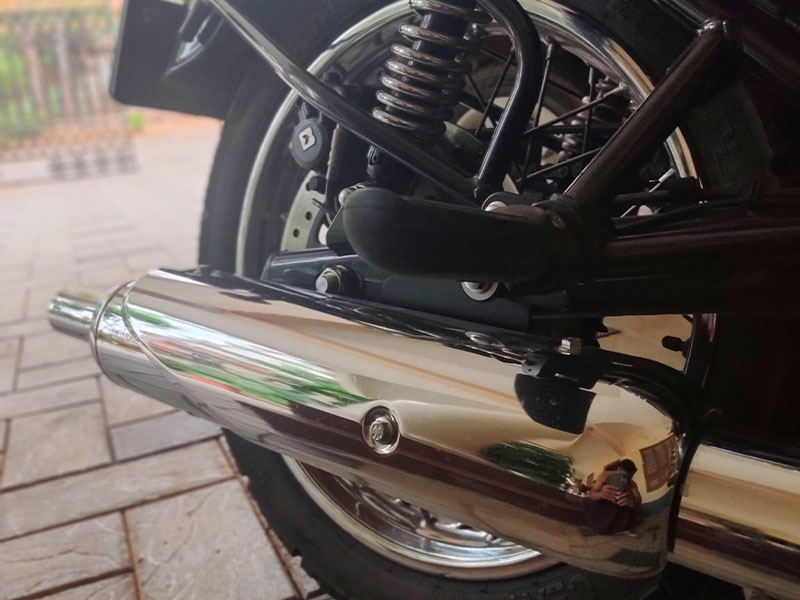
2.1 Exhaust System
- The exhaust pipes are particularly prone to making ticking sounds as they cool down.
- This is due to the numerous joints and heat shields attached to the hot downpipes, which expand and contract at different rates.
2.2 Engine And Transmission
- Various parts of the engine and transmission also undergo thermal changes, contributing to the ticking sound as they cool.
2.3 Different Materials
- Motorcycle components are made from steel, aluminium alloys, and sometimes titanium.
- These materials have different coefficients of thermal expansion (CTE), meaning they expand and contract at different rates, contributing to the complex symphony of ticking sounds.
How Metal Contraction Produces Audible Ticks?
If you’ve ever parked your motorcycle after a ride and heard a series of faint, sharp “tick-tick” sounds, you’re not alone. These sounds are normal as your bike cools down.
From an acoustic perspective, these ticks happen because small internal stresses build up as metal parts contract. Eventually, these stresses cause sudden, tiny shifts at joints, seams, or contact points. For example, exhaust pipes and heat shields, or engine bolts, are tightly fastened together. As they cool, the parts may contract at different rates. When one part shrinks just enough, it might slip or move slightly against another, releasing a small burst of energy.
This quick movement sends a vibration through the metal, and that vibration travels outward as a sound wave—a sharp “tick” or “ping” that you can hear. The ticks may seem random because different parts cool at different rates and make their sounds at different times.
The way these ticks sound depends on a few things:
- The size and shape of the components
- What type of metal are they made from
- How tightly the parts are fastened together
- How quickly is the bike cooling down
Because every motorcycle is built a bit differently and every ride takes place in a different environment, the pattern and loudness of the ticks can vary. But in almost all cases, they’re nothing to worry about—just your motorcycle adapting to temperature changes after a good ride.
Is The Tick-tick Sound A Cause Of Concern Or A Normal Phenomenon?
It’s good to remember that the ticking sound you might hear from your motorcycle is usually perfectly normal. This noise mainly comes from how metal parts in the exhaust system and engine expand and contract with temperature changes.
A big part of this sound often comes from the catalytic converter, which has a ceramic honeycomb structure that heats up and cools down, producing those ticking noises. So, while it might be a bit surprising, it’s just a natural part of how your bike functions!
How Long Does The Tick-tick Sound Typically Last After Shutting Off The Motorcycle Engine?
The duration of the ticking sound (often described as a “tick-tick” sound) after shutting off a motorcycle engine can vary depending on several factors.
- General Duration: The ticking sound is typically short-lived, often lasting only a few minutes after turning the engine off. This is because the metal parts cool relatively quickly once the heat source (the running engine) is removed. The sound tends to slow and eventually stop as the components reach ambient temperature.
- Ambient Temperature: Cooler ambient temperatures may lead to a quicker cooling process, potentially shortening the duration of the ticking sound. Conversely, warmer temperatures prolong the cooling period.
- Engine Size and Material: Larger engines or those with thicker metal components may take longer to cool, which can extend the duration of the ticking sound. The materials used in engine construction also influence cooling rates.
- Riding Duration and Intensity: Longer or more intense rides heat the engine more, which can prolong the cooling period and the associated ticking sounds.
- Cooling System Efficiency: The motorcycle’s cooling system, including the radiator and coolant circulation, affects how quickly the engine cools. A well-maintained system can speed up the cooling process.
- Airflow and Wind Velocity: Parking in a windy area can increase airflow and help the engine cool faster. In contrast, parking in a sheltered or enclosed space may slow the cooling process.
- Extended Duration: Depending on the abovementioned factors, the ticking sound may sometimes last longer than just a few minutes.
How Do We Distinguish Normal Versus Problematic Ticking?
While the ticking sound itself is usually harmless, there are some practical ways to tell if what you’re hearing is normal or a sign of trouble:
- Timing and duration: Normal ticking typically begins immediately after engine shutdown, fades within a few minutes, and is most noticeable in the exhaust and engine area. If the ticking starts later, lasts much longer than usual, or continues until the next ride, it could suggest a problem.
- Sound quality: Normal ticks are sharp, metallic, and irregular in rhythm. Problematic ticks may be much louder, more frequent, or have an unusual tone (such as grinding, knocking, or rapid clicking).
- Location: Ticking from the exhaust and engine surfaces is normal. If you hear ticking from other areas—like the wheels, brakes, or fuel tank—investigate further.
- Associated symptoms: If ticking is accompanied by difficulty starting, power loss, overheating, warning lights, strong smells (burning oil, coolant), or visible leaks, it’s a sign to inspect or consult a mechanic.
- Recent changes: A sudden change in ticking patterns after recent repairs, modifications, or an accident may indicate a fitting or material issue.
| Aspect | Normal Ticking | Problematic Ticking |
|---|---|---|
| When it happens | Occurs immediately after shutdown. | Continues for a long time after shutdown; may also happen during riding. |
| Duration | Lasts only a few minutes. | Continues much longer than a few minutes. |
| Sound character | Quiet, soft, and regular. | Loud, sharp, or irregular. |
| Behaviour with cooling | Fades as the engine cools. | May persist even after engine cools. |
| Other symptoms | No other symptoms (no warning lights, leaks, or performance issues). | Accompanied by burning smells, warning lights, fluid leaks, performance changes, or unusual vibrations. |
If you’re unsure, record the sound on your phone and compare it to previous recordings or share it with a trusted mechanic. Monitoring changes over time helps separate harmless cooling noises from signs of mechanical trouble.
Faq Related To The Tick Tick Sound In Motorcycles
1. Is The Ticking Sound After Turning Off My Motorcycle Normal?
Yes, this ticking sound is normal and is mainly caused by the cooling and contracting of metal parts in the exhaust system and engine after you turn off the bike.
2. What Causes The Tick-tick Sound In Motorcycles After Shutting Off The Engine?
The tick-tick sound is caused by the thermal expansion and contraction of metal components such as the exhaust system, engine, and transmission as they cool down after use.
3. Which Motorcycle Parts Are Responsible For The Ticking Sound?
The exhaust pipes, heat shields, engine, transmission, and catalytic converter are common sources of the ticking sound due to their exposure to high temperatures.
4. How Long Does The Ticking Sound Usually Last After Shutting Off The Engine?
Typically, the ticking sound lasts a few minutes as the metal parts cool down and return to their original size. Duration can vary depending on engine size, ride intensity, and ambient temperature.
5. When Should I Be Concerned About The Ticking Sound?
If the ticking is unusually loud, lasts much longer than usual, or is accompanied by other symptoms like power loss, overheating, or warning lights, consult a mechanic.
6. Can I Eliminate The Tick-tick Sound From My Motorcycle?
You cannot completely eliminate the sound, as it is a natural part of the cooling process. However, maintaining a good cooling system and parking in well-ventilated areas can reduce its duration.
7. Does The Type Of Metal In My Motorcycle Affect The Tick-tick Sound?
Yes, different metals (steel, aluminium, titanium) expand and contract at different rates, which can affect the pattern and intensity of the ticking sounds.
8. Is The Ticking Sound Related To Any Specific Riding Conditions?
Yes, longer or more intense rides, larger engines, and higher outside temperatures can all increase the intensity and duration of the ticking sound.
9. Is The Tick-tick Sound The Same On All Motorcycles?
No, the sound may vary depending on the make and model, the materials used, how the bike was ridden, and environmental conditions.
10. What Should I Do If I Notice A New Or Unusual Ticking Sound?
Record the sound and monitor for changes. If it becomes louder, more frequent, or is accompanied by other issues, have your motorcycle inspected by a professional mechanic.
Other Related Articles From Bikeleague India
- Bike riding in summer in India – Tips to beat the heat
- Causes of motorcycle Accidents In India – Detailed Analysis
- Bajaj Chetak 3502
- Bajaj Chetak 3501
- Oben
Conclusion
After exploring the science and reasons behind the tick-tick sound in motorcycles, it’s clear that this phenomenon is a natural part of your bike’s cooling process. The sound is produced as metal components contract after being heated during a ride, and in most cases, it signals normal operation rather than a problem.
Being aware of what’s typical for your motorcycle can help you quickly spot any unusual noises that might require attention. Ultimately, understanding your bike’s unique sounds builds your confidence as a rider and helps you enjoy motorcycling even more.
If you have any other doubts or queries, email us at bikeleague2017@gmail.com. You can also share your doubts or opinions in the comments section below. We are always eager to help and assist you. Also, here are several social media accounts for Bikeleague India that should raise your suspicions.