
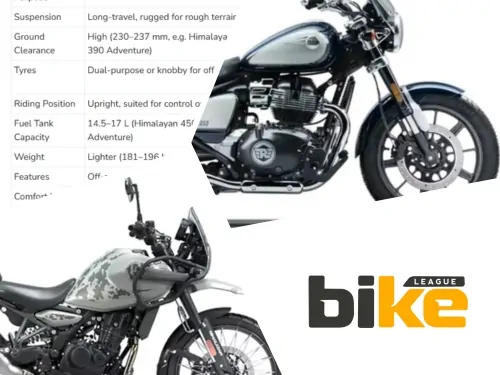
Long Story Short: Here’s a clear comparison to help you decide between adventure and touring bikes.
There are 13 main types of motorcycles, each with its own body style. For more details, you can check out this article. Here, I’ll focus on the most popular types and explain their main differences.
- Adventure Motorcycles (ADV)
- Touring Motorcycles
Both types of bikes are popular because customer preferences are changing. Motorcycles are now used for more than just city travel, especially as younger riders have more disposable income and a growing interest in adventure trips.
Modern motorcycles are much easier and more comfortable for long rides because of new technology. Many people now use them to travel across India, taking long trips to places like Kashmir and sharing their journeys on social media.
Key Takeaways
- India has few dedicated touring bikes; cruisers like the Royal Enfield Interceptor 650 and Super Meteor 650 are commonly used for touring instead, thanks to their comfort and highway manners.
- Cruisers are often used for touring purposes because of their laid-back ergonomics and comfort. Still, not all cruisers are true touring bikes.
- Touring motorcycles are specifically designed for long-haul performance, luggage capacity, and rider endurance. In contrast, cruisers focus more on style and relaxed cruising.
- Adventure bikes are built mainly for off-road riding. If you want to explore new places off the beaten path, an adventure bike is a great choice.
- If you’re more focused on cost and don’t need to go off-road, a touring bike is a better pick for long trips. Touring bikes don’t offer as many customisation options, but they’re a practical choice.
What Is A Touring Bike?
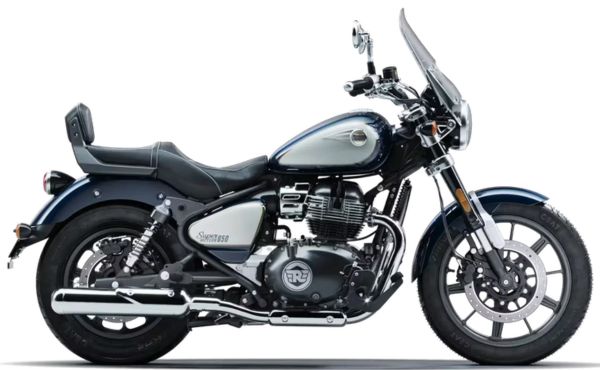
Touring bikes are made for long highway rides. They have large fuel tanks, good wind protection, and plenty of space for luggage. These bikes focus on a relaxed riding position and stability, rather than handling rough terrain like adventure bikes.
India does not have a big market for dedicated touring bikes yet. Bikes like the Royal Enfield Interceptor 650 and Super Meteor 650 are technically cruisers, but their comfort, range, and highway performance make them popular for touring. There are dedicated touring bikes like the Honda Gold Wing, Harley-Davidson Road Glide, and Indian Roadmaster in India, but they are expensive imports and not very common. For this comparison, we’re focusing on the cruiser-based models that most Indian riders actually use for touring.
Some examples relevant to the Indian market are
Advantages Of Touring Bikes Over Adventure Bikes
- Superior comfort on long highway rides with large ergonomic seats and better wind protection covering legs and arms.
- Comparable or larger fuel tanks on flagship models, paired with better aerodynamics and wind protection for genuinely longer stints between rest stops.
- Ample and built-in storage space for luggage.
- Smoother engines produce less vibration, enhancing rider comfort.
- Better stability and optimised handling on smooth paved roads.
Disadvantages Of Touring Bikes Compared To Adventure Bikes
- Heavier and bulkier, making them difficult to manoeuvre in tight or off-road conditions.
- Expensive to buy and maintain due to advanced electronics and extensive bodywork.
- Limited versatility; unsuitable for rough roads, potholes, and off-road terrains familiar in many parts of India.
- Less practical for urban traffic or uneven city streets.
- Lack of agility and poorer performance on twisty or rugged routes compared to adventure bikes.
What Is An Adventure Bike (adv)?
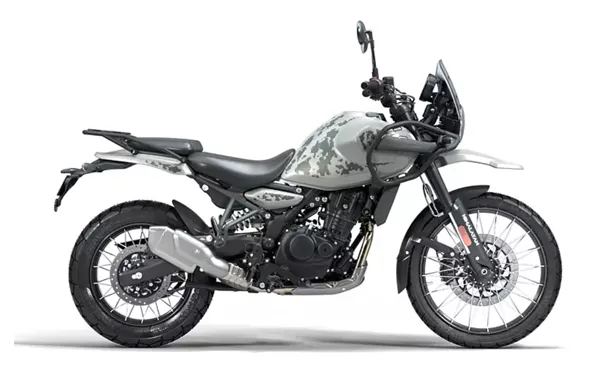
Adventure bikes are made for both on-road and off-road riding. They have more suspension travel, off-road tyres, and tougher bodywork than touring bikes. These bikes are also called all-purpose or on/off-road motorcycles. In India, adventure bikes come in many engine sizes, from entry-level models under 400cc to large 1200cc and above flagships.
Some examples are
Advantages Of Adventure Bikes Compared To Touring Bikes
- Versatile, capable of handling a mix of on-road and off-road riding.
- Taller seat height and suspension travel for better ground clearance on rough terrain.
- Greater manoeuvrability and cornering agility.
- Easier maintenance due to simpler bodywork and more accessible engine components.
- Entry-level ADVs are often more affordable than premium touring/cruiser models, though pricing overlaps significantly at the mid-range (e.g., Himalayan 450 vs. Interceptor 650).
Disadvantages Of Adventure Bikes Compared To Touring Bikes
- Less comfortable for long highway journeys due to narrower seats and less wind protection.
- Smaller fuel tanks require more frequent refuelling stops.
- A taller seat height can be challenging for shorter riders.
- Rougher engines produce more vibrations, which can cause discomfort during extended periods of riding.
- Limited storage space for long trips without the use of additional aftermarket accessories.
By now, you probably have a clear idea of the main differences between adventure and touring bikes.
Key Similarities Between Adventure And Touring Bikes
- They comfortably handle long trips and hauls
- Relatively large body style with relaxed ergonomics
- Both offer touring capability, though adventure bikes extend further into off-road terrain
- Semi-naked in body style and have a windshield
- Both come with enough features
Difference Between Adventure And Touring Bikes
Here’s a simple table that shows the main differences between adventure bikes and touring bikes:
| Aspect | Adventure Bikes | Touring Bikes |
|---|---|---|
| Primary Purpose | Off-road and mixed terrain exploration | Long-distance highway touring |
| Suspension | Long-travel, rugged for rough terrain | Softer, comfort-oriented for smooth rides |
| Ground Clearance | High (230–237 mm, e.g. Himalayan 450, KTM 390 Adventure) | Lower (135–174 mm, e.g. Interceptor 650, Super Meteor 650) |
| Tyres | Dual-purpose or knobby for off-road grip | Road-oriented with focus on comfort and durability |
| Riding Position | Upright, suited for control on varied terrain | Relaxed, designed for comfort on long rides |
| Fuel Tank Capacity | 14.5–17 L (Himalayan 450, KTM 390 Adventure) | 13.7–15.7 L (Interceptor 650, Super Meteor 650) |
| Weight | Lighter (181–196 kg) for manoeuvrability | Heavier (218–241 kg) for stability at speed |
| Features | Off-road modes, traction control, ABS settings | Cruise control, wind protection, infotainment |
| Comfort Level | Firm suspension, durable seat | Softer suspension, cushioned seating |
| Models in India | Royal Enfield Himalayan 450, KTM 390 Adventure | Royal Enfield Interceptor 650, Royal Enfield Super Meteor 650 |
Which One Is The Best In The Adventure Bikes Vs. Touring Bikes Shootout?
Adventure bikes are built mainly for off-road riding. If you want to explore new places off the beaten path, an adventure bike is a great choice. They’re big, have lots of suspension, and let you ride standing up. Many also come with features such as different ride modes, heated seats and grips, and specialised tyres for off-roading.
Adventure motorcycles offer many customisation options. You can add things like aftermarket panniers, crash guards, upgraded suspension, and off-road tyres, though these can increase the overall price. Most parts can be changed or upgraded as you like, so you can build your own bike over time.
Entry-level adventure bikes like the Himalayan 450 and KTM 390 Adventure are competitively priced at purchase and tend to need less frequent servicing than premium touring cruisers, thanks to simpler bodywork and more accessible engine components. Their parts are also built to withstand challenging conditions.
Adventure bikes can be hard to handle in tight spaces or heavy traffic. If you’re more focused on cost and don’t need to go off-road, a touring bike is a better pick for long trips. Touring bikes don’t offer as many customisation options, but they’re a practical choice.
What Are The Specific Features That Differentiate The Suspension And Tyres Of Adventure Bikes From Touring Bikes?
The primary differences between adventure and touring bikes lie in their suspension and tyres. These features determine what each bike is best suited for and where it performs best.
Suspension Differences
Adventure Bikes
Adventure bikes are equipped with longer suspension travel and higher ground clearance, enabling them to absorb shocks and vibrations from rough, uneven, and off-road terrain. Their suspension is designed to handle bumps, potholes, gravel, and dirt trails, allowing better wheel articulation for uneven surfaces. The suspension is typically more robust and adjustable, allowing it to suit various loads and terrain types.
Touring Bikes
Touring bikes have shorter suspension travel compared to adventure bikes, optimised for smooth performance on paved roads and highways. Their suspension focuses on stability, comfort, and load-carrying capability over long distances. It provides a plush, less bouncy ride on smooth asphalt rather than handling off-road challenges.
Tyre Differences
Adventure Bikes
The tyres on adventure bikes are typically dual-purpose or off-road focused, featuring aggressive, knobby tread patterns for improved grip on loose, muddy, or rocky surfaces. These tyres often have a higher profile and larger diameter front wheels (usually 19 or 21 inches) to better roll over obstacles. They may use tube-type or tubeless construction, depending on the model and off-road requirements.
Touring Bikes
Touring bike tyres prioritise road grip, durability, and comfort on long paved rides. They feature smoother tread patterns with continuous ribs or grooves, providing stability and enhanced water displacement on wet roads. These tyres are wider, with a larger contact patch, designed to handle heavy loads and high speeds reliably for extended periods.
In short, adventure bikes are equipped with suspension and tyres designed for tackling challenging, mixed terrain, making them versatile and rugged. Touring bikes prioritise comfort and stability for extended rides on paved roads, featuring suspension and tyres designed for smooth highway travel.
Faq Related To Adventure Bikes Vs Touring Bikes
1. Are Touring Bikes And Cruisers The Same?
Cruisers are often used for touring purposes because of their laid-back ergonomics and comfort. Still, not all cruisers are true touring bikes. Touring motorcycles are specifically designed for long-distance performance, ample luggage capacity, and rider endurance. In contrast, cruisers focus more on style and relaxed cruising. For instance, the Bajaj Avenger Cruise 220 is a cruiser suitable for short tours. At the same time, the Royal Enfield Interceptor 650 and Super Meteor 650 are built for serious touring, offering more balanced ergonomics.
2. How Do The Riding Positions Differ Between Adventure And Touring Bikes?
Adventure bikes offer a more upright riding position with higher ground clearance, providing better visibility and manoeuvrability in off-road conditions. Touring motorcycles offer a more relaxed riding position, prioritising rider comfort during extended highway journeys, often featuring amenities such as adjustable windshields and heated grips.
3. How Do The Technological Features Differ?
Adventure motorcycles often feature specialised components designed for off-road performance, including off-road riding modes and traction control. Touring motorcycles prioritise providing a smooth and stable ride on highways, featuring amenities such as cruise control and advanced navigation systems for enhanced long-distance comfort.
4. How Do The Suspension Systems Compare?
Adventure bikes have long-travel suspension systems and robust chassis to handle rough terrain and enhance off-road capabilities. Touring motorcycles prioritise stability and comfort on paved roads, featuring advanced suspension systems and optimised handling for long-distance cruising.
5. How Should One Decide Between An Adventure And A Touring Motorcycle?
The choice between an adventure and a touring motorcycle depends on the terrain you wish to ride on, your desired specifications, and your personal riding preferences. An adventure motorcycle is ideal for those seeking a bike that can navigate a wide range of terrain. A touring motorcycle is the better choice for a comfortable, luxurious ride on long road trips.
6. Which Type Of Motorcycle Is Better For Off-road Riding?
Adventure motorcycles are specifically designed to handle various terrain and conditions, usually in remote areas, making them more suitable for off-road riding. They include off-road riding modes, traction control, and rugged tyres to tackle challenging landscapes.
7. Which Type Of Motorcycle Is More Versatile?
Adventure bikes are renowned for their versatility, capable of navigating both on- and off-road environments, making them highly adaptable. Touring motorcycles are primarily designed for paved roads but offer a comfortable and stable ride on various road surfaces.
8. What Are The Storage Options Available For Each Type Of Bike?
Touring motorcycles often have extensive storage capacity, featuring integrated hard-shell panniers and top cases for carrying travel essentials during long-distance road trips. Adventure bikes also accommodate various luggage options, including panniers and top cases. Still, they focus more on flexibility for carrying gear needed for off-road adventures.
Other Related Articles From Bikeleague India
- Top 10 Cruising bikes or cruisers under 5 lakhs in India
- Yamaha vs Honda vs Kawasaki : Comparing Bike Giants
- KTM 390 Adventure
- KTM 890 Adventure R
- Indian Roadmaster
Conclusion
Adventure bikes are like the SUVs of motorcycles, while touring bikes are more like sedans with limited off-road ability. If you want a true off-road experience, choose an adventure bike. If you care more about price and don’t need off-road features, a touring bike is a good choice. Cruisers are also an option if you only ride on paved roads. In the end, the best bike depends on your riding needs. This article is here to help you pick the right one.
We hope this article has helped you decide between an adventure or touring motorcycle. If you have more questions, feel free to email us at bikeleagueindia@gmail.com or leave a comment below. We’re always happy to help. You can also reach out to us on Bikeleague India’s social media pages.