
Long story short: Find out different types of bike coating like PPF, Teflon, ceramic coating etc available in India, which coating is best for bike, which one suits your bike, pros, cons etc right here in this article.
Your motorcycle is more than just a way to get around; instead, it shows off your style and personality. These days, keeping your bike looking new is not just about looks; moreover, it also helps protect your investment and lets you enjoy your ride for years.
There are many paint protection options for bikes, like ceramic, graphene, PPF, and Teflon. Consequently, choosing the right one can feel confusing. However, this article will guide you through the different types, explain their pros and cons, and help you pick the best way to keep your motorcycle in great shape.
Key Takeaways On Types Of Bike Coating
- There are multiple paint protection options for motorcycles—including ceramic coating, graphene, paint protection film (PPF), self-healing films, and Teflon—each offering unique benefits and varying levels of durability and cost.
- Your choice of coating should be guided by your riding style, local climate conditions, and maintenance preferences; some coatings are better for daily city use, while others excel in harsh or touring environments.
- Professional application is generally recommended for long-lasting results and optimal protection, but DIY kits are available for budget-conscious riders or those who prefer a hands-on approach.
- Proper care and regular maintenance, such as gentle washing and using recommended products, are essential for prolonging the life and effectiveness of any paint protection coating.
- Investing in the right paint protection not only keeps your bike looking new but also helps retain its resale value, providing peace of mind and confidence on every ride.
Is Paint Protection For Bikes A Necessary Thing Or Not?
Paint protection is an additional layer of defence for your vehicle’s paintwork, offering several benefits. Here are some factors to consider when deciding if paint protection is necessary for your vehicle:
- Protection from environmental factors
- Improve the appearance of your vehicle
- Higher resale value
- Long-term cost savings
- Ease of maintenance
- Prevention of paint damage
Now that you know the benefits, you can clearly see the advantages of paint protection. Next, let’s look at the different types of bike coatings, their pros and cons, and some common questions. For the best results, it’s a good idea to have these coatings applied by professionals. In addition, understanding these details will help you make a more informed decision.
Types Of Bike Coating Available In India
1. Ceramic Coating (nano-ceramic)
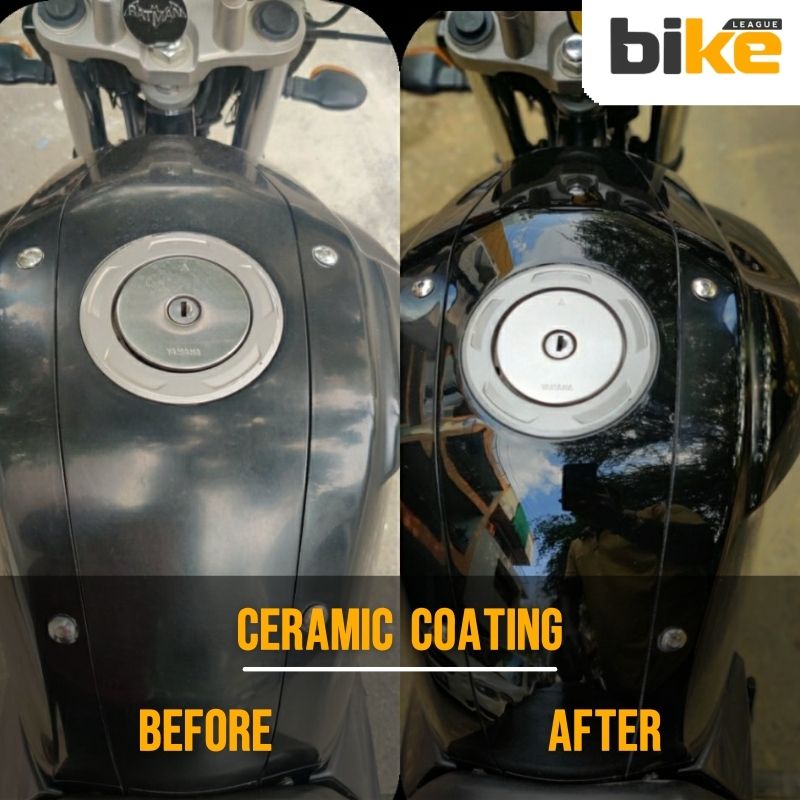
Ceramic coatings are a popular choice for bike owners who want their motorcycles to look shiny and stay protected. These coatings act like a thin, invisible shield that sticks to your bike’s paint. They are mostly made from silicon dioxide, which is also found in glass, and sometimes have extra ingredients for more strength. When a professional applies the coating, it forms a hard, glass-like layer on your bike’s clear coat.
Durability And Protection A Good Ceramic Coating Can Protect Your Bike For 2 To 5 Years. It Blocks Almost All (99%) Of The Sun’s Uv Rays, Which Helps Prevent Fading And Damage From Sunlight. This Is Especially Important In India’s Strong Sun. The Coating Also Makes Water Bead Up And Roll Off, So Your Bike Stays Cleaner And Is Easier To Wash. It Also Protects Against Light Scratches, Dust, Bird Droppings, Tree Sap, And Other Common Messes. Pricing
Getting a full ceramic coating for your bike at a professional studio usually costs between ₹4,000 and ₹8,000. If you like doing things yourself, there are DIY kits for less money, but you need to follow the instructions closely to get good results.
Maintenance
Caring for a bike with ceramic coating is easy. Wash it with a gentle, pH-neutral shampoo and use microfiber towels to prevent scratches. Every 6 to 12 months, you can use a maintenance spray to keep the water-repellent effect strong.
Best For
Ceramic coatings are great for people who ride every day and want their bike to stay shiny with little effort. They work especially well in cities where there is a lot of pollution and dirt.
Pros
- Great value: long-lasting protection for a reasonable price
- Blocks 99% of UV rays, so paint won’t fade easily
- Keeps your bike cleaner and reduces how often you need to wash it
- Professional application is easy to find across India
- DIY options for those on a budget
Cons
- Won’t protect against bigger impacts like stone chips—you’d need PPF for that
- Doesn’t last as long as graphene or PPF coatings
- Might get water spots in very humid weather unless you use a booster spray
- Needs a clean, prepped surface for best results
- Not as good as graphene at resisting dust in extremely polluted areas
2. Graphene Ceramic Coating
Graphene coatings are the newest improvement in ceramic technology and work well in India’s weather. It is a very strong, single layer of carbon atoms. When mixed with ceramics, it creates a hybrid coating for motorcycles.
Durability And Protection: These Coatings Can Protect Your Bike For 5 To 7 Years, Which Is Much Longer Than Regular Ceramic Coatings. Because Graphene Spreads Heat Well, It Helps Stop Water Spots, Which Are Common During India’s Rainy Season. Its Anti-static Properties Also Make It Harder For Dust To Stick, Which Is Useful In Dusty Cities. Graphene Coatings Also Repel Water And Dirt Better Than Regular Ceramics. Pricing
Getting a professional graphene coating can cost anywhere from ₹5,000 to ₹15,000 or more, depending on your bike’s size and the product you choose. Some brands, such as 3M, have begun offering graphene coatings in India’s premium market segment. DIY kits are also available for those who want to try it themselves, with prices starting around ₹1,450 for basic 2-year protection.
Maintenance
The good news is that graphene coatings need even less care than ceramic ones. Just use the regular two-bucket wash method, and you’ll see that dust does not settle as quickly on your bike.
Best For
These coatings are ideal for bikes used in humid, rainy, or dusty conditions. They are especially popular among touring motorcycle owners who want long-lasting protection.
Pros
- Outstanding durability (5–7 years), much longer than standard ceramic coating
- Prevents water spots thanks to great heat dissipation
- Reduces dust sticking to the bike, perfect for Indian cities
- Repels water and dirt better due to higher contact angles
- Protects paint from chemicals and UV rays, keeping your bike looking new
Cons
- Can be more expensive than standard ceramic coatings
- Availability may be limited outside big cities
- Needs a skilled professional for best results (unless you use a DIY kit)
- DIY kits don’t last as long as professional applications
- Doesn’t protect as well against stone chips as PPF (paint protection film)
3. Paint Protection Film (ppf)
Paint Protection Film (PPF) acts like a nearly invisible shield for your bike, protecting it from road debris and damage. Unlike liquid coatings, PPF is a thick, clear urethane film that absorbs impacts and keeps your bike’s paint safe. Ceramic coatings are only a few microns thick, but PPF is much thicker, usually 150 to 250 microns, so it can handle everyday bumps and scratches.
Types Of Ppf
- Standard TPU PPF: The classic choice, made from flexible urethane with a glossy finish. Thickness is usually 185–210 microns.
- Self-Healing PPF: This advanced film can make small scratches disappear simply with heat—leave your bike in the sun or use a heat gun, and surface marks fade away. Lasts 7–10 years.
- Matte PPF: If you prefer a subtle, non-shiny look, matte PPF offers all the same protection in an understated finish (190–250 microns thick).
- Coloured or PRISM PPF: Want your bike to stand out? These films come in over 50 colours and still provide self-healing and durable protection (180–190 microns).
- Polycarbonate TPU PPF: The newest technology, combining polycarbonate with urethane for even clearer gloss, better scratch resistance, and self-healing capabilities.
Durability And Protection
PPF does a fantastic job of stopping stone chips, minor scratches, swirl marks, and protecting against UV rays. Depending on the type of film and how you use your bike, it can last anywhere from 5 to 12 years. Just note that while it’s tough, it won’t prevent damage from really deep gouges or very heavy impacts.
Pricing
Full-bike PPF installation generally costs between ₹10,000 and ₹30,000. Special features—such as self-healing or unique colours—can push the price to ₹35,000 or more.
Maintenance
Taking care of PPF is simple. Wash your bike gently with the two-bucket method. After getting PPF installed, wait 5 to 7 days before washing it for the first time so the film can fully cure.
Best For
PPF is a great choice for touring bikes, sports motorcycles, or anyone who rides in tough road conditions and wants to keep high-impact areas like the fuel tank and fairings looking new.
Pros
- Excellent protection against stone chips, scratches, and road debris (especially useful on Indian highways)
- Lasts 5–12 years, with self-healing variants lasting 7–10 years
- Lots of customisation options: glossy, matte, or coloured films
- Helps maintain your bike’s resale value by preserving the original paint
- UV resistance keeps your bike looking fresh, even in strong sunlight.
Cons
- More expensive than most liquid coatings (₹10,000–₹35,000+)
- Must be installed by certified professionals for best results
- Requires a 5–7 day period to cure before washing or riding in heavy rain
- Adds a little thickness/weight to areas like the fuel tank
- Limited resistance to chemical etching (using a ceramic topcoat can help)
4. Self-healing Paint Protection Film
Self-healing PPF is a premium choice for protecting your motorcycle’s paint. It gives strong physical protection and can even repair itself. If your bike gets light scratches or swirl marks, these marks will disappear when the surface gets warm from the sun or a heat gun.
Durability And Protection
With proper care, self-healing PPF can last 7 to 10 years. Its thick, flexible film shields your bike from stone chips, minor impacts, swirl marks, and UV rays, helping your motorcycle look new for longer.
Pricing
This top-level protection is expensive. Full coverage usually costs between ₹12,000 and ₹35,000 or more, making it the most costly option for bike paint protection.
Best For
Self-healing PPF is perfect for expensive or collector bikes where keeping the paint flawless really matters. It’s also a great option for touring motorcycles that face tough road conditions and lots of weather.
Pros
- Light scratches and swirl marks repair themselves with heat
- Lasts a long time—7 to 10 years of protection
- Shields against chips,bumps, and UV damage
- Keeps resale value high by preserving a like-new look
- Available in different finishes (glossy, matte, colored) to match your style
Cons
- Significantly more expensive than most other coatings
- Needs to be installed by a certified professional to maintain the warranty
- Takes 5–7 days to fully cure. before you can’t wash or expose it to the elements
- Usually only available in big-city detailing studios
- Won’t protect against deep scratches or major impacts
5. Teflon Coating
If you want a low-cost way to protect your bike’s paint, Teflon (PTFE-based) coatings are a basic and budget-friendly choice. Unlike ceramic or PPF coatings that bond tightly to your bike, Teflon acts more like a temporary raincoat. It is a water-repellent spray that helps keep off water and light dirt for a short time.
Durability And Protection
Teflon coatings do not last long, usually less than a year. They make water bead up and give some stain resistance, but they do not protect much against the sun or strong chemicals. Compared to ceramic coatings and PPF, Teflon is less durable and does not make cleaning much easier.
Pricing
The main advantage of Teflon coating is its low price. Getting your whole bike coated usually costs ₹2,000 to ₹5,000, so it is the most affordable option for most riders.
Best For
Teflon is best for short-term paint protection on used bikes or for people on a tight budget who do not mind reapplying it often.
Pros
- Cheapest option (₹2,000–₹5,000), fits any budget
- Fast, easy spray application with no waiting for curing
- Good for quick water repellency, especially during monsoons
- DIY-friendly; no need for a professional
- Handy for older bikes before a resale or repaint
Cons
- Very short lifespan—needs frequent reapplication (less than a year)
- Barely any UV protection, so paint may still fade in the sun.
- Limited resistance to bird droppings and tree sap
- Offers no real protection against stone chips or scratches
- It is rapidly being replaced by better ceramic and graphene options.
| Coating Type | Durability | Key Protection | Pricing (₹) | Best For |
|---|---|---|---|---|
| Ceramic Coating (Nano-Ceramic) | 2-5 years | 99% UV block, water repellent, light scratches, contaminants | ₹4,000-₹8,000 | Daily riders in polluted cities |
| Graphene Ceramic Coating | 5-7 years | Water spot prevention, anti-static dust resistance, superior hydrophobicity | ₹5,000-₹15,000+ | Touring bikes, humid/dusty areas |
| Paint Protection Film (PPF) | 5-12 years | Stone chips, scratches, impacts, UV damage (150-250μm thick) | ₹10,000-₹35,000 | Touring/sports bikes, highways |
| Self-Healing PPF | 7-10 years | Self-repair scratches, chips, impacts, UV (heat-activated healing) | ₹12,000-₹35,000+ | Premium/collector bikes |
| Teflon Coating | Less than 1 year | Basic water/dirt repellency | ₹2,000-₹5,000 | Budget/used bikes |
How To Wash, Maintain, And Get The Most Out Of Your Bike’s Coating In India?
Taking care of your bike’s coating is easier than it seems. Here is a simple, step-by-step guide for each type:
Universal Rules For All Coatings
- Wash your bike every 1–2 weeks to keep dirt and grime from building up.
- Use two buckets: one for clean, soapy water and one for rinsing your mitt. This helps avoid scratches.
- Always pre-rinse with gentle water pressure (no more than 2000 PSI) to wash away loose dirt.
- Stick to pH-neutral car shampoos—regular household soap can damage the coating.
- Wash from the top down with a soft microfiber mitt (skip sponges and stiff brushes).
- Rinse thoroughly, and dry right away with a microfiber towel or blower to avoid water spots.
- Work in the shade on a cool surface, and never let cleaning products dry on the bike.
Ceramic Coating Care
After getting a ceramic coating, wait 7 days before your first wash to let it cure.
- Wash every 2 weeks, and consider using a booster spray every 6 months to keep the hydrophobic effect strong.
- Try a foam pre-soak for 3–5 minutes before your regular wash for even better results.
- Use only ceramic-safe shampoos and avoid waxes, sealants, or automatic car washes—they can dull the coating.
- Every 1–2 months, consider using iron or tar removers, and get a pro checkup once a year.
Graphene Ceramic Care
- Maintenance is similar to ceramic coatings, but graphene is even better at repelling dust.
- Wash every two weeks and use a graphene booster spray every 4–6 months.
- Graphene shampoo adds extra slickness, and the booster fills in micro-scratches—just spray it on, wait 3 minutes, and buff off.
Tip: Graphene coatings help prevent water spots, which is especially useful during India’s rainy season.
Ppf (paint Protection Film) Care
Right after installation, let the standard PPF cure for 2–3 days and the self-healing PPF for 5–7 days before washing.
- Wash gently every week and apply a PPF-specific protectant every 4–6 weeks.
- Use only pH-neutral shampoo and soft microfiber, and skip clay bars unless labelled PPF-safe.- Minor scratches? Often, they’ll disappear with some sun or a little warm water!
- Avoid high-pressure spraying at the edges, harsh chemicals, or abrasives.
- Always towel-dry to prevent mineral spots—never air-dry.
Teflon Coating Care
- Teflon doesn’t last as long, so plan to reapply every year (or sooner if you notice it wearing off).
- Wash weekly with mild soap and a soft cloth, and refresh with Teflon spray every 2–3 months.
- Don’t use harsh cleaners or rough materials.
- Check monthly for wear and touch up spots as needed.
| Coating Type | First Wash Wait | Wash Frequency | Booster Frequency | Key Tools/Products | India Climate Tip |
|---|---|---|---|---|---|
| Ceramic | 7 days | Bi-weekly | 3-6 months | pH-neutral shampoo, SiO2 boosters | UV/pollution shield |
| Graphene | 7 days | Bi-weekly | 4-6 months | Graphene shampoo/spray | Monsoon water spot prevention |
| PPF | 48-72 hrs | Weekly | 4-6 weeks | PPF shampoo, microfiber | Highway chip protection |
| Self-Healing PPF | 5-7 days | Weekly | 4-6 weeks | Warm water for healing | Heat activates scratch repair |
| Teflon | Immediate | Weekly | 2-3 months | Mild soap, Teflon spray | Budget monsoon repellent |
Which Type Of Bike Coating Is Best For You?
Picking the right coating for your bike is not just about numbers and features. It depends on how you ride, your local weather, and what matters most to you. Here is a simple breakdown to help you choose what fits your needs best:
- Choose Ceramic if: Pick Ceramic Coating for a great shine, easy cleaning, and solid protection without breaking the bank. It’s perfect for daily riders in typical city or suburban conditions. Expect to pay around ₹4,000–₹8,000.
- Choose Graphene if: Go for Graphene Coating if you ride through lots of rain, humidity, or dust—think Mumbai monsoons or dusty Delhi streets. It lasts even longer than ceramic (5-7 years) and keeps your bike cleaner for longer. The price is steeper (₹5,000–₹15,000+), but you get top-notch durability and dust resistance.
- Choose PPF if: Pick Paint Protection Film (PPF) if your rides take you on highways, rough roads, or you love long tours. PPF is the bodyguard for your bike’s paint, shielding it from chips and scratches for up to 12 years. It’s more expensive (₹10,000–₹30,000+), but ideal for those who want peace of mind on every ride.
- Choose Self-Healing PPF if: Choose Self-Healing PPF if you own a premium or collector’s bike, or simply want your paint to look flawless for years. This high-end option can ‘heal’ light scratches with heat and keep your bike showroom-fresh. It’s a premium investment (₹12,000–₹35,000+), often worth it for serious enthusiasts.
- Choose Teflon if: Consider Teflon if you’re after a budget-friendly, short-term fix—maybe you’re planning to repaint soon or just want a quick shine before selling your bike. It costs the least (₹2,000–₹5,000), but also wears off the fastest.
- Hybrid Approach (Recommended for frequent riders): For the best of both worlds, try a hybrid approach: PPF on high-impact areas like the fuel tank and fairings (₹5,000–₹15,000), plus ceramic or graphene coating on the rest of the bike. This way, you get thorough protection—against both scratches and the elements—without going all-in on just one method.
Lesser-known Facts And Exciting Details About Bike Coating
1. Ceramic Coating Is Not A Substitute For Clear Coat
Ceramic coatings are applied over a vehicle’s clear coat to provide extra protection. They do not replace the clear coat; rather, they improve its performance.
2. Different Coating Types Offer Varying Durabilities
Choose a coating that suits your specific needs, as different types, such as ceramic coatings, PPF, and nano-coating, offer varying levels of durability and protection.
3. Ppf Offers Physical Protection
Paint protection film (PPF) protects against stone chips, road debris, and minor impacts. It is commonly applied to the front bumper, fenders, and mirrors to prevent damage.
4. Self-healing Coatings Can Repair Minor Scratches
Certain ceramic coatings and PPF have self-healing properties. They can automatically repair minor scratches and blemishes when exposed to heat or sunlight.
5. Proper Maintenance Is Essential
Proper maintenance is essential to maintaining coatings’ effectiveness. This can be achieved by using recommended cleaning products and following care guidelines.
6. Film Patterns Are Customizable
You can cut and shape PPF to fit your motorcycle’s contours precisely. Custom patterns will protect specific areas while maintaining the bike’s aesthetics.
7. Coating Thickness Varies
Coating thickness can vary, and thicker layers offer better protection. Applying thicker coatings may be more difficult, but they provide enhanced durability.
8. Uv Protection Is Included
Many coatings provide UV protection, helping prevent paint from fading and deteriorating from prolonged exposure to the sun.
9. Water Beading And Hydrophobic Properties
Coatings create hydrophobic surfaces that cause water to bead and roll off, taking contaminants with it. This makes cleaning easier and reduces the appearance of water spots.
10. Professional Application For Best Results
For the best results and a long-lasting coating, it is recommended to have professionals apply it. They have the necessary experience and equipment to guarantee a high-quality finish. Although DIY enthusiasts can apply some coatings, leaving it to the professionals is best.
11. Warranties Vary
Coating products have different warranties. Some offer warranties that last several years, giving you peace of mind about the coating’s durability.
12. Cost Depends On Several Factors
The price of bike coating can vary greatly depending on the coating type, brand, application complexity, and motorcycle size.
Factors To Consider When Choosing Types Of Bike Coating In India
When choosing a bike coating in India, several important factors should be considered to ensure you select the most suitable option. Here’s a comprehensive analysis of the key factors to consider:
1. Climate And Environmental Conditions
India’s diverse climate plays a crucial role in determining the most appropriate bike coating:
- Tropical Wet (Humid) Climate: In regions like the Western Ghats and northeastern states, coatings must be highly resistant to moisture and corrosion. Because of their water-repellent properties, ceramic or hydrophobic coatings would be ideal.
- Tropical Dry Climate: For areas in central and western India, including Rajasthan and Gujarat, coatings must withstand intense heat and UV exposure. Ceramic and graphene coatings are excellent options, offering superior UV protection and heat resistance.
- Coastal Climate: Coatings should resist salt corrosion and high humidity in coastal areas like Mumbai and Chennai. Nano-coatings or ceramic coatings with strong anti-corrosive properties would be suitable.
- Air Pollution: In cities with high pollution levels, like Delhi, coatings that resist particulate matter accumulation are essential. Ceramic coatings and PPF (Paint Protection Film) protect against environmental contaminants.
2. Durability And Longevity
Different coatings offer varying levels of durability:
- Ceramic Coatings: These can last up to 5 years or more with proper maintenance, making them a long-term investment.
- Paint Protection Film (PPF): PPF can last 5 to 10 years, offering excellent long-term protection.
- Teflon Coatings: These are less durable, typically needing reapplication every 6 to 12 months.
- Graphene Coatings: While relatively new, these offer advanced protection and high durability.
3. Cost Considerations
The price range for bike coatings in India varies significantly:
- Ceramic Coatings: Range from ₹3,000 onwards and above, depending on the brand, package and motorcycle.
- Teflon Coatings: More affordable, ranging from ₹2000 onwards.
- Graphene Coatings: Starts at ₹5,000 onwards and above.
- DIY Options: Some coatings, like ceramic, offer DIY kits for around ₹2,000, which can be more cost-effective for those willing to apply the coating themselves.
4. Aesthetic Factors And Colour Options
- Most coatings (ceramic, nano, graphene) are clear and enhance the existing colour of the bike by adding depth and gloss.
- PPF can be either transparent or coloured, allowing for some customisation.
- Consider the level of shine and gloss you desire, as different coatings offer varying degrees of aesthetic enhancement.
5. Ease Of Application And Maintenance
- Ceramic Coatings: Can be applied without professional training but require careful preparation and ideal conditions.
- Nano Coatings: Similar to ceramic coatings in the application process.
- Hydro Coatings: Designed for easy application and low maintenance.
- Consider whether you prefer a DIY approach or a professional application, as this can affect both the cost and quality of the coating.
6. Environmental Impact And Regulations
- Non-nano coatings are considered more environmentally friendly and safer for health than nano coatings.
- Water-based coatings have a lower environmental impact than solvent-based options.
- Ensure the chosen coating complies with Indian ecological regulations, especially VOC emissions.
7. Specific Protection Needs
- If you’re concerned about physical damage, PPF offers excellent protection against stone chips and abrasions.
- Ceramic and graphene coatings are highly effective for UV protection.
- If water repellency is a priority, hydrophobic or ceramic coatings with hydrophobic properties are ideal.
- PPF for Bikes: Ultimate Paint Protection for Your Ride
- Tips to reduce your bike insurance premium in India
- Different types of bike wash explained
- All in one buying guide for motorcycle helmets in India
- Everything you need to know about bike engine oil explained
Faq About Bike Paint Protection Coatings In India
1. Is Teflon Coating For Bikes Good?
Teflon coating for bikes, or PTFE (Polytetrafluoroethylene), is an option for protecting motorcycle paint and surfaces.
2. How Do You Protect A Motorcycle Tank From Scratches?
Apply transparent or coloured paint protection film to the motorcycle tank. PPF is a transparent, self-healing film that provides a barrier against minor scratches, stone chips, and other forms of abrasion. This requires a professional application for optimal results.
3. Will Ceramic Coating Remove Scratches?
Ceramic coatings are not designed to remove scratches from bikes or other vehicles. Instead, ceramic coatings are intended to provide a protective layer on the vehicle’s paint and surfaces to prevent or minimise scratches and other forms of damage.
4. Can You Ceramic Coat A Motorcycle?
No, the ceramic coating requires a professional application for the best results. DIY applications may not provide the same level of effectiveness and longevity.
5. Can Paint Protection Film Be Removed?
Yes, PPF can be removed without damaging the vehicle’s paint. The removal process should be carried out carefully, often by a professional, to ensure no adhesive residue is left behind and that the paint remains intact.
6. Can Paint Protection Film Be Repaired?
Paint protection film (PPF) shields the underlying paint from damage. Unlike paint, PPF is not usually repaired by touch-ups or fixes. Instead, when PPF gets damaged, the usual action is to remove and replace it.
7. How Long Does Ppf Last?
The lifespan of PPF can vary depending on the quality of the film, the conditions it’s exposed to, and how well it is maintained. On average, high-quality PPF can last anywhere from 5 to 10 years.
8. Is Ppf Noticeable On My Motorcycle?
PPF is designed to be virtually invisible, preserving your motorcycle’s aesthetic. When correctly applied, it should not be noticeable to the casual observer.
9. Can Ppf Heal Itself?
Many modern PPFs have self-healing properties, which can repair minor scratches and swirl marks with heat. This self-healing can occur naturally in the sun or be accelerated with warm water or a heat gun.
10. Is Ppf Worth The Investment?
For many motorcycle owners, especially those with new or high-end bikes, PPF is worth the investment as it helps maintain the bike’s appearance and resale value by protecting against physical and environmental damage.
11. Can Ppf Be Applied To Older Motorcycles?
While PPF can be applied to older motorcycles, it is recommended for brand-new bikes for the best results. On older bikes with extensive wear and tear, PPF may become more noticeable.
12. What Is The Pencil Hardness Scale In Motorcycle Coating?
The Pencil Hardness Scale evaluates the scratch resistance of protective and clear coats on motorcycle surfaces in motorcycle coatings and automotive detailing. It helps determine the ability of these coatings to withstand scratches and abrasions, allowing for an assessment of their durability and performance.
13. What Is The Difference Between 5h And 9h In Bike Coating?
The “H” in bike and other protective coatings stands for hardness. The number before the “H” indicates the coating’s scratch resistance. The higher the number, the harder and more scratch-resistant the coating.
14. Does Ceramic Coating Harm Paint?
No, properly applied and maintained ceramic coatings do not damage vehicle paint; they are meant to safeguard it. Ceramic coatings are renowned for offering numerous advantages to the paintwork.
15. Does Ceramic Coating Protect The Paint?
Yes, Ceramic coating protects your vehicle’s paint. It forms a transparent and highly resilient layer on the paint’s surface, whether ceramic, nano-ceramic, or SiO2 coating.
16.how Long Does Ceramic Coating Last?
Ceramic coatings typically last 2 to 5 years, depending on the quality of the product and its maintenance. Some newer, more advanced ceramic coatings offer durability of up to 5 years.
Other Related Articles To Bike Coating In India
Conclusion
Choosing the right paint protection for your bike not only helps keep it looking good but also preserves its value over time. Whether you pick ceramic coating, graphene, PPF, self-healing films, or Teflon, each one has its own benefits for different needs and budgets. Ultimately, making an informed choice ensures your motorcycle remains protected and maintains its appeal.
Therefore, think about how you ride, your local weather, and how much time you want to spend on maintenance. Getting a professional to apply the coating is usually best; nevertheless, there are DIY kits for many types. With the right protection, you can enjoy your bike and keep it looking great for years to come.
If you have more questions, you can email us at bikeleague2017@gmail.com or leave a comment below. We are always happy to help. You can also find Bikeleague India on social media.