
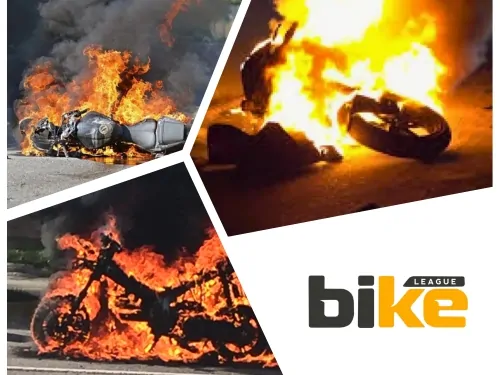
Long story short: Learn how to spot and prevent petrol bike fires and fuel leaks in India. Find out how to keep yourself and others safe on the road.
News reports often mention scooters or petrol bikes catching fire or leaking fuel. There are several ways to prevent these incidents, and they do work. While extreme heat from climate change is a major cause, it is not the only reason.
In this guide, we share important safety tips for Indian petrol bike and scooter riders. These tips will help you ride with confidence. Let’s see how you can keep your two-wheeler journeys safe.
Before we get into the safety tips, it’s important to understand the situation with two-wheeler fires in India. While electric vehicle fires have been in the news, petrol-powered bikes actually have a higher risk of catching fire. Knowing this helps you stay safer on the road.
Industry experts say that petrol and diesel two-wheelers are 20 to 80 times more likely to catch fire than electric ones. This shows why it’s so important to prevent fires, especially when using petrol.
Key Takeaways
-
li>Petrol bikes in India are much more likely to catch fire or leak fuelfuel leak symptoms and risks than electric vehicles. This is mostly due to issues with the fuel system, electrical problems, and hot weather. It’s something every rider should be aware of.
- It’s important to spot the early warning signs of a fuel leak—like seeing petrol stains, smelling strong petrol, or if your engine starts misfiring. Regularly looking over and sniffing around your bike can really help keep you safe.
- Simple steps like checking your fuel system, electrical wiring, keeping your engine and exhaust clean, making sure your cooling system works, and getting your bike serviced by a pro go a long way in preventing fires.
- If you ever think your bike has a fuel leak, switch off the engine right away, get to a safe place, stay away from anything that could spark a fire, secure the area, and call a professional. Don’t try to fix it yourself.
- Indian bikes now come with smarter features—like on-board diagnostics, electronic fuel injection, liquid cooling, and stronger fuel system parts—which make them safer. But nothing beats being alert and keeping up with regular maintenance.
How To Recognise The Signs Of A Fuel Leak In A Bike?
Recognising the signs of a fuel leak is a crucial skill for every bike rider. It empowers you to take proactive measures and ensures your safety on the road.
1. Visual Indicators
Fuel Stains And Puddles
- Ground Inspection: Check for wet spots or puddles beneath the parked bike. Fuel puddles are typically clear and thin.
- Bike Surface: Look for fuel stains or wet spots on the motorcycle’s body, particularly around the fuel tank and along the frame.
Component Inspection
- Fuel Tank: Examine the fuel tank for signs of corrosion, cracks, or loose fittings.
- Fuel Lines: Inspect fuel lines for visible damage, such as cracks, wear, or loose connections.
- Carburettor: Check the area around the carburettor for signs of leakage, especially if the gasket is old.
- Fuel Petcock: Examine the fuel valve (petcock) and its connections for any signs of leakage.
Environmental Considerations
- Dust and Particulate Matter: Dusty conditions are common in many parts of India, and accumulated dust on the vehicle’s surface may obscure visual signs of leaks. Clean the vehicle regularly for better inspection.
- Rainfall Effects: Rain can wash away visual indicators during monsoon seasons. Conduct inspections in dry conditions when possible.
2. Olfactory / Smell Indicators
Strong Gasoline Odor
- Parked Vehicle: A persistent, strong gasoline smell when the vehicle is stationary could indicate a leak.
- During Operation: If you notice a strong fuel smell while riding, it may signify a leak in the fuel system.
Environmental Factors Affecting Odor Detection
- High Temperatures: In hot Indian summers, increased fuel vaporisation can make leak detection through smell more challenging.
- Air Pollution: In urban areas with high pollution levels, other strong odours might mask the smell of fuel leaks.
- Humidity: High humidity in coastal and tropical regions can affect fuel evaporation rates, potentially masking or altering the smell of leaks.
3. Performance-related Signs
Engine Issues
- Misfires and Stalling: Frequent engine misfires or stalling could be due to fuel leaks affecting the air-fuel mixture.
- Delayed Throttle Response: Hesitation when accelerating may indicate inconsistent fuel delivery due to leaks.
Fuel Efficiency
- Reduced Mileage: A noticeable drop in fuel efficiency without other apparent causes could signify a leak.
- Unexpected Fuel Gauge Changes: Rapid or unexpected changes in fuel levels may indicate leakage.
4. Specific Areas To Check
Fuel System Components
- Fuel Tank: Check for holes, cracks, or rust, especially in older vehicles.
- Fuel Lines: Inspect for damage, wear, or improper installation.
- Carburettor: Pay attention to the gasket sealing the carburettor bowl.
- Fuel Injector: Check for any signs of malfunction or overflow. In fuel-injected models
- Gas Tank Cap: Ensure the cap seals properly to prevent vapour leaks.
Connections And Fittings
- Hose Clamps: Check if all hose clamps are tight and secure.
- Gaskets: Inspect gaskets for wear or damage, especially around the carburettor and fuel tank.
What Are The Tips To Prevent Petrol Bike Catching Fire In India?
1. Fuel System Maintenance
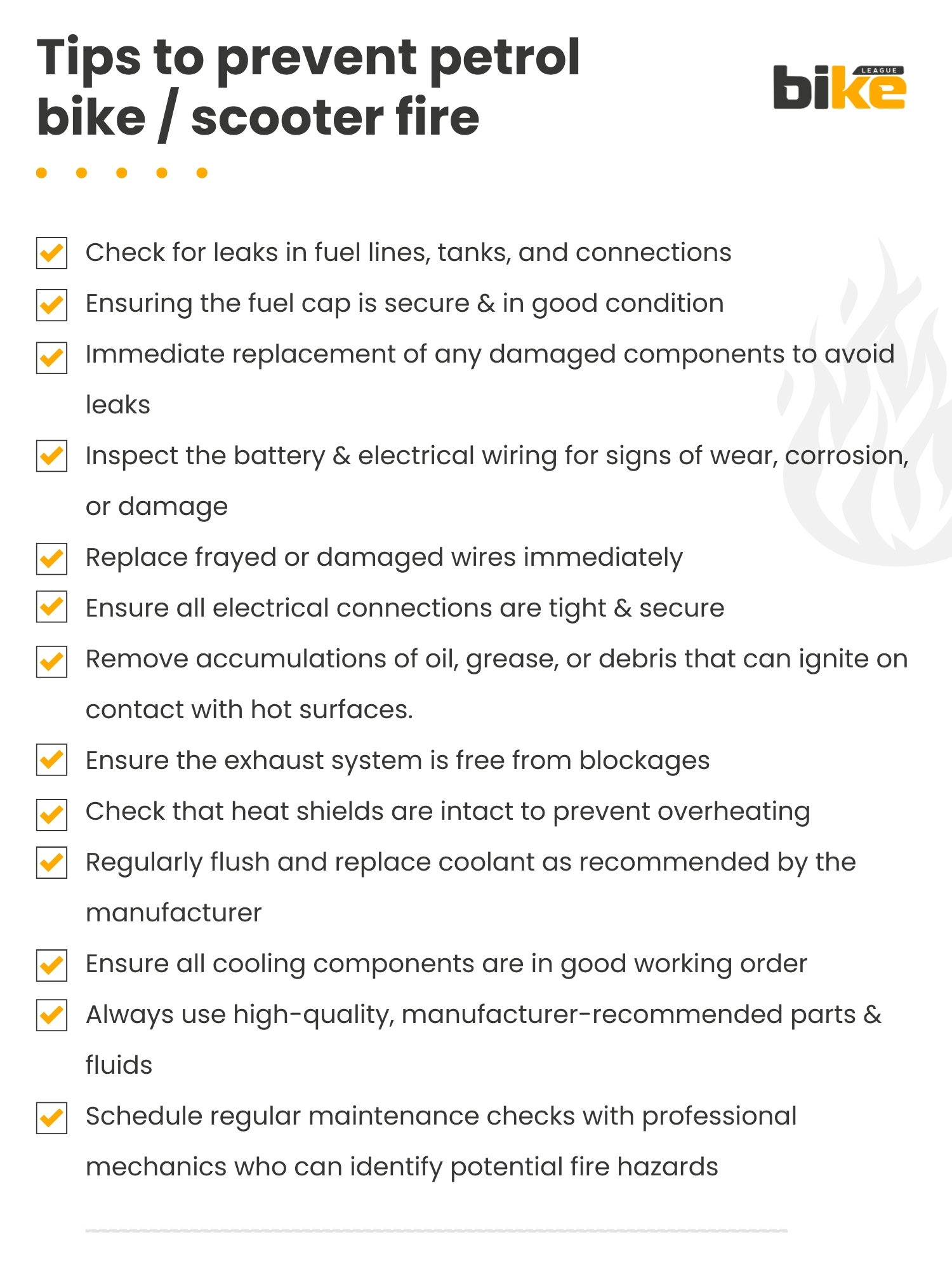
- Check for leaks in fuel lines, tanks, and connections
- Ensure the fuel cap is secure and in good condition to prevent fuel vapour escape
- Immediate replacement of any damaged components to avoid leaks
2. Electrical System Checks
- Inspect the battery and electrical wiring for signs of wear, corrosion, or damage
- Replace frayed or damaged wires immediately
- Ensure all electrical connections are tight and secure
3. Engine And Exhaust System Maintenance
- Remove accumulations of oil, grease, or debris that can ignite on contact with hot surfaces.
- Ensure the exhaust system is free from blockages
- Check that heat shields are intact to prevent overheating
4. Cooling System Maintenance
- Regularly flush and replace coolant as recommended by the manufacturer
- Ensure all cooling components are in good working order
5. Use Of Quality Parts And Regular Professional Servicing
- Always use high-quality, manufacturer-recommended parts and fluids
- Schedule regular maintenance checks with professional mechanics who can identify potential fire hazards
What To Do When Suspecting A Fuel Leak In A Petrol Bike?
 Things to do when suspecting a fuel leak in a petrol bike
1: Immediate Safety Measures
- Turn off the engine: This is the first and most crucial step to reduce the risk of ignition from engine heat or electrical sparks.
- Move to a safe location: If possible, carefully move your motorcycle to a secure area away from traffic and potential ignition sources.
- Maintain distance: Move away from the motorcycle to avoid inhaling fumes and be safe from any potential fire hazard.
- Avoid ignition sources: Avoid open flames, sparks, or other potential ignition sources. Do not smoke or use electrical devices near the motorcycle.
2: Assess And Contain The Situation
- Visual inspection: Carefully examine your motorcycle to identify the source of the leak. Check common areas such as the fuel tank, funes, and connections.
- Look for damage: Inspect for visible signs of damage, such as rust, wear and tear, or holes in the fuel tank that could be causing the leak.
- Use absorbent materials: If available, use absorbent materials to contain the leak and prevent fuel from spreading. This helps minimise environmental impact and reduces slip hazards.
3: Secure The Area
- Clear the area: To prevent accidents or injuries, ensure the area around the motorcycle is clear of people and potential ignition sources.
- Ventilate the space: Open doors and windows to ensure proper indoor ventilation. This helps disperse fuel vapours and reduces the risk of inhalation or explosion.
- Block off the area: If possible, create a barrier to prevent others from approaching the motorcycle until it is deemed safe.
4: Seek Professional Assistance
- Contact a professional mechanic: Contact a qualified motorcycle mechanic who can adequately assess and repair the fuel leak.
- Use roadside assistance: If available, contact your roadside assistance service to help transport the motorcycle safely.
- Call emergency services: If the situation seems life-threatening or has a significant risk of fire or explosion, don’t hesitate to contact emergency services immediately.
5: Document The Incident
- Take notes: Document the incident, including the time, location, and actions taken. This information can be helpful for insurance purposes or when consulting a mechanic.
- Photograph the scene: Take pictures of the leak; any visible damage is safe. This can help with insurance claims and repairs.
6: Follow-up Actions
- Get a professional inspection: Have your motorcycle thoroughly inspected by a qualified mechanic to identify and fix the root cause of the leak.
- Review maintenance schedule: Consider whether any maintenance was overdue, which might have contributed to the leak, and update your maintenance routine accordingly.
- Check recall notices: Research if there are any recall notices for your motorcycle model related to fuel system issues.
What Are The Precautions & Mistakes To Avoid While Dealing With Petrol Bike Fire In India?
- Do not ride the motorcycle: Avoid riding the bike until the leak is fully repaired. Riding with a fuel leak can exacerbate the problem and increase the risk of fire.
- Avoid DIY repairs: Do not attempt to fix the leak yourself. Improper repairs can lead to further damage or increase safety risks.
- Pay attention to the problem: Ignoring a fuel leak can lead to more severe mechanical issues and safety hazards. Prompt attention is necessary to ensure safety.
- Avoid enclosed spaces: Do not park or store a motorcycle with a suspected fuel leak in enclosed spaces like garages, as this can lead to a dangerous accumulation of fuel vapours.
- Don’t use electrical devices: To prevent potential sparks, do not use electrical devices or switches near the leaking motorcycle.
- Take your time with professional help: Procrastinating on getting professional assistance can lead to more significant risks and costly repairs.
How To Recognise A Fuel Leak And What To Do When Suspecting A Leak In Petrol Bikes And Scooters In India?
Imagine you’re about to leave for work, and you suddenly catch a strong whiff of petrol around your scooter. You spot a small wet patch under the tank, and the engine feels a bit off. This isn’t just a minor inconvenience—fuel leaks like these are behind half of all fire incidents in Indian two-wheelers. Recognising these early warning signs—such as unusual smells, stains, or strange engine behaviour—can help you act quickly and calmly, preventing a minor leak from turning into a dangerous fire.
Signs Of Fuel Leak
- Strong petrol smell: If you notice a persistent smell of petrol near the engine or tank, even after you’ve parked for a while (and not right after refuelling), treat this as a red flag.
- Wet stains: Look for fuel dribbling onto the ground under your bike, or shiny patches on the engine casing, exhaust, or frame. These stains are often the first visible sign that something’s wrong.
- Performance drop: Does your bike suddenly stall, become hard to start, blow black smoke from the exhaust, or does the fuel gauge drop unusually fast? These can be warning signs of a leak.
- Visual damage: Take a moment to check for cracked hoses, loose carburettor or injector connections, or rusted tank seams—these small issues can quickly lead to bigger problems if ignored.
- Hissing sounds: If you hear a faint hissing, it could mean fuel is escaping under pressure from the lines or cap. Don’t ignore these noises.
Immediate Actions
- Park safely outdoors: If you suspect a leak, stop your bike in an open area—well away from buildings, dry grass, or anything that could catch fire. Turn off the engine and remove the key.
- No smoking/open flames: Put out any cigarettes immediately, and don’t use your phone near fuel fumes—safety first..
- Ventilate area: Make sure there’s plenty of fresh air. Open up the garage doors or move the bike outside—never deal with a suspected leak in a closed space..
- Inspect visually: Take a careful look at the tank cap, fuel lines, carburettor overflow, and petcock. Avoid touching hot engine parts to keep yourself safe..
- Do not start the engine: Starting a leaking bike can cause it to catch fire due to sparks—so resist the urge to check if ‘it’ll run.
Step-by-step Fix Protocol
| Suspected Source | Check For | Action |
|---|---|---|
| Fuel Tank/Cap | Loose cap, cracked seams, overfill spill | Tighten/replace cap (Rs 200-500); drain excess fuel. |
| Fuel Lines | Cracks, loose clamps, rubber hardening | Replace hoses (OEM Rs 150/meter); tighten clamps. Contact service centre, if under the tank. |
| Carburetor Overflow | Float valve stuck, dirty jets (BS4 bikes) | Clean carb (Rs 300 service); replace float needle. |
| EFI Injectors/Fuel Pump | Leaking seals, electrical fault (BS6) | OBD scan at authorized service; injector seals Rs 500-800. |
| Petcock/Filter | Clogged, worn diaphragm | Replace petcock (Rs 400); clean inline filter. |
When to Call a Professional: If the leak is coming from under the tank, involves any electrical wiring, or happens after a crash, don’t try to fix it yourself. Call your mechanic or insurance helpline—most comprehensive policies include free towing.
Prevention: Make it a monthly habit to check hose clamps, always use original parts, and avoid filling your tank to the brim (90% is enough, especially in summer). The newer BS6 EFI bikes with vapour recovery leak far less, but regular checks still matter.
Do Aftermarket Modifications And Accessories Increase The Chances Of Fire In Motorcycles And Scooters In India?
Yes, adding aftermarket modifications and accessories can greatly increase the risk of fire in motorcycles and scooters in India. This is mainly because such add-ons often involve poor wiring, electrical overloads, or changes to the fuel system that don’t meet factory safety standards. Official safety advisories and insurance reports have identified these modifications as a leading cause of preventable fires.
1. Key Risk Factors
Popular aftermarket add-ons—like loud horns, LED light bars, extra fog lamps, digital dashboards, and GPS trackers—often bypass factory fuses and wiring standards. This can lead to short circuits that may ignite plastics or fuel vapours. Some of the most common risks include:
- Overloaded electrical systems: Stock 12V wiring is usually designed for 100–150W, but aftermarket accessories can push it to 200–300W without upgrading the alternator.
- Tape-insulated wiring: DIY connections using electrical tape instead of proper crimped connectors can loosen with heat or vibration, causing sparks—sometimes right next to hot exhaust pipes.
- Fuel system modifications: Installing aftermarket air filters or exhausts without proper electronic tuning can cause the engine to run too lean, overheat, or backfire—sometimes igniting leaked petrol.
2. Evidence From Official/industry Sources
Fire Causes Linked to Modifications (Insurance & Safety Data)
| Modification Type | Fire Risk Increase | Real Incidents Cited |
|---|---|---|
| Extra Horns/Lights | 65% of mod-related fires | Faulty Chinese horns shorting batteries (HDFC Ergo claims data) |
| Navigation Systems | 20% | Improper USB wiring melting dashboards (SBI General reports) |
| Performance Exhausts | 10% | Backfires + fuel leaks from non-OEM silencers |
| Digital Speedometers | 5% | Cheap units lacking reverse polarity protection |
Insurance Impact: Bikes with modifications are three times more likely to have fire-related insurance claims, and many insurers won’t cover damage if the mods aren’t certified or factory-approved.
3. Manufacturer Warnings
- Hero MotoCorp: “Using unauthorised accessories voids your warranty—stick to genuine Hero parts” (as stated in their owner’s manuals).
- Bajaj: For Pulsar models, aftermarket horn wiring is the most common service complaint linked to fires.
- ARAI Safety Bulletin (2024):Only use OEM accessories. Their tests found that cheap, non-factory modifications can raise wiring temperatures by up to 40°C above normal.
How to stay safe: Always get accessories installed at authorised service centres using official kits (like those in Bajaj’s Pulsar accessory catalogue). Add inline fuses, avoid mixing different brands, and get regular inspections to catch loose connections before they cause problems.
What Are The New Technologies Introduced By Two-wheeler Manufacturers To Reduce Fire-related Incidents In India In The Previous Few Years?
In recent years (2020-2025), two-wheeler manufacturers in India have adopted several new technologies to make bikes and scooters safer and less likely to catch fire. Instead of direct fire suppression systems, these changes mainly stem from stricter emission rules, such as BS6 Phase 1 (2020) and Phase 2 (April 2023), set by authorities such as MoRTH and ARAI. The focus is on smarter engine management to prevent fuel leaks, electrical problems, and overheating, which are often the causes of fires in petrol and diesel vehicles.
Key Technologies (2020-2025)
1. On-board Diagnostics Ii (obd-ii) – Bs6 Phase 2 (2023)
On-Board Diagnostics II (OBD-II), introduced with BS6 Phase 2 in 2023, acts like a smart health monitor for your bike. It keeps an eye on things like fuel pressure, exhaust temperature, and oxygen sensors. If something goes wrong—like the engine running too hot, a fuel leak, or a sensor failing—the system warns the rider with a dashboard light so they can get it fixed before it becomes a bigger problem. This helps stop issues like fuel vapour buildup, which can sometimes lead to fires.
2. Electronic Fuel Injection (efi) Upgrades
Electronic Fuel Injection (EFI) upgrades have replaced old carburettors in all bikes made after 2020 by brands like Hero, Honda, Bajaj, TVS, and Royal Enfield. The new EFI systems control fuel delivery much more precisely and include vapour recovery systems, reducing fuel overflow and evaporation. Bigger catalytic converters are also used, which can handle hotter exhaust gases without damaging components such as fuel lines or plastic covers.
3. Liquid-cooling Expansion (2022-2025)
More performance bikes, like the Yamaha MT-15, TVS Apache series, and Royal Enfield 650 twins, now use liquid-cooling systems (2022-2025). These help keep the engine at a safe temperature, even in heavy traffic or hot weather. Liquid-cooling also reduces the risk of hot exhaust parts contacting plastics, and features like radiator guards and improved coolant flow make it even safer.
4. Reinforced Fuel System Materials (bs6 Ethanol Blend Compliance, 2023)
Since 2023, bikes like the Hero Splendor, Honda Shine, and Bajaj Pulsar have been built to handle new E20 fuel blends (which contain more ethanol). They use tougher, corrosion-resistant hoses, seals, and fuel tanks that won’t crack or leak, even though ethanol can absorb water. This upgrade reduces the risk of fuel leaks and makes for a safer ride for everyone.
5. Advanced Ignition & Wiring Harnesses (2023+)
Recent models (2023 and newer) also have smarter ignition systems and better-protected wiring. The engine computer (ECU) carefully controls when the spark happens, and all wiring is fused to prevent short circuits—especially those caused by aftermarket modifications. These features are also connected to the OBD-II system, making it easier to find and fix problems quickly.
Manufacturer-specific Implementations
| Manufacturer | Key Models (2023-2025) | Fire-Reducing Tech |
|---|---|---|
| Hero MotoCorp | Splendor Plus, Xtreme 125R | OBD-II + EFI vapor recovery; ethanol-resistant lines |
| Honda | Shine 125, SP 125 | Lambda sensor feedback for optimal combustion; liquid-cooled variants |
| Bajaj | Pulsar NS200, Platina | OBD-II misfire detection; reinforced fuel pumps |
| TVS | Apache RTR 160, Raider | BS6 Phase 2 ECU with RDE (Real Driving Emissions) monitoring |
| Royal Enfield | Hunter 350, Classic 350 | Air-oil cooling upgrades; EFI with leak-proof injectors |
| Yamaha | MT-15, R15 | Liquid-cooling + traction control-linked ECU safety |
Unlike electric vehicles, petrol and diesel bikes in India don’t have special fire alarms or suppression systems. Instead, manufacturers focus on preventing fires through early fault detection and smarter diagnostics. Plus, starting January 2026, all new bikes will need to have ABS (anti-lock braking systems), which should help reduce fires caused by crashes.
What Are The Myths And Facts About Fires In Petrol Bikes And Scooters In India?
Many people believe myths about petrol bike and scooter fires in India, often because of viral videos or rumours. In reality, most fires are caused by easily preventable maintenance issues—over 90% of incidents occur this way. Reliable data from insurance claims, ARAI studies, and safety reports show that regular, simple maintenance can prevent most fire risks.
Myths Vs Facts
| Myths | Facts |
|---|---|
| Petrol bikes rarely catch fire compared to EVs | Petrol bikes have 10x+ higher absolute incidents (thousands yearly) due to 95% market share; fuel leaks cause 50% fires vs. EV battery issues. Karnataka reports highlight unreported ICE cases. |
| Fires happen suddenly without warning | 85% preceded by symptoms: burning smell, smoke, warning lights. OBD-II in BS6 bikes alerts 40% earlier; leaks take hours/days to ignite. |
| Only Chinese bikes/parts are dangerous | Aftermarket accessories (horns, lights) from any source cause 65% electrical fires via poor wiring; OEM parts (Hero, Honda) are identical ARAI-certified. |
| Extreme summer heat spontaneously ignites bikes | Heat accelerates faults (cracked hoses, loose wires); BS6 EFI runs 25°C cooler than BS4 carbs. Park shaded, inspect monthly. |
| New bikes from reputed brands are fireproof | Age >5 years = 70% fires from wear; even new bikes risk mods. Bajaj/Hero service bulletins flag wiring issues due to overloads. |
| Overfilling petrol tank causes explosions | Spills on hot engine ignite vapors; fill to 90% capacity. Stationary leaks (in 70% of cases) are more common than riding fires. |
| All fire damage covered by insurance | 60% claims rejected for modifications; factory defects only first year. Comprehensive policy + no mods needed. |
How to prevent fires: Check hoses and wiring every month, use only original accessories, and avoid too many modifications. Taking these simple steps can eliminate 95% of fire risks. Newer BS6 bikes are safer thanks to advanced technology, but older BS4 bikes require extra care.
Faq Related To Petrol Bike Catching Fire, A Fuel Leak In A Bike In India
1. Do Petrol Bikes Catch Fire More Than Evs In India?
Yes, petrol bikes are far more likely to catch fire than EVs in India—mainly because almost everyone rides one. Out of thousands of cases each year, half start with a simple fuel leak. Official numbers say Karnataka had 83 EV fires in the last few years, but there are thousands of petrol bike fires that never even make the news.
2. What Are The First Signs Of A Fuel Leak In My Scooter/bike?
If you ever notice a strong petrol smell around your parked bike, spot wet stains or small puddles under the tank, see black smoke, or your bike suddenly stalls or the fuel gauge drops quickly—these are your early warning signs. Take a minute to check the hoses, tank cap, and carb overflow. If anything feels off, don’t risk riding—it’s not worth your safety.
3. Can I Fix A Fuel Leak On My Activa/pulsar Myself?
You can easily fix a loose tank cap or hose clamp yourself for just Rs 150-500. But if it’s the carburetor or EFI system, it’s best to call a pro (Rs 300-800). If you see extra fuel, drain it using the pipe—only if you know how. If the leak is under the fuel tank, don’t take chances—call for a tow. Fun fact: many people on Reddit report that scooters left unused often have a tiny carb float pin leak.
4. Why Do Bikes Catch Fire At Petrol Pumps In India?
Fires at petrol pumps usually start when spilled drops hit a hot engine, or a spark from a mobile phone or faulty wiring ignites fumes. Always turn off your engine and avoid phone calls at the pump—stay alert, and don’t hesitate to remind the attendant if they seem distracted. There was even a case in Maharashtra in 2025 where a rider’s phone was blamed for a pump fire.
5. Do Aftermarket Horns/lights Cause Fires?
Yes, installing aftermarket horns or extra lights can cause fires—about 65% of mod-related fires are from electrical overloads or short circuits. Always use original kits with proper fuses. And remember, insurance companies reject most claims if your wiring isn’t factory-approved.
6. Is Summer Heat The Main Fire Cause For Petrol Bikes?
Not really. While summer heat can make small problems—like cracked hoses—worse, it doesn’t cause fires on its own. New BS6 EFI bikes even run 25°C cooler. Whenever possible, park your bike in the shade and check it every month. Fires need both heat and a leak—they don’t just happen by magic.
7. What To Do If The Bike Leaks Petrol While Riding?
If you notice petrol leaking while riding, don’t panic. Pull over safely in an open area, switch off the engine, and remove the key. Don’t use your phone or smoke nearby. Give the area some fresh air, and take a careful look at the bike. If you see a spill, cover it with sand or anything absorbent. Call your mechanic or 101 if there’s any risk of fire, and remember to take photos for insurance.
8. Does Insurance Cover Petrol Bike Fire Damage?
Yes, comprehensive insurance usually covers fire damage, especially if your bike is still under warranty for factory defects. But here’s the catch: 60% of claims are rejected for modified or older bikes. Keep all your service records handy, and take advantage of free towing if it’s offered. Your payout depends on your bike’s insured value, not its purchase price.
9. Are New Bs6 Bikes Fireproof?
New BS6 bikes are safer, with warning systems that alert you 40% faster and clever vapor recovery tech. But once your bike is over five years old or has been modified, the risk goes up again—70% of fires happen in these cases. That’s why a quick check of hoses and wiring every month is so important.
10. How To Prevent 95% Petrol Bike Fires?
Make it a habit to check the hoses, clamps, and tank cap every month. Keep your engine and exhaust clean, use only original parts, and avoid filling the tank completely—90% is enough, especially in summer. Book a professional service now and then. And never park in an enclosed space if you suspect a leak.
Other Related Links From Bikeleague India
- Electric scooter fire in India: Causes, Risks & Prevention
- Electric scooter vs Petrol scooter – Which is best
- Motorcycle fuel tank – How to maintain properly
- Electric motorcycles & scooters in India: Examining the pros & cons
- Motorcycle storage – Long term storage tips & precautions
Conclusion
It’s important to keep your motorcycle or scooter safe from fires in India. Our climate, roads, and maintenance habits all play a role. By following these safety tips and staying up to date with the latest standards, you can greatly reduce the risk of fire on your two-wheeler.
Remember, safety is not just about your bike—it’s about protecting yourself and others on the road. Regular maintenance and vigilance are your best tools for preventing fires. Ride safely, stay informed, and enjoy every trip knowing you’re taking the right steps.
If you have questions or want more information about preventing petrol bike fires or fuel leaks, email us at bikeleague2017@gmail.com or leave a comment below. We’re here to help! Also, follow Bikeleague India on social media to stay updated.