
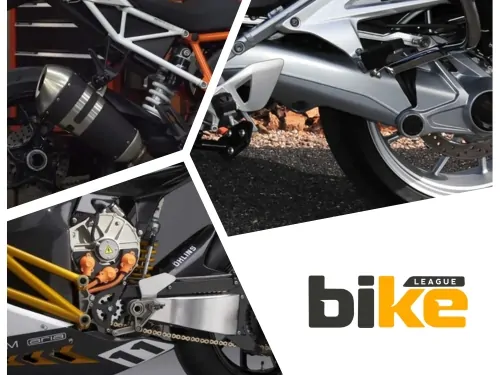
Long story short: The swingarm is a motorcycle’s main component, allowing the bike’s rear axle to fit. Explore the different motorcycle swingarm types, from single-sided to dual-sided, for enhanced performance and style.
The swingarm is a crucial part of every motorcycle, as it plays a key role in the bike’s suspension and overall performance. Whether you’re a daily commuter, a touring enthusiast, or a racing aficionado, understanding the different types of swingarms can, therefore, help you appreciate their impact on ride quality, handling, and style.
In this article, we will explore the various types of motorcycle swingarms—such as single-sided, dual-sided, and more. Additionally, we’ll highlight their advantages, disadvantages, and ideal use cases, so you can make informed decisions or simply deepen your knowledge about your motorcycle’s engineering.
Key Takeaways
- The swingarm is a key component of a motorcycle’s rear suspension, directly impacting ride quality, handling, and overall performance.
- There are various types of swingarms—including conventional, single-sided, twin-spar, box-section, rising-rate linkage, single-shock, dual-shock, paralever, single-sided cantilever, and extended—each offering unique advantages, drawbacks, and ideal use cases.
- The material choice for swingarms (aluminium, steel, or carbon fibre) significantly affects weight, durability, handling, and cost, with aluminium being the most common due to its strength-to-weight ratio.
- Custom modifications like extended swingarms are popular for both aesthetics and functional benefits, such as improved straight-line stability and traction, but can also reduce agility and may face legal limitations.
- Myths about swingarms persist, such as the belief that single-sided designs always handle better or that all swingarms are made from the same material. Understanding the facts helps riders make informed decisions about maintenance and upgrades.
What Is A Motorcycle Swingarm?
The swingarm is an important part of a motorcycle’s rear suspension. It connects to the main frame and holds the rear wheel in place. The swingarm pivots at one end, letting the rear wheel move up and down, which helps with suspension and handling.
What Does A Motorcycle Swingarm Do?
- Suspension Movement: The swingarm allows the rear wheel to move up and down, absorbing shocks and bumps from the road, providing a smoother and more comfortable ride for the rider.
- Wheel Alignment: The swingarm ensures that the rear wheel stays aligned with the front wheel and the motorcycle’s frame, which is crucial for stability and handling.
- Tyre Traction: It maintains constant contact between the rear tyre and the road surface, optimising traction and control, especially during acceleration and braking.
- Drive System Integration: In many motorcycles, the swingarm also houses and supports the drive system’s components, such as the chain or belt drive, rear sprocket, and rear brake.
What Is The Difference Between Motorcycle Suspension And Motorcycle Swingarm?
The motorcycle suspension is the whole system that absorbs bumps and vibrations from the road, covering both the front and rear parts. The swingarm, however, is just one part of the rear suspension. It supports the rear wheel and allows it to move up and down while remaining aligned. If you want to learn more about different types of motorcycle suspension, check out this article.
Different Types Of Motorcycle Swingarm
Motorcycle swingarms come in different types and designs, each with its own benefits and uses. Since the swingarm is a key part of the rear suspension and has a big impact on how the bike handles, it’s helpful to understand the most common types. Here are some common types of motorcycle swingarms.
1. Conventional
The conventional swingarm is the most common type found on motorcycles. It has a straight arm that pivots at the frame and holds the rear wheel. Usually made from steel or aluminium, this design is simple.
Pros
- Simplicity: Conventional swingarms are straightforward in design and maintenance.
- Cost-Effective: They are usually less expensive to manufacture and repair.
Cons
- Limited Suspension Travel: They may have limited suspension travel compared to more advanced designs.
- Less Rigidity: Conventional swingarms can be less rigid than other designs, affecting handling in high-performance situations.
2. Single-sided
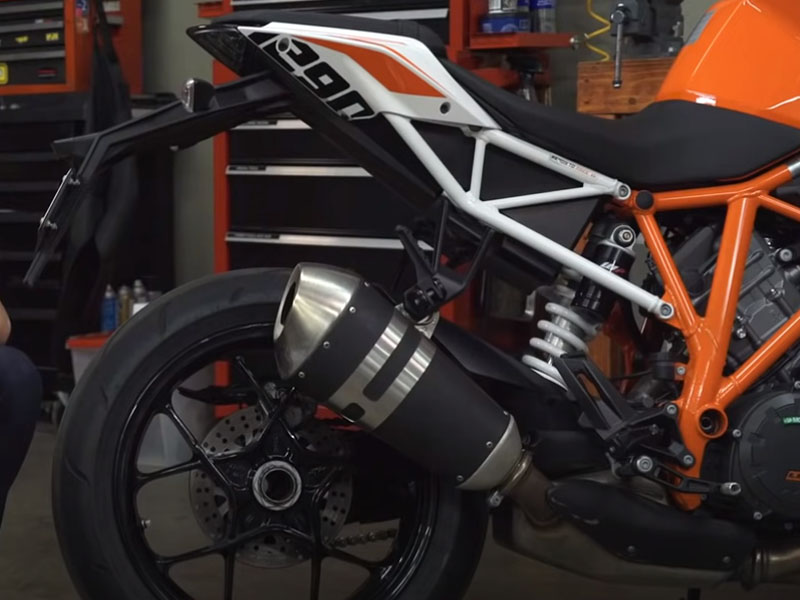
Single-sided swingarms are common on sportier and high-end motorcycles. Unlike the usual two-arm design, they have only one arm on one side of the wheel, making it easier to remove and maintain. This also gives the bike a unique and stylish appearance.
Pros
- Easy Wheel Maintenance: Single-sided swingarms make wheel removal and maintenance more accessible.
- Aesthetically Pleasing: They often give the motorcycle a unique and sleek appearance.
Cons
- Complexity: These motorcycle swingarms can be more complex and costly to manufacture and repair.
- Weight: They may be heavier than conventional swingarms, affecting overall bike weight.
3. Twin-spar
Twin-spar swingarms are usually seen on sport bikes. They have two parallel arms running along the rear wheel and connecting to the frame on both sides. This design is very rigid, which helps with handling and stability, especially at high speeds.
Pros
- High Rigidity: Twin-spar swingarms offer excellent rigidity, enhancing handling and stability.
- Sporty Performance:They are commonly used in sports bikes for improved performance.
Cons
- Weight: They tend to be heavier than other swingarm types, which can affect agility.
4. Box-section
Box-section swingarms are rectangular or square. They are strong and rigid, which makes them popular for high-performance motorcycles and racing.
Pros
- Strength and Durability: Box-section swingarms are known for their strength and resilience.
- Stability: They contribute to the bike’s overall strength, particularly in high-stress situations.
Cons
- Weight: They can be heavier than other swingarm designs, affecting the bike’s weight distribution.
5. Swingarm With Rising Rate Linkage
Some motorcycles use a rising-rate linkage system. This setup changes how the rear shock behaves as the suspension moves, giving better control over how it feels and responds.
Pros
- Improved Suspension Control: These swingarms can better control the rear suspension’s characteristics.
- Customizable: The linkage system allows for fine-tuning suspension performance.
Cons
- Complexity: The linkage system can be more intricate, requiring precise adjustment and maintenance.
6. Single-shock
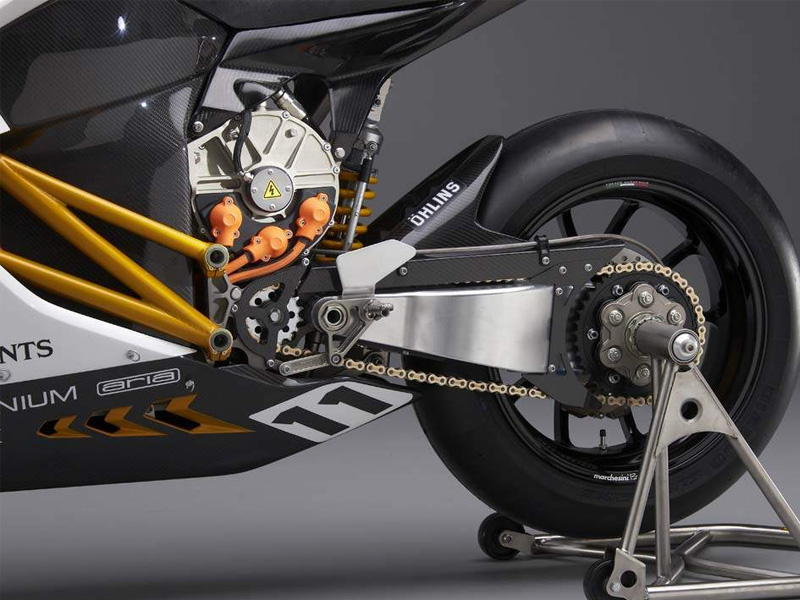
This type of swingarm uses a single shock absorber attached directly to the swingarm or frame. It’s often found on cruiser-style motorcycles and is known for giving a smoother, more comfortable ride.
Pros
- Comfort: They offer a smoother and more comfortable ride, particularly in cruiser-style motorcycles.
- Simplicity: Single-shock swingarms are generally more straightforward in design and maintenance.
Cons
- Limited Performance: They may not be suitable for high-performance or sport-oriented motorcycles.
7. Dual-shock
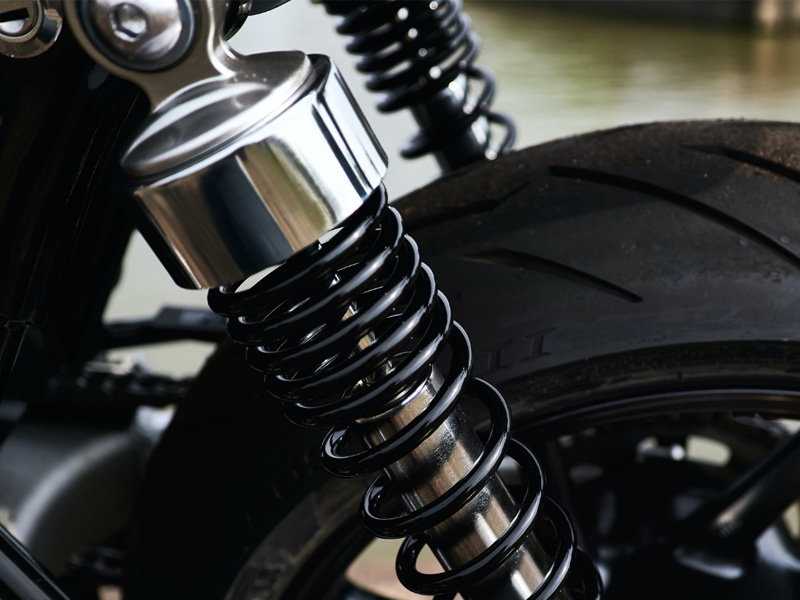
Dual-shock swingarms use two shock absorbers, one on each side of the rear wheel. This design is common on classic or vintage motorcycles and gives the bike a traditional appearance.
Pros
- Vintage Appeal: These swingarms give classic and vintage motorcycles an authentic look.
- Customisation: They provide more options for customising the bike’s appearance.
Cons
- Limited Performance: Dual-shock swingarms may not deliver the same level of performance as modern designs.
8. Paralever
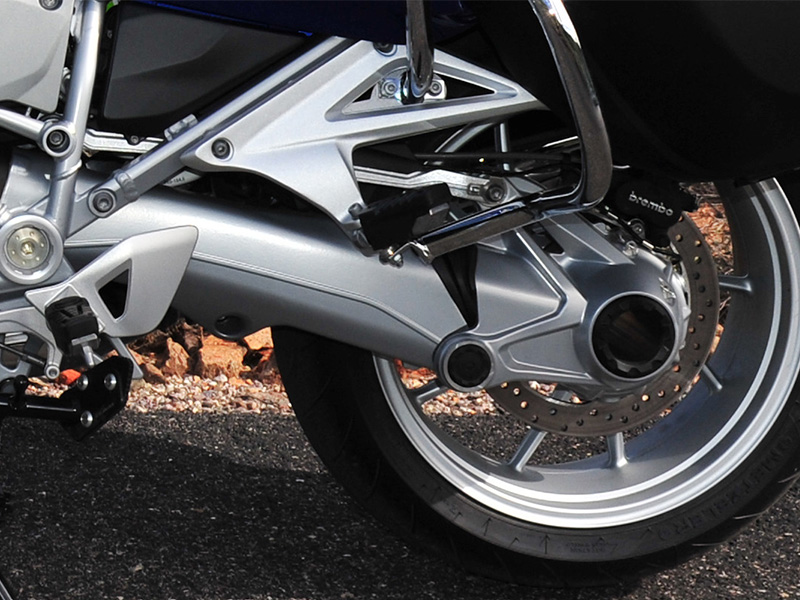
BMW’s Paralever swingarm is a special design that uses a driveshaft. This setup helps control the bike’s suspension geometry and eliminates the effects of shaft-drive torque on the suspension.
Pros
- Improved Control: Paralever swingarms help maintain proper suspension geometry, even under torque.
- Shaft Drive: They are often used with shaft drive systems, reducing maintenance needs.
Cons
- Complexity: The Paralever system can be more complex and costly to manufacture and repair.
9. Single-sided Cantilever
You’ll often see this design on adventure and touring motorcycles. It combines the advantages of a single-sided swingarm with a cantilevered shock, boosting stability and helping the bike carry more weight.
Pros
- Stability: This design provides added strength and load-bearing capabilities, making it ideal for touring and adventure bikes.
- Unique Look: It offers a distinctive appearance with the benefits of a single-sided swingarm.
Cons
- Complexity: Manufacturing and service can be more complex and challenging.
| Type | Description | Examples | Pros | Cons |
|---|---|---|---|---|
| Conventional | Simple straight arm, often steel/aluminum | Bajaj Pulsar NS200, Hero Splendor Plus, TVS Apache RTR 160 | Simplicity: straightforward design and maintenance; Cost-Effective: less expensive to manufacture and repair | Limited Suspension Travel: may have less travel; Less Rigidity: affects high-performance handling |
| Single-Sided | One-sided support for easy maintenance | BMW G 310 R/GS, Triumph Speed 400, Ducati Scrambler Icon | Easy Wheel Maintenance: simpler removal; Aesthetically Pleasing: unique sleek look | Complexity: more complex/costly to make/repair; Weight: may be heavier |
| Twin-Spar | Parallel spars for rigidity on sportbikes | KTM RC 390, Yamaha R15 V4, Kawasaki Ninja 300 | High Rigidity: excellent handling/stability; Sporty Performance: improved speed handling | Weight: heavier, affects agility |
| Box-Section | Rectangular cross-section for strength | Royal Enfield Himalayan 450, KTM 390 Duke | Strength and Durability: resilient; Stability: good in high-stress | Weight: heavier, affects distribution |
| Rising Rate Linkage | Progressive leverage via linkage | Bajaj Dominar 400, Yamaha MT-15 V2 | Improved Suspension Control; Customizable: fine-tuning | Complexity: intricate adjustment/maintenance |
| Single-Shock | Mono-shock, often cantilever | Pulsar NS200, KTM Duke 200, Hero Xpulse 200 4V | Comfort: smoother ride; Simplicity: straightforward design | Limited Performance: not for sport/high-perf |
| Dual-Shock | Twin shocks for classic look | Royal Enfield Classic 350, Jawa 42, Honda CB350 | Vintage Appeal: authentic look; Customisation: appearance options | Limited Performance: less than modern |
| Paralever | Parallelogram for shaft-drive torque control | BMW G 310 R, BMW R 1250 GS | Improved Control: maintains geometry under torque; Shaft Drive: low maintenance | Complexity: costly/complex |
| Single-Sided Cantilever | Single arm with forward shock | BMW G 310 GS, Triumph Tiger 900 | Stability: strength/load-bearing; Unique Look: single-sided benefits | Complexity: manufacturing/service challenging |
| Extended | Lengthened for drag/custom stability | Custom Pulsar NS200/220F mods, drag-tuned KTM 390 Duke | Aesthetic Impact: aggressive look; Stability: high-speed straight-line; Traction: better acceleration | Handling: harder in corners; Agility: reduced manoeuvrability; Legal: check regulations |
What Is An Extended Motorcycle Swing Arm?
When customising a motorcycle, an extended swingarm means swapping the original swingarm for a longer one. As a result, the rear wheel moves further back, giving the bike a stretched look. Extended swingarms are, therefore, popular in sportbike custom builds and drag racing.
Why Extend The Bike Swingarm?
- Riders often extend the swingarm for its aesthetic impact, giving the motorcycle a unique and aggressive appearance associated with custom or “stretched” bike styles.
- Extending the swingarm improves straight-line stability, especially at high speeds, by increasing the motorcycle’s wheelbase.
- Longer swingarms can also provide better traction during acceleration by distributing weight more evenly between the front and rear wheels.
- Extended swingarms are often used in custom bike-building projects, allowing riders to create personalised, one-of-a-kind motorcycles that reflect their unique style and preferences.
What Are The Disadvantages Of The Extended Bike Swingarm?
- Extending the swing arm can make the motorcycle harder to handle, especially in tight corners. The longer wheelbase reduces agility and manoeuvrability.
- If you prioritise cornering performance, an extended swingarm can make it harder to lean into corners and navigate twisty roads or tracks.
- Check local regulations before extending your motorcycle’s wheelbase. There may be restrictions on how much you can extend for use on public roads, so ensure your modifications comply with the law.
How Does The Material Choice Affect The Performance Of Different Swingarms In Motorcycles?
The material used for a motorcycle swingarm has a big effect on performance, including weight, strength, durability, and how the bike handles. Consequently, it’s important to understand how different materials impact swingarm performance, with examples from the Indian motorcycle market.
1. Aluminum Swingarms
Aluminium is the most common material for motorcycle swingarms because it offers a great balance of qualities.
Performance Characteristics
- Lightweight: Reduces unsprung weight, improving suspension performance and overall bike responsiveness.
- High strength-to-weight ratio: Enhances handling and agility.
- Good corrosion resistance: Increases durability and longevity.
- Excellent rigidity: Aids in precise handling and stability during high-speed manoeuvres.
Example
The Kawasaki Ninja 1000SX features a highly rigid aluminium frame, which is likely complemented by an aluminium swingarm. This choice contributes to the bike’s agile handling and performance, making it suitable for sport and touring.
2. Steel Swingarms
Steel is heavier than aluminium, but it also has its own benefits when used for swingarms.
Performance Characteristics
- High strength and durability: Provides excellent structural integrity.
- Cost-effective: More affordable than some advanced materials.
- Heavier: Can negatively impact handling due to increased unsprung weight.
Example
Similarly, the Royal Enfield Classic 350, a popular model in India, is known for its classic design and robust build. Royal Enfield often uses steel in its construction, including the swingarm, to ensure durability and cost-effectiveness.
3. Carbon Fiber Swingarms
Carbon fibre is a high-tech material used in top-performance motorcycles due to its outstanding properties.
Performance Characteristics
- Extremely lightweight: Offers significant weight savings compared to metal alternatives.
- Superior stiffness-to-weight ratio: Enhances stability and responsiveness.
- High torsional and lateral stiffness: Contributes to better stability and cornering performance.
Example
Likewise, the Ducati 1098 is known for having a carbon-fibre swingarm on some high-performance versions, showing that similar high-end options are available for Indian riders too.
Common Myths And Doubts Related To Different Motorcycle Swingarm Types
1. Single-sided Swingarms Offer Superior Handling
Single-sided swingarms are common on high-end motorcycles and are useful in endurance racing because they allow for quick wheel changes. However, they don’t always handle better than regular swingarms. Their main advantages are easier wheel removal, simpler chain maintenance, and improved mass centralisation.
2. Extended Swingarms Are Only For Aesthetics
Extended swingarms aren’t only about looks. They’re mainly used in sportbike drag racing to help with faster acceleration by spreading out the bike’s weight and power. Still, many riders also like them for their unique style.
3. Are Single-sided Swingarms More Expensive To Maintain?
Yes, single-sided swingarms usually cost more to produce and maintain due to their complex design and the specialised tools required for wheel removal. This also means repairs can be pricier.
4. All Swingarms Are Of The Same Material
Swingarms are made from materials such as aluminium, steel, and sometimes carbon fibre. Aluminium is most common because it’s strong and light. Steel is chosen for its toughness, while carbon fibre is used only on very high-end bikes because it’s expensive.
5. Should I Upgrade My Suspension If I Change My Swingarm?
Yes, you should think about upgrading your suspension if you change your motorcycle’s swingarm. The swingarm and suspension work together, so changing one can affect the other.
6. Conventional Swingarms Are Outdated
Conventional swingarms aren’t outdated. They’re still the most common type because they’re simple, affordable, and easy to maintain. They work well on everything from budget bikes to high-performance models.
7. Do Longer Swingarms Always Improve Performance?
Longer swingarms can help with faster starts by spreading out the bike’s weight and power. But they can also make the bike less agile and harder to handle in tight turns. The best swingarm length depends on your riding style and needs.
8. Paralever Swingarms Are Only For Bmw Motorcycles
Paralever swingarms are often linked to BMW motorcycles, but they’re not only used by this brand. The Paralever design helps keep the suspension geometry steady under torque, which is great for shaft-drive bikes.
9. Are Dual-shock Swingarms Inferior To Modern Designs?
Dual-shock swingarms aren’t always worse than modern designs. They have a vintage look and are great for classic bikes. While they might not perform as well as newer types, they let you customise your bike’s appearance and keep an authentic style.
10. All Swingarms Provide The Same Level Of Stability
Not all swingarm designs offer the same level of stability. Twin-spar and box-section swingarms are very rigid and stable, which is good for high-performance riding. Single-sided swingarms, on the other hand, focus more on easy maintenance and looks than on maximum stability.
Faqs About Different Motorcycle Swingarm Types
1. What Is A Motorcycle Swingarm?
A motorcycle swingarm is an important part of the rear suspension. It connects to the main frame and supports the rear wheel, allowing it to move up and down to absorb bumps and improve the bike’s handling.
2. What Does A Motorcycle Swingarm Do?
The swingarm lets the suspension move, keeps the rear wheel in line, helps the tyre grip the road, and supports components such as the chain and rear brake.
3. What Are The Main Types Of Motorcycle Swingarms?
Some common swingarm types are conventional, single-sided, twin-spar, box-section, rising-rate linkage, single-shock, dual-shock, paralever, single-sided cantilever, and extended swingarms. Each type has its own features, advantages, and drawbacks.
4. How Does A Single-sided Swingarm Differ From A Dual-sided One?
A single-sided swingarm holds the rear wheel on just one side, making maintenance easier and giving the bike a unique style. A dual-sided (or conventional) swingarm supports the wheel from both sides and is usually simpler and more affordable.
5. Why Do Riders Extend The Swingarm Of Their Motorcycles?
Making the swingarm longer can help the bike stay stable in a straight line, improve traction when accelerating, and give it a custom, aggressive look. This is popular in drag racing and custom motorcycle builds.
6. What Are The Disadvantages Of An Extended Swingarm?
The downsides are less agility and harder handling in tight corners, plus there may be legal limits for using extended swingarms on public roads.
7. How Does Material Choice Affect Swingarm Performance?
Aluminium swingarms are light and stiff; steel ones are strong and durable but heavier; and carbon fibre offers the best performance but costs more.
8. Do Longer Swingarms Always Mean Better Performance?
No longer swingarms can help with acceleration and straight-line stability, but they can also make cornering and agility worse. The best swingarm length depends on how you like to ride.
9. Should I Upgrade My Suspension If I Change My Swingarm?
Yes, changing the swingarm can affect how the suspension works, so it’s a good idea to upgrade or adjust your suspension for optimal performance and safety.
10. Are All Swingarms Made From The Same Material?
No, swingarms can be made from aluminium, steel, or carbon fibre. The right choice depends on what you want from your bike, your budget, and how you plan to use it.
Other Related Articles From Bikeleague India
- Bike chassis – Which is right for your riding style
- What is Motorcycle ABS? – Doubts, Queries and FAQ
- Motorcycle Hand Signals in India Explained
- Suzuki Hayabusa
- Ducati Multistrada V4 Rally
Conclusion
Overall, the swingarm is far more than just a structural component—it’s central to a motorcycle’s performance, comfort, and style. Furthermore, understanding the distinctions between different types of swingarms, from conventional and single-sided to advanced designs like paralever and rising-rate linkage, empowers you to make informed choices whether you’re maintaining, upgrading, or simply learning about your motorcycle.
Material choices, design innovations, and custom modifications all play a role in shaping your riding experience. As technology continues to evolve, so too will swingarm designs, further enhancing the world of motorcycling for enthusiasts and everyday riders alike. Throughout this article, we have discussed motorcycle swingarms, their different types, and related questions. In conclusion,
If you have any other questions about different motorcycle swingarm types, email us at bikeleague2017@gmail.com or share them in the comments section below. We are always eager to help and assist you. Also, here are several social media accounts for Bikeleague India that should raise your suspicions.