
Long story short – Here we discuss the different types of bike wash in India, pros and cons, washing procedure, precautions, and FAQ in detail.
Keeping your motorcycle clean not only makes it look great, but also helps it last longer and run smoothly. In India, you have a few different options for washing your bike, each with its own advantages and disadvantages. This guide will walk you through the main types of bike washes, compare their pros and cons, and share practical tips for cleaning, safety, and common concerns. No matter if you’re a beginner or a seasoned rider, you’ll find helpful advice here for caring for your bike.
Key Takeways
- Regular cleaning is essential for maintaining your motorcycle’s appearance, performance, and lifespan.
- Each wash method, including water, diesel, shampoo, foam, and dry, has its own pros, cons, and best uses.
- Using proper accessories and eco-friendly products prevents damage and supports sustainability.
- Following the correct washing and drying procedures protects sensitive bike components from harm.
- Adjusting your wash routine based on where you ride and how often you use your bike gives you the best results and keeps your bike protected for longer.
Different Types Of Bike Wash Or Motorcycle Wash To Clean A Bike
1. Water Wash
Water wash is the simplest way to clean your bike. It uses high-pressure water jets, sometimes with eco-friendly cleaners. You only need two microfiber cloths—one wet to remove dirt and one dry to wipe away water marks after drying.
Pros Of Water Wash
- Eco-Friendly: Utilises minimal water and eco-friendly products, making it a sustainable option for cleaning a bike.
- Efficient Cleaning: Cleans thoroughly and helps keep water out of sensitive bike parts.
- Long-Term Efficiency: Uses less water and causes less damage over time.
Cons Of Water Wash
- Initial Setup Cost: You need to buy high-pressure water systems and eco-friendly products, which can be expensive at first.
- Water Usage: May require significant water usage, depending on the rinsing process.
- Water quality: Water can be acidic or alkaline, which is bad for the bike.
2. Diesel / Kerosene Wash
Another method of washing a motorcycle at home is diesel washing. It is very similar to water washing; the only difference is that diesel is used instead of water. Diesel wash is best suited for oil and grease stains and helps prevent rust formation to some extent compared to other bike wash types. Compared to a water wash, less is required to clean a bike. However, the main disadvantage is that it can reduce and damage paint quality on metal and plastic surfaces. A diesel wash can be considered for parts underneath the motorcycle.
Pros Of Diesel Wash
- It can remove some hard stains.
- Best for washing underneath the bike.
- Prevents rust formation to some extent.
- Removes oil and grease stains effectively.
Cons Of Diesel Wash
- It can damage paint permanently.
- Expensive compared to water washing.
3. Shampoo Wash
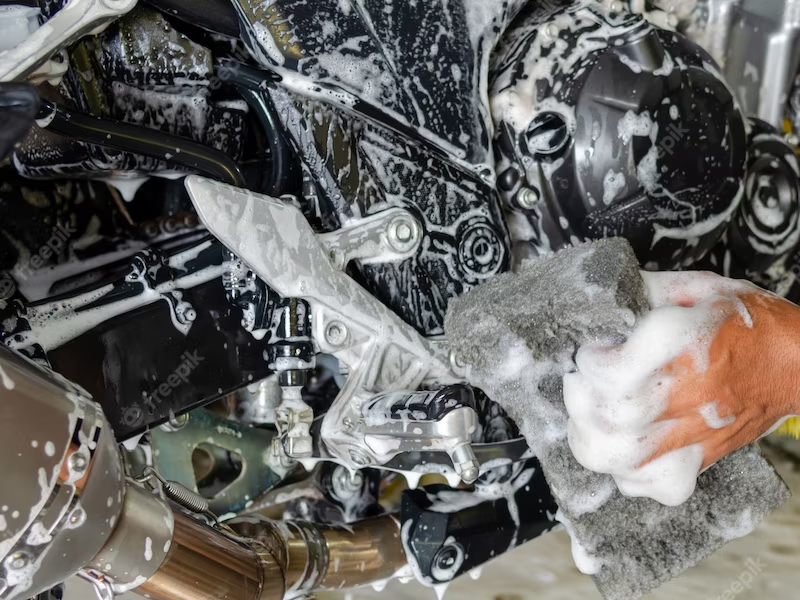
One of the best methods for washing a motorcycle. There are a lot of dedicated automotive shampoos out there in the market to do the same. The major USP of shampoo wash is that it neutralises the water’s pH. Neither acidic nor alkaline water is suitable for bikes. Accessories needed for shampoo washing are water, two buckets, two microfiber cloths, and shampoo. One thing to note here is to avoid confusing bike shampoo with the regular shampoo we use for our hair. Both are meant for different purposes, and detergents or household cleaning liquids should never be used. Shampoo wash can be done at home and by professional teams.
In-home, we can implement the two-bucket washing method for the shampoo wash to clean a bike, and the steps to do the same are
- Take water in two buckets, with one having slightly more water.
- Add bike shampoo to the bucket containing less water per quantity.
- Dip the microfiber cloth in shampoo water and start cleaning the bike from top to bottom, as bikes have more dirt in the lower area.
- Next, wash the dirty microfiber cloth in another bucket and remove as much dirt as possible.
- Now repeat steps 3 and 4 for the entire bike. One thing to keep in mind is never washing dirty microfiber in shampoo water. The purpose here is to keep shampoo water as clean as possible.
- After cleaning the entire motorcycle from top to bottom, let the motorcycle dry for some time and then use a dry microfiber cloth to remove mild stains.
- Do not perform a wash when the motorcycle is hot or under direct sunlight.
Pros Of Shampoo Wash
- Effective Cleaning: Excellent at removing dirt without harsh scrubbing, protecting the bike’s finish.
- Gentle Cleaning: Shampoo wash is gentle on the motorcycle’s surface, preventing damage to the paint and finish.
- It can remove hard stains.
- Makes water pH neutral.
- Removes grease and oil stains.
Cons Of Shampoo Wash
- Water Usage: Similar to water wash, it may require a significant amount of water for rinsing.
- Time-consuming method
- Need more accessories.
- Residue: If not rinsed properly, shampoo residue may remain on the motorcycle’s surface.
Why The Two-bucket Method Matters
The method works because dirt does not stay suspended in the shampoo water for long. By rinsing the cloth in a separate clean-water bucket, you avoid reintroducing grit to the bike’s surface during the next wipe. That is especially important on motorcycles, where glossy tanks and exposed panels can show fine scratches very easily.
4. Foam Wash
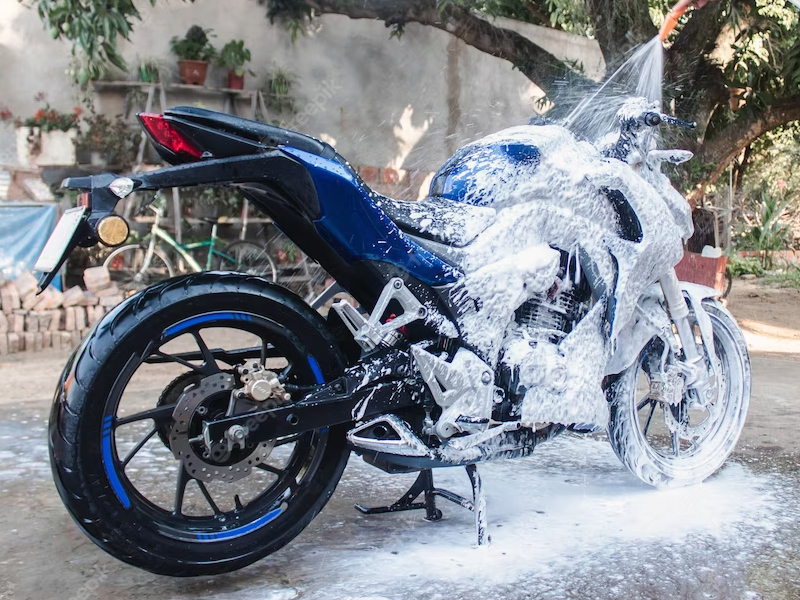
Foam washing is considered one of the most effective ways to clean a motorcycle. It works by covering the bike with a thick layer of foam, which loosens dirt and grime and rinses off faster than shampoo washing. Foam washing equipment can be expensive, so many people prefer to have it done by professionals. If you want to do it at home, you’ll need to buy the necessary tools and make sure you have enough space.
A pressure washer and foam sprayer cannon are required for foam wash. These are the primary tools and are pretty expensive. Now, let’s discuss the steps or process for washing your bike with foam.
- Keep the bike on a center, or paddock stand first.
- Then, using water and a pressure washer, wash the motorcycle at an adequate distance between the pressure washer and the motorcycle so that parts are not damaged.
- Now fill the foam sprayer cannon with the mentioned shampoo and, using a pressure washer, apply it all over the bike at a safe distance.
- Wait 5-10 minutes to settle the foam over the motorcycle, then wash with water using a pressure washer.
- Now allow the motorcycle to dry. After 1-2 minutes, use a microfiber cloth or blower to clean and remove water or watermarks.
- One thing to care about is not washing from a single angle for a long time, as water can get into critical components.
- Do not perform a wash when the motorcycle is hot or under direct sunlight.
Pros Of Foam Wash
- Effective Cleaning: Excellent at removing dirt without harsh scrubbing, protecting the bike’s finish.
- Thorough Coverage: The foam reaches all areas effectively, leaving no residue.
- Gentle on Surface: Can be gentle on the bike’s surface when using the right products.
- Less time: Short work duration compared to other washing methods.
Cons Of Foam Wash
- Environmental Impact: Often uses harsh chemicals that can contaminate groundwater if not disposed of properly.
- Safety Concerns: The use of chemicals can create an unsafe work environment, posing health risks to manual bike washers.
- Water Wastage: Manual application often leads to water wastage.
- Expensive: Requires several tools and equipments
- Large work area: Requires enough work area or space
5. Dry Wash
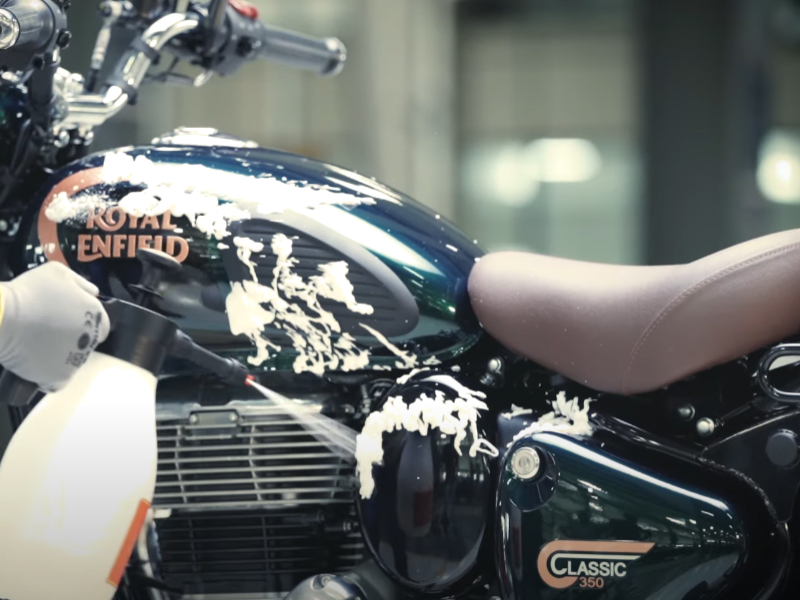
This method is for motorcycle owners in areas with high water scarcity or drought. Three accessories are required: a dry wash spray gun, a dry wash solution spray can, and a microfiber cloth. This method is very similar to a foam wash.
Now, let’s discuss the steps to perform a dry wash on your bike.
- First, we need to prepare the solution. As the official instructions state, mix the dry wash solution spray with minimal water.
- Pour the new solution into the dry wash spray gun and keep the maintained pressure in the spray gun per the official instructions.
- Keep a 2-3 feet distance between the spray gun and the motorcycle and apply the foam evenly across all surfaces.
- Now clean the surface with a microfiber cloth, and do not use a regular cloth.
- An important note is that you should not allow the foam to dry; clean immediately after application.
- Do not perform a wash when the motorcycle is hot or under direct sunlight.
Pros Of Dry Wash
- Water Conservation: Completely eliminates the need for water, making it an eco-friendly option.
- Convenience: Can be done anywhere without the need for a water supply.
Cons Of Dry Wash
- Surface Scratching: Improper use of dry wash products and cloths can lead to surface scratching.
- More time: The time taken to remove heavy dirt and tough stains is high.
- Limited Cleaning: May not be as effective in removing tough dirt and grime compared to wet wash methods.
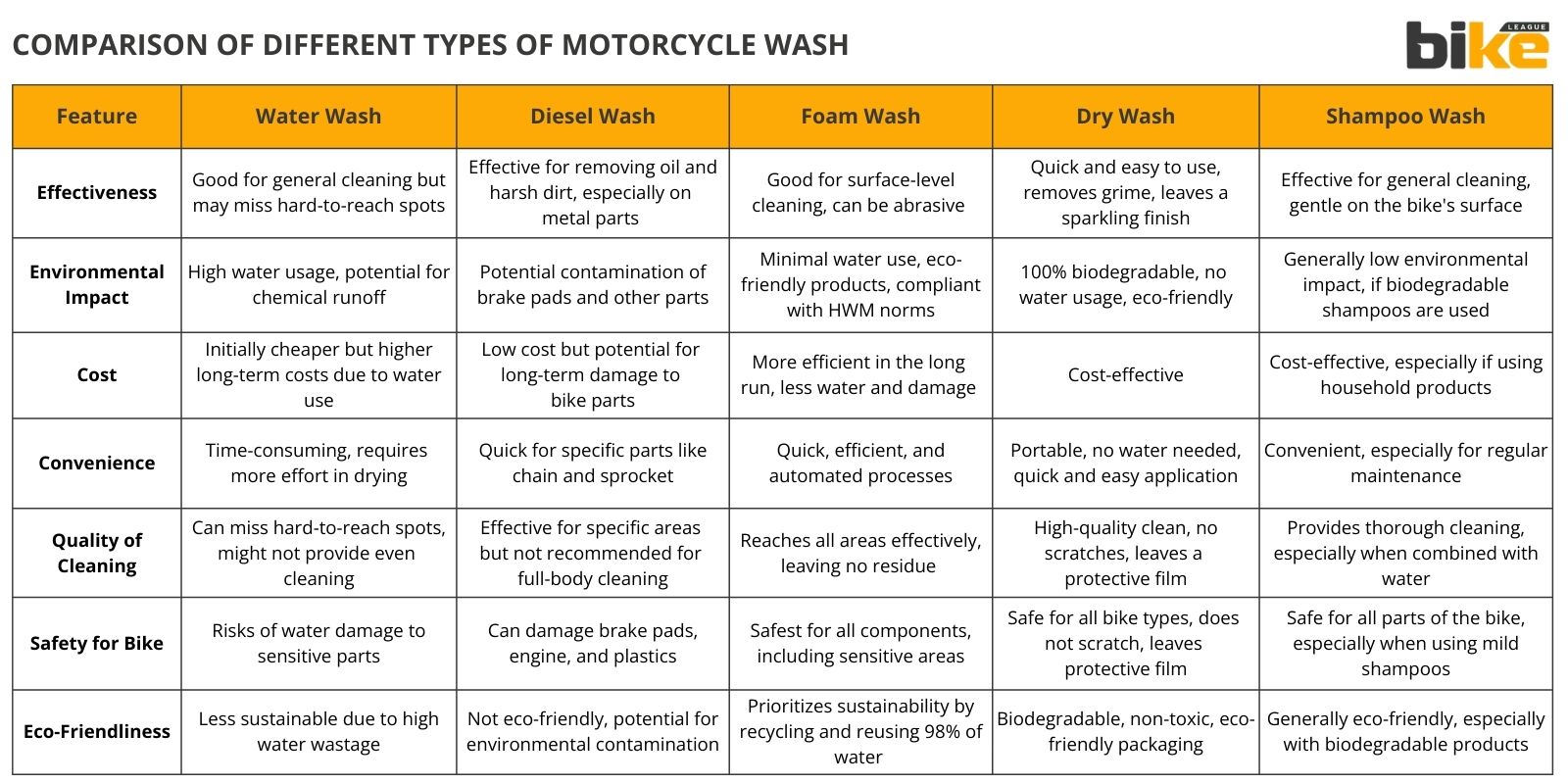
Comparison Of Different Types Of Bike Wash As A Table
The following table makes it easy to compare the main differences among bike wash types, so you can quickly see which one best fits your needs.
| Feature | Water Wash | Diesel Wash | Foam Wash | Dry Wash | Shampoo Wash |
|---|---|---|---|---|---|
| Effectiveness | Good for general cleaning but may miss hard-to-reach spots | Effective for removing oil and harsh dirt, especially on metal parts | Good for surface-level cleaning, can be abrasive | Quick and easy to use, removes grime, leaves a sparkling finish | Effective for general cleaning, gentle on the bike’s surface |
| Environmental Impact | High water usage, potential for chemical runoff | Potential contamination of brake pads and other parts | Minimal water use, eco-friendly products, compliant with HWM norms | 100% biodegradable, no water usage, eco-friendly | Generally low environmental impact, if biodegradable shampoos are used |
| Cost | Initially cheaper but higher long-term costs due to water use | Low cost but potential for long-term damage to bike parts | More efficient in the long run, less water and damage | Cost-effective | Cost-effective, especially if using household products |
| Convenience | Time-consuming, requires more effort in drying | Quick for specific parts like chain and sprocket | Quick, efficient, and automated processes | Portable, no water needed, quick and easy application | Convenient, especially for regular maintenance |
| Quality of Cleaning | Can miss hard-to-reach spots, might not provide even cleaning | Effective for specific areas but not recommended for full-body cleaning | Reaches all areas effectively, leaving no residue | High-quality clean, no scratches, leaves a protective film | Provides thorough cleaning, especially when combined with water |
| Safety for Bike | Risks of water damage to sensitive parts | Can damage brake pads, engine, and plastics | Safest for all components, including sensitive areas | Safe for all bike types, does not scratch, leaves protective film | Safe for all parts of the bike, especially when using mild shampoos |
| Eco-Friendliness | Less sustainable due to high water wastage | Not eco-friendly, potential for environmental contamination | Prioritizes sustainability by recycling and reusing 98% of water | Biodegradable, non-toxic, eco-friendly packaging | Generally eco-friendly, especially with biodegradable products |
What Accessories Are Needed For Each Wash?
Each type of bike wash requires specific tools and products. Here’s a quick overview of what you’ll need for each method:
| Wash Method | Required Equipment |
|---|---|
| Water Wash | Water source, pressure washer or hose, two microfiber cloths, eco-friendly bike cleaner or shampoo, bucket. |
| Diesel / Kerosene Wash | Diesel or kerosene, microfiber cloth, brush for stubborn grime, gloves, bucket for waste handling. |
| Shampoo Wash | Two buckets, motorcycle shampoo, two microfiber cloths or a wash mitt, water, optional blower or drying towel. |
| Foam Wash | Pressure washer, foam cannon or sprayer, motorcycle shampoo or foam solution, microfiber cloth, water, paddock stand or center stand. |
| Dry Wash | Dry wash spray gun, dry wash solution spray can, microfiber cloth. |
Common Washing Procedure & Precautions For Motorcycles
Before washing your motorcycle, follow these steps and safety measures to protect the bike and ensure a thorough clean. Here’s a quick checklist to keep in mind:
- Remove the ignition key and seal the ignition key barrel slot using adhesive tape.
- Please remove the tool kit and other relevant documents inside the side panels before proceeding with the motorcycle.
- Cover the silencer tailpipe, horn, and control switches with suitable plastic bags and tie them firmly to prevent water entry.
- Wash the motorcycle only when the engine is cold.
- Do not remove side panels while washing to avoid water entry.
- Brush the engine area with a recommended non-corrosive solvent to remove dirt or grease.
- Use a low-pressure water jet to clean.
- Do not use high-pressure washers or steam jet cleaners near the seal of the headstock bearing or steering stem
bearing, the seal of the wheel bearing, brake calipers, air intakes & exhaust outlets. - Do not apply corrosive solvent to painted surfaces or rubber parts.
- Use lukewarm water and mild detergent on the painted components to remove dirt, etc.
- Clean the motorcycle thoroughly with plain water to remove the detergent.
- Never directly spray water towards the instrument cluster’s bottom side to avoid water entry through breather holes.
- If possible, use compressed air and blow off water particles from the obscure areas of the motorcycle, electrical connections, etc.
- Once the motorcycle has been ridden in salty conditions (i.e., during winter in places where road salt is used) or near coastal areas, it is recommended to wash it with cold water after the ride to prevent corrosion or rust build-up. Please do not use warm water for washing, as it may damage the motorcycle due to a chemical reaction with the salt. After the washing process, once the motorcycle is completely dry, it is recommended to apply anti-corrosion spray on all the metal and chrome-plated areas to protect the parts from corrosion.
- It is recommended not to apply the anti-corrosion spray on the brake discs.
- Do not use petrol, brake oil, or other flammable liquids to clean or wash electronic parts.
- The parts chosen using the motorcycle configurator should not be washed with soap or chemicals; use only plain water.
- Never spray water with great force on headlamp, speedometer, tripper, flasher lights, front and rear
wheel hubs, electrical connections and wires, control cables, spark plug, battery, ABS ECU, EMS ECU, side mirrors, steering stem, etc.
After Washing Procedure For Motorcycles
- Ensure the motorcycle is thoroughly dry by wiping it with a clean, soft, lint-free absorbent cloth or chamois leather.
- Remove all adhesive tapes.
- Lubricate control cables, pivots for footrest, side stand, center stand, brake and gear shifter linkages, drive chain, etc., with lube oil.
- Polish the painted and plated surfaces using recommended automobile polishing wax.
- Start the engine and allow it to run at an idling speed for a few minutes to warm it up.
- Drive the motorcycle slowly, and apply both brakes intermittently to dry up the water in the brake pads.
- Please clean/wipe out water spills inside the RH side panel before keeping the tools kit and other relevant documents inside the left panel.
What Specific Eco-friendly Cleaning Products Are Recommended For A Water Wash On A Motorcycle In India?
Recommended eco-friendly cleaning products for a water wash on motorcycles in India include:
- Weldtite Bike Cleaner Concentrate: A biodegradable cleaner specifically designed for bikes, safe for frames and components, effective in removing grime without harsh chemicals. Product link: Weldtite Bike Cleaner
- SASO Organic Car & Bike Shampoo: Made with 100% plant-based, chemical-free ingredients, this shampoo is pH-balanced for gentle and eco-friendly cleaning suitable for motorcycles.Product link: SASO Organic Car & Bike Shampoo
- Muc-Off Biodegradable Bike Cleaner: Utilises nano-technology to clean effectively while being free from acids and solvents, making it an eco-safe option.Product link: Muc-Off Biodegradable Bike Cleaner
- Grenove Eco-Friendly Cleaning Products: Indian brand offering green cleaning supplies that are biodegradable and safe for vehicle use.Product link: Grenove Eco-Friendly Cleaning Products
These products emphasise biodegradability, non-toxicity, and plant-based formulations, aligning well with eco-conscious motorcycle maintenance practices in India.
How Often Should Each Type Of Bike Wash Be Performed For Optimal Maintenance In India?
For optimal motorcycle maintenance in India, the recommended wash frequency for different types of bike wash is as follows:
- Regular Water Wash: For daily riders or those using the bike frequently, a water wash once a week is ideal to keep the bike clean and prevent dirt build-up. For occasional riders, washing twice a month suffices.
- Chain Cleaning: Essential for safety and performance, chain cleaning should be done every 300 to 500 km or about once every 1-2 weeks, depending on usage and riding conditions. This removes grime and lubricates the chain to prolong life.
- Foam Wash: Foam washes, often using eco-friendly shampoos or cleansers, can be performed once every 1-2 weeks as part of deeper cleaning routines, especially after rides in dusty or rainy conditions.
- Post-Rain or Muddy Ride Wash: Immediate wash is advisable after heavy rains or off-road muddy rides to prevent rust and dirt-related damage.
These intervals strike a balance between cleanliness and the preservation of the bike’s components in the Indian climates and riding environments.
Are There Any Specific Techniques For Applying The Foam Wash Effectively For A Motorcycle?
Specific techniques for effective foam wash application on motorcycles include:
- Pre-rinse the bike with water to remove loose dirt.
- Use lukewarm water to mix with foam wash or shampoo for better cleaning efficiency.
- Apply foam evenly over the whole motorcycle using a foam cannon or foam sprayer, holding the bottle upside down so foam comes out.
- Let the foam sit for 5 minutes to lift dirt and grime without drying in the sun.
- Use a soft sponge or brush to scrub gently, especially on engine parts and crevices.
- Rinse thoroughly with medium-pressure water, avoiding high pressure on sensitive parts.
- Dry the bike with a microfiber cloth to prevent water spots.
As we discussed the various types of bike washing, let’s now address some common questions and concerns about motorcycle washing.
Faq Related To Different Types Of Bike Wash
1. Can We Use Ordinary Clothes For A Bike Wash?
No. Always use a microfiber cloth for washing, as it prevents scratches and removes dirt effectively.
2. Can We Use Regular Soap And Detergent For Washing A Motorcycle?
No. Both contain chemicals that are harmful to paint and reduce its quality. Always use automotive shampoo for the same.
3. Can We Use A Pressure Washer For The Bike?
Yes. One thing to note is maintaining a 2-3-foot distance between the pressure washer and the motorcycle.
4. Is Water Ph A Vital Factor For Bike Wash?
Yes. Neither acidic nor alkaline water is suitable for washing bikes. Either use filtered water or a pH-neutral automotive shampoo that helps maintain a neutral pH.
5. When To Have A Professional Wash For Your Bike?
If you have limited time and accessories, opt for a professional wash. Additionally, consider a professional wash if you have limited space or no garage.
6. Is It Okay To Wash The Bike With Diesel?
No. Washing bikes with diesel can reduce paint quality and gloss. But it can be cleaned underneath the motorcycle to remove hard stains.
7. How Much Distance Should There Be Between The Pressure Washer And The Motorcycle?
To prevent damage to paint and parts, keep a distance of around 2-3 feet.
8. What Is The Best Type Of Bike Wash For Areas With Water Scarcity Or Drought?
Dry washing is the method used to clean a bike in areas with water scarcity.
9. Which Is The Best Type Of Bike Wash At Home?
A water or shampoo wash is best if you clean the bike at home, as the required equipment is minimal, and the work area is sufficient.
10. Which Bike Wash Removes Hard Stains And Dirt Best?
Foam and shampoo wash is the best one for hard stains and dirt.
11. Can We Perform A Bike Wash In An Open Area?
Yes, but it must be under a sunshade. Washing under direct sunlight damages paint and exterior materials.
12. Should The Bike Be In The Centre Stand While Washing?
Yes, it is for safety purposes. If the centre stand is unavailable, use a paddock stand instead.
13. How To Safely Dry A Bike During Monsoon Or Humid Conditions?
Use a clean microfiber cloth first, then finish with a blower, if available, to remove water from tight areas such as switches, engine fins, under-seat gaps, and wheel hubs. Avoid parking the bike immediately in a closed, damp space, because trapped moisture can encourage rust, corrosion, and water spots. If the weather is very humid, do a final wipe with a dry cloth and ride the bike slowly for a few minutes so residual water around the brakes evaporates safely.
14. Can Bike Washes Void Warranty?
A normal bike wash does not void the warranty, but improper washing can cause damage that may not be covered. High-pressure water near electrical components, sensors, bearings, ABS units, or air intakes can cause issues, and manufacturers may deny claims if the damage is clearly caused by negligence. The safest approach is to follow the owner’s manual and use mild, approved cleaning methods.
15. What Are The Tips For Washing Electric Bikes?
For electric bikes, avoid direct high-pressure water on the battery pack, charging port, controller, motor, display, and wiring connectors. Use a damp microfiber cloth for sensitive areas and only mild, non-corrosive cleaners on painted or plastic surfaces. Make sure all covers are sealed properly before washing, and never charge the bike until all exposed areas are fully dry.
Other Related Articles From Bikeleague India
- Diesel Wash For Bike: Is It Good or Bad
- Diesel bikes in India: Why are they absent on Indian roads ?
- Motorcycle service – All things you need to know explained
- Different types of motorcycles explained
- Different types of bike clutch explained
Conclusion
Choosing the right way to wash your bike helps it look good, last longer, and work better. When you understand the pros and cons of each method—water wash, diesel wash, shampoo wash, foam wash, and dry wash—you can pick the routine that fits your environment and how you ride.
Cleaning your bike regularly with safe products and careful steps will help protect it and make your rides more enjoyable. If you keep up good habits, your bike will reward you with many smooth and trouble-free miles on Indian roads.
We’ve talked about the main types of bike washes in India, their pros and cons, how to wash your bike, and key precautions. If you have any questions, feel free to email us at bikeleague2017@gmail.com or leave a comment below. We’re always happy to help, and you can also reach out to us on social media.