
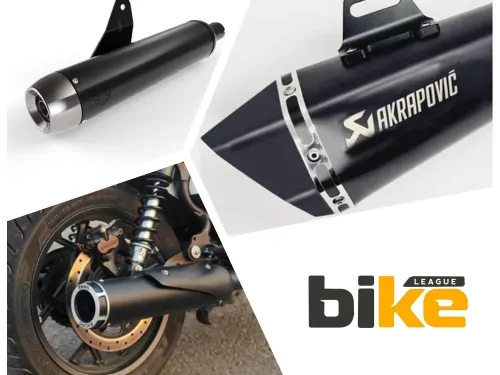
Long story short: In short, it’s important to know the legal rules for aftermarket motorcycle silencers and exhausts in India. Always check RTO guidelines, pollution limits, and understand the penalties for not following these rules.
Many people are unsure about the legal rules for aftermarket motorcycle silencers in India. Here, we break down the relevant regulations, detail pollution and noise limits, and clarify common misunderstandings. For example, some think silencers from the original manufacturer are illegal, but they are actually allowed. These doubts deserve clarification.
Key Takeaways
- A motorcycle silencer is part of the exhaust system that reduces engine noise by guiding exhaust gases through various chambers and baffles.
- Aftermarket silencers are non-original exhaust parts made by companies other than the motorcycle’s manufacturer.
- OEM stands for Original Equipment Manufacturer. This term means the company originally makes the motorcycle or its components.
- In India, using an OEM-approved aftermarket silencer is legal if approved by the Regional Transport Office (RTO) and complies with the 80 dB(A) noise ceiling set under CMVR Rule 120(2), without altering the vehicle’s registered specifications (Section 52, Motor Vehicles Act).
- ISI-approved aftermarket silencers can be used in India if they meet legal noise and pollution standards.
What Is A Silencer On A Motorcycle?
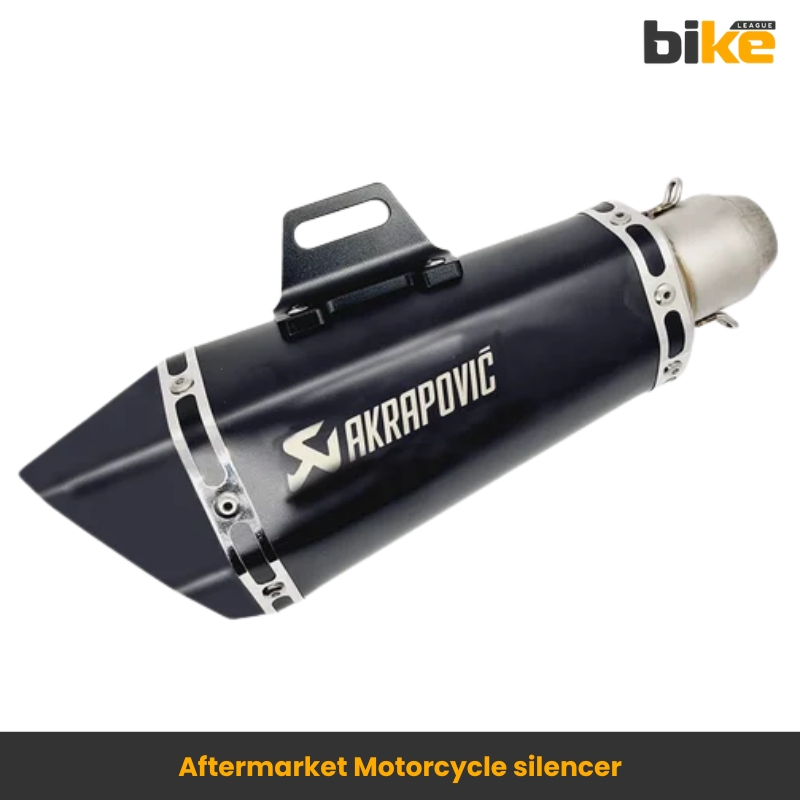
A motorcycle silencer is part of the exhaust system. It channels exhaust gases through chambers lined with sound-absorbing materials, which quiet the exhaust before it leaves the pipe.
Functions Of Motorcycle Silencer
- The main job of a silencer is to make the motorcycle much quieter, so it doesn’t disturb people nearby and follows the law. It makes the ride more pleasant for both the rider and those around them.
- A good silencer helps the engine run smoothly and can improve fuel efficiency for better mileage and performance.
- Besides reducing noise, a well-designed silencer supports cleaner emissions and can enhance performance.
Structure And Working
- Inside, exhaust gases pass through tubes, chambers, and sometimes special fibres that absorb or scatter sound for quieter operation.
- Some silencers use designs or materials that absorb or cancel out sound, and some even turn sound into heat.
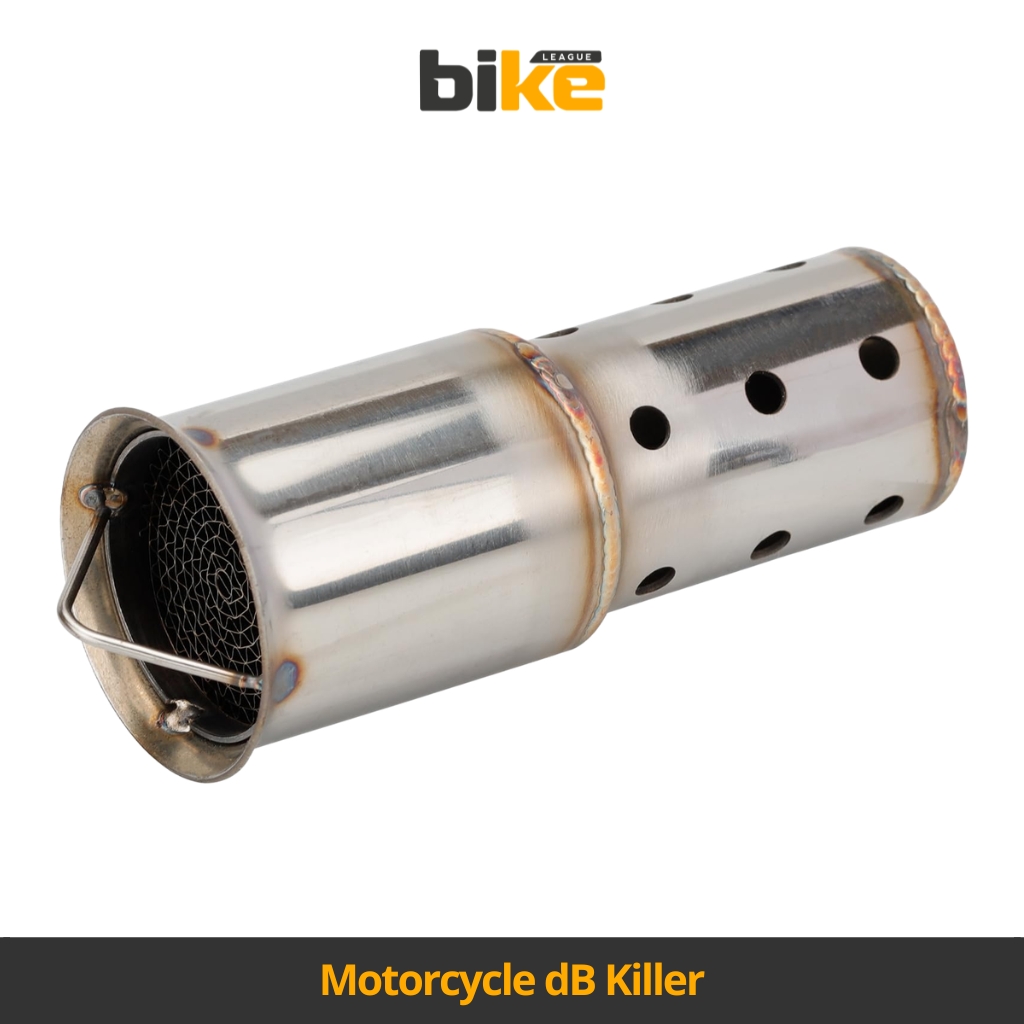
- Manufacturers may include a catalytic converter in modern silencers to clean exhaust gases and add a DB killer for further noise reduction.
Common Types
- Slip-on silencer: An easy-to-install silencer that replaces the stock silencer to modify the sound and performance.
- Full exhaust system: Replaces the entire stock silencer system for greater performance gains.
Materials Used
Manufacturers often use stainless steel or titanium to make silencers. These materials are strong, lightweight, and stylish. A good silencer keeps the bike quiet and helps it run smoothly.
What Are Aftermarket Silencers For Motorcycles?
Companies other than your bike’s manufacturer make aftermarket silencers. Sellers offer them as add-ons or replacements to change your bike’s sound, appearance, or performance.
In India, the law requires aftermarket silencers to comply with CMVR Rule 120(2), which limits noise to 80 dB(A). Some smaller-capacity bikes have a lower limit. If you fit a silencer that changes your bike’s exhaust from what’s listed on the Registration Certificate, Section 52 of the Motor Vehicles Act applies and you must get RTO approval. Using a silencer that is too noisy, not approved, or missing pollution-control parts like the catalytic converter is illegal on public roads.
You can legally buy and sell aftermarket silencers in India, but if you use them on the road without meeting legal requirements, you may face problems. Authorities may fine you, seize your bike, or impose other legal penalties if your silencer is too loud or doesn’t meet pollution rules.
What Is Bs In Motorcycles In India?
In India, “BS” stands for Bharat Stage. These are government rules that limit vehicle pollution to help reduce air pollution and protect health.
Key Points About Bharat Stage (bs) Norms
- These Bharat Stage rules have gotten tougher over the years. For example, BS6 is the latest version and has been required for all new motorcycles in India since April 2020.
- The rules are based on similar ones used in Europe, but they’re adjusted to fit India’s needs.
- The Central Pollution Control Board (CPCB), under the Ministry of Environment, Forests, and Climate Change, implements and updates BS norms nationwide.
- BS6 rules are strict about how much pollution a bike can make. To meet these rules, bikes need special technologies that help keep the air cleaner, such as fuel injection and catalytic converters.
Purpose And Impact
- Bharat Stage rules change how bikes are designed and the technologies they use. They also determine how much exhaust a bike can legally emit.
- Manufacturers can sell and register vehicles in India only if the vehicles meet the current BS emission standard.
- Following these rules benefits everyone. It keeps the air cleaner and helps people stay healthier.
How Are The Bs And Silencer Connected In Motorcycles In India?
On Indian motorcycles, the silencer reduces noise and helps the bike meet pollution laws. Manufacturers design modern silencers to follow sound and emissions regulations.
How Silencers And Bs Norms Are Connected?
- The silencer enables a motorcycle to meet legal noise and emissions standards, such as by using catalytic converters that keep exhaust within regulatory limits.
- Because the latest pollution rules are strict, manufacturers now often include extra parts inside silencers, such as catalytic converters and sensors, to help clean up the gases even more. These upgrades ensure the bike passes the toughest tests.
- Installing a non-compliant or illegal silencer can result in a motorcycle failing pollution tests and being considered unlawful for road use in India.
Regulatory And Technical Changes
- As the rules have gotten stricter, manufacturers have changed silencers. Most manufacturers now make BS6 silencers heavier and with more complex internal parts than older models because these silencers need to remove more pollutants.
- You meet legal standards only when you use manufacturer-approved silencers. If you use unapproved versions, you risk penalties under Section 190(2) of the Motor Vehicles Act, including fines, seizure, and failing pollution or fitness tests.
- Altering or replacing the silencer without proper authorisation can lead to legal violations by breaching noise and emission rules.
What Is Oem In Motorcycles?
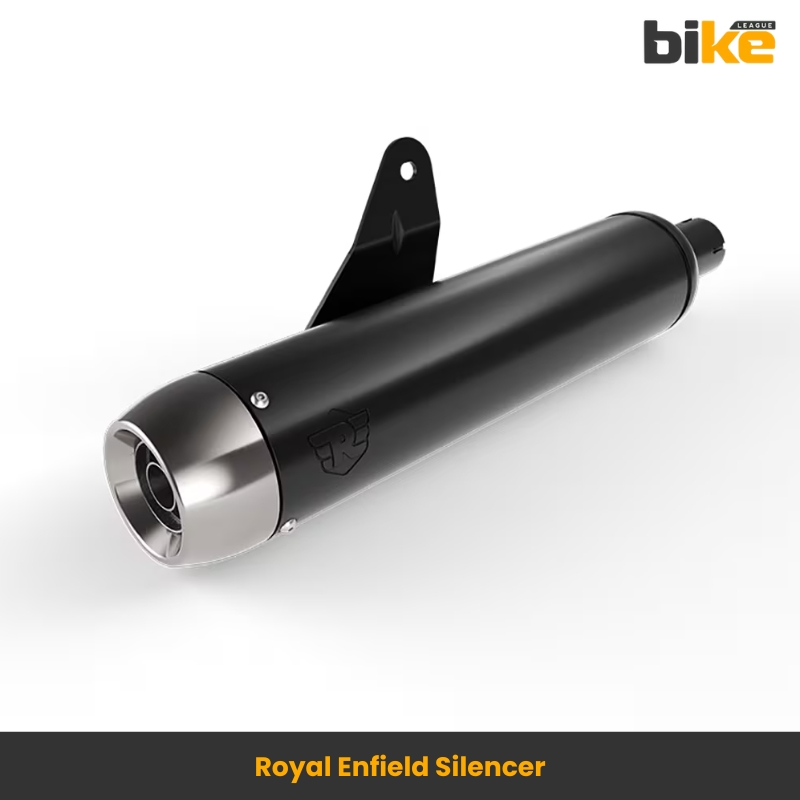
OEM in Indian motorcycles means Original Equipment Manufacturer: the company that makes the motorcycle or its initial parts. The brand manufactures or approves OEM parts, such as silencers or brakes, to meet stringent standards.
Manufacturers design OEM parts to fit specific models, which ensures reliability, safety, and legal compliance. If you use OEM parts, you keep your bike’s performance and value. People use aftermarket parts from third-party companies to replace or upgrade their bikes.
Can We Use An Oem-approved Aftermarket Motorcycle Silencer In India As Per The Law?
In India, you can legally use an OEM-approved aftermarket silencer on motorcycles only if the Regional Transport Office (RTO) officially approves it and sanctions the alteration under Section 52 of the Motor Vehicles Act (which governs any change to your Registration Certificate), while you stay within the 80 dB(A) limit set by CMVR Rule 120(2).
If you use a silencer that is not approved or exceeds the noise limit, authorities can penalise you under Section 190(2) (for using a vehicle in contravention of prescribed noise/emission standards) with fines, vehicle impoundment, or further legal proceedings.
If a seller or fitter knowingly supplies a non-compliant silencer, the law can separately hold them liable under Section 182A, which targets manufacturers, importers, and dealers, not individual riders.
When the silencer exceeds the noise limit, authorities can fine you, impound your vehicle, or take other legal action. Automakers, including brands like Royal Enfield and KTM, approve certain accessories that are legal and help owners avoid penalties.
Key Points
- Aftermarket silencers that are not certified or approved by the RTO are illegal to use — fitting one without approval breaches Section 52 of the Motor Vehicles Act (alteration of a vehicle’s registered specifications). Using an illegal silencer can lead to penalties under Section 190(2), including fines and possible vehicle impoundment.
- The noise level should not exceed 80 dB(A), the ceiling set under CMVR Rule 120(2).
- If you use loud aftermarket silencers, you risk penalties under Section 190(2) — typically fines up to ₹10,000 (exact amounts vary by state, since states notify their own compounding fee schedules), vehicle seizure, and, in repeat cases, driving licence action.
- Silencers that comply with BS6 emission norms and do not remove or tamper with catalytic converters are preferable.
- Many police departments in India are cracking down on illegally modified silencers because they are concerned about noise pollution.
- Aftermarket silencers remain legal if reputable manufacturers sell and officially approve them through their accessory programs.
You should get an RTO- and OEM-approved aftermarket silencer that meets noise and emission norms, and ideally buy it as an authorised accessory from the motorcycle brand or a verified supplier. If you don’t follow these requirements, authorities may fine you, seize your vehicle, or take further legal action.
Where Can We Find Oem-approved Aftermarket Motorcycle Silencers In India?
If you are looking for these products, you can find OEM-approved aftermarket silencers through several channels in India.
- Authorised dealerships or accessory stores of motorcycle brands like Royal Enfield and KTM, which sell officially approved aftermarket silencers designed for their bikes.
- Reputed aftermarket silencer manufacturers and sellers who provide silencers with RTO or ARAI approval and compliance with noise and emission norms.
- Online marketplaces such as IndiaMART and JustDial, and specialised bike gear stores that list OEM- or compliant-silencer options.
- Some well-known brands and manufacturers in India for silencers include Silman, Surya Silencer, AEW India, and Royal Enfield’s official accessory line.
- Workshop service centres authorised by bike manufacturers where OEM-approved accessories, including silencers, are sold and installed.
Choose an OEM-approved aftermarket silencer with proper RTO approval and compliance certificates. This choice keeps your motorcycle legal, running well, and environmentally friendly. It also gives you confidence and peace of mind when you ride.
Examples Of Sources
- Royal Enfield official accessories store
- IndiaMART sellers like Silman, Surya Silencer
- AEW India online store for bike exhausts
- Local authorised dealers of major motorcycle brands.
How Are Noise Limits And Aftermarket Motorcycle Silencers Connected In India?
In India, there are strict rules about how loud a motorcycle can be. Under Rule 120(2) of the Central Motor Vehicles Rules (test procedure AIS-129), a motorcycle’s exhaust noise is measured with a sound level meter placed 0.5 metres (50 cm) from the exhaust outlet, with the engine held at three-quarters of its rated (maximum power) RPM — not from a distance in open air.
Depending on engine displacement, the permissible limit ranges up to 80 dB(A) for most motorcycles, with smaller-capacity bikes held to a lower ceiling. Here’s exactly where your bike falls:
| Engine Displacement | Max Noise Limit |
|---|---|
| Up to 80 cc | 75 dB(A) |
| Above 80 cc, up to 175 cc | 77 dB(A) |
| Above 175 cc | 80 dB(A) |
So, a 100cc commuter and a 350cc Bullet do not have the same noise limit. The smaller bike actually has a lower limit before it is in violation, even though many riders think it is the other way around.
These rules aim to control noise pollution. Officials conduct the test at close range and at a fixed RPM, not just by listening from far away. This process determines if a silencer passes.
The problem is that most aftermarket silencers are much louder than the legal limit, sometimes going over 100 decibels. Authorities consider these silencers illegal under CMVR Rule 120(2). If you use a silencer that is too loud, authorities can fine you or seize your bike under Section 190(2) of the Motor Vehicles Act. The fine is usually between ₹1,000 and ₹10,000, but the exact amount depends on your state and how serious the violation is.
Can You Use Isi-approved Aftermarket Silencers On Motorcycles In India?
Yes, you can, but only if the silencer also meets the legal limits for noise and pollution.
The ISI mark indicates that the silencer meets the Bureau of Indian Standards’ quality and safety standards. But just having the ISI mark isn’t enough—the silencer also has to be quiet enough (within the 80 dB(A) ceiling under CMVR Rule 120(2), which varies by engine displacement) and meet all the pollution rules.
The truth is, most aftermarket silencers in India don’t even have the ISI mark, and many are too loud. That makes them illegal—even if they’re good quality. So, while the ISI mark is a good sign, it’s not enough: the silencer must also be RTO-approved and follow all the noise laws to be legal on public roads.
How Do Police And Rtos Actually Spot An Illegal Silencer On The Road?
Most riders get flagged not because an officer carries a decibel meter, but because a few visible or audible cues give it away instantly.
Signs Enforcement Looks For
- Exhaust note: A sharp popping, cracking, or “machine-gun” sound on deceleration is the single biggest trigger for a roadside stop — it usually means the DB killer has been removed or gutted.
- Missing or gutted DB killer: Officers familiar with common models (especially Royal Enfield Bullets and Classics) can often tell by sight whether the perforated baffle insert is still in place.
- No ARAI/BIS approval mark: A compliant silencer carries a stamped approval or homologation mark from the manufacturer or ARAI. Its absence is an easy visual red flag during a check.
- Visible sparks or flame at the outlet: Aftermarket units that run rich or lack a catalytic converter can spit sparks on hard acceleration — this has led to on-the-spot seizures even for vehicles that weren’t stopped for noise alone.
- Mismatch with the Registration Certificate: If the fitted silencer clearly differs from what’s listed on the RC and there’s no RTO endorsement, that alone is a violation under Section 52, regardless of how quiet it sounds.
The Puc Connection
A modified silencer’s trouble doesn’t end with a police stop — it also follows you to your Pollution Under Control (PUC) certificate renewal. Removing or gutting the catalytic converter is one of the most common reasons a vehicle fails its PUC test, since the cat is what brings CO and hydrocarbon readings within limit. A rider can pass a casual on-road glance and still fail PUC testing outright, which then blocks insurance renewal and makes the vehicle non-compliant on paper even if it was never stopped by traffic police. See our guide to bike pollution certificates for how this test works.
What Are The Recent Silencer Enforcement Drives Across India?
Crackdowns aren’t hypothetical — several cities have run large, well-documented drives in the past year:
- Bengaluru (October 2025): Bengaluru Traffic Police seized 947 modified silencers and booked 3,674 cases for loud horns in a single weeklong citywide drive.
- Hyderabad – Malkajgiri (May–June 2026): Malkajgiri traffic police booked 451 cases and removed 76 modified silencers in a single day in May 2026, and a follow-up drive in June 2026 booked 318 more cases and collected over ₹4.45 lakh in fines.
- Adilabad, Telangana (July 2026): Police crushed 121 seized silencers in a district-wide drive against modified exhausts.
These drives illustrate a pattern: enforcement is intensifying, it’s not limited to one state, and it increasingly extends beyond Royal Enfields to any two-wheeler with a loud or unapproved exhaust.
Comparison Of Oem Silencer (stock), Legal Aftermarket Silencer And Illegal Aftermarket Silencer In India
| Aspect | OEM Silencer (Stock) | Legal Aftermarket Silencer | Illegal Aftermarket Silencer |
|---|---|---|---|
| RTO Approval | Always approved, comes with vehicle | Must have RTO/type approval | No RTO/type approval |
| Noise Limit (dB) | Strictly within prescribed norms ( less than 80dB) | Must be less than 80dB (tested) | Exceeds 80dB, often much louder |
| Emission Compliance | Meets BS6/ARAI/ISI standards | Must retain catalytic converter, meet emission norms | No catalytic converter/not meeting emission norms |
| Warranty Impact | Full warranty preserved | May void warranty if not OEM-approved | Voided warranty |
| Documentation | Vehicle registration, factory certificates | Invoice, RTO certificate, DB norm certificate | No valid documentation |
| Sale/Usage | Fully legal for public roads | Legal only if all approvals intact | Illegal to use on public roads |
| Police Action | Never penalized | Not penalized if compliant | Fined, seized, or destroyed |
| DB Killer Presence | Not required (meets norms by design) | Mandatory to keep effective DB killer | DB killer removed/absent |
| Track/Private Use | Allowed anywhere | Can be used for track/private events if meeting norms | Public use illegal even for events |
Noise figures are tested at 0.5 m from the exhaust outlet at 3/4 rated RPM, per CMVR Rule 120(2)/AIS-129, IS:3028-1998. The exact dB(A) ceiling varies by engine displacement — 75 dB(A) up to 80cc, 77 dB(A) for 80–175cc, 80 dB(A) above 175cc.
Are There Any Aftermarket Motorcycle Silencer Brands Or Models That Are Known For Following India’s Noise And Pollution Rules?
Yes, in India, you can find aftermarket silencer brands and models that comply with noise and pollution regulations. These brands ensure their silencers stay within the 80 dB(A) ceiling set by CMVR Rule 120(2) and meet BS6 emission standards.
Here are a few popular and trusted brands:
- Silman Silencers (Indian manufacturer) – no direct official website, but available through IndiaMART: https://www.indiamart.com/silman-products/
- Surya Silencer (Indian brand) on IndiaMART: https://www.indiamart.com/surya-silencer-products/
- AEW India (aftermarket exhausts and silencers): https://aewindia.co
- Royal Enfield Genuine Accessories (OEM-approved accessories): https://www.royalenfield.com/in/en/gma/black-and-silver-tapered-silencer-1990726/
- TAB Performance (international brand with presence in India): https://www.tabperformance.com
- IndiaMART motorcycle silencers catalogue (various Indian suppliers): https://www.indiamart.com/impcat/motorcycle-silencer.html
These are some well-known brands and sources that offer silencers that follow Indian regulations. Before buying a silencer, check that it has the right certificates and approvals. This helps you get a legal aftermarket silencer that is safe for your bike.
When choosing an aftermarket silencer in India, it’s crucial to look for:
- RTO or ARAI (Automotive Research Association of India) approval.
- Compliance with noise limits (80 dB(A) or below, per CMVR Rule 120(2) — the exact ceiling depends on engine displacement).
- Retention of catalytic converters for BS6 emission compliance.
Using authorised and compliant silencers lowers your risk of fines and legal problems related to noise and emission laws.
What Specific Process Must Be Followed To Obtain An Aftermarket Motorcycle Silencer Approval From The Rto?
To get an aftermarket silencer approved by the Regional Transport Office (RTO) in India, the process generally involves the following steps:
- Research and Select a Compliant Silencer: Choose an aftermarket silencer that complies with CMVR Rule 120(2) — noise below 80 dB(A) (varies by engine displacement) — and BS6 emission norms, with the catalytic converter intact.
- Obtain Manufacturer’s Compliance Certificate: Get a certificate or document from the silencer manufacturer stating its compliance with noise and emission standards. This may include test reports from authorised labs, such as the Automotive Research Association of India (ARAI).
- Application to RTO: Submit an application to the local RTO where the motorcycle is registered. This application typically includes:
1. Vehicle Registration Certificate (RC).
2. Purchase invoice for the aftermarket silencer.
3. Compliance certificate from the manufacturer.
4. Identity and address proof of the vehicle owner. - Physical Inspection and Testing: The RTO may require a physical inspection of the vehicle with the new silencer fitted. They may conduct noise-level testing with a decibel meter to verify compliance.
- Modification Approval: If your silencer passes inspection, the RTO will approve or endorse the modification and update your vehicle’s records.
- Update Registration Certificate: Officials may update the RC to reflect the new exhaust or silencer, which officially legalises the modification.
- Keep Documents Handy: Carry all approval documents and certificates at all times to avoid fines or legal issues during police checks.
Can You Get In Trouble For Using An Aftermarket Silencer That’s Quiet Enough But Not Approved By The Rto?
Yes, you can still get into trouble in India if you use an aftermarket silencer that is quiet but has not been officially approved by the RTO.
Key points include:
- You could be fined anywhere from ₹1,000 to ₹10,000 under Section 190(2) of the Motor Vehicles Act, with the exact amount depending on your state’s notified fee schedule.
- The police can take away your motorcycle if you have a silencer that isn’t RTO-approved, even if it’s not too loud.
- If you keep breaking the rules, you might end up in court or even lose your license.
- You must get RTO approval to legally use a different silencer. Just being quiet isn’t enough—the paperwork matters too.
- Some places are stricter than others, so what happens can depend on where you ride.
Always make sure your aftermarket silencer is not just quiet, but also officially approved by the RTO. This helps you avoid fines or other problems.
How Can You Check If An Aftermarket Silencer Is Really Rto-approved?
Here’s how you can make sure you’re getting a real, RTO-approved aftermarket silencer in India:
- Ask for official papers: Get the RTO approval certificate or Certificate of Conformity (CoC) from the seller. This should clearly state that the silencer meets noise and emissions regulations, and it should be issued by the RTO or a trusted body such as ARAI
- Look for certification numbers: Make sure the silencer has a registration or approval number printed on it or on the box. You can double-check these numbers with the RTO or the company that made it.
- Check with the manufacturer: Ask the silencer’s manufacturer (or an official dealer) to confirm that what you’re buying is actually approved and that the paperwork matches the product.
- Ask the RTO: Some RTO offices publish a list (in person or online) of silencers they have approved. Contact your local RTO or check their website to see if your silencer is on the list.
- Check the paperwork: Good sellers will provide receipts, warranty cards, and information leaflets that mention approval and rules. Make sure everything matches up.
- Stick with trusted sellers: Buy from well-known dealers or official stores—places that clearly state the silencer is RTO-approved and provide proof.
If you follow these tips, you are much less likely to end up with a silencer that is not allowed, and you will avoid problems during police checks or inspections.
What Special Technologies Or Materials Do Bs6 Silencers Use To Meet India’s Strict Pollution Rules?
BS6-compliant motorcycle silencers use smart technology and new materials to help bikes meet India’s strictest pollution standards.
1. Key Bs6 Silencer Technologies
Catalytic Converter Built In
BS6 silencers have a catalytic converter inside. This part uses special metals to turn harmful gases from the engine into cleaner gases before they leave the exhaust pipe.
An Oxygen Sensor To Check The Air Quality
These silencers also have an oxygen sensor that measures exhaust oxygen content. This helps the engine use just the right amount of fuel, so it burns cleaner and pollutes less.
2. Materials Used In Bs6 Silencers
Strong, Thick Metal Build
Manufacturers make most BS6 silencers from thick, high-quality metal that resists rust and withstands high temperatures. This helps them last longer and work well.
Rust-resistant Finish
Some companies add a special coating to stop the silencer from rusting, which is really useful in India’s weather.
High-quality Original Parts
BS6 silencers use high-quality parts that fit perfectly and help the bike comply with all noise and pollution regulations.
3. Performance And Compliance Features
Parts Inside To Reduce Noise
New BS6 silencers feature improved internals to keep the bike quiet without compromising engine performance.
Official Approval Stamps
Manufacturers usually affix official stamps or labels to BS6 silencers to confirm compliance with RTO approval requirements.
All these features and strong materials help BS6 silencers keep bikes clean, quiet, and running well for a long time, while also meeting India’s latest rules.
Faq About Aftermarket Motorcycle Silencer In India
1. Are Aftermarket Silencers Legal In India?
No, most aftermarket silencers aren’t legal unless they meet the 80 dB(A) ceiling under CMVR Rule 120(2), retain pollution-control parts, and are approved by the RTO under Section 52 of the Motor Vehicles Act. If you use a silencer that’s too loud or not approved, you could face penalties under Section 190(2).
2. What Is The Permissible Noise Limit For Motorcycle Exhausts In India?
The limit scales with engine displacement:
| Engine Displacement | Max Noise Limit |
|---|---|
| Up to 80 cc | 75 dB(A) |
| 80cc – 175cc | 77 dB(A) |
| Above 175 cc | 80 dB(A) |
The test is done at 0.5 metres from the exhaust outlet with the engine at three-quarters of its rated RPM (per CMVR Rule 120(2)/AIS-129), not at 2 metres or on a casual “how loud does it sound” basis.
3. Can Police Seize My Motorcycle For Using An Aftermarket Silencer?
Yes. Under Section 190(2) of the Motor Vehicles Act, police can fine you up to ₹10,000 (the exact on-the-spot amount depends on the state’s compounding schedule), take your bike, or even destroy the silencer if it’s too loud or lacks RTO approval. Section 182A is a separate provision aimed at manufacturers, importers, and dealers of non-compliant components — it doesn’t apply to you as the rider.
4. Is There Any Legal Way To Install An Aftermarket Silencer In India?
You can legally use an aftermarket silencer only if it’s approved by the RTO, isn’t louder than allowed, and meets pollution standards. Silencers offered as official accessories by the bike company are usually safe.
5. Do Slip-on Exhausts Require Special Permission In India?
Yes, you need RTO approval for slip-on silencers or any exhaust changes. Even if they’re sold as ‘legal for street use,’ you still need official approval.
6. Are There Any Brands/models That Offer Legal Aftermarket Or Oem-approved Silencers?
Yes, some brands like Royal Enfield offer special silencers for specific models that are already approved and meet all the rules, so you can use them without worry.
7. Will Changing The Silencer Affect The Bike’s Warranty?
If you put on a silencer that isn’t from the bike’s maker or isn’t approved, you might lose your warranty. Always check what your bike company says first.
8. What Are The Penalties For Using A Modified Or Illegal Silencer?
If you use an illegal or modified silencer, authorities could fine you under Section 190(2) of the Motor Vehicles Act (usually ₹1,000 to ₹10,000, varying by state), seize your bike or silencer, and even take stricter legal action if you keep breaking the rules.
9. Is There Any Emission Requirement For Aftermarket Silencers In India?
Yes, all silencers must meet Bharat Stage (BS) emission standards. It’s strictly illegal to remove a catalytic converter or tamper with the parts that control pollution.
10. Why Are Aftermarket Silencers So Popular If Most Are Illegal?
Aftermarket silencers are easy to find because they are taxed and sold like any other product. But just because you can buy one does not mean it is legal to use on the road. If it does not follow the rules, you can get in trouble.
Glossary Of Key Terms
- AIS-129: The Automotive Industry Standard that lays down the official test procedure for measuring motorcycle exhaust noise under CMVR Rule 120(2) — including the 0.5-metre measurement distance and the three-quarter rated RPM condition.
- ARAI (Automotive Research Association of India): India’s premier vehicle testing and certification body. ARAI issues type-approval and compliance test reports for components like silencers, verifying they meet noise and emission standards before they can be legally sold or fitted.
- Bharat Stage (BS) Norms: India’s emission control standards, modelled on European norms but adapted for local conditions. BS6, the current standard, has been mandatory for all new motorcycles since April 2020 and requires stricter control of exhaust pollutants than earlier BS4 norms.
- Catalytic Converter: A component inside the silencer/exhaust system that uses precious metals to convert harmful exhaust gases (like carbon monoxide and hydrocarbons) into less harmful ones before they leave the tailpipe. Removing or tampering with it is illegal and a common cause of PUC test failure.
- CMVR (Central Motor Vehicles Rules), 1989: The rules framed under the Motor Vehicles Act that lay down the technical and operational standards for vehicles in India, including Rule 120(2), which governs permissible silencer noise levels.
- Compounding Fee: An on-the-spot fine amount that a state government notifies for a specific traffic violation, allowing an offence to be settled without going to court. States can set their own compounding amounts within the ceiling fixed by the central Motor Vehicles Act.
- CoC (Certificate of Conformity): A document issued by a manufacturer or approved testing agency certifying that a specific silencer model meets prescribed noise and emission standards.
- dB(A): Decibels, A-weighted — the unit used to measure sound level in a way that approximates human hearing sensitivity. This is the unit used in CMVR Rule 120(2)’s noise ceilings (75–80 dB(A) depending on engine displacement).
- DB Killer: A perforated baffle insert fitted inside a silencer that reduces exhaust noise. Removing or “gutting” the DB killer is one of the most common ways riders illegally increase exhaust volume, and is a major red flag for enforcement.
- Full Exhaust System: A complete aftermarket replacement of the stock exhaust, from the header pipe to the silencer outlet, typically fitted for larger performance gains than a slip-on unit alone.
- Homologation: The process by which a vehicle or component is certified as meeting a country’s regulatory standards for legal sale and use. A homologated silencer carries an approval mark from the manufacturer or ARAI.
- ISI Mark: A certification mark issued by the Bureau of Indian Standards (BIS) indicating a product meets defined quality and safety standards. An ISI mark alone doesn’t guarantee road legality — the silencer must also meet CMVR noise and emission limits.
- OEM (Original Equipment Manufacturer): The company that originally manufactures the motorcycle or its factory-fitted components. OEM parts, including OEM-approved aftermarket accessories, are pre-certified to meet the vehicle’s registered specifications.
- PUC (Pollution Under Control) Certificate: A mandatory certificate confirming a vehicle’s emissions are within prescribed limits, renewed periodically. A modified or non-compliant silencer commonly causes PUC test failure, which can in turn block insurance renewal.
- RC (Registration Certificate): The official document recording a vehicle’s registered specifications, including its exhaust/silencer as originally fitted. Any silencer that doesn’t match the RC, without RTO endorsement, is a violation under Section 52.
- RTO (Regional Transport Office): The state government body responsible for vehicle registration, and the authority that must approve any alteration to a vehicle’s registered specifications, including a change of silencer.
- Section 52, Motor Vehicles Act: The provision governing alteration of a motor vehicle’s registered specifications. Fitting a silencer that differs from what’s listed on the RC requires RTO approval under this section.
- Section 182A, Motor Vehicles Act: A provision penalising manufacturers, importers, and dealers who construct, sell, or alter vehicles or components in violation of prescribed standards. It applies to sellers/fitters of non-compliant silencers, not to individual riders.
- Section 190(2), Motor Vehicles Act: Authorities penalise individual riders for driving vehicles that violate prescribed noise or emission standards. This section actually applies when they catch a rider with an illegal silencer.
- Silencer: The component of a motorcycle’s exhaust system that reduces engine noise by channelling exhaust gases through internal chambers, baffles, and sound-absorbing materials before they exit the tailpipe.
- Slip-on Silencer: An aftermarket silencer that replaces only the rear muffler section of the stock exhaust, typically the easiest and most common type of exhaust modification.
Sources & References
Primary Legal Sources
- Section 52, Motor Vehicles Act, 1988 (alteration in motor vehicle) — India Code, official government portal
- Section 182A, Motor Vehicles Act, 1988 (punishment for offences relating to construction, maintenance, sale and alteration of motor vehicles and components — applicable to manufacturers, importers and dealers) — IndianKanoon
- Section 190(2), Motor Vehicles Act, 1988 (penalty for individual riders violating noise/emission standards) — IndianKanoon
- Central Motor Vehicles Rules, 1989, Rule 120(2) (silencer noise-testing standard) — Ministry of Road Transport & Highways (MoRTH), official text
Recent Enforcement Drive Coverage
- Bengaluru Traffic Police seizes 947 modified silencers, registers 3,674 cases for shrill horns in weeklong drive — Deccan Herald, October 17, 2025
- Malkajgiri Police book 451 cases against modified bike silencers — Telangana Today, May 14, 2026
- 318 cases booked in crackdown on modified silencers — The Hans India, June 26, 2026
- Adilabad police crush 121 silencers to curb noise pollution — Siasat
Other Related Links From Bikeleague India
- Bike modification – The dos and don’ts in India
- Electric motorcycles & scooters in India: Examining the pros & cons
- Bike Pollution Certificate – Key to Legal & Eco-Friendly Riding
- Most powerful bikes in India – Top 5 road legal ones
- Bike ownership transfer in India – step by step guide
Conclusion
We created this article to answer your questions about motorcycle silencers, aftermarket options, and legal rules in India. If you have more questions, email bikeleagueindia@gmail.com or leave a comment below. We will gladly help. You can also connect with Bikeleague India’s social media pages.