
Introduction
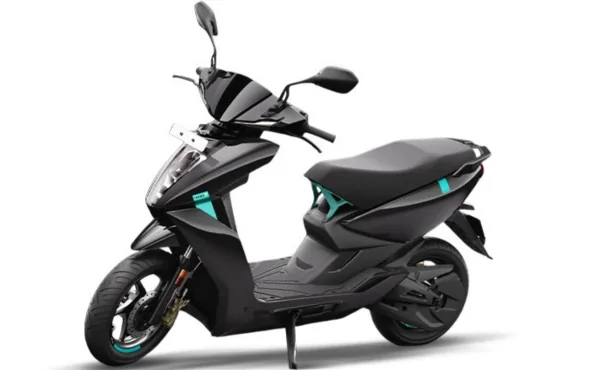
The Ather 450 S is a more affordable electric scooter from Ather Energy, made for the Indian market. It keeps the compact frame, automatic electric drive, sharp handling, and 90 km/h top speed of the 450 series, but has a less powerful motor and simpler features than the 450X. This model suits riders looking for a lively city EV instead of a larger, comfort-focused family scooter. The 450 S comes with a 2.9 kWh battery rated for 122 km IDC range, and newer versions offer a 3.7 kWh battery with a 161 km IDC range. Both versions use the same 5.4 kW motor, so the bigger battery mainly gives you more range and charging options, not higher speed or faster acceleration.

Ratings
- 90%
Performance
- 90%
Features
- 80%
Handling
- 85%
Comfort
- 100%
Build Quality
- 100%
Styling
- 95%
Value for Money
- 91%
Total
Ratings calculation is purely based upon pros and cons of the model given below in the overview section.
Price

Special Features
1
7-inch Deepview Display
2
Turn-by-turn Navigation
3
Ather Connect Functions
4
Atherstack Pro Package
5
Four Riding Modes
6
Autohold
7
Reverse Park Assist
8
Emergency Stop Signal
9
Traction Controlt
10
All-led Lighting
11
Usb Charging Port
12
Alexa Skills
Full Specifications
| Motor Type | Pmsm |
| Power | 8.70 PS |
| Torque | 22 Nm |
| Top Speed | 90km/h |
| Transmission | Automatic |
| Battery Type | Lithium-ion |
| City | 80–100 km / full charge |
| Highway | 70–80 km / full charge |
| Speedometer | Digital |
| Tachometer | No |
| Tripmeter | Yes |
| Low Battery Indicator | Yes |
| Start Type | Self Start (Electric / Push Button) |
| Parking assist | Yes |
| Clock | Yes |
| Pass Light | Yes |
| GPS and navigation | Yes |
| Stand Alarm | Yes |
| Tyres (F) | 90/90-12 Tubeless |
| Tyres (R) | 90/90-12 Tubeless |
| Brakes (F) | Disc |
| Brakes (R) | Disc |
| Front Suspension | Telescopic forks |
| Rear Suspension | monoshock |
| Kerb Weight | 108kg |
| Seat Height | 780mm |
| Battery | Lithium-ion |
| Charging Time (0-100%) | 7h45m (standard) / 5h30m (fast) |
| Head Lamp | LED |
| Tail Lamp | LED |
Overview
Performance And Motor
The Ather 450 S has a rear electric motor that delivers 5.4 kW of peak power and 22 Nm of peak torque. It can go from 0 to 40 km/h in a claimed 3.9 seconds, making it quick and responsive for city traffic, starting at junctions, going over flyovers, and making short overtakes.
The 450 S is not as powerful as the Ather 450X, which has 6.4 kW and 26 Nm, but it is still quicker and more responsive than most regular commuter scooters. The electric motor delivers instant torque, so you do not have to wait for it to pick up speed or shift gears. This makes it easy to handle in stop-and-go traffic and when you need to move quickly on busy city roads.
The 450 S has different ride modes: SmartEco, Eco, Ride, and Sport, depending on the version and software. SmartEco and Eco help save energy and give a gentler throttle response. Ride is the standard mode for daily use, while Sport gives you quicker acceleration. Riding more aggressively will lower the scooter’s real-world range.
The 450 S has a fully automatic electric transmission. There is no clutch or gear lever. You simply twist the throttle to accelerate, and the motor smoothly powers the rear wheel.
The scooter has regenerative braking, which recovers some energy when you slow down and can help reduce brake use in city traffic. Still, you should use the regular brakes in emergencies, on wet roads, when you face sudden obstacles, or on steep hills.
The Ather 450 S has a claimed top speed of 90 km/h, matching the 450X, despite its less powerful motor. This makes the 450 S suitable for city roads, flyovers, ring roads, and faster suburban routes.
With a top speed of 90 km/h, the 450 S gives you more flexibility on open roads than many family scooters that only reach about 80 km/h. However, it is mainly designed for city and suburban use, not for long, high-speed highway rides. Riding at high speeds for long periods will also drain the battery faster than city riding.
Charging Time
Charging times depend on the battery size and charger type. For the 2.9 kWh 450 S, it usually takes about 5 hours 30 minutes to charge from 0 to 80%, and around 7 hours 45 minutes for a full charge with the standard home charger. Some earlier models may take longer, so check that your scooter’s charger matches these times.
The 3.7 kWh 450 S can be fully charged at home in about 5 hours 15 minutes. Its bigger battery gives you more range, and the updated charger makes it easy to charge overnight at home or during a longer stop at work.
The 450S works with the Ather Grid public charging network. The older 2.9 kWh model could add about 1.5 km of range per minute at an Ather Grid station. Public charging is useful for topping up on longer city rides, but charging speed can vary depending on the charger, battery temperature, starting charge, and local conditions.
Range
Electric scooters use certified IDC range numbers instead of petrol-style km/l fuel economy. This certified range is sometimes also called the ARAI claimed range. For the Ather 450 S, the official figures are:
| Bttery pack | Certified IDC/ARAI-listed range |
|---|---|
| 2.9 kWh | 122 km per charge |
| 3.7 kWh | 161 km per charge |
The older 2.9 kWh 450 S was rated at 115 km IDC, so you might still see this number in dealer stock, old brochures, or older reviews. Make sure to check if the scooter you are considering is the updated 122 km version or the earlier 115 km model before buying.
IDC range is measured in controlled tests and is not a guaranteed distance. Real-world range depends on things like ride mode, acceleration, speed, rider and passenger weight, traffic, hills, tyre pressure, temperature, and battery health. Using SmartEco or Eco mode at moderate speeds will get you closest to the official range, while Sport mode and high speeds will reduce it a lot.
For daily city use in India, you can expect the 2.9 kWh Ather 450S to travel about 70-100 km on a single charge. Earlier real-world estimates were 90 km in SmartEco mode, while mixed use usually yields about 70-80 km, especially if you often use Ride and Sport modes.
The 2.9 kWh version is expected to give about 100 km in Eco mode, 80 km in Normal or Ride mode, and 75 km in Sport mode. In one early test, mostly using Ride and Sport modes, the scooter managed about 75 km on a full charge. This shows how much your choice of mode affects daily range.
For the 3.7 kWh version, you can expect about 95-125 km per charge, depending on ride mode, traffic, how much weight you carry, road conditions, and speed. This makes it a good choice for longer city commutes, regular suburban trips, or if you do not want to charge every night.
| Battery pack | Practical Indian range | Suitable daily use |
|---|---|---|
| 2.9 kWh | About 70–100 km | Daily city routes of roughly 25–50 km with regular charging |
| 3.7 kWh | About 95–125 km | Longer commutes, suburban travel, and less-frequent charging |
To get the most range, use SmartEco or Eco mode, accelerate gently, keep speeds moderate, make sure your tyres are properly inflated, avoid carrying extra weight, and try not to let the battery run completely empty too often. Using Sport mode, riding fast, going up steep hills, riding on rough roads, hard acceleration, and carrying a passenger will lower your range.
Features And Technology
The Ather 450 S uses the sporty 450-series platform but has a simpler dashboard and feature set than the 450X. Its equipment focuses on practical connected features, everyday riding help, safety alerts, and access to the charging network. Some advanced functions depend on the optional AtherStack Pro package, so check the exact variant and included software features before booking.
- 7-inch DeepView display: The 450 S uses a 17.7 cm (7-inch) DeepView LCD display instead of the 450X’s colour TFT touchscreen. It has a 1000:1 contrast ratio, automatic brightness adjustment, and a simplified interface designed for clear readability in daylight and at night.
- Non-touch digital console: The DeepView unit is not a touchscreen. It is operated through the switchgear, which helps keep the 450 S more affordable while retaining key ride information, navigation prompts, and smartphone-linked functions. It uses an 800 MHz processor, 1GB RAM, and 8GB storage.
- Turn-by-turn navigation: The DeepView display supports turn-by-turn navigation, including detailed directional prompts for complex junctions and roundabouts. It is useful for commuting on unfamiliar city routes without having to mount a smartphone on the handlebar.
- Bluetooth smartphone connectivity: The 450 S can pair with a smartphone through Bluetooth, enabling call alerts, SMS notifications, app-linked functions, and navigation-related information on the display.
- Ather Connect functions: Depending on the selected package, Ather Connect provides Find My Scooter, live location, theft and tow notifications, ParkSafe parking alerts, ride statistics, trip history, savings tracking, and charging-station location assistance.
- AtherStack Pro package: The optional AtherStack Pro package unlocks or expands connected features, including Ather Connect services, Ride Assist functions, battery-protection coverage, Alexa skills, and software updates. It may also include a complimentary Ather Connect period, subject to the current package terms.
- Four riding modes: SmartEco, Eco, Ride, and Sport. SmartEco and Eco prioritise energy efficiency; Ride balances everyday acceleration and range; and Sport provides stronger throttle response for overtaking and faster city traffic.
- Coasting regenerative braking: Coasting regen slightly slows the scooter when the throttle is closed, recovering energy for the battery. Ather says this can improve range by up to 7 per cent in suitable riding conditions. It also reduces the need for constant brake use in normal city traffic
- AutoHold: AutoHold keeps the scooter stationary on a flyover, ramp, or slope without requiring the rider to continuously hold the brake lever. It is useful during stop-start traffic on inclines.
- Reverse Park Assist: The reverse function slowly moves the scooter backwards, helping riders exit tight parking spaces or manoeuvre on sloping surfaces. The new switchgear includes a dedicated control for reverse and forward operation.
- FallSafe motor cut-off: FallSafe detects sudden changes in scooter orientation, speed, and acceleration that indicate a fall or tip-over. It cuts motor power and activates flashing indicators to reduce the risk of unintended movement and alert nearby people.
- Emergency Stop Signal: During hard braking at speeds above approximately 50 km/h, the Emergency Stop Signal rapidly flashes the brake light to warn traffic behind. This improves the scooter’s visibility in sudden-stop situations.
- Traction control: Indian specification listings describe the 450 S as having a traction-control system. It is intended to help reduce rear-wheel slip on wet, dusty, or loose surfaces; prospective buyers should confirm whether their exact configuration includes multi-mode control or a simpler system.
- Dual-disc braking hardware: The scooter has disc brakes at both ends, providing stronger stopping equipment than an EV with a rear drum brake. It uses combined braking support, but does not offer ABS, so riders should remain progressive with braking on slippery roads.
- Side-stand motor cut-off: The 450 S will not drive with the side stand deployed. This prevents an accidental ride-away during the stand-down.
- Auto indicator cut-off: The turn indicators cancel automatically after a turn, helping riders avoid travelling with an indicator flashing in heavy traffic.
- All-LED lighting: The scooter has LED lighting, including its headlamp, tail lamp, turn indicators, and daytime running light. This improves visibility and preserves the 450 family’s modern visual identity.
- Guide-me-home lights: The lighting remains on briefly after the scooter is parked, helping the rider see in dark parking areas or at residential entrances.
- 22-litre under-seat storage: The 450 S has 22 litres of under-seat storage, suitable for a small bag, rainwear, documents, charging cable, or other compact daily items.
- USB charging port: A USB port allows a smartphone or compatible small device to be charged while riding. It is useful when using connected navigation or on long daily commutes.
- Theft alerts and geo-fencing: App-linked security features include theft alerts, location tracking, and geo-fencing functions on supported packages. These can be useful for owners parking in public areas or shared residential parking.
- Alexa skills: Selected AtherStack Pro configurations support Amazon Alexa integration for compatible connected features. Availability can depend on account setup, software version, and Ather’s current service terms.
- Ather Grid charging access: The 450 S can use Ather Grid public chargers. Older Ather information quoted a peak charging addition of up to 1.5 km of range per minute, though real top-up speed will vary by battery temperature, state of charge, charger output, and local power conditions.
- OTA software updates: Ather can deliver supported feature improvements and system updates over the air, reducing the need to visit a workshop for eligible software changes.
Build Quality
The Ather 450 S is based on Ather’s rigid aluminium frame architecture, with telescopic front forks, a rear monoshock, 12-inch wheels, and disc brakes at both ends. This gives it a more substantial, performance-oriented mechanical foundation than a basic commuter EV, while the 2.9 kWh version’s lower battery capacity helps keep the kerb weight lower than the 450X’s.
Indian users generally rate the 450 S’s fit and finish positively. After about 5,000 km, the body panels, switches, side stand, and footrests still felt solid, with no rattles, loose parts, creaks, or obvious panel gaps. This is individual feedback, but it supports the overall impression of a well-assembled scooter.
The bodywork is slim and angular, helping the scooter feel compact in traffic. Its materials are generally good, though some owners have noted that certain plastic components are lower-quality than expected for the price. Prospective buyers should inspect panel alignment, paint finish, switchgear action, seat-latch operation, charging-port flap, belt-drive sound, brake-lever feel, tyres, and dashboard functions at delivery.
Handling
Handling is one of the 450 S’s biggest strengths. The aluminium chassis, compact size, low centre of gravity, 12-inch wheels, and lower kerb weight make it feel stable and agile. One user found it sure-footed and confidence-inspiring through corners, while another said the smaller battery and retuned suspension give the 450 S a better ride than the 450X without losing its fun on twisty roads.
In Indian city traffic, the 450 S should feel easy to filter through gaps, make quick lane changes, and navigate narrow streets. Its steering response is quick but predictable, and the bespoke 90/90-section MRF tyres provide reasonable grip for normal urban riding. The scooter feels stable at higher city speeds and maintains its composure through sweeping bends, which makes it more engaging than many comfort-led electric scooters.
The 450S is a sporty scooter, not a soft commuter. Its front suspension is firmer than the rear, giving accurate steering and good road feedback but letting sharper bumps through on rough roads. The rear shock is a bit softer and helps with stability, but it cannot fully absorb deep potholes or harsh bumps.
The scooter uses disc brakes at both ends and combined-braking support. Braking is adequate for city use, but the 450S lacks ABS, so riders should use measured brake input on wet roads, loose gravel, painted road markings, and broken tarmac. The traction-control function on applicable configurations can help manage rear-wheel slip, but it is not a substitute for careful braking technique.
Comfort
The Ather 450 S is comfortable for short and medium solo rides, especially on smooth city roads. Its riding posture is sporty but not too aggressive, and one user said the rider does not sit too low, which helps with confidence at higher speeds. The seat is padded enough for normal commuting, and the compact floorboard gives a familiar scooter feel.
Ride quality is better than the sharper 450X setup, but it is still firm. The 450 S handles normal road bumps well, but potholes, rough patches, and repeated speed breakers can be felt through the front fork and seat. It is better for riders who value road feel and handling than those who want a very soft ride on rough roads.
Taller riders may find the cockpit a bit cramped. They can feel bunched up, especially during U-turns, because of the compact riding position and the chance of knees touching the handlebar at full lock. Riders around 5 ft 10 in or taller should check knee clearance, legroom, and comfort during slow-speed moves before buying.
Pillion comfort is only suitable for short city trips. The seat is not very long, and the integrated footrests are not ideal for all passengers. One owner said the pillion space is adequate but that the short seat and footrest design can be uncomfortable for larger passengers. For regular family use or long rides with two people, the Ather Rizta, TVS iQube, or Bajaj Chetak may be more comfortable choices.
Styling
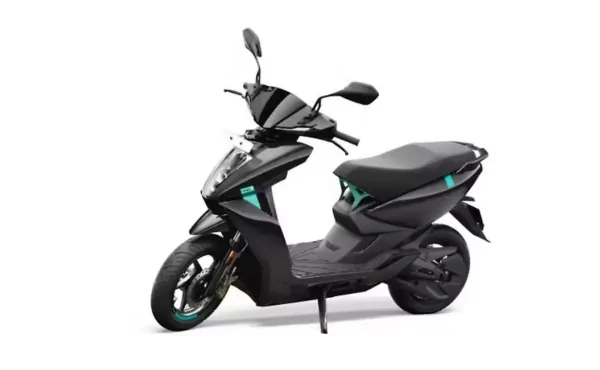
The Ather 450 S has a sharp, minimalist electric-scooter design that looks a lot like the 450X. Its compact size, slim side panels, tapered tail, angular front, and low LED headlamp give it a sportier look than a typical family scooter. It seems made for quick city rides rather than big storage or relaxed rides with two people.
The side profile is clean and uncluttered, with a short seat, narrow rear section, and covered belt-drive area. Its 12-inch alloy wheels, compact floorboard, and exposed-looking rear monoshock reinforce the performance-focused visual identity. The 450 S does not rely on excessive graphics or decorative panels; instead, it relies on its frame proportions, distinctive light signature, and contrast elements to look modern.
At the front, the LED headlamp arrangement and handlebar cowl create the familiar 450-series face. The 7-inch DeepView display is positioned prominently in the cockpit, while the integrated switchgear and compact windscreen area make the riding position look purposeful and technology-led. The 450 S is visually less aggressive than some rivals but feels more premium and cohesive than a typical entry-level EV commuter.
Colour Options And Variants
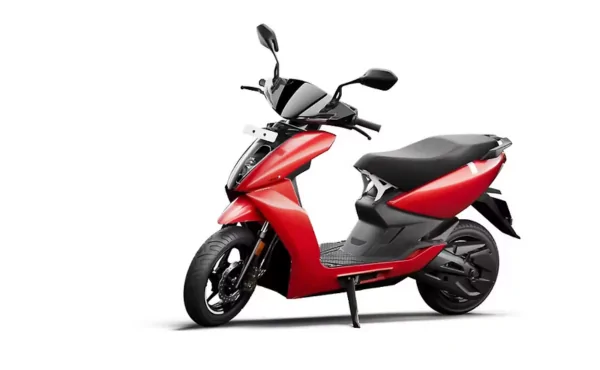
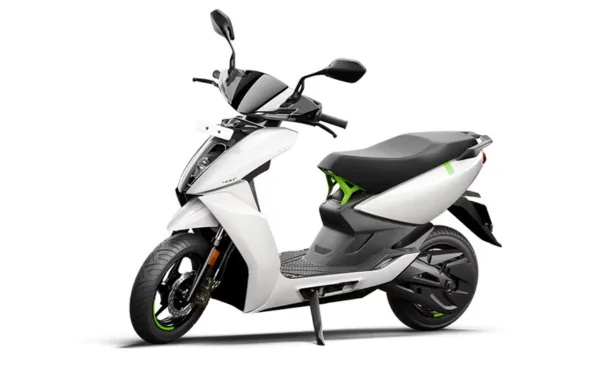
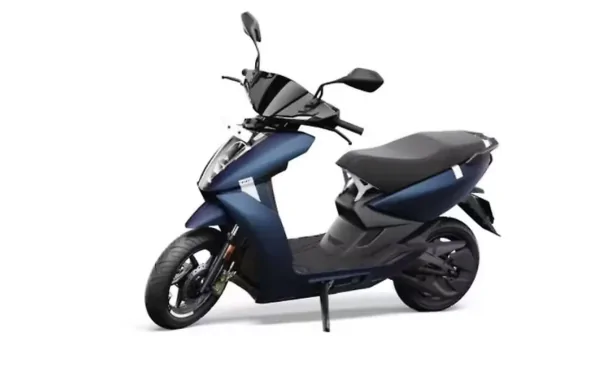
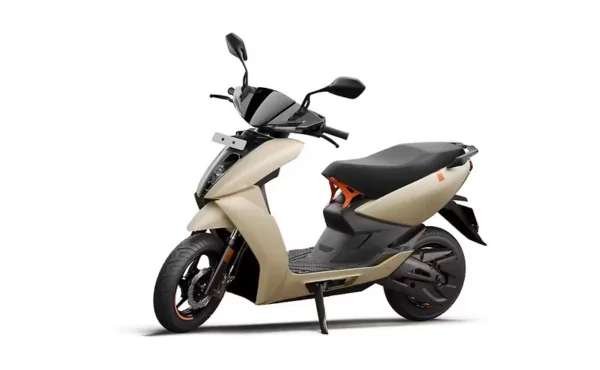
The Ather 450 S colour range includes
- Cosmic Black
- True Red
- Still White
- Stealth Blue
- Hyper Sand
Cosmic Black is the darkest and most understated option. It gives the 450 S a sleek, mature appearance and suits buyers who prefer a low-key premium colour. Still White gives the scooter the cleanest look, highlighting its angular body panels, black lower bodywork, and compact proportions.
Stealth Blue is a dark blue finish with contrasting light accents, giving the 450 S a more youthful and performance-oriented personality.
The Ather 450S is sold with two main battery configurations:
- 2.9 kWh
- 3.7 kWh
The 2.9 kWh model has a 122 km IDC range claim, while the larger 3.7 kWh version is rated at 161 km IDC. Both retain the 450 S’s 5.4 kW motor, 22 Nm of torque, and a claimed top speed of 90 km/h; the bigger battery improves range rather than outright performance.
The 450S 2.9 kWh is the lower-priced, more city-focused option. It suits riders who travel about 25–50 km a day, have reliable overnight charging, and want a lower purchase cost. Its 122 km IDC figure is a certified comparison value, not an exact real-world range.
The 450S 3.7 kWh is the higher-range configuration. It is designed to bridge the gap between the entry 450S and the more premium 450X 3.7 kWh, offering the same 161 km IDC range as the 450X’s larger-battery version but with the 450S’s simpler equipment package.
Depending on city, colour, and software selection, dealers may list several showroom variants. The principal differences usually involve battery capacity, AtherStack Pro software, and paint finish. AtherStack Pro can add or expand app-linked, navigation, assistance, and connected functions; buyers should inspect the exact variant name and itemised quotation rather than assuming that every 450 S includes the full advertised technology package.
For most buyers, the 2.9 kWh version is enough for regular city commuting with daily charging. The 3.7 kWh model is better for riders who travel longer routes, want to charge less often, or need more real-world range without moving up to the faster, more expensive 450X.
Value For Money And Pricing
The Ather 450 S is available with 2.9 kWh and 3.7 kWh battery options. Prices vary by city, selected software package, paint finish, insurance, registration charges, and accessories. The 2.9 kWh version is the lower-priced entry model, while the 3.7 kWh version costs more due to its larger battery and a 161 km IDC range claim.
The Ather 450S 2.9 kWh has an ex-showroom price starting at ₹ 1,27,888 in Delhi. The 2.9 kWh AtherStack Pro version costs more because it adds advanced connected functions, navigation support, ride assistance, and app-based security features.
The larger-battery Ather 450 S 3.7 kWh is intended for riders who want the 161 km IDC range claim, more range reserve for longer commuting, and less frequent charging. The top 3.7 kWh variant with AtherStack Pro, premium finish options, and additional connected features, depending on the city and the active pricing structure.
For example, on-road prices in Delhi are higher after adding insurance, registration charges, applicable incentives, accessories, and local dealer costs. The 450 S Super Matte 2.9 kWh AtherStack Pro is approximately ₹1.53 lakh on-road in Delhi, though prices in Chennai and other cities may differ. Buyers should request an itemised quotation from their nearest Ather Space before booking.
The Ather 450 S is a more affordable way to join Ather’s sporty electric-scooter range than the 450X. It has a 5.4 kW motor, 22 Nm torque, 90 km/h top speed, aluminium chassis, disc brakes at both ends, four ride modes, 22 litres of under-seat storage, a 7-inch DeepView display, reverse assist, AutoHold, regenerative braking, Ather Connect compatibility, and access to Ather Grid public charging.
The 2.9 kWh 450S is the better value for riders who travel about 25–50 km per day and have reliable overnight charging. Its 122 km IDC range is enough for most daily city commutes, though real-world distance is lower. It is a good choice for buyers who want Ather’s agile handling and EV ecosystem without paying extra for the 450X’s stronger motor and TFT touchscreen.
The 3.7 kWh 450 S is better for riders who often travel longer city or suburban distances. It offers the same 161 km IDC range as the larger-battery 450X but keeps the 450 S’s simpler 7-inch DeepView display and 5.4 kW motor. This makes it a practical choice for buyers who do not need the 450X’s extra performance and touchscreen.
AtherStack Pro is worth choosing only if its extra features are important to you. It adds connected navigation, app alerts, security tools, Alexa integration, some rider-assistance functions, and software upgrades, but it can raise the final cost a lot. At the top end of the 450 S range, buyers should compare the final on-road price with the 450X, Ola S1 Pro, TVS iQube ST, and other premium EVs.
The Ather ecosystem adds ownership value through Ather Grid charging access, OTA updates, an app-based ownership platform, and a growing presence of branded retail and service. Before purchase, confirm the nearest workshop, charging network coverage on regular routes, battery warranty, software subscription duration, home charger installation cost, and any additional maintenance package.
The Ather 450 S competes with both value and premium electric scooters in India, and they are
TFinally, the Ather 450X is the in-house upgrade option. It costs more but offers a stronger motor, a TFT touchscreen, more advanced connected technology, and a more performance-oriented experience. Buyers who value range over features can consider the 450 S 3.7 kWh, while buyers seeking the full 450-series feature set should compare it with the 450X before booking.
Verdict
The Ather 450 S is a solid pick for city commuters in India, balancing performance, range, and smart features. Its price is competitive for a premium scooter, and it offers top-notch traction control and digital connectivity.
Although some buyers might worry about the price or charging time, the 450 S compensates with its great build quality, comfortable ride, and additional fast-charging options. The battery subscription plan adds to its appeal, making it a good fit for many Indian riders thinking about going electric. Overall, the Ather 450 S is a strong choice for those seeking reliability and modern technology in an electric scooter.
Pros
- Sharp city performance: The 450 S produces 5.4 kW and 22 Nm, with a claimed 0–40 km/h time of 3.9 seconds. Its instant electric torque gives it quick acceleration from traffic lights, enough response for urban overtakes, and confident performance on flyovers.
- 90 km/h top speed: The scooter’s 90 km/h claimed top speed gives it more flexibility than many entry-level city EVs. It can handle city roads, ring roads, flyovers, and faster suburban stretches with greater ease than 70–80 km/h electric scooters.
- Agile and confidence-inspiring handling: The 450 S uses the same compact aluminium chassis concept as the 450X, along with 12-inch wheels and a low centre of gravity. Indian reviews describe it as agile, sure-footed, and enjoyable through urban bends and traffic gaps.
- Good ride-and-handling balance: Its suspension is firmer than a family scooter’s but remains reasonably compliant. Reviewers note that it manages road undulations well while retaining stability and sporty cornering confidence.
- Dual-disc brakes with CBS: The scooter has 200 mm front and 190 mm rear discs with a combined braking system. This provides confident stopping performance for daily commuting and is a meaningful advantage over EVs with a rear drum brake.
- Useful safety equipment: eatures include FallSafe motor cut-off, Emergency Stop Signal, AutoHold, side-stand cut-off, auto indicator cancellation, and reverse park assist. These functions improve everyday safety and make parking or stopping on slopes easier.
- Coasting regenerative braking: Regenerative braking engages when the throttle is closed, providing engine-braking-like deceleration and recovering some energy. It can make city traffic smoother and reduce routine brake use.
- Four practical ride modes: SmartEco, Eco, Ride, and Sport modes allow riders to choose between range-focused use and sharper throttle response. This makes the 450 S adaptable to traffic conditions, distance, and rider preferences.
- DeepView display with navigation: The 7-inch DeepView display is not a touchscreen, but it remains informative and legible, and it supports turn-by-turn navigation. It provides core ride information while helping keep the 450 S more affordable than the touchscreen-equipped 450X.
- Ather Grid and connected ecosystem: The scooter can use Ather Grid chargers and supports app-linked tools, including location features, theft/tow alerts, trip data, and charging-station discovery, on supported packages. This adds value for riders who occasionally travel beyond their routine home-charging route.
- Good build quality: Users describe the 450 S as well made, while an owner after around 5,000 km reported no serious rattles, loose parts, or panel-fit problems. This supports its appeal as a daily-use urban EV.
- 3.7 kWh option for longer routes: The 3.7 kWh version has a 161 km IDC range claim, giving buyers a larger range reserve than the 2.9 kWh model. It is a useful option for longer commutes or riders who do not want to charge every night.
Cons
- Firm ride over bad roads: The 450 S prioritises agility, so sharp potholes, broken concrete, and repeated speed breakers can be felt through the suspension. It is more comfortable than the 450X in some conditions but is still not a plush family-scooter option.
- Compact ergonomics for taller riders: The compact rider triangle can feel cramped, particularly during tight U-turns. Some riders may experience knee contact with the handlebar at full steering lock.
- Limited pillion comfort: The short seat and compact rear footrest arrangement are adequate for short trips but less suitable for frequent or long two-up commuting. Larger passengers may find the pillion area restrictive.
- Smaller battery on the base model: The 2.9 kWh version has a 122 km IDC claim, but real-world range is generally lower. An owner reported up to around 85 km, while aggressive use of Ride or Sport mode can reduce practical distance further.
- Slow home charging on the 2.9 kWh version: Depending on the charger configuration, the 2.9 kWh model can need roughly 7 hours 45 minutes or longer for a full charge. It is suitable for overnight charging but not ideal for riders who need a rapid same-day refill at home.
- No ABS:Despite its 90 km/h top speed and performance-oriented chassis, the 450S lacks ABS. Riders must use progressive braking, especially in rain, over road markings, or on loose road surfaces.
- DeepView screen is not a touchscreen: The 7-inch display retains core information and navigation but does not offer the richer touchscreen interface, integrated Google Maps experience, or broader app interaction available on the 450X.
- Some useful functions require AtherStack Pro: several connected services, enhanced app features, navigation-related tools, battery protection, and Alexa functions. Buyers should confirm the exact included features before paying extra.
- Small 22-litre boot: The under-seat storage is sufficient for rainwear, documents, small bags, or charging cables, but it is limited for groceries or larger helmets. It is much less practical than the Ather Rizta’s 34-litre storage space.
Frequently Asked Questions About Ather 450 S
1. What Is The Range Of The Ather 450 S?
The Ather 450 S is available with two battery options. The 2.9 kWh battery has a certified IDC range of 122 km, while the 3.7 kWh battery offers 161 km IDC range. In real-world Indian conditions, the 2.9 kWh version typically delivers about 70-100 km per charge, while the 3.7 kWh version delivers about 95-125 km per charge, depending on ride mode, traffic, and riding style.
2. How Long Does The Ather 450s Take To Charge?
The 2.9 kWh Ather 450 S takes about 5 hours 30 minutes to charge from 0 to 80%, and around 7 hours 45 minutes for a full charge with the standard home charger. The 3.7 kWh version can be fully charged at home in about 5 hours 15 minutes despite its larger battery.
3. What Is The Top Speed And Motor Power Of The Ather 450s?
The Ather 450 S has a rear electric motor producing 5.4 kW of peak power and 22 Nm of peak torque, with a claimed top speed of 90 km/h. It can accelerate from 0 to 40 km/h in a claimed 3.9 seconds. Both the 2.9 kWh and 3.7 kWh battery versions use the same motor, so the larger battery improves range rather than performance.
4. Does The Ather 450 S Have Abs?
No, the Ather 450 S does not have ABS. It uses dual-disc brakes (200 mm front and 190 mm rear) with a combined braking system, but riders are advised to use progressive braking on wet roads, loose gravel, painted road markings, and broken tarmac since there is no ABS.
5. What Is The Price Of The Ather 450 S?
The Ather 450 S 2.9 kWh has an ex-showroom price starting at ₹1,27,888 in Delhi. The AtherStack Pro version costs more due to added connected features, navigation support, ride assistance, and app-based security. On-road prices are higher after adding insurance, registration, and other charges; for example, the 450 S Super Matte 2.9 kWh AtherStack Pro is approximately ₹1.53 lakh on-road in Delhi.
Other Related Links From Bikeleague India
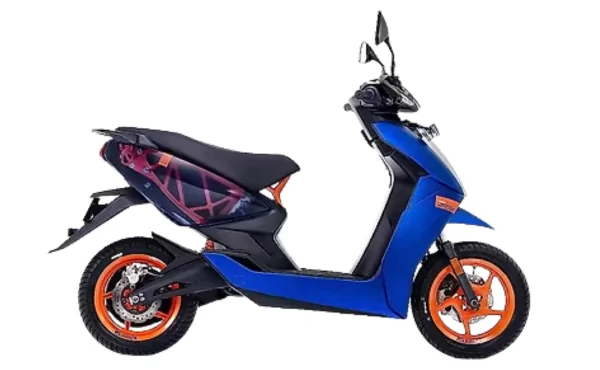
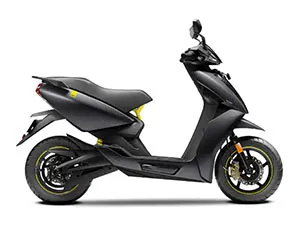
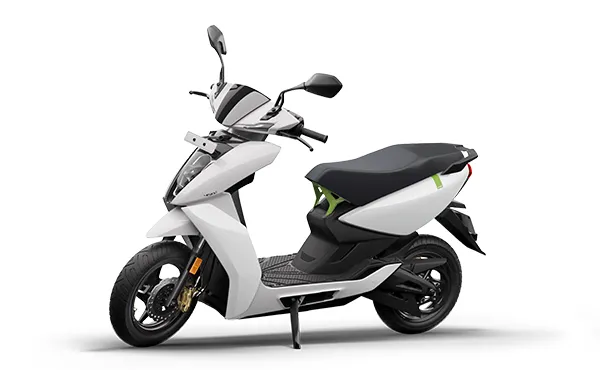
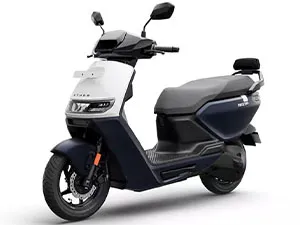
List Of All Ather Electric Scooters In India
About Ather Electric Scooters
Ather Energy is a top electric two-wheeler maker in India, recognized for its tech-driven scooters, smart software, in-house battery packs, and fast-growing charging and retail network. Started in Bengaluru in 2013 by Tarun Mehta and Swapnil Jain, Ather has evolved from an IIT Madras-backed startup to a public EV company. Its products include the high-performance 450 series and the family-friendly Rizta.
Ather stands out in India’s EV sector because it focused early on engineering, software, charging, and the overall ownership experience. Instead of just making a battery-powered scooter, Ather created a connected platform with its Atherstack software, Ather Grid chargers, Experience Centres, and service network.
Ather Energy started in October 2013 and is based in Bengaluru, Karnataka. Founders Tarun Sanjay Mehta and Swapnil Babanlal Jain set out to build high-quality electric scooters designed for Indian roads.
The company first built a prototype electric scooter, then launched the Ather S340 in 2016. Its first commercial model, the Ather 450, came out in 2018 and helped Ather become known as a premium electric scooter brand.
Since then, Ather has reached two main types of customers:
| Product family | Main target buyer | Key identity |
|---|---|---|
| Ather 450 series | Enthusiasts and urban commuters | Performance, technology, sporty handling |
| Ather Rizta | Families and practical daily users | Comfort, storage, everyday usability |
| Future EL-platform products | Price-sensitive and wider-market buyers | Greater accessibility and pan-India expansion |
The 450 series features models like the 450S, 450X, and 450 Apex. The Rizta marks Ather’s move into the popular family scooter market, and its success has helped drive the company’s growth in retail and production.
History And Growth
Ather started as an electric mobility startup at IIT Madras. Early on, it raised money from investors, including Hero MotoCorp, which later became a major shareholder.
Ather’s first big milestone was unveiling the S340 electric scooter in February 2016. The Ather 450 launched in 2018, along with the first Experience Centre and the start of its charging network.
Ather added the 450X in 2020, the 450S in 2023, and the limited 450 Apex in 2024. The Rizta, launched in 2024, was a key step, as it took Ather into the wider family-scooter market.
| Year | Major Development |
|---|---|
| 2013 | Ather Energy was founded in Bengaluru by Tarun Mehta and Swapnil Jain. |
| 2016 | The company unveiled its first scooter, the Ather S340. |
| 2018 | Ather 450 launched; first Experience Centre and charging network initiatives began. |
| 2020 | Ather introduced the 450X. |
| 2021 | First Hosur manufacturing facility commenced operations. |
| 2022 | A second Hosur facility began operations. |
| 2023 | Ather launched the 450S. |
| 2024 | Ather launched the 450 Apex and Rizta; cumulative sales reached 341,113 electric two-wheelers. |
| 2025-26 | Retail expansion accelerated, with a target of 700 Experience Centres by the end of FY2026. |
Ather has grown fastest in southern India, where it built strong brand awareness, more charging stations, and a solid dealer network. Now, the company is focusing more on other regions to become less dependent on the south.
Key Milestones And Developments
Ather has done more than just launch electric scooters. It has built a full EV ecosystem with connected software, navigation, charging, Experience Centres run by dealers, and battery pack manufacturing.
Ather Grid, the company’s charging network, is one of its most visible achievements. It gives Ather owners public charging and is a key part of the ownership experience, especially for those who want reliable daily and city travel.
Ather also improves its connected vehicle experience with Atherstack, its software platform. Updates let the company add or improve features even after purchase, setting it apart from regular petrol scooters.
| Milestone | Details |
|---|---|
| First prototype | Ather S340 unveiled in 2016. |
| Commercial entry | Ather 450 launched in 2018. |
| Charging ecosystem | Ather Grid became part of the company’s charging and ownership strategy. |
| Connected technology | Ather stack software supports navigation, connectivity, diagnostics, and over-the-air updates. |
| Performance portfolio | 450X, 450S, and 450 Apex strengthened Ather’s sporty premium identity. |
| Family segment entry | Rizta expanded Ather into the practical family-scooter category in 2024. |
| Public-market milestone | The business transitioned to Ather Energy Limited in 2024 as part of its public-company journey. |
| Retail scale-up | The company had 600 stores by Q3 FY2026 and expected to reach 700 by the end of that financial year. |
Manufacturing Facilities
Ather’s main factory is in Hosur, Tamil Nadu, where it runs two plants: one for assembling electric two-wheelers and another for making battery packs. By the end of 2024, these facilities could produce 420,000 scooters and 379,800 battery packs each year.
The Hosur plants are important because Ather builds both scooters and battery packs there, using lithium-ion cells from suppliers. Making its own battery packs gives Ather more control over this key and costly part.
Ather is building a third factory at Bidkin in AURIC, Chhatrapati Sambhaji Nagar, Maharashtra. This new plant will boost production and help the company expand to more regions.
| Facility | Location | Primary Role |
|---|---|---|
| Hosur Factory 1 | Hosur, Tamil Nadu | Electric two-wheeler assembly. |
| Hosur Factory 2 | Hosur, Tamil Nadu | Battery-pack manufacturing. |
| Current Hosur capacity | Tamil Nadu | 420,000 electric two-wheelers and 379,800 battery packs annually, as of December 2024. |
| Factory 3.0 | Bidkin, AURIC, Chhatrapati Sambhaji Nagar, Maharashtra | Planned capacity expansion and future product production. |
| Expected total capacity | Across facilities | Around 1.42 million electric two-wheelers annually after Maharashtra expansion. |
The Maharashtra plant matters because it puts Ather closer to western and northern markets and connects it to a strong network of auto suppliers. The plant will open in stages, not all at once.
Market Position And Achievements
Ather is one of India’s best-known electric scooter companies. It competes with big names like TVS, Bajaj, Ola Electric, Hero MotoCorp’s VIDA, and other regional EV makers.
Ather started out as a premium, performance-focused brand, but the Rizta has helped it reach more customers. By appealing to families, commuters, and those seeking storage and comfort, Ather has grown its sales while maintaining its tech-focused reputation.
Ather’s retail growth is a big recent achievement. It passed 500 Experience Centres in 2025, had 600 stores by Q3 FY2026, and aims to reach 700 by the end of FY2026.
| Area | Ather’s position |
|---|---|
| Market category | Leading Indian pure-play electric two-wheeler manufacturer |
| Core strengths | Product engineering, software, charging ecosystem, brand experience |
| Performance portfolio | Ather 450 series |
| Family-scooter offering | Ather Rizta |
| Retail presence | 600 stores by Q3 FY2026 |
| Retail target | 700 Experience Centres by end-FY2026 |
| Manufacturing capability | 420,000 annual E2W capacity at Hosur as of December 2024 |
| Expansion focus | Northern, western, eastern, and central India |
Ather’s biggest strength is its integrated ownership ecosystem. Its products, software, charging, service, and retail all work together as one system. This approach can build customer loyalty, but it also means spending more on expanding the network and supporting customers.
Future Plans
Ather plans to reach more customers, boost production, grow its store network, expand its software business, and start exporting.
Right now, Ather’s main goal is to expand its retail network. It plans to have 700 Experience Centres by the end of FY2026, focusing on tripling its presence in northern India and growing in the west and east.
Ather is also working on new electric scooters using its EL platform. This will let the company offer more affordable models and compete in a wider price range, including below ₹1 lakh.
Ather is getting ready to expand internationally. It has talked about entering some Southeast Asian and Latin American markets, where electric scooters could be very useful for city travel.
| Future focus | Planned direction |
|---|---|
| New product platforms | Launch products based on the EL platform. |
| Wider price coverage | Target more affordable and mass-market EV segments. |
| Retail network | Grow to 700 Experience Centres by end-FY2026. |
| Production | Commission the Maharashtra factory in phases and expand total capacity. |
| Software revenue | Develop Ather stack-led software, connectivity, and non-vehicle revenue streams. |
| International markets | Explore exports and market entry in Southeast Asia and Latin America. |
| Geographic growth | Scale up in north, central, east, and west India. |
Ather Energy has grown from a Bengaluru startup into one of India’s top electric two-wheeler companies. Its success comes from early engineering investments, the premium 450 range, the family-friendly Rizta, the Ather Grid charging network, and a growing retail presence across India.
Ather’s future growth depends on scaling up manufacturing, launching more affordable products, expanding service and charging beyond the south, and making its new Maharashtra plant a success. If it meets these goals, Ather can become a leading electric mobility brand in India for the long term.
Other Related Links From Bikeleague India
User Reviews
There are no reviews yet. Be the first one to write one.

Hiran Narayanan
Founder & CTO at Bikeleague India
Hiran Narayanan is the Founder and CTO of Bikeleague India, bringing over 15 years of experience in motorcycle technical writing. He develops detailed analyses, tools, model overviews, and blogs that contribute to bikeleague.in's improving rankings.