
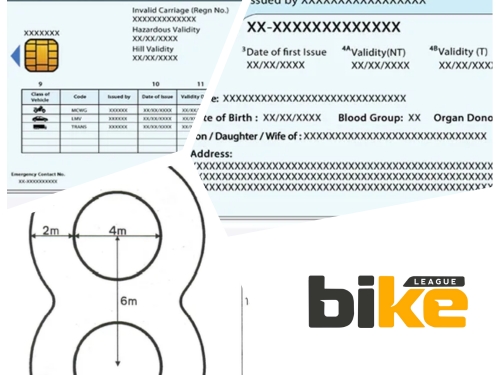
Long Story Short: To legally ride a two-wheeler in India, you need to get a learner’s licence first, then apply for a permanent driving licence after at least 30 days. The central fee is about ₹700, or ₹900 if your state adds a smart card charge. You can begin the process online through the Sarathi portal, but you must visit the RTO for the driving test.
This guide covers how to get and renew a two-wheeler licence, what documents you need, the penalties for riding without a licence, and how to keep a digital copy on your phone.
Key Takeaways
- You can apply for and renew a two-wheeler licence online or at the RTO, as long as your documents and forms are in order.
- Driving without a valid licence can lead to substantial penalties, vehicle seizure, insurance complications, and even imprisonment, making legal compliance essential for all riders.
- You’ll need documents such as proof of age and address, application forms, photos, and sometimes a medical certificate. Preparing these in advance will make the process easier.
- You can use digital platforms like DigiLocker and mParivahan to store and show your driving licence on your phone. Officers accept the digital copy from these apps instead of the physical card.
- Common mistakes like missing documents, missing deadlines, or making errors during driving tests can delay or stop your application. Careful preparation and following the guidelines are important for success.
What Are The Consequences Of Driving A Two-wheeler Without A License?
1. Legal Consequences
1.1 Fines And Penalties
Driving without a valid licence breaks the Motor Vehicles Act and leads to fines. The penalty for this offence has gone up a lot in recent years:
- Fine: Up to ₹5,000, raised from ₹500.
- Imprisonment: Up to three months. The court can impose the fine, the imprisonment, or both. This comes under Section 181 of the Motor Vehicles Act, 1988.
1.2 Challan Issuance
If you are caught driving without a licence, the traffic police will give you a challan. Check the due date on the challan, as time limits and court steps can be different.
1.3 Seizure Of The Motorcycle
Under Section 207 of the Motor Vehicles Act, a police officer can seize and detain a vehicle that is being used without a valid licence. The officer may instead take the vehicle’s registration certificate and give you an acknowledgement. To get the vehicle back, the owner applies to the transport authority with the relevant documents.
1.4 Insurance Claims Can Be Rejected
Motor insurance policies require that the vehicle is driven by someone with a valid licence. If you ride without one, your insurer can reject your own-damage claim after an accident, but must show that you broke the rule. If someone else is hurt or their property is damaged, the insurer usually pays them first, then collects that amount from you under the “pay and recover” rule. In the end, you may have to pay much of the cost yourself.
2. Financial Consequences
2.1 Increased Insurance Cost
If your claim is rejected or disputed, it can be harder to get insurance later. Insurers may also charge higher premiums if they think you are a high-risk rider.
2.2 Additional Fines For Related Offenses
People who drive without a licence often break other rules as well, such as driving without insurance, speeding, or drunk driving. Each of these has its own fines and penalties, which can add up fast.
3. Social And Safety Consequences
3.1 Legal Record
If you are caught driving without a licence, the challan goes on your record, and a court may give you the fine or jail time mentioned earlier.
3.2 Safety Risks
Driving without a licence is both illegal and unsafe. Licensed drivers are expected to know the rules and basic safety. Most importantly, having a licence helps protect you and others on the road.
What Is The Fee Structure For A Two-wheeler License In India?
The Central Motor Vehicles Rules, 1989 (Rule 32) set the standard fees for a driving licence. Some states add extra charges, like a smart card fee, so check the final amount on the Sarathi portal before paying.
For a new two-wheeler licence, central fees total about ₹700: learner’s application ₹150, learner’s test ₹50, driving test ₹300, and licence issue ₹200. Some states add a ₹200 smart card charge, making it about ₹900. If you renew after the grace period, it costs ₹300 plus ₹1,000 for each year or part of a year of delay.
| Service | Fee (₹) |
|---|---|
| Learner’s licence application (per class) | 150 |
| Learner’s licence test or repeat test | 50 |
| Driving test or repeat test (per class) | 300 |
| Issue of driving licence | 200 |
| Renewal (within grace period) | 200 |
| Renewal after grace period | 300, plus ₹1,000 for each year or part of a year of delay |
| Add another vehicle class | 500 |
| International Driving Permit | 1,000 |
| Smart card (charged in some states, e.g. Delhi) | 200 |
| Change of address or other particulars on the licence | 200 |
Source: Parivahan: Licensing related fees and charges. Checked November 2026.
About the grace period: Under Section 15 of the Motor Vehicles Act, you pay the standard renewal fee if you apply up to one year before or after your licence expires. After that, you pay a higher fee and must pass the driving test again. Some fee tables and state websites still mention the old 30-day grace period, so Sarathi will show the exact late fee for your licence before you pay.
What Information Does The Two-wheeler Driving License Contain?


1. Personal Information
The licence card has your identity details so officers can confirm it belongs to you:
- Full name
- Date of birth
- Blood group
- Address
- Photograph and signature
2. Licence Information
- Licence number: Every licence has a unique number used for tracking and verification.
- Date of issue: The date the licence was issued.
- Validity (NT): The date until which the licence is valid for non-transport (private) vehicles. A separate “Validity (TR)” appears only if you hold a transport licence.
- Issuing authority: The licensing authority that issued the card.
3. Vehicle Class Information
The card shows a table of the vehicle classes you are allowed to drive. For each class, it lists the class, its code, the issuing authority, the date of issue, and the vehicle category. Transport licences also include badge details.
4. Verification Features
- QR code: A QR code on the card can be scanned to check your details against the Sarathi or Vahan database, which makes checks by authorities faster.
- Chip or contactless feature: The national format allows states to add a chip, so some cards have one and others don’t.
- Security features: Cards use security elements such as colour patterns, a hologram, and a state logo to make copying harder.
How To Get A Two Wheeler License In India
What Is The Basic Eligibility For A Motorcycle Driving License?
1. Two Wheelers Up To 50cc
If you want to ride a two-wheeler with an engine up to 50cc, you need to be at least 16 years old. If you are under 18, you must provide written consent from a parent or legal guardian when applying for a learner’s licence.
2. Two Wheelers Above 50cc
You must be at least 18 years old to ride motorcycles above 50cc, whether they have gears or not.
3. Learners License
To get a learner’s license (LL) for two-wheelers, you need to meet the age rules. The LL is valid for six months and allows you to practice while being supervised. Make sure to practice safely with someone who has a valid license.
4. Permanent Driving License
You can apply for a permanent driving license after you have held a learner’s license for at least 30 days. The age rules are the same: 16 years old for two-wheelers up to 50cc, and 18 years old for those above 50cc.
What Are The Rules For Riding A Two-wheeler Under 18?
Section 4 of the Motor Vehicles Act says that anyone under 18 cannot drive a motor vehicle in public. The only exception is for motorcycles up to 50cc, which you can ride from age 16 with guardian consent when applying for the licence.
What Happens If A Minor Rides A Bigger Bike?
Section 199A of the Act states that if a minor breaks the law, the guardian or vehicle owner is considered responsible. Besides the penalty for the offence itself:
- The guardian or owner can face imprisonment of up to three years and a fine of ₹25,000.
- The vehicle’s registration is cancelled for 12 months.
- The guardian or owner can defend themselves by proving the offence happened without their knowledge, or that they took all due care to prevent it.
There is also a long-term penalty for the minor. Section 199A(5) says that if a juvenile breaks the Motor Vehicles Act, they cannot get a learner’s licence or driving licence until they are 25.
What Are The Types Of Two-wheeler Licence In India?
Section 10 of the Motor Vehicles Act says that licences are given for specific types of vehicles. For two-wheelers, there are two main classes, and the class shown on your licence decides what you can ride.
| Class | What it covers | Minimum age |
|---|---|---|
| MCWOG (Motor Cycle Without Gear) | Gearless two-wheelers such as scooters and mopeds | 18 years. 16 years for a motorcycle up to 50cc, with a guardian’s consent. |
| MCWG (Motor Cycle With Gear) | Geared motorcycles | 18 years |
Which Class Should You Apply For?
- Scooter or moped only: MCWOG is enough.
- Geared motorcycle: You need MCWG. An MCWG licence generally also lets you ride gearless scooters, so most riders who want both choose MCWG alone. An MCWOG licence does not allow you to ride a geared motorcycle.
- Car as well as a two-wheeler: Many states let you select more than one class, such as LMV and MCWG, in a single learner’s application. Tests and fees can still be separate for each class, so check your state’s page on Sarathi. If you already hold a licence, you can add a class later (₹500 on the central fee table).
Do Electric Scooters Need A Licence?
You usually don’t need a licence or registration for low-speed electric scooters with a motor up to 250 watts and a top speed of 25 km/h. For faster or more powerful electric two-wheelers, you do need one, so always check the specs before buying.
What Are The Rules For Riding On A Learner’s Licence?
A learner’s licence lasts for six months, and you can apply for a permanent licence after 30 days. During this period, Rule 3 of the Central Motor Vehicles Rules sets these conditions:
- Supervision: An instructor holding a valid driving licence for that class must accompany you and be able to control or stop the vehicle.
- “L” sign: Display a red “L” on a white background on the front and rear of the vehicle.
- No other passengers: On a motorcycle, you can’t carry anyone else except the instructor.
- Expiry: After six months, a learner’s licence lapses, and you would need to apply for a new one.
What Are The Steps To Obtain A Two-wheeler License In India?

1. Check Your Eligibility And Class
Make sure you meet the minimum age (see the eligibility section above) and choose if you need MCWOG or MCWG. If you also want a car licence, check if your state allows you to apply for both classes together.
2. Gather Your Documents
Get your proof of age, proof of address, a passport-size photo, your signature, and the Form 1 declaration ready. If you are 40 or older, include a Form 1A medical certificate.
3. Apply For A Learner’s Licence
Apply on the Sarathi portal with Form 2, pay the learner’s licence fee, and book your test. In some states, you can take the learner’s test online from home.
4. Pass The Learner’s Test
Take and pass the computer-based test on traffic rules and road signs. Your learner’s licence will then be valid for six months.
5. Practise With Supervision
Ride only when a licensed instructor is with you and make sure the “L” sign is displayed. You need to hold your learner’s licence for at least 30 days before taking the driving test.
6. Book And Take The Driving Test
Book your test slot on Sarathi, pay the ₹300 test fee, and take the practical test at the RTO on a vehicle of your class. If you finished a course at an accredited driver training centre, you might not need to take this test.
7. Receive Your Driving Licence
Once you pass, pay the licence-issue fee. Your smart card will be sent to your address, and you can also add a digital copy to DigiLocker or mParivahan.

How To Apply For A Learner’s Licence Online On Sarathi
- Go to sarathi.parivahan.gov.in and select your state.
- Open the “Learner’s License” menu and click “Application for New Learner’s License”.
- Fill in the application form. For a scooter, choose MCWOG; for a geared motorcycle, choose MCWG. Click “Next” and follow the screens to upload your documents and pay the fee.
- Visit your RTO on the scheduled date with your original documents, the acknowledgement slip, and a copy of the fee receipt. If the status says “under scrutiny”, the RTO will verify your documents and take your biometrics. (In states with the Aadhaar-based “faceless” route, you may not need to visit. See the section below.)
- Take the learner’s test. In states that offer it online, open the “Learner License” menu, click “Online Learners’ License Test (STALL)”, and log in with your application number, date of birth, and password. Elsewhere, you take it at the RTO.
- Once your licence is issued, you can print it (Form 3) from the “Learner License” menu in states that allow it.
Practise Before The Test
Sarathi has free “Mock Test for Learner’s Licence” and “Sample Questions for LL Test” options in the same “Learner License” menu.
Good To Know
- A learner’s licence is valid for six months and cannot be renewed. If it expires, apply for a new one using “Expired Learner License Issue Again”.
- If you already hold a driving licence and want another class, choose “Applicant holds Driving License” and enter your licence number and date of birth.
- If you need to correct details in a learner’s licence application, use “Application Edit (Learners’ License Only)”.
Can You Get A Two-wheeler Licence Without Visiting The Rto?
You can do many things on the Sarathi portal from home using Aadhaar authentication, but not everything.
What You Can Do Online, Without An Rto Visit
- Learner’s licence: If your state offers the Aadhaar-based “faceless” route, you apply online, verify yourself with an OTP sent to your Aadhaar-linked mobile number, and take the learner’s test from home. You then download your learner’s licence from Sarathi.
- Licence renewal: You can renew online where no driving test is required. If you are 40 or above, you upload a Form 1A medical certificate.
- Other services: You can also get a duplicate licence through the Ministry’s Aadhaar-authenticated online services.
When You Still Need To Visit
- If your documents need checking: If you use address proof other than Aadhaar or submit a medical certificate, bring the original documents to the RTO for verification before your test.
- The driving test: You take the practical test for a permanent licence in person, using a vehicle of your class. If you have a certificate from an accredited driver training centre, you do not need to take the RTO test.
- States without the service: Some states do not offer the faceless route, and certain services are only available at the RTO. Check your state’s page on Sarathi for details.
Aadhaar authentication is optional. If you do not use it, you can still apply online but will need to finish the process at the RTO.
What Questions Are Asked In The Learner’s Licence Test?
The online test is a computer-based multiple-choice quiz about traffic signs and rules. Parivahan shares the full question bank, so you can practise similar questions. Common topics include:
- Reading road signs, such as stop, no entry, and pedestrian crossing signs.
- Rules for supervising a learner and the validity of a learner’s licence.
- Safe driving, for example, how to control speed on a long downhill slope.
- Penalties, such as the fine for using a mobile phone while driving.
You will see your score and a countdown timer for each question on the screen. The number of questions and time limit depend on your state, and you usually need at least 60% correct answers to pass. Try the free mock test on Sarathi to get familiar with the format.
How To Book, Reschedule And Track Your Application On Sarathi
How Do I Book A Learner’s Or Driving Test Slot?
- Go to sarathi.parivahan.gov.in and select your state.
- Click “Appointments” and choose the service you need, such as the learner’s licence test or the driving licence test.
- Select your state and RTO, enter your details, and pick an available date.
- Go to the RTO on your booked date with your original documents. The next section covers what to bring and what the examiner will check.
You can book a slot only in some states. If this option is not available, the RTO or your state’s transport department will let you know when to come in.
How Do I Reschedule Or Cancel A Test?
- Open Sarathi, select your state, and click “Appointments”.
- Choose the option to reschedule or cancel your existing appointment, and enter the details you used when booking.
- Book a new slot, subject to availability.
Usually, you can reschedule up to three times and cancel twice, but your state may have different limits.
How Do I Check My Application Status?
- Open Sarathi and select your state.
- Choose “Application Status” from the “Apply Online” menu.
- Enter your application number and date of birth, then submit.
If you lose your application number, use the “Find Application Number” option in the “Others” menu. The status screen will show you the current stage of your application.
What Happens In The Two-wheeler Driving Test?
What To Bring On The Day Of Your Driving Test
- Your original learner’s licence and the other original documents you submitted with your application.
- Your appointment or acknowledgement slip, if you booked a slot on Sarathi.
- A two-wheeler of the same class as the licence you are applying for (a geared motorcycle for MCWG, a scooter for MCWOG).
- A helmet and sturdy riding gear.
Rules vary by RTO. Check with your RTO to find out if you can use their test vehicle or need to bring your own, and whether they will check your vehicle’s papers.
What The Examiner Checks
The test is run by the licensing authority, or by an examiner the state has authorised. They check that you can handle the vehicle safely. Under Rule 15 of the Central Motor Vehicles Rules, the examiner looks at things like:
- Basic checks before starting, such as adjusting the mirror.
- Moving off safely and changing gears smoothly.
- Stopping and restarting on an incline without rolling back.
- Turning, signalling and changing lanes with proper care.
- Stopping safely in an emergency and keeping to the left.
For motorcycles, the examiner usually tests your skills on a marked track with a figure-8. Practise your balance and slow-speed control before the test.
What If You Fail?
If you fail, you need to pay the test fee again (₹300 for a repeat test) and book a new slot on Sarathi. There is no central waiting period, but your state’s booking system may only show slots after a gap, so check the available dates when you book.
Can You Skip The Rto Test?
Yes, in some cases. If you finish a course at an accredited driver training centre and get its certificate (Form 5B), you do not need to take the RTO driving test when you apply for your licence.
What Documents Do You Require For A Two-wheeler Driving License In India?
1. Proof Of Age
To verify your age, you need to submit one of the following documents:
- Birth Certificate: A government-issued document that records your birth details.
- PAN Card: A Permanent Account Number card issued by the Income Tax Department.
- 10th Class Mark Sheet: A school certificate that includes your date of birth.
- Passport: An official travel document issued by the government.
- Transfer Certificate: A school or college transfer certificate with your date of birth on it.
2. Proof Of Address
You must provide proof of both your current and permanent address. You can use any of the following documents:
Current Address Proof (if Applying In A Different State)
- Rental Agreement: A legal document between you and your landlord.
- Electricity Bill: A utility bill issued in your name.
Permanent Address Proof
- Aadhaar Card: A unique identification number issued by the government.
- Ration Card: A document issued by the government for purchasing subsidised food.
- Voter ID Card: An identification card issued by the Election Commission of India.
- Passport: An official travel document issued by the government.
- Electricity Bill: A utility bill issued in your name.
3. Additional Documents
- Application Form: Form 2 is the single application form for a learner’s licence, a driving licence, adding a vehicle class, renewal, and change of address or name. On Sarathi, you fill it in online.
- Photograph and signature: Upload a recent passport-size photo and your signature on the Sarathi portal. The size and format rules may differ by state, so check the upload screen for details.
- Medical Certificate (Form 1A): Required if you are 40 or above, or if you apply for a transport licence. A registered medical practitioner must sign it. Younger applicants for a non-transport licence submit only the Form 1 self-declaration.
- Application Fees: The fee for processing the application.
4. Special Requirements
- Form 1: A self-declaration of physical fitness, required with every application.
5. What Medical Fitness Is Required?
The medical standards are the same for all two-wheelers. There are no separate rules for geared motorcycles or gearless scooters. Two forms apply to both.
Form 1: Your Own Declaration
You sign Form 1 yourself. It asks whether you:
- Suffer from epilepsy, or from sudden attacks of loss of consciousness or giddiness.
- Can read a motor car number plate from 25 metres in good daylight, with glasses if you wear them.
- Can tell red and green apart.
- Suffer from night blindness.
- Have any other condition that could make your driving a danger to the public.
Form 1a: The Doctor’s Certificate
If you are 40 or above, a registered medical practitioner completes Form 1A. The doctor checks:
- Your vision, including whether glasses correct any defect and whether you can read a number plate from 25 metres.
- Your colour vision, tested with a standard Ishihara chart.
- Night blindness and hearing ability.
- Your arms, legs, hands and joints, for any defect or deformity that could interfere with driving.
The certificate confirms if you are medically fit to hold a licence for a vehicle other than an adapted vehicle. The form also says that a person who cannot speak but can hear may get a licence for a non-transport vehicle.
Digital Bike Driving License: Digilocker And Mparivahan
Digilocker
DigiLocker is a cloud-based platform where you can store and access your government-issued documents, like your driving license, online.
Benefits Of Digilocker
- Easy Access: Access your documents anytime, anywhere.
- Secure Storage: Ensures the safety and security of your documents.
- eSign: Allows you to self-attest documents digitally.
How To Add Your Driving License To Digilocker
- Sign Up: Visit the DigiLocker website or download the mobile app, and sign up using your mobile number.
- Verification: Complete OTP verification and set up your account.
- Link Aadhaar: Link your account with your Aadhaar number. This is required to fetch your driving licence.
- Fetch Your Licence: Use “Search Document”, select “Ministry of Road Transport and Highways”, choose “Driving Licence Verification Record”, and enter your licence number.
- Check the Name: The name on your licence must match the name on your Aadhaar; otherwise, DigiLocker can’t fetch it. If they don’t match, correct the record with your RTO or update your Aadhaar.
- Find It Later: Once fetched, the licence appears in the “Issued Documents” section.
Mparivahan
mParivahan is a mobile app from the Ministry of Road Transport and Highways. With it, you can access your driving license and other vehicle documents in digital form.
After a November 2018 change to Rule 139 of the Central Motor Vehicles Rules, you can show your driving licence electronically using DigiLocker or mParivahan. Officers can check it by scanning the QR code.
What Are The Benefits Of Mparivahan?
- Virtual DL and RC: Store and show your digital driving license and registration certificate.
- Information Access: Get information about various traffic rules and regulations.
How To Add Your Driving License To Mparivahan
- Download the App: Install the NextGen mParivahan app on Android or iOS.
- Sign Up: Register using your phone number and complete OTP verification.
- Add Your Licence: Open the “Virtual DL” option, enter your driving licence number and date of birth, and verify with the OTP sent to your registered mobile number.
- View It Anytime: Your virtual licence is saved in the app dashboard.
What Are The Common Mistakes Applicants Make When Applying For A Two-wheeler License In India?
1. Documentation Errors
Many people have problems because of missing or incorrect paperwork. For example, unclear scans of Aadhaar cards, passports, or address proofs can get your application rejected. Sometimes, people forget to submit required forms like Form 1 (fitness declaration) or Form 2 (application), or use low-quality passport photos. Picking the wrong vehicle class or using an expired Learner’s License (LL) when applying for a permanent license can also cause delays.
2. Process And Deadline Mistakes
Missing deadlines is a common problem. If you renew after your licence expires, you might have to pay a late fee. If you are more than a year late, you will need to retake the driving test. Other issues, like not booking test slots on time, missing OTPs, or not turning on your camera for online LL tests, can also make your application fail. Not following your state’s rules can cause trouble too, so check your state’s transport page before you apply.
3. Test Performance Errors
During practical tests, small mistakes like putting your feet down while riding a figure-8, revving the engine too much, or stalling the bike can make you fail. Skipping safety checks, ignoring traffic signals, or not wearing proper gear like a helmet can also lose you points. Being nervous can lead to mistakes, like shifting gears wrong or braking suddenly.
4. Tips To Avoid These Mistakes
Before you upload your documents to the Sarathi portal, make sure everything is clear and matches your details. Bring extra copies to the RTO just in case. Apply for or renew your license at least a month before it expires, and use your Aadhaar for quicker verification. Practice for the learner’s license test (you need to get at least 60% right) and rehearse the figure-8 on a similar track. Always wear the required safety gear and try to stay calm during tests. If you have an older application or licence record, check with your local RTO to make sure it is updated on the Sarathi system.
How To Reinstate An Expired Two-wheeler License In India?
If your two-wheeler driving licence has expired, you can renew it online using the Parivahan Sarathi portal. You can apply up to one year before it expires or within one year after. The licence will be renewed from the date you apply. If more than a year has passed since expiry, you must pass the driving test again before you can renew.
1. Renewal Window And Late Fees
- Up to one year before expiry: You can apply early. The renewed licence runs from the renewal date.
- Within one year after expiry: You can renew without a re-test at the standard fee. Some state systems may still show a late fee, so check the amount on Sarathi.
- More than one year after expiry: Renewal is refused unless you pass the driving test again.
An expired licence is not valid for riding. If you drive with one, you could be fined up to ₹5,000, face up to three months in jail, or both under Section 181 of the Motor Vehicles Act.
2. Step-by-step Online Process
- Go to sarathi.parivahan.gov.in, select your state, and find “DL Renewal” under Driving Licence services.
- Enter your licence number and date of birth to retrieve your details, then select “Renewal”.
- Fill out the form and upload the required documents (expired licence, Aadhaar or PAN for ID/address, passport photo; Form 1A medical certificate if you’re 40 or above).
- Pay the renewal fee (₹200 plus any late charges) online. Book an RTO appointment for biometrics or verification if necessary.
- Visit the RTO on your appointment day with the original documents. Your renewed licence will be sent by post, or you can download a digital version.
3. Offline Alternative
You can also renew your licence in person at your local RTO. Bring Form 2, Form 1 (and Form 1A if you are 40 or older), your expired licence, supporting documents, and the fees. Submit them for verification and biometrics, then track your application status on Parivahan.
4. Key Tips
- No re-test is required if you renew within one year after expiry. After that, you must retake the driving test.
- If you need to retake the test, it is advisable to practice beforehand.
- Use the mParivahan app to check your status.
- The renewal fee is ₹200 within the grace period. Late renewal costs more, so check the exact amount on Sarathi.
How Do Licence Rules Differ Between States?
The Central Motor Vehicles Rules and the Motor Vehicles Act apply all over India, but each state manages the licensing process and may do things differently.
- Fees: Some states charge extra, such as a smart-card fee. Delhi lists a separate charge for the smart card.
- Online learner’s test: Not every state offers it. Some states have started an Aadhaar-based learner’s licence test that you can take from home.
- Documents and forms: Accepted proofs, photo rules, and slot-booking steps vary, and some states publish their own fee tables.
- Late renewal charges: State schedules set how late fees are counted, so check yours before renewing an expired licence.
Always check the latest rules and fees on the Sarathi portal or your state transport department’s website before you apply.
Use Only Official Websites
Apply only through the official government portals. Sarathi is at sarathi.parivahan.gov.in, and the main portal is parivahan.gov.in. Watch out for agents or websites that ask for extra payments or look like the official portal, and never share your OTP with anyone.
Important Official Links For Bike Driving License-related Services In India
- Sarathi Parivahan portal: apply, renew and book tests
- Parivahan: Licensing related fees and charges
- Form 2: application for learner’s licence, driving licence, renewal and other services (PDF)
- Form 1A: medical certificate (PDF)
- Parivahan Sewa portal (Ministry of Road Transport and Highways)
- DigiLocker official website
- mParivahan Android app
- mParivahan iOS app
- DigiLocker Android app
- DigiLocker iOS app
Faq For Two Wheeler License In India
1. What Is The Minimum Age To Ride A Two-wheeler In India?
You must be at least 16 years old, with written consent from a parent or guardian, to ride a motorcycle up to 50cc. For all other two-wheelers, with or without gears, the minimum age is 18. A 17-year-old can only get a learner’s licence for a motorcycle up to 50cc, and anyone under 16 cannot legally ride on public roads. Most petrol scooters are above 50cc. For example, the Honda Activa 110 has a 109.51cc engine, and the Activa 125 has about 124cc, so a 16-year-old cannot ride either. If a minor rides a bigger bike, the guardian or owner can be punished under Section 199A.
2. Can I Ride A Bike In India With Only A Learner’s Licence?
Yes, but only for learning. With a learner’s licence, you must be accompanied by an instructor who has a valid licence for that type of vehicle and can control or stop it if needed. The vehicle must have a red “L” on a white background at the front and back. On a motorcycle, you cannot carry any passenger except the instructor.
3. How Much Does It Cost To Get A Two-wheeler Driving Licence In India?
For most people, the central fees for a new two-wheeler licence total about ₹700: ₹150 for the learner’s licence, ₹50 for the learner’s test, ₹300 for the driving test, and ₹200 for issuing the licence. Some states add a smart-card fee (about ₹200 in Delhi), so the total can be around ₹900.
4. What Are The Penalties For Driving A Two-wheeler Without A Licence In India?
If you drive without a valid licence under Section 181 of the Motor Vehicles Act, you can face up to three months in jail, a fine of ₹5,000, or both. You may also get a challan, and the police can seize your vehicle or its registration certificate under Section 207.
5. Can I Apply For A Two-wheeler Driving Licence Online, Or Do I Need To Visit The Rto?
You can apply online using the Sarathi or Parivahan portal, upload your documents, pay the fees, and book your test slot. In some states, the Aadhaar-based “faceless” process lets you get a learner’s licence and take the test from home, without visiting the RTO. For a permanent licence, you still need to go for the driving test in person, unless you have a certificate from an accredited driver training centre.
6. Can I Store My Bike Driving Licence Digitally On My Phone?
Yes. Rule 139 of the Central Motor Vehicles Rules allows you to show your driving licence through DigiLocker or mParivahan instead of carrying the physical card. Make sure you use the official apps. If your licence does not show up in the app, carry your physical card and ask your RTO to update the record.
7. How Long Is A Two-wheeler Licence Valid, And What If I Miss Renewal?
Section 14 of the Motor Vehicles Act says a private (non-transport) licence is valid until you turn 40 if you are under 30, for 10 years if you are 30 to 49, until you turn 60 if you are 50 to 54, and for 5 years if you are 55 or older. Some older state websites still mention 20 years or until age 50, so always check the expiry date on your licence. You can renew up to one year before it expires or within one year after, but a late fee may apply. If you wait more than a year, you must pass the driving test again.
8. Can Older Riders Get Or Renew A Licence, And Who Needs A Medical Test?
Yes. Everyone must sign the Form 1 fitness declaration, and the medical rules are the same for both geared and gearless two-wheelers. If you are 40 or older, a registered doctor must also fill out Form 1A, which checks your vision, colour vision, hearing, and limb function. A 50-year-old follows the same process as anyone else: get a learner’s licence, wait 30 days, then take the driving test. Section 14 says a licence issued at 55 or older lasts 5 years, with no upper age limit, so you can keep riding after 70 if the doctor says you are fit. If the doctor finds you unfit, they can refuse to renew your licence.
9. Do Electric Scooters Need A Licence, And What Age Can Ride Them?
A low-speed electric scooter with a motor up to 250 watts and a top speed up to 25 km/h is not considered a motor vehicle, so you do not need a licence or registration. The Motor Vehicles Act does not set an age for these scooters, but 16 is usually the minimum, and many manufacturers require it for sale. If the electric scooter is faster or more powerful, it is treated as a motor vehicle, so the rider must be 18 and have a licence. Always check the power and top speed before buying.
10. Can I Buy A Bike Without A Driving Licence?
Yes, you can buy a bike, but you cannot ride it on public roads until you have a valid licence for that type. Section 3 of the Motor Vehicles Act bans driving without a valid licence, and Section 181 allows up to three months in jail, a fine of ₹5,000, or both. Dealers usually ask for ID proof (Aadhaar, PAN, passport, or driving licence), address proof, and passport-size photos. If you take a loan, the lender will ask for income documents. Dealers usually handle registration, which must be done within seven days of delivery and needs Forms 20, 21, and 22, the invoice, insurance, and a PUC certificate. Requirements can vary by state and dealer.
Other Related Articles For Two Wheeler Driving License In India
- Motorcycle helmet in India – All in one buying guide
- Must have bike documents for travel in India
- Causes of motorcycle accidents in India
- Braking in motorcycle – All expert tips for bikers
- Bike ownership transfer in India – step by step guide
Conclusion
To get a two-wheeler licence, first apply for a learner’s licence, keep it for at least 30 days, and then pass the driving test. Renew your licence within one year of expiry to avoid having to take the test again, and keep a digital copy on DigiLocker or mParivahan. If you ride without a valid licence, you could face a fine of up to ₹5,000, up to three months in jail, or both.
Rules and fees can change and may be different in each state, so check the latest details on the Sarathi portal or your state transport department before applying. If you have questions about this guide, email us at bikeleagueindia@gmail.com.