
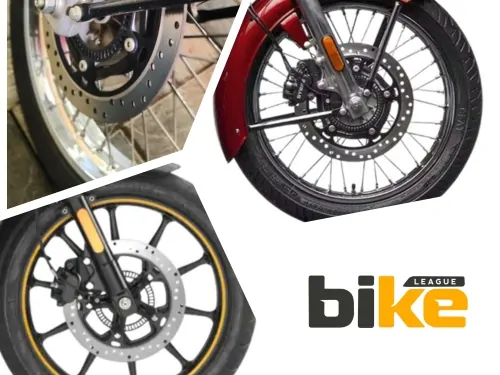
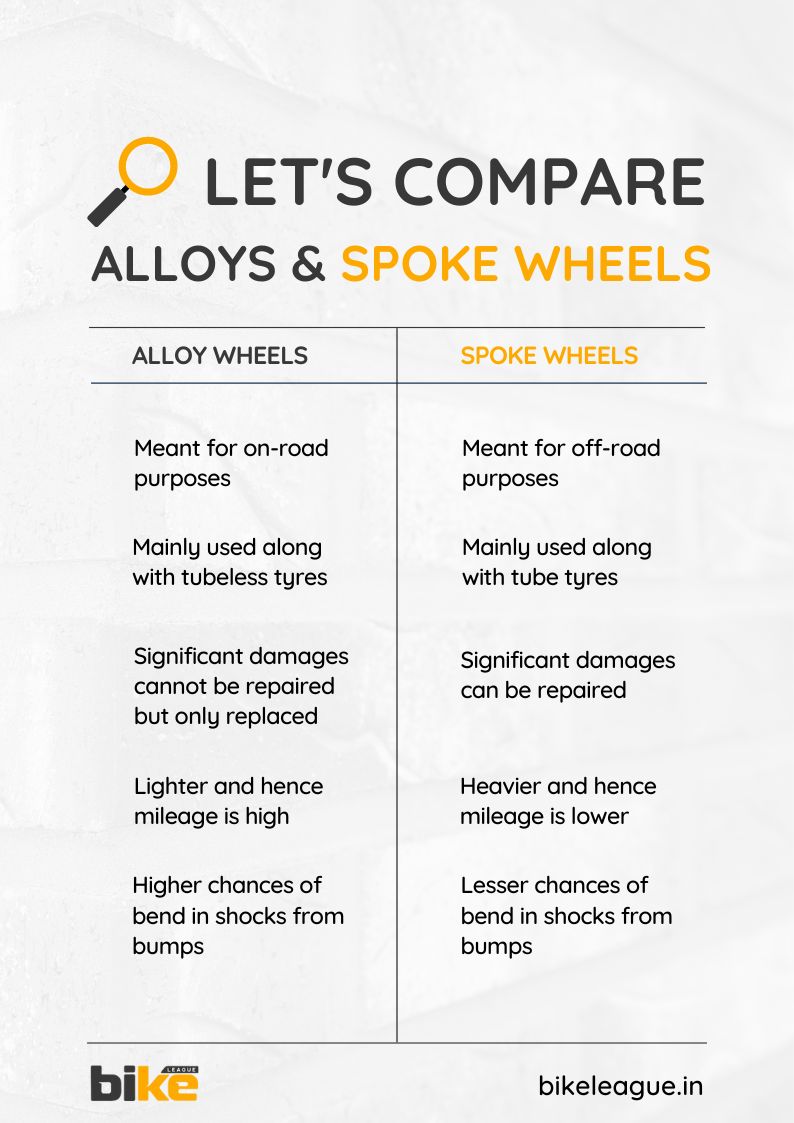
Long story short – Bike Alloy wheels are for on-road purposes. In contrast, bike spoke wheels are for off-road purposes, but what about other features of these motorcycle wheel types?
Choosing the right wheels for your motorcycle can make a big difference in how your bike performs, how safe it is, and how it feels to ride. The two main types, spoke wheels and alloy wheels, each have their own pros and cons depending on your riding style and the roads you travel.
This article looks at the differences between motorcycle alloy and spoke wheels. We’ll cover their features, benefits, drawbacks, and what you should think about before choosing one.
Key Takeaways
- Alloy wheels are best suited for on-road and high-speed riding due to their lightweight, rigidity, and compatibility with tubeless tyres, offering better handling and modern aesthetics.
- Spoke wheels excel in off-road conditions, providing superior durability and shock absorption, making them the preferred choice for adventure and dirt bikes.
- Proper maintenance is essential for both types: spoke wheels require regular tension checks, while alloy wheels need inspection for cracks and damage, especially after impacts.
- Cost and repairability differ significantly—spoke wheels are generally less expensive to repair, while alloy wheels often require full replacement if damaged.
- The right wheel choice depends on your riding style, terrain, budget, and maintenance preferences; understanding the pros and cons of each helps ensure safety, performance, and satisfaction.
Motorcycle Wheel Types
Motorcycle wheels come in various types, each designed to address specific performance needs and riding conditions. Here’s a breakdown of the common types of motorcycle wheels:
- Spoke wheels
- Alloy wheels
Spoke Wheels
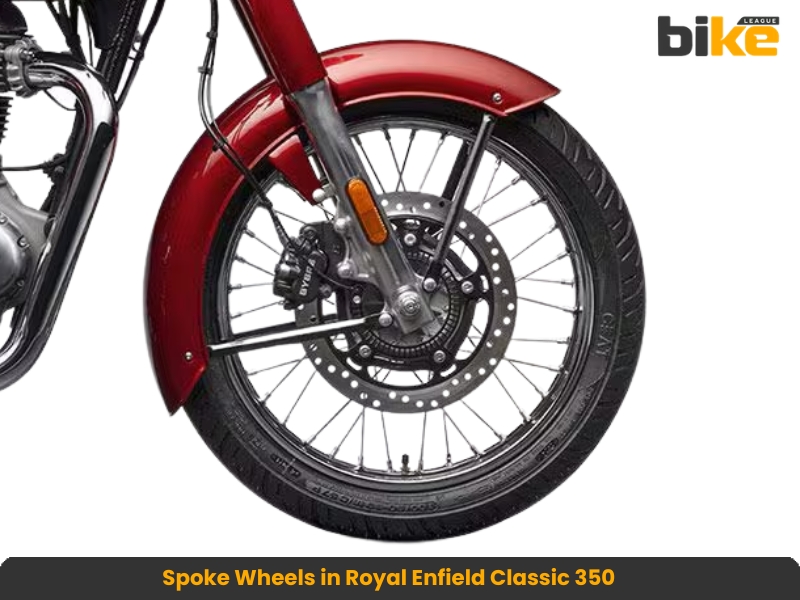
Spoke wheels are the traditional type used before the 1970s. Made from cast aluminium, they changed the motorcycle industry by being affordable, easy to make, and allowing bikes to run without tubes.
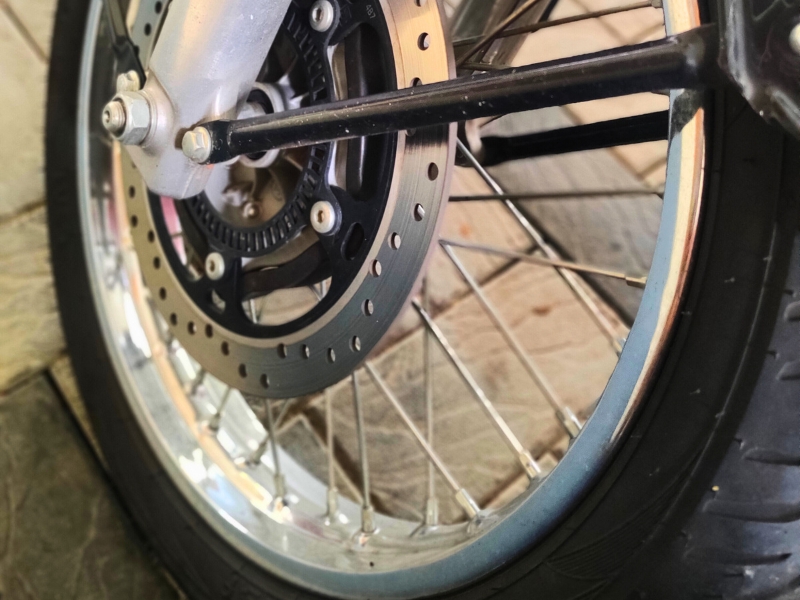
Spoke wheels work by using tension. The crisscrossed steel wires, or spokes, pull on the rim to help the wheel keep its shape and share the load.
Advantages Of Spoke Wheels
1. Durability And Flexibility
Spoke wheels are known for being durable and able to handle hard impacts, which makes them great for rough roads and off-road riding. Each spoke can bend and flex, so the wheel can handle bumps without breaking.
2. Low Maintenance And Cost
Spoke wheels usually need less maintenance and cost less to repair or replace than alloy wheels. Their design works well on rough roads, so they’re a budget-friendly choice for adventure and dirt bikes.
3. Shock Absorption
Because spoke wheels can flex, they absorb shocks from bumps, potholes, and debris. This lowers the risk of damage and gives you a smoother ride on rough ground.
4. Suitability For Off-road Use
Spoke wheels are built to handle tough conditions, so they’re better for off-road use. You’ll often see them on adventure bikes, motocross bikes, and dual-sport motorcycles.
Disadvantages Of Spoke Wheels
1. Weight And Performance
Spoke wheels are heavier than alloy wheels, which can hurt your bike’s performance and fuel efficiency. The spokes also create more air drag, which can slow the bike down and make it less efficient.
2. Maintenance Requirements
The metal spokes are always under stress, so they need to be checked and adjusted regularly to stay in good shape. This can take time and sometimes needs special tools.
3. Aesthetic And Cleaning Challenges
Spoke wheels have a classic look, but they’re harder to clean because of the tight spaces between the spokes. This can be a downside if you care a lot about how your bike looks.
Alloy Wheels
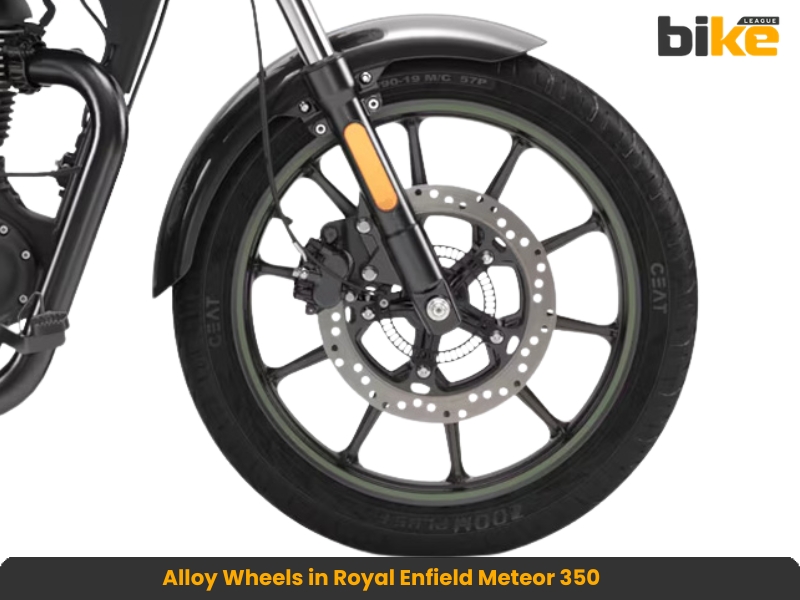
Alloy wheels are modern, tubeless wheels made for better performance and safety. They’ve changed how wheels are made. Alloys like aluminium and magnesium are light, which helps your bike perform better. Most alloy wheels are made from a mix of these metals.
Borrani started making motorcycle wheels with aluminium rims in April 1922. While cars already used cast wheels, the Bohme Land motorcycle from Czechoslovakia got them in 1927.
Advantages Of Alloy Wheels
1. Lightweight And Improved Performance
Alloy wheels weigh less than spoke wheels, which lowers the bike’s unsprung weight. This helps with handling, fuel efficiency, and overall performance. Their lightness also makes it easier to go faster and handle better.
2. Sturdiness And Stability
Alloy wheels are strong and can handle a lot of power, so they’re good for street and track bikes. Their solid build provides stability and control, especially at high speeds and during turns.
3. Modern Design And Tubeless Compatibility
Alloy wheels work well with tubeless tyres, which makes your bike safer and perform better. They also come in stylish designs that you can match to your bike’s look.
4. Ease Of Manufacturing And Repair
Alloy wheels can be made quickly and with fewer mistakes. Sometimes they’re easier to fix, but if they’re badly damaged, you’ll usually need to replace them.
Disadvantages Of Alloy Wheels
1. Susceptibility To Damage
Alloy wheels aren’t as tough as spoke wheels and can crack or dent more easily, especially on rough roads. Because they’re rigid, they don’t absorb bumps as well.
2. Higher Cost
Alloy wheels usually cost more to buy and replace than spoke wheels. This is something to keep in mind if you’re on a budget.
3. Limited Off-road Capability
Because alloy wheels aren’t flexible and don’t absorb shocks well, they’re not the best choice for off-road riding. They can get damaged or go out of balance more easily on rough ground.
Differences Between Motorcycle Alloy Wheels & Spoke Wheels In Various Aspects
| Aspect | Alloy Wheels | Spoke Wheels |
|---|---|---|
| Weight & Handling | Generally lighter than steel-rimmed spokes, so you get crisper turn-in, quicker acceleration and braking feel. Ideal for twisty roads and sport riding. | Heavier overall, and spokes add rotating mass farther from the hub, so handling feels a bit more sluggish by comparison. |
| Stiffness & Feedback | Very rigid—transmits road bumps directly into the chassis. Gives precise feedback at the expense of comfort on rough surfaces. | Spokes flex under load, absorbing small bumps and reducing “jarring” on uneven back-roads or trails. |
| Durability & Impact Resistance | Prone to cracking or bending if you hit a deep pothole at speed. Repair typically means swapping in a new rim. | A spoke can straighten or break on a hard impact, but you can usually replace a broken spoke and re-true the wheel roadside. Better for off-road and poor-road conditions. |
| Tubeless Tyres | Native tubeless fitment—easier puncture repair with sealants or plugs, and you avoid inner-tube hassles. | Traditional spokes require tubes; conversion kits exist but add weight and can compromise sealing unless you use special rims with sealed spoke nipples. |
| Heat Dissipation (Braking) | Alloy conducts heat away from brakes, helping to manage fade on long descents. | Steel spokes and rims heat up less efficiently; on long downhill runs, you may notice braking performance degrades slightly more. |
What Are The Latest Advancements In Spoke-wheel Technology In Motorcycles?
- Tubeless-Ready Spoke Rims – Several manufacturers, for e.g. Royal Enfield on the Classic 350, Honda on the H’ness CB350, KTM off-road models, now use rims with sealed spoke‐nipple beds. This lets you fit tubeless tyres without inner tubes, combining the off-road toughness of spokes with the puncture-resistance of tubeless tyres.
- Stainless-Steel & Double-Butted Spokes – Stainless steel resists corrosion (critical in India’s humid and coastal areas), and double-butted spokes (thicker at ends, thinner mid-span) reduce weight without sacrificing tensile strength.
- Proprietary Sealed Nipples & Low-Maintenance Hubs – Newer kits feature O-ring–sealed spoke nipples that keep dirt and water out, so you can go 10,000 km between full‐wheel truing services in many cases.
- Composite/Carbon Spokes (Premium Segment) – High-end adventure and racing bikes sometimes use carbon-composite struts in lieu of steel spokes—cutting weight by up to 30 % and offering even more predictable flex characteristics. Currently a niche (and costly) option, but it’s trickling from race to road.
- Self-Tensioning Spoke Systems – Experimental designs (still rare in the Indian market) use spring‐loaded nipple housings that automatically maintain spoke tension as wheels heat up, cool down, or flex under load. This promises even less maintenance in the future.
Cost Components In Both Motorcycle Spoke Wheels & Alloy Wheels In India
| Cost Component | Alloy Wheels | Spoke Wheels |
|---|---|---|
| Upfront Price | Typically ₹2,500–₹4,500 per wheel (urban commuters through mid-capacity bikes). Higher for multi-piece or “premium” designs. | Basic steel-rimmed spoke wheels start around ₹1,200–₹2,000 per wheel. Even premium stainless-steel spoke sets seldom exceed ₹3,000. |
| Routine Maintenance | Virtually none—just occasional cleaning. | Periodic wheel-truing (every 3,000–5,000km) to keep spokes evenly tensioned; a service job that costs ₹150–₹300. |
| >Repair after Damage | A bent or cracked alloy rim usually must be replaced outright (₹3,000–₹5,000). | Broken spokes can be replaced one-by-one (₹20–₹40 per spoke) and the wheel re-trued for a few hundred rupees. |
What Are The Risks If Motorcycle Wheels Are Not Properly Maintained Or Chosen Incorrectly?
Motorcycle wheels that are not maintained well or chosen appropriately can lead to serious safety issues—such as vibrations, tyre blowouts, or even loss of control—especially on India’s challenging roads. Common problems arise from ignoring spoke tension, skipping checks on alloys, or using the wrong wheel type for your riding style and terrain.
Risks Of Poor Maintenance
- If spoke wheels aren’t regularly checked and adjusted (every 3,000–5,000 km), spokes can loosen or break, leading to wheel wobbles, warped rims, and tyre failure at speed.
- With alloy wheels, neglecting cleaning or balancing can result in cracks or bends from potholes, which in turn causes uneven tyre wear and unstable handling.
- Bearings in both types can wear out and seize, sometimes suddenly, and corrosion can become a major problem in humid or coastal areas.
Risks Of Choosing The Wrong Type
- Using the wrong wheels for your needs increases the risk. Alloy wheels, for example, are prone to cracking off-road because they’re less flexible, while spoke wheels tend to add weight and drag on highways, making high-speed riding less stable and efficient.
- Using incompatible wheels can also cause braking issues, ABS malfunctions, or rubbing, all of which increase the risk of accidents on rough roads.
What Common Mistakes Do Riders Make When Selecting Or Maintaining Motorcycle Wheels?
Many riders make simple yet costly mistakes with their motorcycle wheels—either by not paying close enough attention to important details or by skipping basic maintenance. In India’s mix of city streets and rough roads, these slip-ups can lead to serious safety issues and costly repairs.
Selection Mistakes
- Overlooking fitment details: Choosing wheels with the wrong bolt pattern, offsets, or centre bore can cause annoying vibrations or, in the worst cases, brake issues or even wheels coming loose.
- Going for looks over function: It’s tempting to pick alloys for an off-road bike or spokes for highway riding just for style, but this mismatch can affect safety and performance.
- Skipping compatibility checks: Not ensuring your wheels, tyres, ABS, and suspension work together can quickly wear out parts and make your ride less stable.
Maintenance Mistakes
- Neglecting spoke checks: If you don’t check and true your spokes every 3,000–5,000 km, you risk warped rims or loose spokes that can fail while riding.
- Poor cleaning habits: Letting dirt build up, especially in humid weather, can lead to corrosion. Using harsh cleaners may also damage finishes.
- Improper tightening: Rushing axle or wheel reassembly without proper torque can throw the wheel out of alignment and wear out bearings faster.
- Ignoring wheel balance: Riding with unbalanced wheels can cause vibration and instability, which some riders ignore until it becomes a serious risk.
A little extra care and routine checks can prevent most of these issues. Always consult your bike’s manual for specific guidelines.
Faqs About Motorcycle Spoke And Alloy Wheels
1. What Are The Main Differences Between Alloy And Spoke Wheels?
Alloy wheels are made from a single metallic block, typically aluminium or magnesium, and are known for their rigidity and lightweight properties. In contrast, spoke wheels have a rim connected to a hub by several wire spokes, offering more flexibility and durability, especially on rough terrains.
2. Which Type Of Wheel Is Better For High-speed Riding?
Alloy wheels are better suited to high-speed riding due to their rigid structure, which provides better handling and corner stability. They can handle higher speeds and more horsepower and torque with ease.
3. Are Alloy Wheels More Durable Than Spoke Wheels?
Spoke wheels are generally more durable than alloy wheels because they can bend and flex to absorb shocks from rough terrains, making them ideal for off-road riding. Alloy wheels, while sturdy, are more susceptible to cracks and dents and often require complete replacement if damaged.
4. Can We Use Bike Alloy Wheels With Tubeless Tyres?
Yes, alloy wheels almost universally allow tubeless tyres to fit, offering advantages such as better stability, cooler running, and easier puncture repair. This is one of the significant benefits of alloy wheels over spoke wheels.
5. What Are The Maintenance Requirements For Spoke Wheels?
Spoke wheels require regular inspection and adjustment to ensure that each spoke is under the correct tension. This maintenance is crucial to prevent wheel deformation and ensure optimal performance, especially on rough terrains.
6. Are There Any Weight Differences Between Bike Alloy And Spoke Wheels?
Alloy wheels are generally lighter than spoke wheels, which can improve fuel efficiency and reduce the motorcycle’s unsprung weight, enhancing road-holding capabilities. However, there are varying arguments about the weight differences depending on the specific materials and designs used.
7. What Are The Cost Implications Of Choosing Bike Alloy Wheels Over Spoke Wheels?
Alloy wheels are typically more expensive than spoke wheels due to the higher quality materials and manufacturing processes. However, they offer modern features like tubeless tyre compatibility and improved performance, which can justify the higher cost for many riders.
8. Which Type Of Wheel Is Better For Off-road Riding?
Spoke wheels are better suited for off-road riding because they are more flexible and better at absorbing impacts from rough terrain, reducing the risk of wheel damage. Their durability and ability to handle shocks make them the preferred choice for off-road bikes, scramblers, and adventure motorcycles.
9. What Are The Aesthetic Differences Between Bike Alloy And Spoke Wheels?
Alloy wheels are available in various designs and colours, offering a modern and stylish look. In contrast, spoke wheels have a traditional design that appeals to riders who prefer a classic or retro aesthetic.
10. What Should I Consider When Choosing Between Alloy And Spoke Wheels?
When choosing between alloy and spoke wheels, consider your riding style, the terrain you frequently encounter, and your maintenance preferences. Alloy wheels are ideal for high-speed on-road riding and require minimal maintenance, while spoke wheels are better for off-road conditions and require regular upkeep.
11. Does The Number Of Spokes In Wheels Increase Ride Quality?
The greater the number of spokes, the stronger the wheel gets. But it also affects the bike’s overall aerodynamics. A higher number of spokes creates greater wind resistance and reduces power transmission to the wheels.
12. Are Spoke Wheels Reliable?
First, let’s deduce from your requirements that spoke wheels are much more reliable. They are repairable and do not crack or lose composure in bumps.
13. Are Spokes In Spoke Wheels Replaceable?
A faulty or damaged spoke should be replaced. In a properly built wheel, stainless steel spokes don’t suffer from fatigue, so a fatigue failure can be the first of many. Two or more fatigue failures indicate that rebuilding the entire wheel with new spokes is the best option.
14. Can Spoke Wheels And Tubeless Tyres Be Used Together?
The spoke nipples have a gap between the rim and the spoke tensioner that would cause leaks if fitted with tubeless tyres. Hence, tubeless tyres couldn’t fit on bike-spoke wheels. While there are exceptions in the spokes of superbikes, the spoke nipples are sealed during manufacturing.
15. Can We Repair Damaged Alloy Wheels?
The user cannot repair damaged alloy wheels; the only option is to replace them.
16. Why Are Tubeless Tyres Suitable For Alloy Wheels?
Alloy wheels are ideal for tubeless tyres because of the tyre’s seating position on the rim. The tyre fits perfectly and accurately on the rim in the periphery, which is very important; improper fitting may cause the bike to start wobbling while riding.
17. Do Motorcycle Wheels Need Alignment?
Generally, it is not needed for an alloy wheel. But the spoke wheels need alignment.
18. Where To Buy Motorcycle Wheels Online?
Always look for motorcycle wheels on the official company website or e-commerce portals like Amazon India or Flipkart. You can refer online for colour options and other details. But never buy online.
19. Should You Always Buy Motorcycle Wheels Offline?
Yes, without a doubt, you should buy motorcycle wheels offline to check their size, quality, and colour, and make the final decision only after seeing them. So, always purchase offline.
Other Related Articles From Bikeleague India
- What is Motorcycle ABS? – Doubts, Queries and FAQ
- Bajaj CT 110X
- Aprilia SR 125
- ADMS DB
- Hero Xoom 125
Conclusion
The choice between alloy and spoke wheels comes down to your riding style, what you prefer, and the roads you ride most often. Alloy wheels are great for performance, modern looks, and easy maintenance, so they’re perfect for city rides and highways. Spoke wheels are best if you need durability and shock absorption, especially for rough or off-road trips.
Each type has its own strengths and weaknesses, so think about what matters most to you—cost, looks, or how the wheels work—before you decide. If you stay informed and take care of your wheels, you’ll have a safer and smoother ride, no matter which type you pick.
If you have any questions, feel free to email us at bikeleague2017@gmail.com or leave a comment below. We’re always happy to help. You can also find us on social media.