
Long story short: The latest Royal Enfield Bullet 350 is smoother, safer, and more refined, offering modern comforts while maintaining the classic look. Still, the old Bullet’s raw, nostalgic character continues to attract riders who cherish tradition over technology.
The Royal Enfield Bullet 350 is a classic motorcycle loved by riders for generations. Now that the new Bullet 350 is here, many fans and enthusiasts want to know how it compares to the original.
In this article, we’ll compare the old and new Bullet 350 models, looking at their features, performance, and what it’s like to ride them. Whether you already own a Bullet or are thinking about getting your first Royal Enfield, this guide will help you see what each version offers and which one could suit you best.
Key Takeaways
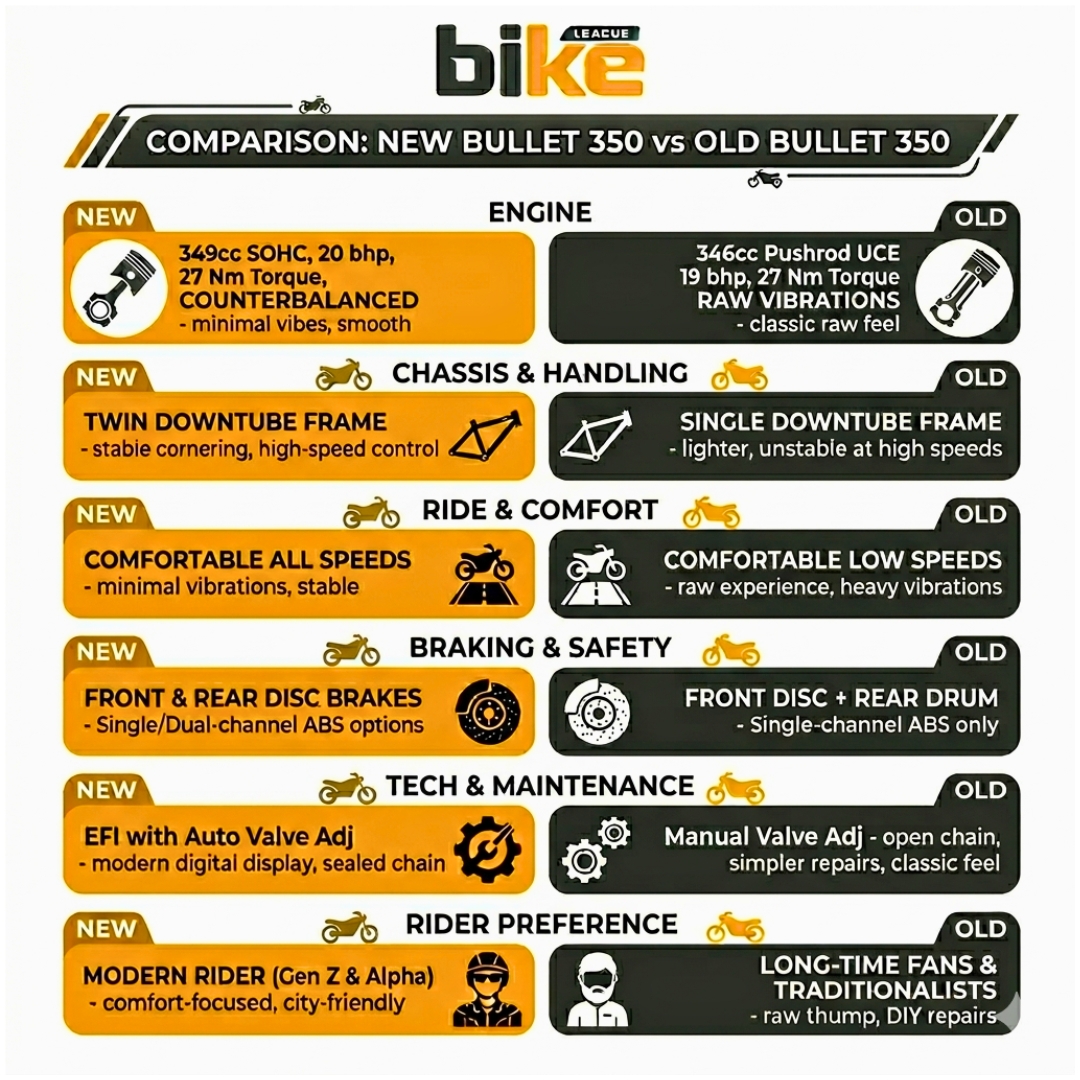
- The new Royal Enfield Bullet 350 features a smoother, more refined engine with less vibration, making it more comfortable at high speeds compared to the older model’s raw, classic feel.
- Build quality and fit & finish have improved significantly in the latest model, offering sturdier components, better paint, and more official accessories, while older Bullets have a rugged charm but more inconsistencies.
- The latest Bullet 350 brings modern technology, including a semi-digital display, maintenance-free battery, and EFI, whereas the old model is simpler and easier for DIY repairs but requires more frequent maintenance.
- Riding comfort, handling, and safety are enhanced in the new Bullet with a stronger chassis, improved suspension, and disc brakes with ABS on both wheels; the older version is lighter but less stable and offers basic braking.
- The new Bullet 350 offers more color options and variants, appealing to a wider range of riders, while the old model is preferred by traditionalists who value nostalgia and classic riding experience.
Comparison Between New Royal Enfield Bullet 350 Vs Old Bullet 350
1. Engine Of Old & New Royal Enfield Bullet 350
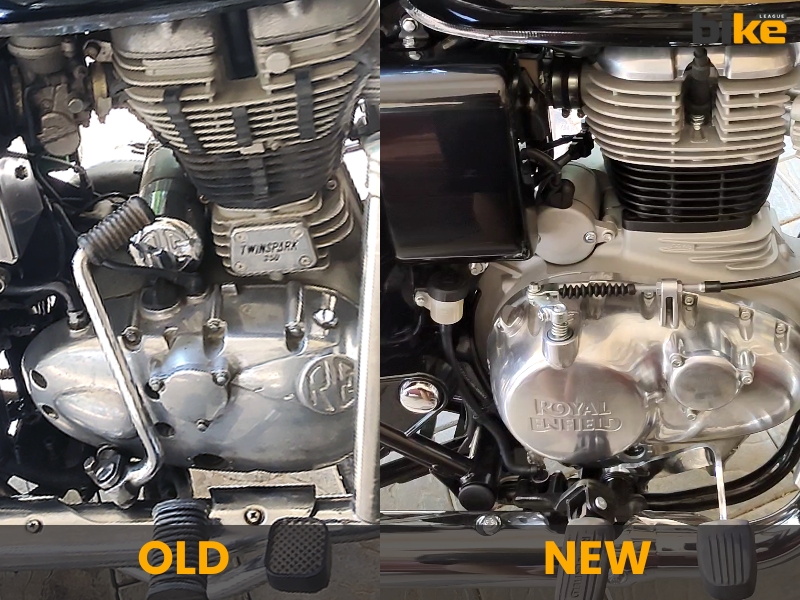
The most significant change in the motorcycle is the engine. The new Royal Enfield Bullet 350 features a smoother, slightly larger engine (349 cc) compared to the old one (346 cc).
This engine, also found in the Meteor 350 and Classic 350, provides slightly more power: approximately 20 bhp in the new model, compared to 19 bhp in the old. The pulling strength (torque) stays nearly the same at 27Nm. As a result, the ride is smoother and vibrates less than the old Bullet.
To sum up, the new Bullet 350 gives you a smoother and more powerful ride, especially at higher speeds. The old Bullet still has its tough, classic character that many long-time fans love. If you’re a purist, you might lean toward the older model, but the new one really shines when you ride above 60km/h.
2. Fit & Finish
The new Bullet 350 feels sturdier overall. The switches, footrests, and other parts are stronger and fit together better. The paint looks more even and is less likely to chip, plus you get more color choices. There are also plenty of official accessories for this model, which come in handy.
Older Bullets sometimes had loose parts, uneven gaps, or paint issues. But for some riders, this roughness adds to their classic charm. Since there are fewer official accessories, many owners use third-party parts instead.
3. Electrical System
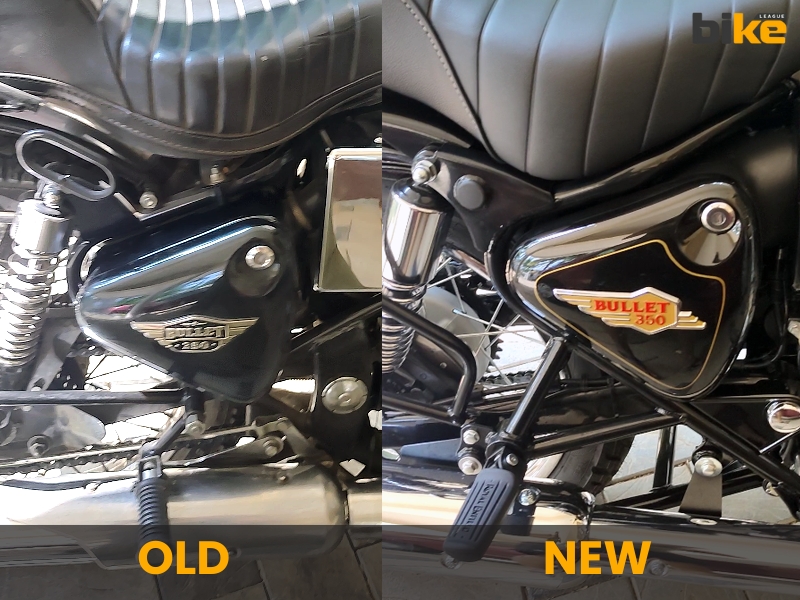
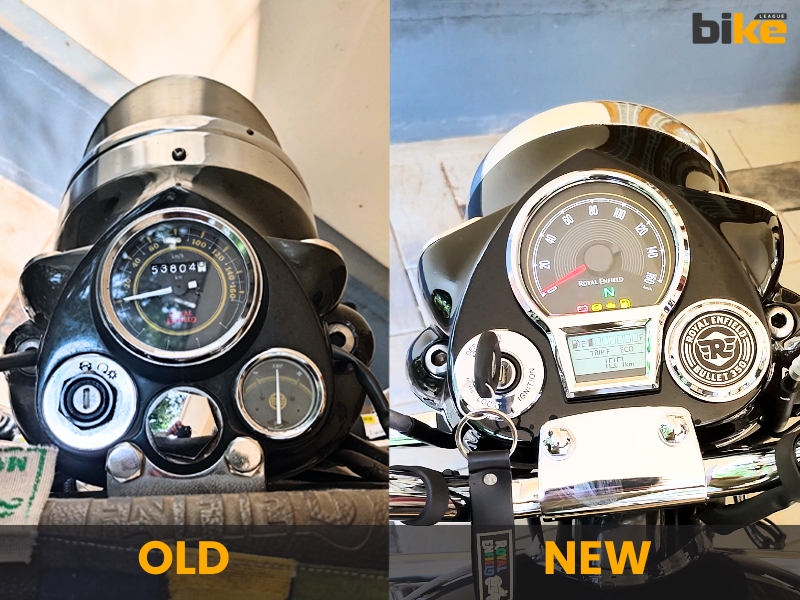
The old Bullet used a spinning magnet to start the engine and basic lighting and a foot lever to start. The new Bullet 350 uses a battery and generator, so you just press a button to start it. None of the new models has a foot lever.
The new semi-digital display gives you both pointer dials and digital numbers, showing speed, fuel level, total and trip distance, a clock, brake safety light, battery warning, and more. There’s also a USB charger for your devices. Older models only had pointer dials for speed and distance, and some didn’t even have a fuel gauge.
The latest Bullet 350 still uses standard bulbs for the front, rear, and signal lights rather than modern LEDs. On the plus side, the battery is maintenance-free, a big advantage that comes standard on all new models.
4. Chassis
The old Bullet used a single main support bar, which wasn’t as sturdy and made it harder to control at high speeds. The new Bullet 350 has two stronger support bars, giving you better control and stability when turning or riding fast. The new design solves the stability issues of the older models.
5. Suspension Of Old & New Royal Enfield Bullet 350
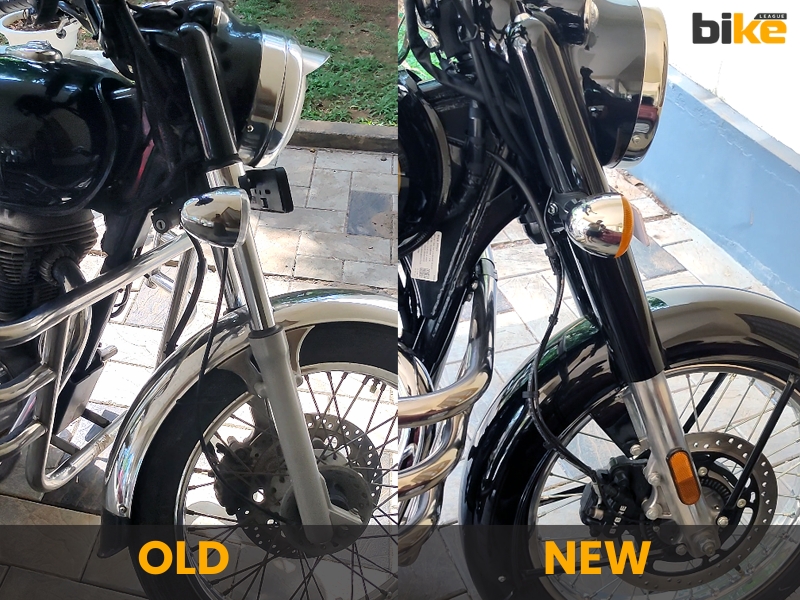
The old Bullet had basic front shocks that didn’t absorb bumps well, especially on rough roads. The rear springs weren’t very adjustable, so the ride was less comfortable. Oil-filled shocks also didn’t handle bumps as well as gas-filled ones.
The new Bullet has thicker front shocks for better control and stability, especially during braking or cornering. The rear springs are adjustable, so you can set them for your weight or riding style. This makes the ride smoother and easier to manage.
The new Bullet 350 uses gas-filled shocks, which are better than the old oil-filled ones. Gas-filled shocks absorb bumps more effectively, giving you a smoother ride.
6. Ride Quality & Refinement
The old Bullet 350 felt more comfortable at slow speeds. Its soft suspension smoothed out small bumps when riding slowly. But the simple frame and shocks made it feel wobbly, especially in turns or at high speeds. The engine also vibrated a lot, which could make long rides tiring.
The new Bullet 350 is comfortable no matter how fast you go. Its stronger frame and better shocks make the ride smoother, even on rough roads. The new engine also reduces vibrations, making rides much more enjoyable.
7. Handling Old & New Royal Enfield Bullet 350
The old Bullet 350 is lighter and easier to handle at low speeds. Its thin tires and simple frame help you maneuver in tight spaces. However, the weaker frame and suspension made it less stable during turns or over bumps.
The new Bullet 350’s stronger frame and better suspension give you more control and confidence, even when turning or riding fast.
The discontinued Bullet 350 had its own charm, especially with a smoother ride on highways. The latest Bullet 350 offers a more balanced and confidence-boosting experience, whether you’re cruising or riding in the city.
8. Braking System
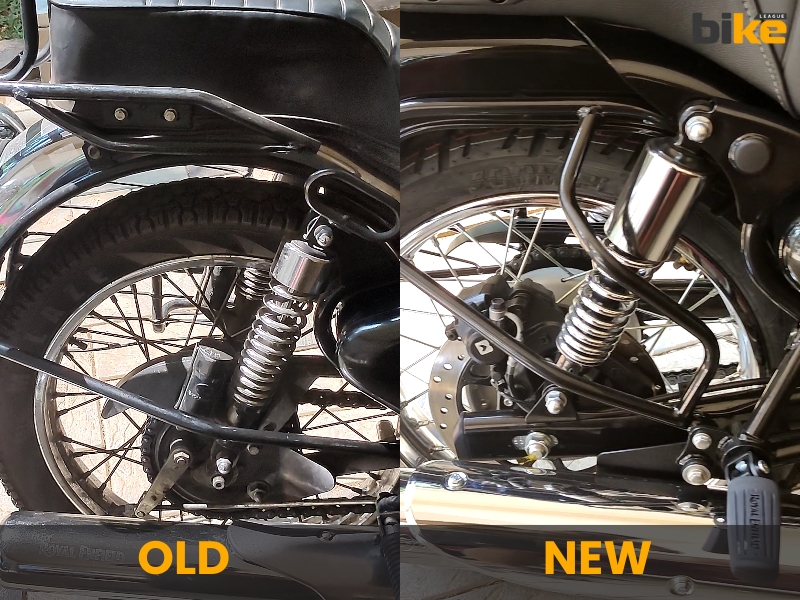
The old Bullet had a disc brake in front and a drum brake at the back, so stopping power wasn’t as good. The rear brakes were noisy and needed more maintenance. It had ABS, but only for the front wheel, which made it less safe than systems that work on both wheels.
A major upgrade in the new Bullet is disc brakes on both wheels. Some versions also have ABS for both wheels, giving riders more safety and options.
9. Maintenance & Service
With the discontinued Bullet 350, you need to adjust the valve clearance regularly because of wear and tear. These adjustments help keep the air-fuel mixture right for smooth running and good fuel efficiency. The chain also needs more frequent care.
The simpler design makes it easier to reach certain mechanical parts. Spare parts are often easier to find and may cost less. This straightforward setup is great for riders who like doing their own basic repairs.
The new Bullet 350 automatically adjusts valve clearances, reducing the need for manual intervention. Fuel injection (EFI) manages the air-fuel mixture, offering a more consistent and hassle-free experience. The sealed chain design requires less frequent lubrication and adjustment.
Modern features like fuel injection mean you might need special tools or expert help for repairs. Because the systems are more complex, you’ll often need to go to trained professionals at authorized service centers for maintenance.
The discontinued Bullet 350 needs more frequent adjustments, but its simple design makes DIY maintenance easier. The new Bullet, with its more complex systems, needs fewer adjustments but often requires a service center for certain tasks.
10. Color Options
There are now seven color options, with chrome available on six of them. The top variant, Black Gold, doesn’t have any chrome. All versions come with single-channel ABS as standard.
Standard Black, Standard Maroon, and Black Gold come with dual-channel ABS. The Madras line on the fuel tank isn’t available on the military black and military red options.
The older generation had fewer color choices. Dual-channel ABS wasn’t offered with any color variants; only single-channel ABS was standard.
Pros And Cons Of Old Royal Enfield Bullet 350 (uce)
| Pros | Cons |
|---|---|
| Raw, classic riding feel and distinct engine thump | High vibration levels, especially over longer rides |
| Simpler engine layout, easier for home mechanics and DIY service | Outdated braking—drum on rear, single-channel ABS, less safety |
| Kick starter available (in ES models) for emergencies | Wobbly and less planted at higher speeds or on uneven roads |
| Heavy metal construction and classic charm | Inconsistent paint quality,loose fittings possible |
| Less expensive to buy and maintain spares are cheaper | Minimal official color options or company accessories |
| Straightforward analog meters,fewer electronics to fail | Needs frequent manual valve and chain adjustment |
| Many third-party accessories and parts available | Drum rear brake needs regular attention and may be noisy |
Pros And Cons Of New Royal Enfield Bullet 350 (j Series)
| Pros | Cons |
|---|---|
| Smoother,refined J-series engine with fewer vibrations better for long rides | Engine thump less pronounced than the classic model |
| Improved modern chassis offers more stability, confidence, and safety | Lacks kick starter—only self-start option |
| Front & rear disc brakes, ABS on both wheels (in some variants) | Repairs and major servicing require professional help due to complex tech |
| Adjustable, gas-filled rear suspension for superior comfort | Slightly higher maintenance costs, fewer DIY options |
| Semi-digital instrument console: fuel gauge, clock, trip meters, service indicator | Conventional headlight bulbs; no full LED setup |
| Fuel injection, sealed chain, and maintenance-free battery | Pricier than older generation; top variants cost more |
| Wide array of new colors and company accessories | Purists may miss classic look and rugged feel |
| Enhanced build quality & finish, more precise paintwork |
What Is The Impact Of E20 Fuel On The New And Old Royal Enfield Bullet 350?
What Is E20?
E20 fuel is simply petrol that contains 20% ethanol and 80% regular petrol. It’s being introduced in India to help reduce pollution and our dependence on fossil fuels. Ethanol comes from plants like sugarcane or corn, so it’s a bit kinder to the planet than pure petrol.
How Does E20 Affect The New Bullet 350?
If you’ve got the latest Royal Enfield Bullet 350, you’re in luck. These new models are built to handle E20 fuel—Royal Enfield has used materials in the engine, fuel pipes, and seals that aren’t easily worn out by ethanol. You’ll be helping the environment with lower emissions every time you ride. You might notice a tiny drop in mileage and a little less power, but for most riders, this won’t make a big difference in daily life. The ride still feels smooth and enjoyable.
What About The Older Bullet 350?
If you’re riding a classic Bullet 350, especially one made before E20-compatible versions came out, a bit of caution is needed. Ethanol can be tough on older rubber hoses, gaskets, and metal parts that weren’t designed for it. Over time, using E20 in these older bikes could mean more frequent repairs, clogged fuel lines, or engine trouble. Unless your older Bullet’s fuel system has been upgraded with ethanol-resistant parts, it’s best to check with a Royal Enfield service center before regularly filling up with E20.
The Bigger Picture
India’s move to E20 is a big step toward greener riding. The new Bullet 350 handles it easily, but classic Bullets need a little extra care. If you’re unsure, a quick chat with a mechanic or service center can save you from bigger hassles down the road.
Faq Related To Royal Enfield Bullet 350 (j Series) Vs Discontinued Royal Enfield Bullet 350 (uce)
1. Are There Differences In Vibration Levels Between The Two Models?
Yes, there’s a significant difference. The J series engine features a counterbalancer that substantially reduces vibrations, resulting in a smoother ride compared to the UCE engine. The UCE models were known for their characteristic vibrations, which some riders found uncomfortable over long distances.
2. How Does The Riding Comfort Compare Between The J Series And The Uce Bullet 350?
The J series offers a more comfortable riding experience due to its reduced vibrations and improved engine refinement. This enhancement in comfort is often likened to the refinement difference between riding in a truck (UCE) and a sedan (J series).
3. Are There Any Notable Design Changes In The J-series Bullet 350?
While the J series Bullet 350 retains a retro-styled design similar to its predecessor, it incorporates modern touches such as a Smiths-style clock and chrome elements. It also features a helpful digital display with a fuel gauge, clock, and two trip meters.
4. How Does The Build Quality Compare Between The Two Models?
The J series engines are considered better built than the UCE engines. While the UCE might feel heavier due to its weight and metal construction, the J series offers a more refined, modern design.
5. Is There A Difference In The Engine Architecture Between The J Series And Uce?
Yes, there’s a significant change. The J-series engine replaces the older pushrod architecture of the UCE with a more modern SOHC (Single Overhead Camshaft) setup, which improves both performance and reliability.
6. How Does The Overall Riding Experience Differ Between The Two Models?
Riders have praised the J series for its smooth performance and less complicated riding experience. It’s a preferred choice for new riders or those looking for a hassle-free ride. The UCE had its own charm and was known for a raw, vibration-heavy experience.
7. Are There Any Significant Technological Upgrades In The J-series Bullet 350?
Yes, the J series Bullet 350 comes with several technological upgrades. It features a digital display with a fuel gauge, clock, and trip meters. The engine also incorporates modern technology, such as a counterbalancer, to reduce vibration. These features represent Royal Enfield’s commitment to enhancing the riding experience while maintaining the classic appeal of their motorcycles.
8. What Is The Fuel Efficiency Difference Between The New And Old Bullet 350?
The new Bullet 350 (J series) usually delivers slightly better fuel efficiency thanks to its modern fuel-injection system and refined engine. While real-world mileage depends on riding conditions, most users report around 35-40 km/l for the J series, compared to 30-35 km/l for the older UCE model.
9. Can I Still Get Spare Parts And Service For The Discontinued Uce Bullet 350?
Yes, Royal Enfield and several third-party vendors continue to provide spare parts and service for the UCE Bullet 350. However, some unique or older parts may take longer to source, so it’s a good idea to check with your local dealer or a trusted mechanic.
10. Which Bullet 350 Is Better For Beginners?
The new Bullet 350 (J series) is generally more beginner-friendly due to its smoother engine, lighter clutch, better brakes (especially models with dual-channel ABS), and reduced vibrations. The older UCE model, while simpler mechanically, may feel heavier and more challenging for new riders, especially in city traffic.
Other Related Articles From Bikeleague India
- Cruising bikes or cruisers – Top 10 under 5 lakhs in India
- Adventure bikes vs Touring bikes which one is the best
- RE Bullet 350
- RE Classic 350
- Royal Enfield Bikes
Our Opinion
The discontinued Royal Enfield Bullet 350 gave riders a raw, classic experience with its famous “thump.” While it had plenty of charm, comfort, and refinement, they weren’t its main strengths. The new Royal Enfield Bullet 350 prioritizes comfort and a smoother ride while retaining its iconic look. Stricter emission rules may have softened the “thump” a bit.
Even so, the new Bullet appeals to more riders who want both heritage and modern features. The easy DIY repairs of older Bullets aren’t found in the new generation. Also, the advanced technology in the new Bullet could make long trips harder if you break down.
Conclusion
Both the classic and modern Royal Enfield Bullet 350 are still icons on Indian roads. The old Bullet 350 appeals to traditionalists with its raw, mechanical feel and unique thump, perfect for those who enjoy hands-on riding and maintenance. The new Bullet 350, on the other hand, offers significant improvements in comfort, technology, and everyday use, making it a great choice for a new generation of riders who want refinement and reliability while still appreciating tradition.
In the end, choosing between the two is all about what you prefer. The old Bullet is for those who love nostalgia and the classic riding feel, while the new Bullet is best for riders who want modern features and a smoother, easier ride. No matter which you pick, the Bullet’s spirit lives on and keeps inspiring motorcycle fans.
If you have any questions, just email us at bikeleague2017@gmail.com. We’re always happy to help. You can also follow us on social media for more updates from Bikeleague India.