
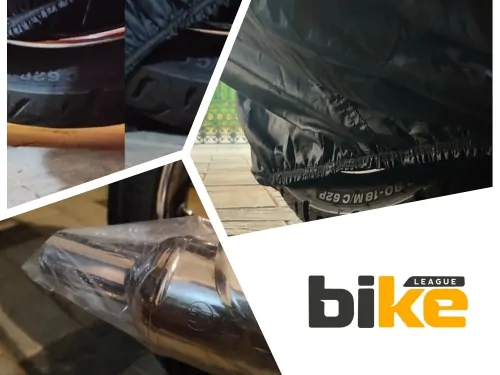
Long story short: Discover tips & precautions for preparing your motorcycle for long-term indoor storage with our comprehensive guide. From cleaning to battery care, we’ve got everything covered.
Proper indoor storage helps keep your motorcycle in good condition during long breaks. Whether you’re taking a seasonal break, travelling, or just want your bike to stay ready, these steps can help you avoid expensive repairs and make sure your motorcycle is ready when you need it.
This guide covers what you need to know about storing your motorcycle indoors for an extended period. You’ll find tips on maintenance, protection, and advice for different climates and bike types. Let’s get started so your bike lasts longer and runs smoothly.
Key Takeaways
- Always prepare your motorcycle thoroughly for long-term indoor storage by cleaning, changing fluids, and having it serviced by an authorised dealer to prevent corrosion and mechanical issues.
- Store your motorcycle in a dry, secure, and preferably climate-controlled location. Use a breathable, waterproof cover and elevate or rotate tyres to prevent flat spots and moisture damage.
- Remove the battery and keep it on a maintainer or in a dry place to avoid discharge and extend its life during storage. Treat leather and metal parts to prevent cracking and rust.
- Seal all exhaust and intake openings to keep out moisture and pests, and periodically check your motorcycle’s condition, even during storage.
- Before riding again, carry out a comprehensive pre-ride inspection and consider another authorised service to ensure your motorcycle is safe and fully operational after storage.
List Of All Motorcycle Storage Precautions & Tips
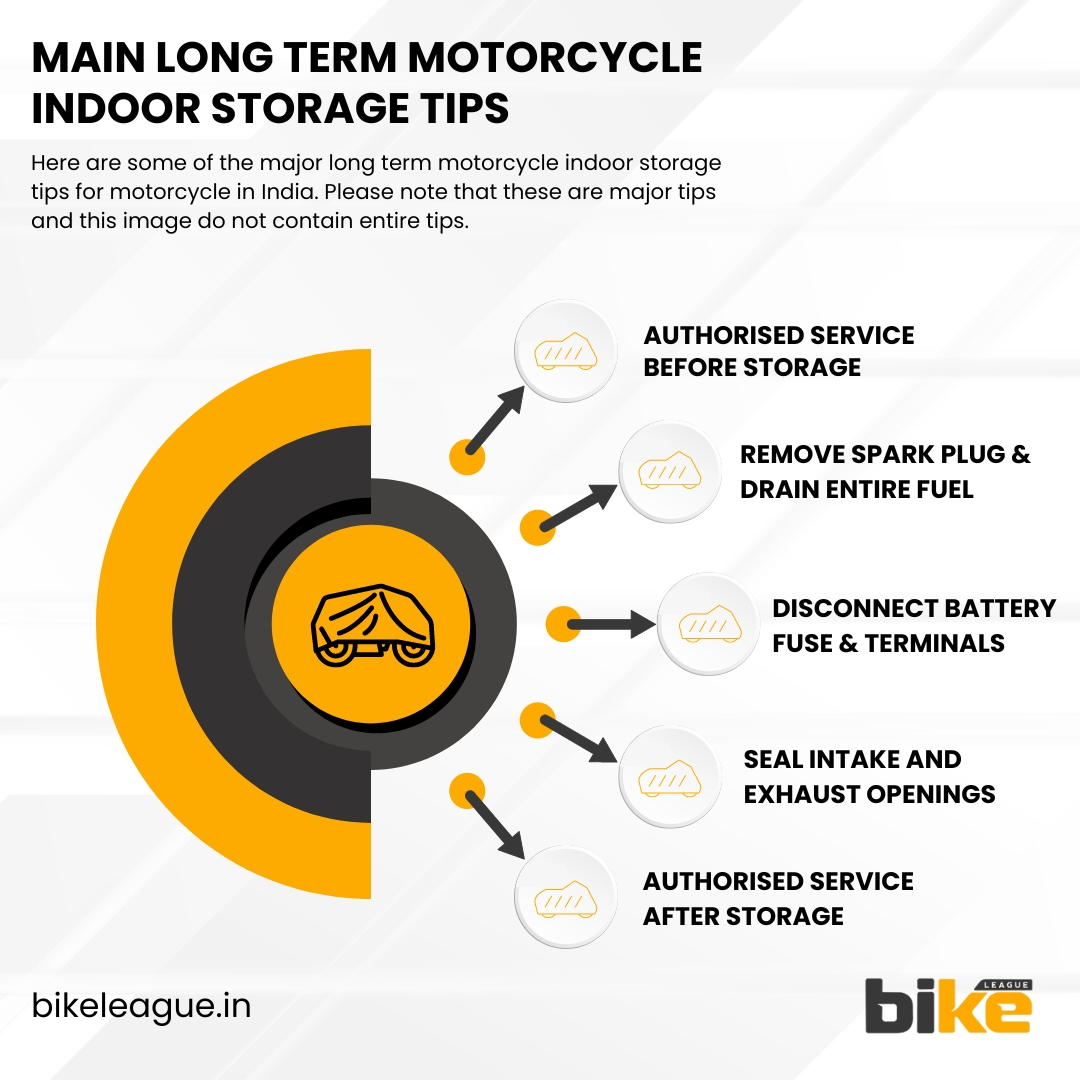
1. Get An Authorised Service First
Before you store your motorcycle, it’s important to get it serviced at an authorised service centre.
2. Choosing The Right Motorcycle Storage Location
2.1 Motorcycle Indoor Storage
It’s best to store your motorcycle indoors to protect it from bad weather, temperature changes, and theft. Good options are garages, sheds, or climate-controlled storage units. These places keep the temperature steady, which is good for long-term storage.
2.2 Climate-controlled Units
A climate-controlled self-storage unit can protect your motorcycle from freezing winters and hot summers. These units also give you extra space for gear like helmets, jackets, and tools.
2.3 Security
To keep your motorcycle safe from bad weather and damage, look for a self-storage facility with good security and gate code access.
3. Pre-storage Maintenance
3.1 Cleaning
Before you store your motorcycle, wash and wax it well. Pay special attention to chrome and painted parts to stop rust and corrosion. Clean the drive chain and use the right chain lubricant. Wipe off any extra lubricant after about 5 minutes.
3.2 Fluid Changes
Check your Owner’s Manual and change the engine oil, oil filter, brake fluid, and coolant or antifreeze as recommended. This stops old fluids from causing damage while your bike is stored.
3.3 Fuel System And Spark Plug
Drain the fuel from the tank and induction system, or add a fuel stabiliser to keep the fuel from going bad. Some stabilisers work for up to 24 months. Remove the spark plug, pour about 5 ml of clean engine oil into the hole, close it, turn the engine over a few times, and put the spark plug back in.
3.4 Battery Care
Take out the charging circuit fuse, disconnect the battery terminals, and remove the battery. Store it in a cool, dry, and airy place. Before putting the battery back, check its voltage. If it’s low, recharge it at an authorised service centre or battery shop.
4. Physical Protection
4.1 Metal Parts
Apply anti-rust solutions to all plated parts, avoiding them on chrome, rubber, or painted parts.
4.2 Tyre Care
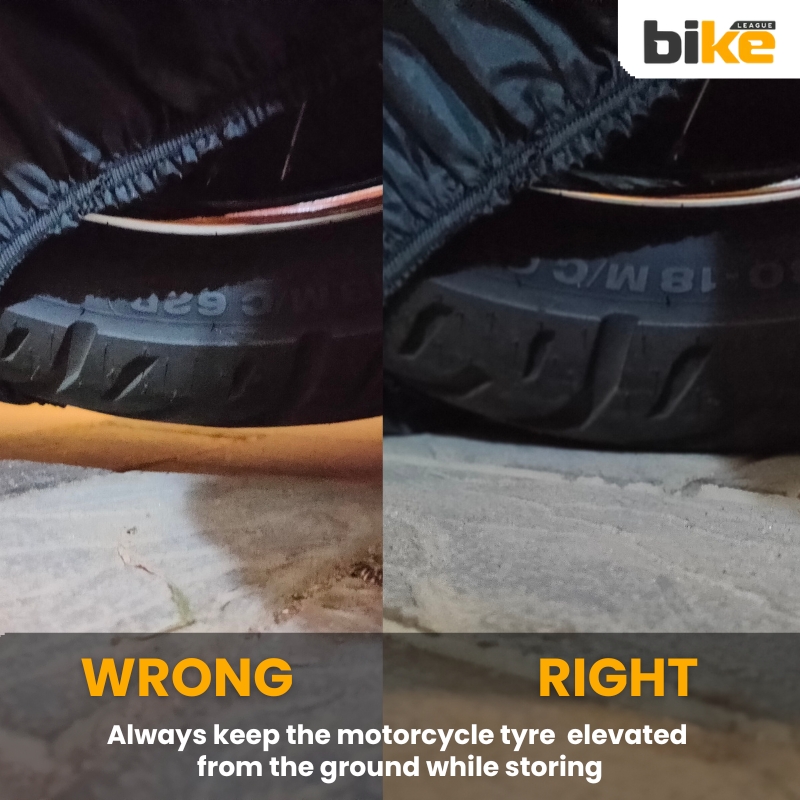
Over-inflate the tyres to prevent flat spots, or use a motorcycle stand to elevate the bike. Occasionally, rotate the tyres to change their contact points with the ground.
4.3 Covering
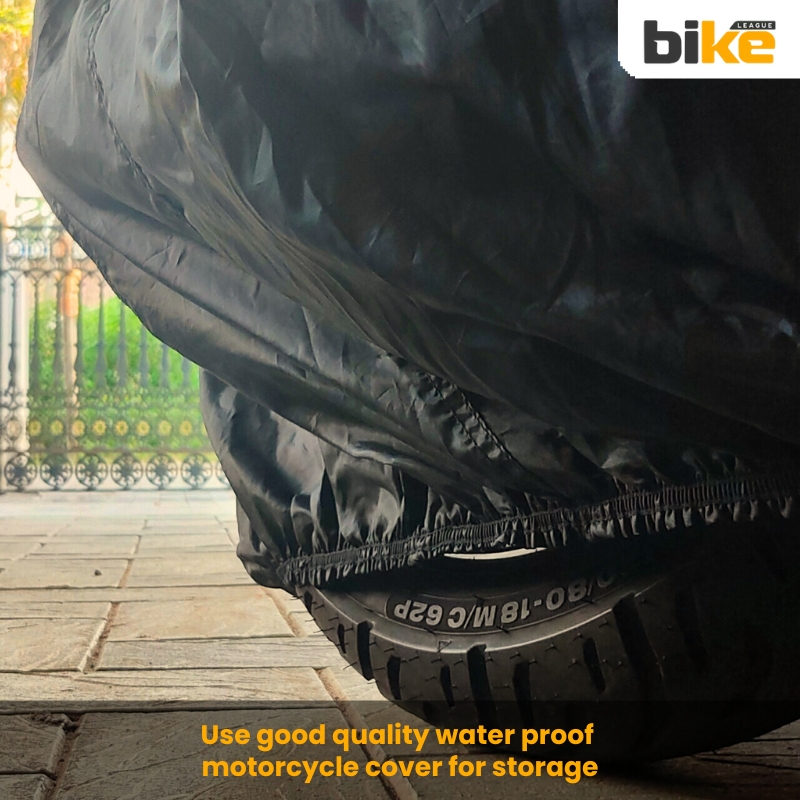
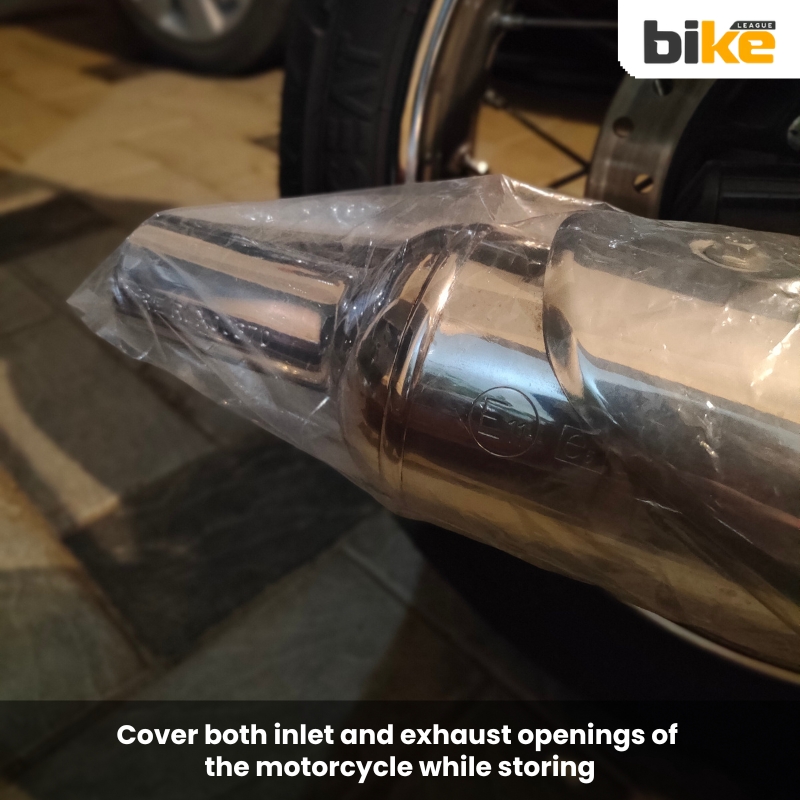
Use a breathable, waterproof cover to shield your motorcycle from dust and moisture. Cover the silencer with suitable bags to prevent moisture entry. Set the bike on its centre stand and avoid placing it near heating or hot items to prevent damage.
4.4 Seal Openings
Seal the exhaust and intake openings to prevent small animals from nesting inside.
5. Long-term Motorcycle Storage Tips
5.1 Periodic Checks
While starting the motorcycle periodically during storage is not recommended, it is essential to perform occasional checks to ensure everything is in order. Flex the levers and rotate the rear wheel if the bike is on a centre stand.
5.2 Leather Treatment
Store leather items, such as seats and saddlebags, in a dry, heated building and treat them with a leather conditioner to prevent cracking.
5.3 Avoiding Improper Storage
Improper storage, such as haphazardly placing the bike in a corner, can lead to various issues. To avoid problems, ensure each step is followed meticulously.
6. Preparing For The Riding Season
6.1 Pre-ride Inspection
Before taking your motorcycle out of storage:
- Perform a thorough safety check.
- Inspect the battery, check for leaks, ensure fluid levels are topped off, and verify that the tyres are properly inflated.
- Test all lights and signals, and make sure the throttle and clutch function correctly.
6.2 Fuel and Spark Plugs
Drain any old fuel and replace it with fresh gasoline. Check and, if necessary, replace the spark plugs before starting the engine.
6.3 Final Step
Restoring the motorcycle to its peak operating condition by preparing it at an authorised service centre for reuse after storage is preferable.
What Are The Best Practices For Different Two-wheeler Storage Durations (e.g., 1 Month Vs 6 Months Vs 1 Year)?
When it comes to storing your motorcycle, there’s no single rule that fits every situation. Parking it for a month in your city garage is very different from stashing it away for a full year. By tailoring your approach to the storage duration, you can save yourself unnecessary effort and keep your bike in top shape for when you’re ready to ride again.
1. Short‑term Storage (1–2 Months)
This kind of short-term storage is common during monsoon breaks, travel, or brief job transfers. The main priorities are to look after your fuel and battery, and to provide some basic protection for the bike.
- Give your bike a good wash and dry it thoroughly. If you like, add a light coat of wax for extra protection.
- Fill the fuel tank and add a fuel stabiliser. Let the engine run for a few minutes so the treated fuel gets through the system.
- Either disconnect the battery or keep it connected to a battery maintainer. If you decide to leave it connected, remember to check the charge every 3 to 4 weeks.
- Slightly over-inflate the tyres (but stay within safe limits), and cover your bike with a breathable, waterproof cover.
- Block the wheels using the centre stand or simple blocks, and try not to store the bike on damp concrete.
If you’re storing your bike for less than two months and it’s in a dry, covered spot, you don’t need to worry about changing the oil, draining the fuel, or removing the battery.
2. Mid‑term Storage (3–6 Months)
Mid-term storage is often needed during those stretches when harsh weather rolls in or you’re away for a longer job assignment—think summer-monsoon overlap, winter breaks, or a shift from city to town for several months. In these situations, putting in a bit more preparation pays off and helps avoid headaches later.
- Give your motorcycle a thorough wash and dry, and follow up with a coat of wax for extra protection. Don’t forget to clean and lubricate the chain and any exposed metal parts.
- Change the engine oil and filter before putting your bike away. Old oil can build up acids and moisture, which aren’t good for the engine’s insides.
- Fill the tank with fresh fuel and a stabiliser, or if you have a carburetted bike, drain the tank and cap it tightly. Let the engine run for a few minutes so the treated fuel moves through the system.
- Take the battery out and keep it in a cool, dry place. Make sure it stays charged. If you’re able to check on the bike from time to time, using a battery maintainer is a good idea.
- Lift your motorcycle on a paddock or centre stand to take the weight off the tyres. If that’s not possible, just rotate the tyres every few weeks to prevent flat spots.
- Lightly plug the exhaust and air intake openings with breathable foam or cloth. This helps keep rodents and small animals from making a home in your bike.
- Store your bike somewhere covered, dry, and secure—like a garage, shed, or small storage unit. It’s also smart to give it a quick check every month or two.
For most Indian riders, this 3–6 month approach strikes a good balance between effort and safety—especially if you’re storing your bike through the heavy rains or an entire off-season.
3. Long‑term Storage (6 Months–1 Year Or More)
Long-term storage is often needed for collectors, extended job transfers, or when you’re keeping a bike for future resale. In these cases, it’s important to prepare your motorcycle almost as thoroughly as you would for winter hibernation.
- Start with a full authorised service—get the oil, filter, brake fluid, coolant, chain, and tyres all checked and in order.
- Treat or drain the fuel system completely, depending on whether your bike is carburetted or fuel-injected. Use a high-quality fuel stabiliser rated for 12–24 months if you’re leaving fuel in the tank.
- Take out the battery and store it on a maintenance charger, or keep it attached to a smart maintainer in a place with a steady temperature.
- Lift your bike onto stands, and if you can, use tyre covers or place desiccant packs under the cover to protect against flat spots and moisture.
- If possible, store your bike in a secure, climate-controlled unit—this is especially useful in humid cities or near the coast.
- Take photos and notes to document your bike’s condition, and plan to check on it two or three times over the year—every few months is usually enough.
After 6 to 12 months, arrange for a full authorised service—oil, filter, fluids, tyres, and brakes—before heading out on long rides or tours.
4. Quick Reference Table (1 Month Vs 6 Months Vs 1 Year)
| Duration | Fuel & fluids | Battery | Tyres & positioning | Extra steps |
|---|---|---|---|---|
| 1 month | Stabiliser + full tank; no drainage needed. | Keep on battery or tender; no removal. | Slightly over‑inflate; cover and store on centre‑stand. | Basic cover, pest‑free zone. |
| 3–6 months | Fresh fuel + stabiliser or drain carb; oil change recommended. | Removal or maintainer strongly advised. | Lift on stands or rotate tyres; avoid damp floors. | Plug exhaust/intake; periodic checks. |
| 6–12 months | Full fuel prep + oil change; complete service before storage. | Remove and store with maintainer; or use a smart maintainer in‑situ. | Long‑term lift, desiccant, and documented condition. | Climate‑controlled space; pre‑ and post‑storage authorised service. |
What Are The Different Two-wheeler Type‑specific Storage Tips?
Not all motorcycles need the same prep. Scooters, adventure‑tourers, vintage bikes, and electric motorcycles have different weaknesses when left idle for months.
1. Scooters (110–125 Cc)
Light, compact, and often used in city traffic, scooters are usually parked in tight, humid spaces in India.
Fuel & Fluids
- Fill the tank with fresh fuel and add a fuel stabiliser; avoid leaving scooters with very low fuel for long periods.
- Check the CVT belt and variator cover if your scooter is due for service; contamination can stiffen clutches during storage.
Battery
Connect the battery to a 12 V maintainer or remove it and store it in a cool, dry place; avoid leaving it on a damp floor.
Tyres & Positioning
Slightly over‑inflate both tyres and keep the scooter on its centre‑stand; avoid long‑term parking on rough concrete.
Extras For India
Use a breathable cover even in covered parking; UV and roadside dust can age plastics and rubbers faster.
2. Adventure / Touring Bikes
Adventure bikes spend more time on rough terrain, on long rides, and in mixed climates, so their storage needs differ from those of city bikes.
Fuel & Fluids
- Change engine oil, coolant, and brake fluid before storage; ADVs see more heat and vibration, so better fluids last longer.
- Fill the tank and add a stabiliser; if the bike has a fuel‑tap or vacuum‑tap, turn it off to prevent seepage into the carb/fuel rail.
Suspension & Tyres
- Keep tyres on the ground but lift the bike occasionally or use paddock stands to relieve suspension “set” in long‑travel ADVs.
- Lubricate the chain and pivot points thoroughly; dirt trapped in the chain can accelerate corrosion during storage.
Exterior & Protection
ADV bikes often have exposed engine guards, crash‑bars, and panniers; clean and lightly grease fasteners to prevent rust creep.
3. Vintage & Classic Motorcycles
Older engines, rubber parts, carburettors, and original paint need special care to avoid cracking, rust, and gum‑clogged fuel systems.
Fuel & Carburettor
- Use a high‑quality fuel stabiliser or consider ethanol‑free fuel if available; older fuel lines and rubber seals hate ethanol.
- On carburetted bikes, drain the carb bowls or use a fuel additive that evaporates moisture; gummed jets can be hard to clean later.
Oils & Metals
- Change the oil before storage, and consider a “winterisation” oil change with a slightly heavier grade if your manual allows it.
- Apply light rust‑inhibiting oil to exposed metal parts and painted areas near joints where rust often starts.
Rubber & Plastics
Vintage rubber dampers, seals, and tyres deteriorate faster; store them away from UV and ozone sources (e.g., electric motors, fans).
Short Vs Long Rest
For 4+ months, it’s best to remove the battery and store it in a heated, dry place; for short gaps, keep it on a low‑current maintainer.
4. Electric Motorcycles & Scooters
Lithium‑ion or lead‑acid battery packs are the main concern; fuels and engine oil are not an issue, but battery health is critical.
Battery State‑of‑charge
- For long‑term storage (>30 days), keep the battery between 40–60% charge; avoid 0% or 100% for months.
- If the bike is stored in a hot Indian garage, avoid leaving it fully charged; heat accelerates lithium‑ion degradation.
Charger & Storage Environment
- Use only the OEM or approved charger and avoid cheap, unbranded units that can over‑stress the pack.
- Store in a cool, dry, ventilated area; avoid places near direct sunlight, AC outdoor units, or water‑leak‑prone walls.
Tyres & Mechanical Parts
- Lift tyres on a stand if possible, or rotate them monthly to prevent flat‑spots; lubricate the chain (if applicable) and brakes.
- Check brake pads and cables periodically; even without an engine, suspension and brake components can corrode.
Periodic Checks
For storage beyond 2–3 months, check battery voltage and charge every 4–6 weeks to keep it within 40–80%.
How To Adapt Storage Precautions For Specific Climates Like Humid Coastal Regions Vs Dry Interiors, High-altitude Cold In India?
India’s mix of humid coasts, dry interiors, and high‑altitude cold zones means your storage plan should change with the weather. Adjusting for moisture, heat, and cold will help prevent rust, battery issues, and tyre degradation.
1. Humid Coastal Regions (e.g., Kerala, Karnataka Coast, Mumbai, Chennai)
High humidity and salt air accelerate rust and encourage mould on plastics, wiring, and under‑seat areas.
Moisture Control
- Use a dehumidifier or silica gel packs in the garage, or store the bike in a well‑ventilated covered space with a breathable cover.
- Avoid leaving the bike in a damp car‑park basement or under stair‑cases where air circulation is poor.
Metal And Under‑seat Protection
- Lightly grease exposed metal parts (chain, bolts, kick‑stand, exhaust mounting) and check for rust creep every 4–6 weeks.
- Keep the under‑seat storage and battery cover clean and dry; wipe out moisture after monsoon showers, even in covered parking.
Tyres And Floor
Place a wooden plank or rubber sheet under the tyres to block ground moisture; avoid long‑term parking on wet concrete.
2. Dry, Hot Interior Regions (e.g., Delhi, Rajasthan, Gujarat, Central India)
Intense heat and UV radiation can age plastics, rubber, and tyre compounds, while large day‑night temperature swings can encourage condensation.
Heat And Uv Protection
- Park the bike in a covered, shaded area and use a UV‑resistant, breathable cover to reduce sun damage to plastics, seats, and instruments.
- Avoid leaving the bike in direct sunlight or near AC outdoor units that blast hot air.
Tyres And Rubber
- Slightly over‑inflate tyres before storage and cover them; this helps reduce cracking and hardening in hot, dry air.
- Check tyres and rubber seals every 2–3 months for dry‑cracking or UV‑fading.
Fluids And Storage Space
Store in a cool, dry room with as little temperature swing as possible; avoid garages exposed to direct afternoon sun.
3. High‑altitude, Cold Regions (e.g., Hill Stations, Parts Of The Himalayas, Nilgiris)
Cold temperatures and moisture can lead to condensation, rust, and battery issues if the bike sits idle for long.
Location And Insulation
- Choose a covered, wind‑protected spot (shed or garage) and avoid open‑air parking exposed to rain and snow‑like drizzle.
- If possible, keep the bike in a climate‑controlled or insulated room, and use a small heater or dehumidifier to reduce condensation.
Battery And Cold
- Remove the battery and store it in a warm, dry room at 50–60% charge, or use a smart battery tender to compensate for slow discharge in cold weather.
- Avoid fully charging a cold battery; instead, warm it indoors before charging.
Tyres And Suspension
- Keep tyres off the cold concrete using paddock stands to reduce cold‑set and flat‑spotting.
- Lubricate suspension pivots and linkages before storage to prevent rust and stiffness in the hills.
4. Monsoon‑affected Mixed Zones (e.g., Bengaluru, Parts Of Central India)
These areas swing between heavy rain and brief dry spells, so rust and moisture‑related problems can creep in subtly.
Regular Checks And Covers
- Even if the bike is under a roof, use a waterproof yet breathable cover and inspect it every 2–3 weeks for rust, water seepage, or mould.
- Unplug the battery if storage exceeds 2–3 months, and keep it in a dry room rather than in a damp garage.
Ventilation And Rodent Control
- Keep the storage area well‑ventilated; avoid sealing the bike in a plastic sheet that traps moisture.
- Lightly plug exhaust and air‑intake openings with breathable cloth to stop rodents and insects without sealing in condensation.
What Are The Motorcycle Storage Tips For Apartment Dwellers With No Garage?
Many Indian riders live in flats and rely on basement parking, shared terraces, or small balconies instead of a private garage. With the right setup and discipline, your bike can stay safe and storage‑ready even in tight spaces.
1. Parking Basements And Covered Parking
Basement or covered parking is the most common “no‑garage” option in Indian apartments. Use it smartly:
- Always park on the centre‑stand or small paddock stand so tyres aren’t sitting flat for long periods.
- Choose a covered, dry corner away from direct AC condensation drips, leaking pipes, or flooded stair‑well areas.
- Install a lockable disc lock + chain or cable lock from the frame to a fixed pillar or iron railing, and keep a good‑quality breathable cover handy.
2. Using A Small‑space Storage Stand Indoors
If your building allows it, storing a motorcycle indoors in a small lobby, common‑area balcony, or even a large utility room is possible with the right stand.
- Use a wall‑mount or floor‑stand that lifts the bike off the ground, freeing up floor space and helping prevent flat‑spots.
- For ultra‑small spaces, a vertical or wall‑mounted rack (similar to bicycle systems) can work for lightweight scooters or small bikes, especially if the ceiling is high enough.
- Avoid blocking emergency exits, stairways, or common circulation areas; obtain written approval from the housing society or RWA if you plan to store the bike indoors.
3. Balcony Or Terrace Parking
In many Indian apartments, balconies or shared terraces are used as makeshift “mini‑garages”.
- Park the bike on a rubber mat or ply sheet to protect the floor and reduce tyre‑to‑concrete bonding.
- Use a UV‑resistant, breathable cover and orient the bike so it doesn’t block neighbours’ access or laundry areas.
- If monsoon winds are strong, consider a lightweight wind barrier (plastic sheet or acrylic panel) that doesn’t completely seal the area to avoid trapping moisture.
4. Dedicated Bike‑storage / Self‑storage Units For Cities
In metros, some riders outsource storage to professional bike‑storage or self‑storage services, especially during long‑term freezes (job transfer, education, military posting, etc.).
- Look for facilities that offer:
1. 24×7 surveillance + access control (CCTV, key‑card entry).
2. Covered or climate‑controlled bays to protect against heat, humidity, and dust. - Let the provider handle pickup and delivery with proper packing and ramps, so you avoid scratching the bike during loading and unloading.
Troubleshooting Motorcycle Storage Issues & Common Mistakes
Even with the best prep, riders often find a dead battery, surface rust, minor leaks, or rodent damage when they bring a bike out of storage. Fixing these issues early keeps repair costs low and your motorcycle road‑ready.
1. Dead Or Weak Battery After Storage
A flat battery is the most frequent “after‑storage” complaint, especially in hot Indian garages or basements.
First Check
Use a multimeter to measure battery voltage:
- Below 12.4 V (12 V SLA) usually indicates deep discharge; below 12 V often indicates capacity loss.
- If the voltage is very low, charge the battery with a smart charger, then re‑test.
If It Still Won’t Hold A Charge
- Sulphation and electrolyte loss are common after long storage; repeated deep‑discharge kills lead‑acid batteries.
- For bikes stored for 4–6 months or more, budget for a battery replacement if the bike cranks weakly or retains almost no charge.
Moving Forward
Either remove the battery and store it in a cool, dry place with periodic top‑ups, or keep it on a battery maintainer during storage.
2. Surface Rust, Flakes, Or Sticky Parts
Rust often appears on exposed metal parts, exhaust outlets, or under‑fender areas if moisture and poor ventilation are present.
Light Surface Rust
- Clean the area with a non‑aggressive rust remover or evaporation‑type rust‑neutraliser, then wipe dry and apply a thin rust‑inhibiting spray (CRC‑type).
- Follow up with a wax‑based sealer on metal parts where the finish is intact (spoiler, brackets, etc.).
Where Not To Sand Heavily
- Avoid aggressive sanding on painted or anodised surfaces; focus on fully exposed rusty patches instead.
- For chrome handlebars or exhausts, use fine‑grade steel wool and chrome polish rather than grinding.
Prevention For Next Time
Always plug exhaust and air‑intake openings, keep tyres off the ground, and use a breathable cover to cut down moisture accumulation.
3. Leaking Fluids (oil, Coolant, Brake Fluid)
After storage, small leaks often appear from seals, gaskets, or aged hoses that softened while sitting.
Quick Checks Before Starting
- Inspect the underside of the engine, radiator, and brake lines for wet spots or discolouration.
- Check fluid levels (engine oil, coolant, and brake fluid) and refill if below the minimum mark.
If A Leak Is Found
- Temporary fix: clean the area, identify the source (oil‑pan seal, radiator‑core, brake‑bleed‑nipple, hose), and replace the suspect part.
- For anything near the engine or brakes, book a slot at an authorised workshop before a long ride or highway stint.
Prevention
Change oil and filters, inspect hoses, and top up fluids before storage, so contaminants and weak seals are addressed upfront.
4. Rodent Or Pest Damage
Mice and small animals often chew wires, insulation, or foam in the seat after bikes sit for months, especially in dark, covered garages.
What To Look For
- Chewed rubber, frayed wires under the seat, droppings, or foul smell in the under‑seat area or around the battery.
- Flickering lights, unexpected warning‑lamp behaviour, or bikes that won’t start at all can indicate wire damage.
Immediate Actions
- Clean the affected area thoroughly, remove any nesting material, and replace chewed wiring or insulation. For safety‑critical items (brake‑light, horn, headlamp, ignition, or ECU‑related wires), have an electrician or workshop redo the wiring properly.
- Use a natural rodent‑repellent spray or peppermint‑oil‑based product around the bike, avoiding direct contact with rubber or plastics.
Next‑time Prevention
- Plug exhaust and air‑intake openings with breathable foam or mesh; keep the area well‑lit and ventilated (a small fan helps).
- Store food, cardboard, or nesting‑like debris away from the motorcycle zone.
5. Tyre Flat‑spots, Cracked Rubber, Or Seized Suspension
Long‑term parking can leave tyres with permanent flat spots or rubber with dry cracks, especially if tyres were under‑inflated or stored on hot concrete.
On Tyres
- If the tyre has a hard flat‑spot or significant cracking, the safest option is to replace it rather than “riding it out”.
- For minor soft spots, run the bike at low speed for a few kilometres to warm the tyres evenly, then re‑check tyre pressure and tread integrity.
On Suspension
- If forks or shocks feel stiff or “sticky” after storage, gently compress and extend them repeatedly to restore smooth action.
- If the feel remains rough or the bike dives abnormally under braking, get the suspension inspected at a service centre.
Prevention
Keep tyres correctly inflated or slightly over‑inflated, use a centre‑stand or paddock stand, and rotate tyres every 4–6 weeks during long storage.
Myths About Motorcycle Indoor Storage
1. Myth: Starting The Motorcycle Periodically Prevents Damage
Reality: Running the engine occasionally can create condensation and cause corrosion. Instead, prepare your bike properly and leave it untouched until you’re ready to ride.
2. Myth: Storing With An Empty Fuel Tank Prevents Fuel Issues
Reality: An empty tank can rust due to moisture. Fill the tank with fuel stabiliser for long-term storage. For carbureted bikes, drain the carburettor bowls to avoid clogged jets.
3. Myth: Any Cover Will Do
Reality: Non-breathable covers trap moisture, leading to rust and mould. Use a breath stabiliser designed for minimal storage.
4. Myth: Tyres Don’t Need Attention
Reality: Leaving the bike on its tyres can cause flat spots. Elevate the tyres or move the bike a few inches weekly.
5. Myth: Battery Will Remain Fine
Reality: Batteries lose charge over time. Disconnect the battery or use a tender, then store it in a cool, dry place after it has fully charged.
6. Myth: A Quick Wash Before Storage Is Enough
Reality: Wash, dry, and wax your bike before storage to prevent corrosion. Wax provides a protective barrier.
7. Myth: Indoor Storage Means No Precautions Needed
Reality: Indoor conditions can still cause rust and mould. Lubricate parts, fill the fuel tank, and use rodent deterrents.
8. Myth: You Don’t Need To Change The Oil
Reality: Old oil contains contaminants that can harm your engine. Change the oil and filter before storing for an extended period.
9. Myth: There’s No Risk From Pests
Reality: Rodents can damage stored bikes. Plug exhaust and air intakes with breathable materials and check them regularly for nests.
10. Myth: You Don’t Need To Secure A Stored Motorcycle
Reality: Theft risks are real. Secure your motorcycle with locks, chains, or alarms, and cover it to deter thieves.
Frequently Asked Questions About Motorcycle Indoor Storage
1. Should I Empty The Fuel Tank Before Storing My Motorcycle?
Either empty the fuel tank or treat the fuel with a stabiliser to safeguard the engine from fuel degradation during storage.
2. How Can I Prevent Tyre Flat Spots During Storage?
To prevent tyre flat spots, slightly over-inflate the tyres and consider using a motorcycle stand to keep them off the ground, thereby maintaining their shape and integrity.
3. Is It Necessary To Remove The Battery For Long-term Storage?
Removing and storing the battery in a dry, heated place to prevent drainage and extend its lifespan is advisable. Alternatively, using a maintainer can also be effective.
4. What Type Of Cover Should I Use To Protect My Motorcycle While In Storage?
Opt for a breathable, waterproof cover to protect the motorcycle from condensation buildup and moisture damage, especially in humid conditions. This type of cover allows air circulation while keeping moisture out.
5. Should I Start My Motorcycle Periodically During Storage?
Starting the motorcycle during storage is not recommended, as it can cause condensation and other issues. The best approach is to properly prepare the bike before storage and leave it until it’s time to ride again.
6. What Maintenance Should Be Done Before Storing A Motorcycle?
Before storing the bike, clean and polish it, change the engine oil and perform any authorised service to prevent corrosion and ensure it’s ready for use when taken out of storage.
7. How Can I Protect The Exhaust Pipes During Storage?
Prevent moisture and pests from entering the exhaust pipes by plugging or covering them to prevent long-term damage.
8. Do Leather Parts Need Special Treatment Before Storage?
Treat leather parts with a conditioner to prevent drying out and cracking during storage.
9. Which Surface Should I Store The Motorcycle On?
To prevent tyre damage, avoid storing the bike on concrete. Instead, protect the tyres with a plywood sheet or old carpet.
10. Do I Need To Perform Authorised Service Before And After Long-term Storage?
Yes. It is preferable to have an authorised service to operate a motorcycle at its peak operating conditions.
Other Related Articles From Bikeleague India
- Motorcycle fuel tank – How to maintain properly
- Bike insurance jargons & addons in India Guide
- Two-wheeler insurance in India – How to buy and select
- Bike engine oil – Everything you need to know explained
- Mileage in Two wheelers – Proven & useful tips
Conclusion
Storing your motorcycle indoors properly keeps it in good shape and ready to ride. By following the steps in this guide—like preparing your bike, choosing a good storage spot, caring for key parts, and checking on it sometimes—you can avoid expensive problems and help your bike last longer. Adjust these tips for your bike, storage time, and local weather. With a little care, your motorcycle will stay protected and run well for years.
If you have more questions, feel free to email us at bikeleague2017@gmail.com or leave a comment below. We’re always happy to help. You can also contact us on Bikeleague India’s social media pages.