
Long story short: Here are some defensive bike driving and motorcycle riding tips for bikers in India. These skills will help you stay safe on the road.
If you’ve ever ridden a bike or motorcycle in India, you know it’s not just about reaching your destination. It’s about dealing with surprises along the way. Maybe you’ve dodged a stray dog, squeezed through traffic, or braked suddenly when a car swerved. With so many unpredictable moments on Indian roads, defensive riding is more than a skill—it’s your lifeline.
This guide is for riders who want to stay safe, ride smart, and enjoy every journey. You’ll find practical tips from other bikers, honest advice about what works and what doesn’t, and encouragement to make defensive riding a daily habit. Whether you’re commuting, going on a road trip, or enjoying a Sunday ride, these strategies will help you spot risks, avoid mistakes, and ride with confidence.
Key Takeaways
- Defensive riding in India means: Always expecting the unexpected—from sudden lane changes to stray animals—and choosing to stay alert and put your safety above speed or ego.
- Core defensive riding techniques include: Looking well ahead, leaving plenty of space around you, making yourself visible, staying ready to react, and always riding with proper gear for protection.
- Defensive riding stands out from other styles: It’s about thinking ahead, planning for what could go wrong, and avoiding trouble before it starts—not just reacting or riding slowly.
- Defensive riding helps you avoid common mistakes like: Following too closely, overtaking blindly, missing blind spots, or skipping basic checks on your bike.
- Don’t fall for common myths: Real safety doesn’t come just from riding slowly, having the right of way, or fancy gear. Staying alert, flexible, and ready for surprises is what really keeps you safe.
What Is The Meaning Of Defensive Driving For Bikers?
Defensive driving for bikers means thinking ahead and staying alert. Picture yourself riding through city traffic or along a village road. You’re not just watching the road; you’re reading it, looking out for an auto-rickshaw that might swerve, a stray dog about to run out, or a distracted car driver.
You trust your skills, but you don’t push yourself to the limit because you know anything can happen. Real defensive riding means knowing anyone can make a mistake at any time. It’s not about fear, but about staying alert and choosing safety over speed or pride. On the road, staying safe is more important than being right.
What Are The Core Elements Of Defensive Driving For Bikers?
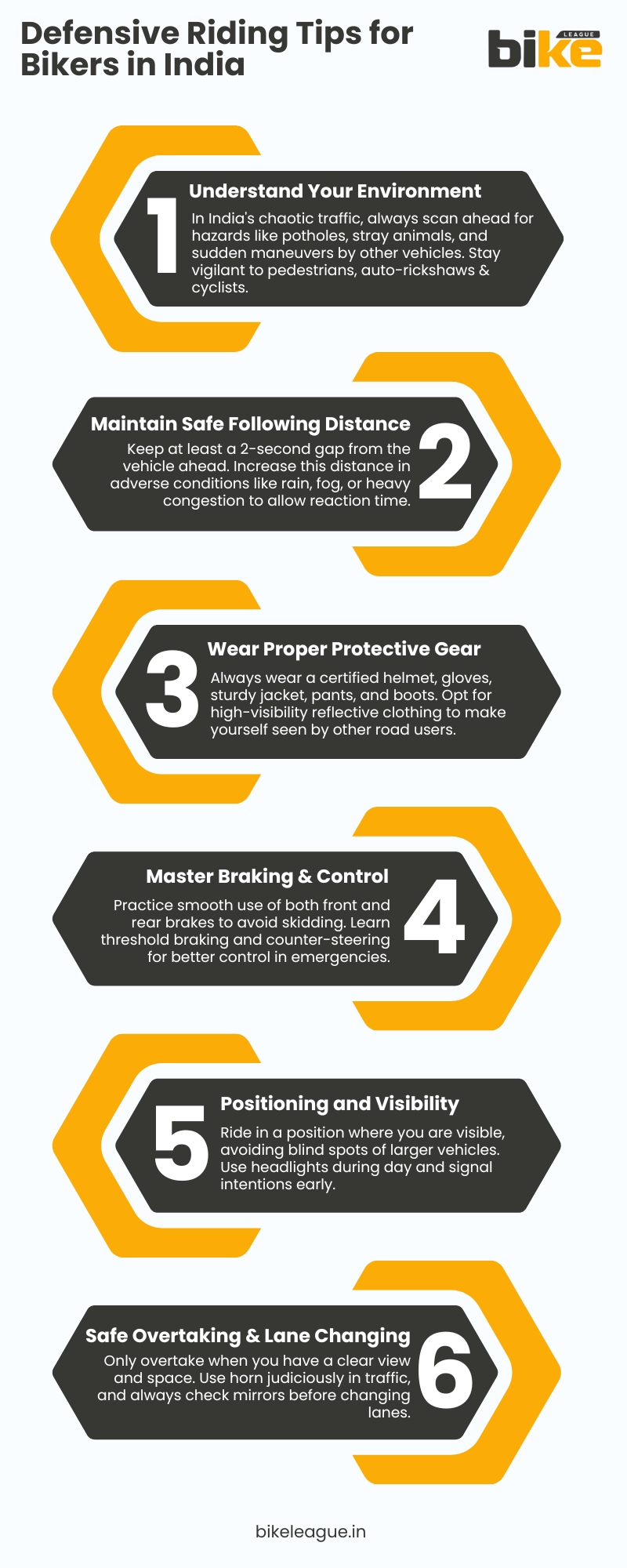
Defensive riding is more than just following rules. It’s a way of thinking that helps keep you safe, even when Indian roads are unpredictable. Here are six key elements, explained simply for every rider:
1. Scanning And Anticipation
Imagine riding through a busy street. You keep your eyes 12-15 seconds ahead, check your mirrors often, and notice small signs like a car drifting, a pedestrian waiting at the curb, or debris on the road. Spotting trouble early gives you time to react calmly instead of braking at the last second.
2. Space And Positioning
Keep a 2 to 4 second gap from the vehicle in front, and make it longer if it’s raining or traffic is heavy. Stay where you are clearly visible, not hidden in someone’s blind spot. If a gap is closing, don’t try to squeeze in. Give trucks and buses extra space because they can’t see you as well as you can see them.
3. Visibility And Conspicuity
To be noticed for the right reasons, wear bright or reflective gear, keep your headlights on during the day and night, and signal your intentions early. Position yourself so you are easy to see. Use your horn to alert others, not to scare them.
4. Control And Readiness
Keep your hands ready by covering your brakes or clutch near possible hazards. Stay in the right gear so you can react quickly, and don’t push yourself to your limits on public roads. Practice emergency swerves and braking in a safe place, so you won’t be caught off guard. Slow down before corners and accelerate smoothly as you exit.
5. Preparation And Mindset
Before every ride, do a quick T-CLOCS check: tyres, controls, lights, oil, chassis, and stands. Wear all your gear, including your helmet, jacket, gloves, and boots. Most importantly, keep a ‘stay alive first’ attitude. Leave distractions and ego at home, and be ready for surprises on Indian roads.
How Does Defensive Riding Differ From Other Driving Styles For Bikers?
Motorcycle defensive driving stands out because it focuses on anticipating problems and keeping safe distances, not just on speed, reacting, or being cautious. It assumes that others may create hazards in busy traffic.
Comparison Of Different Biker Riding Styles
| Style | Core Focus | Key Tactics | Risks in Indian Traffic |
|---|---|---|---|
| Aggressive | Speed, quick overtakes, thrill-seeking | Tailgating, gap-squeezing, high-rev lane changes | Provokes rage, high-speed collisions with buses/trucks |
| Reactive | Immediate threat response | Braking/swerving only after hazards appear | Late reactions to signals, potholes, animals |
| Passive/Cautious | Avoiding conflict via slowness | Constant yielding, edge-of-road crawling | Blind spots of vehicles, squeezed by faster traffic |
| Defensive | Hazard prediction, space creation | 12-sec scanning, visible positioning, escape planning | Minimizes external faults (70% of two-wheeler crashes) |
Defensive riding combines awareness with careful decisions, which lowers the risk of serious accidents on India’s busy roads, where mistakes by others are common.
List Of All Tips For Defensive Bike Driving For Bikers
Here is a defensive driving tips and techniques for defensive bike riding in India. It’s important to learn and use each one for your safety and others’. Don’t skip any of these defensive motorcycle riding tips. Here are 20 techniques to help you ride safely.
1. Maintain Proper Tyre Pressure & Tyre Health
Even with defensive riding, a worn-out bike tyre may not protect you from unexpected situations. Good grip on sand, gravel, oil, water, or anything else is crucial. Check your tyre air pressure at least once a week.
During regular inspections, look for signs of side wear, significant cuts, punctures, bent spokes, or cracked rims. Certain tyres have indicators for minimum and maximum tread wear. It’s essential to replace them before they reach the minimum tread level.
2. Check Brakes And Brake Pads
Check your brake pads regularly because you may not notice wear until the pads start damaging the disc plates. Disc plates, or rotors, are more expensive to replace. Don’t let it get to that point.
Remember, once the disc plate has a scratch, braking efficiency is compromised. It is also essential to replace brake fluid every 2 years to ensure good braking performance.
3. Left Side Overtaking
There are three situations in which left-side overtaking is allowed in defensive riding on a bike or motorcycle. The third one is not widely known. They are:
- The vehicle to be overtaken is either turning right or making a U-turn from the centre of the road, and giving a signal to turn. It would be safe to overtake from the left.
- The vehicle to be overtaken is stationary and safe to pass from the left.
- The overtaking vehicle and the vehicle being overtaken are on a multilane road. The vehicle ahead can be safely overtaken in a marked lane to the left of the vehicle being overtaken.
4. Signal Precautions
When you approach a red signal, use it as a time to be extra careful, not just to stop. Always check your rearview mirrors for any approaching hazards. Signal your intentions and stay on the left side of the road to help manage the situation.
Be especially careful if you are waiting on the right side, as more crashes happen there. Studies show that vehicles waiting on the right are 50% more likely to be in a collision. The risk of crashing decreases as more vehicles wait at the signal.
Be extra alert if you are at a signal with little traffic. Check your rearview mirrors and watch out for buses and trucks on highways, since they have bigger blind spots and may not notice you.
5. Do Not Drive In Neutral Gear
Do not ride in neutral gear when going downhill. If you ride with the clutch pulled in or in neutral, you can only control your speed with the brakes. Constantly using the brakes can cause them to overheat and stop working.
Instead, use both engine braking and regular braking when riding downhill. Engine braking means using the engine’s resistance to slow down, reducing strain on your brakes and helping prevent them from overheating.
6. Use High Beam, Low Beam, And Pass Light
Use both high and low beams as needed, especially on highways. Switch to low beam when oncoming traffic is present. This is one of the most important defensive and safe riding tips for night motorcycle rides.
Use a pass light to alert oncoming traffic when overtaking or riding on narrow roads, or to signal that you are turning off the high beam. Always give way to a vehicle using a passing light. Don’t assume other drivers will always let you pass just because you use the pass light.
7. Check All Lights In Your Motorcycle
Always check your tail, brake, hazard, and headlight for problems, since they are important both day and night. Also, watch out for vehicles on the road that don’t have their lights on. These are key defensive and safe riding tips for motorcyclists.
8. Maintain Centre Position While Cornering
When cornering, avoid staying on the far left or right. Keep to the middle of the lane to avoid unexpected obstacles. Enter the corner at the right speed so you can exit safely.
9. Be Aware Of Parked Vehicles
The biggest risk with parked vehicles is that doors can open suddenly and cause accidents. Always keep a safe distance from parked vehicles and remember these defensive riding tips.
If you are in a car or larger vehicle, open the door with your opposite hand so you turn your body and can see what’s behind you. You can also use your rearview mirrors to check for approaching vehicles.
10. Lane Splitting Only At Slow Speeds
Lane splitting, or filtering, lets you move between two vehicles in bumper-to-bumper or slow traffic. In India, lane splitting is allowed in defensive bike riding under three conditions:
- Only a 40km/h city speed limit or bumper-to-bumper traffic is allowed.
- Only to lane split 3 or 4-wheelers, not more oversized vehicles.
- Only a 15km/h speed difference between your vehicle and the vehicles in front.
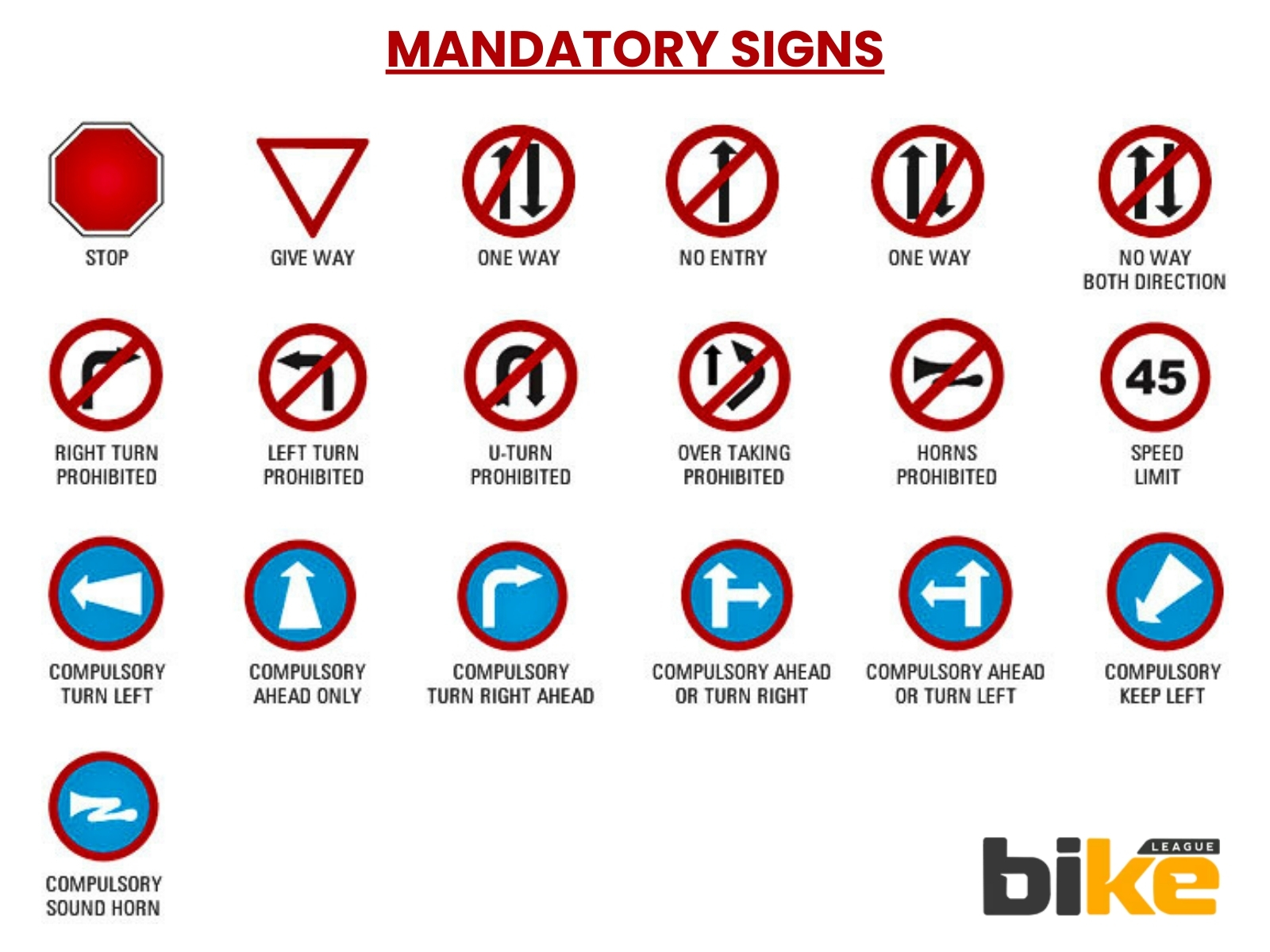
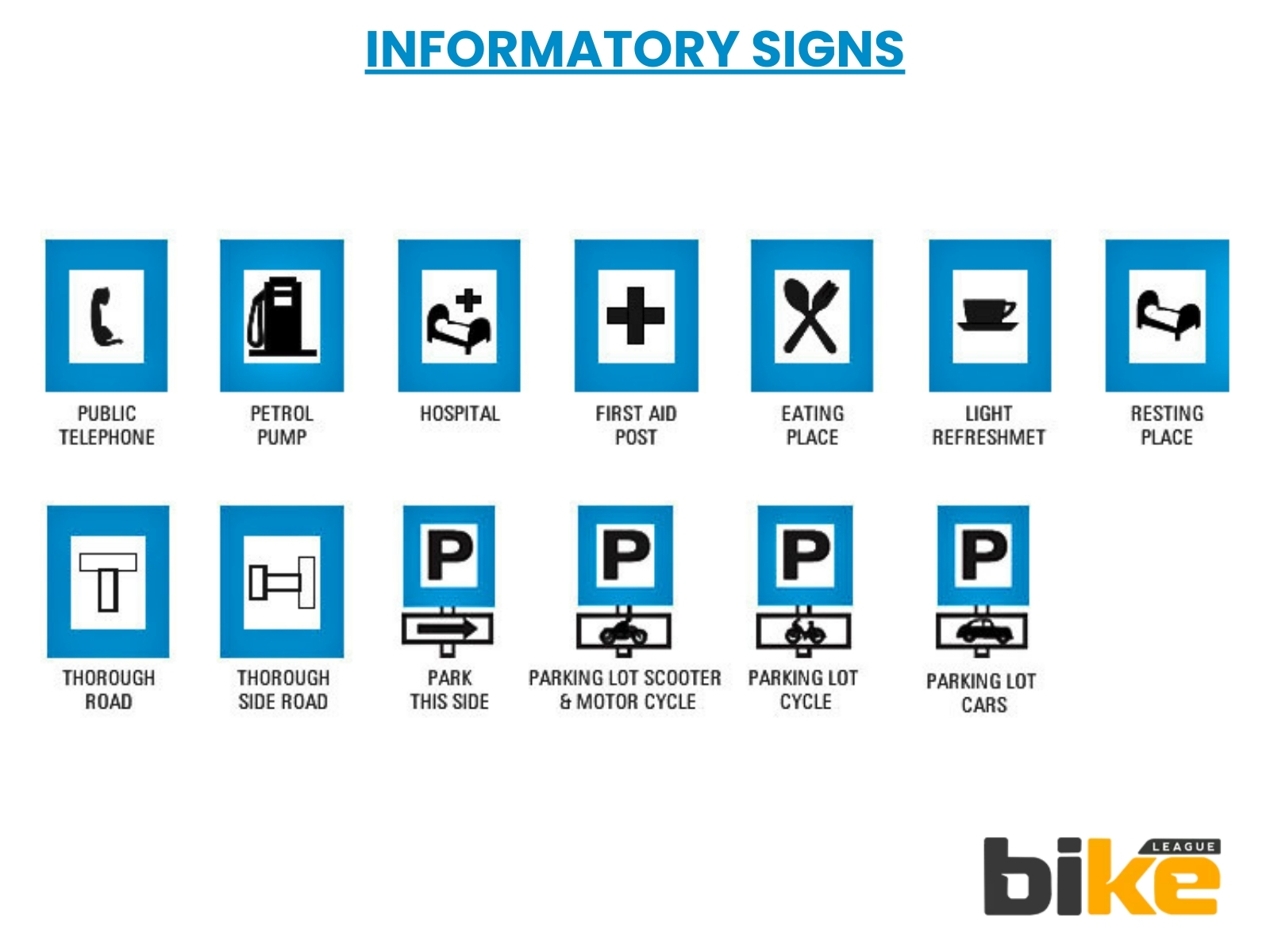
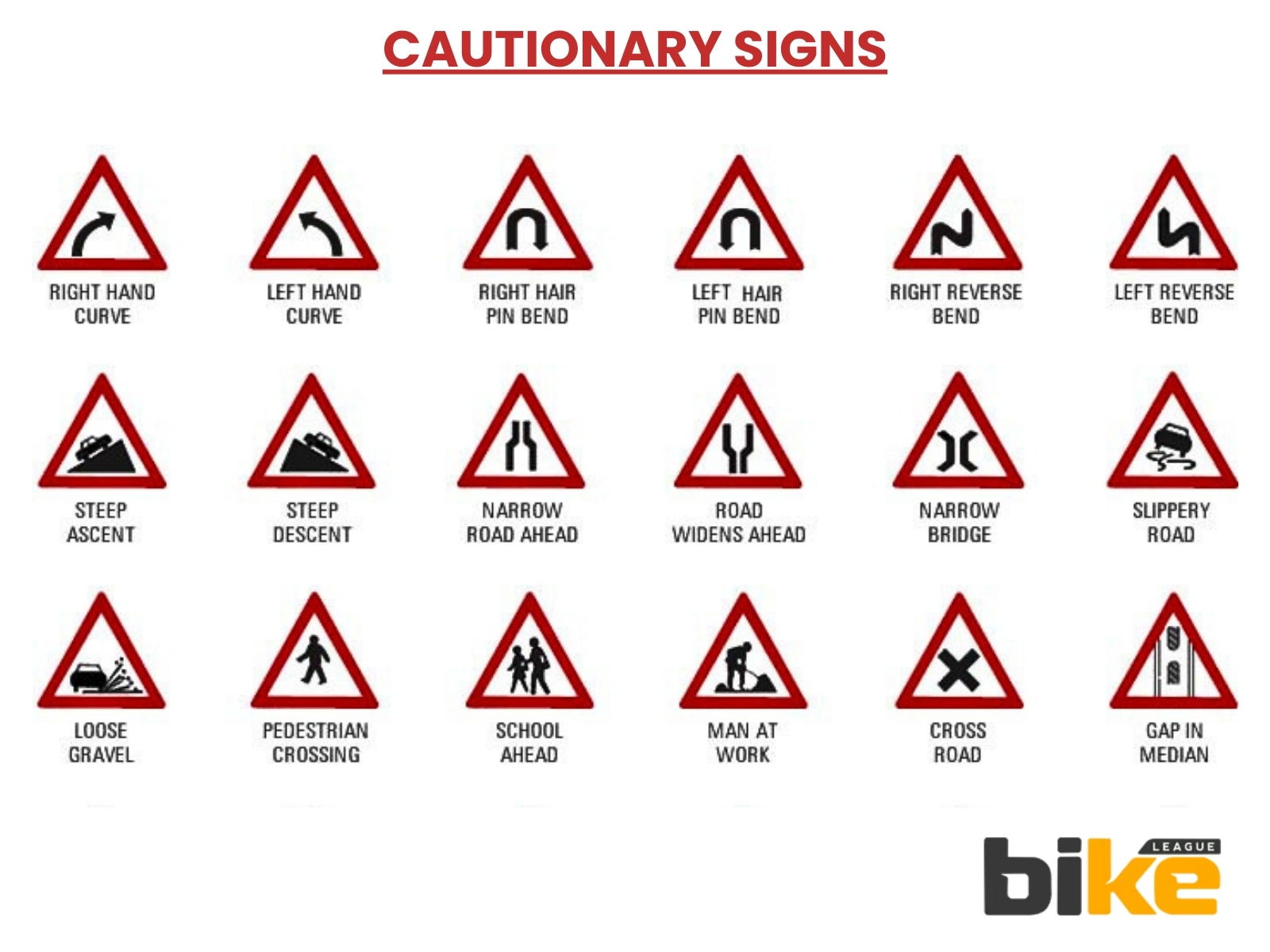
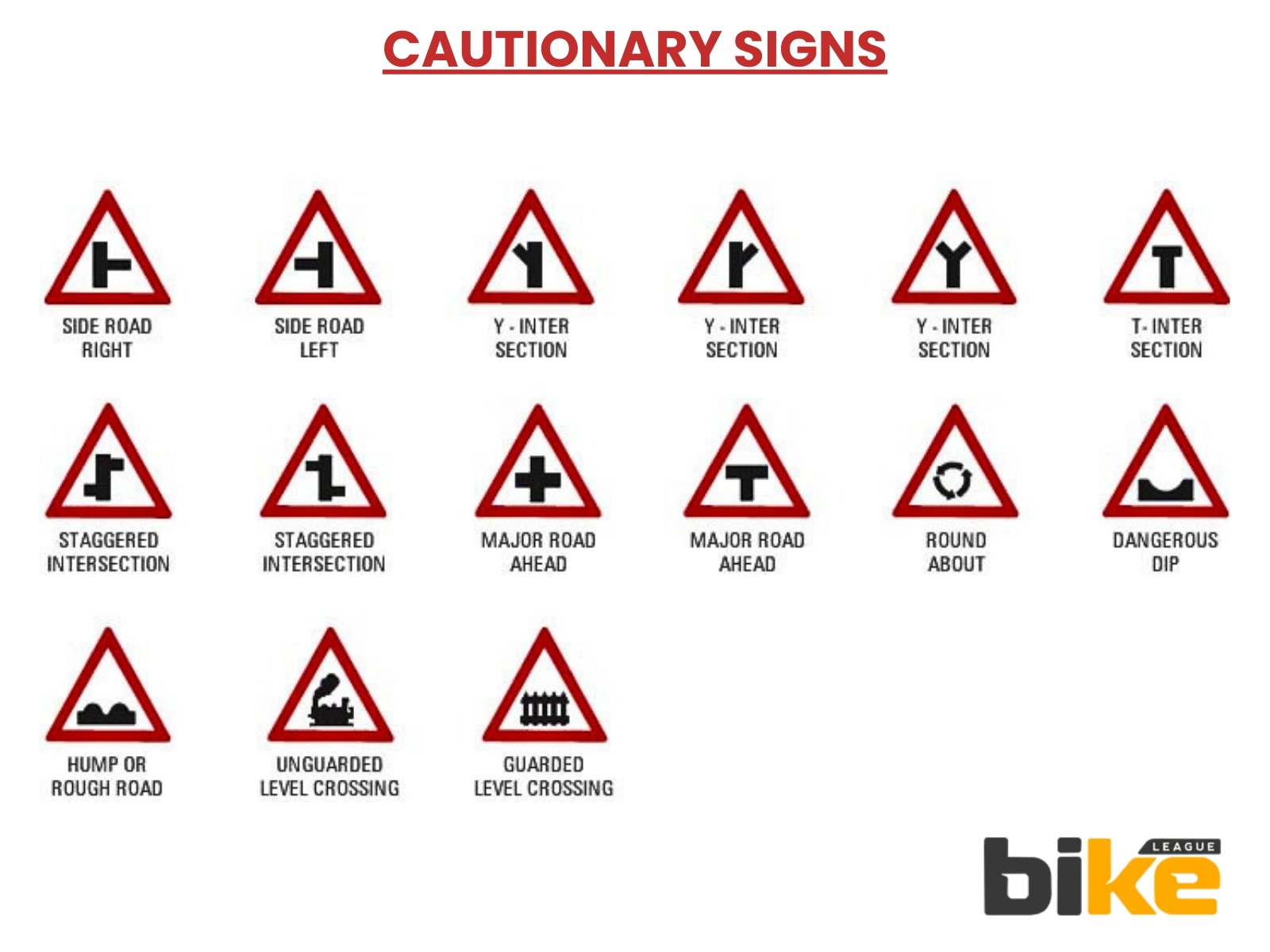
11. Know All Traffic Signs
Traffic or road signs are placed along roads to give important information to drivers. These signs use pictures instead of words. Drivers should pay close attention to these signs, respect them, and respond properly, as they help control traffic. There are three main types of traffic signs.
12. Shoulder Check Is Essential
Doing a shoulder check, sometimes called a lifesaver, is an important skill for motorcyclists. It lets you see your blind spot before changing lanes or merging into traffic.
Mirrors are useful, but they have limits. They can’t show your full blind spot, which is the area around and behind you. A shoulder check helps you see this area and avoid potential collisions with vehicles you might otherwise miss.
13. Avoid Tailgating In Defensive Bike/motorcycle Driving
Keep a safe distance from the vehicle in front so you have enough space to react to sudden situations, like hard braking.
Issues with tailgating as a defensive
- Less space to react to sudden stops or road hazards.
- Motorcycles can’t quickly swerve to avoid a collision caused by a tailgater.
- Motorcycles need more space to stop safely, especially on slippery roads. Tailgating eliminates this space.
- Motorcycles may need to adjust for wind or road imperfections. A tailgater does not allow for these adjustments.
- A tailgating car can block the view of a motorcycle from other drivers.
14. Keep The Headlight Always On
Using daytime running lights (DRLs) or keeping your headlight on during the day makes you more visible. Motorcycles made in India after April 2017 have DRLs as standard. This is another important defensive and safe riding tip for motorcyclists.
A 2023 study by Monash University in Australia found that DRLs reduced overall accident risk by almost 9%. The effect was even stronger at dawn and dusk, with reductions of over 20%.
15. Always Scan The Road
Make it a habit to watch the road ahead and be ready for hazards like sudden stops, merging vehicles, or debris.
16. Gear Up For Visibility & Protection
Wearing a good helmet is required by law and is your main protection in an accident. To be more visible, especially at night, wear a bright jacket and pants with reflective gear. Closed-toe boots also help protect you if you fall.
17. Adjust For Conditions
Consider how weather, road conditions, and traffic affect your speed. Slow down when it’s raining, foggy, the road is rough, or at night.
18. Avoid Aquaplaning/hydroplaning
Aquaplaning, or hydroplaning, happens when water builds up between your motorcycle tyre and the road. This causes the tyre to lose grip, making it hard to control the bike.
Here are some tips to help you avoid aquaplaning on your motorcycle:
Before you ride:
- Ensure your tyres are properly inflated and have sufficient tread depth. Worn tyres lose grip much more easily, especially on wet roads.
- If heavy rain is forecast, consider delaying your ride or planning an alternate route with less chance of standing water.
While riding:
- Reduce your speed significantly when riding on wet roads.
- Be extra vigilant and scan the road ahead for puddles, especially in low-lying areas or near drains.
- If possible, safely manoeuvre around large puddles or areas with deep-standing water.
- Avoid sudden braking, acceleration, or sharp turns. These manoeuvres can upset the bike’s balance in wet conditions.
- Disengage cruise control if present when riding in the rain. You need complete control over your speed in case of sudden water encounters.
- Maintain a straight posture and avoid leaning the motorcycle too much during turns on wet roads.
19. Beware Of Animals In Rural Areas
Animals like cows, dogs, and goats are common hazards, especially in rural areas or at dawn and dusk. Slow down and be extra careful if you see animals near the road.
20. Assume Invisibility
Ride as if other drivers might not see you. Be ready to react, watch for dangers, and make yourself visible by choosing the right position and using your headlight.
21. Avoid Riding Fatigued
Being tired makes it harder to make good decisions and react quickly. To stay alert and focused, take breaks during long rides.
22. Practice Peripheral Vision
When riding a motorcycle, tunnel vision means focusing only on a small area ahead, like looking through a tunnel. This can make you miss hazards on the sides, such as merging vehicles or obstacles. Tunnel vision often happens because of stress or inexperience and can be very dangerous.
Defensive riders learn to use their peripheral vision to notice what’s happening around them and respond safely. Peripheral vision is important for defensive riding because it helps you spot hazards from the side without turning your head.
Peripheral vision allows you to:
- Spot moving vehicles entering your lane.
- See drivers turning signals before they activate.
- Detect road dangers like potholes or debris.
Using your peripheral vision helps you notice threats sooner and react faster, making your ride safer.
What Are Some Common Myths About Defensive Riding For Bikers In India?
Myth 1: “slow Speed = Always Safe.”
Many riders believe that riding slowly always means they are being defensive and will avoid serious crashes. In reality, most urban two-wheeler accidents in India happen at low speeds, often close to home. These crashes are usually caused by sudden hazards, distractions, and insufficient attention to the road, not just by speed.
- defensive bike driving is about anticipation, smart lane positioning, having an escape plan, and making yourself visible—not just keeping your speed down.
- Crawling along in the wrong lane, riding in blind spots, or staying too close to buses and trucks can actually be riskier than riding a little faster with better positioning and enough space around you.
Myth 2: “loud Exhaust / High Beam = Better Visibility.”
Some bikers think that a loud exhaust or always using a high beam will make them more visible and safer. However, traffic experts in India say that excessive noise and glare can stress and blind other drivers, increasing the likelihood of crashes, especially in crowded city traffic.
- Defensive visibility means standing out without being aggressive. Use your low beam correctly, wear reflective gear, choose your lane carefully, and use the horn only when it’s really needed.
- If you use high beams all the time in the city or tailgate with your high beams on the highway, you can blind other drivers and make them angry. This is the opposite of defensive riding.
Myth 3: “if I Have Right Of Way, I’m Safe.”
Many riders believe that if they are legally ‘right,’ such as having a green signal or being on a straight road, they don’t need to ride defensively. But crash data and road safety experts in India warn that being correct doesn’t always keep you safe. Buses, trucks, tractors, or distracted drivers can still hit you if you assume everyone will follow the rules.
- Defensive riding means always preparing for the worst: cross traffic might run a red light, parked vehicles could suddenly U-turn without warning, and pedestrians might step into the road out of nowhere.
- Your main goal should be to stay safe first and worry about being ‘right’ later. Give yourself space to escape, keep your brakes ready, and slow down at junctions, even if the signal is in your favour.
Myth 4: “good Skills / Abs / Big Bike Will Save Me.”
With bigger bikes (250 to 400+ cc) and advanced electronics becoming popular in India, many riders think that better brakes, more skills, or track experience automatically make them safer on the street. But safety trainers warn that extra power and agility can tempt you to push your limits, especially in heavy traffic, leaving you less room for mistakes. This goes against the idea of defensive riding.
- ABS, traction control, and strong brakes will help only if you’ve already left enough space, looked ahead to spot problems early, and are always mentally a step ahead of traffic.
- Defensive riding on Indian roads means choosing to ride below your personal skill level, especially at night, in the rain, or when you are near buses, autos, and village traffic.
Myth 5: “defensive = Timid / Always Giving Way.”
Some riders think defensive riding means being slow, hesitant, or always giving way in traffic, never overtaking or holding your lane. In reality, defensive riding is about being calm, decisive, and assertive when needed. Hesitating during an overtake or drifting without confidence can confuse other drivers and cause accidents.
- A true defensive rider plans overtakes, uses indicators and clear lane changes, and avoids squeezing into shrinking gaps where others can’t predict your movement.
- The goal is to be predictable and visible, not aggressive or timid. Hold your lane firmly, use clear signals, and only compete for space when it actually makes you safer, not just to boost your ego.
How Should Defensive Riding Strategies For Bikers Adapt For Urban Vs. Rural Riding Conditions In India?
Defensive riding strategies for Indian bikers should be adjusted for urban and rural areas, as hazard types, average speeds, and accident patterns differ significantly.
Risk Landscape: Urban Vs. Rural
Urban roads are crowded and often chaotic. Two-wheelers share space with cars, buses, autos, and pedestrians, especially near junctions, bus stops, and markets. In contrast, rural roads and highways have fewer vehicles but much higher speeds, poorer lighting, more animals and farm vehicles, and a higher rate of serious crashes, especially on major highways.
Urban: Low-speed, High-conflict Strategy
In cities, defensive riding is all about handling short-range threats and being highly visible in crowded conditions. Here are some key adaptations:
- Stay alert at junctions and U-turns: Slow down and cover your brakes near signals, bus bays, schools, metro construction, and markets, where unexpected lane changes and pedestrians are common.
- Own your lane predictably: Don’t squeeze between buses and trucks. Stay out of cab blind spots, signal early, and avoid sudden swerves or squeezing through gaps that others can’t anticipate.
- Watch for distractions and dooring: Scan for parked cars, delivery bikes, and ride-hail vehicles that might stop or open doors suddenly. Keep extra space from parked rows.
Rural & Highways: High-speed, Low-margin Strategy
Out of town, defensive riding is more about managing speed, sight lines, and poor infrastructure. Here’s how you can adapt:
- Ride to what you can actually see: Slow down on undivided highways, blind crests, village entrances, and curves, where oncoming overtakes, stray cattle, or tractors can suddenly appear in your lane.
- Build bigger safety margins: Leave more space between you and other vehicles, avoid riding parallel to trucks or buses, and finish overtaking as early as possible instead of sitting in the oncoming lane.
- Watch for night and surface hazards: Expect missing road markings, gravel, surprise speed breakers, and potholes. Use lower speeds, a clean visor, and high-visibility gear instead of just trusting your high beam.
Same Core Principles, Different Execution
The basics of defensive riding, such as anticipation, visibility, keeping space, and controlling your speed, apply everywhere. How you use them depends on where you are riding. In cities, focus on handling close-range threats at low speed. On rural roads and highways, read the road ahead, ride within your limits, and treat every intersection, curve, or hill as a possible danger zone.
What Are The Most Frequent Mistakes New Or Experienced Bikers Make In Defensive Riding In India?
Both new and experienced bikers in India often make common mistakes that defensive riding can help prevent, such as failing to scan properly or overtaking blindly, especially as two-wheeler accidents increase in heavy traffic.
| Mistake | Who Makes It | Defensive Correction Steps |
|---|---|---|
| Tailgating / no following distance | Both; experienced overestimate braking | 1. Pick a fixed point ahead. 2. Pass it after the vehicle ahead does (2-sec rule; 4-sec in rain). 3. Extend near buses/trucks. 4. Scan for brake lights early |
| Blind overtakes on curves | Experienced chasing thrill | 1. Slow before blind corners/crests. 2. Wait to see a full, clear stretch ahead. 3. Flash high beam once if needed. 4. Abort if oncoming appears |
| Not scanning ahead / mirrors | New riders fixate on immediate path | 1. Scan 12-15 sec ahead every 5-8 sec. 2. Check mirrors at every gear change. 3. Note drifting cars/pedestrians early. 4. Plan escape space |
| Riding in blind spots | Both; passive crawlers | 1. Position centre/left in lane visibly. 2. Avoid bus/truck sides/rear. 3. Move if shadowed. 4. Honk entering blind zones |
| Target fixation on hazards | New; panic stares at potholes/cars | 1. Spot hazard, but look where you want to go. 2. Eyes up through turns. 3. Practice slow drills. 4. Steer with gaze, not force |
| Indicators left on | Both; distraction forgetfulness | 1. Auto-check post-turn. 2. Use as “intent” signal early. 3. Cancel manually. 4. Assume others misread |
| No gear/helmet discipline | New skipping basics | 1. Full kit always: ISI helmet snug, jacket/gloves/boots. 2. T-CLOCS pre-ride (tyres/lights/oil). 3. No phone/riding. 4. Fatigue breaks |
Official Government Links In India
- Act, Rules & Policies: http://parivahan.gov.in/parivahan/en/content/act-rules-and-policies
- eChallan for violations & payments: https://echallan.parivahan.gov.in/index/accused-challanhttps://echallan.parivahan.gov.in/index/accused-challan
Faq Rated To Defensive Driving For Bikers In India
1. What Is Defensive Riding For Bikers?
Defensive bike riding is a mindset and technique in which you assume other road users may make mistakes, so you ride to anticipate, avoid, and mitigate those risks by using space, controlling speed, and maintaining visibility.
2. Why Is Defensive Riding So Important On Indian Roads?
Indian roads are highly mixed-traffic, with pedestrians, animals, autos, buses, and distracted drivers; most two-wheeler crashes involve others’ errors, so defensive riding becomes critical for survival.
3. How Is Defensive Riding Different From Aggressive Or Reactive Riding?
Aggressive riders chase gaps and speed, while reactive riders respond only after danger appears; defensive riders constantly scan ahead, keep buffers, and plan escape routes before hazards develop.
4. What Are The Core Techniques Of Defensive Riding?
Key techniques include 12–15-second forward scanning, mirror checks every few seconds, a 2–4-second following distance, visible lane positioning, smooth braking, and anticipating blind spots at junctions and bus stops.
5. Is Defensive Riding Only For Beginners Or Also For Experienced Riders?
It is essential for both; many serious crashes involve experienced riders who rely on skill and speed instead of anticipation and space management in real-world Indian traffic.
6. How Can I Practice Defensive Riding Daily In Indian City Traffic?
Start by reducing speed near intersections, markets, and metro works, leaving extra space around buses and cabs, and treating every indicator, brake light, and pedestrian movement as an early warning.
7. What Are The Most Common Mistakes Indian Bikers Make That Defensive Riding Fixes?
Typical mistakes include tailgating, blind overtakes, failing to check mirrors, riding in truck/bus blind spots, skipping gears, and using phones; defensive riding corrects these by maintaining distance, positioning, and discipline.
8. Does Defensive Riding Mean Riding Very Slowly?
No, it means riding at a speed that matches your visibility and escape options, sometimes speeding up briefly to clear a danger zone and sometimes slowing down to create space.
9. What Role Does Protective Gear Play In Defensive Riding?
A full-face BIS/ISI helmet, jacket, gloves, boots, and reflective elements back up your riding strategy by reducing injury severity when things still go wrong despite the best anticipation.
10. Are There Any Defensive Riding Or Two-wheeler Safety Trainings In India?
Yes, several corporate and training programs teach two-wheeler defensive driving for field staff and commuters, focusing on hazard recognition, positioning, speed management, and legal compliance.
Here Are Some Related Articles From Our Team
- Must have bike documents for travel in India
- Braking in motorcycle – All expert tips for bikers
- Electric scooter maintenance – Top tips for longevity
- Two Wheeler License in India: Full guide to types & process
- Motorcycle fuel – Types, things to know & take care in India
Conclusion
Defensive bike riding in India is not just a skill; it’s a mindset that can save lives. By anticipating hazards, staying visible, and making smart decisions on every ride, you greatly reduce your risk, no matter where or when you travel. True safety comes from awareness, preparation, and practicing these techniques regularly. Ride safely and make defensive riding your daily habit.
If you have any questions or need further guidance, feel free to reach out to us at bikeleague2017@gmail.com or connect with us on Bikeleague India’s social media channels.