
Long story short: In this guide, you’ll find the pros and cons of cleaning your motorcycle with diesel wash. We’ll show you safe ways to remove oil and grease, protect your bike’s paint, and explore other cleaning options. You’ll also get practical steps and tips for using diesel wash.
Keeping your motorcycle clean helps it last longer and perform better, but not every cleaning method works the same way. In India, many people use diesel wash to remove tough grease and grime from metal bikes. This method has both benefits and drawbacks.
This guide covers the pros and cons of diesel wash, safe ways to protect your bike, and other cleaning options. Whether you’re an experienced rider or just starting out, you’ll find helpful tips here to keep your bike in great condition.
Key Takeaways
- Diesel wash is a widely used and affordable method in India for removing stubborn grease and grime from metal motorcycle parts, particularly on classic bikes like Royal Enfield.
- While diesel effectively cleans and temporarily lubricates metal surfaces, it can harm paint, plastics, rubber parts, and modern electronics if not used with caution.
- Diesel wash also carries significant environmental risks, such as soil, water, and air pollution, especially if the waste is not disposed of responsibly.
- Experts and many users recommend eco-friendly alternatives—like automotive shampoos, biodegradable detergents, and steam cleaning—to protect both your motorcycle and the environment.
- If you decide to use a diesel wash, limit it to the greasy lower parts of your bike. Be sure to shield all painted, rubber, plastic, and electrical components, and always finish with a thorough rinse using shampoo and water to remove any residue.
Why Is The Diesel Wash Popular For Bikes In India?
There are several reasons why the diesel wash is popular for bikes in India:
- Effectiveness: Diesel is known for its ability to cut through tough grime and oil stains. It is a trusted and practical choice for cleaning heavily soiled motorcycles.
- Cost-Effectiveness: Diesel is cheaper than specialised cleaning agents, so many bike owners in India choose it to save money.
- Cultural Acceptance: Diesel wash is a common practice in the Indian biking community, especially among owners of metal bikes like Royal Enfield, which are known for collecting grime.
- Ease of Access: Diesel is readily available across India, which adds to its popularity as a motorcycle cleaning agent.
People living in tough conditions often use diesel wash to get rid of oil and grime. In many areas of India with dusty or muddy roads, diesel wash is a common method for keeping bikes clean.
What Is The Process Of Diesel Wash For A Motorcycle?
Many people use diesel fuel to clean their motorcycles and remove dirt, grime, and stains. Here’s how the process typically goes:
- Application: Diesel is applied to the bike, focusing on areas with heavy oil and grease buildup, such as the chain sprocket.
- Cleaning: The diesel helps break down tough stains and grime, especially on metal surfaces.
- Multiple Rounds: The process often includes multiple rounds of washing to ensure thorough cleaning.
- Rinsing: After the diesel has done its job, the bike is rinsed to remove the loosened dirt and diesel residue.
People mainly use this method on metal bikes like Royal Enfields because it removes grime, tar, and oil stains well.
What Are The Benefits Of A Diesel Wash For A Bike?
Many people choose diesel wash for their bikes for several reasons:
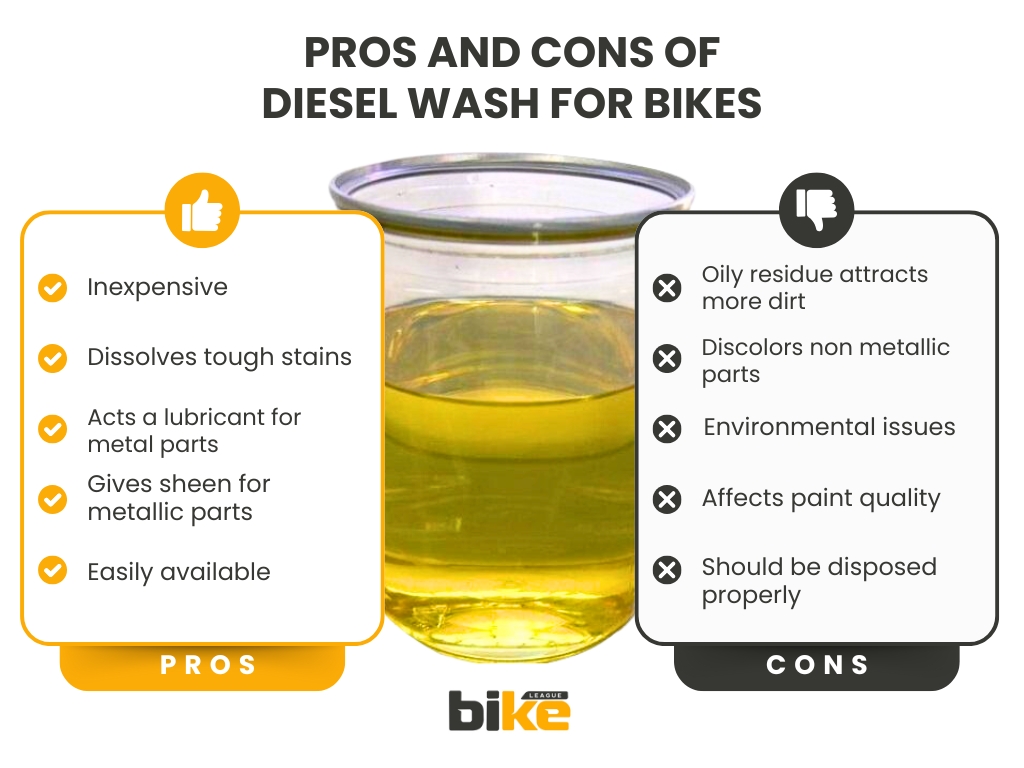
- Effective Cleaning: Diesel effectively dissolves and removes tough stains, grime, tar, and oil, resulting in thorough cleaning. This deep clean can improve the appearance of metal surfaces, giving the bike a polished look.
- Lubrication: Diesel’s oily residue may act as a temporary lubricant for metallic bike parts, reducing friction and wear during use.
- Cost-Effective: Diesel is usually less expensive than specialised bike cleaning products, so it provides a cost-effective solution for many bike owners.
What Are The Limitations Of A Diesel Wash For A Bike?
But there are also some downsides to using diesel wash on a bike:
- Residue Issues: Diesel’s oily residue can attract more dirt and dust if not properly rinsed off, potentially leading to more frequent cleaning needs.
- Environmental Impact: Using diesel as a cleaning agent can have negative environmental impacts due to its chemical composition. Improper disposal of diesel-contaminated water can lead to soil and water pollution.
- Potential damage for non-metallic parts: Diesel can damage or discolour bikes with non-metallic parts or sensitive finishes. For instance, it can cause paint to fade or peel and damage plastic components, making them unsuitable for all types of bikes.
What Are The Expert Opinions About Diesel Wash?
Many experts advise against using diesel wash on motorcycles because it can damage the paint and other parts.
They suggest using automotive shampoos and other specialised cleaning products that clean effectively without damaging your bike’s paint or parts.
Experts also worry about the environment. If diesel waste isn’t properly disposed of, it can pollute water, and diesel releases chemicals that contribute to air pollution. They recommend using eco-friendly cleaning methods to help reduce these issues.
What Is The User Experience About The Diesel Wash For Bikes?
- Some users, especially those with metal bikes like Royal Enfield, have had good experiences. They say diesel removes grime, tar, and oil stains, and leaves the bike looking shiny.
- Others are concerned about long-term effects, like paint damage and the risk of rust if the diesel isn’t washed off completely.
What Are The Environmental Impacts Of Diesel Wash?
- Pollution and Toxicity: Diesel contains various hydrocarbons and additives that can harm the environment. When used in washing, it can contaminate water sources and soil, leading to pollution.
- Air Quality: Diesel contains volatile organic compounds (VOCs) that can evaporate into the atmosphere, contributing to air pollution. This is particularly concerning in urban areas where vehicular emissions have already compromised air quality.
- Impact on Materials: Diesel’s corrosive nature can degrade paint and plastic components, releasing micro-particles into the environment.
Given These Concerns, What Eco-friendly Alternatives Are Available That Offer Similar Cleaning Results?
In India, more people are now choosing safer and more eco-friendly ways to clean their bikes. Here are some new options and trends:
- Eco-Friendly Washing Solutions: Eco-friendly car and bike washes are gaining popularity as they minimise water usage and reduce chemical runoff.
- Automated Washing Systems: Automated bike wash systems use significantly less water than traditional methods and incorporate water-recycling technologies.
- Waterless Cleaning Products: The development and use of waterless cleaning products are rising. These products are used to clean vehicles without water, thus conserving a vital resource.
- Biodegradable Detergents: Using biodegradable detergents instead of diesel can significantly reduce environmental harm. These detergents break down naturally, leaving no harmful residues.
- Steam Cleaning: Steam cleaning is an effective alternative that uses high-pressure steam to clean surfaces. It is chemical-free and uses minimal water, making it an environmentally friendly option.
Diesel Wash Vs. Shampoo, Steam, And Waterless Cleaning: A Quick Comparison
| Method | Cost | Effectiveness On Grease/Oil | Water Usage | Environmental Impact | Best Suited For |
|---|---|---|---|---|---|
| Diesel Wash | Low | Very high on metal, chain, engine areas | Moderate (rinse required after) | High risk if runoff isn’t disposed of properly | Lower/greasy metal parts on classic, metal-heavy bikes |
| Automotive Shampoo | Low to moderate | Good on dirt, dust, road grime; moderate on heavy grease | Moderate to high | Low, especially with biodegradable formulas | Routine full-bike washing, all bike types |
| Steam Cleaning | Moderate to high | High, including on grease, without harsh chemicals | Low | Low | Modern bikes with plastics, electronics, sensitive finishes |
| Waterless Cleaning Products | Moderate | Good on light dirt and dust; limited on heavy grease | Minimal to none | Low | Quick touch-ups, water-scarce areas, garage-kept bikes |
Diesel is still a popular choice for removing tough grease from metal parts at a low cost, but it’s the only method here with real risks to the environment and your bike’s materials. For regular cleaning, shampoo or steam cleaning gives similar results with much less risk to paint, rubber, and the environment.
What Precautions Should Be Taken To Protect Your Motorcycle During A Diesel Wash?
Use diesel wash only as a targeted degreaser for the lower, oily areas of your bike — not for washing the whole bike. Below are the parts to protect, where you can use diesel more safely, and what to do if it’s already been applied.
1. Parts You Must Protect
- Rubber and seals: Keep diesel away from O-rings, chain seals, footpeg rubbers, hose pipes, fork and shock seals, tyres, chain sliders, bushes, and grommets. Diesel contains heavy aromatic oils that penetrate, soften, swell, and degrade rubber, making it brittle or prone to cracking over time.
- Plastic and painted panels: Avoid spraying diesel on the fuel tank, fairings, headlamp cowl, side panels, mudguards, alloys, and stickers. Repeated exposure causes discolouration, dulling, and weakening of plastic, and can degrade the clear coat, fade paint, and lift decals.
- Electricals & electronics: Keep diesel and high-pressure spray away from electrical components. This includes the meter console, switchgear, key/kill switches, handlebar controls, battery area, ECU/relays, and open couplers under the seat.
- Braking system: Do not allow diesel on brake discs, pads, callipers, ABS sensors, or brake hoses; it reduces friction and can temporarily compromise braking performance.
- Sealed (O/X-ring) chains: For modern sealed chains, diesel or petrol can swell or soften the O-rings and wash out the factory grease fill. Chain manufacturers such as D.I.D explicitly advise against kerosene, diesel, and other volatile solvents on sealed chains. They recommend seal-safe cleaners instead.
- Royal Enfield’s own official stance: Royal Enfield’s owner’s manual is clear on this point. It tells owners to wash painted parts with plain water only, and to avoid strong solvents, cleaning agents, or detergents on them — diesel included. The manual also warns that fuel spills stain painted surfaces permanently unless you wipe them off right away, which shows how reactive RE’s paint finish is to petroleum products. Older RE workshop and washing-procedure documents do allow brushing a solvent onto the engine area to cut grease. But they pair this with a hard rule: never use a corrosive solvent on painted surfaces or rubber parts. In short, even Royal Enfield’s own literature limits solvent use to the engine and metal zone. This matches the “lower parts only” approach we recommend in this guide.
2. Where Diesel Can Be Used Relatively Safely
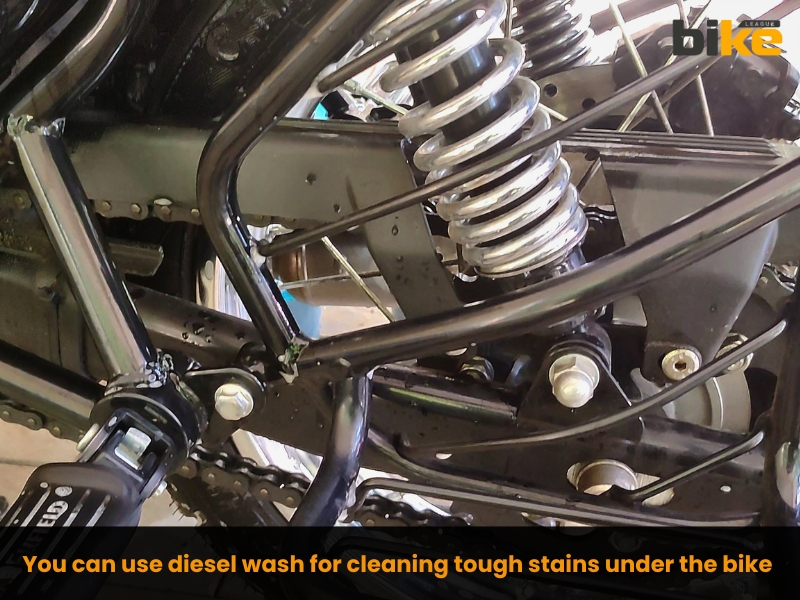
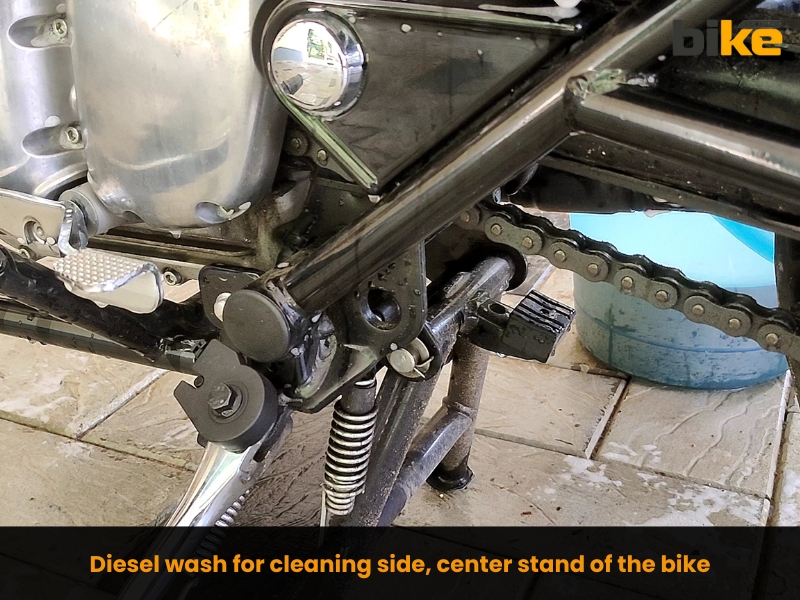
- Limit diesel to the lower, greasy parts: crankcase exterior, front sprocket area, underside of the engine, main stand/side-stand pivots, and heavy oil or chain-sling deposits on the swingarm.
- Apply diesel to a cloth or brush first and scrub with it, rather than spraying or “foaming” the whole bike directly.
3. What To Tell The Wash Guy
- Clearly instruct: diesel only for the bottom side/engine area; normal shampoo and water for everything else.
- Specify no diesel on: tank, side panels, headlamp cowl, switchgear, disc brakes, tyres, chain, and under-seat wiring/battery.
- Ask for lower water pressure around wheel bearings, the chain area, switchgear, and the instrument cluster, to avoid forcing water and diesel into seals and connectors.
- Insist on a thorough shampoo rinse after diesel application on metal parts, so residue doesn’t keep attacking paint and rubber or attract dust.
4. Extra Care For Specific Bikes And Conditions
- On fully-faired bikes, avoid letting diesel seep behind fairings where foam and cloth can’t reach — it will sit there and slowly dull paint and soften rubber mounts.
- On older bikes with exposed wiring, wrap vulnerable connectors with plastic temporarily, or ask the washer to avoid that zone completely.
- For frequent washing (e.g., city and monsoon use), skipping diesel altogether and using a good automotive shampoo plus a dedicated chain cleaner is safer for long-term paint and rubber life.
5. If Diesel Has Already Been Used
- Rinse the bike again with shampoo and plenty of clean water, especially on painted and rubber parts, then dry with a microfiber cloth.
- Re-lubricate the chain with proper chain lube, and apply a rubber protectant or silicone spray on any rubber hoses and parts that may have been exposed.
- Apply a plastic protectant to restore gloss on affected panels, and wax or polish any painted surfaces that came into contact with diesel.
In summary, use diesel only on tough oil or grease under the bike. Make sure to protect or avoid all rubber, brakes, electrical parts, and painted surfaces, and always finish with a good shampoo wash and re-lubrication.
How Does Improper Disposal Of Diesel Wash Contribute To Environmental Pollution?
In India, wastewater containing oil and grease is a regulated discharge parameter under the Water (Prevention and Control of Pollution) Act, 1974, enforced through the Central Pollution Control Board (CPCB) and State Pollution Control Boards. Diesel-contaminated wash runoff that enters open drains or soil without treatment falls outside these norms, which is part of why professional and roadside washes are expected to trap and dispose of oily effluent responsibly rather than allowing it to enter stormwater drains.
- Soil contamination:Diesel contains hydrocarbons and toxic chemicals that seep into soil, killing beneficial microbes, reducing soil fertility, and causing long-term ecological damage. Contaminated soil can affect plant growth and disrupt local ecosystems.
- Water pollution: When diesel wash runoff enters water bodies unchecked, it forms a film on the surface, reducing oxygen levels essential for aquatic life. Diesel toxins bioaccumulate in fish, contaminating the food chain and harming aquatic biodiversity. This also affects human health through contaminated water and food.
- Air pollution: Diesel contains volatile organic compounds (VOCs) that evaporate, contributing to smog and ground-level ozone formation. These air pollutants degrade air quality, cause respiratory problems, and aggravate asthma and other illnesses.
- Health hazards: Exposure to diesel pollutants is associated with increased risk of lung cancer, cardiovascular, and respiratory diseases. Chronic exposure to diesel fumes can worsen existing health conditions, causing serious public health concerns.
Faq About Diesel Wash For A Bike
1. Is Diesel Wash Safe For All Motorcycle Parts?
No, diesel wash is generally safe only for metal parts that have grease and oil stains. It should be avoided on painted surfaces, plastics, rubber parts, and electrical components, as it can cause damage or deterioration to these materials.
2. What Are The Benefits Of A Diesel Wash For Bikes?
Diesel wash is highly effective at removing stubborn grease, oil, and grime from chains, sprockets, engines, and other lower metal parts. It is also inexpensive and widely available in India, making it a popular choice for cleaning metal components.
3. Can Diesel Wash Damage My Motorcycle Paint?
Yes, diesel can strip wax, dull paint, and cause damage if left on too long or not rinsed off thoroughly. It can also harm plastics and stickers.
4. Is Diesel Wash Recommended For All Bike Types?
Diesel wash is better suited to classic, metal-heavy bikes like Royal Enfield bikes. For modern motorcycles with more plastic and electronic components, safer washing methods are recommended.
5. How Should Diesel Wash Be Applied?
Apply diesel only to the greasy lower parts of the bike using a brush or cloth, rather than spraying it everywhere. Be sure to rinse thoroughly with shampoo and water immediately afterwards.
6. Does Diesel Wash Prevent Rust?
Diesel wash can help prevent rust on oily parts by removing water and leaving behind a light protective layer, but it is not a complete rust-proofing solution.
7. Is It Safe To Clean The Bike Chain With Diesel?
Diesel can clean bike chains, but it may damage the rubber O-rings found in sealed chains. Whenever possible, use chain-specific cleaning products instead.
8. What Precautions Should I Take During A Diesel Wash?
Protect electrical components, brake parts, tyres, rubber seals, and painted plastics by keeping them covered or making sure diesel does not come into contact with them. After washing, lubricate the chain and treat the rubber parts with conditioner.
9. Can Diesel Wash Harm The Environment?
Improper disposal of diesel wash water can cause soil, water, and air pollution due to the toxic hydrocarbons it contains. Always make sure to dispose of wash water safely and responsibly.
10. Is Diesel Wash The Best Cleaning Method For Bikes?
Diesel wash is effective for removing tough grease, but it can be harsh and may damage parts if not used carefully. For routine cleaning, using a water-based shampoo is a safer and more recommended option.
Here Are Some Related Articles From Bikeleague India
- Bike wash – Different types, procedures, precautions, FAQ
- Diesel bikes in India: Why are they absent on Indian roads ?
- Motorcycle storage – Long term storage tips & precautions
- Bike engine oil – Everything you need to know explained
- Motorcycle chain – how to clean, adjust & maintain
Conclusion
Diesel washing has long been popular for removing stubborn grease and grime from motorcycles—especially those with metal parts. However, its risks to paint, plastics, and the environment mean it should be used cautiously and only for targeted cleaning. With more eco-friendly and bike-safe options now available, it’s wise to prioritise these alternatives for regular maintenance.
If you have any questions or want to learn more about diesel washing for bikes, please leave a comment below. We are here to help. You can also follow Bikeleague India on social media for updates.