
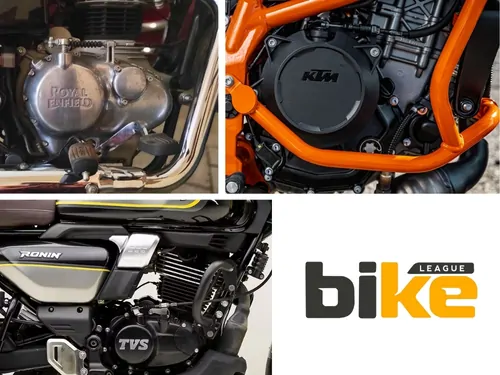
Long story short: A detailed guide to engine geometry: Compare oversquare vs undersquare vs square configurations, their impact on torque curves, redline limits, and riding performance.
Motorcycle fans notice that every bike has its own personality. For example, some feel aggressive and sporty, while others are calm and steady. But what creates these differences? In most cases, it comes down to the engine’s design. Specifically, the bore and stroke are two key parts that shape how a motorcycle delivers power, how much torque it has, and how it feels to ride.
No matter if you’re new to riding or have years of experience, knowing about engine geometry helps you pick the right bike. In this guide, we’ll break down oversquare, undersquare, and square engines, and then show how each one affects your ride.
Key Takeaways
- Bore and stroke are fundamental aspects of engine geometry that directly influence a motorcycle’s power delivery, torque, and riding characteristics.
- Oversquare engines (larger bore than stroke) typically deliver higher RPMs and peak power, making them ideal for sporty, high-performance bikes.
- Undersquare engines (longer stroke than bore) produce more torque at lower RPMs, offering smoother power for cruisers and touring motorcycles.
- Square engines balance both bore and stroke, providing a versatile mix of torque and power suitable for a wide range of riding styles.
- Understanding engine geometry helps riders choose motorcycles that best fit their preferences, whether they prioritise speed, acceleration, or smooth cruising.
What Is Bore (cylinder Diameter) In A Motorcycle Engine?
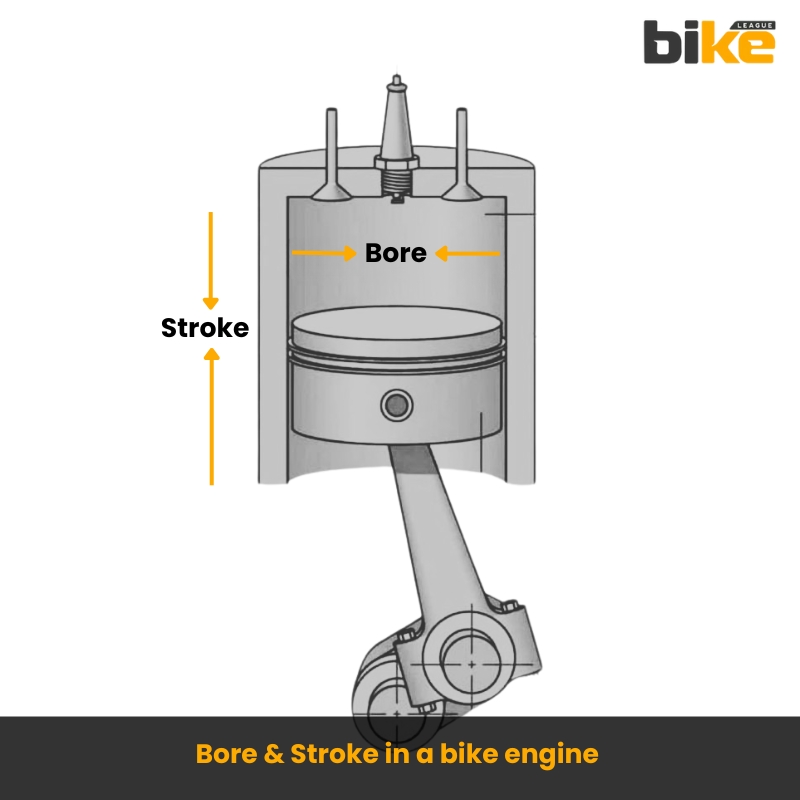
The bore is the internal diameter of the cylinder in which the piston travels.
- Units: Typically measured in millimetres (mm).
- Large bore: Allows for bigger valves and better breathing at high RPM, favouring peak power.
- Smaller bore: (relative to stroke) often yields better low-end torque and a narrower, lighter piston.
What Is Stroke (piston Travel) In A Motorcycle Engine?
The stroke is the distance the piston moves up and down within the cylinder from the Bottom Dead Centre (BDC) to the Top Dead Centre (TDC).
- Units: Also measured in millimetres (mm).
- Longer stroke: increases leverage on the crankshaft, boosting low-RPM torque.
- Shorter stroke: reduces piston speed at high revs, enabling higher redlines and more top-end power.
What Is The Relation Between Bore And Stroke In A Motorcycle Engine?
How the bore (cylinder width) and stroke (piston travel) relate to each other is key to a bike’s character. Together, they decide the size of each cylinder and the whole engine, which in turn affects how much torque and power the bike makes.
Motorcycle Engines are classified based on bore and stroke as follows:
- Oversquare (Short-Stroke): Bore > Stroke
- Undersquare (Long-Stroke): Bore
- Square: Bore = Stroke
Each engine type gives a different mix of power, torque, and efficiency.
Next, we’ll look at the three engine types found in Indian bikes. After that, we’ll cover their pros and cons, list some models, and answer common questions.
| Engine type | Bore–stroke relationship | Torque curve behavior | Typical redline behavior | Riding feel summary |
|---|---|---|---|---|
| Oversquare | Bore > Stroke | Peak torque at higher RPM, lean at low end | High rev‑limit; engine revs freely | Sporty, peaky, high‑RPM rush |
| Undersquare | Bore | Strong low‑RPM torque, flatter at high RPM | Lower rev‑limit; engine feels strained at high RPM | Relaxed, torquey, easy cruising |
| Square | Bore ≈ Stroke | Smooth, broad mid‑range torque | Moderate rev‑limit; usable high‑RPM power | Balanced, versatile, all‑rounder |
1. Oversquare Motorcycle Engine
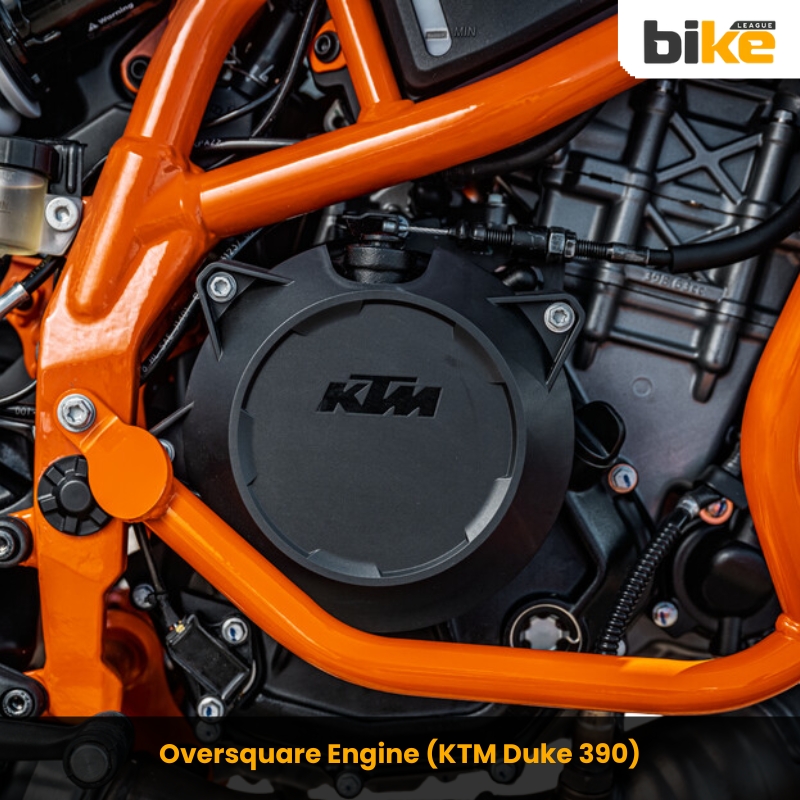
An oversquare engine has a bore (width) that’s bigger than its stroke (piston travel), so the ratio is more than 1:1. This setup lets the engine use bigger valves, keeps piston speeds lower at high rpm, and allows for higher redlines.
Pros
- High-rpm Power: Peak torque and power occur at higher revs, ideal for sporty riding.
- Larger Valves: Improved breathing and volumetric efficiency.
- Lower Mechanical Stress: A shorter stroke reduces piston acceleration, enhancing reliability at high rpm.
Cons
- Reduced Low-End Torque: Less crank leverage yields lower torque at low rpm.
- Higher Heat Loss: Increased cylinder surface area can decrease thermal efficiency and raise emissions.
Oversquare Engine Motorcycle Models In India
| Model | Bore × Stroke | Classification |
|---|---|---|
| KTM Duke 390 | 89mm × 65mm | Oversquare |
| Yamaha R15 V4 | 58mm × 47.2mm | Oversquare |
2. Undersquare Motorcycle Engine
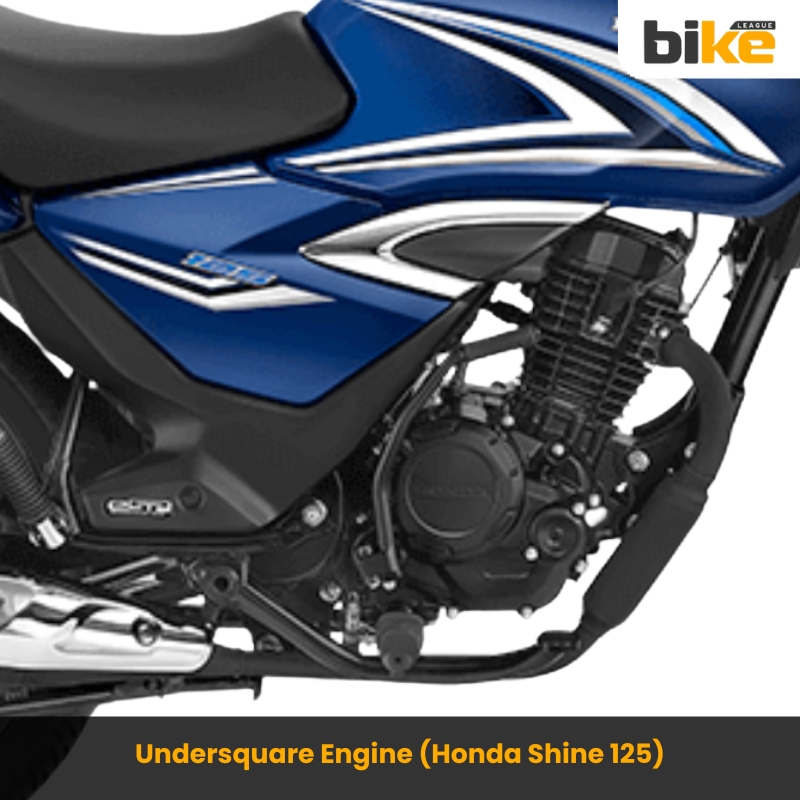
An undersquare engine has a bore (width) that’s smaller than its stroke (piston travel), so the ratio is less than 1:1. The longer stroke gives more leverage, which means better torque at low rpm.
Pros
- Strong Low-End Torque: Excellent for city commuting and heavy loads.
- Compact Width: A narrow bore reduces engine width, aiding packaging.
- Potentially Higher Compression: A longer stroke can support higher compression ratios (with appropriate design).
Cons
- Limited Top-End Power: High piston speeds limit maximum rpm and peak power.
- Increased Mechanical Stress: Greater piston acceleration increases crank and bearing loads.
- Valve Area Constraints: A smaller bore restricts valve size, limiting breathing.
Undersquare Engine Motorcycle Models In India
| Model | Bore × Stroke | Classification |
|---|---|---|
| Bajaj Pulsar 150 DTS-i | 56 mm × 60.7 mm | Undersquare |
| Honda Shine 125 | 50 mm × 63 mm | Undersquare |
3. Square Motorcycle Engine
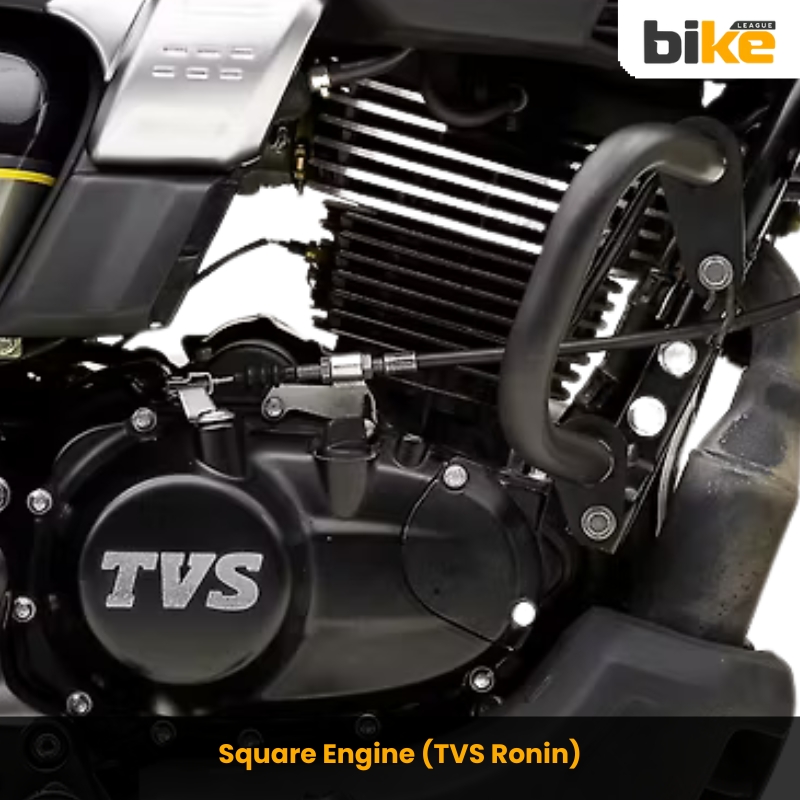
A square engine has the same bore and stroke, making the ratio 1:1. As a result, this design tries to balance torque and power at all engine speeds.
Pros
- Balanced Performance: Good compromise between low-end torque and high-rpm power.
- Even Wear: Piston speeds and stresses are moderate, promoting durability.
- Smooth Combustion: Symmetrical chamber shape aids efficient burn.
Cons
- Compromise Design: Doesn’t specialize in torque or peak power.
- Valve Area: Bore size may limit maximum valve area compared to highly oversquare engines.
Square Engine Motorcycle Models In India
| Model | Bore × Stroke | Classification |
|---|---|---|
| TVS Ronin | 66 mm × 66 mm | Square |
| Royal Enfield Himalayan 450 | 84 mm × 81.5 mm | Nearly Square |
How Oversquare, Undersquare, And Square Motorcycle Engines Feel In Real-world Riding?
Oversquare, undersquare, and square engine geometries each give a bike a distinct “personality,” changing how it feels in city traffic, on the highway, and during spirited riding. To help you understand these differences, below we break down how each of these engine types actually behaves under real‑world conditions in India.
1. Oversquare (short-stroke) – Sporty, High-revving
- In city traffic: these engines tend to feel a bit lifeless at lower revs. They only really come alive when you rev them past 5,000 or 6,000 rpm. Quick bursts of acceleration from low speed usually require more throttle and higher revs, so they suit riders who don’t mind working the gearbox and keeping the engine on the boil.
- On the highway or on sporty roads: The engine feels energetic and responsive in the mid- and upper-rev ranges. There’s a strong surge between 7,000–10,000 rpm, making overtaking or spirited riding feel exciting. The power delivery is “peaky,” so you’re often aiming to stay close to the redline.
- On a racetrack: Oversquare engines are right at home here. Their ability to rev freely and quickly lets you take full advantage of short gearing and aggressive riding. The sensation is one of speed and urgency, but it does require you to be more involved with shifting and throttle control.
Example: KTM Duke 390, Yamaha R15 V4
2. Undersquare (long-stroke) – Torquey, Relaxed
- In city traffic: These engines pull well from low rpm, usually feeling strong and responsive even at 3,000–4,000 rpm. You can ride at slower speeds in higher gears with little fuss, which makes commuting more relaxed and less tiring.
- On the highway or touring: Undersquare engines are calm and steady at 70–90 km/h, with enough torque for easy cruising. However, they don’t love being pushed to high speeds for long periods, as the engine feels more stressed at higher rpm.
- Long-distance/touring: They’re ideal for two-up riding or carrying luggage, thanks to their strong low- and mid-range torque. The power delivery is smooth and predictable, making for a relaxed journey.
Example: Bajaj Pulsar 150 DTS-i, Honda Shine 125
3. Square – Balanced, Versatile
- In city traffic: Square engines offer flexibility. You can ride at low to mid rpm without the engine feeling bogged down, but there’s still enough top-end if you want to pick up the pace. This makes them approachable for a wide range of riders.
- On the highway or on tour: They stay smooth at 80–110 km/h and deliver a balanced spread of torque and power. You don’t have to work the engine hard to enjoy a steady ride.
- Mixed-use/sporty commuting: Square engines are the all-rounders; they aren’t overly aggressive or too laid-back. If you want one bike that does a bit of everything—commuting, highway runs, weekend rides—this type fits the bill.
Example: TVS Ronin 225, Royal Enfield Himalayan 450 (nearly square)
Which Engine Type (oversquare, Undersquare, Or Square) Suits Which Rider?
Engine geometry isn’t just about numbers. It changes how a motorcycle feels and responds, making each ride different. Here’s a simple guide to match each engine type with different riding styles in India:
| Engine type | Ideal rider profile | Best use case | Watch‑out / limitation |
|---|---|---|---|
| Oversquare | Thrill‑seekers, sporty riders, track‑style enthusiasts | Short blasts, weekend rides, spirited riding, highway overtakes | Less relaxed in long tours and heavy city traffic |
| Undersquare | Daily commuters, relaxed highway cruisers, tourers | City commuting, short‑to‑medium highway runs, two‑up touring | Feels strained at sustained high speeds near redline |
| Square | Mixed‑use riders, one‑bike‑for‑everything users | Daily commuting + highway runs + weekend rides | Doesn’t dominate any one area but rarely disappoints |
1. Oversquare – For The Thrill-seekers And Sporty Riders
- Ideal rider: If you enjoy the adrenaline of high revs, frequent gear changes, and spirited rides on highways or twisty backroads, an oversquare engine fits your style. These engines reward riders who like to push the pace and keep the throttle open.
- Use case: Perfect for short, energetic rides, weekend outings, riding schools, or track days where excitement and rapid acceleration matter most.
- Watch out: Oversquare engines can feel less relaxed during long tours or in heavy stop-and-go traffic. They’re best for those who don’t mind being a bit more involved with their machine.
2. Undersquare – For City Commuters And Relaxed Tourers
- Ideal rider: If your daily routine involves navigating traffic jams or you prefer a calm, steady cruise, an undersquare engine is a great match. These engines deliver power smoothly at low rpm, making city rides and relaxed highway cruising effortless.
- Use case: Ideal for daily commutes, short to medium highway trips, and carrying a passenger or luggage without fuss.
- Watch out: Undersquare engines may feel less lively at high speeds and can seem strained if pushed near the redline for long periods.
3. Square – For Those Who Want A Bit Of Everything
- Ideal rider: If you want a motorcycle that handles city commutes, highway runs, and the occasional spirited ride—without being extreme in any one area—a square engine offers that balance. It suits new and experienced riders alike who appreciate predictability and flexibility.
- Use case: Great for riders who need one bike to do it all: daily chores, weekend escapes, and mixed riding conditions.
- Watch out: While square engines don’t dominate in any single area, they rarely disappoint. Their greatest strength is their all-rounder nature, making them a practical choice for most everyday riders.
Faqs About Oversquare Engine Vs Undersquare Engine Vs Square Bike Engine In India
1. Which Engine Type Is Best For Sporty/high-performance Riding Bikes?
Oversquare engines are preferred for sporty bikes because they can rev higher and produce peak power at elevated rpm. Their short stroke and large valves deliver crisp throttle response and strong top-end pull.
2. Which Motorcycle Engine Type Is Ideal For City Commuting?
Undersquare engines shine in urban riding thanks to their robust low-rpm torque, which delivers quick acceleration and effortless cruising in traffic.
3. Which Bike Engine Offers The Most Balanced Performance?
Square engines strike a middle ground, providing usable torque from low rpm while still allowing moderate high-rpm power, making them versatile for mixed riding conditions.
4. Do Motorcycle Square Engines Compromise On Performance?
They balance low-end torque and high-end power without extreme specialisation.
5. Are Bike Oversquare Engines Less Fuel-efficient?
They can suffer higher heat loss and slightly lower thermal efficiency at steady cruising speeds.
6. Can The Geometry Of A Motorcycle Engine Change During Tuning?
Bore and stroke are fixed by design; tuners can alter performance via valve sizing, cam profiles, and forced induction, but not the basic geometry.
7. Why Don’t All Bikes Use Square Engines?
Designers choose geometry to meet specific goals: commuter torque, performance, high-revving, or balanced versatility.
8. Can I Change An Engine’s Bore-to-stroke Ratio Through Tuning Or Modifications In Motorcycles?
No—The engine’s crank and block design determines the bore and stroke dimensions. They cannot be altered without replacing major engine components. Tuners can improve breathing (cams, valves), add forced induction, or modify fueling, but the basic geometry remains fixed.
9. Are There Any Maintenance Differences Between Oversquare And Undersquare Engines?
Oversquare engines, often tuned for higher RPMs, may require more frequent valve checks and attention to top-end components, while undersquare engines, running at lower RPMs, can sometimes see more wear on bottom-end components. However, regular service schedules are key for all engine types.
10. Does Engine Geometry Affect Engine Sound?
Yes, engine geometry influences the engine’s sound profile. Oversquare engines tend to have a sharper, higher-pitched note at high revs, while undersquare engines usually produce a deeper, more throaty exhaust sound due to their longer stroke and lower redline.
Other Related Links From Bikeleague India
- Diesel bikes in India: Why are they absent on Indian roads?
- Different types of motorcycles explained
- Motorcycle engine – Understanding the different types
- Yamaha vs Honda vs Kawasaki: Which Bike Brand Is Best?
- Indian Sport Chief
Conclusion
Engine geometry isn’t just a technical detail. Instead, it shapes how a motorcycle performs and feels. By learning about oversquare, undersquare, and square engines, you can choose a bike that fits your riding style. For example, whether you want high-revving power, smooth torque for daily rides, or a balanced all-rounder, there’s an engine type for you. In the end, the best engine is the one that makes every ride enjoyable.
If you have questions, email us at bikeleague2017@gmail.com or leave a comment below. We’re happy to help. You can also find us on social media.

Nice information given about engine types. I liked it !!!.
Thank you for the feedback sir. This is what fuels us to do more and perform more