Overview
Performance And Engine
The Ronin features a 225.9 cc, single-cylinder, four-stroke, four-valve, SOHC, oil-cooled engine with fuel injection and a square 66 mm × 66 mm bore-and-stroke layout. Power output is 15.01 kW (20.4 PS) at 7,750 rpm and peak torque is 19.93 Nm at 3,750 rpm.
The engine’s strong low-end torque is useful in city traffic and for everyday overtaking. Since it reaches peak torque at 3,750 rpm, the Ronin delivers its best pulling power before hitting its top power at 7,750 rpm. This makes the bike feel relaxed to ride and means you don’t have to rev it hard for most city or moderate-speed riding.
| Engine item |
Specification |
| Engine type |
Single-cylinder, four-stroke, four-valve, SOHC |
| Displacement |
225.9 cc |
| Cooling system |
Oil-cooled |
| Fuel system |
Fuel injection |
| Maximum power |
15.01 kW / 20.4 PS at 7,750 rpm |
| Maximum torque |
19.93 Nm at 3,750 rpm |
| Bore × stroke |
66 mm × 66 mm |
| Fuel-tank capacity |
14 litres |
| Starting assistance |
Integrated Starter Generator |
The Ronin’s five-speed manual gearbox and assist-and-slipper clutch work well with its engine, which is tuned for mid-range power. Riders can use the available torque for city rides and regular highway trips. Real-world performance will depend on factors like gear choice, rider and passenger weight, road slope, fuel quality, wind, altitude, tyre condition and pressure, maintenance, and how the throttle is used.
| Transmission item |
Specification |
| Number of gears |
5 |
| Clutch type |
Assist-and-slipper clutch |
| Low-speed support |
Glide Through Technology |
| Shift-related feature |
Gear Shift Assist |
| Final drive |
Chain drive |
The assist-and-slipper clutch is designed to reduce clutch effort and assist smoother downshifts, while Glide Through Technology is intended to support slow-speed riding in traffic. No official numerical operating-speed range for GTT is published, so a specific speed claim would be an assumption.
The Ronin’s top speed is about 120 km/h, though this is not officially confirmed. The actual top speed can change depending on rider position and weight, extra load, road surface, wind, traffic, tyre pressure, fuel, weather, and the bike’s condition. This speed is not meant for regular cruising.
Mileage And Fuel Efficiency
There is no official ARAI mileage figure for the Ronin. The estimated mileage is around 42–43 kmpl, but this can vary. This number comes from controlled tests and may not reflect what owners get in daily use.
With a 14-litre tank, the Ronin could theoretically cover about 588–602 km based on the estimated mileage. However, this is not a guaranteed range, as real-world conditions often lead to lower mileage. In everyday use, riders can expect about 35–43 kmpl.
For mixed Indian riding, a realistic mileage is about 35–42 kmpl. Fuel use can increase in heavy traffic, with frequent acceleration, higher speeds, extra weight, rough roads, low tyre pressure, or poor maintenance. The best way to know your own mileage is to track it over several refills.
Features And Technology
The Ronin combines a 225.9 cc oil-cooled four-valve engine with rider-support, connectivity, comfort, lighting, braking, and chassis features. Equipment varies across the Base, Mid, Base+, and Top versions, with items such as dual-channel ABS, SmartXonnect, Type-C charging, traction control, adjustable levers, and selected connectivity functions.
- 225.9 cc oil-cooled four-valve engine: The Ronin uses a single-cylinder, four-stroke, four-valve SOHC engine with fuel injection and oil cooling. Maximum output is 20.4 PS at 7,750 rpm and 19.93 Nm at 3,750 rpm.
- Fuel-injection system: The engine uses electronic fuel injection, which manages fuelling for operating conditions.
- Integrated Starter Generator: An Integrated Starter Generator (ISG) is included as part of the Ronin’s convenience equipment.
- Assist-and-slipper clutch: The Ronin is equipped with an assist-and-slipper clutch system, which is intended to reduce clutch effort and assist smoother downshifts.
- Glide Through Technology: GTT is a riding feature to support low-speed control in stop-and-go traffic. No official numerical operating-speed range is published, so no specific speed should be attributed to it.
- Gear Shift Assist: Gear Shift Assist is included as a convenience feature
- Dual-channel ABS: The Mid, Base+, and Top versions use dual-channel ABS, which supports braking control at both wheels.
- Single-channel ABS: The Base version uses single-channel ABS.
- Rain and Urban ABS modes: Rain and Urban ABS modes are available on the Mid and Top versions. These modes are intended to support city riding and wet-road conditions.
- Traction Control System: Traction control is included on the Top version. It is not standard across the complete Ronin range.
- 41 mm USD front fork: The Ronin uses a 41 mm upside-down front suspension, designed to support front-end control and road compliance.
- Seven-step adjustable rear monoshock: The rear suspension is a monoshock with seven-step preload adjustment, allowing owners to adjust the rear setup according to load or preference.
- Double-cradle split Synchro Stiff frame: The Ronin uses a double-cradle split Synchro Stiff frame.
- Nine-spoke alloy wheels: The Ronin is equipped with nine-spoke alloy wheels across the range.
- Block-tread tubeless tyres: The Ronin uses 110/70–17 front and 130/70–17 rear tubeless tyres with block-tread styling.
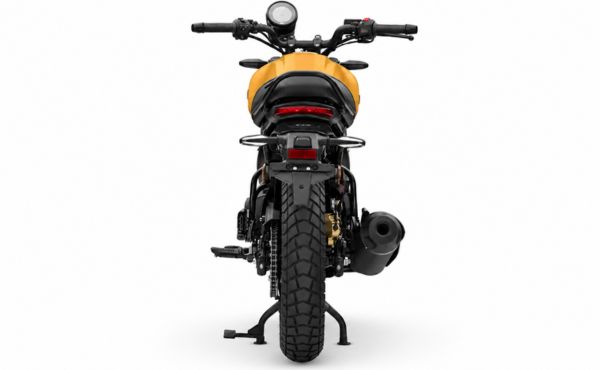
- All-LED lighting: The Ronin features LED lighting, including an LED headlamp, LED brake/tail lamp, and LED turn signals.
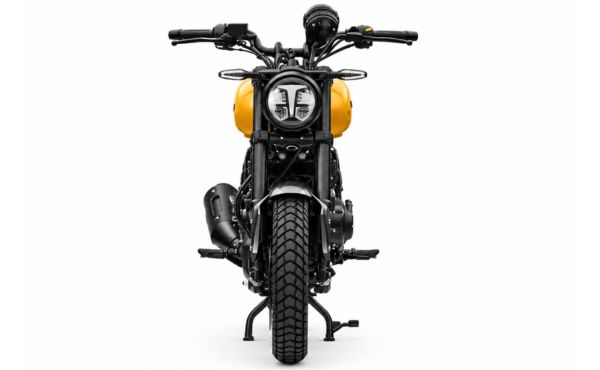
- T-shaped signature position lamp: The LED headlamp incorporates a T-shaped signature position lamp, which is a defining part of the Ronin’s front-end appearance.
- Asymmetric digital speedometer: The Ronin uses an asymmetric digital speedometer.
- Digital instrument cluster: The standard console is digital, while the higher Base+ and Top variants receive a fully digital SmartXonnect cluster.
- SmartXonnect connectivity: The Base+ and Top variants offer a SmartXonnect-enabled digital cluster, enabling compatible connected functions when paired with a smartphone.
- Voice assist: Voice Assist is included as part of the Base+ and Top connectivity package.
- Turn-by-turn navigation: Navigation is available through the SmartXonnect package on the Base+ and Top versions.
- Estimated Time of Arrival: The connected navigation package includes Estimated Time of Arrival information on the relevant SmartXonnect-equipped versions.
- Incoming-call alert and receive function: The connected display supports incoming-call alerts and call-receive functionality on the Base+ and Top variants.
- Custom-window notifications: SmartXonnect-equipped versions can display custom-window notifications.
- Ride analysis: Ride analysis through the Connect App is available on the Base+ and Top variants.
- Ride Assistance: Ride Assistance is included as part of the Base+ and Top package.
- Type-C charging port: A Type-C charger is available on the Base+ and Top versions. Riders should secure any cable and avoid operating a phone while riding.
- Distance-to-empty display: The console includes a Distance to Empty (DTE) function.
- Two trip meters: There are two trip meters as part of the convenience functions.
- Chain cover: The motorcycle includes a chain cover, which helps protect the chain area from road debris.
- Premium seat: The Ronin features a premium seat as part of its standard feature package.
- Accessory compatibility: An extensive range of custom accessories is available for owners to alter the motorcycle’s appearance or utility.
Build Quality
The Ronin’s Double Cradle Split Synchro Stiff frame, nine-spoke alloy wheels, 41 mm USD front fork, seven-step preload-adjustable rear monoshock, tubeless block-tread tyres, all-LED lighting, asymmetric digital instrumentation, premium seat, and chain cover are all part of its build. The kerb weight is 160 kg for Mid, Base+, and Top variants, while the Base model is 159 kg.
The motorcycle’s visible construction gives it a substantial neo-retro roadster appearance without the visual complexity of a fully faired motorcycle. Important hardware includes the 300 mm front and 240 mm rear disc brakes, 110/70–17 front and 130/70–17 rear tubeless tyres, alloy wheels, LED lamps, and a T-shaped headlamp signature. These are specification details and not a guarantee of long-term durability.
Owners have generally been positive about perceived quality. First-ride assessments found the paint finish upmarket, the plastic panels sturdy, the switches tactile, and panel gaps even. The Ronin is described as having tighter panel gaps and high-quality switches and mirrors. These are impressions, so inspect the actual motorcycle delivered by the dealership rather than treating them as universal quality guarantees.
When you take delivery, check the paint, panel alignment, headlamp and indicators, switch movement, display clarity, wheel finish, tyre dates, chain tension and lubrication, front fork seals, rear shock and preload, brake lever feel, disc condition, fasteners, and visible wiring. If you choose a SmartXonnect model, also test Bluetooth pairing, navigation, notifications, and Type-C charging before accepting the bike.
Handling
The Ronin’s handling base consists of its double-cradle split Synchro Stiff frame, 41 mm USD fork, preload-adjustable monoshock, 17-inch nine-spoke alloys, and block-tread tubeless tyres. The tyre sizes are 110/70–17 at the front and 130/70–17 at the rear. Dimensions include a 1,357 mm wheelbase, 181 mm ground clearance, and 160 kg kerb weight for the Mid, Base+, and Top variants.
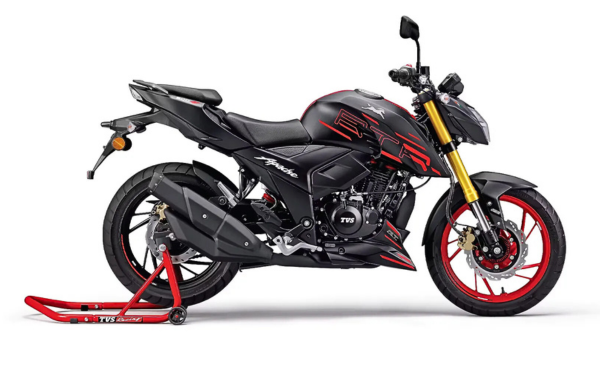
The suspension is made to handle city roads and rough surfaces well. Some riders say it works well on bad roads and offers good braking and grip. Others find the bike easy to steer, agile at normal lean angles, and stable in wet weather, though it’s not as sharp-handling as the Apache RTR 200.
The Ronin is generally described as easier to manoeuvre than its 160 kg kerb weight might suggest. It is often considered light on its feet with very good handling for a relaxed retro-styled motorcycle, while others find that the USD fork and monoshock keep it settled on broken roads and allow it to turn into corners without wandering off line.
Braking hardware varies by variant. The Base version has single-channel ABS, while Mid, Base+, and Top versions have dual-channel ABS. Rain and Urban ABS modes are available on Mid and Top variants, and traction control is present on the Top version. These aids can support braking and traction management, but they cannot compensate for excessive speed, poor tyres, unsuitable tyre pressure, gravel, standing water, abrupt inputs, or unsafe road conditions.
Comfort
The Ronin has a 795 mm seat height, a 14-litre tank, and an upright, relaxed roadster layout. The low seat height can help shorter riders place their feet more securely at stops, though every rider should assess reach and balance personally. Its 181 mm ground clearance and preload-adjustable rear suspension are also relevant to day-to-day Indian roads and variable loading.
The Ronin is generally seen as comfortable, thanks to its low seat and soft ride. Riders mention it’s smooth and easy to use every day. The suspension handles potholes and rough roads well, and the bike becomes easy to manage in traffic once you get used to its weight.
It’s important to test the Ronin for long rides instead of assuming it will be comfortable. Some riders say it’s fine for cruising at 70–80 km/h, but they feel more vibrations above 90 km/h and seat discomfort after 100–150 km. The upright handlebar and long seat are good for short and medium trips, but long, fast rides may show less wind protection and firmer seat padding after 150–200 km. These are personal experiences, not official claims.
To judge comfort, try the Ronin in city traffic, over speed bumps, rough roads, slow turns, and on open roads. Check the seat support, handlebar reach, knee angle, footpeg position, clutch effort, heat in traffic, how the suspension handles bumps, and any vibration through the handlebar, seat, and footpegs. If you often carry a passenger, test the rear seat and suspension with their weight.
Styling
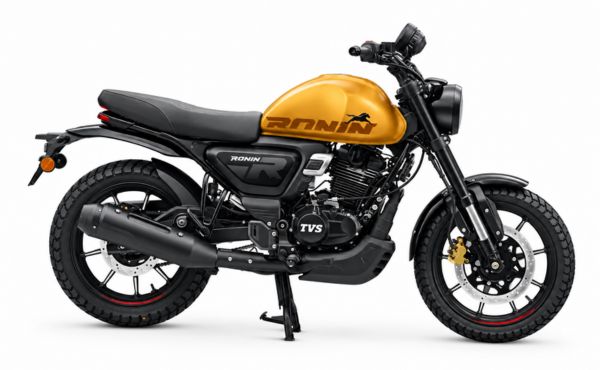
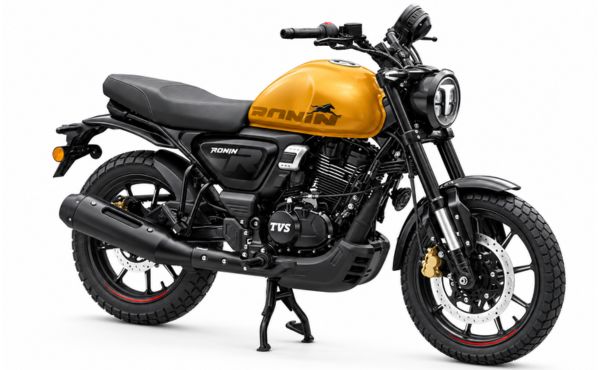
The Ronin is designed to be customized with accessories to match each owner’s style. Its look mixes retro-inspired shapes with modern parts, instead of copying a typical cruiser, sport-naked, or classic roadster.
The most recognisable styling feature is the all-LED T-face headlamp with a T-shaped signature position lamp. The Ronin also uses LED turn signals and an LED brake/tail lamp, giving the retro-influenced shape a more modern lighting signature.
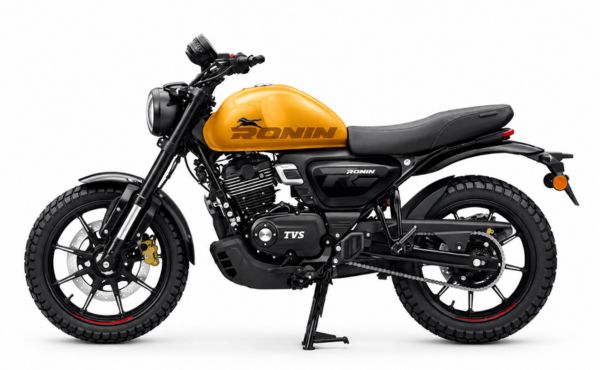
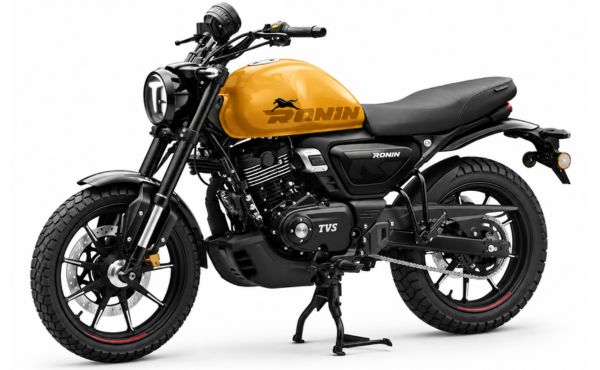
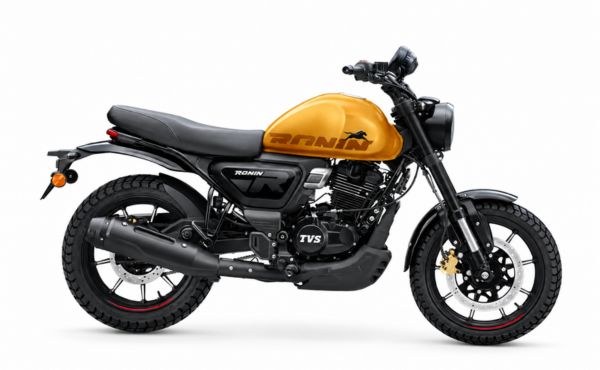
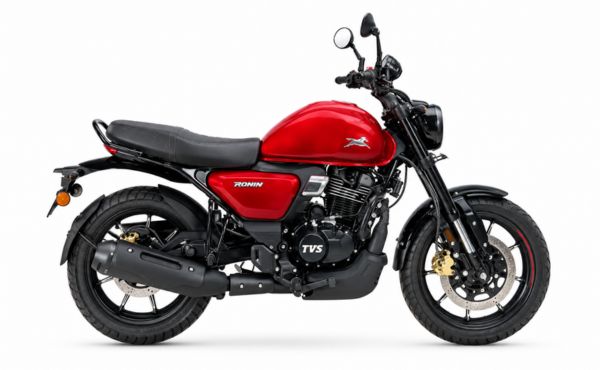
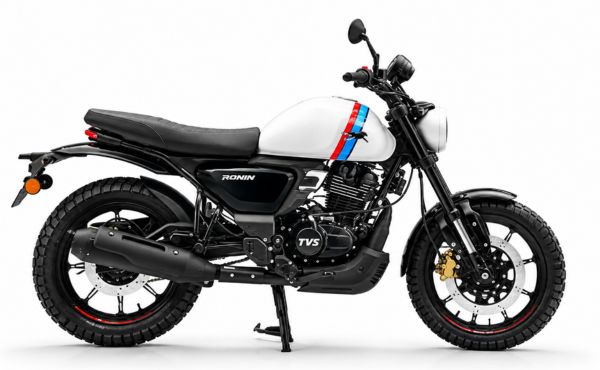
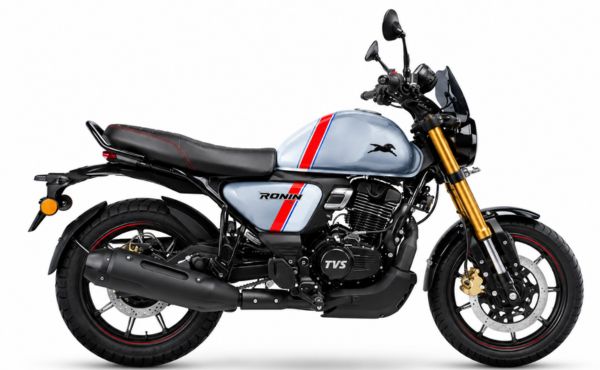
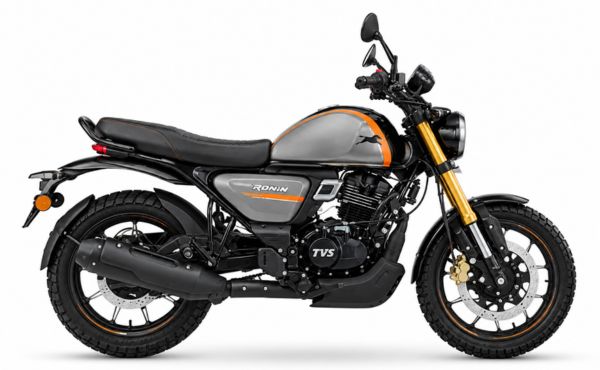
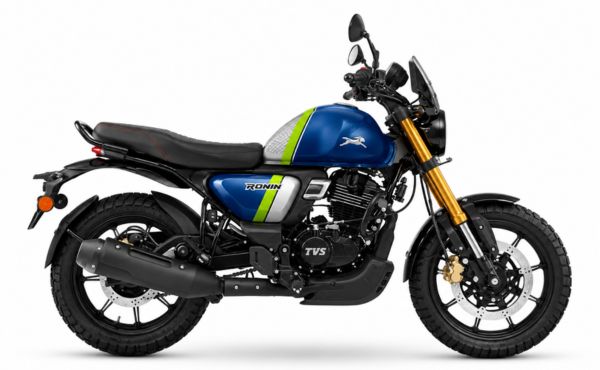
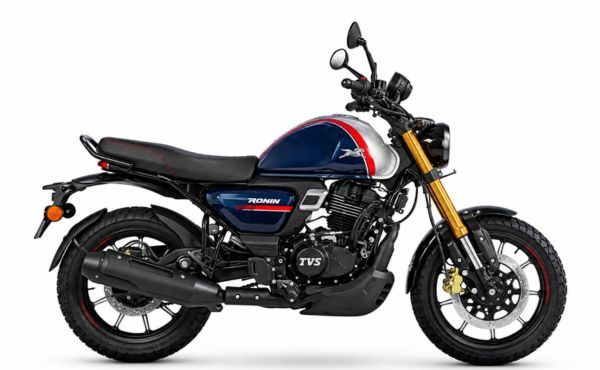
The side profile is defined by the 225.9 cc engine, double-cradle frame, compact side panels, chain cover, broad premium seat, and block-tread tubeless tyres. The 17-inch nine-spoke alloy wheels are black on the Base and Mid versions, while Bright Gold alloy wheels are featured on the Base+ and Top versions.
A visor is also available as an accessory on the Top version. A wider custom-accessory range is offered, but individual accessory availability, price, and installation should be confirmed with an authorised dealer.
Colour Options And Variants
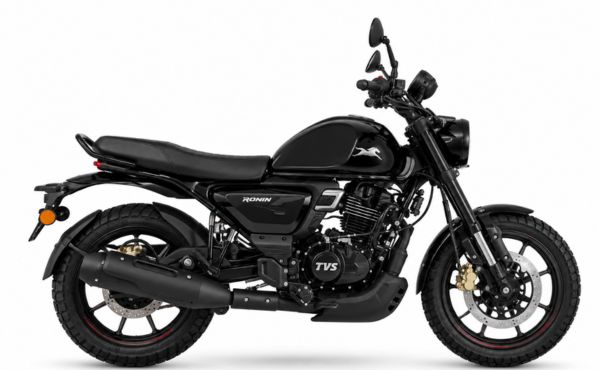
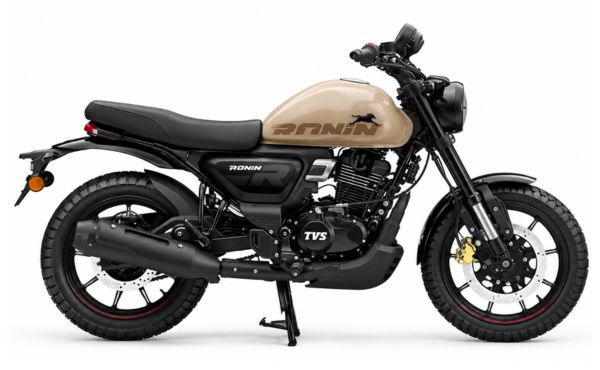
There are nine colour options across the four grades. Each variant comes with specific colours, and the finish is either shiny or matte.
| Variant |
Colour options |
Official finish |
Wheel finish |
| Base |
Lightning Black, Magma Red, Agonda White |
Lightning Black and Magma Red: shiny; Agonda White: matte |
Black |
| Mid |
Glacier Silver, Charcoal Ember |
Glacier Silver: shiny; Charcoal Ember: matte |
Black |
| Base+ |
Sunlit Yellow, Desert Mirage |
Matte |
Bright Gold |
| Top |
Nimbus Grey, Midnight Blue |
Shiny |
Bright Gold |
Lightning Black and Magma Red are the shiny Base-version finishes, while Agonda White is listed with a matte finish. The Mid grade provides Glacier Silver in shiny paint and Charcoal Ember in matte paint.
The Base+ grade is the colour-focused matte option, offering Sunlit Yellow and Desert Mirage, both paired with Bright Gold alloy wheels. The Top version uses Nimbus Grey and Midnight Blue with shiny paint and Bright Gold wheels.
The colours Arctic Teal and Champagne Gold, associated with other motorcycle models, are not listed for the Ronin.
The Ronin’s range is categorised as Base, Mid, Base+, and Top, which describe feature grades.
| Variant grade |
Visual identifiers |
Equipment distinction |
| Base |
Black alloy wheels; Lightning Black, Magma Red, or Agonda White |
Single-channel ABS, digital speedometer, normal levers |
| Mid |
Black alloy wheels; Glacier Silver or Charcoal Ember |
Dual-channel ABS; Rain and Urban ABS modes |
| Base+ |
Bright Gold alloy wheels; Sunlit Yellow or Desert Mirage |
Fully digital SmartXonnect cluster, Type-C charger, navigation, voice assist, ride analysis |
| Top |
Bright Gold alloy wheels; Nimbus Grey or Midnight Blue; visor listed as an accessory |
Dual-channel ABS, traction control, adjustable levers, SmartXonnect cluster, Type-C charger, navigation, voice assist, ride analysis |
The Base version is visually distinguished by black wheels and its three stated colour choices. It is listed with single-channel ABS, a digital speedometer, and normal levers.
The Mid grade retains black wheels but changes the paint choices to Glacier Silver and Charcoal Ember. It introduces dual-channel ABS and Rain and Urban ABS modes.
The Base+ grade is identified by its Bright Gold wheels and matte Sunlit Yellow or Desert Mirage finishes. It is the first grade to list SmartXonnect-based connectivity, including navigation, Voice Assist, ride analysis, and a Type-C charger.
The Top version combines Bright Gold wheels with Nimbus Grey or Midnight Blue shiny finishes. It adds traction control and adjustable levers to the SmartXonnect, Type-C charging, navigation, and connectivity package. TVS also lists a visor as an accessory for this grade.
For a buyer focused on appearance, the major division is between the black-wheel Base and Mid grades and the Bright Gold-wheel Base+ and Top grades. For a buyer who wants connected instruments, Base+ and Top are the SmartXonnect-equipped grades. The Top version is the only listed grade with both traction control and adjustable levers, while the Mid and Top entries are the grades explicitly shown with Rain and Urban ABS modes.
Value For Money And Pricing
The TVS Ronin starts at ₹ 1,30,290 ex-showroom in Delhi for the base model, with the price changing by variant and colour. The best way to judge value is by equipment: Base is the entry-level, Base+ adds dual-channel ABS and SmartXonnect, Mid brings extra ABS modes, and Top includes traction control, adjustable levers, and the most features. Registration, tax, insurance, accessories, and finance will add to the final on-road price.
All Ronin versions have the same main parts: a 225.9 cc oil-cooled, four-valve engine with 20.4 PS and 19.93 Nm, five-speed gearbox, fuel injection, assist-and-slipper clutch, Glide Through Technology, 41 mm USD front fork, seven-step adjustable rear monoshock, double-cradle split Synchro Stiff frame, nine-spoke alloy wheels, and 300 mm front/240 mm rear disc brakes. So, the main differences are in braking setup, connected tech, rider aids, lever type, colour, wheel finish, and extra comfort or convenience features—not the engine.
The Base range lists single-channel ABS, normal levers, a digital speedometer, and black alloy wheels. It is the cost-focused Ronin for a buyer who wants the common engine, chassis, USD fork, and rear monoshock package without paying for dual-channel ABS, traction control, SmartXonnect connectivity, or premium electronic functions.
The Agonda Edition: Identifies Agonda White as a matte Base-grade finish; it does not provide a separate mechanical or electronics specification for the Agonda Edition beyond the Base feature matrix. It is therefore appropriate to treat its price difference as a colour or edition-positioning distinction unless a dealer provides a separate written equipment sheet.
The Base+ is the key step for buyers seeking dual-channel ABS and smartphone-connected functionality. It is above the Agonda Edition and adds dual-channel ABS, a SmartXonnect-enabled fully digital cluster, Voice Assist, turn-by-turn navigation, Estimated Time of Arrival information, ride analysis, Type-C charging, and Bright Gold alloy wheels. It is also offered in two matte colours: Desert Mirage and Sunlit Yellow.
The Mid grade retains dual-channel ABS and is one of the two grades that TVS explicitly lists with Rain and Urban ABS modes. It also features a fully digital SmartXonnect cluster, navigation, Voice Assist, ride analysis, and Type-C charging on Mid. However, the TVS lists black alloy wheels for Mid, while Bright Gold wheels are specified only for Base+ and Top.
The Top version is in both Nimbus Grey and Midnight Blue. It is the only grade that combines traction control and adjustable levers with dual-channel ABS, Rain and Urban ABS modes, SmartXonnect, navigation, Voice Assist, ride analysis, Type-C charging, a premium seat, and Bright Gold alloy wheels. The gap over Mid Charcoal Ember should be justified by a buyer’s actual need for traction control, adjustable levers, and the Top-specific colour and equipment combination.
The Base+ is the clearest equipment-led value point for many buyers because it moves from the Base’s single-channel ABS to dual-channel ABS and adds the SmartXonnect suite. The Top is the appropriate choice only for riders who place clear value on traction control, adjustable levers, premium seat, and its specific colour/wheel treatments.
The Ronin occupies an unusual position between a neo-retro roadster, relaxed commuter, and lightweight lifestyle motorcycle. The closest Indian-market alternatives regularly included in local comparison coverage are the
- Royal Enfield Hunter 350
- Bajaj Pulsar N250
- Honda CB350
- Yezdi Roadster
They are not identical in displacement, engine configuration, riding character, or equipment, so equivalent variants should be compared rather than only headline starting prices.
The Royal Enfield Hunter 350 is a relevant rival for buyers who want a retro-styled city roadster. Its price range begins below Base+ but reaches above the Ronin Top, so comparing features and variants is important.
The Bajaj Pulsar N250 is another option for riders who prefer a contemporary street-naked appearance and a 250 cc performance focus. Its price places it near the Ronin Base+ but below the Mid, so it should be compared with the Ronin on design, braking equipment, connected features, comfort, and final on-road price rather than displacement alone.
The Honda CB350 and Yezdi Roadster are alternatives for buyers considering larger-capacity retro-roadster motorcycles. Their starting prices sit above the Ronin Top, so they represent a higher-budget decision rather than like-for-like pricing competition.
The TVS Ronin is best assessed as four equipment grades with nine price-and-colour combinations, not as a single uniform motorcycle. The Base is the lower-cost entry point, Agonda provides a specific Base-level finish, Base+ introduces dual-channel ABS and connected functionality, Mid adds Rain and Urban ABS modes, and Top brings traction control and adjustable levers.