
Introduction
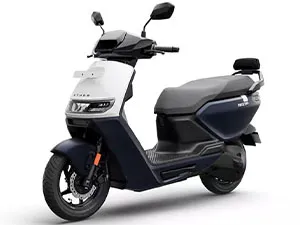
The Ather Rizta is a family-friendly electric scooter designed for Indian cities. It has an easy automatic ride and several charging options. You can pick a 2.9 kWh battery with a certified range of 123 km or a bigger 3.7 kWh battery with a certified range of 159–160 km, as tested under Indian Driving Conditions (IDC). Ather offers home charging with a portable or Duo charger, and you can also use the public Ather Grid network. The Rizta focuses on smooth, easy performance instead of the sportier feel of the Ather 450 series. With a 4.3 kW motor, a top speed of 80 km/h, and two ride modes (SmartEco and Zip), it works well for daily city rides, family trips, flyovers, and suburban roads, but it is not meant for regular high-speed highway travel.
Gallery
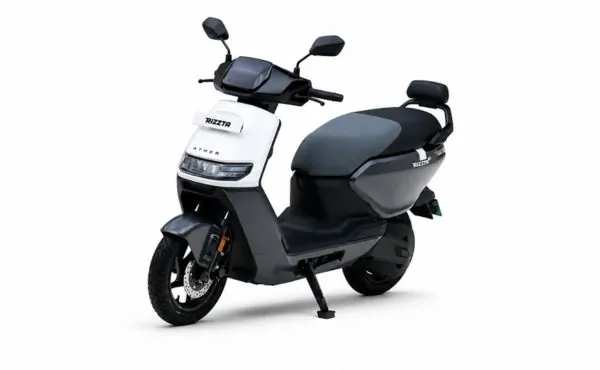
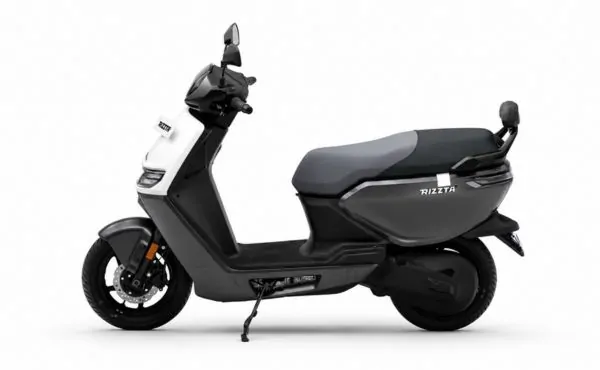
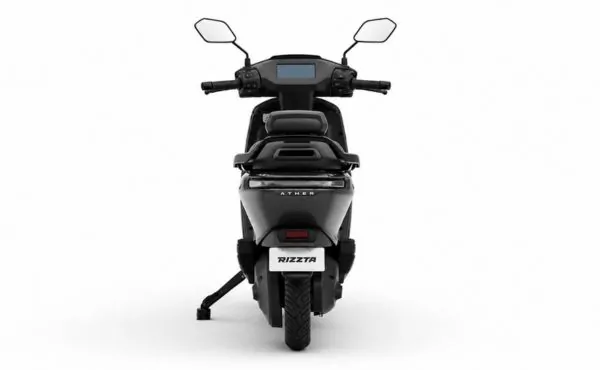
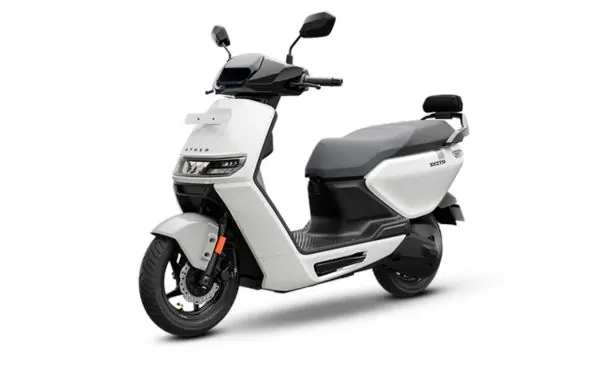
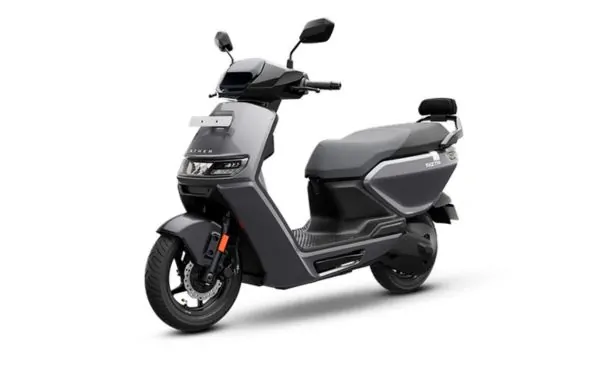
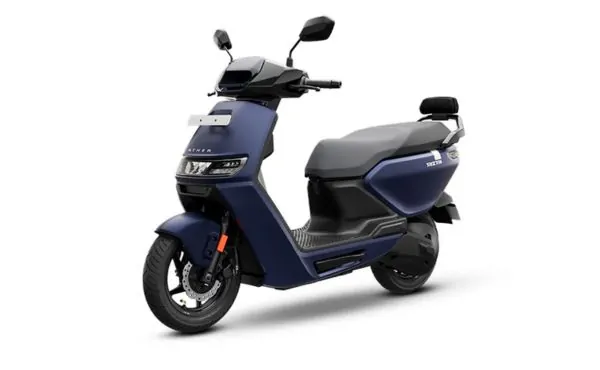
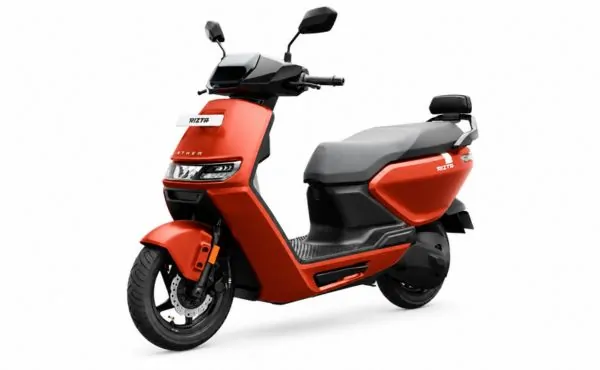
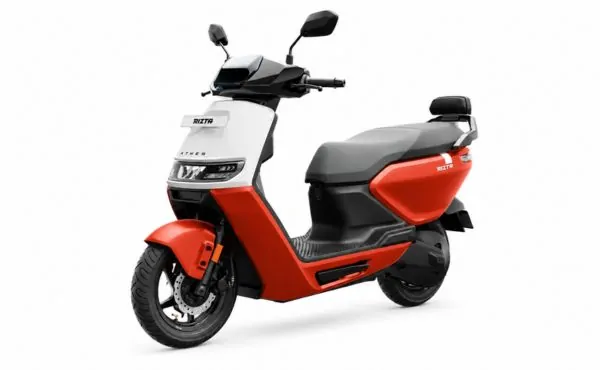
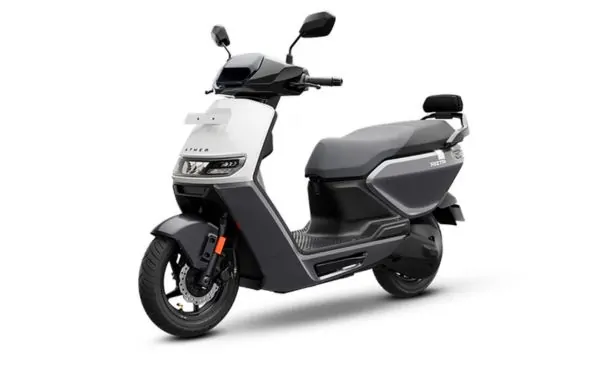
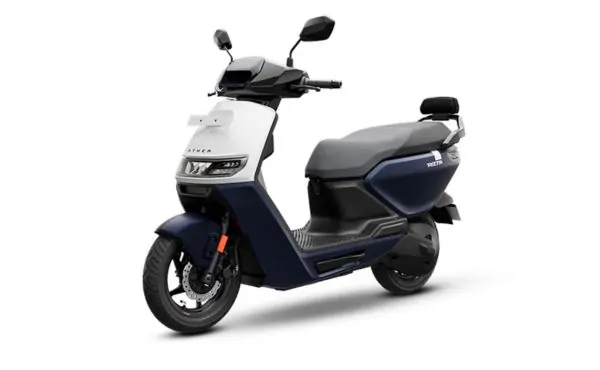
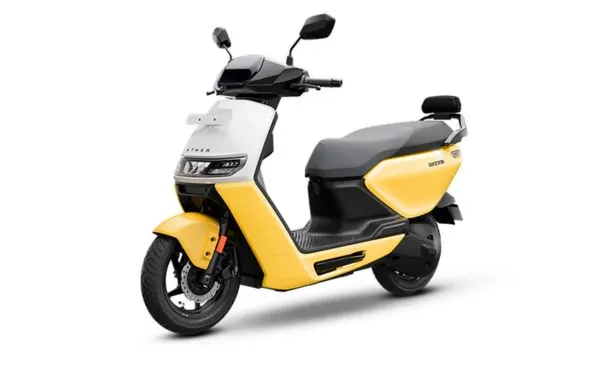
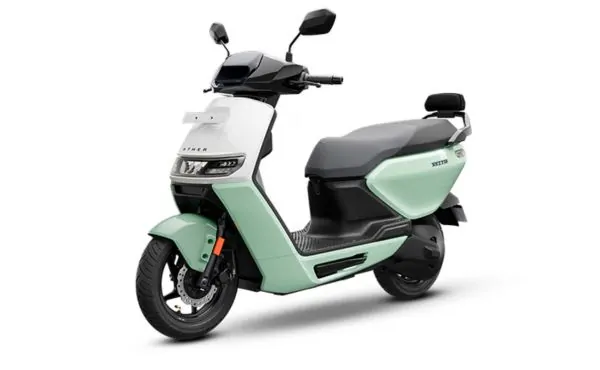
Key Specifications
Battery Type
2.9 kWh Lithium-ion
Range
70-100 km/c
Power
5.85 PS
Torque
22 Nm
Max Speed
80 km/h
Charging Time
7h 25min (0-100%)
Rear Suspension
Monoshock Absorbers
Kerb Weight
125 Kg
Ratings
- 90%
Performance
- 95%
Features
- 80%
Handling
- 95%
Comfort
- 95%
Build Quality
- 100%
Styling
- 90%
Value for Money
- 92%
Total
Ratings calculation is purely based upon pros and cons of the model given below in the overview section.
Price

Special Features
1
34-litre Under-seat Storage
2
Google Maps And Navigation
3
Call And Music Controls
4
Magic Twist Regenerative Braking
5
Smarteco And Zip Ride Modes
6
Autohold
7
Reverse Assist
8
Emergency Stop Signal
9
Ather Duo Home Charger
10
Document Storage
11
Auto Indicator Cut-off
12
Side-stand Motor Cut-off
Full Specifications
| City | 80-100 km/c |
| Highway | 70-80 km/c |
| Motor Type | PMSM |
| Power | 5.85 PS |
| Torque | 22 Nm |
| Top Speed | 80 km/h |
| Transmission | Automatic |
| Battery Type | Lithium-ion |
| Speedometer | Digital |
| Odometer | Digital |
| Low Battery Indicator | Yes |
| Start Type | Self Start |
| USB Charging Port | Yes |
| Clock | Yes |
| Pass Light | Yes |
| CBS | Yes |
| Under Seat Storage | 34 Litre |
| Tyres (F) | 90/90 - 12tubeless |
| Tyres (R) | 100/80 - 12tubeless |
| Brakes (F) | Disc,200mm |
| Brakes (R) | Drum,130mm |
| Front Suspension | Telescopic Forks |
| Rear Suspension | Monoshock Absorbers |
| Kerb Weight | 125 kg |
| Ground clearance | 165 mm |
| Length*width*Height | 1850mm * 750mm * 1140mm |
| Seat height | 780 mm |
| Battery | 2.9kWh Lithium-ion |
| Charging Time (0-100%) | 7h 25min |
| Head Lamp | LED |
| Tail Lamp | LED |
Overview
Performance And Motor
The Ather Rizta uses a rear electric motor that gives up to 4.3 kW of power and 22 Nm of torque. The motor provides smooth, steady acceleration, which is helpful in busy Indian traffic and makes it easier for riders moving from petrol scooters to electric ones.
The scooter has two riding modes: SmartEco and Zip. SmartEco helps save energy by using gentle acceleration and lower power, extending range. Zip mode gives quicker acceleration for overtaking, joining faster traffic, and keeping up with city speeds.
Ather says the Rizta can accelerate from 0 to 40 km/h in 4.7 seconds, and independent tests have seen about 4.3 seconds in Zip mode. This is quick enough for daily traffic and climbing flyovers, but the scooter still feels calmer than a high-performance electric model.
The Rizta uses a fully automatic direct-drive system, so there is no clutch, gearbox, or gear lever. To ride, you just twist the throttle to go.
Regenerative braking is a useful feature. Ather says you can twist the throttle upward to slow down, which recovers some energy and means you do not always need to use the brakes in normal traffic. This is helpful in city traffic, on downhill roads, or when stopping often, but you still need the brakes for harder stops.
The Ather Rizta can reach a top speed of 80 km/h. This is suitable for city roads, flyovers, ring roads, and most suburban routes, but not for long, high-speed highway rides.
For daily city use, the 4.3 kW motor feels smooth and quick, especially in Zip mode. However, if you often ride faster than 70–80 km/h, carry heavy loads at speed, or travel long distances on highways, you may want to consider a more powerful scooter or a motorcycle.
Charging Time
Charging time depends on the battery and charger you choose for your Rizta. The 2.9 kWh battery with the 350 W portable charger takes about 6 hours 40 minutes to reach 80% and 8 hours 30 minutes to reach 100%. This is convenient for overnight charging at home or during a full workday at the office.
The bigger 3.7 kWh battery can be used with Ather’s 700 W Duo charger. According to Ather, it takes about 4 hours 30 minutes to reach 80% and 6 hours 10 minutes to reach 100%. You can mount the Duo charger at your parking spot or carry it with you if needed.
The Rizta can also use the Ather Grid public charging network. Ather says there are more than 4,300 charging points in over 370 Indian cities, and the specification sheet claims you can add about 15 km of range in 10 minutes at an Ather Grid charger. The actual range added will depend on your battery version, current charge, temperature, and charging conditions.
Range
In India, electric scooters usually list their range using IDC certification instead of petrol mileage figures. The Rizta’s certified range depends on which battery it has:
| Battery Pack | Certified IDC range |
|---|---|
| 2.9 kWh | 123 km per charge |
| 3.7 kWh | Up to 159–160 km per charge |
The 2.9 kWh battery is included with the Rizta S and some Rizta Z models, while the bigger 3.7 kWh battery is available on higher-spec Rizta Z models. IDC range numbers are measured in controlled tests, so use them as a guide for comparison, not as a guarantee of daily range.
To keep your battery healthy, try not to let it run down to zero often. Using Zip mode, quick acceleration, high speeds, frequent hard braking, carrying heavy loads, climbing hills, low tyre pressure, heavy traffic, and hot or cold weather can all lower the distance you get per charge.
In real Indian conditions, the 2.9 kWh Rizta usually gives about 80–105 km per charge, while the 3.7 kWh version gets around 100–125 km, depending on traffic and your riding style. These numbers are more helpful for planning than the official IDC ratings.
A road test of the 3.7 kWh Rizta Z recorded roughly 105 km in SmartEco mode and around 90 km when ridden mainly in Zip mode, with SmartEco used only when traffic allowed. Another test found approximately 85–90 km in SmartEco mode with a 75 kg rider on the 2.9 kWh model, dropping to about 75 km in Zip mode.
Here’s what you can expect for daily use in India:
| Battery Pack | Practical city range | Best use case |
|---|---|---|
| 2.9 kWh | About 75–100 km | Daily commutes of roughly 25–50 km with regular charging |
| 3.7 kWh | About 90–125 km | Longer city commutes, family errands, or charging every two to three days |
To get the best range, use the throttle gently, ride in SmartEco mode, keep a steady speed, check your tyre pressure, and avoid carrying too much weight. If you use Zip mode often, ride at full throttle, face heavy traffic, rough roads, steep hills, or carry passengers frequently, your range will be lower.
Features And Technology
The Ather Rizta is designed for families, with ample storage, smart technology, practical riding features, and safety in mind. The features you get depend on the model and options you choose. The Rizta S comes with a 7-inch DeepView display, while the higher-end Rizta Z has a 7-inch touchscreen and additional connectivity features.
- Family-oriented seating and floorboard: The Rizta has a wide, long seat and a broad floorboard, providing the rider, pillion, and carried items with more usable space than Ather’s sportier 450-series scooters. Its layout is aimed at regular household travel and city commuting.
- 34-litre under-seat storage: There is 34 litres of storage space under the seat, enough for a full-face helmet and some smaller items. This is one of Rizta’s most useful features for carrying groceries, bags, and other daily family essentials.
- Optional frunk and storage accessories: You can add extra storage up front and buy special luggage accessories, such as a boot bag. These help you organise things that do not fit under the seat.
- 7-inch DeepView display on Rizta S: The Rizta S has a 7-inch DeepView digital display with adjustable brightness. It shows important ride details and offers turn-by-turn navigation, but it is not a touchscreen.
- 7-inch TFT touchscreen on Rizta Z: The Rizta Z comes with a 7-inch colour touchscreen. You can use touch gestures such as pinch, zoom, swipe, and glide on maps, messages, and other features.
- Bluetooth and internet connectivity: The Rizta has Bluetooth and internet connectivity, so its dashboard can connect to your smartphone and access Ather’s online features.
- Google Maps and navigation: Higher Rizta Z models offer Google Maps navigation, with turn-by-turn directions, traffic updates, and routes for two-wheelers. The Rizta S also gives turn-by-turn navigation on its DeepView display.
- WhatsApp previews and messaging tools: On connected Rizta models, you can see WhatsApp message previews on the dashboard. Depending on your model and subscription, you can also decline calls with a preset SMS reply. Only use these features when stopped or with safe, hands-free controls.
- Call and music controls: The connected display lets you see call alerts and control music, so you do not have to keep reaching for your phone while riding.
- AtherStack software and OTA updates: Ather can update the Rizta’s software wirelessly. This means new features and improvements can be added without needing to visit a workshop.
- Magic Twist regenerative braking: On some Rizta Z models, Magic Twist lets you slightly reverse the throttle to boost regenerative braking. This helps control your speed in traffic and saves some energy, but you still need the brakes for emergency stops.
- SmartEco and Zip ride modes: The Rizta has SmartEco mode for saving energy and Zip mode for quicker response in traffic. You can choose the mode that fits your route and riding style.
- SkidControl traction control: Ather’s SkidControl helps prevent the rear wheel from slipping by reducing power when needed, which is useful on wet or loose roads. This feature is not available on all models, and it is not standard on the base Rizta S.
- AutoHold: AutoHold keeps the scooter still on a slope without you having to hold the brake lever. This is handy when stopped on flyovers, ramps, or sloped roads.
- Reverse assist: Reverse assist lets you move the Rizta backwards slowly, making it easier to park or get out of tight spots.
- FallSafe motor cut-off: FallSafe shuts off the motor if the scooter falls or tilts excessively. This helps prevent the scooter from moving accidentally if you lose your balance or it gets knocked over.
- Emergency Stop Signal: The emergency stop signal flashes the rear light rapidly when you brake hard, so drivers behind you can see you more easily.
- Side-stand motor cut-off: The scooter has a side-stand cut-off, so it will not run if the side stand is down.
- Auto indicator cut-off: The indicators turn off automatically after a turn, so you do not accidentally ride with them on. This is especially helpful in busy city traffic.
- Guide-me-home lights and LED lighting: The Rizta has guide-me-home lights and LED lamps, making it easier to see after parking at night and improving visibility in low light.
- 400 mm water-wading capability: Ather says the Rizta can handle water up to 400 mm deep, which is helpful during city floods. Still, you should avoid riding through deep, fast, or unpredictable water.
- Find My Scooter and theft notifications: With Ather Connect, some models offer Find My Scooter, tow alerts, and theft notifications. These are useful if you park in big public places or apartment complexes.
- Live location sharing and trip planner: Rizta Z models let you share your live location and plan longer trips with charging stops. Location sharing can help your family keep track of your journey.
- Document storage: On higher models, you can store digital documents in the scooter, so your registration, insurance, or licence files are easy to access.
- Ather Halo smart-helmet integration: The Rizta works with Ather’s Halo smart helmet system. With the right Halo parts, you can use features like talking to your passenger and sharing music. There is also a charging spot for the Halo device under the seat.
- Ather Duo home charger: Ather’s Duo charger can be set up at your parking spot or carried in the scooter’s storage. This gives you more flexibility than just having a fixed home charger.
- Ather Grid public charging access: The Rizta is compatible with Ather Grid, which Ather says has more than 4,300 charging points across 370-plus Indian cities. This can be useful for riders who travel beyond their usual home-charging range.
Build Quality
The Rizta has a neat, well-built body with tightly fitted panels and no major gaps, according to Indian road tests. Owners often say it feels solid and gives a premium impression every day.
The Rizta’s body and floorboard are made for families, not for the smaller sport-scooter style of the Ather 450. The wide floorboard gives space for your feet and small bags, and the 34-litre under-seat storage is handy for daily use. Ather also sells accessories to add more luggage space or personalise your scooter.
The Rizta has telescopic front forks and a rear monoshock, which are better than basic entry-level suspension. It weighs about 119–125 kg, depending on the model, which helps it feel stable on the road. When buying, check the paint, charging port flap, seat latch, switches, boot hinges, and the dealer’s preparation of the scooter, as these factors matter for long-term use.
Some owners have noticed belt noise or software glitches, but not everyone experiences these problems. It is a good idea to test the dashboard, connected features, reverse assist, regenerative braking (if available), and charging when you get the scooter or during a showroom demo.
Handling
The Ather Rizta is easy to handle for a family scooter. Even with its big seat, wide floorboard, and heavier weight, it stays agile in traffic and stable at city and suburban speeds. It is simple to ride in different situations, feeling nimble in tight spots and steady at higher speeds.
The upright seating, neutral handlebars, and easy steering help you move through traffic, park in apartments, and make U-turns. The long, flat seat and wide design do not feel awkward while riding, but the scooter’s weight is more noticeable when pushing it or reversing out of tight spots. The reverse-assist feature helps with this.
The Rizta handles in a way that feels familiar and predictable, like other Ather electric scooters. It stays stable at city speeds, turns well, and does not feel loose on slightly rough roads. Most Indian riders like its handling, though it is made more for safe family use than for sharp, sporty cornering.
One ergonomic limitation is the steering-lock area. The handlebar can touch the rider’s knees during full-lock U-turns. Taller riders should check knee clearance during a test ride, especially if they often need to maneuver in tight parking spaces or narrow residential lanes.
Comfort
Comfort is a big plus for the Rizta. The wide, long seat provides more space for both the rider and the passenger than most scooters in this class. Long-term tests show the seat is truly roomy and comfortable, and the Rizta Z’s pillion backrest adds extra support for regular two-person city rides.
You sit upright with plenty of space for your feet, so you do not feel cramped like on smaller scooters. The floorboard can hold small bags, which is handy for daily errands. The passenger gets proper footrests, and the wide seat means you can wear a backpack without crowding them.
On city roads, whether smooth or a bit uneven, the telescopic fork and rear monoshock give a comfortable ride. The Rizta handles small bumps and speed breakers well, and the suspension feels even better with a passenger. Many owners like its smooth ride, stability, and handling of normal potholes.
The main downside is how it handles deep potholes and sharp bumps. The front fork can feel stiff and send jolts to your hands, and the rear suspension might feel bouncy or firm when riding alone. With a full load, the front fork can bottom out, and the rear can feel a bit soft. So, while the Rizta is comfortable for regular family rides, it is not the best choice for very rough roads.
The Rizta is best for people who want ample seat space, passenger comfort, an upright riding position, and easy city handling. If you are shorter, worried about knee space during tight turns, or often ride alone on very rough roads, take a longer test ride before deciding.
Styling
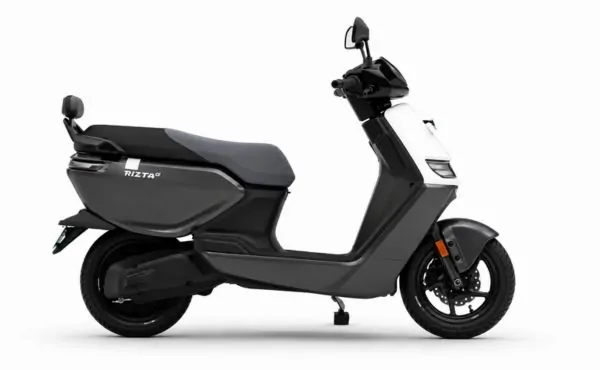
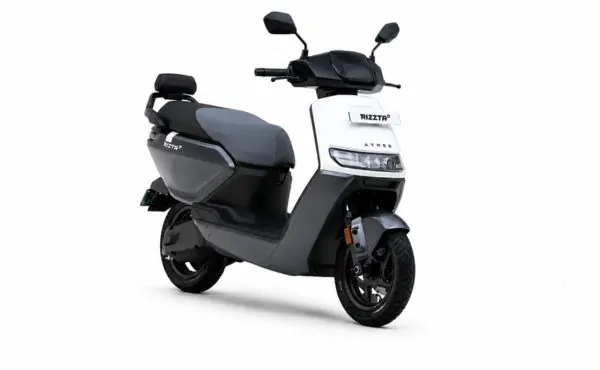
The Rizta is designed as a true family electric scooter, not a sporty city EV. It has a wide, flat front, big body panels, a large seat, and a long, useful floorboard. This upright, simple look should appeal to many Indian families, not just young riders looking for a sporty style.
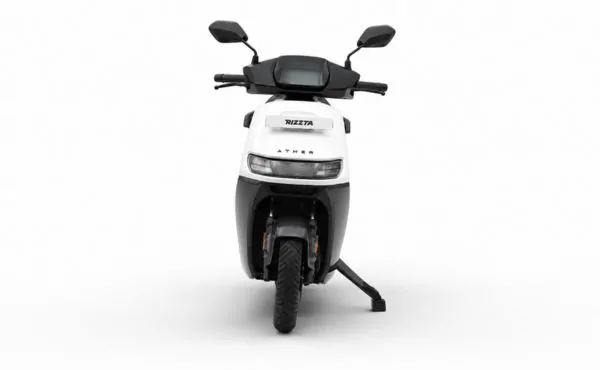
The Rizta’s body has flatter surfaces and simpler lines than the Ather 450. The wide LED light bar at the front gives it a modern look, and the front blends smoothly into the sides and lower body. The back is boxier, which makes room for the bigger seat and 34-litre storage under the seat.
The Rizta looks practical rather than aggressive. It does not have sharp cuts, exposed parts, or a forward-leaning shape. Instead, Ather gives it a family-friendly shape with modern LED lights, alloy wheels, and pastel or two-tone colours to keep it stylish but not too flashy.
Ather has covered the belt-drive area that was exposed on the 450-series, making the Rizta look neater and more family-friendly. The clean panels, wide seat, and roomy floorboard all show its focus on practicality.
Colour Options And Variants
The Rizta is available in nine listed India-spec colour options, although availability varies by variant, battery pack, finish, city, and production batch. The listed colours are
- Siachen White Mono
- Deccan Grey Mono
- Pangong Blue Super Matte
- Terracotta Red Super Matte
- Terracotta Red Duo
- Deccan Grey Duo
- Pangong Blue Duo
- Alphonso Yellow Duo
- Cardamom Green Duo
The mono colours are the simpler options. Siachen White Mono gives a clean, minimal look. Deccan Grey Mono is the most subtle, and Pangong Blue Mono adds some colour but keeps a classic single-tone style. These are good choices for buyers who want a simple, mature family scooter.
The Duo colours add a white upper section on the seat and body panels for a more premium two-tone look. Deccan Grey Duo is a subtle dual-tone, while Pangong Blue Duo and Cardamom Green Duo are more colourful but not too bold. Alphonso Yellow Duo is the brightest and most youthful option.
Terracotta Red comes in both mono and Duo styles. This warm red stands out more than the grey or white options but still keeps the Rizta’s practical look. Check with your dealer for the exact finish name, colour availability, and any extra cost, since these can change by model year and location.
The Ather Rizta is sold in two primary trims:
- Rizta S
- Rizta Z
Each trim is available with different battery options and optional connected-tech packages, which creates multiple showroom variants even though the core body design remains the same.
The Rizta S is the more value-focused model. It uses the 7-inch DeepView digital display instead of the Z’s touchscreen and is typically offered with the 2.9 kWh battery pack, rated for 123 km of IDC range. Current listings also show S variants with the 3.7 kWh battery, rated for up to 159 km IDC range, depending on city and model-year catalogue.
The Rizta Z is the higher-spec trim. It receives the 7-inch TFT touchscreen, expanded connected functions, and access to additional equipment such as Magic Twist regenerative braking, SkidControl traction control, and selected AtherStack Pro functions, depending on the exact configuration. The Z is offered with both 2.9 kWh and 3.7 kWh battery packs, rated for 123 km and 159–160 km IDC range, respectively.
AtherStack Pro is an optional software and feature package on selected variants. Depending on the version, it adds or expands connected functions such as enhanced navigation, live location sharing, theft and tow notifications, WhatsApp previews, and other dashboard-based features. Therefore, buyers should compare the exact model name on the quotation—not just “S” or “Z”—before booking.
When choosing your final configuration, focus on two practical factors: battery range and the technology you need. The 2.9 kWh version is good for shorter daily commutes with regular home charging, while the 3.7 kWh version is better for riders who want more charging flexibility. The Rizta S is right for those who prefer basic functions and a simpler display, while the Rizta Z is better for buyers who want a touchscreen, extra assistance features, and more colour options.
Value For Money And Pricing
Following the June 2026 price revision, the Ather Rizta range starts at ₹ 1,21,047 ex-showroom for the Rizta S with the 2.9 kWh battery. The range extends to ₹1,59,046 ex-showroom for the Rizta Z with the 3.7 kWh battery. These figures can vary slightly by state, dealership, colour finish, and optional feature pack, so buyers should obtain a current quotation from their local Ather Space before booking.
These are the core four configurations. However, Ather also sells versions differentiated by Mono, Duo, and Super Matte paint options, plus AtherStack Pro software selection, so online platforms may show a much larger total number of variants.
On-road cost includes the ex-showroom price, insurance, registration-related charges where applicable, optional accessories, and any local handling or delivery items. In Delhi, for example, the Rizta S 2.9 kWh Mono is around ₹1,24,427 on-road, while the Rizta Z 3.7 kWh with AtherStack Pro is about ₹1,84,083 on-road. The gap between entry and fully optioned versions means buyers should compare like-for-like configurations, not just starting prices.
The Rizta’s main value lies not in its top speed or its largest claimed range. Instead, it offers a practical family package: a wide seat, broad floorboard, 34-litre under-seat storage, a 2.9 kWh or 3.7 kWh battery, a 4.3 kW motor, an 80 km/h top speed, and a mature connected software system. The higher Rizta Z versions add a 7-inch TFT touchscreen and features like Magic Twist regenerative braking, SkidControl traction control, enhanced navigation, and connected safety alerts, depending on the package you choose.
Ather’s public charging infrastructure is an additional ownership advantage. The portable or wall-mounted Ather Duo charger gives owners more flexibility for home or workplace charging. This can make the Rizta easier to own for users who occasionally travel beyond their normal daily route.
The Rizta S 2.9 kWh offers the strongest entry-level value for households with a predictable daily commute and reliable overnight charging. The Rizta S 3.7 kWh is arguably the range-focused sweet spot: it adds the larger battery without the full price jump to the touchscreen-equipped Z trim. The Rizta Z 3.7 kWh is best reserved for buyers who will genuinely use its premium display, connected functions, and rider-assistance features, since its final on-road cost can approach or exceed ₹1.8 lakh in some cities.
A key thing to consider is the optional AtherStack Pro package. It adds useful features, but it also raises the price a lot. Buyers should separate their essential needs like battery capacity, home charging, storage, seat comfort, and local service from optional connected features before deciding if the Pro package is worth it.
The Rizta competes mainly with family-oriented electric scooters in India. The closest alternatives are the
Each targets a different balance of range, performance, service reach, build quality, or price.
For most family buyers, the best comparison set is the Rizta S 3.7 kWh, a suitably equipped TVS iQube, and a Bajaj Chetak, all within the same on-road budget. Riders seeking maximum range or stronger acceleration should additionally test the Ola S1 Pro Gen 3, Ather 450X, and Hero Vida V2 Pro before making a final decision.
Verdict
The Ather Rizta is a strong, family-focused electric scooter for Indian buyers who want space, comfort, storage, easy city performance, and connected technology. Its wide seat, 34-litre under-seat boot, broad floorboard, smooth 4.3 kW motor, 80 km/h top speed, and practical 2.9 kWh or 3.7 kWh battery options make it a good fit for daily commuting, school runs, errands, and regular two-person city rides. The 3.7 kWh version is better for riders who want more real-world range and less frequent charging, while the Rizta Z is best for those who will use the touchscreen, navigation, Magic Twist, and advanced connected features.
However, the Rizta is not perfect for every EV buyer. Its suspension can feel firm over sharp potholes, and taller riders should check knee clearance during full-lock turns. SmartEco mode may also feel slow on faster roads. The price goes up a lot for the top-spec Rizta Z 3.7 kWh with AtherStack Pro and premium finishes, so buyers should compare the final on-road price with similar versions of the TVS iQube, Bajaj Chetak, Ola S1 Pro, Hero Vida V2 Pro, and Ather 450X. For families with easy charging access who value comfort, practicality, safety features, and a smooth ownership experience over pure performance, the Ather Rizta is still one of the best-rounded electric scooters in India.
Pros
- Spacious seat for two riders: The Rizta has a long, wide single-piece seat that is comfortable for a rider and pillion. Even taller and heavier passengers remain comfortable, and the standard backrest on Z variants adds useful passenger support.
- Large 34-litre under-seat boot: Its 34-litre storage compartment is one of the scooter’s strongest practical advantages. It can accommodate a full-face helmet and selected everyday items, making it useful for groceries, rain gear, bags, or family errands.
- Broad floorboard: The large floorboard provides extra legroom and can carry small bags between the rider’s feet. This makes the Rizta more practical for household use than sportier electric scooters with narrow footwells.
- Easy, predictable motor response: The 4.3 kW motor has smooth, direct throttle response that is especially useful in stop-start Indian traffic. The ability to modulate small throttle inputs without unwanted jerks is beneficial when carrying a pillion.
- Good city handling: At about 119 kg in the tested configuration, the Rizta feels agile in traffic and remains stable at normal city and suburban speeds. It is nimble in congestion and planted at its 80 km/h top speed.
- Useful family-focused riding position: The upright seating posture, wide handlebars, and generous foot space make it approachable for riders transitioning from petrol scooters. It feels familiar and easy to live with rather than overly sporty or intimidating.
- Strong connectivity: Higher variants offer a 7-inch TFT touchscreen, Google Maps navigation, Bluetooth connectivity, real-time traffic information, and messaging support. These features improve usability for urban commuters who navigate unfamiliar routes
- Magic Twist regenerative braking: On compatible Rizta Z configurations, Magic Twist allows the rider to decelerate by twisting the throttle in the opposite direction. It can make riding smoother, recover some energy, and reduce the need for regular braking, though it cannot replace conventional braking in an emergency.
- Useful safety and assistance features: Depending on the variant and package, the Rizta offers SkidControl traction control, AutoHold, reverse assist, FallSafe motor cut-off, emergency-stop signalling, and a side-stand motor cut-off. This is a strong suite of safety and convenience features for a family EV.
- Public charging access: The Rizta can use the Duo charger at home or work, giving owners both private and public charging options. There are over 4,300 charging points across more than 370 Indian cities.
- Real-world range can be practical: A 2.9 kWh road test returned an average real-world range of 95.5 km, which is adequate for many city commutes. The test included a 2% overnight battery drain and approximately 500 metres of low-speed movement after the display reached 0%.
- Solid fit and finish: Indian users describe the Rizta as well built, with neat body panels and a stable, conventional-scooter feel. This supports its suitability for routine family use.
Cons
- Firm ride on poor roads: The Rizta is more comfortable than Ather’s sportier 450 models, but it is not exceptionally plush. Sharp potholes and abrupt bumps can transmit noticeable impacts through the handlebar and seat, particularly when riding solo.
- Stiff front fork: The front fork can thud over bumps and send sharper jolts into the rider’s hands. This can become tiring on severely broken urban roads.
- Rear suspension is better with a pillion: The rear suspension can feel firm or slightly bouncy with only the rider on board, but it settles and becomes plusher when carrying a passenger. Solo riders who frequently encounter deep potholes should take a long test ride.
- Knee interference at full steering lock: During lock-to-lock U-turns, the handlebar can contact the rider’s knees. Taller riders should specifically check this during a test ride, as it can be inconvenient in narrow lanes and tight parking areas.
- SmartEco mode can feel slow: SmartEco prioritises range over response, so it can feel lethargic compared with Zip mode. Riders who regularly travel on fast suburban roads may spend more time in Zip, reducing their achievable range.
- Slow standard home charging on some versions: Base versions use a lower-output charger and can take more than eight hours to reach 100%. This is fine for overnight charging but may be inconvenient for buyers who need fast same-day recovery between rides.
- Higher purchase price with premium options: The Rizta begins at a comparatively accessible level, but the Z 3.7 kWh with AtherStack Pro and premium paint can approach ₹1.8 lakh on-road in certain cities. Several owners also consider the optional Pro Pack expensive.
- Some useful features depend on the trim or paid package: Magic Twist, SkidControl, touchscreen navigation, and advanced connected functions are not included on every Rizta version. Buyers need to confirm the exact variant and package rather than assume all advertised features are standard.
- Minor NVH and software complaints: Some reviewers and owners have noted belt or motor whine, occasional software glitches, and a slightly firm ride. These reports are not universal, but buyers should test the dashboard, connected services, charging system, and ride quality before delivery.
Frequently Asked Questions About Ather Rizta
1. What Are The Battery And Range Options On The Ather Rizta?
The Ather Rizta is available with a 2.9 kWh battery with a certified IDC range of 123 km, or a 3.7 kWh battery with a certified IDC range of up to 159–160 km. The 2.9 kWh battery is included with the Rizta S and some Rizta Z models, while the 3.7 kWh battery is available on higher-spec Rizta Z models.
2. What Is The Top Speed And Motor Power Of The Ather Rizta?
The Ather Rizta uses a rear electric motor producing up to 4.3 kW of power and 22 Nm of torque, with a top speed of 80 km/h. It has two ride modes, SmartEco and Zip, and can accelerate from 0 to 40 km/h in 4.7 seconds according to Ather, with independent tests recording about 4.3 seconds in Zip mode.
3. How Much Storage Space Does The Ather Rizta Offer?
The Rizta offers 34 litres of under-seat storage, enough for a full-face helmet and some smaller items. Buyers can also add extra storage up front and purchase accessories such as a boot bag for additional carrying capacity.
4. What Is The Difference Between The Rizta S And Rizta Z Trims?
The Rizta S is the value-focused model with a 7-inch DeepView digital display and is typically offered with the 2.9 kWh battery, though 3.7 kWh variants are also listed. The Rizta Z is the higher-spec trim with a 7-inch TFT touchscreen, expanded connected functions, and access to features like Magic Twist regenerative braking and SkidControl traction control, offered with both 2.9 kWh and 3.7 kWh battery packs.
5. What Is The Price Of The Ather Rizta?
Following the June 2026 price revision, the Ather Rizta range starts at ₹1,21,046 ex-showroom for the Rizta S with the 2.9 kWh battery and extends to ₹1,59,046 ex-showroom for the Rizta Z with the 3.7 kWh battery. On-road, the Rizta S 2.9 kWh Mono is around ₹1,24,427 in Delhi, while the Rizta Z 3.7 kWh with AtherStack Pro is about ₹1,84,083 on-road.
Other Related Links From Bikeleague India
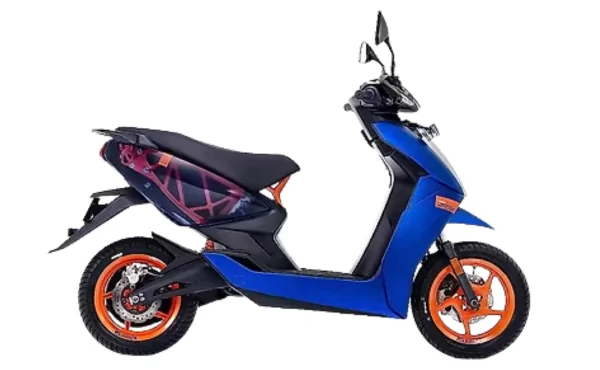
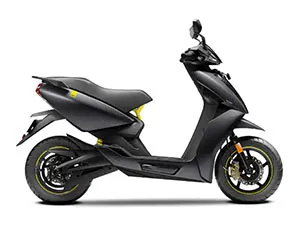
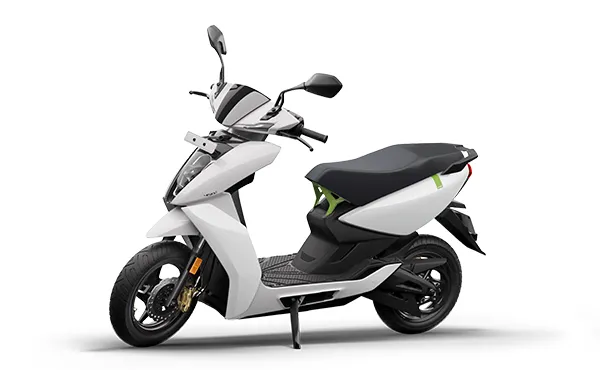
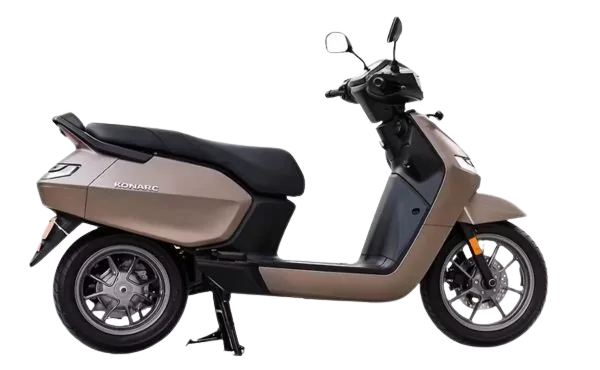
List Of All Ather Electric Scooters In India
About Ather Electric Scooters
Ather Energy is a top electric two-wheeler maker in India, recognized for its tech-driven scooters, smart software, in-house battery packs, and fast-growing charging and retail network. Started in Bengaluru in 2013 by Tarun Mehta and Swapnil Jain, Ather has evolved from an IIT Madras-backed startup to a public EV company. Its products include the high-performance 450 series and the family-friendly Rizta.
Ather stands out in India’s EV sector because it focused early on engineering, software, charging, and the overall ownership experience. Instead of just making a battery-powered scooter, Ather created a connected platform with its Atherstack software, Ather Grid chargers, Experience Centres, and service network.
Ather Energy started in October 2013 and is based in Bengaluru, Karnataka. Founders Tarun Sanjay Mehta and Swapnil Babanlal Jain set out to build high-quality electric scooters designed for Indian roads.
The company first built a prototype electric scooter, then launched the Ather S340 in 2016. Its first commercial model, the Ather 450, came out in 2018 and helped Ather become known as a premium electric scooter brand.
Since then, Ather has reached two main types of customers:
| Product family | Main target buyer | Key identity |
|---|---|---|
| Ather 450 series | Enthusiasts and urban commuters | Performance, technology, sporty handling |
| Ather Rizta | Families and practical daily users | Comfort, storage, everyday usability |
| Future EL-platform products | Price-sensitive and wider-market buyers | Greater accessibility and pan-India expansion |
The 450 series features models like the 450S, 450X, and 450 Apex. The Rizta marks Ather’s move into the popular family scooter market, and its success has helped drive the company’s growth in retail and production.
History And Growth
Ather started as an electric mobility startup at IIT Madras. Early on, it raised money from investors, including Hero MotoCorp, which later became a major shareholder.
Ather’s first big milestone was unveiling the S340 electric scooter in February 2016. The Ather 450 launched in 2018, along with the first Experience Centre and the start of its charging network.
Ather added the 450X in 2020, the 450S in 2023, and the limited 450 Apex in 2024. The Rizta, launched in 2024, was a key step, as it took Ather into the wider family-scooter market.
| Year | Major Development |
|---|---|
| 2013 | Ather Energy was founded in Bengaluru by Tarun Mehta and Swapnil Jain. |
| 2016 | The company unveiled its first scooter, the Ather S340. |
| 2018 | Ather 450 launched; first Experience Centre and charging network initiatives began. |
| 2020 | Ather introduced the 450X. |
| 2021 | First Hosur manufacturing facility commenced operations. |
| 2022 | A second Hosur facility began operations. |
| 2023 | Ather launched the 450S. |
| 2024 | Ather launched the 450 Apex and Rizta; cumulative sales reached 341,113 electric two-wheelers. |
| 2025-26 | Retail expansion accelerated, with a target of 700 Experience Centres by the end of FY2026. |
Ather has grown fastest in southern India, where it built strong brand awareness, more charging stations, and a solid dealer network. Now, the company is focusing more on other regions to become less dependent on the south.
Key Milestones And Developments
Ather has done more than just launch electric scooters. It has built a full EV ecosystem with connected software, navigation, charging, Experience Centres run by dealers, and battery pack manufacturing.
Ather Grid, the company’s charging network, is one of its most visible achievements. It gives Ather owners public charging and is a key part of the ownership experience, especially for those who want reliable daily and city travel.
Ather also improves its connected vehicle experience with Atherstack, its software platform. Updates let the company add or improve features even after purchase, setting it apart from regular petrol scooters.
| Milestone | Details |
|---|---|
| First prototype | Ather S340 unveiled in 2016. |
| Commercial entry | Ather 450 launched in 2018. |
| Charging ecosystem | Ather Grid became part of the company’s charging and ownership strategy. |
| Connected technology | Ather stack software supports navigation, connectivity, diagnostics, and over-the-air updates. |
| Performance portfolio | 450X, 450S, and 450 Apex strengthened Ather’s sporty premium identity. |
| Family segment entry | Rizta expanded Ather into the practical family-scooter category in 2024. |
| Public-market milestone | The business transitioned to Ather Energy Limited in 2024 as part of its public-company journey. |
| Retail scale-up | The company had 600 stores by Q3 FY2026 and expected to reach 700 by the end of that financial year. |
Manufacturing Facilities
Ather’s main factory is in Hosur, Tamil Nadu, where it runs two plants: one for assembling electric two-wheelers and another for making battery packs. By the end of 2024, these facilities could produce 420,000 scooters and 379,800 battery packs each year.
The Hosur plants are important because Ather builds both scooters and battery packs there, using lithium-ion cells from suppliers. Making its own battery packs gives Ather more control over this key and costly part.
Ather is building a third factory at Bidkin in AURIC, Chhatrapati Sambhaji Nagar, Maharashtra. This new plant will boost production and help the company expand to more regions.
| Facility | Location | Primary Role |
|---|---|---|
| Hosur Factory 1 | Hosur, Tamil Nadu | Electric two-wheeler assembly. |
| Hosur Factory 2 | Hosur, Tamil Nadu | Battery-pack manufacturing. |
| Current Hosur capacity | Tamil Nadu | 420,000 electric two-wheelers and 379,800 battery packs annually, as of December 2024. |
| Factory 3.0 | Bidkin, AURIC, Chhatrapati Sambhaji Nagar, Maharashtra | Planned capacity expansion and future product production. |
| Expected total capacity | Across facilities | Around 1.42 million electric two-wheelers annually after Maharashtra expansion. |
The Maharashtra plant matters because it puts Ather closer to western and northern markets and connects it to a strong network of auto suppliers. The plant will open in stages, not all at once.
Market Position And Achievements
Ather is one of India’s best-known electric scooter companies. It competes with big names like TVS, Bajaj, Ola Electric, Hero MotoCorp’s VIDA, and other regional EV makers.
Ather started out as a premium, performance-focused brand, but the Rizta has helped it reach more customers. By appealing to families, commuters, and those seeking storage and comfort, Ather has grown its sales while maintaining its tech-focused reputation.
Ather’s retail growth is a big recent achievement. It passed 500 Experience Centres in 2025, had 600 stores by Q3 FY2026, and aims to reach 700 by the end of FY2026.
| Area | Ather’s position |
|---|---|
| Market category | Leading Indian pure-play electric two-wheeler manufacturer |
| Core strengths | Product engineering, software, charging ecosystem, brand experience |
| Performance portfolio | Ather 450 series |
| Family-scooter offering | Ather Rizta |
| Retail presence | 600 stores by Q3 FY2026 |
| Retail target | 700 Experience Centres by end-FY2026 |
| Manufacturing capability | 420,000 annual E2W capacity at Hosur as of December 2024 |
| Expansion focus | Northern, western, eastern, and central India |
Ather’s biggest strength is its integrated ownership ecosystem. Its products, software, charging, service, and retail all work together as one system. This approach can build customer loyalty, but it also means spending more on expanding the network and supporting customers.
Future Plans
Ather plans to reach more customers, boost production, grow its store network, expand its software business, and start exporting.
Right now, Ather’s main goal is to expand its retail network. It plans to have 700 Experience Centres by the end of FY2026, focusing on tripling its presence in northern India and growing in the west and east.
Ather is also working on new electric scooters using its EL platform. This will let the company offer more affordable models and compete in a wider price range, including below ₹1 lakh.
Ather is getting ready to expand internationally. It has talked about entering some Southeast Asian and Latin American markets, where electric scooters could be very useful for city travel.
| Future focus | Planned direction |
|---|---|
| New product platforms | Launch products based on the EL platform. |
| Wider price coverage | Target more affordable and mass-market EV segments. |
| Retail network | Grow to 700 Experience Centres by end-FY2026. |
| Production | Commission the Maharashtra factory in phases and expand total capacity. |
| Software revenue | Develop Ather stack-led software, connectivity, and non-vehicle revenue streams. |
| International markets | Explore exports and market entry in Southeast Asia and Latin America. |
| Geographic growth | Scale up in north, central, east, and west India. |
Ather Energy has grown from a Bengaluru startup into one of India’s top electric two-wheeler companies. Its success comes from early engineering investments, the premium 450 range, the family-friendly Rizta, the Ather Grid charging network, and a growing retail presence across India.
Ather’s future growth depends on scaling up manufacturing, launching more affordable products, expanding service and charging beyond the south, and making its new Maharashtra plant a success. If it meets these goals, Ather can become a leading electric mobility brand in India for the long term.
Other Related Links From Bikeleague India
User Reviews
There are no reviews yet. Be the first one to write one.

Hiran Narayanan
Founder & CTO at Bikeleague India
Hiran Narayanan is the Founder and CTO of Bikeleague India, bringing over 15 years of experience in motorcycle technical writing. He develops detailed analyses, tools, model overviews, and blogs that contribute to bikeleague.in's improving rankings.