
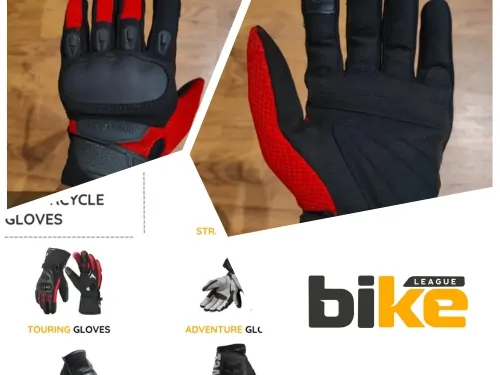
Long story short – Biker gloves are a vital part of riding motorcycle accessories and are mandatory in all riding scenarios except commuting. Here we discuss different motorcycle gloves, like leather gloves, hybrid gloves, textile gloves, etc.
No matter if you commute daily, love touring, or enjoy off-road adventures, motorcycle gloves are one of the most important pieces of riding gear. They do more than add style—they protect your hands, make riding more comfortable, and help you control your bike in any weather or road condition. This guide gives Indian riders all the key information about motorcycle gloves, including types, materials, fit, safety standards, and practical buying tips, so you can choose the right pair for your needs.
Key Takeaways
- Always prioritise certified protection (CE-certified gloves with reinforced knuckles and palms) for maximum safety.
- Choose the right type of glove (street, touring, racing, adventure, or dirt) based on your riding style and weather conditions.
- Make sure your gloves fit snugly and comfortably to keep your grip, control, and protection. Gloves that do not fit well can reduce both safety and comfort.
- Maintain your gloves with regular cleaning, drying, and timely replacement when worn or damaged.
- Invest in quality. Better-made gloves offer more protection, last longer, and give you better value over time.
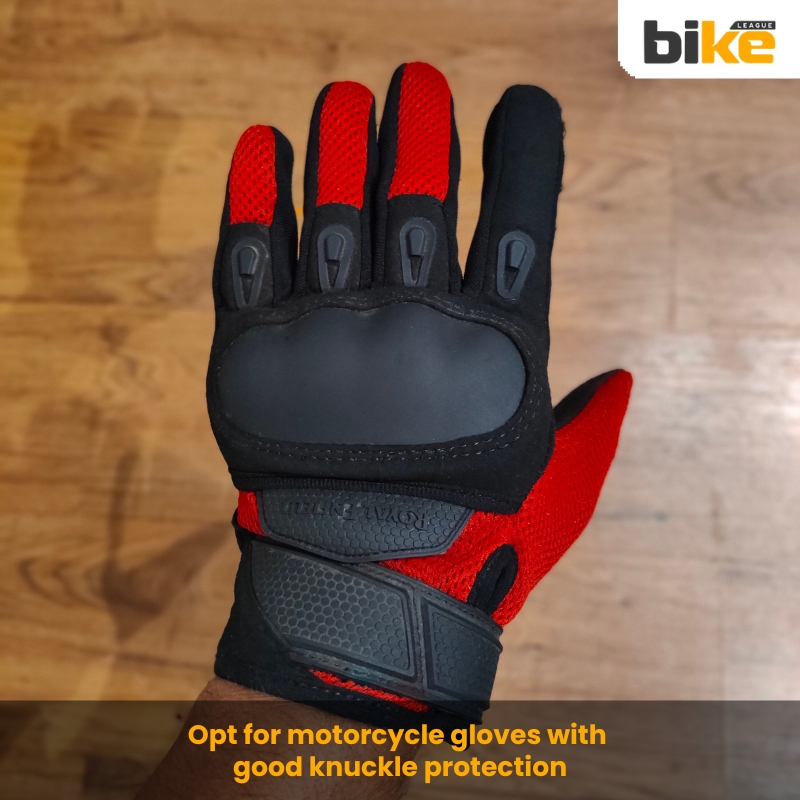
What Are Riding Gloves Or Motorcycle Gloves?
As the name suggests, motorcycle gloves are worn while riding a motorcycle. Riding gloves come in various shapes and sizes and are made of different materials.
Are Motorcycle Gloves Necessary?
Yes, motorcycle gloves are a must for long rides. In tough weather, whether it is hot or cold, your hands can be affected, which impacts your comfort and control. Gloves are required for off-road riding, but are optional for street riders and commuters. They also protect your skin from scratches, abrasions, cuts, and bruises if you have a fall.
Type Of Motorcycle Gloves
The main types of motorcycle gloves in the Indian market are as follows.
1. Street Or Commuter Gloves
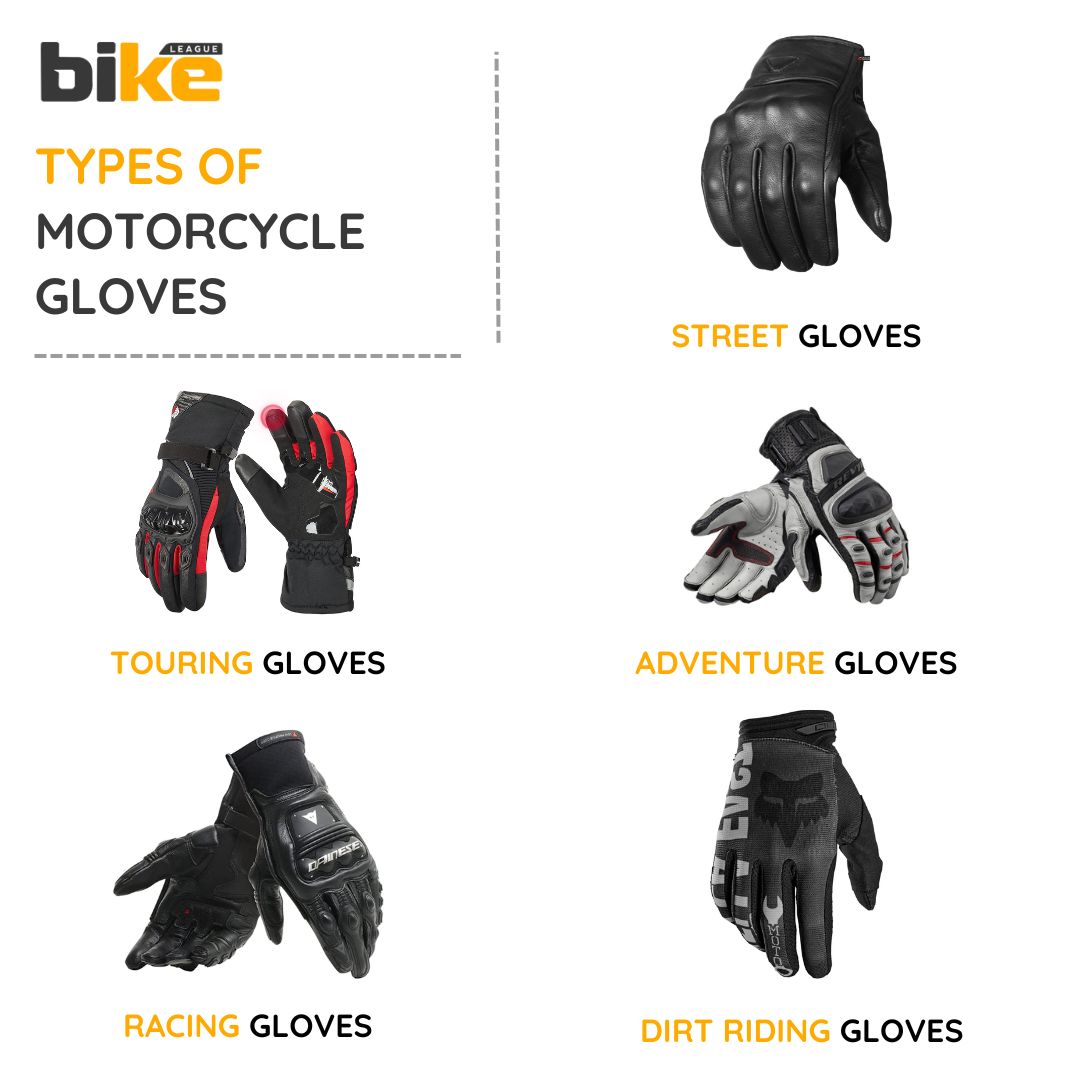
These gloves are made for city riding and are usually made from leather or textile. Leather gloves give better protection in summer, but they are not good for wet weather. It is best to choose all-weather commuter gloves, as they are useful in different conditions.
Pros Of Street Gloves
- Ease of Use: Easy to wear and remove, suitable for daily commuting
- Breathability: Often made with breathable materials for comfort
Cons Of Street Gloves
- Advanced Protection: May lack advanced protective features found in racing or touring gloves
- Insulation: Limited insulation for cold weather
2. Adventure Gloves
Adventure gloves are designed to be comfortable and protective like other types, but they need to be lightweight so your hands can move quickly. Most adventure gloves are made from leather and textiles.
Pros Of Adventure Gloves
- Made of mesh, leather, and rubber, offering flexibility and protection
- Often waterproof and provide good grip, suitable for diverse weather conditions
Cons Of Adventure Gloves
- Can be more expensive than street gloves
- May not offer the same level of protection as racing gloves
3. Touring Gloves
Touring gloves are among the most expensive types because they offer advanced protection and are built to last. They are made to handle all kinds of extreme weather for long periods. Touring gloves should be waterproof, not too heavy, and comfortable for the rider.
Pros Of Touring Gloves
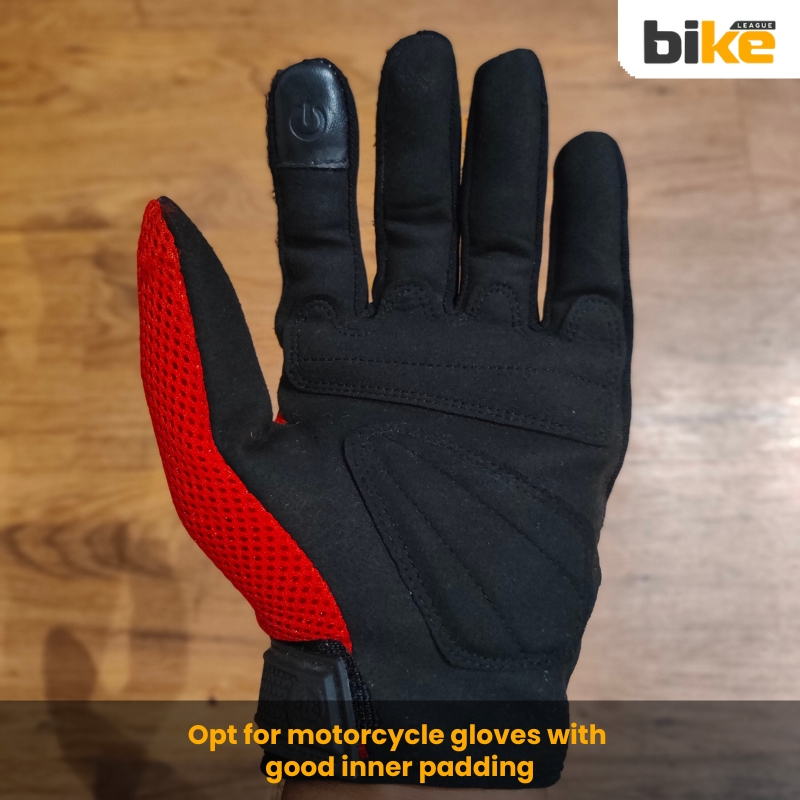
- Extra Padding: Extra padding to reduce hand fatigue, especially on long rides
- Durability: Robust materials and construction for durability, often including waterproofing and insulation
Cons Of Touring Gloves
- Cost: Can be more expensive due to advanced features
- Weight and Ventilation: May be heavier and less ventilated than summer gloves
4. Racing Gloves
Racing gloves provide the highest level of protection. They are made from thick leather and have limited ventilation to keep your hands safe. They also use armored materials to help prevent serious hand injuries.
Pros Of Racing Gloves
- High Protection: High protection with armour and reinforced materials, designed for high-speed impacts and abrasion resistance.
- Optimal Grip: Features like pre-curved fingers and hard knuckle protection for optimal grip and control
Cons Of Racing Gloves
- Expense: Expensive compared to other types
- Comfort: Can be less comfortable for everyday use due to limited ventilation
5. Dirt / Off-road Riding Gloves
Dirt gloves have the least protection and only a little armor. They are lightweight, flexible, and well-ventilated for dirt riding. These gloves are less durable but more affordable than other types.
Pros Of Dirt Riding Gloves
- Flexibility: Flexible and lightweight, allowing for better control
- Reinforcement: Reinforced in key areas for protection against rough terrain
Cons Of Dirt Riding Gloves
- Protection Level: May not offer as much protection as racing gloves
- Suitability for Long Rides: Not ideal for long-distance touring
Types Of Motorcycle Gloves According To Material
1. Leather Motorcycle Gloves
Many riders prefer leather motorcycle gloves because they are durable and protective. Most are made from cowhide, goatskin, or kangaroo leather.
Pros Of Leather Motorcycle Gloves
- High Abrasion Resistance: Leather offers excellent protection against abrasions, making it ideal for high-speed riding and racing
- Durability: Leather motorcycle gloves are long-lasting and can withstand significant wear and tear
- Comfort: Over time, leather motorcycle gloves mold to the shape of the rider’s hands, providing a custom fit
Cons Of Leather Gloves
- Cost: High-quality leather gloves can be expensive
- Break-in Period: Leather gloves require a break-in period to become comfortable
- Weather Sensitivity: Leather is less effective in wet conditions unless treated for waterproofing
2. Textile Motorcycle Gloves
Textile motorcycle gloves use synthetic materials like nylon, polyester, and Kevlar. They are designed to be waterproof and breathable.
Pros Of Textile Motorcycle Gloves
- Weather Resistance: Textile motorcycle gloves often feature waterproof membranes like GORE-TEX® or hydratex®, making them suitable for wet conditions
- Breathability: These gloves are generally more breathable than leather, making them comfortable for long rides in varying climates
- Cost-Effective: Textile motorcycle gloves are usually less expensive than leather gloves
Cons Of Textile Motorcycle Gloves
- Less Durable: Textile motorcycle gloves may not last as long as leather gloves and can be less resistant to abrasions
- Fit and Comfort: They may not provide the same snug fit as leather gloves and can feel less comfortable initially
3. Mesh Gloves
Mesh gloves are made for maximum airflow and are best for hot weather. They usually combine mesh with leather or synthetic fabrics.
Pros Of Mesh Gloves
- Ventilation: Mesh gloves provide excellent airflow, keeping hands cool and dry in hot weather
- Lightweight: These gloves are generally lighter and more comfortable for summer riding
Cons Of Mesh Gloves
- Limited Protection: Mesh gloves offer less protection compared to full leather or textile gloves, especially in high-impact areas
- Durability: They may wear out faster due to the lightweight materials used
4. Hybrid Motorcycle Gloves
Hybrid motorcycle gloves use a mix of leather, mesh, and textiles to balance protection, comfort, and function. They are versatile and work well in many riding situations.
Pros Of Hybrid Motorcycle Gloves
- Versatility: Hybrid motorcycle gloves can be used in different weather conditions and riding styles, offering a good balance of features
- Enhanced Protection: hybrid motorcycle gloves often include reinforced areas with materials like Kevlar or hard knuckle protectors for added safety
Cons Of Hybrid Motorcycle Gloves
- Complex Design: The combination of materials can make these gloves more complex and potentially more expensive
- Fit Issues: Finding the right fit can be challenging due to the varied materials and construction
What Are The Recommended Motorcycle Gloves By Riding Scenario In India?
Although glove types and materials matter, most riders choose gloves based on their riding style, location, and weather. Scenario-based advice helps make this guide more useful for Indian riders. The earlier sections already cover the strengths of each glove type, so these recommendations build on that information.
| Riding Scenario | Recommended Glove Type | Key Features to Look For | Example Brands (India-available) |
|---|---|---|---|
| City commuting (summer) | Street/Mesh gloves | Breathable mesh, touchscreen compatibility, light leather palm | Rynox Airflux, Cramster City Pro |
| City commuting (monsoon) | Textile hybrid gloves | Waterproof membrane (GORE-TEX/Drystar), quick-dry liner | Mototech Aquashield, Solace Rain Master |
| Long-distance touring (all-weather) | Touring gloves | Full gauntlet, waterproof + insulated, CE Level 2, palm slider | Revit Himalayan, Alpinestars Tokyo WP |
| Ladakh / cold climate riding | Insulated touring or heated gloves | Thermal lining, windproof, optional battery-powered heating | Gerbing Heated, Held Arctic |
| Track / high-speed racing | Racing gloves | Full carbon/TPU knuckle armour, kangaroo leather, CE Level 2 KP, pre-curved fingers | Dainese Racing, Alpinestars SP-X |
| Off-road / dirt biking | Dirt gloves | Lightweight, flexible, reinforced palm, high ventilation | Oneal Element, Rynox MT Cross |
| Adventure / dual-sport | Adventure gloves | Mesh + leather blend, waterproof, ergonomic grip, moderate armour | Klim F5, Rynox Adventure Pro |
1. City Commuting In Summer
For daily city rides in hot weather, street or mesh gloves are the best choice. They are light, breathable, and easy to wear for short or medium trips. Choose gloves with mesh panels, basic knuckle protection, a secure wrist strap, and touchscreen-friendly fingertips to stay comfortable and safe.
2. City Commuting In The Monsoon
For rainy commutes, textile or hybrid gloves are better than regular leather gloves because they handle wet weather well and dry quickly. Look for gloves with a waterproof membrane, good grip on the palm, and a liner that stays smooth after getting wet.
3. Weekend Touring And Highway Rides
For long highway rides, touring gloves are the best choice. They offer comfort, weather protection, and strong safety features for long hours on the road. Look for gauntlet-style cuffs, palm sliders, hard knuckle protectors, waterproofing, and enough padding to reduce hand fatigue.
4. Cold-weather Or Mountain Rides
In cold weather, insulated touring or winter gloves are better than regular summer gloves because they keep your hands warm and flexible. Choose gloves with windproof construction, thermal lining, and little ventilation for the best results.
5. Track Days Or Aggressive Sport Riding
For high-speed riding, racing gloves give you the most protection. They use strong leather, reinforced palms, hard armour, and cover your wrists well. Look for full-gauntlet designs, scaphoid protection, finger bridges, and CE-certified knuckle protection.
6. Off-road And Trail Riding
For dirt, trail, or motocross riding, off-road gloves are best because they are lightweight, flexible, and give you better control. Focus on gloves with good ventilation, grip, and flexibility, but keep in mind that off-road gloves usually offer less impact and abrasion protection than road gloves.
7. Mixed Riding And All-round Use
If you want one pair of gloves for commuting, occasional touring, and weekend rides, hybrid gloves are usually the best all-round option. A good hybrid glove has a leather or reinforced palm, textile or mesh panels, knuckle protection, and enough comfort for various Indian weather conditions.
What Is Fit & Sizing Guidance For Motorcycle Gloves?
Getting the right glove size is very important. Gloves that are too loose might come off if you fall, while tight gloves can cut off blood flow and make your hands tired. Here is how to measure your hands and use a size chart, even when shopping online.
How To Measure Your Hand
You will need a soft tape measure, or you can use a piece of string and a ruler. Measure your dominant hand, which is the one you use most for the throttle and brake.
Step by step:
Palm Circumference
- Wrap the tape around the widest part of your palm, just below the knuckles, excluding the thumb.
- Keep the tape snug but not tight.
- Note the measurement in centimetres and inches.
Hand Length (optional But Helpful)
- Measure from the base of your palm (where it meets the wrist) to the tip of your middle finger.
- This helps spot if your fingers are unusually long or short.
Wrist‑to‑knuckle Length (for Gauntlets)
- If you’re buying full‑gauntlet touring or racing gloves, measure from your wrist crease to the middle fingertip to ensure the cuff covers your lower forearm properly.
- Take 2–3 measurements and average them for accuracy.
Motorcycle Glove Size Chart
Most manufacturers base sizes on palm circumference measured just below the knuckles (excluding the thumb).
| Size | Palm circumference (cm) | Palm circumference (inches) | Typical hand size |
|---|---|---|---|
| XS | 18–19 | 7.0–7.5 | Small, often women’s or petite male hands |
| S | 19–20 | 7.5–8.0 | Small–medium hands |
| M | 20–21 | 8.0–8.5 | Average medium hands |
| L | 21–22 | 8.5–9.0 | Large hands |
| XL | 22–23 | 9.0–9.5 | Very large hands |
| XXL | 23–24 | 9.5–10.0 | Extra large hands |
This chart is based on common motorcycle glove sizing across brands. Always check the specific brand’s size chart before buying online.
How To Use A Size Chart When Buying Motorcycle Gloves Online?
When a brand provides a size chart, follow these checks:
- Match your palm circumference to the size range (e.g., 21–22 cm = Large in most charts).
- If you are between sizes in leather or technical gloves, lean toward the larger size for a bit more comfort and breathability, unless the brand explicitly says “runs large.”
- If your fingers are long, check if the brand lists finger length; if your length is above their average, consider going up one size.
Quick Fit Checks Once You Receive The Gloves
- Fingers should just touch the end of the glove without pressing hard against the tip to avoid circulation issues and pressure sores.
- Palm and knuckles should feel snug but not tight; you should be able to fully close your hand and rotate your wrist without creasing or buckling.
- The wrist closure (strap or gauntlet) should hold the glove firmly so it doesn’t slide off during braking or in a slide.
How To Clean, Dry & Store Motorcycle Gloves?
Properly cleaning and storing your gloves affects how well they protect you, how well they grip, and how long they last. Sweat, dust, and monsoon moisture can damage materials and stitching, so regular care is important.
How To Clean Different Types Of Gloves
1. Leather Motorcycle Gloves
Leather gloves are more delicate; the goal is to remove dirt without stripping natural oils.
After Every Ride (basic Clean)
- Wipe the outer surface with a soft, damp cloth to remove dust and road grime.
- If the palms are oily or sweaty, use a mild leather cleaner on a cloth (not directly on the glove) and gently wipe.
Spot Deep Cleaning (once In A While)
- Use a leather-specific cleaner and a soft brush or microfiber cloth.
- Never soak leather gloves; excessive water can make them stiff and prone to cracking.
Conditioning (for Indian Climate)
- Once the gloves are completely dry, apply a thin layer of motorcycle-grade leather conditioner.
- This keeps the leather soft and prevents cracking in heat or sudden dry spells.
2. Textile / Hybrid / Mesh Gloves
These gloves can handle a bit more water but are sensitive to harsh chemicals and heat.
Regular Cleaning
- Check the care label; many textile gloves are handwashable with mild detergent or baby shampoo in lukewarm water.
- For delicate brands or expensive touring gloves, stick to wiping with a damp cloth and mild soap.
- Never use bleach or strong solvents; they can strip waterproof coatings and weaken stitching.
If The Gloves Are Machinewashable
Use a delicate / gentle cycle and place them in a mesh laundry bag to protect armour and padding.
Proper Drying: Protect Structure And Grip
How you dry gloves is as important as how you clean them.
Never Use Heat Sources
Avoid hair dryers, radiators, or direct sunlight; heat can shrink leather, crack seams, and damage waterproof membranes.
Airdry Naturally
- For leather gloves, stuff them lightly with newspaper or paper towels and leave them in a well-ventilated, shaded area for 12–24 hours.
- For textile gloves, hang them by the cuff or lay them flat so the liner and padding can dry out completely.
Don’t Store Wet Gloves
Storing damp gloves in a bag or helmet can cause mildew, bad odour, and material degradation; always dry them fully before storing.
How To Store Gloves For Long-term Use
Good storage keeps armour intact and lining breathable.
Short Term (between Rides)
- Let gloves air out after riding, especially in humid weather or after rain.
- Keep them at room temperature away from direct sun or heat sources.
Long Term (offseason Or Unused Period)
- Clean and dry gloves fully before storage.
- Store leather gloves in a cool, dry place, loosely stuffed with paper so they don’t crease or crack.
- For textile gloves, use a breathable fabric bag or box rather than a sealed plastic bag, which can trap moisture and promote mildew.
Storage “don’ts”
- Do not store gloves inside a helmet; sweat and trapped air quicken deterioration.
- Avoid stacking heavy objects on top of gloves, as this can squash and misshape the armoured padding.
Quick “lifespan” Checklist For Indian Riders
- Every 3–6 months, clean and inspect for stitching tears, padding crush, or cracking on leather.
- After heavy rain / monsoon, pay extra attention to leather gloves: dry gently, then recondition if needed.
- If the palm or knuckle armour feels loose or the liner is pulled out of place, it’s a sign the glove has lost its protective integrity and should be replaced.
What Specific Features Should We Look For In Motorcycle Gloves In India To Ensure Maximum Protection?
When choosing motorcycle gloves in India for maximum protection, prioritise the following features:
| Feature | Why It Matters | Details to Look For |
|---|---|---|
| CE Certification (EN 13594:2015) | Verified safety performance | Level 1 (good), Level 2 (best), “KP” for knuckles |
| Knuckle & Palm Protection | Shields from impact/abrasion | Hard armor knuckles, palm sliders, reinforcement |
| Abrasion-Resistant Materials | Prevents road rash | Goatskin/kangaroo leather, double stitching |
| Ventilation & Climate Adaptation | Comfort in Indian weather | Mesh, perforated leather, moisture-wicking liners |
| Gauntlet/Wrist Guard | Wrist/forearm safety | Long cuff/gauntlet styles, adjustable straps |
| Fit & Ergonomics | Prevents glove slip/fatigue | Pre-curved fingers, elastic/stretch panels, secure fit |
1. Certified Impact Protection
- CE Certification: Choose gloves that are CE certified according to EN 13594:2015. Level 2 offers superior impact and abrasion protection, and gloves with “KP” have proven knuckle protection.
- Reinforced Knuckles: Look for hard armour (carbon fibre, TPU, or D3O) to protect during falls.
- Palm Sliders: Essential for protecting the scaphoid (palm bone) during slides; should be made of abrasion-resistant materials.
2. Premium Materials
- Abrasion-Resistant Leather: Goatskin or kangaroo leather for palms and key impact areas. Synthetic leather and mesh blends are common for breathability and still offer protection.
- Double or Triple Stitching: Reinforces critical seams so gloves don’t unravel on impact.
3. Climate-appropriate Design
- Ventilation: Mesh panels or perforated leather on the back of the hand and fingers for airflow, crucial for Indian summers.
- Moisture-Wicking or Quick-Dry Liners: Prevents sweat build-up and keeps grip secure.
- Weatherproof Membrane: If you ride year-round or in the monsoon, look for waterproof (e.g., Gore-Tex, Drystar XF) or windproof features.
4. Full Gauntlet Or Longer Cuffs
- Full Gauntlet Styles: Extended cuffs offer superior wrist and lower forearm protection; often required for Level 2 certification and for touring or sports riding.
5. Ergonomic And Comfort Features
- Pre-Curved Fingers: Less fatigue, more natural grip.
- Adjustable Closure/Wrist Strap: Secure fit to prevent the glove from sliding off during a crash.
- Stretch Panels/Elastic: For dexterity and flexibility, especially on the throttle hand.
6. Additional Safety & Modern Touches
- Pinky-Ring Finger Bridge: Sometimes stitched together to reduce finger roll injury in a slide.
- Scaphoid Protection: Added protection for a commonly fractured bone in falls.
- Touchscreen Compatibility: For convenience, so you don’t have to remove gloves to use your phone/GPS.
7. Fit & Quality Control
- Ensure the gloves fit snugly without restricting movement. Loose gloves may come off in an accident, compromising protection.
- Check for proper CE labelling inside the glove; beware of counterfeits.
How Long Do Motorcycle Gloves Last? When To Replace Them?
Typical Lifespan Of Motorcycle Gloves
| Type of Gloves | Typical Lifespan | Heavy Usage Lifespan |
|---|---|---|
| Street / Commuter Gloves | 12–24 months | 6–12 months |
| Touring Gloves | 24–36 months | 12–18 months |
| Racing Gloves | 18–30 months | 6–12 months |
| Adventure Gloves | 24–36 months | 12–18 months |
| Dirt / Off-road Gloves | 6–12 months | 3–6 months |
| Mesh Gloves | 6–12 months | 3–6 months |
Note: These are estimates for riders riding 2–4 times per week. Daily riders or track riders will see shorter lifespans.
Signs Your Gloves Need Replacing (beyond Visible Tears)
Sanitary And Comfort Degradation
Even if gloves look intact, they may need replacement due to comfort or hygiene issues:
- Persistent odour after multiple cleanings indicates bacteria or fungus in the lining.
- Lining pulls away from the outer shell or bunches up consistently during rides.
- Inner padding becomes compressed and no longer provides cushioning.
- Stiff, brittle, or cracked leather that doesn’t soften with conditioning.
- Material no longer breathes — hands stay sweaty even in ventilation zones.
2. Protection Degradation
- Armour shifts or becomes loose — knuckle protectors, palm sliders, or finger armour don’t stay in place.
- Stitching starts to unravel at critical stress points (palm, thumb base, ring-pinky bridge).
- Waterproof membrane fails — gloves soak through within 5 minutes of rain.
- Leather becomes thin or paper-like on palms or high-wear areas (feels floppy, not supple).
- Velcro or wrist closure loses holding power — can’t keep the glove secure during braking.
3. Fit And Functionality Issues
- Gloves feel looser than when new (material stretching) — increased risk of slipping off in a crash.
- Fingers feel longer due to material deformation.
- Touchscreen compatibility stops working despite gentle cleaning.
- Grip on the palms becomes slippery, affecting throttle control.
Inspection Checklist: Replace Immediately If You Notice These
Every 3–6 months, inspect your gloves and ask:
- Can I see through any part of the palm or back when I stretch the material?
- Does the knuckle protector move independently of the glove shell?
- Are there stitching gaps at the thumb-palm junction or between fingers?
- Does the liner feel permanently damp or gritty after drying?
- Can I pinch the leather thinner than 1mm in high-wear zones?
Typical Lifespan Of Motorcycle Gloves
| Type of Gloves | Typical Lifespan | Heavy Usage Lifespan |
|---|---|---|
| Street / Commuter Gloves | 12–24 months | 6–12 months |
| Touring Gloves | 24–36 months | 12–18 months |
| Racing Gloves | 18–30 months | 6–12 months |
| Adventure Gloves | 24–36 months | 12–18 months |
| Dirt / Off-road Gloves | 6–12 months | 3–6 months |
| Mesh Gloves | 6–12 months | 3–6 months |
Why You Shouldn’t Extend Glove Life Beyond Safe Limits
- Old stiff leather cracks during a slide, offering zero abrasion resistance.
- Loose armour can shift into a harmful position in a fall.
- Compressed padding can trap moisture, leading to blisters.
- Worn palms can lead to reduced grip and throttle control.
As a rule of thumb, if you are unsure, replace your gloves. Safety can decline without obvious signs, and replacing gloves costs much less than treating a hand injury.
What Is Ce Certification (en 13594:2015) For Motorcycle Gloves?
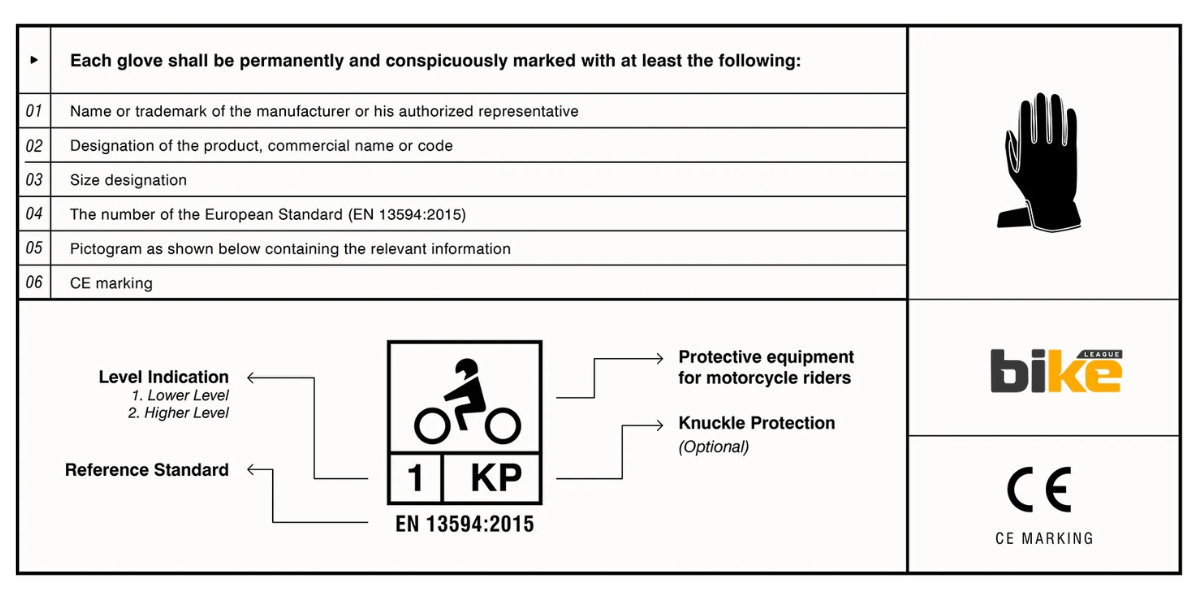
CE Certification (EN 13594:2015) for motorcycle gloves is a European safety standard that ensures the gloves provide adequate protection for motorcycle riders. This standard involves rigorous testing for impact resistance, abrasion resistance, tear strength, seam integrity, and retention (the ability of the glove to stay on your hand during a crash).
- EN 13594:2015 applies to all motorcycle gloves intended to reduce hand and wrist injuries in accidents. This designation number shows the recognised standard the glove has been tested to
- Figure 1 or 2 shows its CE rating (‘1’ for a basic pass, ‘2’ for a more advanced pass). Gloves are rated at two performance levels. Level gives basic protective performance, but with greater dexterity and comfort. Level 2 provides higher protection (especially against impact and abrasion) but can be heavier or less flexible.
- A code such as “KP” indicates that the glove has passed a dedicated knuckle impact protection test, which is mandatory for Level 2 and optional for Level 1.
- Gloves must display a CE mark and label with the EN 13594:2015 standard and the performance level.
What Tests Are Done For Ce Certification For Motorcycle Gloves?
Under the CE standard, there are six mandatory elements that a glove must meet to achieve a rating, and one optional test for gloves to meet the higher standard.
Test 1: Cuff Length
Measure from the wrist line to the cuff’s end. Level 1 requires at least 15mm; Level 2 requires a minimum of 50mm.
Test 2: Restraint
This test checks if the glove stays on during an accident. A dummy wrist holds the glove while clamps attempt to pull it off. Level 1 requires a force of 27 Newtons (N) and Level 2 requires 52N. The glove must remain in place for 30 seconds.
Test 3: Tear Strength
Tear resistance is tested at three areas: the palm, cuff, and fourchettes. For Level 1, the palm must withstand 25 N, the cuff 18 N, and the fourchettes 18 N. For Level 2, these values increase to 35 N, 30 N, and 25 N, respectively.
Test 4: Seam Strength
Seam strength is tested similarly to tear strength. The main seams need to survive 6 N/mm for Level 1 and 10 N/mm for Level 2; fourchettes require 4 N/mm for Level 1 and 7 N/mm for Level 2.
Test 5: Impact Abrasion Resistance
A sample is dropped onto abrasive material to test its durability. Level 1 requires a minimum of 3 seconds before puncture, with an average of 4 seconds across 4 samples. Level 2 requires 6 seconds per sample, with an average of 8 seconds.
Test 6 (optional For Level 1): Impact Protection Of Knuckles
For Level 2 certification, this test measures the impact resistance. A 2.5kg striker hits the glove with 5 joules of force. Level 1 allows a maximum of 9 kilonewtons (kN) for a single strike and 7 kN for the average; Level 2 requires a maximum of 4 kN for both measures. Any damage during testing results in an automatic fail.
Common Mistakes When Buying And Using Motorcycle Gloves
1. Buying Oversized Gloves For “comfort”
Mistake: Many riders buy gloves one or two sizes larger, thinking it’ll be more comfortable or leave room for thick liners.
Why it’s dangerous: Oversized gloves can slip off completely during a crash, leaving your hands unprotected. Loose material also bunches up, interfering with throttle grip and brake operation, and can get caught on controls.
What to do instead: Gloves should feel snug but not tight. Fingers should just touch the end without pressing hard. If you’re between sizes, size up only if the brand explicitly says “runs small” — but test the fit first if possible.
2. Choosing Gloves Based Only On Looks Or Brand
Mistake: Riders pick gloves because they look cool, match their jacket, or carry a famous brand name, without checking safety features.
Why it’s dangerous: A stylish glove with no CE certification or armor offers dangerously false confidence. Protection comes from tested materials and construction, not branding or aesthetics.
What to do instead: Prioritise CE certification (EN 13594:2015) first, then look for hard knuckle protectors, palm sliders, reinforced stitching, and quality materials. Stylish gloves should meet safety standards, not replace them.
3. Using Regular Gloves Or Work Gloves For Riding
Mistake: Some riders wear gardening, cycling, winter, or work gloves instead of proper motorcycle gloves, especially in cold or rainy weather.
Why it’s dangerous: Regular gloves offer zero abrasion resistance and no impact protection. In a slide, they’ll tear instantly, and reinforced areas (like palms) aren’t designed for high-speed road contact. They can also melt or fuse to your skin in friction burns.
What to do instead: Use only motorcycle-specific gloves with CE certification. For cold weather, choose insulated touring gloves; for rain, choose waterproof textile gloves — but always motorcycle-rated.
4. Assuming All Leather Gloves Are Equally Protective
Mistake: Riders think “it’s leather, so it’s safe” without checking the leather type or construction.
Why it’s dangerous: Not all leather is the same. Cowhide, goatskin, and kangaroo leather have different abrasion resistance and durability. Cheap synthetic leather offers significantly less protection than premium hides.
What to do instead: Look for goatskin or kangaroo leather palms (high abrasion resistance with flexibility). Check for double or triple stitching and reinforced palm areas.
5. Buying The Same Gloves For All Seasons
Mistake: Purchasing one pair of gloves and using them year-round regardless of weather changes.
Why it’s problematic: Wearing summer gloves in winter can cause frozen fingers and loss of grip. Wearing winter gloves in summer leads to excessive sweating and reduced control. Waterproof gloves without breathability become unusable on hot days.
What to do instead: At minimum, have summer (ventilated) and all-weather (waterproof + insulated) pairs. Consider mesh gloves for hot monsoon-free summer months and insulated gloves for hill stations.
6. Ignoring Gauntlet Vs Short Cuff Safety
Mistake: Riders choose short-cuff gloves for convenience without realising gauntlet cuffs provide critical wrist protection.
Why it’s dangerous: Short cuffs leave the wrist and lower forearm exposed. In a fall, the jacket sleeve can ride up, leaving skin vulnerable. Level 2 CE certification often requires gauntlet length.
What to do instead: For touring, highway, or sport riding, choose full-gauntlet gloves. Short cuffs are acceptable only for low-speed commuting and should still cover the wrist bone.
7. Thinking “cheap Gloves Are Better For Beginners”
Mistake: New riders buy budget gloves expecting to “upgrade later,” assuming they need less protection while learning.
Why it’s dangerous: Beginners are at a higher risk of crashes due to inexperience. Glass, gravel, or asphalt at even 40 km/h will tear cheap gloves instantly. Early accidents happen when riders think most, not least, about protection.
What to do instead: Invest in mid-range CE-certified gloves from day one (₹1,500–₹3,000 range in India). Your skill will improve, but protection should not lag behind.
8. Washing Gloves Incorrectly Or Not At All
Mistake: Riders either never clean their gloves or wash them like regular clothing (machine-washing leather gloves, using bleach, or heat-drying).
Why it’s dangerous: Sweat and grime degrade leather and waterproof membranes over time. Heat (dryers, radiators, sunlight) shrinks leather and cracks seams, ruining protection.
What to do instead:
- Leather gloves: Wipe with a damp cloth, use leather cleaner, air-dry naturally, and condition every few months
- Textile gloves: Hand-wash with mild detergent, air-dry by cuff, never machine wash unless label specifically allows
Never use heat, bleach, or strong solvents.
9. Not Replacing Gloves After A Crash
Mistake: Riders continue using gloves after even minor falls, assuming they’re still safe if they look okay.
Why it’s dangerous: Protective materials (armour, padding, leather fibres) degrade internally even without visible damage. A glove that absorbed impact is compromised and may fail in the next crash.
What to do instead: Replace gloves immediately after any crash or slide, regardless of appearance. This applies even for low-speed drops.
10. Assuming Waterproof/manual Touchscreens Mean Protection
Mistake: Riders think features like waterproofing, touchscreen compatibility, or reflective strips make a glove “safe.”
Why it’s dangerous: These are convenience features, not safety features. A waterproof glove without armour and CE certification still offers minimal crash protection. Touchscreen tips can delaminate or fail over time.
What to do instead: Treat these features as bonuses, not purchase drivers. CE certification, armour, and quality materials always come first.
Common Myths About Motorcycle Gloves
Myth 1: “gloves Are Only For Racing Or Off-road”
Reality: All riders — commuters, touring, city, rural — face fall or slide risks. Gloves protect against abrasions, blisters, vibration fatigue, and weather, not just high-speed crashes.
Myth 2: “if I Fall, I’ll Take My Hands Off The Handlebars Anyway”
Reality: In 80%+ of falls, hands instinctively reach out or get trapped. You cannot reliably control hand position during a crash. Gloves are your only protection.
Myth 3: “gloves Make My Hands Sweaty And Affect Throttle Feel”
Reality: Properly fitted, breathable gloves with moisture-wicking liners improve grip by absorbing sweat. Poor throttle feel comes from ill-fitting or low-quality gloves, not gloves in general.
Myth 4: “heavy-duty Gloves Are Too Bulky For Daily Use”
Reality: Modern touring and hybrid gloves are lightweight yet protective. Many commuters wear medium-duty gloves daily without discomfort.
Myth 5: “i’ll Wear Gloves Only On Long Trips”
Reality: Most accidents happen within 5 km of home, during routine commuting. You need protection on short rides, too.
Myth 6: “brown Commuter Leather Gloves Are Good Enough”
Reality: Fashion leather gloves lack abrasion-resistant treatment, armour, and reinforced stitching. They tear easily in slides and offer minimal protection.
Myth 7: “ce Certificate Is Just A Marketing Gimmick”
Reality: CE EN 13594:2015 involves rigorous testing for tear strength, seam strength, impact resistance, abrasion resistance, and retention (staying on during a crash). Counterfeit labels exist, but genuine CE certification is a proven safety standard.
Myth 8: “i’m A Careful Rider; I Don’t Need Gloves”
Reality: Even careful riders face other people’s mistakes (speeding cars, loose gravel), mechanical failures, or unexpected hazards. Protective gear is for unavoidable risks, not rider recklessness.
Faq Related To Buying Motorcycle Gloves In India
1. Where To Buy Motorcycle Gloves?
Always purchase motorcycle accessories in person so you can assess the fit, size, and feel. On online websites, rates may be lower than offline, but there is no way to verify product quality, and there’s a risk of damage and fraud. You can also bargain to get products at an online price.
2. What Kind Of Motorcycle Gloves Do I Need?
It all depends on the conditions and the ride situation. As discussed above, there are different motorcycle gloves for various scenarios.
3. How Should Motorcycle Gloves Fit?
Gloves should be neither too loose nor too tight, and should not be too close, as this can restrict blood flow and cause discomfort. Fingers should move comfortably after wearing the gloves. There should be no excess material that could bunch up and interfere with your grip on the handlebars. If possible, have a short ride with gloves to get a feel for the product.
4. Which Type Of Motorcycle Glove Is Best For Cold Weather?
For cold weather, leather gloves are the best in the business. Also, check out gloves with minimal air ventilation.
5. What Are The Best Motorcycle Gloves For Wet Weather?
For wet weather, textile material gloves are best. Also, consider gloves with waterproof membranes for riding in wet conditions.
6. Which Additional Features Should We Look For In Bike Gloves?
- Touchscreen compatibility: allows you to use your smartphone without taking your gloves off.
- Reflective material: improves visibility in low-light conditions.
- Ventilation: helps keep your hands cool in hot weather.
- Wrist closure: ensures a secure fit and prevents the gloves from slipping off.
7. What Are Heated Biker Gloves?
Heated motorcycle gloves keep your hands warm for several hours after charging. To keep gloves warm for a long day or trip, securely wire them to the motorcycle battery. These gloves are only suitable for harsh, cold conditions. Otherwise, it is not that worthy.
8. What Are The Best Biker Gloves For Hot Weather?
For hot weather, textile material gloves are best. Also, look for gloves with adequate airflow.
9. When To Replace Biker Gloves?
If any of the glove’s surfaces are worn and torn, it is high time to replace them with a brand-new pair.
10.what Are The Safest Biker Gloves?
Racing gloves are the safest, as they offer the most features and protection, including full-gauntlet construction and reinforced knuckle guards.
11. Which Are The International Biker Glove Brands?
Some of the renowned international brands are
12. Which Are The Domestic Motorcycle Glove Brands?
When it comes to domestic brands, the recommended ones are
14. What Are The Best Gloves Available On The Market?
This article provides tips for purchasing motorcycle gloves. That is the sole purpose of this article; hence, we will not suggest individual products here.
Other Related Articles From Bikeleague India
- What all basic motorcycle accessories should a rider have
- Must have bike accessories for a long distance trip
- BMW CE 04
- BMW CE 02
- Joy E-Bike Wolf
Conclusion
Picking the right motorcycle gloves is important for your safety, comfort, and enjoyment while riding. Whether you need street, touring, racing, or off-road gloves, there is a pair for every rider and every condition. Focus on certified protection, a good fit, and features that suit your local weather when choosing your gloves.
Remember, gloves are not just an accessory. They are essential gear that can make a big difference in an accident. Ride safe, stay protected, and let your gloves give you the confidence to enjoy every ride.
If you have more questions, email us at bikeleague2017@gmail.com. You can also share your thoughts or questions in the comments below. We are always happy to help. You can also find Bikeleague India on social media.