
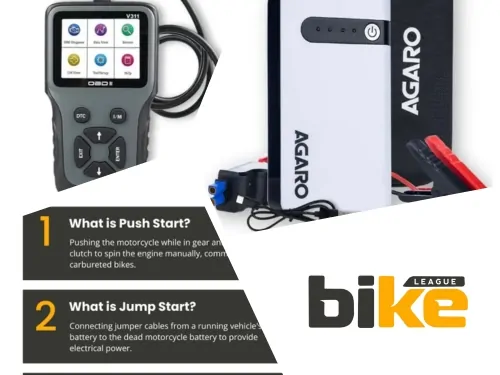
Long story short: Some fuel-injected motorcycles can be push-started if there is still enough power for the ECU, fuel pump, and ignition system. However, if the battery is fully dead, push-starting usually won’t work, and some manufacturers recommend against trying it.
If your battery is weak and your bike won’t start, use a jump-starter only if your owner’s manual says it’s safe. Always check the battery’s charge before trying to push-start, since a low battery can affect the entire electrical system.
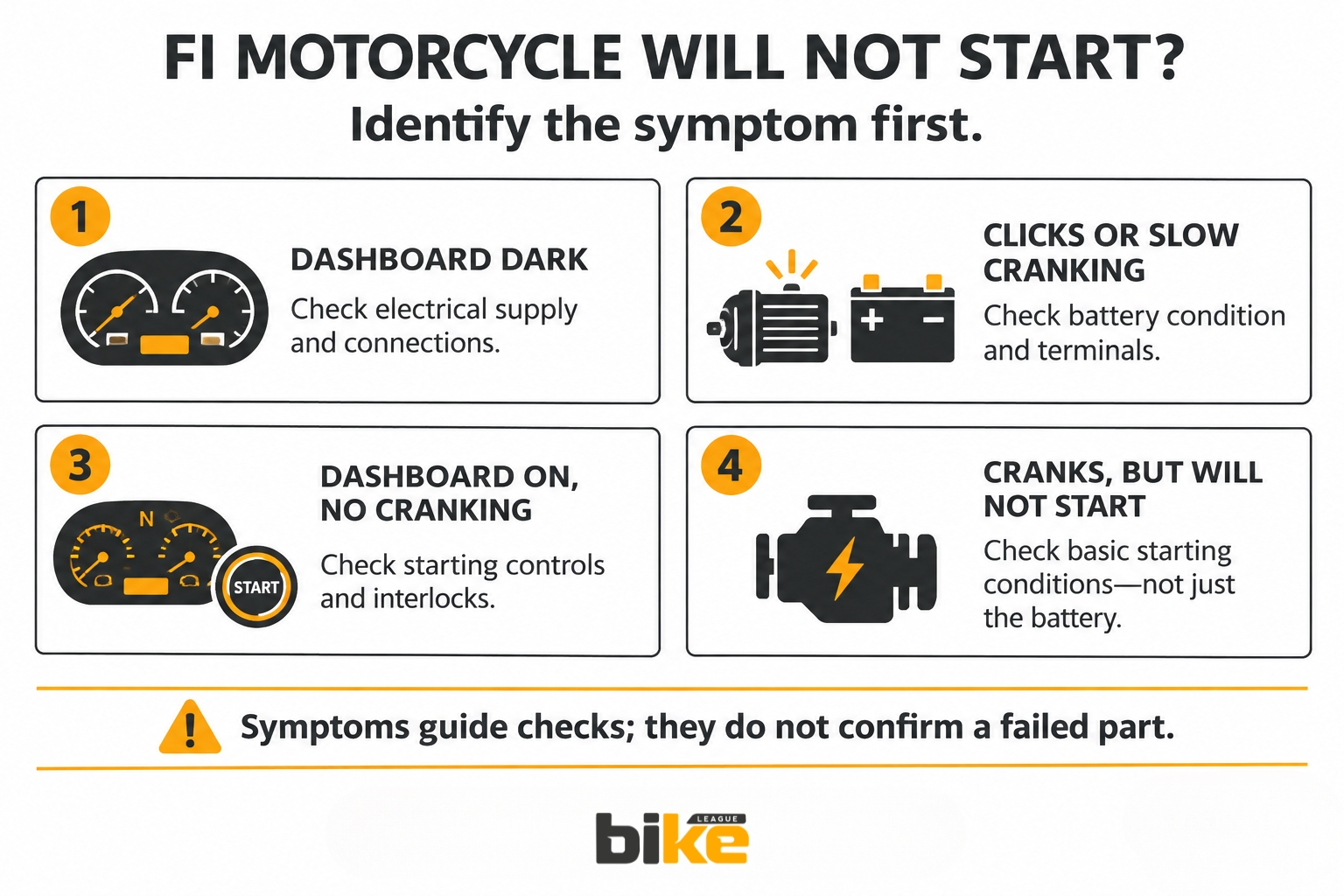
If your fuel-injected motorcycle won’t start, start by checking what’s wrong. Is the dashboard dark, does the starter just click or turn slowly, or does the engine crank but not start? Each of these needs a different check. Jump-starting can help if the battery is low, but it won’t solve every fuel, ignition, or electrical issue.
This guide covers the difference between push start vs jump start, explains how your battery’s condition affects both, and lists simple checks you can do if you’re stuck on the roadside. Comparing push start vs jump start helps motorcycle owners understand which method may be suitable when their bike won’t start, especially with a fuel-injected (FI) motorcycle. For BS6 motorcycles in India, always follow your owner’s manual for starting instructions, since not every method works for every bike.
Key Takeaways
- Some FI motorcycles can be push-started when enough electrical power remains, but the method is not suitable for every motorcycle. Check your model’s owner’s manual before attempting it.
- A battery that cannot turn the starter effectively may still have enough power for the fuel-injection and ignition systems. A completely discharged battery is a different situation and may prevent push-starting.
- A compatible jump-starter may help when insufficient battery power is causing the starting problem. Follow the motorcycle and jump-starter manufacturers’ instructions, including connection order and polarity.
- If the engine cranks normally but does not start, do not assume the battery is the cause. Check the basic starting conditions and seek professional diagnosis if the problem persists.
- A successful jump-start does not prove that the battery is healthy or fully charged. If the problem returns, have the battery and charging system tested rather than relying on repeated emergency starts.
What Are The Different Ways To Start A Motorcycle?
Motorcycles may use an electric starter, a kick-starter, or both, depending on the model. Check the specifications and owner’s manual for the exact model and model year rather than using its BS emission category to identify the starting system. The kick-starter section below explains these differences in more detail.
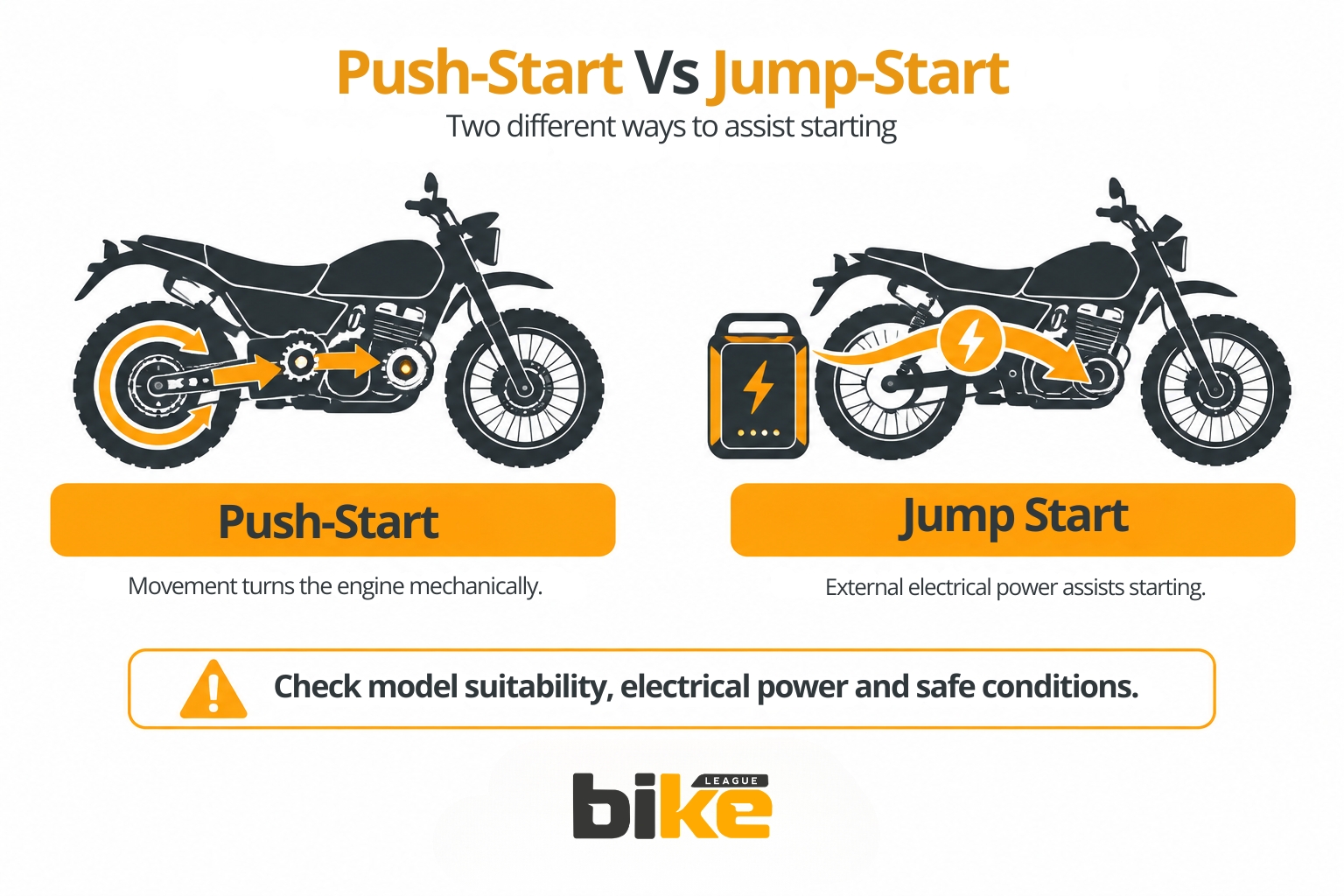
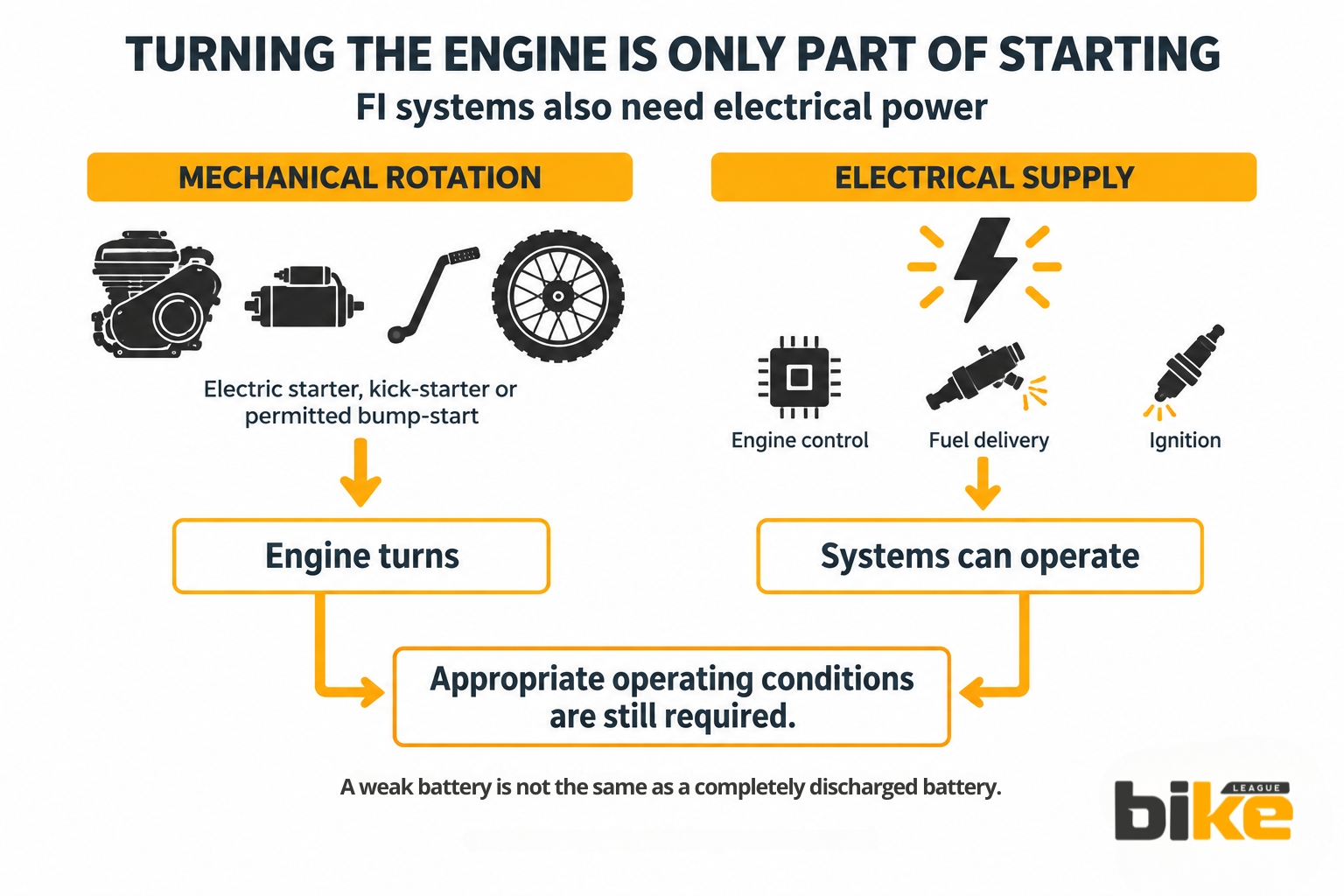
Push-starting and jump-starting are emergency methods rather than alternatives that suit every motorcycle. The important distinction is how the engine is turned and how its electrical systems receive power. Push-starting uses the rear wheel and transmission to turn the engine, while jump-starting supplies external electrical power so the electric starter can operate. On an FI motorcycle, the fuel-injection and ignition systems also need sufficient electrical power.
Before using an emergency starting method, check your motorcycle’s owner’s manual. Transmission type, battery condition and manufacturer restrictions determine whether a method is appropriate.
1. Motorcycle Starting Methods Compared
| Starting method | How it works | Main limitation | Suitability for FI motorcycles |
|---|---|---|---|
| Electric start | A battery-powered starter motor turns the engine. | Requires sufficient battery power and a functioning starter circuit. | The normal starting method on many FI motorcycles; follow the model’s starting instructions. |
| Kick-start | A foot-operated mechanism turns the engine. | Available only on models fitted with a kick-starter. It does not automatically eliminate the electrical requirements of an FI system. | Model-dependent. Use only if a kick-starter is fitted, and follow the model’s starting instructions. Do not assume that it allows starting with a completely discharged battery. |
| Push start / bump start | Movement of the rear wheel turns the engine through the transmission when the clutch engages. A downhill roll-start uses the same principle. | Requires a suitable transmission, safe conditions and sufficient electrical power for the engine-management and ignition systems. | May work on some manual-transmission models, but check the owner’s manual first. Do not assume it is suitable for all motorcycles. |
| Jump-start | A compatible external battery or jump-starter supplies electrical assistance for starting. | Requires compatible equipment, correct connections and manufacturer approval. It does not fix every no-start problem. | May help when insufficient battery power is the cause; follow the motorcycle and equipment manufacturers’ instructions. |
2. Which Starting Method Is Best For Fi Motorcycles?
Use the starting method specified in your motorcycle’s owner’s manual for normal operation. If the bike refuses to start, identify the symptom before choosing an emergency method.
- If the starter clicks or turns the engine slowly, check the battery condition and terminal connections. A compatible jump-starter may help if insufficient battery power is the cause and the manufacturer permits jump-starting.
- If the engine cranks normally but does not start, do not assume that a battery boost will solve the problem. Check the basic starting conditions and follow the troubleshooting guidance in the owner’s manual.
- If the motorcycle has a kick-starter, follow its specified starting procedure. Do not assume that the kick-starter makes the fuel-injection and ignition systems independent of electrical power.
- Push-starting may work on some manual-transmission FI motorcycles if sufficient electrical power remains, but it is not suitable for every model. Check the manufacturer’s instructions before attempting it.
3. How Does Fuel Injection Affect Emergency Starting?
A fuel-injected motorcycle needs electrical power for its engine-management, fuel-delivery and ignition systems. Turning the engine with a kick-starter or through the rear wheel does not remove those electrical requirements.
However, a battery that struggles to operate the electric starter is not necessarily completely discharged. Some manual-transmission FI motorcycles may still be capable of a push start if enough electrical power remains and the manufacturer permits the method. Do not assume that this applies to every motorcycle.
Check the owner’s manual for your exact model and model year before attempting an emergency start. Fuel injection or BS6 compliance alone does not tell you whether push-starting or jump-starting is permitted.
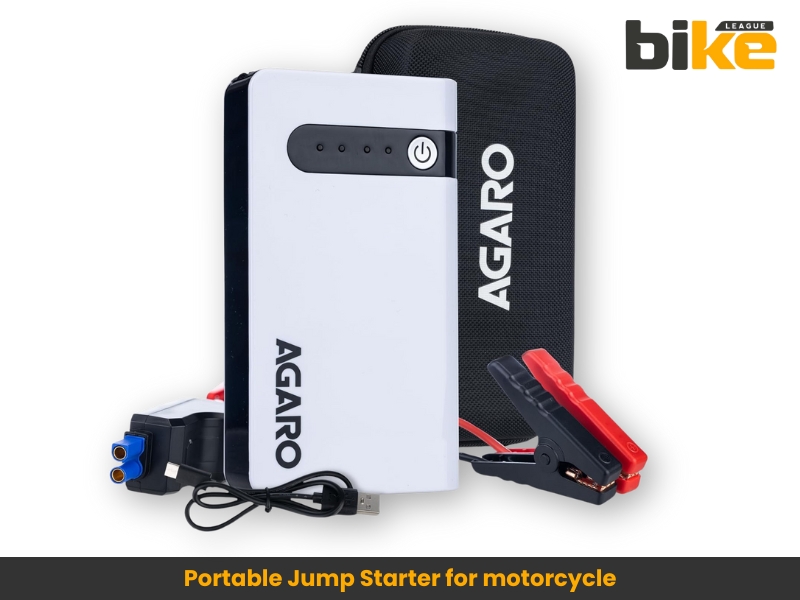
For touring, a compatible portable jump-starter can be useful if your motorcycle’s manufacturer allows its use. Learn the connection procedure before travelling, keep the jump-starter charged according to its instructions, and remember that it will not resolve every starting fault.
4. Do Motorcycles Still Have Kick-starters, And Why Do Some Omit Them?
Yes, some motorcycles still have kick-starters. There is no single year when the motorcycle industry stopped using them, and fuel injection does not automatically mean that a motorcycle must be electric-start-only.
Which Bs6 Motorcycles And Scooters In India Still Have Kick-starters?
Yes, some BS6 motorcycles and scooters in India retain kick-starters. Fuel injection does not automatically mean that a model must be electric-start-only. The examples below show manufacturer-confirmed starting features; check the specifications and owner’s manual for the exact model, variant and model year.
| Manufacturer and model | Vehicle type | Manufacturer-listed starting feature | Battery-related qualification |
|---|---|---|---|
| Hero Super Splendor Xtec 2.0 | Motorcycle | Silent Start with ISG (with i3S) and kick-start. | The starting-system specification confirms a kick-starter, but does not by itself establish operation with a completely discharged battery. |
| Hero Glamour X | Motorcycle | Kick-start and power start, with a low-battery kick-start feature. | Hero specifies low-battery capability. Do not interpret this as a guarantee of starting with a completely discharged, disconnected or faulty battery. |
| Suzuki Access 125 | Scooter | Kick and electric start. | Suzuki states that a condenser inside the regulator enables kick-starting even if the battery dies. Follow the applicable owner’s manual for the starting procedure and limitations. |
A kick-starter’s presence does not establish whether push-starting or jump-starting is permitted. These are different starting methods. Follow the owner’s manual separately for each procedure.
Manufacturer sources: Hero Super Splendor Xtec 2.0 specifications; Hero Glamour X starting features; Suzuki Access 125 specifications and kick-start capability.
When Did Motorcycles Stop Using Kick-start?
They have not stopped universally. Electric starters gradually became more common, while kick-starters remained on some models. Availability depends on the manufacturer, engine design, market and model year rather than a single industry-wide changeover date.
Why Do Some Manufacturers Omit The Kick-starter?
Starting equipment varies by model. Check the manufacturer’s specifications to confirm whether a kick-starter is fitted, and use the owner’s manual for starting instructions. The table above illustrates why broad assumptions about FI or BS6 motorcycles are not useful.
Which Motorcycle Does Not Have A Kick-starter?
The Yamaha FZ-S FI V4 is an example of an electric-start motorcycle without a kick-starter. Yamaha India’s official specifications list its starting system as “Electric starter.” Check the specifications for the exact version you are considering rather than applying this information to every Yamaha FZ model.
A starting-system specification does not establish whether push-starting or jump-starting is permitted. Consult the motorcycle’s owner’s manual separately for emergency starting instructions.
Manufacturer source:Yamaha FZ-S FI V4 official specifications.
Does A Kick-starter Guarantee Starting With A Dead Battery?
No. A kick-starter turns the engine mechanically, while the fuel-injection and ignition systems still need electrical power. Whether the motorcycle or scooter can supply that power when the battery is discharged depends on its design. Suzuki, for example, describes condenser-assisted kick-start capability on the Access 125, while Hero describes low-battery kick-start capability on the Glamour X. These are different model-specific claims, not a guarantee for every FI vehicle. Follow the owner’s manual for the exact model.
What Can Cause Starting Problems In An Fi Motorcycle?
An FI motorcycle may fail to start because of insufficient battery power, a poor electrical connection, an incorrect starting condition or a fault that requires further diagnosis. Before choosing a starting method, establish whether the engine does not crank, cranks slowly or cranks normally without starting.
- No cranking or slow cranking: Check the battery condition, terminal connections and starting controls according to the owner’s manual. A weak battery is one possibility, but it is not the only cause.
- Normal cranking without starting: Check the fuel level, engine-stop switch and other basic starting requirements. Do not assume that jump-starting will solve the problem.
- A warning light appears: Note when it illuminates and whether it remains on after the normal starting sequence. Follow the model-specific guidance in the owner’s manual rather than guessing which component has failed.
- The problem returns after an assisted start: Have the battery and charging system tested. A successful start does not establish that the battery is healthy or fully charged.
Battery condition is particularly important when deciding whether an emergency starting method may help. A battery that cannot turn the starter effectively may still retain some electrical power, while a completely discharged battery may prevent the fuel-injection and ignition systems from operating.
If the basic checks do not resolve the problem, or a warning indication requires attention under the owner’s manual, stop repeated starting attempts and arrange professional diagnosis.
Safety Precautions Before Troubleshooting
- Move the motorcycle to a safe position away from moving traffic. Choose firm, level ground and make sure the bike is securely supported before inspecting it.
- For hands-on inspection of battery terminals, wiring or fuses, turn the ignition OFF. Do not rely only on the engine-stop switch to switch off the motorcycle’s electrical systems.
- Keep flames, cigarettes and other sources of ignition away from the battery and fuel system. Avoid touching both battery terminals with a tool or allowing the positive terminal to contact a metal part of the motorcycle.
- Before a starting attempt, follow the owner’s manual: select the required gear position, set the engine-stop switch to RUN, and operate the clutch, brake or side-stand interlock as specified for your model.
- Keep hands, clothing, tools and bystanders clear of moving parts. Do not attempt a push-start in traffic or where the surface, slope or available space makes it unsafe.
- Observe dashboard warnings during the normal starting sequence. A warning lamp illuminating when the ignition is switched on does not, by itself, identify a fault. Check the owner’s manual for the meaning of a lamp that stays on or flashes.
- Stop troubleshooting if you notice leaking fuel, smoke, a burning smell, damaged wiring or a damaged battery. Keep clear and arrange appropriate assistance rather than attempting another start.
Before jump-starting, confirm that the method is permitted for your motorcycle and follow the connection procedure specified by the motorcycle and jump-starter manufacturers. Keep sparks away from the battery; correct polarity alone does not make an improvised procedure safe.
Step-by-step Checklist: What To Check When An Fi Motorcycle Will Not Start
Complete the safety precautions above before beginning. Then identify the starting symptom and follow the relevant checks below. Use your motorcycle’s owner’s manual for model-specific starting instructions, warning-light meanings and electrical specifications.
| Starting symptom | Initial checks | What the symptom does not prove |
|---|---|---|
| Dashboard does not illuminate | Check battery connections and the basic electrical supply according to the owner’s manual. | That the battery alone is responsible. |
| Starter clicks or turns slowly | Check battery condition and terminal connections. | That the starter motor has failed. |
| Dashboard illuminates, but starter does not operate | Check the starting controls and interlocks specified in the owner’s manual. | That working dashboard lights establish sufficient starting power. |
| Engine cranks normally but does not start | Check fuel level, starting controls and dashboard warnings according to the owner’s manual. |
That jump-starting will resolve the fault. |
These symptoms help organise the checks; they do not confirm which component has failed. Avoid repeated starting attempts while deciding which troubleshooting path applies.
2. Check The Basic Starting Conditions And Electrical Connections
- Check the fuel level. Make sure there is sufficient fuel for normal operation according to the owner’s manual. If the gauge reading is uncertain, do not assume that fuel is available simply because the dashboard illuminates.
- Follow the model’s starting procedure. Set the engine-stop switch to RUN and select the required gear position. Operate the clutch, brake and side-stand controls as specified in the owner’s manual; requirements differ between motorcycles.
- Turn the ignition OFF before inspecting battery connections. Look for loose terminals, visible corrosion or damaged cables. If cleaning or tightening is needed, follow the battery and motorcycle manufacturers’ instructions. Avoid bridging the terminals or touching the positive terminal to surrounding metal with a tool.
- If you have a multimeter and know how to use it safely, measure the battery voltage under the conditions specified by the manufacturer. Interpret the reading according to battery type and state of charge rather than using one universal pass-or-fail value.
- Check the relevant fuses using the owner’s manual. Switch the ignition OFF before removing a fuse, and replace a blown fuse only with the specified type and rating. If the replacement blows again, stop and arrange diagnosis.
- Observe what happens during a brief starting attempt. Note whether the starter clicks, turns slowly, does not operate or cranks normally. Working dashboard lights, indicators or a horn do not by themselves prove that the battery can deliver sufficient starting current.
If these checks do not identify an obvious problem, continue with the section that matches the starting symptom. Do not bypass safety interlocks, bridge fuse terminals or disturb unfamiliar wiring.
3. Observe Fuel-pump Operation And Dashboard Warnings
- Follow the owner’s manual to prepare the motorcycle for starting. Switch the ignition ON and set the engine-stop switch to RUN where required.
- Listen for the fuel pump’s operating sound, if it is normally audible on your motorcycle. Note whether the sound differs from the bike’s usual starting behaviour. Do not use a fixed sound duration as a universal pass-or-fail test.
- If you hear the pump, continue with the normal starting procedure. The sound indicates that the pump is operating, but it does not by itself confirm correct fuel pressure or fuel delivery.
- If you do not hear the usual pump sound, recheck the basic starting conditions and battery connections. Check only the relevant accessible fuses identified in the owner’s manual, with the ignition switched OFF. Do not assume that the pump itself has failed.
- Observe the malfunction indicator lamp (MIL) during the starting sequence. Its normal behaviour is model-dependent: it may remain illuminated until the engine starts. Follow the owner’s manual if it stays on or flashes unexpectedly.
Do not repeatedly cycle the ignition as a universal priming procedure. Follow any reset or restart sequence specified for your model. If the motorcycle still will not start, arrange diagnosis rather than opening fuel lines, bypassing a relay or disturbing fuel-pump wiring.
4. Attempt A Normal Start And Assess The Result
- Follow the starting procedure in your motorcycle’s owner’s manual. Observe its limits on starter operation and the recommended pause between attempts. Do not apply one cranking-time limit to every model.
- Note how the engine responds:
- Starter clicks, turns slowly or does not operate: Recheck the basic starting conditions and battery connections. If insufficient battery power is suspected, consider a compatible jump-start only if the manufacturer permits it and you can follow the specified procedure safely.
- Engine cranks normally but does not start: Stop assuming that the battery is the cause. Recheck the fuel level, starting controls and dashboard warnings. If the basic checks do not resolve the problem, arrange professional diagnosis.
- Do not spray intake cleaner or starting fluid into the intake as a general roadside troubleshooting step. Leave spark-plug removal, fuel-system testing and other workshop checks to someone with the appropriate tools, technical information and experience.
- If the engine starts, follow the owner’s manual for warm-up and throttle use. Observe whether it runs normally and whether warning lights behave as expected. Do not rev the engine simply to “circulate oil” or assume that starting it has fully recharged the battery.
- If the engine repeatedly stalls, a warning remains active, or you notice smoke, leaking fuel or a burning smell, switch the engine off when safe and arrange assistance. Do not continue repeated starting attempts.
A successful assisted start is not a complete repair. If the starting problem returns, have the battery and charging system tested and investigate any other symptoms.
Can I Push Start An Fi Motorcycle With A Faulty Starter Motor?
It may be possible on a suitable manual-transmission motorcycle because bump-starting turns the engine through the rear wheel and transmission rather than using the electric starter motor. However, the fuel-injection and ignition systems must still receive sufficient electrical power, and the manufacturer must permit the method.
A starter that does not operate is not automatically a faulty starter motor. Insufficient battery power, poor connections, a starting interlock or another starter-circuit fault can produce a similar symptom. Complete the basic checks before assuming that the motor needs replacement.
- If the fault is confined to the electric starter motor, a permitted bump-start may provide temporary starting assistance on a suitable motorcycle.
- If the battery cannot power the engine-management and ignition systems, bump-starting may not work.
- If the engine already cranks normally but does not start, the starter motor is turning the engine; investigate the no-start symptom instead.
- If you hear grinding, notice smoke or a burning smell, or suspect that a component is mechanically jammed, stop attempting to start the motorcycle and arrange diagnosis.
A successful bump-start does not repair the starter fault. Arrange inspection rather than relying on repeated push-starts. Do not bridge starter-relay terminals, strike the starter motor or bypass safety interlocks as a roadside workaround.
Can An Fi Motorcycle Start Or Be Bump-started With A Faulty Stator?
It may start if the battery still has sufficient power and the fault does not prevent the fuel-injection and ignition systems from operating. The outcome depends on the motorcycle’s electrical-system design and the nature of the fault.
A permitted bump-start on a suitable manual-transmission motorcycle turns the engine without using the electric starter. However, it does not repair the stator or restore charging-system output.
If the charging system cannot supply enough power, the battery may discharge while supporting the motorcycle’s electrical systems. The engine may eventually stop or fail to restart. A successful bump-start or jump-start therefore does not establish that the motorcycle can safely continue the journey.
Arrange diagnosis or recovery if a charging fault is suspected. Do not assume that riding for a fixed distance will recharge the battery, and do not replace the stator without checking the battery, regulator/rectifier, wiring and connectors.
How Can You Tell Whether A Motorcycle Stator Is Faulty?
A battery that repeatedly loses charge, unusual electrical behaviour or an engine that stops as electrical power falls may justify a charging-system check. These symptoms do not, by themselves, prove that the stator has failed. The battery, regulator/rectifier, wiring and connectors also need assessment.
Diagnosis should follow the service information for your exact motorcycle. Depending on the charging-system design, a technician may carry out:
- Battery testing: Check the battery’s condition and performance before attributing the problem to the charging system.
- Charging-output testing: Measure charging performance under the specified engine speed, electrical load and test conditions.
- Wiring and connector inspection: Check for damaged connections and other faults that could interrupt charging.
- Stator winding tests: Check winding resistance and, where applicable, insulation to ground using the manufacturer’s procedure.
- Stator output testing: Measure AC output where the system design and service procedure require it.
- Regulator/rectifier testing: Assess this component separately rather than replacing the stator solely because battery charging is inadequate.
Do not apply one resistance value, output voltage or connector arrangement to every motorcycle. Follow the service information for your exact model rather than improvising a roadside test. Leave tests beyond your tools or experience—including those involving disconnected charging-system connectors or a running engine—to a qualified technician.
5. When Further Diagnosis Needs Workshop Tools
If the basic checks do not resolve the starting problem, further diagnosis may require model-specific service information, suitable tools and technical experience. Do not treat the following as a roadside checklist to perform without the correct equipment and precautions.
- Battery and charging-system testing: A technician can assess battery performance under load and check charging-system output against the motorcycle’s specifications. A resting voltage reading alone does not establish battery health.
- Diagnostic-code reading: Use a diagnostic tool confirmed to support your motorcycle’s connector and communication protocol. Record any diagnostic trouble codes before clearing them. A code helps guide diagnosis; it does not automatically prove that the named sensor or component needs replacement.
- Ignition-system testing: Spark-plug inspection and spark testing should follow the service procedure, using suitable equipment and precautions around fuel and ignition components.
- Fuel-system testing: Pump operation, fuel pressure and injector checks require the relevant specifications and test methods. Do not open fuel lines or apply external power to components as an improvised roadside test.
- Compression and mechanical checks: Compare results with the specifications and test conditions for the exact engine. Do not use one compression-pressure range for every motorcycle.
- Air-intake inspection: Inspect or service the air filter according to the maintenance schedule. Leave throttle-body and sensor cleaning to the specified procedure; do not assume that every FI motorcycle has a MAF sensor or needs routine sensor spraying.
Give the technician a clear description of the symptoms: whether the engine cranks, whether an assisted start helped, which warning lights appeared, and when the problem occurs. This is more useful than replacing parts based on a guess.
6. What Gear Is Best For Bump-starting An Fi Motorcycle?
Second gear is commonly recommended in general bump-start guidance for suitable manual-transmission motorcycles. Compared with first gear, it can make the engagement less abrupt and reduce the tendency for the rear wheel to lock or skid. However, follow your motorcycle manufacturer’s instructions rather than treating second gear as a universal rule.
Selecting second gear does not guarantee that the engine will start. The motorcycle must be suitable for bump-starting, and enough electrical power must remain for the engine-management, fuel-delivery and ignition systems.
A battery that cannot operate the starter effectively may still retain enough power for those systems. A completely discharged battery is a different situation. Neither second gear nor additional pushing speed will resolve every electrical, fuel or ignition fault.
- Check the owner’s manual for your exact model and model year. Do not attempt the method if the manufacturer advises against it.
- Do not assume that scooters, automatic-transmission motorcycles or DCT motorcycles can be bump-started using a manual-motorcycle procedure.
- Do not attempt a push-start in traffic, on slippery or uneven ground, or where you cannot maintain control of the motorcycle.
- If the engine already cranks normally but does not start, investigate the starting fault rather than assuming that pushing the motorcycle will solve it.
A compatible jump-starter may be more practical for an insufficient-battery-power problem, provided the manufacturer permits its use and the correct procedure is followed. If neither method is appropriate or safe, arrange roadside assistance.
How Much Speed Is Needed To Bump-start An Fi Motorcycle?
There is no single speed that guarantees a successful bump-start on every motorcycle. The bike must be moving fast enough for the rear wheel and transmission to turn the engine, but the required speed depends on the motorcycle and the gear selected.
Do not treat a figure such as 10–15 km/h as a universal requirement or a guarantee of success. General bump-start guidance describes building momentum rather than specifying one minimum speed for every model. Follow any procedure provided by your motorcycle’s manufacturer.
More speed will not overcome insufficient electrical power for the fuel-injection and ignition systems, an unsuitable transmission or another starting fault. Do not use a steep descent or attempt to reach a target speed where you cannot maintain control and stop safely.
If the manufacturer does not permit bump-starting, or you cannot attempt it safely, use an approved alternative or arrange roadside assistance.
Why Can’t You Bump-start An Automatic Scooter Or Dct Motorcycle Like A Manual Bike?
A manual-motorcycle bump-start relies on selecting a gear and engaging the clutch so the moving rear wheel can turn the engine. Automatic scooters and DCT motorcycles do not give the rider the same direct clutch control.
- Typical automatic scooters: Many use a CVT with a centrifugal clutch. With the engine stopped, that clutch is disengaged, so pushing the scooter does not establish the wheel-to-engine connection needed for a normal bump-start. The limitation is not simply that the transmission uses a belt.
- DCT motorcycles: Clutch engagement and gear changes are controlled by the transmission system rather than a rider-operated clutch lever. Selecting a gear or pushing the motorcycle is not equivalent to engaging the clutch on a manual bike.
Do not apply a second-gear clutch-release procedure to either type. Follow the starting and battery-assistance instructions for the exact model. If an approved jump-start is unavailable or the motorcycle still will not start, arrange roadside assistance.
“Automatic” covers different transmission designs, so do not assume that one explanation or starting procedure applies to every motorcycle without a conventional clutch lever.
What Are The Risks And Limitations Of Push-starting An Fi Motorcycle?
Push-starting is not automatically harmful simply because a motorcycle uses fuel injection. However, it is not suitable for every model or situation. Check the owner’s manual before attempting it, and do not proceed if the manufacturer advises against the method.
- Loss of control: Pushing the motorcycle and engaging the clutch while moving can create a fall risk. Traffic, slippery surfaces, uneven ground and steep slopes make an attempt less safe.
- Unsuitable transmission or starting system: A procedure intended for a manual-transmission motorcycle should not be applied to a scooter or DCT motorcycle. Model-specific design and starting interlocks also matter.
- Insufficient electrical power: Turning the engine through the rear wheel does not remove the electrical requirements of the fuel-injection and ignition systems. If those systems cannot operate, pushing the motorcycle may not produce a start.
- A fault that push-starting cannot resolve: If the engine already cranks normally but does not start, a fuel, ignition or other fault may need diagnosis. Repeated bump-start attempts are not a substitute for finding the cause.
- Repeated unsuccessful attempts: Continuing to push and restart the motorcycle increases fatigue and exposure to roadside hazards. Stop if the method is unsuitable, unsuccessful or difficult to perform safely.
Do not assume that a failed push-start has damaged the ECU, sensors, fuel pump or engine. Any suspected damage needs proper diagnosis rather than a conclusion based only on the starting attempt.
If insufficient battery power is the problem, a compatible jump-starter may be a more practical option where the manufacturer permits it. Otherwise, arrange roadside assistance.
What Should You Do Instead Of Repeated Starting Attempts?
If an attempt fails, reassess the starting symptom before trying again. Follow the owner’s manual for starter-operation limits and pauses between attempts. If the basic checks do not resolve the problem, or the next step cannot be performed safely, arrange diagnosis or roadside assistance.
Push-start Or Jump-start: Which Method Fits The Problem?
Push-starting and jump-starting assist the engine in different ways. Push-starting turns the engine through the rear wheel and transmission. Jump-starting supplies external electrical power so the electric starter and other starting systems can operate.
If insufficient battery power is preventing the starter from turning the engine effectively, a compatible jump-starter may help, provided your motorcycle’s manufacturer permits the method. Follow the specified equipment requirements, connection order and safety precautions; correct polarity alone does not guarantee a safe procedure.
Some manual-transmission FI motorcycles may be capable of a push-start if enough electrical power remains for the fuel-injection and ignition systems. However, the method is not suitable for every model, and it should not be attempted where the manufacturer prohibits it or conditions make it unsafe.
If the engine already cranks normally but does not start, neither method should be treated as the default solution. Recheck the basic starting conditions and arrange diagnosis if the fault persists.
After a successful assisted start, do not assume that the battery is healthy or fully charged. There is no single idling or riding duration that guarantees recovery for every battery and motorcycle. Follow the appropriate charging guidance and have recurring battery or charging problems investigated.
1. Push-starting And Jump-starting Compared
| Aspect | Push-start / bump-start | Jump-start |
|---|---|---|
| How it works | The rear wheel turns the engine through the transmission when the clutch engages. | A compatible external power source provides electrical assistance for starting. |
| When it may help | On a suitable manual-transmission motorcycle when sufficient electrical power remains and the manufacturer permits the method. | When insufficient battery power prevents effective starting and the manufacturer permits the method. |
| Main limitations | Cannot be assumed to work with a completely discharged battery or an unsuitable transmission. | Requires compatible equipment and does not resolve every fuel, ignition or electrical fault. |
| Safety considerations | Requires space and control of a moving motorcycle. Traffic, slippery surfaces and uneven ground can make an attempt unsafe. | Requires correct connections and precautions against sparks and short circuits. Follow the specified connection and disconnection sequence. |
| Equipment or conditions needed | A suitable motorcycle, sufficient remaining electrical power and a safe place to attempt the method. | A compatible jump-starter or donor battery, suitable leads and access to the specified connection points. |
| If the engine already cranks normally | Do not assume that pushing will resolve the no-start fault. | Do not assume that additional battery power will resolve the no-start fault. |
| After a successful start | Investigate why the normal starting method failed. | Assess battery condition and investigate recurring discharge or charging problems. |
Neither method repairs the underlying fault or proves that the battery is healthy. Check the owner’s manual before attempting an emergency start, and arrange assistance if the method is unsuitable or cannot be performed safely.
How To Jump-start An Fi Motorcycle Safely
Jump-starting may help when insufficient battery power is preventing effective starting. Before proceeding, check that your motorcycle’s manufacturer permits the method and that the external power source is compatible with the motorcycle and its battery. If the instructions prohibit jump-starting or you cannot identify the correct connection points, arrange assistance instead.
1. Check Compatibility And Prepare
- Read the motorcycle’s owner’s manual and the instructions supplied with the jump-starter or cables. Follow any model-specific requirements.
- Confirm the motorcycle’s electrical-system voltage and the external source’s compatibility. For a 12V motorcycle, use a compatible 12V source—not a 24V supply.
- Check compatibility with the battery chemistry. Do not assume that equipment suitable for a lead-acid battery is also suitable for a lithium battery.
- Do not attempt to jump-start a visibly damaged, leaking, swollen or unusually hot battery. Stop if you notice smoke, a burning smell or leaking fuel.
- Secure the motorcycle, switch the ignition OFF and keep electrical accessories off while making connections. Prepare the gear position and starting controls according to the owner’s manual.
- Identify the positive terminal, negative terminal and the approved ground point before connecting anything. Keep flames, cigarettes and sparks away from the battery.
2. Using A Portable Jump-starter
- Confirm that the jump-starter is charged and compatible with the motorcycle and battery.
- With the jump-starter switched off where its instructions require, connect its leads in the order and to the points specified by the motorcycle and equipment manufacturers.
- Check that the clamps are secure and that the leads are clear of moving parts and hot surfaces. Do not let the clamps touch each other.
- Enable the jump-starter as instructed and attempt a normal start within the motorcycle’s specified starter-operation limits.
- If the engine starts, switch off and disconnect the jump-starter as directed by its manufacturer. If it does not start, observe the required pause and attempt limits rather than repeatedly cranking.
Do not use a manual override or forced-output mode unless the equipment instructions explicitly permit it for the battery and situation. Do not bypass a protection warning.
3. Using A Compatible Donor Battery
Use the following sequence only where it agrees with your motorcycle’s instructions. If using a donor car, keep its engine OFF throughout the procedure.
- With the ignition switched OFF, connect one red positive clamp to the recipient motorcycle battery’s positive terminal.
- Connect the other red positive clamp to the donor battery’s positive terminal.
- Connect one black negative clamp to the donor battery’s negative terminal.
- Connect the final black clamp to the recipient motorcycle’s approved ground point, away from its battery. Do not choose an arbitrary painted surface or a fuel-system component.
- Check that the cables cannot contact moving parts and that the clamps cannot touch each other. Follow the motorcycle’s normal starting procedure and specified cranking limits.
- After a successful start, disconnect in reverse order: recipient ground clamp, donor negative clamp, donor positive clamp, then recipient positive clamp. Keep the disconnected clamps apart.
The final ground connection can produce a spark. Using the specified point away from the recipient battery helps keep that spark away from battery gases.
4. After The Engine Starts—or If The Attempt Fails
Check for abnormal operation and warning indications before continuing. A successful jump-start does not prove that the battery is healthy or fully charged. Follow the appropriate charging guidance and have recurring battery or charging problems investigated.
If the engine still will not start, stop after the permitted attempts and arrange diagnosis. Do not increase the supply voltage, bypass protective devices or improvise another connection.
Reference:Yuasa motorcycle battery jump-start guide. Your motorcycle and jump-starter manufacturers’ instructions take priority.
What Should You Do If Your Fi Motorcycle Will Not Start On The Roadside?
Prioritise your safety before diagnosing the motorcycle. Move away from traffic where possible, secure the bike on firm ground, and assess whether you can carry out basic checks without exposing yourself or others to danger.
| Situation | Do | Avoid |
|---|---|---|
| Roadside safety | Choose a safe position away from traffic. Use appropriate visibility measures where available and safe. | Inspecting or attempting to start the motorcycle in a live traffic lane. |
| Basic inspection | Turn the ignition OFF before inspecting accessible battery connections or fuses. Follow the owner’s manual. | Bridging battery terminals, bypassing fuses or disturbing unfamiliar wiring. |
| Starting attempt | Follow the model’s starting procedure and specified limits on starter operation and pauses between attempts. | Repeated cranking without reassessing the symptom or allowing the specified pause. |
| Suspected weak battery | Consider a compatible jump-start only if permitted by the manufacturer and you can follow the complete procedure safely. | Improvised connections or assuming that correct polarity alone makes the procedure safe. |
| Considering a push-start | Check model suitability and manufacturer guidance. Proceed only if the method is permitted and conditions are safe. | Attempting it in traffic, on slippery ground or with an unsuitable transmission. |
| Engine cranks normally but does not start | Recheck basic starting conditions and arrange diagnosis if the problem persists. | Assuming that a jump-start or repeated push-start attempts will resolve the fault. |
| Assistance needed | Contact your manufacturer’s or insurer’s roadside-assistance service, or a local recovery provider. Share your location clearly. | Treating 112 as a routine breakdown-recovery number. Use it for an actual emergency, such as injury, fire or immediate danger. |
| After the engine starts | Check for abnormal operation and warning indications. Arrange battery and charging-system testing if the problem recurs. | Assuming that a successful start or a fixed period of idling has fully recharged the battery. |
Stop troubleshooting if you notice leaking fuel, smoke, a burning smell or visible battery damage. Keep clear and arrange appropriate assistance rather than attempting another start.
What Should You Check After The Motorcycle Starts?
A successful start does not confirm that the underlying problem has been resolved. Note whether the motorcycle started normally, needed external electrical assistance or started only after a connection or control was corrected.
Before continuing your journey, check for abnormal operation and follow the owner’s manual for dashboard warnings. If the starting problem returns, share your observations with a technician rather than assuming that the battery, charging system or a sensor has failed.
1. Post-start Checks
- Dashboard warnings: Check whether warning lamps behave as described in the owner’s manual. Record any lamp that remains on or flashes unexpectedly; do not identify a failed component from the warning alone.
- Engine operation: Observe whether the engine runs normally or repeatedly stalls, hesitates or idles unusually. These symptoms need investigation but do not, by themselves, prove that a sensor is dirty or the fuel is contaminated.
- Electrical behaviour: Note unusual dashboard resets, flickering lights or weak electrical accessories. Report when they occur rather than treating them as a confirmed battery or alternator fault.
- Battery and charging checks: If testing is needed, use the procedures, engine speed and voltage limits specified for the motorcycle and battery. A resting-voltage reading and an engine-running reading measure different conditions.
- Signs requiring you to stop: If you notice leaking fuel, smoke, a burning smell or visible battery damage, switch off when safe, keep clear and arrange assistance.
- Recurrence: If the next normal starting attempt fails or the motorcycle repeatedly needs assistance, have the battery and charging system tested and investigate any other starting symptoms.
Keep a brief record of the problem: the starting symptom, warning indications, any assistance used and whether the issue returned. Photographs of dashboard warnings can help you explain the sequence to the workshop when it is safe to take them.
2. When Should You Arrange Professional Diagnosis?
- The motorcycle still will not start after you have completed the basic checks in the owner’s manual.
- The engine cranks normally but repeatedly fails to start.
- The motorcycle repeatedly needs a jump-start or another assisted starting method.
- A warning lamp stays on or flashes in a way that the owner’s manual identifies as requiring attention.
- The engine repeatedly stalls or the motorcycle shows unusual electrical behaviour after starting.
- You find damaged wiring, a fuse that blows again after correct replacement, or another fault beyond your tools and experience.
Do not wait for an arbitrary number of minutes or kilometres before seeking help. Follow the urgency stated in the owner’s manual. If you notice leaking fuel, smoke, a burning smell or visible battery damage, stop when safe, keep clear and arrange assistance.
3. How Can You Reduce The Risk Of Another Starting Problem?
- Follow the maintenance schedule for your exact model, including any time-based requirements.
- Inspect battery connections and maintain the battery according to the motorcycle and battery manufacturers’ instructions.
- If the motorcycle will be stored, follow its storage guidance. Use a battery charger or maintainer only if it is compatible with the battery and approved for the intended use.
- Investigate recurring discharge rather than relying on repeated jump-starts. Have battery performance and charging-system operation checked under the specified test conditions.
- Use diagnostic scanning when symptoms, warning indications or the service procedure call for it. Do not assume that monthly scanning is necessary or that a generic scanner supports your motorcycle.
- If you carry a portable jump-starter, check its charge and condition according to the equipment manufacturer’s instructions before travelling.
Keep service records and a brief history of recurring symptoms. These help the workshop understand what happened and which checks or repairs have already been completed.
Can Push-starting Affect Motorcycle Warranty Or Insurance In India?
Do not assume that a push-start attempt automatically cancels the motorcycle’s warranty or insurance coverage. Check the manufacturer’s warranty terms, the owner’s manual and the applicable insurance policy. Whether a repair is covered depends on the type of cover, the cause of the damage and the relevant conditions or exclusions.
1. Manufacturer Warranty
Follow the starting instructions for your exact model. If the owner’s manual advises against push-starting, do not attempt it. If a starting problem occurs during the warranty period, contact an authorised workshop and explain the symptoms and any starting assistance used.
Check the warranty terms that apply to your motorcycle and ask the authorised workshop whether the diagnosed fault is covered. If a repair is declined, request the reason and the relevant warranty provision in writing. Do not assume that every emergency starting attempt has the same effect on coverage.
2. Motorcycle Insurance
Own-damage insurance and manufacturer warranty serve different purposes. An insurance policy may cover specified events, such as accidental damage, while excluding wear and tear and mechanical or electrical breakdown. A starting failure or worn clutch is therefore not automatically an insured repair.
If an accident or other potentially covered event occurs, notify the insurer and follow its claim instructions. Coverage depends on the policy wording, exclusions and circumstances; do not assume that a push-start attempt either guarantees or prevents a claim.
3. Roadside Assistance
Check whether your manufacturer, insurer or a separate service provider offers roadside assistance. Confirm whether battery assistance or recovery is included, along with any location, usage or other limits. Receiving roadside assistance does not necessarily mean that subsequent repairs are covered.
4. Records And Next Steps
- Keep the owner’s manual, warranty documents, insurance policy and service records accessible.
- Follow the maintenance requirements stated in the applicable warranty terms.
- Record the starting symptoms and any assistance or repairs already carried out.
- For an insurance claim, provide the documents requested for that particular incident. Do not assume that every repair claim requires the same paperwork.
- If coverage is disputed, ask for the decision and the relevant warranty or policy clause in writing.
Common Myths About Starting Fi Motorcycles
Emergency starting advice is not universal. Battery condition, transmission type and manufacturer instructions determine which method is appropriate for your motorcycle.
| Myth | What to know instead |
|---|---|
| No FI motorcycle can be push-started. | Some suitable manual-transmission FI motorcycles may be push-started if sufficient electrical power remains. Check the owner’s manual before attempting it. |
| Second gear guarantees a successful push-start. | Second gear is commonly used in bump-start guidance, but it cannot overcome insufficient electrical power, an unsuitable transmission or another starting fault. |
| A kick-starter means an FI motorcycle never needs electrical power to start. | A kick-starter turns the engine, but the fuel-injection and ignition systems still need electrical power. Whether the motorcycle can start with a discharged battery depends on its design. |
| Working dashboard lights prove that the battery is healthy. | The battery may power the dashboard yet struggle under starter load. Battery condition requires the appropriate checks, not just functioning lights. |
| A jump-start fixes every no-start problem. | It may help when insufficient battery power is the cause. If the engine cranks normally but does not start, another fault may need diagnosis. |
| Correct polarity is the only jump-start precaution. | Equipment compatibility, connection order, the specified ground point and precautions against sparks and short circuits also matter. |
| A successful assisted start proves that the battery is fully charged. | Starting the engine does not establish battery health or full charge. Follow the appropriate charging guidance and investigate recurring problems. |
| A push-start attempt automatically cancels warranty or insurance coverage. | Coverage depends on the applicable terms, the diagnosed cause and relevant exclusions. Follow the manufacturer’s starting instructions and check the actual documents. |
What If You Are Stranded Without A Jump-starter Or Nearby Mechanic?
If the basic checks do not resolve the problem and you have no suitable starting equipment, focus on staying safe and arranging assistance. Do not attempt an unfamiliar procedure simply because you are far from a workshop.
1. Secure The Motorcycle And Your Surroundings
Move the motorcycle out of moving traffic only if you can do so safely. Choose firm ground where the bike can be securely supported. Use available visibility measures when appropriate, but do not stand in the road to attract attention.
If you notice leaking fuel, smoke, a burning smell or visible battery damage, keep clear and arrange appropriate assistance. Do not attempt another start.
2. Repeat Only The Basic, Safe Checks
Check the fuel level and starting controls according to the owner’s manual. With the ignition OFF, inspect accessible battery connections and relevant fuses only if you know how to do so safely. Do not open fuel lines, bypass interlocks or disturb unfamiliar wiring.
If the engine cranks normally but does not start, do not assume that pushing the motorcycle will solve the problem. Further diagnosis may require workshop tools.
3. Assess Whether Any Starting Option Is Appropriate
Use a kick-starter only if fitted, following the model’s instructions. Consider a push-start only if the motorcycle is suitable, sufficient electrical power remains, the manufacturer permits the method and conditions are safe. A downhill slope is not, by itself, a reason to attempt it.
If a compatible jump-starter or donor battery becomes available, use it only where the manufacturer permits jump-starting and you can follow the complete procedure. Do not improvise connections with unsuitable equipment.
4. Arrange Assistance Or Recovery
- Contact your manufacturer’s or insurer’s roadside-assistance service, a recovery provider or a nearby workshop.
- Share your location, direction of travel and a recognisable landmark. Explain whether the engine cranks and whether the motorcycle can be moved safely.
- If mobile coverage is unavailable, seek help from a nearby staffed location only where it is safe to do so. Avoid leaving a safe position for an uncertain route.
- Call 112 if there is an actual emergency, such as injury, fire or immediate danger. Do not treat it as a guaranteed motorcycle-recovery service.
5. Prepare Before Remote Rides
- Save relevant roadside-assistance contacts and check the service’s coverage limits.
- Carry the tools and spare fuses appropriate to your motorcycle and your ability to use them.
- If carrying a jump-starter, confirm compatibility and maintain it according to its instructions.
- Keep essential route information available offline and share your planned route with someone you trust.
- Follow the motorcycle’s battery, maintenance and storage guidance before travelling.
Manufacturer Examples: Why Model-specific Guidance Matters
General advice cannot replace the instructions for your motorcycle. The owner’s-manual example below illustrates why dashboard-warning behaviour must be interpreted for the exact model and manual edition.
| Model and source | What the manufacturer states | What this does not establish |
|---|---|---|
| Hero Glamour — July 2024 owner’s manual | The programmed FI malfunction indicator lamp illuminates when the ignition is switched ON and should go OFF once the engine starts. | A lamp illuminated before starting does not, by itself, confirm a fault. This example should not be applied to every model or model year. |
Check the exact model, variant and manual edition before interpreting a dashboard warning. The warning-lamp behaviour described in this example should not be applied to every motorcycle or model year.
Official Sources And Owner’s Manuals
- Hero Glamour: July 2024 owner’s manual
- Hero India: Find your motorcycle’s owner’s manual
- Honda India: Find your motorcycle’s owner’s manual
Technical Terms Used In This Guide
These definitions explain the terms used in the starting and troubleshooting sections. For specifications, warning-light behaviour and diagnostic procedures, refer to the documentation for your exact motorcycle.
| Term | Meaning | Relevance to starting |
|---|---|---|
| FI: Fuel injection | A system that supplies fuel to the engine through injectors. Modern motorcycle systems use electronic control. | Fuel delivery and ignition require the appropriate operating conditions and electrical power. |
| ECU: Electronic control unit | The controller that manages engine functions such as fuel injection and ignition. | It uses system inputs to control engine operation. Do not assume one minimum operating voltage applies to every motorcycle. |
| MIL: Malfunction indicator lamp | A dashboard warning lamp associated with the engine-management system. | Its normal starting-sequence behaviour and warning patterns must be checked in the owner’s manual. |
| OBD: On-board diagnostics | The vehicle’s built-in system for monitoring faults and providing diagnostic information. | Reading diagnostic information requires equipment compatible with the motorcycle. |
| DTC: Diagnostic trouble code | A code recorded when the diagnostic system detects a fault or abnormal condition. | It guides further testing; it does not automatically prove that the component named in the code has failed. |
| Cranking | Turning the engine during a starting attempt, before it begins running on its own. | No cranking, slow cranking and normal cranking without a start require different checks. |
| Bump-start / push-start | Using movement of the rear wheel and transmission to turn the engine. | Suitability depends on motorcycle design, remaining electrical power and manufacturer guidance. |
| Jump-start | Using a compatible external electrical source to assist starting. | It may help with insufficient battery power, but it requires the correct equipment and procedure. |
| Resting battery voltage | Battery voltage measured without an active charging or starting load, under the specified test conditions. | It helps assess charge state but does not, by itself, establish performance under starter load. |
Faqs About Push-starting And Jump-starting Fi Motorcycles
1. Can A Fuel-injected Motorcycle Be Push-started?
Some manual-transmission FI motorcycles may be push-started if sufficient electrical power remains for the engine-management, fuel-delivery and ignition systems. However, the method is not suitable for every model. Check the owner’s manual before attempting it.
2. Can You Bump-start A Completely Dead Fi Motorcycle Or One Without A Battery?
First clarify what “dead” means. A motorcycle with no dashboard power, one that cranks slowly and one that cranks normally without starting have different symptoms.
- No dashboard power: Check the basic electrical supply, battery connections and relevant fuses according to the owner’s manual. Do not assume that pushing the motorcycle will restore electrical power.
- Weak battery still fitted: The battery may struggle to operate the starter while retaining enough power for the fuel-injection and ignition systems. A bump-start may be possible on a suitable manual-transmission model if the manufacturer permits it.
- Completely discharged battery: If the engine-management, fuel-delivery and ignition systems cannot receive sufficient electrical power, turning the engine through the rear wheel may not produce a start.
- Battery missing or disconnected: This is not the same as a weak battery. Do not attempt battery-free operation unless the manufacturer explicitly permits it.
- Engine cranks normally but does not start: Treat this as a no-start fault requiring the relevant checks, not automatically as a dead-battery problem.
Do not remove or disconnect the battery as a starting workaround. Follow the instructions for your exact model and arrange battery service, diagnosis or roadside assistance if the basic checks do not resolve the problem.
3. Does Second Gear Guarantee A Successful Push-start?
No. Second gear is commonly used in bump-start guidance for suitable manual-transmission motorcycles, but it cannot overcome insufficient electrical power, an unsuitable transmission or another starting fault. Follow the manufacturer’s guidance.
4. When Can Jump-starting Help An Fi Motorcycle?
A compatible jump-start may help when insufficient battery power is preventing effective starting. Use it only if the manufacturer permits the method, and follow the complete connection and disconnection procedure.
5. Can I Use A Car Battery To Jump-start My Motorcycle?
Check the motorcycle manufacturer’s instructions before using a donor battery. Confirm compatibility and follow the specified procedure. Where a donor car is permitted, do not start or run its engine during the motorcycle jump-start procedure described in this guide.
6. Why Does The Engine Crank Normally But Still Not Start?
Normal cranking without a start can have causes other than insufficient battery power. Recheck the fuel level, starting controls and warning indications according to the owner’s manual. If the problem persists, arrange diagnosis rather than repeating assisted starting attempts.
7. Does Hearing The Fuel Pump Mean The Fuel System Is Working Correctly?
Not necessarily. The sound indicates pump operation, but it does not by itself confirm correct fuel pressure or delivery. Compare the sound with the motorcycle’s usual starting behaviour and follow the troubleshooting instructions for your model. If the engine still will not start, further diagnosis may be needed.
8. Should The Fi Warning Light Go Off Before The Engine Starts?
Not on every model. Some motorcycles keep the malfunction indicator lamp illuminated until the engine starts. Check the owner’s manual for normal behaviour and the action required if the lamp remains on or flashes unexpectedly.
9. Does A Successful Jump-start Mean The Battery Is Healthy And Fully Charged?
No. An assisted start does not establish battery health or full charge. Follow the appropriate charging guidance and have the battery and charging system tested if the starting problem returns.
10. When Should I Stop Troubleshooting And Get Help?
Arrange assistance if the basic checks do not resolve the problem, the motorcycle repeatedly needs an assisted start, or a warning requires attention under the owner’s manual. Stop attempting to start it if you notice leaking fuel, smoke, a burning smell or visible battery damage.
Related Motorcycle Troubleshooting Guides
- Motorcycle fuel-pump priming: operation, checks and care
- Honda E-clutch technology explained- benefits pros and cons
- Vespa Tech 150
- Yamaha FZS Fi
- Yamaha Ray 125 Fi Hybrid
Conclusion
Choose an emergency starting method according to the symptom and your motorcycle’s owner’s manual. Some manual-transmission FI motorcycles may be capable of a push-start when sufficient electrical power remains, while a compatible jump-start may help when battery power is insufficient. Neither method is suitable for every motorcycle or every starting fault.
If the engine cranks normally but does not start, investigate the cause rather than repeating assisted starting attempts. After a successful start, do not assume that the battery is healthy or fully charged. Arrange testing if the problem returns, and seek assistance whenever the next step cannot be carried out safely.
For questions or corrections about this guide, email bikeleagueindia@gmail.com or leave a comment below. Include your motorcycle’s model, model year, starting symptom and any warning indications. Do not share personal contact details in a public comment.