Overview
Performance And Engine
The Royal Enfield Himalayan 440 uses a 443cc, single-cylinder, four-stroke, long-stroke engine with air and oil cooling. It produces 25.4 bhp at 6,250 rpm and 34 Nm of peak torque at 4,000 rpm. These figures represent a meaningful step up from the earlier Himalayan 411, particularly in torque availability and mid-range usability.
This engine delivers strong low and mid-range power rather than high-revving performance. With 34 Nm of torque available at 4,000 rpm, it supports typical Indian riding scenarios such as overtaking, carrying luggage, climbing hills, and navigating rough roads with minimal gear changes. Royal Enfield states the engine is engineered for steep climbs and challenging terrain.
Approximately 90% of the bike’s torque is accessible from 2,800 rpm, resulting in responsive performance at lower speeds. This enhances city riding, improves acceleration, and facilitates riding with a passenger or luggage.
The engine features a larger bore than the previous Himalayan 411, providing an additional 1.4 horsepower and 2 Nm of torque. More significantly, it delivers power and torque earlier in the rev range, enhancing daily usability over peak performance figures.
The Himalayan 440 now has a six-speed manual gearbox, replacing the old five-speed from the Himalayan 411. This upgrade matters for Indian touring riders because the extra gear lets the engine run at lower rpm on highways.
The six-speed gearbox, also used in the Scram 440, features revised gear ratios. Lower gears improve control on steep or loose surfaces, while higher gears make highway riding easier. The broader gear range optimises the Himalayan 440’s low-end torque.
The Himalayan 440 uses a standard clutch and gearbox, without a slipper clutch. This aligns with its emphasis on simplicity and durability over extra features.
No official top-speed figure has been released for the Himalayan 440. The emphasis remains on the 443cc engine’s torque rather than maximum speed. Any reported top-speed should be considered unofficial until verified.
With 25.4 bhp, a long-stroke engine, and a six-speed gearbox, the Himalayan 440 is designed for strong mid-range performance and extended rides rather than top speed. For most Indian riders, the additional torque and sixth gear offer greater practicality than high-speed capability.
Mileage And Fuel Efficiency
Currently, there is no official ARAI-certified fuel efficiency figure for the Himalayan 440. While engine and torque specifications are available, the manufacturer has not released an official mileage claim.
Therefore, any estimate or owner-reported figure should not be referred to as “ARAI mileage.” Until an official ARAI-tested value is published, consider the Himalayan 440’s fuel economy as a real-world estimate rather than a certified claim.
Actual mileage depends on factors such as speed, traffic, road conditions, load, tyre pressure, riding style, and maintenance. In India, city traffic or hilly terrain typically reduces efficiency compared to smooth highway riding.
Currently, owners report an average mileage of 32 kmpl for the Royal Enfield Himalayan 440. This user-reported data is not an official ARAI figure but serves as the best available reference for the Indian market at this time.
An average of 32 kmpl is reasonable for a 443cc air/oil-cooled adventure motorcycle with a six-speed gearbox. The sixth gear can improve highway fuel efficiency by reducing engine rpm, though frequent stop-and-go riding, aggressive acceleration, off-roading, or carrying heavy loads may decrease mileage.
At present, Indian buyers may use 32 kmpl as a general real-world estimate, though it is not guaranteed. As the Himalayan 440 is new, this figure may change as more owner data becomes available from various regions.
Features And Technology
The Royal Enfield Himalayan 440 is built with practical adventure-touring equipment instead of lots of electronics. Its India-specific features include a new LED headlamp, a semi-digital dashboard with navigation, switchable rear ABS, long-travel suspension, a 21-inch front wheel, and useful touring features like a rear luggage rack.
- Classic Himalayan design with 10-year badge: The Himalayan 440 keeps the original Himalayan’s unmistakable look, with a round headlamp, windscreen, exposed tank-side frame, and a purposeful adventure-bike stance. Royal Enfield has also added a special 10-year anniversary badge to celebrate the original Himalayan’s history.
- New LED headlamp: The motorcycle has a round LED headlamp that improves night-time visibility. Royal Enfield says this light helps riders spot bends, bumps, and obstacles sooner, which is especially useful on poorly lit mountain roads and touring routes in India.
- Integrated DRLs and LED tail-light: Along with the LED headlamp, the Himalayan 440 has daytime running lights and an LED brake/tail-light. It uses square-shaped halogen turn indicators at the front and rear, keeping a simple and rugged lighting setup.
- Semi-digital twin-pod instrument console: The Himalayan 440 has a simpler twin-pod dashboard instead of the older Himalayan 411’s multi-pod cluster. The left side has the analogue speedometer, while the right side Tripper pod handles navigation functions.
- LCD information display: The semi-digital display shows key ride information like fuel level, gear position, trip meters, odometer, and clock. This setup keeps the console easy to read and avoids extra visual clutter.
- Tripper navigation module: The Himalayan 440 comes with Royal Enfield’s Tripper navigation system, which connects to your smartphone through a compatible app. It can show turn-by-turn directions and support call and SMS alerts, so riders can follow routes without needing to mount a separate phone on the handlebar.
- Bluetooth connectivity: Bluetooth lets riders pair their phone with the motorcycle’s instrument system and supports the Tripper navigation. This is helpful for touring riders who often need navigation for unfamiliar routes, mountain roads, and long highway trips.
- USB Type-C charging port: The Himalayan 440 has a USB Type-C charging port, which is a practical upgrade over the USB Type-A port on the Scram 440. It’s useful for charging your smartphone, navigation device, or other electronics during long rides.
- 21-inch front spoke wheel: The motorcycle has a 21-inch front wheel and a 17-inch rear wheel, both with spoke rims. The larger front wheel is important for an adventure bike because it handles potholes, loose surfaces, rocky trails, and uneven Indian roads better.
- Tube-type spoke-wheel setup: The Himalayan 440 uses regular spoke wheels instead of tubeless alloy or cross-spoke rims. This keeps its classic off-road style, but riders should know that fixing punctures is less convenient than with tubeless tyres, especially during remote trips.
- Long-travel front suspension: The front suspension uses 41 mm telescopic forks with 200 mm of travel. This setup helps the motorcycle absorb rough roads, potholes, broken tarmac, and trail-like sections better than a regular road bike.
- Linkage-type rear monoshock: The Himalayan 440 has a linkage-type rear monoshock with 180 mm of travel. Along with the long-travel front suspension, this helps the bike handle uneven Indian roads and supports its adventure-touring purpose.
- 220 mm ground clearance: Royal Enfield says the Himalayan 440 has 220 mm of ground clearance. This is important for riders who face deep potholes, big speed breakers, unpaved roads, and rocky stretches, and it helps prevent the underbody from hitting uneven terrain.
- Accessible 800 mm seat height: The Himalayan 440 has an 800 mm seat height, which Royal Enfield says is easy to manage on different terrain. For an adventure bike with a 21-inch front wheel and 220 mm ground clearance, this seat height helps riders stop confidently in traffic or on uneven ground.
- Split-seat arrangement: The motorcycle comes with a split-seat layout, with a step-up between the rider and pillion sections. It also includes pillion footrests and a grab rail, making it more suitable for two-up road trips than a single-seat-focused off-road machine.
- Rear luggage rack: A rear luggage rack capable of supporting up to 10 kg of payload comes standard. This gives owners a ready-made mounting point for a small tail bag, duffel, soft luggage or other touring essentials without immediately needing an aftermarket rack.
- 300 mm front disc brake: Braking duties at the front are handled by a 300 mm disc with a two-piston floating ByBre calliper. This provides a more substantial braking setup for a motorcycle intended to carry a rider, luggage and potentially a pillion over varying terrain.
- 240 mm rear disc brake: The rear uses a 240 mm disc with a single-piston floating ByBre calliper. The front-and-rear disc setup is paired with ABS and is designed to provide controlled braking during regular commuting, highway riding, wet-weather conditions and descents.
- Dual-channel ABS: Dual-channel ABS is standard on the Himalayan 440, helping reduce the risk of wheel lock under hard braking on tarmac and mixed road conditions. This is an important safety feature for an adventure motorcycle that may be used across highways, city roads and loose surfaces.
- Switchable rear ABS: Riders can switch off the rear ABS through a handlebar-mounted control. This feature can be useful on loose terrain, where experienced riders may prefer controlled rear-wheel slide or lock-up for certain off-road situations. Front ABS remains active, maintaining a safety margin during low-grip riding.
- Hazard warning lights: The India-spec Himalayan 440 includes hazard warning lights. This small but useful safety and visibility feature helps when the motorcycle is stopped on the roadside, moving slowly in poor visibility, or dealing with an emergency situation.
- Conventional cable-operated throttle: The Himalayan 440 uses a cable-operated throttle, keeping the setup straightforward. As a result, it does not offer ride modes, cruise control or switchable traction control, reflecting Royal Enfield’s positioning of the motorcycle as a simpler, rugged and cost-conscious adventure machine.
- No traction control or cruise control: The motorcycle does not receive traction control or cruise control in its India-spec equipment list. Instead, its feature package prioritises essential navigation, lighting, braking, ground clearance, suspension travel and luggage-carrying practicality.
- Three India-spec colour options:The Himalayan 440 is available in three colour choices: Sela Black, Nelong White and Mustang Brown. These colours set it apart from the Scram 440 and reinforce the model’s visual connection to the Himalayan adventure-touring range.
Build Quality
The Himalayan 440 retains the recognisable body-and-frame concept of the original Himalayan, including the exposed frame structure around the fuel tank, round headlamp, windscreen and upright adventure-bike proportions. The motorcycle uses a half-duplex split-cradle frame with minor revisions, while the exposed exoskeletal tank-side frame contributes to its functional, expedition-oriented appearance.
Royal Enfield has positioned the Himalayan 440 as a “rugged, reliable, minimalistic off-roader” rather than a technology-heavy premium ADV. This is visible in its conventional cable throttle, analogue-digital instrumentation, wire-spoke wheels and non-adjustable telescopic front fork. The simpler specification supports affordability and uncomplicated ownership while retaining equipment relevant to Indian touring use.
The motorcycle has a kerb weight of 199 kg, making it substantially built but also relatively heavy for manoeuvring at a standstill or on loose ground. Riders should expect the Himalayan 440 to feel planted once moving, but shorter or less-experienced riders may need time to become comfortable while reversing, parking or balancing it on uneven surfaces with luggage.
Its 15-litre fuel tank, metal luggage rack and split-seat arrangement reinforce its touring-oriented construction. Royal Enfield says the rear rack can carry up to 10 kg, letting owners mount a soft tail bag or other light touring luggage without an immediate aftermarket rack setup.
The 21-inch front and 17-inch rear spoke wheels give the Himalayan 440 a more authentic adventure-bike layout than road-focused alternatives. However, the motorcycle uses tube-type tyres rather than tubeless wheels. This supports its traditional off-road character but can make puncture repair more inconvenient on remote Indian routes compared with a tubeless setup.
Handling
The Himalayan 440 has been configured to prioritise stability and confidence on poor roads rather than sharp, lightweight street-bike handling. Its 21-inch front wheel is central to this character: it is better suited to rolling over potholes, gravel, broken tarmac and trail-like surfaces than a smaller front wheel. Royal Enfield says the wheel helps riders tackle rough terrain rather than avoid it.
The motorcycle uses 41 mm telescopic front forks with 200 mm of suspension travel and a linkage-type rear monoshock with 180 mm of travel. Compared with the Scram 440, the Himalayan gets 10 mm more front-suspension travel, helping it better absorb severe road imperfections and off-road obstacles.
A claimed 220 mm ground clearance is another important handling-related advantage for Indian use. It should help reduce the likelihood of grounding over tall speed breakers, deep potholes, unpaved tracks and rough mountain-road sections. The long-travel suspension and clearance are particularly relevant for riders travelling through regions where surface quality changes frequently.
The Himalayan 440’s 199 kg kerb weight should provide stability at cruising speeds and on uneven highways, especially when carrying luggage. At low speed, though, this mass may be noticeable in congested city traffic, U-turns, parking manoeuvres and loose-surface riding. Its handling will therefore reward a measured riding style rather than aggressive, quick direction changes.
Braking hardware includes a 300 mm front disc with a two-piston floating ByBre calliper and a 240 mm rear disc with a single-piston floating calliper. Standard dual-channel ABS is included, while the rear ABS can be switched off using a handlebar control. This lets experienced riders use more rear-wheel slip on loose dirt or gravel while retaining front-wheel ABS intervention for a greater safety margin.
Comfort
Comfort is one of the Himalayan 440’s central strengths on paper, particularly for riders dealing with uneven road surfaces. The 200 mm front and 180 mm rear suspension travel should help isolate the rider from potholes, patched tarmac, broken village roads and rough mountain sections more effectively than motorcycles with shorter-travel suspension.
Royal Enfield has given the Himalayan 440 an 800 mm seat height. For an adventure motorcycle with a 21-inch front wheel and 220 mm ground clearance, this is a comparatively approachable figure. The manufacturer says the seat height helps riders remain sure-footed and stable across different terrain, though actual comfort will still depend on a rider’s inseam, footwear and confidence level.
The upright riding position, round windscreen-equipped front end and long-travel suspension point to a relaxed touring posture. The Himalayan 440 is designed for riders who may spend extended time on the motorcycle, whether commuting through uneven urban roads or travelling on highways and hill routes. Its six-speed transmission should also make highway stretches less effortful than the old five-speed Himalayan 411.
The split-seat layout includes a stepped pillion seat, pillion footrests and a grab rail. This should provide better passenger practicality than a strictly solo-focused trail motorcycle, although long-distance pillion comfort will ultimately depend on the seat cushioning, rider-pillion space and the luggage arrangement used for a trip.
The new LED headlamp can further improve practical riding comfort during night travel by helping the rider spot bends, bumps and obstacles earlier. This is especially useful on Indian highways and mountain roads where street lighting can be inconsistent.
Styling
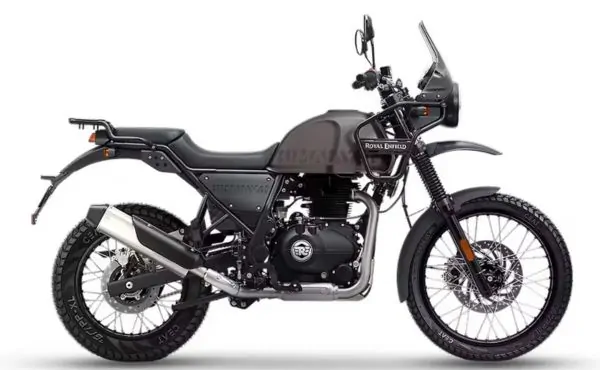
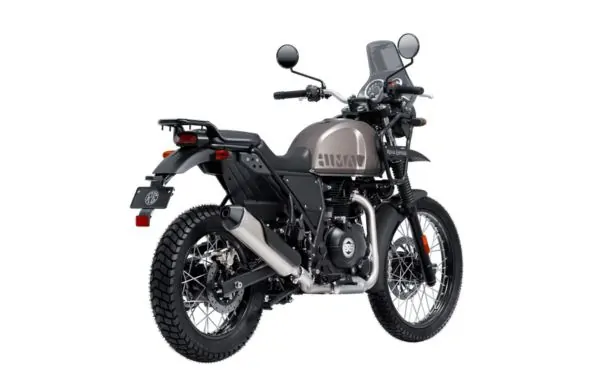
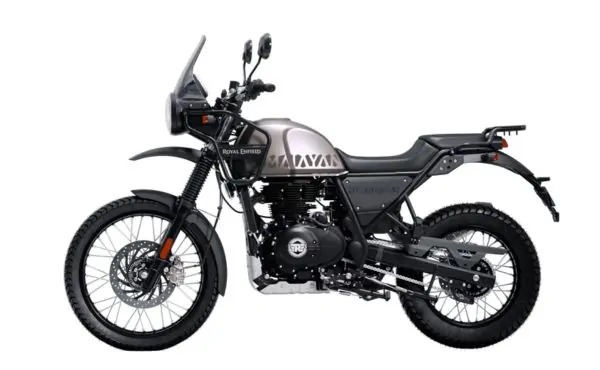
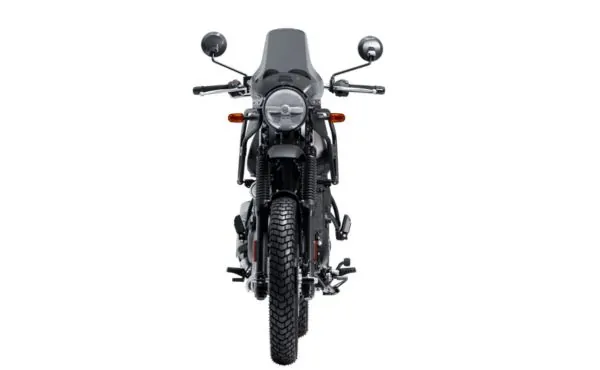
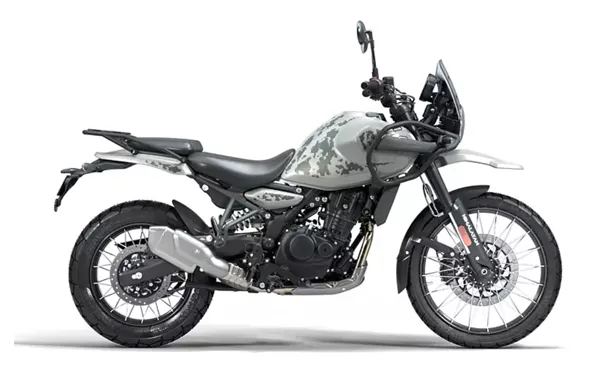
The Himalayan 440 follows a familiar, utilitarian adventure-tourer design language. Royal Enfield has retained the original Himalayan’s unmistakable silhouette, combining a round headlamp, compact windscreen, upright front end, exposed tank-side frame members and a practical rear luggage rack. The design is intended to look functional and expedition-ready, rather than aggressively sporty or overly premium.
A defining visual element is the exoskeletal frame structure flanking the fuel tank. This exposed metal framework gives the motorcycle a rugged, mechanical look and creates a clear visual link to the earlier Himalayan 411. The fuel tank retains the old model’s tapered shape: wider at the bottom and progressively narrower near the filler cap.
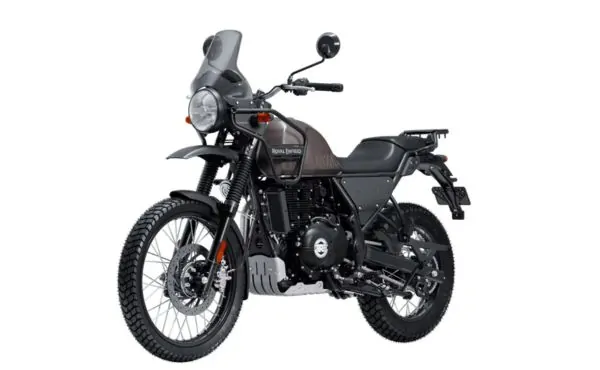
At the front, the motorcycle gets a round LED headlamp with integrated daytime running lights. The circular unit is a modern interpretation of the Himalayan 411’s halogen headlamp and helps preserve the motorcycle’s classic adventure-bike character. Square-shaped halogen turn indicators are positioned around the lighting assembly, adding to its purposeful, no-frills design.
The short windscreen remains an important styling cue. It gives the Himalayan 440 a recognisable touring-oriented profile while visually separating it from the more stripped-back Scram 440. The tall 21-inch front spoke wheel further strengthens its traditional adventure-motorcycle stance and makes the motorcycle look more trail-focused than a conventional road bike.
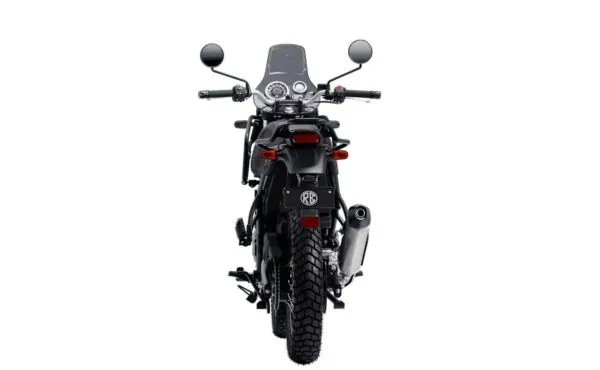
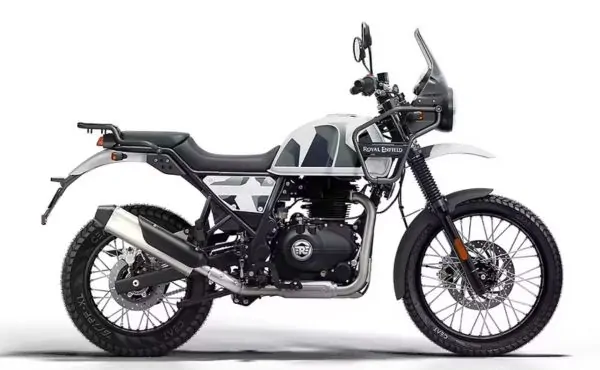
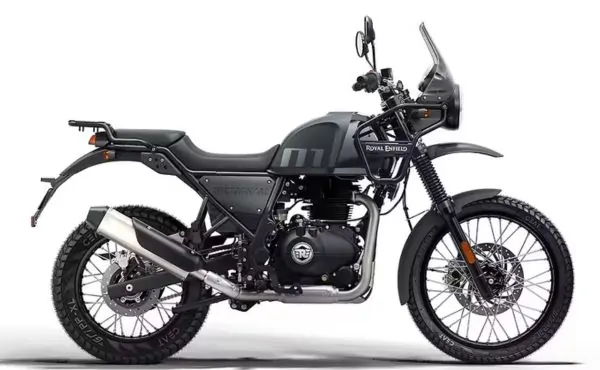
The side profile remains simple and functional, with a raised front mudguard, visible engine area, split seat and a practical tail section. Royal Enfield has not attempted to hide the motorcycle’s mechanical components behind extensive body panels. Instead, the design highlights its frame, suspension and spoke wheels—an approach that suits the Himalayan nameplate’s rugged image.
A special commemorative badge is fitted to the tank to mark 10 years of the Himalayan range. This detail acknowledges the original Himalayan’s role in Royal Enfield’s modern adventure-motorcycle journey and gives the 440 a distinct anniversary connection.
The twin-pod instrument layout also contributes to the motorcycle’s retro-functional styling. It replaces the old Himalayan 411’s more complicated four-pod dashboard with a cleaner arrangement: an analogue speedometer on one side and the Tripper navigation pod on the other. This asymmetric dashboard layout keeps the traditional Himalayan character while adding modern navigation support.
Color Options And Variants
The Royal Enfield Himalayan 440 is available in three India-spec colour options.
- Sela Black
- Nelong White
- Mustang Brown
These shades are exclusive to the Himalayan 440 in the current line-up and are different from the colours offered on the Royal Enfield Scram 440. All three colour options carry the same ex-showroom price, with no colour-based premium reported.
Sela Black is the darkest and most understated option in the Himalayan 440 range. It suits riders who prefer a more serious, rugged and low-maintenance-looking adventure motorcycle. The dark finish works well with the motorcycle’s black mechanical components, spoke wheels and exposed frame sections, giving it a stealthier road presence.
For buyers who frequently ride in varied weather conditions or on dusty routes, a darker shade may also be practical because minor dirt marks and road grime are less visible than on a lighter paint finish.
Nelong White is the lightest colour option and provides a sharper contrast with the Himalayan 440’s black frame, engine area, tyres and spoke wheels. It gives the motorcycle a cleaner, more prominent visual identity and brings out the shape of the fuel tank, windscreen and exposed tank-side framework more clearly.
This colour option may appeal to riders who want the Himalayan 440’s old-school design details to stand out. However, as with most lighter motorcycle colours, it may need more frequent cleaning to maintain its fresh appearance after monsoon riding, dusty tours or muddy off-road stretches.
Mustang Brown is the most earthy and adventure-themed colour in the range. Its name references Mustang, a high-altitude Himalayan region known for dry mountain landscapes, and the shade complements the Himalayan 440’s utilitarian, travel-focused personality.
The brown finish is likely to appeal to riders who prefer a more traditional, expedition-inspired look. It blends naturally with the motorcycle’s round LED headlamp, exposed frame, spoke-wheel setup and compact touring windscreen.
The Royal Enfield Himalayan 440 is offered in only one variant in India:
- Himalayan 440 Standard
The single-variant strategy keeps the Himalayan 440 range straightforward. Rather than splitting the lineup into multiple trims with different wheels, electronic packages or equipment levels, Royal Enfield offers one core specification with the choice limited primarily to colour. This approach aligns with the motorcycle’s simple, accessible and rugged positioning.
The Standard variant includes the Himalayan-specific styling elements, including the round LED headlamp, windscreen, 21-inch front spoke wheel, 17-inch rear spoke wheel, split seat, rear luggage rack, anniversary tank badge and twin-pod instrument cluster with Tripper navigation.
Value For Money & Pricing
Royal Enfield has priced the Himalayan 440 at ₹ 2,29,000 ex-showroom in India. The final on-road price will vary by state because road tax, registration charges, insurance premiums, handling charges and optional accessories differ between locations. The on-road price in Delhi is approximately ₹2,69,500, which may differ in other cities.
The Himalayan 440 has no variant-based price ladder at launch. Buyers receive one core equipment package and choose between three colours, all at the same ex-showroom price. This makes the buying decision simpler than with motorcycles offered in several trims or wheel-and-electronics configurations.
The Himalayan 440’s main value proposition is its genuine adventure-oriented chassis and practical touring equipment. It costs substantially less than the Himalayan 450, which has an ex-showroom price of ₹3,08,000, creating a gap of roughly ₹79,000 before registration, insurance and accessories.
For this price, the Himalayan 440 includes a 443cc engine producing 25.4 bhp and 34 Nm, a six-speed gearbox, a 21-inch front spoke wheel, 200 mm front-suspension travel, 180 mm rear-suspension travel, 220 mm ground clearance, dual-channel ABS with switchable rear ABS, LED lighting and Tripper navigation. Royal Enfield also includes a rear luggage rack rated for up to 10 kg, adding practical value for touring-oriented owners.
The six-speed gearbox is particularly important in this price range. The earlier Himalayan 411 used a five-speed unit, whereas the Himalayan 440 uses the newer six-speed transmission shared with the Scram 440. This should improve highway usability and make steady-speed touring less demanding than on the older model.
The motorcycle also retains a relatively accessible 800 mm seat height despite its 21-inch front wheel and 220 mm ground clearance. This may make it a more approachable choice for riders who want an adventure-bike stance and suspension travel without the taller seating position associated with some larger ADV motorcycles.
However, the value equation depends on the buyer’s priorities. The Himalayan 440 uses a basic cable-operated throttle and offers no ride modes, traction control, cruise control, TFT display, slipper clutch or tubeless wheels. It also weighs 199 kg. Buyers seeking a more advanced electronics suite, lighter-weight performance or tubeless-spoke convenience may find the Himalayan 450 or other higher-priced models more suitable.
Royal Enfield has also announced a standard warranty of three years or 30,000 km, with the option of extending coverage to up to seven years. This additional warranty availability can improve long-term ownership confidence, especially for riders planning extensive touring or high annual mileage.
The Himalayan 440 operates in the affordable adventure-tourer and dual-purpose motorcycle space. Its most relevant rivals include:
- Yezdi Adventure
- KTM 250 Adventure
- Suzuki V-Strom SX
although they serve slightly different budgets and riding priorities.
Among these motorcycles, the Himalayan 440 stands out by offering a 21-inch front wheel, 220 mm ground clearance and long-travel suspension. Its pricing places it between a basic lightweight dual-purpose motorcycle and a more expensive, feature-heavy middleweight ADV.
The Himalayan 440 offers strong value for riders in India who want a rugged, recognisably Himalayan adventure motorcycle without moving into Himalayan 450 pricing. Its value comes from a 443cc torque-focused engine, six-speed gearbox, long-travel suspension, 21-inch front wheel, switchable rear ABS, navigation support and luggage-carrying provision.
It suits riders who prioritise Indian-road versatility, touring practicality and old-school Royal Enfield character over premium electronics or outright performance. The main trade-off is that the lower price comes with a simpler equipment package, tube-type spoke wheels, and a 199 kg kerb weight.