Overview
Performance And Engine
The Bonneville Bobber has a 1200 cc, liquid-cooled, 8-valve, SOHC, 270-degree crank parallel-twin engine tuned just for this model. While it shares the engine with other Bonneville twins, the Bobber’s version gives more mid-range power, so it feels strong at lower speeds instead of focusing on high revs. It makes 77 bhp (about 78 PS) at 6,100 rpm and 106 Nm of torque at 4,000 rpm. For Indian riders, the strong torque at 4,000 rpm means the bike feels powerful from around 2,500 rpm, letting you cruise easily without pushing the engine. This setup is better for relaxed highway riding and easy overtaking than for quick, aggressive bursts.
The engine meets BS6-Phase-2 standards and is liquid-cooled, with a 270-degree crank that gives it a unique, strong sound and makes it easy to handle in city traffic. The Bobber’s tuning is responsive, with smooth throttle control and ride-by-wire technology that delivers power predictably at low speeds, matching the bike’s low seat height. The Bonneville Bobber has a 6-speed manual gearbox that works well with the engine’s wide torque range, so you can ride in higher gears without constantly shifting. The transmission also has a wet multi-plate clutch and a slipper clutch, which help reduce rear-wheel chatter during hard downshifts and make city riding smoother.
The gearbox’s lower gears make it easy to get moving and overtake, while the top three gears are long enough to keep the engine quiet at highway speeds. Combined with the bike’s 251-kg weight and low frame, this setup helps the Bobber stay calm and steady at 90 to 110 km/h, even though it’s not as eager to rev as some adventure bikes.
The Bonneville Bobber can reach a top speed of about 150 km/h, thanks to its 77 bhp, 106 Nm of torque, and 6-speed gearbox. But on Indian highways, its real strength is the strong mid-range power, which lets it cruise easily at 120 to 130 km/h in 6th gear. The bike feels stable and secure at these speeds thanks to its weight and low centre of gravity. The Bobber is made more for relaxed cruising and easy overtaking than for chasing top speed, which suits its cruiser style in India.
Mileage And Fuel Efficiency
The Bonneville Bobber isn’t the most fuel-efficient cruiser, with official fuel economy of 21 to 24.4 kmpl, depending on the model year. These numbers are from lab tests and may not match what you get in real-world riding. The official figure is 24.39 kmpl, showing the 1200 cc twin’s focus on efficiency and the 6-speed gearbox. The latest model’s cruise control and improved electronics are designed to help riders save fuel on long rides.
For the Bonneville Bobber in India, real-world mileage is usually in the low to mid-20s kmpl, which is close to the official numbers for a 1200 cc, 251-kg bike. Most riders get about 21 kmpl, with mixed-use mileage between 20 and 23 kmpl. City riding with lots of stops can lower fuel economy to the high teens, while steady highway cruising at 80 to 90 km/h with cruise control can reach the mid-20s. The Bobber is more about strong torque and relaxed riding than high mileage, and most owners feel that 21 to 23 kmpl is a fair trade for its performance and style.
Features And Technology
In India, the Triumph Bonneville Bobber is viewed as a premium, modern-classic bobber for riders who want a powerful 1200 cc twin, a simple cockpit, and a low cruiser stance with the latest electronics. Here’s a closer look at its main features.
- 1200 cc high-torque parallel-twin engine with Bobber-specific tuning: The Bobber is powered by a 1200 cc, liquid-cooled, 8-valve, SOHC, 270°-crank parallel-twin engine with Bobber-specific tuning, giving it strong low- and mid-range punch rather than peak-revving character.
- BS6-Phase-2-compliant liquid-cooled powerplant: The engine is fully BS6-Phase-2-compliant, liquid-cooled, and equipped with multipoint sequential electronic fuel injection, which helps keep emissions and operating temperatures in check while still delivering the 1200 cc cruise-bike feel.
- 78 PS and 106 Nm torque figures for relaxed cruising: Peak power is 78 PS (76.9 bhp) at 6,100 rpm and maximum torque is 106 Nm at 4,000 rpm, which form the basis for the Bobber’s effortless highway overtaking and relaxed touring behaviour.
- 6-speed manual gearbox with torque-assist clutch: The Bobber uses a 6-speed manual transmission coupled to a wet, multi-plate torque-assist clutch, which significantly reduces lever effort at low speeds and in traffic, making the 251-kg cruiser easier to manage in Indian city conditions.
- Chain final drive for simple, cost-effective maintenance: Triumph retains a chain final drive rather than a shaft, which is widely understood and keeps routine chain lubrication and replacement straightforward and budget-friendly.
- Full-LED headlight with DRL for better visibility and modern look: The Bobber features a full-LED headlamp with integrated daytime-running lights, improving night-time visibility and giving the front end a cleaner, more contemporary look while still retaining classic-style lines.
- Single-button cruise control for relaxed highway touring: Cruise control is now standard on the India-spec Bobber, with a single-button operation that lets riders set a steady speed on long highway runs, reducing fatigue on inter-state and coastal-strip touring.
- Six-axis IMU with cornering-ABS and traction control: The inclusion of a six-axis IMU enables cornering-aware ABS and traction control, giving the Bobber advanced rider-safety systems that work in sync with lean angle and wheel speed to improve stability on wet roads and uneven surfaces.
- Switchable traction control and dual-channel ABS: The Bobber comes with dual-channel ABS and switchable traction control, allowing riders to tailor or deactivate the systems for specific road conditions while still retaining a strong safety backbone for mixed-traffic and twisty-road use.
- Ride-by-wire throttle with multiple ride-mode options: The bike uses ride-by-wire throttle control that works with Road and Rain-style ride modes, letting riders adjust throttle response and intervention for Indian-style traffic, monsoon-wet roads and highway-touring conditions.
- Twin Brembo front discs with 310 mm rotors: The Bobber uses twin 310 mm front brake discs with Brembo 2-piston sliding-axial callipers, giving strong, progressive braking power that helps manage the 251-kg mass and 1200 cc torque safely in Indian braking situations.
- Rear 255 mm disc with Nissin calliper and ABS: The rear brake is a 255 mm single disc with a Nissin single-piston sliding-axial calliper and ABS, working in conjunction with the front setup to provide balanced, predictable stopping power for a cruiser-style 1200 cc twin.
- Analogue-style speedometer with multi-function LCD display: The instrument cluster features a round analogue-style speedometer, paired with a multi-function LCD display that shows speed, trip distance, fuel level, low-fuel warning, gear position, clock, and service-interval information in a compact layout.
- Gear-position and low-fuel indicators for rider convenience: The instrument cluster includes a gear-position indicator and a low-fuel warning, plus trip-computer-style functions, which are particularly useful for riders who want to stay in the right-ratio band and manage refuelling on long-haul runs.
- USB-type accessory power socket for charging devices: The latest update includes a built-in USB-type accessory socket, allowing riders to charge smartphones, GPS units or action cameras while riding, a practical feature for weekend touring and daily-use Indian riders.
- 12-litre fuel tank with respectable touring range: The Bobber has a 12-litre fuel tank, which, when combined with its 1200 cc twin’s efficiency, gives a practical touring range that suits Indian inter-city and highway-centric rides.
- Tubular steel twin-cradle frame with twin-sided swingarm: The chassis uses a tubular steel twin-cradle frame and twin-sided alloy swingarm, providing a solid, low-slung foundation for the bobber stance and helping the bike feel planted and planted on Indian highways despite its 251-kg kerb weight.
- 16-inch spoked wheels with MT-style front and 150/80-R16 rear tyre: The Bobber runs on 16-inch wire-spoked wheels, with a 16-inch MT-style front tyre and a 150/80-R16 rear, giving it a compact, bobber-appropriate stance rather than big-wheel cruiser or adventure-style footprint.
- Showa Ø47 mm cartridge-style front forks for comfort: The front suspension uses Ø47 mm Showa cartridge forks, tuned for a plush, cruiser-oriented ride that soaks up broken tarmac, potholes, and expansion-joint jolts commonly found on Indian highways.
- Rear mono-shock with linkage for controlled rear damping: At the rear, Triumph fits a mono-shock unit with linkage, which works with the 16-inch rear wheel and 251-kg weight to give a controlled, low-slung cushion that suits relaxed highway cruising and weekend-country-road runs.
- Low 690–700 mm seat height for relaxed bobber ergonomics: The seat height is 690–700 mm, one of the lowest in the 1200 Bonneville family line-up, giving the Bobber a proper low-slung bobber feel and making it easy to flat-foot at traffic lights and low-speed corners.
- Wide-profile single seat for solo-focused comfort: The latest update brings a wider-profile, single-seat design that is tuned for solo-ridden bobber use, with a sculpted profile that suits the forward-leaning, head-down riding position typical of Indian bobber-style cruising.
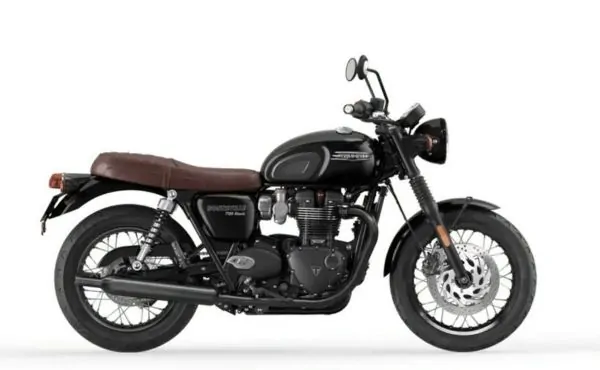
- Blacked-out, minimalist styling and bobber-industrial finish: The Bobber features a blacked-out, muscular aesthetic with a 2-into-2 brushed-stainless twin-skin exhaust, minimal-chrome treatment, and a clean, minimalist cockpit, giving it a strong visual identity among cruisers.
- Brushed-stainless 2-into-2 exhaust system for signature look and sound: The 2-into-2 twin-skin exhaust with brushed-stainless finish adds to the bobber character, giving the bike a throaty parallel-twin note and a clean, slightly industrial-style rear-end view that stands out in the Indian premium-cruiser scene.
- Chrome-Edition variant with hand-detailed trim: The Bonneville Bobber is also available in a Chrome-Edition, featuring additional reflective chrome accents and hand-detailed trim, giving the machine a more flamboyant look.
- Immobiliser and low-battery indicator for security and maintenance aid: Indian spec-tables list an immobiliser and low-battery indicator as standard features, enhancing security and making it easier to spot charging or electrical issues before long-haul trips.
- Two-year unlimited-mileage warranty and 10,000-mile service interval: The 10,000-mile (16,000-km) service interval and multi-year warranty are part of the Bobber’s ownership-value package.
Build Quality
The Triumph Bonneville Bobber stands out as a premium, well-built modern-classic cruiser with an industrial bobber style that feels more upscale than many other 1200 cc cruisers in India. The latest update makes it look and feel even better, with sharper engine covers, a 14-litre fuel tank, a wider seat, updated bodywork, and a cleaner, more unified cockpit.
With its tubular steel frame, twin-sided alloy swingarm, 16-inch wire-spoked aluminium rims, and 2-into-2 brushed stainless exhaust, the bike feels sturdy and well-built. The tight panel gaps and shiny paint look good both in showrooms and at roadside stops. The latest version uses lighter aluminium rims and more sculpted side panels, giving the Bobber a more refined street-cruiser feel while keeping its raw bobber style.
The Bobber’s 251 kg weight is supported by a solid chassis and low 16-inch wheels, making the bike feel stable and well built, not flimsy or over-sprung. The brushed stainless exhaust, compact tank, and clean front end make it look more like a carefully crafted piece of industrial art than a typical mass-market cruiser, with plenty of attention to detail.
Handling
On Indian roads, the Triumph Bonneville Bobber feels steady like a cruiser but is surprisingly agile for a 1200 cc, 251-kg bike. This comes from its 16-inch wheels, low frame, and torque-focused engine. The twin-cradle frame, spoked wheels, Showa front forks, and mono-shock rear are all tuned for comfort and easy steering, not sharp cornering.
The latest update lowers the seat to about 690–700 mm and improves the 16-inch wheel setup, making the Bobber easier to handle in slow traffic and tight spaces, while still staying stable at highway speeds. It feels steady and confident on highways like the Mumbai–Pune route and NH-44, as well as on coastal roads, where the strong torque and low centre of gravity help it cruise at 90–110 km/h with ease.
At the same time, the Bobber’s 16-inch wheels and relatively short wheelbase make it more nimble than many 18-inch or 19-inch adventure-cruiser peers, so it can negotiate tight hairpins and twisty hill roads with more agility than a pure-bagger-style cruiser. The six-axis IMU-based cornering-ABS and traction control, now standard on the India-spec Bobber, add a layer of electronic stability that helps manage the bike’s 106 Nm torque and 251-kg weight when braking into bends or crossing paint-line-only lane-markings on Indian highways.
The Bobber’s slightly forward-leaning riding position and 16-inch tires make it feel stable and grounded at speed, more than some 1200 cc naked bikes. It’s not as quick to turn in very tight corners, but the upside is that the Bobber feels calm and steady on long, straight rides. This is great for Indian riders who prefer relaxed cruising over aggressive cornering.
Comfort
Comfort has improved a lot on the Bonneville Bobber in India, thanks to a wider solo seat, a 14-litre fuel tank, and a more relaxed, touring-friendly riding position compared to the older 12-litre model. The latest update adds a larger tank, a wider, softer seat, and better padding, all aimed at making long rides more comfortable and less tiring.
With a seat height of 690 to 700 mm, the Bobber is easier to handle than many other 1200 cc bikes, allowing average-height riders to put their feet flat on the ground at stops and during slow manoeuvres. It still keeps the low bobber look that’s great for highway and weekend rides. The wider seat and new padding help spread your weight more evenly, which many Indian riders say is a big improvement over the older model.
In a mix of Indian road conditions, the Bobber is great for relaxed highway trips and long rides. The 1200 cc engine and 6-speed gearbox let you ride comfortably at mid-range speeds, while the Showa front forks and mono-shock rear soak up bumps and rough patches smoothly. The seat is supportive and well-padded, so you can cruise for hours without your back or shoulders getting tired.
Still, comfort can be an issue during high-speed rides or in heavy city traffic. The low, feet-forward position and small tank mean you feel more wind on your chest and more vibration in your legs on long trips. Since the Bobber does not come with a tall windscreen in India, many riders add aftermarket screens or bar risers to make long rides at 110 to 120 km/h less tiring. This is a practical fix, not a problem with the main comfort setup.
The Bonneville Bobber really shines for daily use and touring in India. Its low seat, 14-litre tank, comfortable solo seat, and relaxed steering make it a true everyday cruiser that’s also ready for longer trips. Unlike upright adventure bikes, it doesn’t put extra strain on your wrists or make your head move around.
Styling
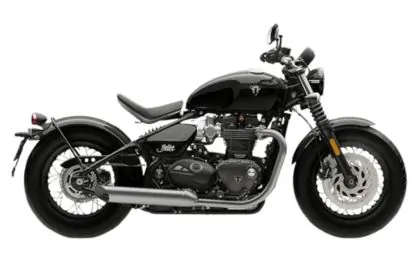
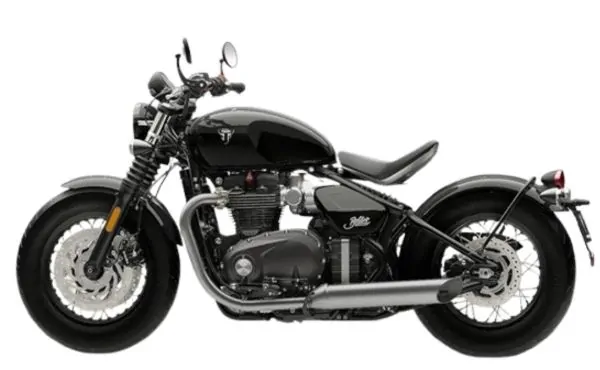
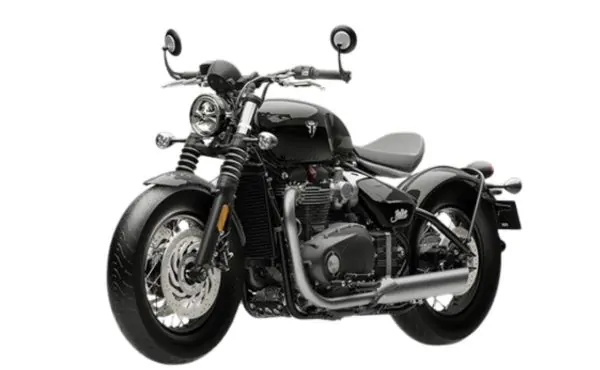
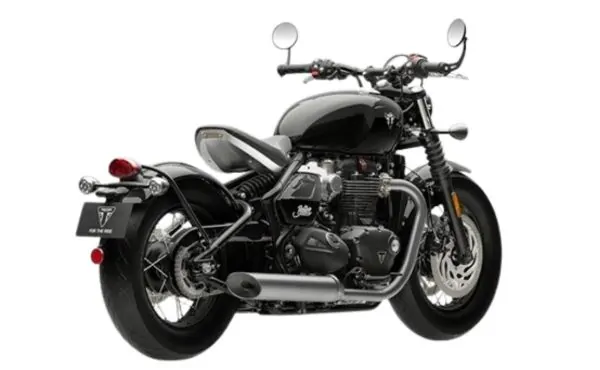
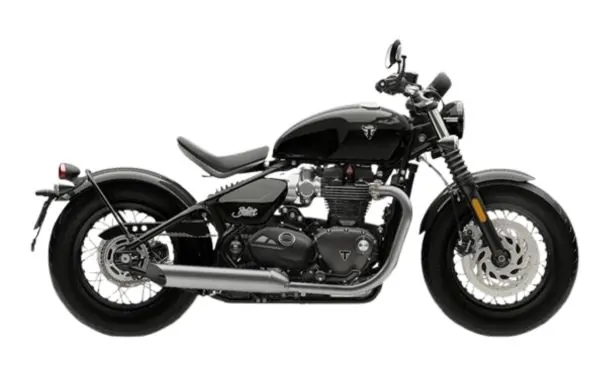
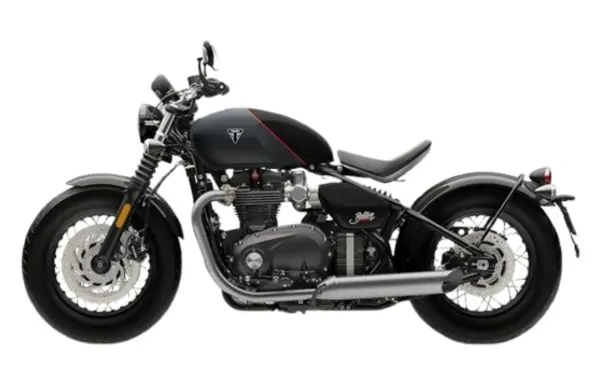
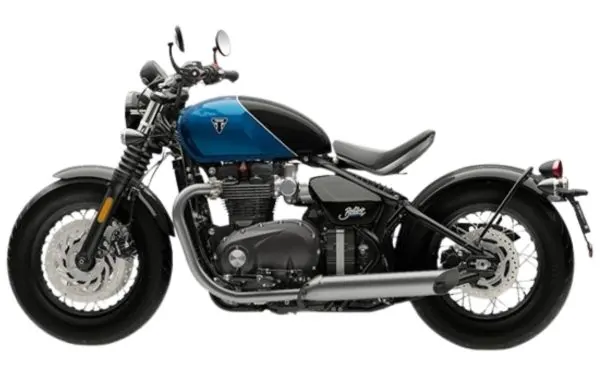
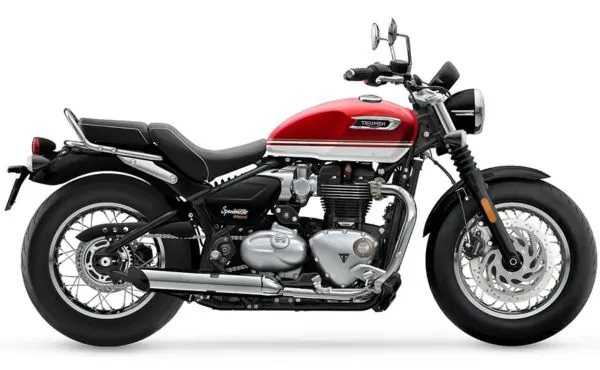
The Triumph Bonneville Bobber has a low, muscular look that mixes classic Bonneville style with an aggressive, industrial cruiser feel. Its design is inspired by custom bikes, with a low profile, clean lines, and hand-finished details. The latest update adds a teardrop-shaped 14-litre tank and sculpted side panels, making the bike look more solid and ready for highway touring in India. The 16-inch spoked wheels and compact tyres keep the classic bobber stance, while the 2-into-2 brushed stainless exhaust with a chrome tip stands out at the back.
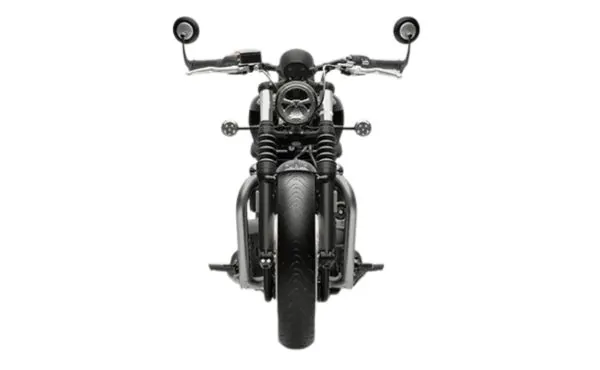
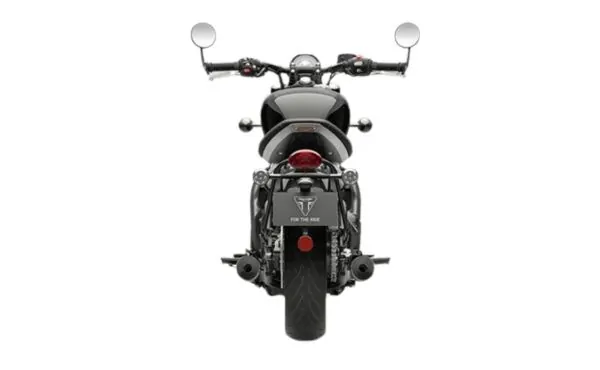
The Bobber’s minimalist style stands out with blacked-out parts, a small headlamp, and a floating solo seat that keeps the focus on the engine, tank, and rear curves. The latest update brings smoother bodywork and cleaner lines, making it look more like a modern cruiser while keeping its classic engine and exhaust as key features. At 251 kg with 16-inch wheels, the Bobber has an aggressive, custom-built look, with a short front fender, small rear mudguard, and visible suspension that give it a unique, handcrafted feel in the 1200 cc class.
Color Options And Variants
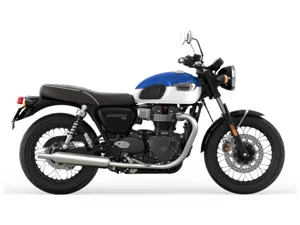
The Bonneville Bobber comes in a range of colours, including classic black and more expressive, limited-run options for those who want a unique look. The latest model is available in several colourways, including:
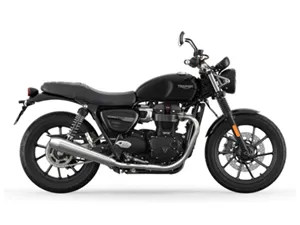
- Jet Black
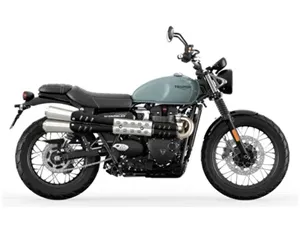
- Satin mineral grey
- Interstellar Blue
The launch cycle introduced new Bobber-exclusive colour schemes, including Satin Mineral Grey, Interstellar Blue, and Jet Black, available alongside the core model options.
No matter which colour you choose, the Bobber’s bodywork and 14-litre tank look neat and well-built. The low tank and sculpted rear look good with both dark and bright colour options. All versions use the same 1200 cc engine, with differences only in colour choices and special editions.
Value For Money And Pricing
The entry price is ₹ 13,51,600 (ex-showroom) for the latest model, with a starting ex-showroom price of around ₹12.05 to 12.88 lakh, depending on the variant and city. After adding RTO, insurance, and dealer taxes, on-road prices for the Bonneville Bobber usually range from ₹13.3 to 14.8 lakh in major cities, with some outlets quoting higher prices depending on state RTO rates. This price puts the Bobber above most 800- to 1000-cc naked twins and café cruisers, and just below or on par with some other 1200-cc lifestyle cruisers. The higher cost is worth considering, even though the bike offers a strong engine and many features. The 1200 cc twin, 14-litre tank, 16-inch wheels, and advanced electronics help justify the price for those who want a powerful 1200 cc cruiser.
Whether the Bonneville Bobber is good value depends on if you’re willing to pay more for a 1200 cc bobber with lots of electronics and strong brand appeal. The latest model comes with a 14-litre tank, wider seat, 6-speed gearbox with torque-assist clutch, cornering ABS and traction control, cruise control, and full-LED lights, all powered by a 1200 cc twin with 78 PS and 106 Nm. The Bobber is often called “good value for money” or “justified at this price, given the hardware,” especially when compared with smaller-capacity Bonnevilles or sub-1000 cc modern classics that cost less but lack the strong low-end torque and bobber-focused ergonomics of the 1200 cc twin. Those who want a true 1200 cc cruiser with a bobber-style stance, advanced safety features, and cruise control usually feel the price matches the ownership package, especially if they plan to ride often and keep the bike for several years.
However, the Bobber’s 251-kg weight, fuel use with its 12- or 14-litre tank, and 1200 cc maintenance costs make it more expensive to run than most 90 to 100 cc commuters or even some 350 cc cruisers. So, buyers focused on budget or mileage might find it hard to justify the price. The Bobber is known for its unique style, classic looks, and strong cruising power, but it may not be the best choice for those who want a 1200 cc bike mainly for daily commuting.
In the 1200 cc lifestyle and cruiser-oriented segment, the Triumph Bonneville Bobber is often compared with other Triumph-family cruisers, bobber-style bikes, and modern-classic 1200-class motorcycles in a similar price bracket. The main rivals include
- Indian Scout Bobber
The Bonneville Bobber is considered a premium bobber-cruiser that costs more than many 800–900 cc modern-classics and 350-cc cruisers, yet offers a full 1200 cc twin, a 14-litre tank, advanced safety features, and distinctive bobber styling. For those who prioritise bobber-style character, 1200 cc torque, and advanced electronics, the Bobber’s price and running costs are considered a fair exchange for the ownership experience; for others, smaller-capacity bikes or more practical cruisers may be more suitable alternatives.