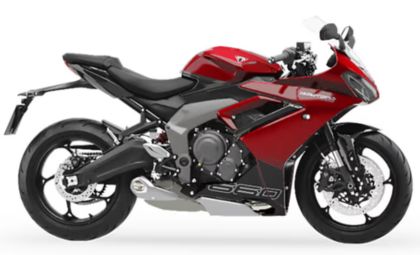
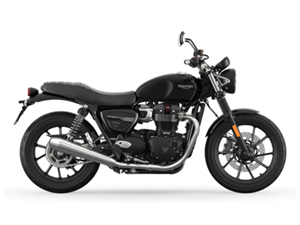
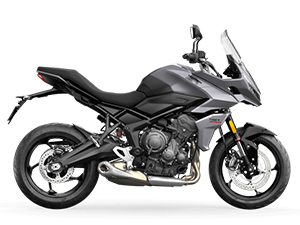
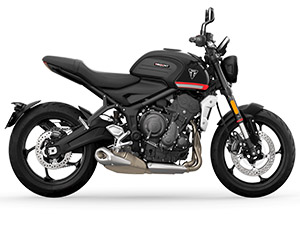
Overview
Performance And Engine
The Trident 660 uses a 660 cc, liquid-cooled, 12-valve inline three-cylinder engine that produces 81 PS (81 bhp / 59.6 kW) at 10,250 rpm and 64 Nm of torque at 6,250 rpm, based on EC lab tests. Triumph designed this engine to deliver strong, steady torque across the rev range, making it easy to accelerate in traffic or overtake on city and highway roads. The triple-cylinder setup gives the bike a smooth, refined feel, with a noticeable boost in power above 7,000–8,000 rpm, so riders can enjoy higher revs without the engine feeling rough or unpredictable.
This model keeps the main engine parts from earlier versions but now features improved fuel mapping and updated rider modes that adjust throttle response and traction control for different situations. On the road, the Trident is quick enough for Indian highways and offers a good balance of lively performance and easy commuting. It is a versatile choice for riders who want a freer engine rather than an overused one.
The Trident 660 comes with a 6-speed gearbox and a wet multi-plate slip-and-assist clutch, designed for smooth, predictable shifts and better control during hard braking or quick downshifts. The assist-slipper clutch helps reduce rear-wheel chatter and jerkiness when dropping several gears, which is especially helpful on speed breakers, potholes, and uneven roads common in India.
The Trident 660 does have a few drawbacks for Indian riders. Its on-road price can be high for some, the suspension may feel firm on rough roads, and its fuel efficiency and pillion comfort are not as good as some touring bikes. Even so, its lively character, flexible riding position, and strong safety and tech features make it a well-rounded and appealing choice for anyone looking for a stylish, modern roadster that is both approachable and desirable on Indian roads.
The Trident 660 can reach a top speed of about 210–212 km/h, which is more than enough for Indian highways. It easily keeps up with fast traffic. With its strong midrange, smooth gearbox, and practical top speed, the Trident delivers well-rounded performance for its class.
Mileage And Fuel Efficiency
The Trident 660 is rated at 20 kmpl by ARAI in India, but this figure is based on lab tests, and real-world mileage depends on your riding style and traffic conditions. This 20 kmpl rating is better than many other bikes in the 250–700 cc range. Its inline-three engine and liquid cooling help it run efficiently and smoothly in standard tests.
In real-world use, the Trident 660 usually gets less than the official ARAI mileage. Most owners report about 14 kmpl in city traffic and 18–20 kmpl on highways at steady speeds. Short trips, heavy traffic, or aggressive riding can lower mileage to the mid-teens, while moderate highway speeds help improve it. Overall, the Trident 660 is fairly efficient for its class, but riders should expect mileage in the mid-teens under typical Indian conditions.
Features And Technology
The Triumph Trident 660 in India is a user-friendly, tech-packed roadster with a 660 cc triple engine and advanced electronics made for Indian roads. Here are some features that are unique to the Indian version of the Trident 660.
- Multi-functional instruments with colour TFT display:The Trident 660 features a hybrid LCD-plus-TFT instrument cluster with a central colour TFT screen that shows speed, rpm, gear indicator, trip information, fuel gauge, distance-to-empty, and rider-mode-status, giving Indian riders a clear, modern digital panel for everyday city and weekend-ride-style use.
- Three riding modes (Road, Rain, Sport) with switchable traction control: The bike offers three primary rider modes—Road, Rain, and Sport—each with a default traction-control level that can be switched on or off, allowing Indian riders to tune power delivery and rear-wheel slip for monsoon-tarmac, patchy-surface roads, or spirited highway riding.
- Optimised cornering-style ABS and traction control: The Trident 660 carries Optimised Cornering ABS and traction control derived from Triumph’s IMU-plus-ride-by-wire architecture, improving stability while braking in corners and enhancing grip control on typical Indian-style twisty sections, highway-interchange-style bends, and wet-tarmac conditions.
- Full-LED lighting with headlight, tail lamp, and indicators: The Trident 660 is fitted with a full-LED lighting package, including an LED headlamp, integrated LED tail lamp, and self-cancelling LED indicators, giving strong night-visibility and a sharper, premium-looking on-road presence that suits Indian highway and city-periphery-type riding.
- Cruise control as standard equipment: Cruise-control hardware is standard on the Trident 660, controlled via buttons on the left-handlebar cluster, allowing riders to set and maintain a steady highway speed on Indian-style tarmac stretches without constant throttle input, which is a big comfort boost for long-commute-and-touring-style rides.
- Triumph Shift Assist (up and down clutch-less shifting): The Trident 660 comes with Triumph Shift Assist, enabling clutch-free upshifts and downshifts, reducing left-hand fatigue in stop-and-go city traffic and during frequent highway-style overtakes, while still retaining the benefits of a 6-speed road-biased gearbox.
- Optimised suspension with 140 mm wheel travel: The bike runs a 41 mm upside-down Showa fork at the front and a single Showa rear monoshock, both tuned for around 140 mm wheel travel, giving Indian riders a forgiving, plush ride over potholes, broken patches, and uneven-tarmac-style sections without sacrificing cornering stability.
- Nissin-style braking hardware with twin front discs: The Trident 660 uses twin 310 mm front discs mated with Nissin-style 2-piston sliding callipers and a 255 mm rear disc with a single-piston calliper, delivering a strong, progressive braking feel suitable for higher-speed highway braking as well as repeated city-stop-and-go conditions.
- My Triumph Connectivity as an optional Bluetooth unit: The Trident 660 features a My Triumph Connectivity module that can be paired with a smartphone, enabling phone-notification alerts, call alerts, navigation-image-through-cluster guidance, and music-control via the Triumph app, improving convenience for Indian riders on long-distance and mixed-commute-style rides.
- USB-type charging socket for rider gadgets: The bike includes a USB-type charging socket on the nacelle area, allowing Indian riders to keep phones, power banks, or GPS units charged during longer rides without relying on aftermarket wiring harnesses or third-party solutions.
- Slip-and-assist clutch for easier city riding: The Trident 660 carries a wet multi-plate slip-and-assist clutch as standard, which lightens clutch-lever effort and smoothes out engine braking, helping riders manage frequent traffic-stop-starts and low-speed manoeuvring commonly found in Indian city conditions.
- Single-hand-adjustable windscreen (on some variants): Certain Indian-market variants of the Trident 660 are offered with a small, single-hand-adjustable windscreen that can be raised or lowered, letting riders manage wind and buffeting for different heights and highway-style cruising speeds (around 90–120 km/h) and improving comfort on mixed-commute-and-weekend-tour-style use.
- High-spec road-biased tyres for mixed-surface grip: The Trident 660 comes with sport-touring-style road-biased radial tyres (typically 120/70-ZR17 front and 180/55-ZR17 rear) that offer strong mid-range grip, predictable wet-surface handling, and reasonable tread life, making it suitable for mixed Indian-style urban, highway, and light-touring conditions.
- Heated grips and fog lamp as factory-developed accessories: Triumph offers heated grips and an LED fog lamp as factory-developed accessories in India, which improve comfort and visibility for riders in colder regions, hill-station-style loops, or early-morning rides through foggy or drizzle-type conditions.
- Tyre Pressure Monitoring System (TPMS) as an optional accessory: For Indian buyers, TPMS can be added as a factory-fitted or dealer-fit accessory, providing real-time tyre-pressure feedback on the TFT or via a dedicated display, which adds an extra layer of safety and peace of mind on long highway runs and uneven-surface roads.
- Accessory-ready pannier mounts and luggage setup: The Trident 660 frame features integrated pannier-mount points, allowing riders to fit OEM-style side panniers or crash-bar-compatible luggage setups without relying heavily on third-party brackets, which is useful for riders who occasionally tour or carry weekend-camp-style gear.
- LED-type flashing indicators and turn-signal cancellation: The bike features LED-style self-cancelling indicators wired to an IMU-based system that automatically cancels the turn signal after the bike straightens from a corner, improving convenience and safety on Indian-style twisty-road and highway-interchange-type riding.
- Dual-seat-height accessory options for shorter riders: Triumph offers low-seat and dual-comfort seat accessories for the Trident 660, with the low-seat reducing seat height by about 25 mm, helping shorter-statured Indian riders and pillion occupants manage city traffic foot-downs and side-stand-dismounts more comfortably.
- Advanced rider-mode-linked throttle mapping: The ride-by-wire system ties tightly to each rider mode, giving distinct throttle maps—Sport sharpening response and engine character for spirited riding, Road smoothing out delivery for daily commuting, and Rain softening power and making traction control more interventionist for wet-tarmac conditions.
- Class-leading value-for-money feature set: Triumph India positions the Trident 660 as a high-value roadster in its class, combining a 660 cc triple-cylinder engine, 20-km/L-style efficiency, 210+ km/h top-speed, and a rich electronics suite with multiple rider-aids, which makes it a strong contender against many mid-250–650 cc middleweights that offer fewer tech features and safety systems.
Build Quality
Triumph highlights the Trident 660 as a bike built to “premium” standards, with a tubular steel perimeter frame, twin-sided fabricated steel swingarm, and high-quality cast-alloy 17-inch wheels (17 × 3.5 at the front and 17 × 5.5 at the rear) that give the bike a solid, mechanical feel when parked and in low-speed use. The fuel tank, side panels, and surrounds are finished with tight panel gaps, even paintwork, and a weighty metallic presence that feels more upmarket than many mid-capacity Japanese rivals, especially in the 250–400 cc bracket. The model carries Triumph’s “renowned premium build quality and component specification” tag, with well-machined brackets, neatly routed harnesses, and a clean under-tank and sub-frame layout that remains visible when the bike is parked on campus-style concrete or tar-concrete-mix floors. The 14-litre steel tank and overall 190 kg wet-weight platform feel substantial without being heavy-handed, and the compact envelope—805 mm seat height, 1401 mm wheelbase, and 795 mm wide handlebar—keeps the bike manageable in tight city-style lanes and parking spaces.
In India, users note that fittings and finish are consistent across the primary-market variants, with robust switchgear, a metal-mounted TFT/LCD cluster, and a stainless-steel 3-into-1 exhaust system that holds up well to rust-prone, humid coastal or monsoon-heavy conditions when kept in the shade and washed regularly. The tubular-steel frame and bolt-on sub-frame design are also seen as inherently repair-friendly for Indian workshops, while the 10,000-mile (16,000 km) service interval underlines Triumph’s claim of “high build quality and use of premium materials,” implying fewer mechanical shake-downs and long-term parts-related issues. Owners using the bike for mixed city-highway duties report that brackets, mounts, and even the fairing-style tank shrouds do not vibrate or rattle excessively at highway speeds, which is reassuring for Indian-style long-commute or weekend-tour-style riding.
Handling
Triumph describes the Trident 660 as having “easy, intuitive and sporty handling,” with a neutral chassis tuned for both city-centre riding and weekend-strip-style runs. The 805 mm seat height, 1401 mm wheelbase, 24.6° rake, and 107 mm trail create a relatively neutral steering geometry that feels flickable in traffic yet stable at 100–120 km/h on straight-line national-style highways. The wide 795 mm handlebar offers ample leverage for quick lane-changes and filter-style manoeuvres without making the bike feel twitchy at low speeds, which is helpful in crowded Indian city traffic and tight-corner-and-roundabout-style layouts. The 140 mm of front and rear suspension travel, combined with a 120/70-ZR17 front and 180/55-ZR17 rear Michelin-type road-biased radial setup, gives the Trident enough compliance to absorb potholes, patched tarmac, and uneven-patch-style village-road sections without feeling overly firm or harsh.
Indian-market hardware updates include a 41 mm Showa upside-down SFF-BP (Separate Function Fork-Big Piston) front fork and a preload-adjustable Showa rear monoshock, both tuned to give a balance between highway-style sharpness and everyday comfort. On metro-style roads with broken-patch tarmac and deep-pothole-infested sections, the Trident absorbs impacts with a controlled, progressive feel, while on twisty hill-town-style routes it holds its line without tramlining despite the relatively wide rear tyre. The twin 310 mm front discs and Nissin-type sliding callipers, supported by optimised cornering ABS, give strong, predictable braking suitable for sudden stop-and-go situations and high-speed-deceleration-style entries into town-style bypasses or highway junctions. Users emphasise that the Trident’s handling is “confident-inspiring” for both new riders and experienced ones, with a chassis that feels planted in corners and communicative at the handlebars, which is valuable for Indian-style mixed-condition riding that can switch suddenly from smooth highway to rubble-strewn village-connectors.
Comfort
Triumph promotes the Trident 660 as delivering “everyday riding comfort” and “all-day riding comfort,” focusing on the seat, riding position, and overall ergonomics. The 805 mm seat height is moderate enough for medium-statured Indian riders, allowing full-foot-down confidence at traffic lights and roundabouts, while the relatively narrow seat and slim-tank-section design make it easy to lock the bike between the legs during low-speed-maze-style city-traffic riding. The seat shape is sculpted to support the rider’s rear without being overly hard, and the upright handlebar-to-footpeg triangle encourages a relaxed, slightly leaned-forward posture that reduces neck and lower-back fatigue on long-duration-style rides. The 14-litre fuel tank locates the mass slightly higher but still central, so the bike remains agile in corners while feeling planted during steady-cruise-style highway runs.
Sitting on Indian tarmac—ranging from smooth-bitumen-type highways to mixed-quality-surface-type state-roads—the Trident’s suspension absorbs rumble-strips, speed-breaker-type bumps, and patched-surface-sections with a forgiving feel, while the 190 kg wet-weight keeps the bike planted at higher speeds. The 6-speed gearbox with a slip-and-assist clutch lightens left-hand effort, which is helpful during long-stop-and-go-style traffic or city-periphery-style riding where the rider is constantly working the clutch and rear brake. The narrow-overall-width envelope and compact footprint make parking and U-turning relatively easy on tight Indian-style two-lane-or-narrow-lane-style roads, while the natural balance and low-centre-of-gravity-type behaviour help riders feel in control at low-speed-school-campus-style cruising. For longer-day-style rides, the combination of the wide handlebars, cushioned seat, stable suspension, and neutral-stance geometry means the Trident 660 can be ridden for several hours without feeling overly cramped or aggressive, which suits Indian-style mixed-commute-and-weekend-tour-oriented usage patterns.
Styling
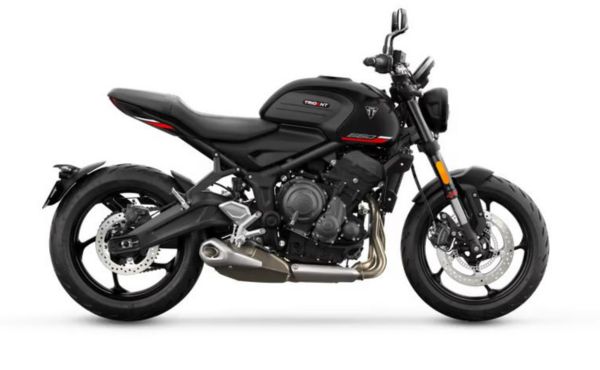
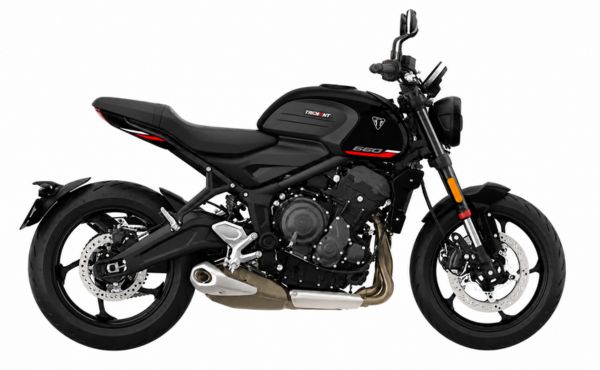
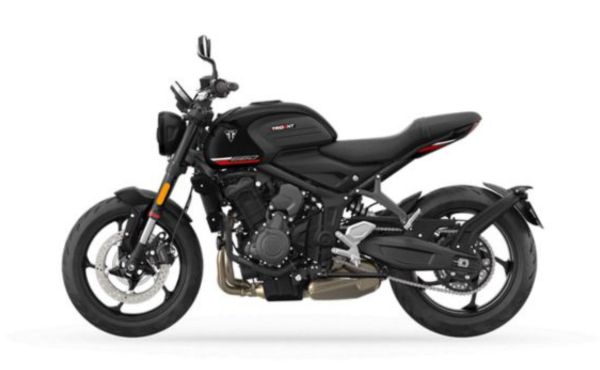
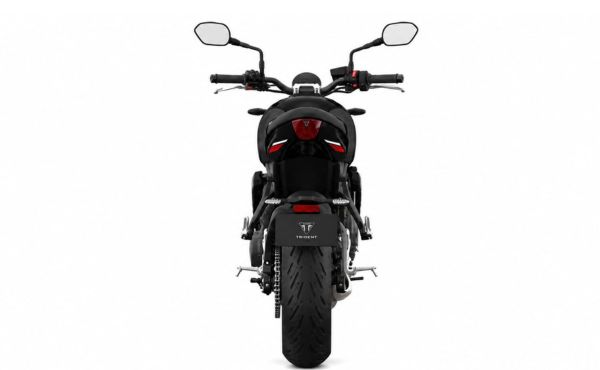
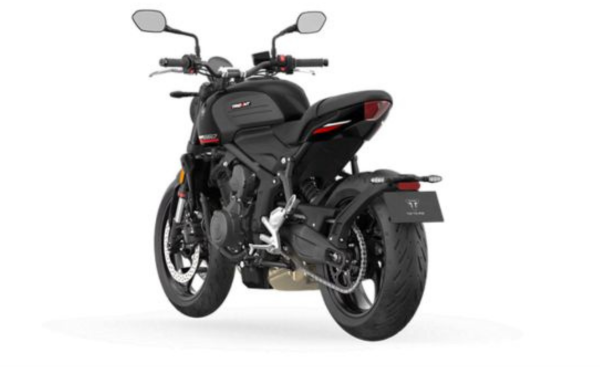
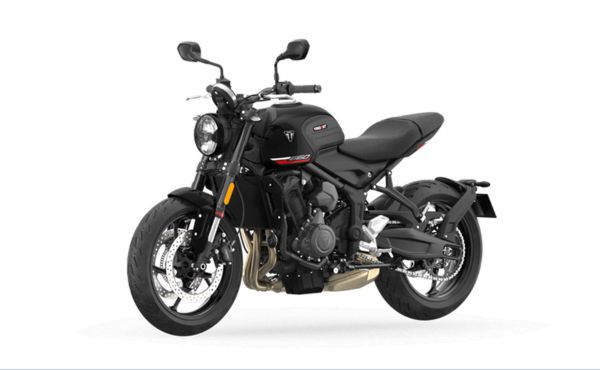
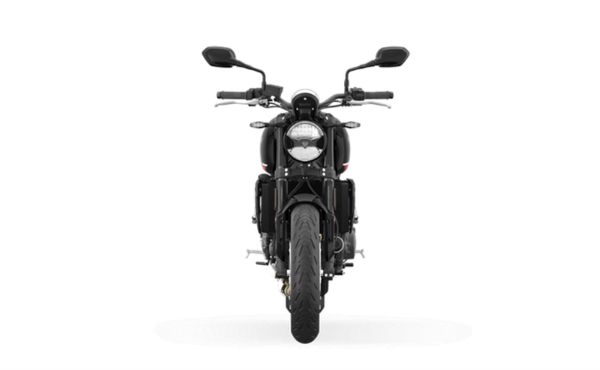
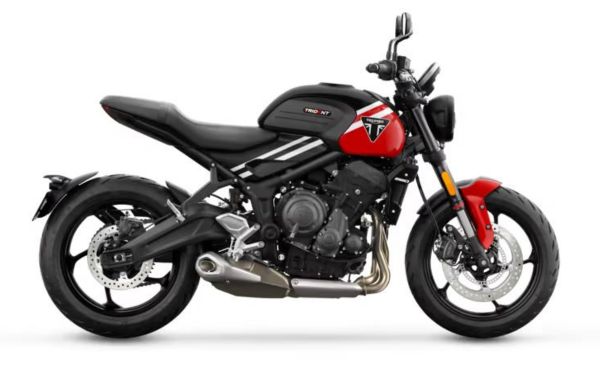
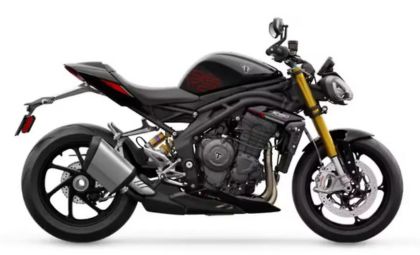
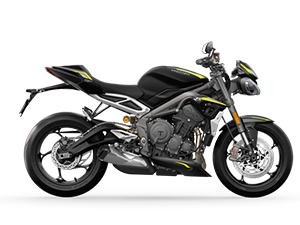
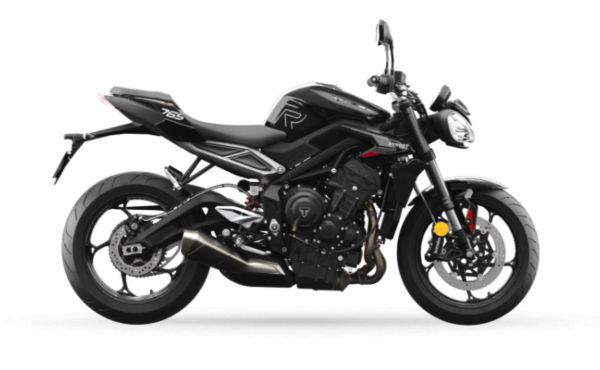
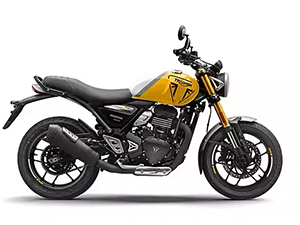
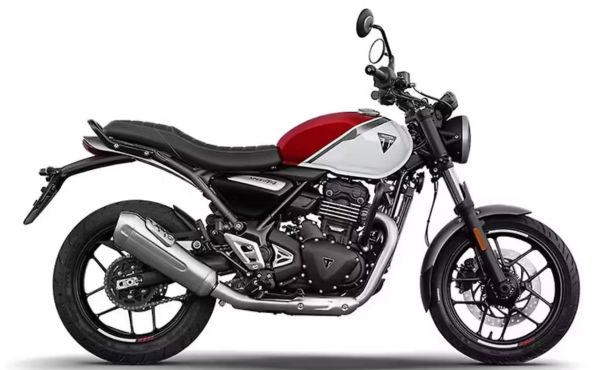
Triumph describes the Trident 660 as having “unique retro-modern styling,” blending a muscular, neo-classic roadster look with contemporary surfaces and aggressive lines aimed at younger, city-leaning buyers. The centrepiece is a sculpted fuel-tank section with flowing curves and a tapered rear, which gives the bike a compact, almost “small-big-bike” presence that stands out in the 250–400 cc dominated segment. The exposed 660 cc triple-cylinder engine is partially framed by slim side panels and a modest engine-cover-style treatment, creating a semi-naked character that feels sporty yet not overly aggressive. The compact headlamp nacelle, minimalist indicators, and clean-looking tail-section give the Trident a tidy, modern-minimalist roadster silhouette, which is visually closer to a café-style roadster than a typical hooligan-style naked.
The update refines the visual appeal further with sharper panel gaps, a more integrated TFT-style dash nacelle, and a slightly revised fork-shroud treatment that complements the new Showa SFF-BP front fork styling. The alloy-spoke-style 17-inch wheels and a 3-into-1 exhaust routing with a stainless-steel-looking collector contribute to an upmarket appearance, especially when viewed next to many mid-capacity rivals that still use simpler, less sculpted designs. The overall stance—805 mm seat height, 120/70-ZR17 front and 180/55-ZR17 rear tyres, and a compact 1401 mm wheelbase—gives the bike an athletic, planted look while keeping it manageable in visual size for Indian city-owners who prefer a smaller-footprint-style middleweight.
Color Options And Variants
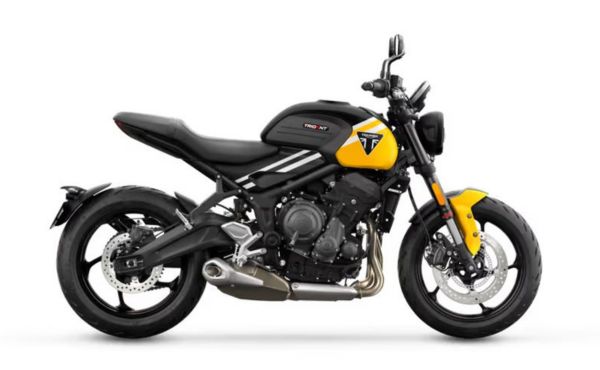
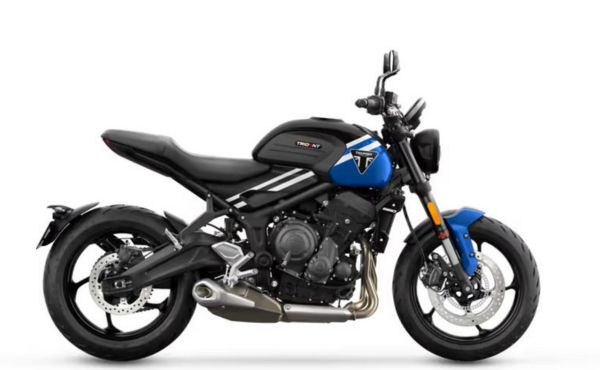
In India, the Trident 660 is offered in four primary colour schemes, all centred on Triumph’s “cosmic” and “sapphire”-themed palette, and they are
- Jet Black
- Cosmic Yellow/Sapphire Black
- Diablo Red/Sapphire Black
- Cobalt Blue/Sapphire Black
each combining a vivid primary hue on the tank and tail with a uniform Sapphire Black base on the frame-side-and-fairing-visible areas. The dual-tone paint schemes include large-area branding-style graphics such as colour-separated tank panels and side-shroud accents, which enhance the retro-modern character and make the bike stand out in traffic and group-ride-style settings. The Sapphire Black base on the chassis and swingarm area ties the visual package together, giving the bike a cohesive, race-inspired-looking appearance without needing heavy-graphics-style decals.
In India, the Trident 660 is structured around a single mechanical specification but multiple visual trims, making “variants” essentially paint-and-graphics-based rather than hard-spec differentiated. The base variant is the Jet Black model, officially listed as the entry-level option in terms of price and colour, usually starting at the lower ex-showroom figure. Then there are three dual-tone colour-based variants: Cosmic Yellow/Sapphire Black, Diablo Red/Sapphire Black, and Cobalt Blue/Sapphire Black, each carrying a slightly higher ex-showroom tag while sharing the same engine, suspension, brakes, and rider-aids package. These colour-based trims let Indian buyers personalise the bike’s look without paying for hardware-tier changes, which is useful in a market where buyers often prioritise aesthetics and brand image.
Value For Money And Pricing
Triumph India lists the Trident 660 with a starting ex-showroom price of ₹ 8,99,000 for the base variant (Jet Black) on the official product page, reflecting the updated spec with more rider aids and standard features. When you factor in on-road costs, the Trident 660 usually lands in the ₹10.5–11.5 lakh on-road band in major metros, after adding RTO, insurance, and dealer-handling charges. Over the last few years, Triumph has raised the Trident 660 price by around ₹37,000 versus the earlier model, but this increase is justified by the addition of items such as Triumph-branded road-tyre-type upgrades, standard-fit quickshifter, cruise-control-style rider-modes, and IMU-based cornering-ABS-plus-traction-control hardware rather than purely cosmetic tweaks.
From an Indian-buyer perspective, the Trident 660 is often described as “punching above its price point” because it stacks a 660 cc liquid-cooled triple-cylinder engine, 81 PS and 64 Nm of torque, and a full-suite-plus electronics package into a sub-₹9-lakh-ex-showroom band, while rivalling much costlier 650s and 700s. The value case is built on the Triple engine’s character plus a rich electronics list—multi-mode ride-by-wire throttle, Optimum Cornering ABS and traction control, Triumph Shift Assist (up-and-down quickshifter), cruise control, and a My-Triumph-style TFT-connected cluster—that would be optional or absent on many similarly-priced mid-capacity 650s. The Trident also offers a 6-speed gearbox, a lightweight chassis, a 190 kg wet-weight, a 14-litre tank, a two-year unlimited-km warranty, and a 10,000-mile service interval, which lowers running-cost-per-year compared with many 650-class bikes that still use simpler hardware or higher-riding-style packages.
Trident sits in the middle of the 650-class hierarchy: it is dearer than the Kawasaki Z650 but considerably cheaper than the Honda CB650R, effectively giving Indian buyers a way to access a triple-cylinder-type character and Euro-style electronics without paying full-flagship-Japanese-streetfighter-style premiums. Owners also note that long-term resale and depreciation remain competitive versus other 650s, especially because the Trident’s friendly mid-range power delivery and neutral-handling-style chassis make it appealing to both new-to-650 riders and experienced enthusiasts. For a rider upgrading from 250–400 cc nakeds, the Trident 660 offers a huge step-up in performance, comfort, and tech at a modest financial stretch, which is why Indian users frequently tag it as a “sweet-spot” middleweight when budget is in the ₹8–10 lakh ex-showroom bracket.
Within the 600–700 cc middleweight roadster segment in India, the Trident 660’s main competition comes from a handful of established 650-class nakeds, each offering a different value-and-character mix, and they are
- Kawasaki Z650
- Honda CB650R
- Kawasaki Z650RS
- Ducati Scrambler Icon Dark
They are also mentioned in comparison pieces as alternative-style options, though the latter operates in a higher-prestige segment and carries a premium export-style price.