
Long story short – To sum up, don’t pick two-wheeler tyres based only on the brand. It’s essential to understand tyre sizing and how to interpret motorcycle tyre codes. Just like shoes are important for us, wheels are important for your bike. When choosing a tyre, look at the speed rating, rim size, load index, and other key details. We’ll explain these points here.
Picking the right tyres for your motorcycle isn’t just about choosing a popular brand. You need to understand the important information on the tyre’s sidewall. Tyre codes and markings tell you about size, construction, load capacity, and speed rating, which all affect your bike’s safety and performance. In this guide, we’ll explain how to read two-wheeler tyre codes so you can make the best choice for your next ride.
Key Takeaways
- Always check the tyre code on your motorcycle’s sidewall—these markings provide essential information about size, load index, speed rating, and construction type.
- Choosing tyres with the right load index and speed rating is crucial for safety and good bike performance. Never compromise on these details.
- The aspect ratio and rim size affect your motorcycle’s comfort and handling. Choose values that fit your riding style and follow the manufacturer’s recommendations.
- Additional markings such as tubeless/tube-type designation, direction of rotation, tread wear indicators, and date code help ensure correct installation and timely replacement.
- Knowing how to read tyre codes helps you make better choices, avoid common myths, and pick tyres that improve safety and boost your confidence while riding.
Let’s go straight to how you can read motorcycle tyre codes and markings, and what you should focus on. There are six main things to look for:
- Width of the tyre
- Aspect ratio (between height and width)
- Rim size
- Type of vehicle
- Load index
- Speed rating
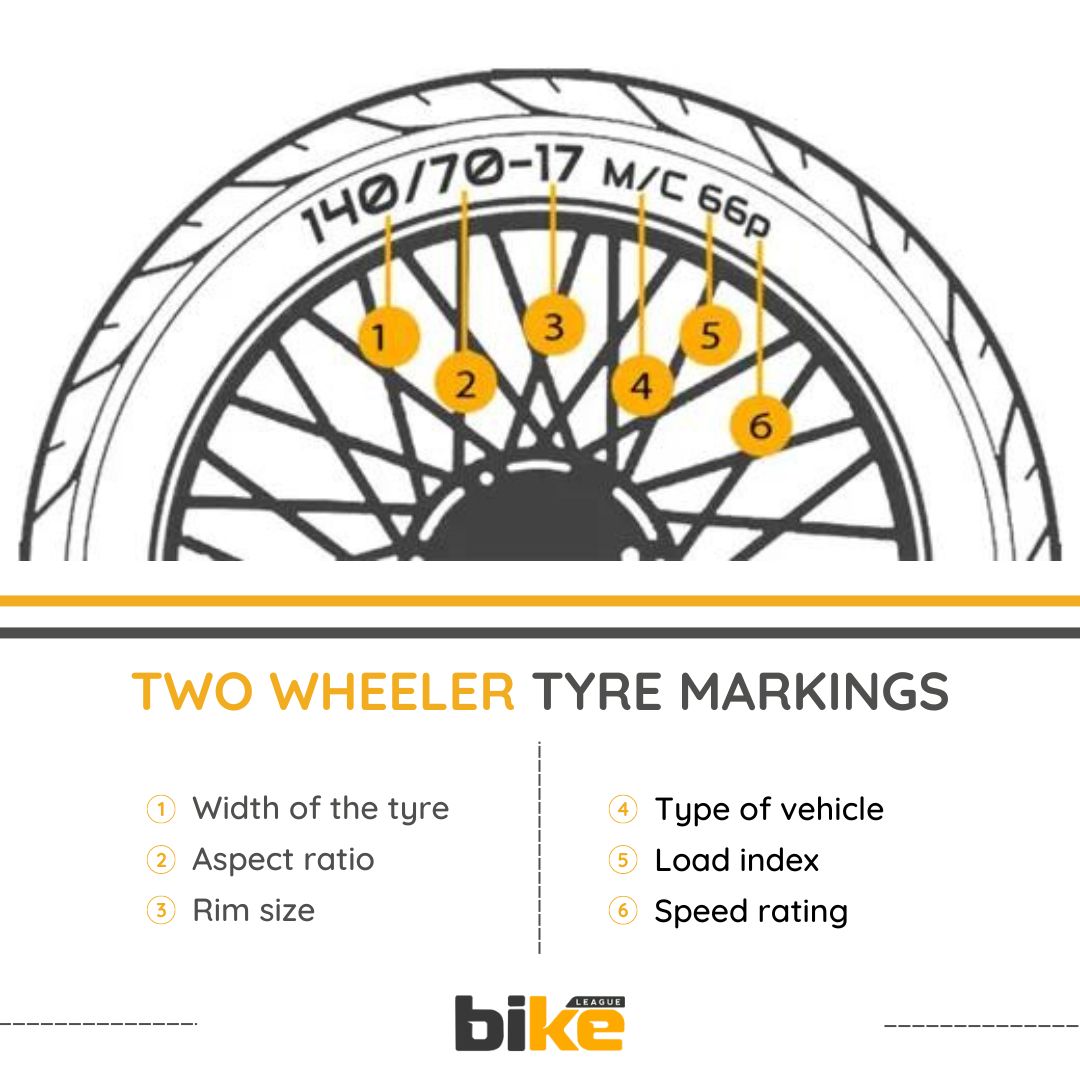
The picture above shows the tyre markings on an actual two-wheeler tyre.
Two-wheeler Tyre Code Deciphered
1. Width Of The Tyre
The first two or three digits of the bike tyre markings mention the width in millimetres with correct tyre inflation. 140 is the width in our above image.
2. Aspect Ratio
The next digits show the height as a percentage of the tyre’s width. Lower aspect ratios, like 40 or 50, mean sportier tyres with shorter sidewalls for better handling and grip. Higher aspect ratios, like 60 or 70, give more comfort and stability for daily riding. In our image, the aspect ratio is 70, so the sidewall height is 70% of the width.
3. Type Of Construction (not Always Present)
This marking appears next to the rim size and shows how the tyre was made.
- B – bias belt or bias ply construction (older design, less common)
- D – Diagonal tyres (less common, combines bias and radial features)
- R – Radial tyres (most common, offer better handling and comfort)
4. Type Of Vehicle
M/C in above image means motorcycle.
5. Rim Size
Digits adjacent to the construction type mention rim size or wheel diameter in inches. 17 is the rim size of the tyre in the above pic.
6. Load Index Of Two-wheeler Tyre
As the name suggests, it is the maximum weight the two-wheeler tyre can hold or carry. In the above image, it is 66. Check the motorcycle tyre load index chart below
| Load Index | Load in Kg |
|---|---|
| 62 | 265 |
| 63 | 272 |
| 64 | 280 |
| 65 | 290 |
| 66 | 300 |
| 67 | 307 |
| 68 | 315 |
| 69 | 325 |
| 70 | 335 |
| 71 | 345 |
| 72 | 355 |
| 73 | 365 |
| 74 | 375 |
| 75 | 387 |
7. Speed Rating
This shows the highest speed the tyre can safely handle. A tyre with a higher speed rating can help your bike stay stable at high speeds. See the chart below for more information.
| Code | km/h |
|---|---|
| A1 | 5 |
| A2 | 10 |
| A3 | 15 |
| A4 | 20 |
| A5 | 25 |
| A6 | 30 |
| A7 | 35 |
| A8 | 40 |
| B | 50 |
| C | 60 |
| D | 65 |
| E | 70 |
8. Additional Markings
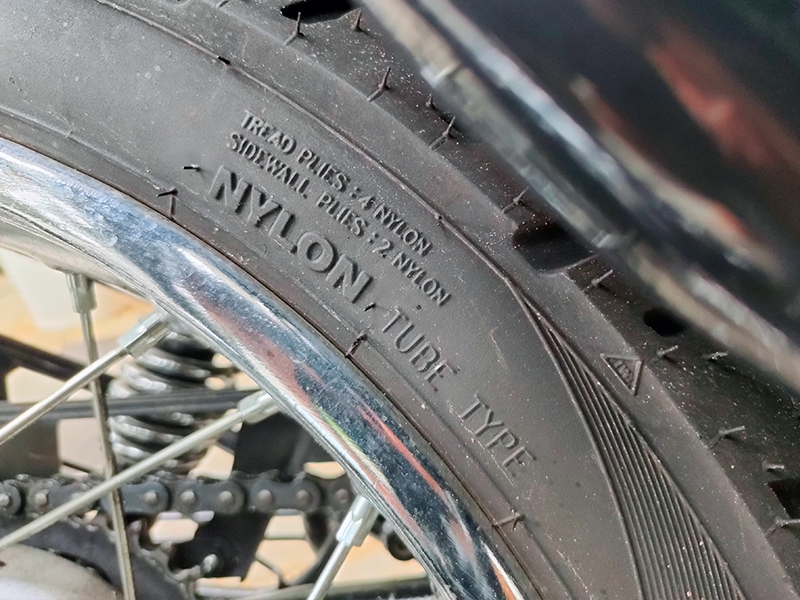
- Tubeless (TL) or Tube-Type (TT): Indicates whether the tyre requires a tube or not.
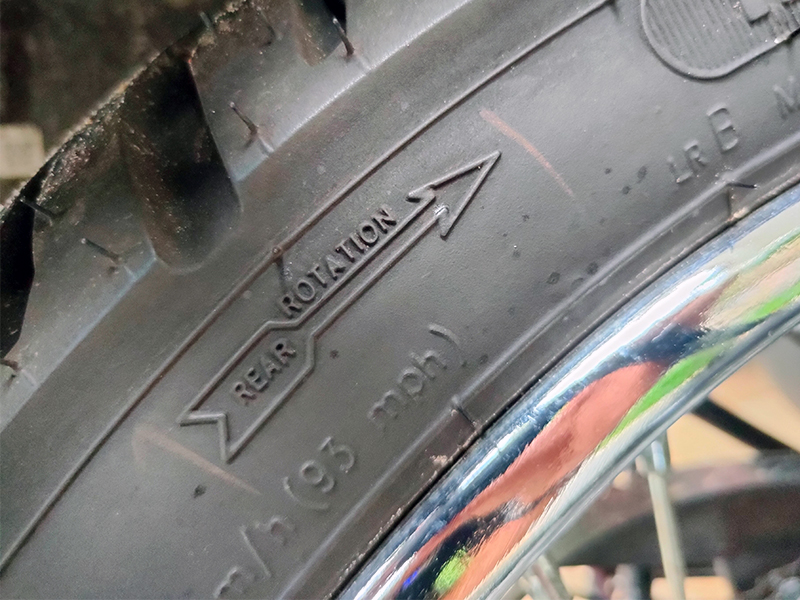
- Direction of Rotation: An arrow showing the intended direction of tyre rotation for optimal performance.
- Tread Wear Indicators (TWI): Small raised bars inside the tread grooves indicate the legal wear limit.
- Date Code: A four-digit code indicating the week and year of manufacture (e.g., “2234” means the tyre was made in the 34th week of 2022).
Myths And Misconceptions About Two-wheeler Tyre Code
Myth 1: Tyres With A Higher Speed Rating Always Perform Better
Reality: A higher speed rating of a bike tyre does not necessarily mean better performance for everyday riding. Speed ratings indicate the maximum speed a tyre can handle. For high-performance bikes, selecting a tyre with a suitable speed rating is crucial for safety. Still, other factors, such as tread design and rubber compound, are more critical for performance.
Myth 2: Tyres With A Higher Load Index Provide Better Handling
Reality: The load index indicates the maximum weight a tyre can support, not its handling characteristics. While it is essential to choose a tyre with an appropriate load index for your vehicle, it does not directly correlate with better handling.
Myth 3: Tyres With A Lower Aspect Ratio Are Always Better For Performance
Reality: Lower aspect ratio tyres can improve handling and stability, but they also make the ride stiffer and less comfortable. The choice of aspect ratio should strike a balance between performance needs and comfort.
Myth 4: Tyres With A Larger Diameter Always Improve Performance
Reality: Larger diameter tyres can affect the bike’s handling and speedometer accuracy. Sticking to the manufacturer’s recommended tyre size is essential for optimal performance.
Myth 5: Tyre Rotation Is Not Necessary
Reality: Regular tyre rotation helps even out wear and extends tyre life. Neglecting tyre rotation can lead to uneven wear and reduced performance.
Myth 6: All Codes Are Standardised Across Brands
Reality: While tyre codes generally follow international conventions, some brands may include unique markings or abbreviations. Always refer to the manufacturer’s manual or website if in doubt about a symbol or code.
Myth 7: The Load Index Refers To Combined Weight
Reality: The load index on a tyre indicates the maximum weight that a single tyre can safely carry, not the combined load for both tyres. Misunderstanding this can result in overloading and potential tyre failure.
Myth 8: Speed Rating Means Recommended Riding Speed
Reality: The speed rating on the tyre is the maximum safe speed that the tyre can handle under optimal conditions, not the recommended cruising speed for your motorcycle.
Myth 9: Date Code Indicates Expiry Date
Reality: The date code only shows the week and year of manufacture, not the expiry date. Tyres do not have a printed expiry date; their lifespan depends on storage, usage, and environmental factors.
Myth 10: Oem Tyre Codes Are Always The Best Choice
Reality: While OEM (Original Equipment Manufacturer) tyre codes are recommended for general use, riders with specific needs (off-road, racing, touring) may benefit from tyres with different code specifications suited to their use case, as long as they remain within safe compatibility limits.
Faq About How To Read Two-wheeler Tyre Code
1. What Is A Tyre Code And Where Can I Find It?
A tyre code is a series of numbers and letters found on the sidewall of your motorcycle tyre. It provides details on the tyre’s size, load index, speed rating, and construction type.
2. What Does The Aspect Ratio Mean?
The aspect ratio is the ratio of the tyre’s height to its width, expressed as a percentage. A lower aspect ratio means a sportier tyre with better handling.
3. How Important Is The Load Index On A Two-wheeler Tyre?
The load index indicates the maximum weight the tyre can safely carry. Using a tyre with the correct load index is critical for safety and performance.
4. What Is The Speed Rating, And Why Does It Matter?
The speed rating indicates the maximum speed at which the tyre can safely carry a load. Always choose a speed rating that matches or exceeds your motorcycle’s specifications.
5. How Do I Read The Date Code On A Tyre?
The date code is a four-digit number indicating the week and year the tyre was manufactured (e.g., 2234 means the 34th week of 2022).
6. What Does The “b” Mean On A Two-wheeler Tyre?
The letter “B” on a motorcycle tyre code/markings can have two different meanings, depending on the context:
1. Bias-ply construction:
In traditional bike tyre construction, “B” stands for “bias-ply.” This refers to the tyre’s internal structure, where fabric cords are laid diagonally across the carcass (like a belt), providing a strong, stable construction.
2. Bias-belted construction:
Sometimes, “B” can also stand for “bias-belted” construction. This is a hybrid design that combines bias-ply and radial features.
7. What Does 67h Mean On A Two-wheeler Tyre?
The “67H” marking on your motorcycle tyre is a combination of two separate codes: the load index (67) and the speed index (H). The load index number indicates the maximum weight the tyre can safely carry at its recommended inflation pressure. The speed index letter denotes the maximum speed the tyre is rated for when carrying its maximum load.
8. Do Tyre Codes Differ Between Tubeless And Tube-type Tyres?
The main tyre code format (size, aspect ratio, rim, load index, speed rating) is the same for both tubeless and tube-type tyres. However, there will be an extra marking, usually “TL” (tubeless) or “TT” (tube-type), to indicate which kind it is.
9. Is It Safe To Use A Tyre With A Different Speed Rating Or Load Index Than Recommended?
No. It is not recommended to use a tyre with a lower speed rating or load index than specified by your motorcycle’s manufacturer. This can compromise safety and handling.
10. What Should I Do If A Tyre Code Includes Unusual Letters Or Symbols?
If you see markings or codes that don’t match standard patterns, consult the tyre manufacturer’s documentation or website. Some brands use additional symbols for specific features or certifications.
11. Can I Decode The Tyre Code To Know The Tyre’s Country Of Origin?
No. The tyre code does not indicate the country of manufacture. For this information, look for separate markings such as “Made in…” on the sidewall.
Other Related Articles From Bikeleague India
- Best bike tyre brands for your motorcycle in India
- Best bike tyre brands for your motorcycle in India
- Motorcycle Sprocket & Gear Ratios – The Ultimate Guide
- Electric scooter maintenance – Top tips for longevity
- ADMS DB
Conclusion
Learning to read two-wheeler tyre codes helps you choose tyres that improve your motorcycle’s safety, performance, and lifespan. By checking markings like size, load index, speed rating, and manufacture date, you can avoid mistakes and keep your ride safe and smooth.
Next time you buy new tyres, use what you’ve learned here to choose the best ones. Tyres are just as important to your motorcycle as shoes are to you. Always put safety first, follow the recommended guidelines, and enjoy the confidence that comes with having the right tyres.
If you have any questions, you can email us at bikeleague2017@gmail.com or leave a comment below. We’re always happy to help. You can also contact us on Bikeleague India’s social media pages.